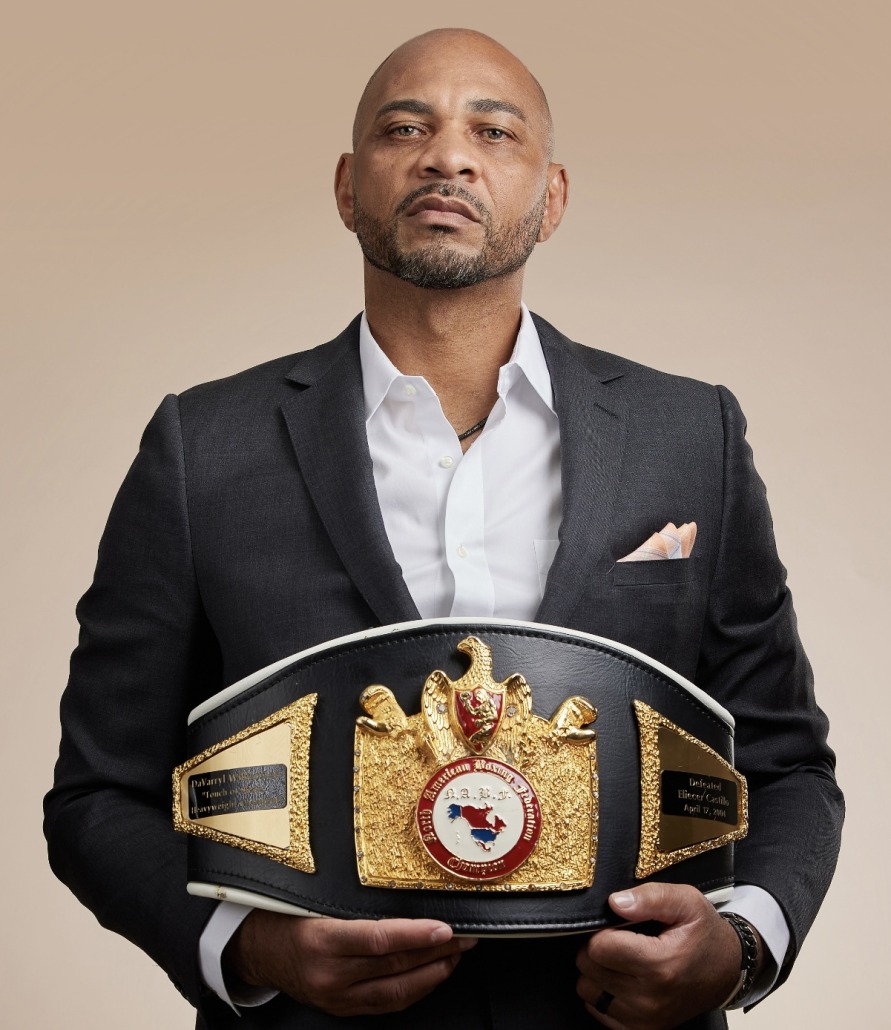
“I feel really good that everything is working”: Former heavyweight and NABF champ DaVarryl Williamson is proud of his career and lives the good life after fighting
If DaVarryl “Touch of Sleep” Williamson died today, he would be content with his life because of his impact on the community. His philosophy on giving back is a mixture of all his coaches from the youth level in football to his time in professional boxing.
As a pro fighter, Williamson was no different than the kind, welcoming man he is today. But when he stepped into the ring, he was something else: a dangerous heavyweight with a taste for decapitation.
His accomplishments include, but are not limited to, being a 10-time national amateur boxing champion, NABF boxing champion (2005) and a member of the Colorado Sports Hall of Fame. Yet his academic achievements, a master’s degree in administrative service and a bachelor’s degree in recreation, are equally important.
His life has been an odyssey, starting with being born in the hospital section of a jail in Washington, D.C., and not being claimed by any of his family members. He and his sister, Demetria, were put in the foster system and eventually lived with the Addison family, among one of multiple foster homes.
“The first nine years of my life, we were somewhere else,” Williamson said about his and his sister Demetria’s upbringing. They lived with four other children in the Addison household- Clarence and Clarice Thomas, Sarah and Wilhelmina Addison- and they are still close today as adults.
His other sister, Donna Marie Matthews, who passed away in 2018, would send him food stamps while he was at Wayne State College and she was in a halfway house with her three kids. The hookup ensured that Williamson could make $150-250 last an entire semester. Thinking back on her sacrifices, the teachings of Al Mitchell (boxing coach) and Steve Kereakos (football coach) make Williamson want to put into the world more than he has taken out.
Boxing was the realm he turned to after it didn’t work as pro football quarterback following a workout with the Indianapolis Colts. Williamson got a tryout because he knew someone who knew someone, but he switched sports, joining the USA Olympic 1996 boxing team as an alternate. Still, taking a sack on the field prepared him for an overhand right in the ring. “Your mind is saying, a hit is coming at some point,” Williamson said.
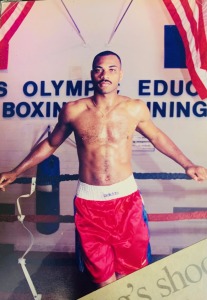
He spent the next years developing his skills, earning a 120-17-1 record, with 103 knockouts. Then he made his pro debut 25 days before turning 32 years old, becoming an uncommon prospect. His fatal flaw in the ring was his chin not being as strong as his knuckles.
His first boxing setback was getting knocked out in round four of his fourth fight by Willie Chapman. A streak of 15 wins followed, with the last one in this span coming against Robert Wiggins, while suffering through a broken jaw, in a 10-round unanimous decision on Jan. 10, 2003.
Williamson said he broke his jaw in the second round. “I didn’t want to take my mouthpiece out because I felt like something was wrong… so I’m spitting blood in the bucket, and I’m seeing it’s different from any of the blood I had before.”
He didn’t tell his coach because he wasn’t sure “how much he loved me, how much he didn’t love me.” One of the tools that helped him win the fight was the resiliency he developed in yoga classes.
Looking back on that fight, Williamson recalls Wiggins as a “tough joker” who didn’t play well with others.
He suffered the worst defeat of his career nine months later, getting knocked out in the first round by Joe Mesi’s sledgehammering left hooks and overhand right. He was so stunned he had to get checked out by medics for four minutes as he lay face up on the canvas. His handlers, promoter Lou DiBella and manager Garry Gittlesohn, thought he was done, dropping him as a client.
Williamson mentally got over his situation because he convinced himself he was playing with house money after picking up boxing at age 25, plus managed himself. He fought twice in the next six-and-a-half months, earning consecutive victories, which included the NABF championship over Eliecer Castillo.
Yet, he feels the Wladimir Klitschko fight is one of the what-if moments of his career because he believes he won. Notably, Klitschko had a PhD in Sports Science and Williamson had a master’s degree before this bout. The strategy in the early rounds was to tire out his Ukrainian opponent, who was 26 pounds heavier, with his movement. Williamson knocked him down in round four with his signature right hand, but the fight ended prematurely because of an accidental head clash, which caused a cut over Klitschko’s right eyebrow.
He returned to the ring 43 days later, beating Oliver McCall in a 10-round unanimous decision and then obliterated Derrick Jefferson in two rounds for the WBC Continental Americas belt. This made Chris Byrd his mandatory opponent, but he lost that one in a unanimous 12-round decision loss for the IBF title.
He compiled a 5-4 record over the next seven years, but it included one of the most noteworthy wins of his career against Michael Marrone. Williamson downplays his seventh-round knockout, saying Marrone didn’t deserve to be in the ring with him, but it doesn’t change the fact that boxing is a young man’s game. He beat Marrone being 16 years older.
One of the people in his corner that night on April 23, 2011, was Jamahl Mosley, the current head coach of the Orlando Magic. Mosley wiped Williamson’s face as he waited in the neutral corner after the KO. He was asked to come because Williamson’s crew was a man short. Mosley told Five Reasons Sports Network over a brief phone call set up by Williamson that his experience with boxing “changes the landscape of everything you do.”
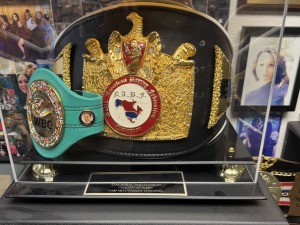
Presently, Williamson owns and operates the TOS (Touch of Sleep) gym in Englewood, Colorado, which is also a museum of boxing history. He spends every day there training people of all ages, deploying the methods of his former coach, Al Mitchell. There, he met his wife, Jennifer, while giving lessons to her children, Donald and Gabriel, 15 years ago.
One of Jennifer’s achievements includes a master’s degree in psychology with an emphasis in applied psychological science. She is proud that Williamson upholds her values in education for the family.
His work at TOS has been equally as gratifying as his career. But what kind of coach is Williamson? One that wouldn’t allow a student with one amateur fight to face off with an opponent with 15, which was suggested by Konquer Club, a matchmaker for single-day amateur boxing events.
On top of that, extensive work with a client, a young man with Down syndrome, is one of his most successful coaching jobs. That young man eventually participated in a sparring session and is going on his fourth year of training.
Williamson thinks he stopped fighting at the right time because he doesn’t have to chew on one side of his mouth, nor does he feel pain in his limbs. “I feel really good that everything is working.” He is also pleased with the time he spends with his wife, and their children Dantel, Alayanna, Donald, Gabriel and Nina.

When Five Reasons Sports Network asked how he wants to be remembered, Williamson said as the people’s champion. “I was accessible. Anyone in the world could come up and talk to me and interact with me.”



Leave a Reply
Want to join the discussion?Feel free to contribute!