Mateo’s Hoop Diary: Heat overcome the Bulls’ late surge in Chicago

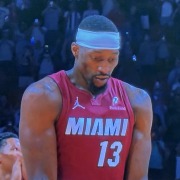
The Heat escaped the Bulls in Chicago on the second night of a back-to-back despite playing below standard in the half-court and transition. Jaime Jaquez Jr., Pelle Larsson and Dru Smith logged two field goals apiece in the fourth quarter, and their poor late-game execution didn’t cost them after allowing the hosts to scrape their way back after being down 10 in the last few minutes.


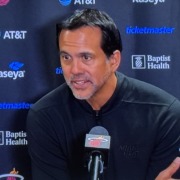
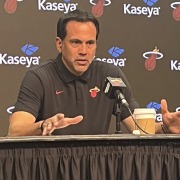
“We know what we are capable of defensively,” coach Erik Spoelstra said. They held the Bulls to 41.9% shooting in the second half, but it wasn’t so clean.


Their long and short-range accuracy was the story of the first half, but issues have persisted after intermission this season for Miami. The 3-point shooting went cold in the second half, plus they got outrebounded and the Bulls lived at the line.


On top of that, Ayo Dosunmu was Chicago’s only source of offense, getting loose for 15 fourth-quarter points. It was the highest-scoring quarter of his career.


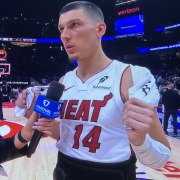
Larsson stripped Coby White in Bulls territory, while up three with _ seconds left, but Norman Powell turned it over, and instantly committed a penalty. He was fortunate it wasn’t a transition take-foul because Chicago would’ve had possession after their two free throws. 


Still, Larsson scored on a sideline inbound too early, instead of running down the remaining seconds. This allowed the Bulls to call a timeout, then get a clean last look to tie, but Coby White missed from 28 feet. 


The Heat won 116-113 and had lots of help from the bench (50 points). It was also their 12th game this season scoring at least 60 points in the lane (9-3).


Takeaways:

  • This was the makeup game from Jan. 8 that wasn’t played in Chicago because of the on-court condensation issue. This was the Bulls’ 29th clutch game of the season. 


  • Jović played well on defense because he is getting better at throwing his size around. Still, the Heat are a small team, and their potency wanes when satisfied with their work. That was part of the problem in the fourth quarter as they couldn’t guard without fouling and they put themselves in bad positions by turning the ball over five times.


  • Kel’el Ware didn’t play the fourth quarter, but he was still the team‘s best shot blocker and deep threat, making three treys. The team went small and conceded six offensive rebounds in the period. He was asked in the locker room about staying locked in after missing four games with a hamstring injury. He said, “Just doing what I can in my minutes. Whatever minutes I get, try to go out there and impact the game, and make it positive minutes.”


  • It was another night that Jaquez was the team’s best scoring threat. He logged 19 points on 61.5% shooting, with 10 rebounds, six dimes and zero turnovers. Aside from corner trey, all other shots came from within 1-9 feet because he’s an expert at getting to the body. Keep in mind that he’s making 75% of attempts at close range this season, which is a 7.3% increase from last year.


Mateo’s Hoop Diary: “We have to understand who we are…” Heat can’t overcome the Magic’s inside and outside scoring

The Miami Heat were exposed by the desperate Orlando Magic in their fourth matchup of the season and remain winless against their in-state rivals. The latter was bigger, stronger and faster, plus Paolo Banchero and Anthony Black took over the game.


The Magic’s inside action was so devastating that the Heat surrendered the most first-quarter paint points of the season (26). The pick-6s also gave them trouble and zapped the offense as they ended the first quarter down seven points after going down as much as 13.


The second unit’s intensity in the zone defense, plus triggering the bonus for the last nine minutes of the half, which lowered Orlando’s RPMs, helped them capture the lead. It was a 41-point outburst, which included three trifectas by Simone Fontecchio and four shots in the restricted area between Jaime Jaquez Jr. and Kel’el Ware.


Additionally, the hosts slowed down the inside bleeding in the half-court, yet still struggled when Orlando punched the gas in transition.


They went into intermission ahead by nine following 10 lead changes and two ties, and subsequently experienced the infamous turd quarter. They failed to stop Banchero’s close-range action, and Anthony Black erupted from inside and out, too.


“We couldn’t guard,” coach Erik Spoelstra said. “To give up a 40-point third quarter on our home floor, with great opportunity, and playing really well in the first half, we just paid the price for that.”


Jaime Jaquez Jr. and Fontecchio’s three treys plus a fastbreak strike lifted them nearly halfway out of the double-digit ditch, forcing Orlando to call a timeout. But the Magic were unfazed and answered with mid and long-range jumpers that killed Miami’s spirit.

The Heat lost 133-124. Their record is now 25-23 at eighth in the East.


Takeaways:


  • The Magic came into the game on a four-game losing streak and were not messing around. They pummeled the lane early, went through their rough patch, and then figured out that as soon as the Heat face adversity, they fold. Another reason for their success was their superior play in the open court, which was partly due to Miami’s sloppiness with the ball. It was also the 11th time the Heat have given up at least 60 points in the lane, and they are 5-6 in those games.


  • The Heat were able to stay in a zone longer in the second quarter because the Magic are a poor outside shooting team. Yet, the Magic stepped up with 50% shooting from deep in the second half, plus their 20 second-chance points was back-breaker.


  • Ware’s two offensive rebounds turned into four second-chance points. He played decently for a spurt in the first half, but he was shelved for the rest of the game.


  • The Heat didn’t have answers for Black. He was a force on and off the dribble, when attacking the lane, and he nailed four 3-pointers. His best spurts were the first and third quarters, scoring four field goals apiece. He has a first step that most of Miami’s defenders can’t hang with.


  • Davion Mitchell and Tyler Herro were absent, so Kasparas Jakučiokis and Pelle Larsson started for them. Jakučionis had multiple steals, including one in full-court press that turned into a pick-6. Yet they only combined for 10 points on 36.3% shooting. Orlando’s versatile size is a tough matchup.


Tropical hoops roundup: FIU bounces back; FAU suffers setback; Miami deserves ranking

The Florida International Panthers broke a five-game losing streak on Saturday on the road with an 81-78 win over New Mexico State.

Corey Stephenson carried the Panthers with a 25-point and 12-rebound performance. He shot 7-of-15 from the floor, including 10-of-12 from the free throw line. Julian Mackey scored 12 points on 3-of-6 from the three-point line, while both Zawdie Jackson and Ashton Williamson each added 10 points for FIU, which returned to .500 (10-10, 3-6) on the season.

The Aggies were led by Elijah Elliot, who scored a game-high 26 points on 7-of-16 shooting, and Jemel Jones (15 points). The Aggies outshot the Panthers from the three-point line but made three fewer baskets despite 10 more attempts.

Stephenson came up clutch in the final minute for FIU. He tied the game 78-78 with a three-point jump shot from 26 feet and secured the win with three free throws. He was responsible for all of FIU’s 10 points within the final five minutes.

The Panthers first established a double-digit lead in the first half after a 10-4 run to go up 33-23 five minutes before halftime. FIU went into intermission leading 40-31 after a three-pointer by Williamson.

The Panthers briefly return home on Wednesday to take on Jacksonville State before going back on the road to open February.

FAU suffers setback at South Florida

In the latest episode of a new in-state rivalry in the American Athletic Conference, Florida Atlantic falls on the road against South Florida 89-75 on Sunday. The Owls’ loss snaps their five-game winning streak.

The Owls (14-7, 6-2) remain the only team in the region to lead their conference, although their lead in the AAC is very slim. Only a half-game separates FAU from Tulsa, Temple, Charlotte, and USF at the top of the standings.

The Owls were led by star sophomore Devin Vanterpool, who scored 22 points on 9-of-18 shooting and 4-of-7 from the three-point line. Kanaan Carlyle scored 16 points, Josiah Parker added 13 and Isaiah Elohim chipped in 11 points for the Owls, who collectively made 27-of-66 (41%) field goals, shot 7-of-22 from three, and were 14-of-19 from the free throw line.

South Florida had five players score double digits, including Wes Enid, who scored 19 points with five three-point baskets. The Bulls had similar success from the arc but, overall, made 3 more field goals and 8 more free throws than FAU.

FAU’s largest lead came in the final minutes of the first half. A layup from Parker put the Owls up 36-28 with 1:15 to go. CJ Brown made a pair of free throws and Enis shot a three-pointer to put USF within three at halftime.

The game remained close early in the second half, as a layup from Parker had FAU leading 43-42 with 16:32 remaining. The Bulls swiftly went on to outscore the Owls 25-13, as a dunk from Izaiyah Nelson put them up 67-56 with 8:41 left in the game. The Bulls maintained their double-digit lead throughout the remainder of the second half.

FAU travels to Memphis on Thursday before returning home to host East Carolina on Feb. 1 and Tulsa on Feb. 4.

Miami deserves top 25 ranking

The Miami Hurricanes improved to 16-4 after an 85-76 road win against Syracuse on Saturday. Miami (5-2) is tied with Virginia for third place in the ACC behind Clemson (7-1) and Duke (7-0).

Malik Reneau led the Canes with 20 points and 11 rebounds, Tre Donaldson and Shelton Henderson added 16 points each and Tru Washington chipped in 14 points.

Miami is ahead of No. 22 North Carolina and No. 23 Louisville in the ACC standings, though the Canes haven’t played them yet. UM will host UNC on Feb. 10 and close out the regular season at home against Louisville on March 7.

Both UNC and Louisville are the only two ranked teams with five losses. Ranked wins against Kansas, Virginia, and Kentucky have kept UNC among the top 25. The Tar Heels host No. 5 Duke on Feb. 7 before traveling to Miami, which may bode well for the Canes.

Louisville is 2-3 against ranked teams this season, but defeating Kentucky and Indiana is enough to keep the Cardinals in the top 25 heading into Monday’s road game against Duke.

Miami’s schedule is keeping the Hurricanes outside the top 25 until they further prove themselves in the ACC. They had two opportunities against the top 10 (No. 10 Florida and No. 9 BYU) and fell short both times. Defeating Ole Miss and Georgetown helped stave off the notion of Miami feasting on mid-majors to boost its record leading up to conference play.

The Hurricanes didn’t just start the season with a new head coach but also a new team filled with experienced transfers. Reneau leads the Canes with 19.7 points per game after spending his first three years at Indiana. Donaldson is with his third team (Auburn and Michigan) in his fourth year and is averaging a career high 16 ppg. Junior Tru Washington, coming over from New Mexico, is averaging 11.8 ppg, and senior center Ernest Udeh Jr. (Kansas and TCU) is providing the defense with 10 rebounds, 1.3 blocks, and 1.1 steals per game.

The lone true freshman starter, Shelton Henderson, is also making an impact with 14.4 points and 4.5 rebounds per game while shooting 62.2 from the floor. Jai Lucas recruited Henderson at Duke before taking him to Miami with him and this is proof of his ability to assemble a squad through both high school recruiting and the transfer portal.

The Hurricanes host Stanford on Wednesday and close out the month against California on Jan. 31.

Mateo’s Hoop Diary: The Heat finished off the Suns in Phoenix and takeaways

The Heat completed their back-to-back set in Utah and Phoenix with a pair of wins, as Bam Adebayo stepped up as a jump shooter on both nights, and the youngsters took over the fourth quarter against the Suns. It was the back end of their five-game road trip that lasted seven nights (2-3), and there are multiple things they can build on. 


 The Heat’s offensive rebounding, repeated trips to the charity line, plus Adebayo’s jump shooting, and Norman Powell’s rim pressure gave them an 11-point advantage going into the second quarter.


Yet the Suns tied it up five minutes later as they blasted the lane while the Heat briefly went cold. The latter eventually rediscovered their mojo and went into halftime up 10 and later experienced more turbulence in the third quarter. 


Jaime Jaquez Jr. subsequently sullied schemes with five pull-up jumpers and drive-bys in the fourth, while Pelle Larsson was immaculate on three close-range attempts. The other edge was contesting cleanly on most of Phoenix’s late 3-pointers. 


The Heat won 111-102. Jaquez said he is ready to go home to Miami, and that the team is “done talking about it, we just need to go do it,” regarding the upcoming stretch of games.


Coach Erik Spoelstra wasn’t planning on playing him all of the fourth quarter, but Jaquez kept “generating so many good things” while Phoenix was going small, with Royce O’Neale at center.  


Four of the next five are in Miami. The other outing includes the make-up game the Heat have to play with the Bulls in Chicago, which was originally scheduled for Jan. 8. 


Takeaways:


  • Andrew Wiggins, Kasparas Jakučionis and Adebayo combined for 11 of the team’s 18 offensive rebounds. Keep in mind that the Heat set their season high in offensive rebounds on Saturday in Utah (26), and then had 18 in Phoenix, tying for the fourth-most this year. Furthermore, the Heat are athletic enough to be a huge factor on the offensive glass every night. When they hear Spoelstra telling them to impose their will, it can’t always be on rim attacks or side-to-side passes that expose the arc. The Heat can be in almost any game by hitting the boards this hard. 


  • Devin Booker and Jalen Green were absent, affecting the Suns’ playmaking and three-level scoring. One thing they can do very well is force over-help away from the arc. Still, the late protection is another area the Heat need to follow up on, because lately they’ve allowed way too many open to wide-open looks this season. Teams must be surrendering at least 10 points per game from shading away from the 3-point line, biting on pump fakes and lunging at shooters. Considering how undisciplined most of the league is, the Heat can have a serious edge by committing to being the best team in this department.


  • Adebayo has picked up his scoring in January and it’s helping give the team direction. Don’t forget he went nearly a month without scoring at least 20 points and now has done it seven times in his last eight nights. He’s shot 43.9% over that span, but it doesn’t matter. An aggressive Adebayo makes a lot of good things happen and inspires the troops.


  • Jaquez had 20 points and made 72.7% of his attempts, tying for his fifth-most accurate night of the year. His role as the second-unit leader is one of the three most important on the team because they need him to sustain their preferred pace.


Mateo’s Hoop Diary: Heat make easy work of the Jazz in Utah

The Heat crushed the Jazz, improving to 2-2 on their west coast road trip.  They rampaged on the glass and scored at least 140 points (147) for the eighth time this year (8-0).


The Heat had a bumpy start, giving up three backdoor cuts and coughing up two turnovers, but they cleaned things up, and invaded the lane eight times and recovered 10 offensive rebounds. It was all gas, no brakes, and they ended the period ahead by a point. 


They separated themselves by following up with strikes to the body, corralling nine more offensive boards, and even went on a 13-6 run to close the period, while blowing up nearly everything Utah was running. 


They were up 73-52 at halftime and had five scorers in double figures. Brice Sensebaugh subsequently nailed three trifectas in the third quarter, but it didn’t make a dent as the Heat kept their feet on the accelerator. The Heat also started the fourth quarter ahead by 19 and it quickly became a formality as the Jazz never found any answers to slow them down.


The Heat won 147-116, despite allowing 70 points in the lane, which is the the second-most they’ve allowed this season.


Takeaways:


  • The Heat outrebounded the Jazz by 29, and set a new season high with 26 offensive rebounds. The previous highest season was 21 against the Oklahoma City Thunder on Jan. 17. Bam Adebayo (15) and Dru Smith (10) were the team’s leading rebounders against Utah.


  • Pelle Larsson and Kasparas Jakučionis started together. Larsson was affected by two fouls, forcing him to sit in the first two minutes, yet still had a dozen on immaculate shooting by halftime and finished with 20 points on 63.6% accuracy, with two rebounds and three dimes. Furthermore, Jakučionis got the start because of Davion Mitchell’s absence (shoulder), and he scored efficiently on and off the dribble. His best spurt was in the third quarter, logging nine of his 12 points. 


  • Jakučionis was accidentally hit by Ace Bailey’s elbow in the temple with fewer than three minutes left. Adebayo and Norman Powell then escorted him to the locker room.


  • Myron Gardner is on a two-way contract, yet his energy is infectious, and his hustle bought the team extra possessions. He guarded his tail off, too. 


  • This was the Heat’s 11th time this season scoring at least 70 by halftime (73), and they are undefeated on those nights. 


  • One thing Utah did exceptionally well is cut nonstop to the hoop. Keyonte George and Bailey did serious damage on these plays, and Jusuf Nurkić set up a good chunk of them.


  •  The Heat are the eighth seed, only a half-game ahead of the Chicago Bulls. Both squads will see each other thrice from Jan. 29 through Feb. 1.


Feast or Famine: What to make of FIU basketball?

The Florida International Panthers enter a crucial C-USA road trip on Thursday at UTEP after dropping down to .500 (9-9, 2-5) after four straight losses.

Both FIU and UTEP sit slightly above the conference cellar at 2-5. Unlike UTEP, the Panthers looked like an elusive winning season was within reach.

Not every college basketball team enters the season with the same realistic goals. The system dictates that only winning the conference tournament matters in all but six conferences. However, for many mid-major teams, finishing the season with a winning record would qualify as a success.

Jeremy Ballard has been the FIU head coach since 2018, but the Panthers haven’t finished above .500 since his second season. However, the current college sports system allows coaches like Ballard to pick a new roster each year, hoping to find the right combination of talent and experience to end FIU’s postseason drought.

The entire FIU starting five arrived in Miami via the transfer portal. Corey Stephenson has given the Panthers an identity on offense with his 17.5 points per game on 46.6 percent shooting. Only four other players in the C-USA have scored more this season.

Stephenson, a senior transfer from Cal-State Bakersfield, has had his best games against the toughest opponents. He scored 23 points and a season-high six assists against Miami and dropped 25 against LSU and James Madison earlier in the season.

Entering the conference slate of the 2025-26 season, FIU looked like it was trending towards its first winning season since 2019-20. Winning two of their first three conference games had the Panthers trending upward. The only game they lost during that stretch came against C-USA leading Liberty and went into overtime.

The Panthers have proven that they can certainly play with the best of them. FIU enters Thursday’s matchup having averaged the third most points (83.7) in C-USA with the third highest field goal percentage (46.0). While they also allow the most points on defense in C-USA, the Panthers are fifth in rebounds and second in blocks behind Hamed Olayinka and Eric Dibami.

FIU will travel to New Mexico State on Saturday to take on an Aggies team that has lost seven of its last 11. FIU previously defeated NMSU at home 89-74 on Jan. 2, behind Stephenson’s 21 points and Dibami’s 10 rebounds.

Despite their current skid, the Panthers are only a slight turnaround away from vaulting back into contention.

Mateo’s Hoop Diary: Jimmy Butler suffers season-ending injury in Golden State’s win over the Heat

Jimmy Butler tore his right ACL, coming down for a pass in Monday’s win over his former team, the Miami Heat, and will miss the remainder of the season, per ESPN. Any chance his crew had of going on a playoff run has evaporated because there’s so much heavy lifting Stephen Curry can do since Steve Kerr has abandoned trust in Jonathan Kuminga, and Draymond Green isn’t a reliable scorer.


Some solace can be taken that an ACL tear is not a career death sentence like it used to be. Yet, Butler will turn 37 in September and already has tons of mileage.


Despite all the problems in Miami or in previous stops, he was totally bought in to the Golden State Warriors. He’d been the best player on all of his teams since 2014-15, when he was age 25, until the trade, so getting over there finally gave him the luxury of being next to someone better than him in Curry.


They closed out the 2024-25 season with a 23-8 record, and defeated the second-seeded Houston Rockets in seven games of the first round. He suffered a pelvic contusion after a scary fall, seven minutes into Game 2, and was exceptional in the close-out match, logging 20 points, seven assists, and eight boards in 44 minutes.


Curry subsequently suffered a hamstring injury in round two against the Minnesota Timberwolves, ending his season, and Butler couldn’t create the same separation. They lost in five outings.


His chance at chasing a title on the Warriors is gone, barring some heist or divine intervention, considering how much of the payroll is owed to him, Green and Curry. There’s also management’s reluctance to trade Green, in large part because he is Curry’s guy, in spite of him not being the same player. Don’t forget that Kerr already said in December that they were a fading dynasty, too.


Next season is the last year on Butler’s contract, but until he’s back, the Warriors don’t have the weaponry outside of Curry to carry the team. Even if Butler re-upped with them on a significantly smaller deal for 2027-28, their margin for error would be tighter because of age.


Although he could win a title as a role player elsewhere. It wouldn’t diminish his résumé because he already stamped his Hall-of-Fame case as a playoff riser with his Miami tenure (2019-2025), leading his team to two NBA Finals and beating five higher-seeded squads between 2020 and 2023.


There’s no doubt that Butler will come back as an impactful, winning player, but this could be it for him as a top dog who gets stronger as the playoffs approach. If that’s the case, that version of him was one of the best players and overachievers of his generation.


The Miami Heat’s ’06 files: Adjusting to turbulence

Plans were scrapped after game two.


The Heat were snake-bitten by Shaquille O’Neal’s sprained right ankle on Nov. 3 against the Pacers, and his absence put tremendous stress on the players and coaches while the vibes spiraled.


“An idle Shaquille can be a challenge for a team,” The Associated Press’ Tim Reynolds told Five Reasons Sports. “While he was resting the ankle, he was still very loud, still very vocal, and not everybody always appreciated or understood Shaq’s sense of humor.”


He could have worked harder during his rehab, but he didn’t. They went 9-9 before he returned, but coach Stan Van Gundy voluntarily stepped down from his post on Dec. 12. It wasn’t the first time he had tried resigning that season, either, according to Reynolds. Van Gundy said he wanted to spend more time with his family, but there was an element of him being sick of the drama.


O’Neal’s ego and insolence were difficult to handle, and he didn’t exactly view Van Gundy as his “white father,” like he did with coach Phil Jackson in Los Angeles. 


So, Riley, the team president who had no interest in a coaching comeback and wanted to finally get on with hip replacement surgery, took over. Yet, it wasn’t smooth sailing from there.


They only had a 30-20 record before hosting the Pistons on Feb. 12, 2006. They were coming off a 36-point smackdown in Dallas three days earlier, and the Pistons had defeated them three straight times. Detroit  subsequently had a 13-point lead going into the final frame against the Heat, but the hosts pulled it off thanks to Dwyane Wade and O’Neal combining for 27 points in the fourth quarter. Gary Payton was the only other Miami player to log at least three field goals, and Riley called it a “watershed” moment as the team evolved mentally.


Toughness was in part developed by how rigorous the training was. Riley once had the team doing wall-sit exercises while pacing and giving his lecture, according to James Posey in his interview with Heat TV host and radio play-by-play man Jason Jackson. Posey also recalled that everyone was instructed to do cardio on the exercise bike after practice in front of a massive TV screen displaying every player’s information from their machine, while Riley walked around like a drill sergeant. “You can’t cheat it,” Posey said. “So he knows if you are going hard or not.”


For someone like Posey, a veteran in his seventh season, the training put him in the best shape of his life. He was already an exceptionally good defender, and being leaner helped him move quicker.  


Dwyane Wade also kept blossoming, and everything on the court ran through him, while locker room business went through O’Neal, Payton and Alonzo Mourning. Notably, O’Neal and Mourning, who turned 33 and 35 in March and February, were former rivals and came into the league in 1992 as the first and second picks. They had 19 All-Star appearances combined before the year started, and Payton had recorded nine All-NBA selections. It was a leadership group with serious credibility. 


Mourning, an intense and committed man to his craft, was particularly a hawk at practices and in the weight room, and he would not tolerate low RPMs. Anyone that showed up unprepared was going to get called out. 


The bond between Wade and O’Neal got stronger as well throughout the year. According to Mike Wallace, formerly of the Miami Herald and now with Grind City Media, some of it had to do with Shaq giving him the ‘Flash’ nickname, and Wade embracing it. 


There were “some things that Dwyane Wade took on in terms of entitlement, that was because Shaquille O’Neal came in with the already sense of entitlement, in terms of how you are going to be treated and what you are going to be doing,” Wallace told FRSN. “The Dwyane Wade that became a superstar in Miami, the seeds were planted by Shaq’s influence.”


Erik Spoelstra, an assistant coach at the time and formerly a video coordinator, played an important role in Wade’s rise, too. Heat play-by-play broadcaster Eric Reid told Five Reasons Sports Network that Spoelstra worked with Wade on every aspect of his game. 


They closed out the regular season with a 21-10 record, and seven of those losses came in April. On top of that, Mourning injured his left calf muscle and missed the last 14 games of the year. Riley wasn’t sweating the last month, and a 52-30 record was good enough for the second seed, which was 12 games behind the Pistons. 


Before their series with the Chicago Bulls started, the Associated Press reported that Riley spent four days in his home state, New York, with his sick mother, Mary, who was age 96. He came back to Miami two days before Game 1. 


Mateo’s Hoop Diary: Heat outlast Shai Gilgeous-Alexander and the defending champions

The Heat withstood the Thunder in Miami behind their strong rebounding and 3-point shooting.  Bam Adebayo struggled from the inside but lit up the perimeter, and the bench had big-time contributions.


Norman Powell said, “The thing about this team [is that] we can beat anybody or we can lose to anybody. It’s all about our mentality and our approach and being collective…”


They weren’t deterred by a 12-point first-half deficit, and closed the distance with raised intensity on defense, Pelle Larsson scoring thrice at close range, and Myron Gardner, who is on a two-way contract, swishing three treys. They were only down five points at intermission despite shooting below average at 0-3 feet and in the paint non-restricted area.


The Heat subsequently took the lead, but it didn’t last long as Chet Holmgren erupted, making three shots in the square, and Shai Gilgeous-Alexander scored 10 points in the third quarter on jumpers and drive-bys. 


Then they went colder than an ice box in the fourth quarter, as eight lead changes followed. Larsson was their source of inside pressure, tallying three more baskets in the paint on cuts and catch-and-go moves, Adebayo rediscovered his touch from short and long distance, and Andrew Wiggins drilled a right-side 3-pointer to give the crew the final lead.


The Heat won 122-120, setting a new season high in second-chance points (33).


Takeaways:


  • The Heat were missing Davion Mitchell, Jaime Jaquez Jr. and Tyler Herro. They were most affected in the half-court, scoring only 83.2 points per 100 plays, which is good enough for the 13th percentile, per Cleaning the Glass. They still made 20 triples for the fourth time this year, remaining undefeated on those nights. Norman Powell’s drive-and-kick set up Wiggins’ go-ahead triple.


  • SGA scored 39 points on 63.2% shooting, and his biggest outbursts came in the first and third quarters.  He picked up the slack for Jalen Williams, who didn’t play after suffering a hamstring injury late in the first half, by scoring 21 points the rest of the way.


  • While the Heat led by two with 31 seconds left, Holmgren curled to the right behind SGA’s back screen on a sideline inbound and missed the lob. Alex Caruso also missed a makeable 3-pointer after the Heat doubled SGA on the final inbound.


  • Adebayo scored the team’s first nine points and continued, nailing four extra 3-pointers, setting a new career high for makes in a game (6). He recovered 12 rebounds, including six offensive and was the best big man on the court. Additionally, Myron Gardner stepped up, scoring 11 of the team’s 42 bench points.


  • The Thunder being the champs had a lot to do with the Heat’s vigor, but it was the first game of the second half of the season, and they played like they were desperate to get back on track. Pushing the pace, the rebounding edge and superior ball protection allowed them to take 34 more shot attempts.


  • Kasparas Jakučionis got his second start of his career and fouled out after 26 minutes. He missed most of his shots except for a corner trey, yet had seven assists against zero turnovers.


  • Spoelstra accused Ware of playing for himself after Thursday’s loss against the Celtics, yet he was contrite before the Thunder game. He said he didn’t articulate his thoughts properly and that, “I’m fully invested about the opportunity to develop Kel’el…We’re going to give him everything we have to become the player he can become.”


Mateo’s Hoop Diary: Assessing the Heat at the season’s halfway point

The Heat are at the halfway point of the year (21-20), and they’ve been unable to sustain prosperity or recapture the vibes from the first 11 games. Securing home court has proven too challenging, and they aren’t any good on the road, either. It will take lots of work to turn the corner, as their three worst shooting fourth quarters have come in January versus top competition.


The offense has been 20th in the league over the last 10 outings, while logging the second-highest pace. There is an element of teams starting to figure them out, but they’ve had nights in which they didn’t show up to play, affecting those numbers as well. 


Norman Powell said their Achilles heel is adversity, and he’s right. They melt as soon as things get hard, and it was no different on Thursday in the washout at home against the Celtics.  They conceded a season-worst 31 second-chance points and were outscored by 15 in the fourth quarter.


Bam Adebayo said that they’ll keep being in the middle of the pack unless they all commit to “doing role player things.”


The problems 


  • Suspect defense


The team is logging a top-six defensive rating, but it could be smoke and mirrors. They surrender 36.5 open to wide-open 3-pointers per game because of over-help and reckless closeouts. In fairness, the rest of the league is not that much better at protecting the arc, but too many Heat games hang in the balance of the opposing shooter’s hands.  


  •  Too many players are worthy of starting 


The team was without Tyler Herro for 73% of their outings, and incorporating a piece like him is no easy task because he takes about 17 shots per game. Offensively, he has not missed a beat. But coach Erik Spoelstra still has to find the right combinations with him, since they are too vulnerable defensively when running a three-guard set next to Davion Mitchell and Powell. All options should be on the table, even with Herro and Powell scoring at an All-Star level, or with Mitchell being a strong point-of-attack pest who is critical to the transition attack. 


  • Adebayo has not been a max player


Adebayo is having his second-lowest scoring season since becoming a starter (17.0) and has not been a fluid offensive player for most of the year. He even had a stretch from Dec. 18 through Jan. 11, failing to score at least 20 points in 11 consecutive outings. He started the year in a funk, too, and he told Five Reasons Sports Network before the fifth game in San Antonio that it wasn’t because defenses were doing anything special; he was just missing shots. Thirty-six games later, and the problems have persisted.


He has been through a pair of injuries since (foot and back spasms), but it’s not the entire reason for his decline. Regardless, he needs to pick up his scoring and aggression because it’s impossible to be a good team when such a large percentage of the salary is going to a high-level role player. If adding more screen rolls into the offense is what’s needed to bring him back to form, so be it.  


  • The Ware dilemma. 


The most effective way to send a message to a player is by slicing their minutes. Spoelstra was left with no choice but to bench Ware for the second half of the meltdown against the Celtics because of waning vigor. Then he made the mistake of throwing his developing pupil under the bus for the second time since the Summer League. 


“He’s stacking days in the wrong direction now,” Spoelstra said. Yet he also included the accusation that Ware plays for himself: “I get it with young players. You sometimes subconsciously play poorly to say, ‘Hey, I’ll play poorly until you give me the minutes I think I deserve.’ That’s not how this works.”


If that assessment is correct, he snitched, and that team credo of only keeping issues in-house is a load of drivel, unless they want to send a message. So much for trust, eh. 


But what if he’s wrong, and there’s a misunderstanding between coach, management, and player on where or what Ware should be midway through year two?


Anytime a coach needs to send a message through the media, they’ve failed, and it’s possibly an indication that their word isn’t as strong as others believe it is. 


Adebayo was diplomatic, playing the good cop, offering sage advice to his teammate. As this storyline, which Spo revealed in July, continues, perhaps the coach should take a page from the captain’s leadership playbook.