Mateo’s Hoop Diary: The Pacers eliminated the Knicks in Game 6, advancing to the NBA Finals

The Pacers chopped down the Knicks in Game 6 to advance to the NBA Finals. They were greyhounds in transition, they punished New York’s 17 giveaways with 34 digits, and Pascal Siakam terrorized them at short, mid and long range.


The Pacers’ faithful supporters celebrated their second trip to the NBA Finals and first in 25 years. Siakam won the Eastern Conference Finals MVP named after Larry Bird and it was handed to him by Pacers great Reggie Miller.


Coach Rick Carlisle said that Game 1’s fluky ending put them in position to lead. He also said Thomas Bryant, who added three treys off the bench in Game 6, contributed to the win. 


Early on, Tyrese Haliburton missed all four shots yet had four offerings to three teammates in the first quarter. The Knicks were on the Pacers’ heels but fell into Indiana’s trap by playing at their speed. 


Siakam ran in two more fastbreak baskets and nailed a pull-up trey over Karl-Anthony Towns, plus Haliburton added eight points from deep and short range. Yet the Knicks never fell behind by more than five in the period because of Towns and OG Anunoby’s paint pressure.


The Pacers went to halftime ahead 58-54, with five extra made 3-pointers than their visitors. Then they came out of the break like racers of the Indy 500, taking a 15-point lead five minutes in and forcing four turnovers. Siakam added another 10 points on jumpers and layups, and Haliburton minced coverages with his passing. 


Eventually, the Knicks cut the lead to nine with 10 minutes left, but Andrew Nembhard’s defense slowed down Jalen Brunson, and Haliburton targeted  Towns twice on screen rolls, and pierced the lane two extra times, preventing any chance of a comeback. 


The Pacers couldn’t be stopped in transition and won 125-108. Their defense halted New York’s half-court attack to 93.5 points per 100 plays, good enough for the 39th percentile, per Cleaning the Glass.


After the game, Siakam praised Nembhard’s defense and could tell by the look in his eyes that he was ready. “That guy is special.”


Carlisle said his team can’t celebrate too much. “Getting to the NBA Finals is an achievement, but if you start looking at it that way, you’ll go into it with the wrong mindset.” 


The Pacers, who are winners of three ABA Finals (1970, 1972, 1973)  will play the Thunder in Game 1 of the Finals on June 5. Teams that win Game 1 of the Finals win the series 70.5% of the time.


Breaking Down the Pod: The Truth About the Miami Heat, Spending, The Tax and Results

💸 Breaking Down the Pod: Are the Miami Heat Actually “Cheap”? A Look at NBA Luxury Tax Spending Since 2012

Welcome back to Breaking Down the Pod, your fan-first breakdown of the Five on the Floor podcast. In this episode, Ethan Skolnick and Greg Sylvander dig into one of the more heated narratives surrounding the Miami Heat: Does the front office spend enough to win? And how does that compare to the rest of the NBA?

🎙️ Episode Review: NBA Luxury Tax Spending — How It Matches Up with Wins

Podcast Hosts: Ethan Skolnick & Greg Sylvander
Main Question: Are the Heat truly being outspent—or are fans misreading the big picture?
Data Source: Chart via @NBA_University (May 27, 2025)
Sponsors: PrizePicks.com (code: five), Water Cleanup of Florida
Special Offers: CigarsInternational.com (code: FIVE20), Mood.com (code: FIRST20)

▶️ YouTube
🎧 Apple Podcasts
🎧 Spotify

Image Used for Discussion via @NBA_University Image

Unpacking the Price of Success: 

The Miami Heat’s Financial and On-Court Performance Since 2012 

The Miami Heat have a funny way of being right in the middle of the pack when it comes to a lot of things—especially lately. It turns out they’re in that same middle tier when it comes to luxury tax spending since 2012. But “middle of the pack” doesn’t always tell the full story—especially when your results far exceed what others in your spending bracket have to show. 

 📊 Key Stats (2012–2025) 

  • Win %: 58.5% 
  • Playoff Wins: 92 
  • Championships: 2 
  • Luxury Tax Years: 6 
  • Highest Tax Year: 2013 
  • Total Tax Paid: $74,189,772 

 🔍 What the Data Reveals 

A recently compiled dataset from @NBA_University offers a fascinating glimpse into the correlation between luxury tax spending and competitive success. While some teams swing big financially for minimal return, others—like the Miami Heat—make every dollar count. 

Miami’s 58.5%-win rate since 2012 is impressive, but it’s their 92 playoff victories that place them in rare company. Only a handful of franchises can claim that level of postseason experience in that time. And perhaps most crucially, they’ve secured two NBA championships in this span, tied for second most in the league. 

💰 Spending Without Waste 

Financially, the Heat have taken a balanced approach. They’ve paid the luxury tax in six different seasons, peaking in 2013. Their total tax bill: $74 million—a substantial figure, yet modest compared to teams like the Warriors who’ve spent over $750 million. 

But unlike some franchises that have overspent into irrelevance, the Heat’s spending has been measured, strategic, and often effective. They’re firmly in the top half of tax-paying teams, but they haven’t overcommitted. This middle-ground approach has allowed them to stay competitive while retaining flexibility—something many luxury-tax teams envy. 

Now there have been many bad moves that have maybe even further limited the Heat’s success and ability to add more championships, Rozier, Whiteside, Duncan, injuries. But that is all part of the game. These deals must be assessed and criticized but the bigger picture remains.

What Ethan and Greg Had to Say

They organize the teams by tax brackets. They mention the success of the Pacers, Hawks, and Grizzlies. Paying no tax doesn’t mean that you will “suck”, but it doesn’t really equate to winning, but remember as I was told in business statistics, correlation does not mean causation. The top taxpayers are highlighted by the Warriors who have the most titles, playoff wins, and tax years all for an extra $750 million yet it’s paid off. Ethan believes that most anyone will take the tax years if the owner can handle it for the Warriors success. Value goes up etc., its business, winning brings revenue and winning builds culture.

They then go into the Clippers who just can’t get across the finish line, all this money spent with nothing to show for it (poor money spent).

Ethan- “Just spending is not enough, look at the Nets. They have been worse than the Hawks!”

Greg- “Thye are the biggest example of completely overspending and having nothing to show for it.”

Ethan was direct about two narratives that don’t hold up under scrutiny:

“There’s two cases you cannot make here—not if you’re being intellectually honest. The first is that they’re cheap. This chart doesn’t indicate that. It doesn’t show they’re the biggest spenders, but it certainly doesn’t show they’re cheap. They’ve spent when appropriate.”

He continued:

“Sometimes they’ve even tried to overspend. Giving Caleb Martin that money last year would’ve been a disaster in retrospect. They’ve generally spent in the upper third of the league—around 12th overall. So no, you can’t make the ‘cheap’ case.”

“And the other case you absolutely cannot make—and if someone is making it, I can’t respect their opinion—is that this team has been consistently mismanaged. Argue they should spend more? Fine. But say they’re mismanaged? No way.”

Greg reminds everyone how anyone would like to be in Miami’s shoes, they are the image that the league looks towards.

🗣️ What I Have to Say

This chart is revealing in all the right ways. It doesn’t just show who spends the most—it shows who spends well. And despite being in the “middle” financially, Miami shines near the top in performance. That’s no accident.

Even through some tough stretches—the Whiteside years, the injury-plagued 2020 Finals run (remember Bam and Goran?), the Rozier trade that didn’t pan out—this team has stayed competitive. They’ve missed on moves like anyone else, but those misses haven’t defined them.

This chart doesn’t tell us everything. It doesn’t account for injuries, bad luck, or market dynamics. But what it does show, loud and clear, is organizational competence.

Miami is a franchise that knows how to spend, when to spend, and when to walk away. The fact they’ve done all this without hitting Warriors-level tax numbers is even more impressive. There are at least 20 other franchises that would trade places with the Heat today, and that’s saying something.

For me this chart may not show the causation and the deeper issues, but I can promise you one thing just like Ethan said it shows you who is good at their job. 

🧭 It’s All About Perspective

In sports, everyone swings and misses—from the security guards to the concession workers, players, coaches, scouts, and even journalists. Mistakes are part of the game. Sometimes a decision doesn’t pan out. Sometimes the lights are too bright. But when missteps become patterns, that’s when there’s a problem.

Winning? There’s nothing wrong with that.

The Miami Heat aren’t in a perfect position right now, but they’ve earned the respect of everyone in the league. They’ve been here before. And if history tells us anything, it’s that they usually find a way through.

Haven’t Pat Riley and Erik Spoelstra earned that trust?

It’s okay to question decisions. That’s part of being a fan, reporter, and even just a human being, its natural. But it’s not okay to say this franchise is cheap or mismanaged—because there are at least 20 other franchises that would gladly trade places with the Miami Heat, even going back further than this chart shows.

🧠 Final Analysis: Respect Where It’s Due

The Miami Heat have not spent like the Warriors—but they haven’t needed to. They’ve maintained championship-level relevance for over a decade, and they’ve done it with fewer financial swings. Even through missteps (Rozier trade, injury years, the Whiteside saga), the franchise has stayed in the hunt.

Are they cheap? No. Are they the biggest spenders? Also no. But are they mismanaged? Absolutely not.

What this chart really shows is who knows how to build a culture, find value, and maintain competitiveness. Pat Riley and Erik Spoelstra have earned that trust, and this data reinforces why.

What is your biggest takeaway from this chart?

Breaking Down the Pod: Miami Heat Strategy — Shift Back to a Midrange Emphasis?

🎧 Breaking Down the Pod: Should the Heat Embrace the Midrange Again?

Welcome back to Breaking Down the Pod—your go-to spot for sharp, fan-first insights on the Five on the Floor podcast. This time, Ethan Skolnick and Brady Hawk dig into one of the most debated topics surrounding the Miami Heat: is it time to lean back into the midrange game?


🎙️ Episode Review: Miami Heat Strategy — Shift Back to a Midrange Emphasis?

Podcast Hosts: Ethan Skolnick & Brady Hawk
Main Question: Should the Heat reintroduce more midrange action, especially for Tyler Herro?
Sponsors: CousinsUSA.com/5RSN, PrizePicks.com (code: five)
Special Offers: CigarsInternational.com (code: FIVE20), Mood.com (code: FIRST20)

🎙️ Listen here:
▶️ YouTube
🎧 Apple Podcasts
🎧 Spotify


🔍 Why Midrange? Why Now?

As we get deeper into the NBA playoffs, one thing is clear: the best teams—and their stars—score from all three levels. Despite analytics pushing teams toward threes and rim attempts, many of the game’s elite still thrive in the midrange. That’s no coincidence. Open midrange shots are available, and great players can punish defenses when given that space.

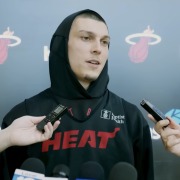
That sets the stage for this episode, which was sparked by a key question Brady Hawk asked Tyler Herro at the Heat’s end-of-season press conference:

Brady Hawk:
“Tyler, you were talking about your offensive role heading into the season and how much it changed. I know there’s been some back and forth on whether the mid-range shot would be a major part of your offense. Do you see the way you’re being guarded now as a reason to go back to it—where the midrange is actually a good shot for you in the half court?”

Tyler Herro:
“Yeah… Me and Spo go back and forth on it. He wanted me to play more off the ball this season.
But with the way I’m guarded sometimes, the midrange is the shot to take.
What matters most is making the right play—and whatever that leads to, hopefully it leads to wins.”


🧠 Breaking It Down

That moment becomes a launchpad for the pod’s broader conversation. Ethan and Brady dig into the following:

🔄 Why the Heat shifted away from midrange

Spoelstra has clearly leaned into a more modern, three-point-heavy approach. But that shift may have come at the cost of some of the team’s natural strengths—especially players like Herro, who excel in that 15–18 foot zone.

Ethan:

“What they give you sometimes ends up being the best shot if it’s open—and that is the mid-range. Kawhi Leonard won a championship in Toronto knocking down midrange jumper after midrange jumper.”

🧱 Herro’s fit in the offense

Herro’s increased off-ball role may not unlock his full potential. He’s proven he can hit midrange shots—especially when defenses run him off the three-point line or wall off the rim. When the spacing isn’t there, the midrange often is.

🔄 Roster identity & fit

Brady compares the situation to what works for stars like Shai Gilgeous-Alexander (SGA). The Thunder surround him with scoring threats so he can operate freely at all three levels. That hasn’t consistently been the case in Miami.

Brady:

“If Miami builds around Tyler and Bam, they have to get scoring on the outside”

That’s how you unlock three-level scoring—and take the pressure off Herro and Adebayo to do everything.


🔁 What Comes Next?

The midrange question is really an identity question:
Do the Heat adjust the scheme to fit their personnel—or force players like Herro to fit the scheme?

Ethan:

“I just want players shooting the shot that’s most comfortable for them.”

That’s a simple idea with big implications. If the midrange is open, and the player is confident—why not take it?


👀 The Wiggins Factor

They also talk about Wiggins—someone who never quite found a consistent role to help evaluate his impact. He’s used to adjusting, but injuries and inconsistency held him back.

Brady:

“It’s not just about where Wiggins gets his shots—it’s about how many he takes. When he’s assertive, the offense flows better.”

The same principle applies to Herro: he’s got to be the bucket-getter, and it will be easier for him with a better constructed roster and other willing but most importantly capable scorers.


📌 Final Thoughts

Miami has some real offensive deficiencies—and the midrange debate won’t be fully settled until the roster is set. But one thing is clear: if the Heat want to build around Tyler Herro, they need to add shooters who create space and give him room to operate.

Defensive pressure has taken away some of Herro’s three-point volume, making it harder to stick with the modern “threes and layups” model. More spacing = more freedom. The midrange becomes a viable option again when there are consistent threats both inside and out.

Brady even suggests Miami might look for outside shooting in the draft. That could be key.

Another concern? Free throws. Miami lacks a true foul-drawer right now. That hurts the offense—and limits the value of midrange play unless you’re getting to the line, too.

Could that be Bam’s next evolution? It should be.

So should the Heat embrace the midrange?
Maybe—but only if they build the right roster around it. The stars can thrive in that space. The role players need to clear the way.

Mateo’s Hoop Diary: “I’m going to be all over the film”: The Pacers dropped Game 5 in New York

The Pacers were outhustled and outmuscled, plus Jalen Brunson turned into Rambo in Game 5, shifting the series back to Indiana. He scored 32 digits on 66.7% shooting, which included a 16-point blaze in the third quarter on blow-bys and jumpers.


Coach Rick Carlisle said his team didn’t play with the force needed, and they couldn’t generate enough traction to get out of the hole. One of the early warnings that the Pacers weren’t sharp was Andrew Nembhard aborting a layup for a pass to the corner that missed. 


The Pacers never led, were shut down at the rim, and were beat in two key areas: paint points 60-34 and second-chance points 13-7. Brunson and Mikal Bridges also made six shots at mid-range. 


Tyrese Haliburton was pressured and unable to hit shots on the move. Pascal Siakam was outplayed by Karl-Anthony Towns, who bulldozed into the lane for nine baskets. New York also won the 50-50 balls and, at one point, was in such control that they played Landry Shamet and Precious Achiuwa, their 10th and 11th men in playoff minutes.


The Pacers emerged from halftime down 11 and didn’t help themselves by recording more turnovers (8) than field goals (7) in the third quarter, four coming from poor passes. On top of that, the Knicks extended their edge to 22 as Deuce McBride nailed a step-back jumper over Bennedict Mathurin on the baseline at the end of the period.


A 12-point deficit was the closest the Pacers could get in the fourth quarter, but Josh Hart drove left on Andrew Nembhard for a two-footer and cut up the baseline for a layup, freezing Indiana’s progress. 


It didn’t matter that the Knicks weren’t a factor from a long-range because their inside action was like repetitive shots to the spleen, kidneys, and liver, which eventually caved the Pacers in. On the other side, the visitors were impeded in the half-court to 89.3 points per 100 plays, good enough for the 31st percentile, per Cleaning the Glass. 


Siakam was off target on drives and jumpers, but he was the only visiting starter to break double-figures (15) and no other logged above eight points. Their five-man unit only splashed three trifectas, too. 


The Pacers lost 111-94. They had their most turnovers of the playoffs (20) and made only a third of 3-point attempts.


After the game, Siakam said, “We fought tonight, and they were the better team…”


Haliburton said, “We gotta be better as a group. I think our pace has to be better, and that starts with me.”


Game 6 is on Saturday.


Mateo’s Hoop Diary: Haliburton’s historic night leads the Pacers to a 3-1 lead over the Knicks

Tyrese Haliburton’s signature performance- 32 points, 15 assists, 12 rebounds and zero giveaways- propelled the Pacers to a 3-1 lead in the Eastern Conference Finals. He became the first player since turnovers were recorded (1977-78) to put up such a mammoth stat line. The Knicks will try holding them off in Game 5, but they come with bad intentions and the psychological edge that they can’t be stopped at Madison Square Garden.


New York matched Indiana’s three-point shooting but couldn’t hang when the afterburners were activated. The hosts were also surgical in the half court, scoring 112.6 points per 100 plays, good enough for the 87th percentile per Cleaning the Glass.


Coach Rick Carlisle said his crew had a difficult film review on Monday, but the painful honesty recalibrated their focus.


Haliburton was one rebound shy of a triple-double when the hosts led 69-64 at halftime. His fingertips were smoking like the end of a discharged barrel after breaking  coverages in the fast lane and raining four trifectas.


Additionally, Aaron Nesmith was barely affected by his right ankle sprain as he got over screens and buried a dozen points before intermission. Carlisle said, “I was really concerned after Game 3 what today was going to feel like for him. He got a lot of treatment yesterday… He was determined to be in this game.”


The Knicks had kept it close because they went on a 16-8 run when Haliburton rested at the beginning of the second quarter, and OG Anunoby, Jalen Brunson plus Karl-Anthony Towns countered with baskets from short, middle and long range.


Then Haliburton had four assists to four teammates, and targeted Brunson plus Towns for a blow-by and shot against drop coverage in the third. The Pacers eventually took a 13-point lead in the fourth quarter, but had it reduced to six with over four minutes left as they sloppily committed three turnovers, put the Knicks on the line for 10 attempts (seven made) and were burned by two closely covered 3-pointers.


Nonetheless, Andrew Nembhard, who was gun shy in Game 3, was colder than a corpse, but doghouse escapee Bennedict Mathurin tallied 20 bench points, including seven in the fourth quarter. In crunch time, Haliburton burst into the lane for a layup through the middle and set up former Knick Obi Toppin with an inbound pass that was the bayonet through New York’s heart.


The Pacers won 130-121. They also had 20 points off turnovers, 16 via second chances and 22 on the break. Haliburton said he let the team down in Game 3 but was pleased with his effort on Tuesday. He also said, “This is a big win for us because if we go back down there [tied at] 2-2, that’s probably a little different momentum-wise.”


Game 5 is on Thursday.


Breaking Down the Pod: Miami Heat’s Biggest Issues to Fix

🧩 Breaking Down the Pod: Episode 6

Welcome back to Breaking Down the Pod, where I take you inside the latest from the Five on the Floor crew—highlighting standout moments, passionate takes, and giving you my own fan-driven perspective.

This time, it’s all about the fixes:

🎧 Episode Review: What Must the Miami Heat Fix Most?
Podcast Hosts: Ethan Skolnick & Geo Valdez
Main Question: What are the top five issues the Miami Heat need to address to improve?
Sponsors: RealEstateShoppeFL.com, PrizePicks.com (code: five)
Special Offers: CigarsInternational.com (code: FIVE20), Mood.com (code: FIRST20)

🔍 Summary:

In this fresh, insightful episode, Ethan Skolnick teams up with first-time guest Coach Geo to dissect the Miami Heat’s biggest flaws—and how to fix them. From on-court execution to organizational identity, nothing is off-limits. KD trade talk? Yep. Bam’s workload? That too.

Before diving into basketball, Ethan kicks things off with a rant about the real number one fix Miami needs: the security lines at the arena. He says he thinks the arena should be moved out a bit so it can be entered on all four sides and laments I-95 construction like a true South Florida vet.

📉 The Five Core Issues:

Late-Game Halfcourt Offense
Coach Geo opens with the most glaring concern: Miami’s late-game execution without Jimmy Butler. He believes the team simply doesn’t have enough offensive talent, and that players like Kevin Durant could dramatically elevate the group. Ethan agrees Phoenix may have to sell low, and I think KD could spark a surprise sweepstakes.

They do not believe the talent is in the building to make this happen, they could add new voices which could help as well.

Inconsistent Defense, Especially POA
Miami’s defensive identity has slipped. Geo emphasizes the need for two-way talent that can guard elite scorers, especially at the point of attack. Ethan adds they need better passing lane disruptors. Right now, too much falls on Bam—unfairly.

Identity Crisis
Miami isn’t sure who they are anymore. The gritty Heat Culture—taking charges, out-hustling opponents—has faded. Geo says the team must choose a direction both stylistically and roster-wise. Ethan echoes that Jimmy no longer had the energy to save them nightly, and Herro/Bam aren’t wired to fill that void.

Riley noted this in his end of season presser. How the Heat weren’t many of the things they are known for.

“Hardest working, best conditioned, most professional, unselfish, toughest, meanest, nastiest team in the NBA.”

Lack of Rim Pressure
No paint touches, no foul shots, no rim threat. Outside of Davion Mitchell, no one helped break down a defense and Miami doesn’t have any creators to create shots and points. Geo and Ethan agree that elite playoff teams pair star power with rim pressure and depth—not just top-heavy rosters.

Lack of “Dawgs”
Geo wants more on-court killers. The Heat miss the toughness of guys like P.J. Tucker, Lowry, and even Strus. Davion’s the only one who plays like every possession matters. Ethan adds they also need better transition offense—the fast break is almost nonexistent.

My Two Adds:

  1. Backup Big Man & Two Way Talent
    Too often when Bam sat, the interior defense fell apart. Whether it’s a vet or another developmental project, Miami needs someone who can protect the rim and soak up key minutes.
  2. Pick a Direction
    The Heat can’t afford to stay in the middle. Whether it’s a full reload or a big trade, they need to make a decision and commit. Half-measures lead nowhere.

🔥 Key Quote:
“KD would be awesome. He makes the game easier for everyone.” — Coach Geo

📊 Stats That Say It All:

  • Miami ranked 21st in offensive rating and 28th in pace.

  • Opponent FG% spiked when Bam sat

💭 Final Thought:
This pod pulls no punches. It’s part therapy session, part blueprint for change. Whether it’s big trades or subtle tweaks, the takeaway is clear: the status quo won’t cut it.

📣 Join the Community:
Off The Floor Discord: Click Here (scroll down)
OnlyFins (Dolphins fans): /discord

🎧 Listen on YouTube
🎧 Listen on Spotify
🎧 Listen on Apple Podcasts


Mateo’s Hoop Diary: The Pacers folded at home in Game 3 against the Knicks

The Pacers played scared late in Game 3, opening the door for a Knicks comeback fueled by Karl-Anthony Towns’ fourth-quarter explosion after he stunk it up through three periods. The Knicks are now the first team in the play-by-play era (1997 onward) to have three 20-point comebacks in a playoff run, per NBA communications.


The mood at Gainbridge Fieldhouse darkened like that of divers surrounded by homicidal sharks. Monday’s film session should be illuminating and as haunting as a recurring nightmare when reviewing all the shots passed up. After the game, coach Rick Carlisle also recognized missed makeable looks as a correctable issue.


With the Knicks’ season on life support, Towns missed close-range layups, took low-percentage deep shots that funneled transition scores for Indiana, held the arm of a smaller player on a mismatch, picking up this third first-half foul, and had four turnovers. Coach Tom Thibodeau even played Landry Shamet, which is the equivalent of jamming all the buttons on a PlayStation controller when running out of options against a superior player. 


The Pacers led by 20 in the first half and entered the fourth quarter up 80-70 without Aaron Nesmith, who sprained his right ankle in the third quarter. Carlisle made the mistake of resting Tyrese Haliburton for the first two minutes. Then Towns had one of the finest moments of his career as he turned into a superhero for New York. He pierced the lane for three up-close baskets, made five freebies, and nailed three 3-pointers. 


The Pacers even got a stimulus from the refs in between Towns’ outbreak when Jalen Brunson got run over, picking up his fifth foul with seven minutes left. Nesmith also checked back in after New York’s failed challenge, but the Pacers couldn’t cash in because they were gun shy, and the juice in their offense was gone: Pascal Siakam attempted a failed long two-pointer over Miles McBride when he could have blown by him on the baseline; Andrew Nemhard passed out of shot he had when driving through the middle; Myles Turner plus Nesmith missed all seven of their attempts.


Haliburton said the attack was stagnant, they fouled too much on defense and that the team needed to do better at showing help in the gaps against Towns.


Additionally, Towns didn’t pick up his fifth foul until there were fewer than three minutes left, but the Pacers didn’t attack him more before or after.  


The Pacers lost 106-100. Their half-court offense logged a rotten 84.4 points per 100 possessions, good enough for the 18th percentile, per Cleaning the Glass. They missed all five fourth-quarter paint shots as well.


The Knicks’ win is the first thing that went right for the team since consecutive losses after some of their supporters threw trash at a Pacers fan on the street. 


Carlisle said the team wouldn’t know about Nesmith’s status until Monday. 


Game 4 is on Tuesday.


Breaking Down the Pod: Most heartbreaking losses in Miami Heat History

🧩 Breaking Down the Pod: Episode 5
Welcome back to Breaking Down the Pod, where I unpack episodes from the Five on the Floor crew, spotlight the most passionate takes, and share what these conversations mean to me as a fan.

We’re going deep into the emotional archives this time:

🎧 Episode Review: Most Heartbreaking Losses in Miami Heat History
Podcast Hosts: Ethan Skolnick & Greg Sylvander
Main Theme: What are the most gut-wrenching defeats in Miami Heat history?
Sponsors: CousinsUSA.com/5RSN, PrizePicks.com (use code: five)
Special Offers: CigarsInternational.com (code: FIVE20), Mood.com (code: FIRST20)


💔 The Heat’s History of Heartbreaks

In this emotional rollercoaster of an episode, Ethan and Greg walk through the losses that still sting, not just from the organization’s perspective—but also from the fans’. From the heartbreak of the Alonzo Mourning era to the blown opportunity in 2005, and all the way through the Jimmy Butler years, they take you through a timeline of pain, perspective, and passion.

They revisit Game 7 in 2005 vs the Pistons, when Dwyane Wade was injured and Shaq still couldn’t carry the team to the Finals. They touch on the infamous Knicks heartbreaks, the Allen Houston shot, the Mashburn pass that never happened, and more. Then they go into the 2011 Finals loss to Dallas, breaking down how the series flipped after the Game 2 collapse—where the Heat blew a 15-point lead as Dwyane Wade celebrated in front of the Mavs’ bench. LeBron’s shrinkage in that series still haunts fans.

They also hit the “what ifs” around Chris Bosh’s blood clots and how that derailed Miami’s chances to beat Toronto and potentially Cleveland in 2016. And of course, they revisit the Derrick White buzzer-beater in Game 6 of the 2023 ECF—a dagger that almost erased a 3–0 lead. Every era has a wound.


🔥 My Take as a 19-Year-Old Fan

While many of the losses they mention happened before I became a fan, I connected with this episode more personally than any other. My earliest Heat memory? Sitting on the couch with my dad and brothers when Mike Breen shouted:
“Rebound Bosh, back out to Allen, his three-pointer—BANG!”
That moment didn’t just make me a fan—it made me part of the culture.

That’s why my heartbreaks look a little different. Game 6 against the Lakers in the 2020 Finals stands out for me. Jimmy Butler put the entire team on his back, leading a depleted roster through an unforgettable run. That series was full of heart, grit, and raw will—but the loss still hurt deeply.

For me, nothing hits like Game 7 of the 2022 ECF vs the Celtics. Butler drops 47 in Game 6 to force a seventh game, and then—down by 2—he pulls up for the kill shot. It felt right. But it rimmed out. That was the moment that stung the most. The Heat were a 1-seed. Bam was locked in. That team could have beaten the Warriors.

The thing about sports is hindsight is always 20/20. It’s easy to say, “We could’ve beaten Golden State,” or “What if Bosh never got sick?” or “What if LeBron stayed?” Every sports fan plays that game. It’s what keeps conversations alive long after the final buzzer.

We can debate every what-if forever. The takes are limitless. The arguments, endless. The passion? Undeniable.

But the beauty of being a Miami Heat fan is that we’ve had those moments. No matter your age, you’ve seen something other fanbases dream of. And still—we want more. It’s natural. Because in Miami, championships are the standard. That’s what makes the heartbreaks matter. That’s what makes the podcast episodes like this one hit harder.

Whether you lived through Game 7 in 2005, Game 2 in 2011, or Game 7 in 2022—this episode will speak to your soul.

Highly recommended listen.


🎙️ Why You Should Listen
This episode is storytelling at its best. Ethan and Greg blend analysis with lived experience, walking us through not just what happened, but how it felt. Whether you’re a fan from the ‘90s or someone like me who grew up on Big 3 replays and Bubble magic—this episode hits home.

🗣️ Join the conversation and relive the moments that made us, broke us, and still drive us.

🎧 Listen on YouTube
🎧 Listen on Spotify
🎧 Listen on Apple Podcasts

Breaking Down the Pod: Miami Heat Decisions: Should They Keep/Extend or Trade Niko Jović?

🧩 Breaking Down the Pod: Episode 4

🎧 Miami Heat Decisions: Should They Keep/Extend or Trade Niko Jović?

📢 Don’t miss a pod!
Subscribe to Five on the Floor on Spotify, Apple Podcasts, and YouTube.

Podcast Hosts: Ethan Skolnick & Eternal Bast
Sponsors: InsuranceByLinnette.com, PrizePicks.com (code: five)

🔥 Episode Summary

In this episode pulled from the “Off the Floor” subscriber Discord, Ethan Skolnick and Eternal Bast dive deep into one of the Heat’s biggest offseason questions: What should Miami do with Nikola Jovic? Should they pay him? Trade him? How do they define his role and evaluate his potential going forward?

The conversation was inspired by a question from Discord regular Neem: What is Jovic’s realistic upside—and is he worth an extension or better used as a trade asset?


📌 Key Points from Ethan & Eternal

📊 Jovic by the Numbers:

  • 21 years old, on a rookie deal.
  • Averaged ~10.7 points, 4 rebounds, 3 assists.
  • Dealt with injuries and inconsistent usage.
  • Eligible for a 3-year, $30 million extension.

🔓 Untapped Potential, or Trade Chip?

  • Eternal sees Jovic’s realistic ceiling in the next 3 years as a 15/5/5 guy.
  • Strong facilitator, improving defender, versatile offensive toolkit.
  • Great in transition, mid-post decisions, and mismatch hunting.
  • Needs to tighten handle and improve rebounding.

“He has the skillset we talk about Miami needing—he’s just not always available.” — Eternal

🧠 Mentality & Makeup:

  • Ethan and Eternal both emphasize Jovic’s maturity, self-awareness, and willingness to be coached.
  • Euro background shows in his approach to team play and fundamentals.
  • Made defensive impact in games vs. Cleveland despite recently coming off injury.

🏗️ Role Definition is Key:

  • Ethan: “They’ve got to decide what he is and use him that way.”
  • Eternal: “He flourishes with pace and freedom.”
  • Both agree that Miami’s offensive system currently doesn’t maximize Jovic’s strengths.

🧠 My Take

The Miami Heat fanbase loves to talk about “untouchables” — young players they refuse to part with, especially when trade rumors start swirling around star talent. But this year feels different. In my eyes, no one should be off the table. The Heat are in their worst position in years, and clinging to unproven upside over actionable improvement is a recipe for stagnation.

The two names constantly mentioned in this context are Nikola Jović and Kel’el Ware. In this episode, Ethan Skolnick and Eternal focus on Jović — a conversation originally sparked by Off the Floor Discord member Neem.

Jović is still just 21 years old, on a rookie contract, and has drawn attention across Heat Twitter for his potential. He averaged nearly 11 points, 4 rebounds, and 3 assists this past season, but consistency remains an issue — both in role and availability. He’s eligible for a 3-year, $30 million extension this summer, and as Ethan puts it: it’s decision time.

Eternal projects Jović’s realistic next-three-years upside at 15/5/5. He’s improved defensively and earned a starting spot before being sidelined by injury. He’s a great facilitator, a confident shooter, and a strong transition player — all traits that fit Miami’s offensive needs. But his rebounding still needs work, and his handle isn’t tight enough to consistently serve as a lead initiator. He thrives in a system with pace and freedom — which Miami doesn’t currently provide.

To me, that’s exactly why Miami should keep him — if they also bring in the kind of offensive-minded assistant coach we talked about in episode three. Jović embodies the “pace and space” archetype. A new voice on the bench could unlock his game in ways Spoelstra’s system hasn’t yet.

Eternal notes that Jović is one of the few Heat players who can break down a defense, get two feet in the paint, and make smart decisions — whether that’s a kick-out to the corner or a lob pass. Eternal calls him the second- or third-highest offensive upside guy on the roster, right behind Tyler Herro — and I agree. It’s hard to name someone else above him.

And yet, as Ethan and Eternal both acknowledge, he’s not always there. Injuries, inconsistency, role confusion — all of it chips away at the vision.

They were even mismatch hunting with Jović early in games, especially in transition or half-court sets when smaller guards were on him. He showed flashes as a mid- to low-post decision-maker and even impacted Game 2 vs. Cleveland defensively — even after returning from a broken hand. He willed Miami back into that game… and then shot them out of it. That’s Jović in a nutshell, not in the sense of shooting, but the inconsistency and availability.

Ethan is open to extending him and Davion at around $10 million per year each. That could be a steal if they deliver high-level production on manageable deals. He says it plainly: “Would I want to trade Jović? No.” But he also sees the potential trade value if it helps Miami land a meaningful upgrade.

And I agree. The Heat have poured three years of development into Jović. Spo has invested real time. His skillset is what Miami needs, and he’s one of the few young players in the league with untapped two-way potential. But if the right deal comes along? You have to consider it.

🔚 Final Thought

Nikola Jovic is the kind of player who could either help lead a resurgence in Miami — or flourish somewhere else. The Heat’s decision shouldn’t be about sentiment or fear of regret. It should be about fit, vision, and commitment.

If they believe in him, they need to fully invest — not just financially, but structurally. Build an offense that lets him shine.
If not? Move him before someone else figures out how.


❓ Question for Heat Fans:

Would you extend Jovic at $10M/year — or package him in a trade? Who would you target in return?

Mateo’s Hoop Diary: Pacers take a commanding 2-0 lead with the series shifting to Indiana

Pascal Siakam was the go-to man and stabilizer across 17 lead changes and 17 ties in the Pacers’ Game 2 win in New York. They snatched a 2-0 lead for the second time in the playoffs on the road, and he set a playoff career-high of 39 points, making 65.2% of attempts. His coach, Rick Carlisle, said he had a special game. “In the first half, he was the guy who got us going and got us through some difficult stretches.”


Droves of Knicks supporters were waiting to celebrate in the streets, but they went home as crestfallen as they had been for the last 25 years. Perhaps coach Tom Thibodeau can summon Red Holzman’s ghost for counsel. Or he can suck up to the boss by playing Dolan’s music from JD & the Straight Shot so he doesn’t fall out of favor. 


First, Siakam had 16 of Indiana’s 24 first-quarter points, attacking on the break plus hitting fadeaways and a 3-pointer. After the Pacers went up by 10 points, New York throttled back with three dunks by OG Anunoby and Jalen Brunson’s deep shooting, ending the frame up 26-24.


Knicks reserve big man Mitchell Robinson turned into the dollar store Bill Russell for 16 straight first-half minutes, denying shots and picking up extra possessions. Additionally, Brunson and Karl-Anthony Towns did the heavy lifting, but neither side could grasp control. Siakam followed up with another open-court gash, a jumper over Towns with contact and scored on a broken possession, charging to the hole on the right side. 


The Pacers were down 52-49 at halftime and no one other than Siakam got to the line. On top of that, he was the lone Pacer who had logged more than three field goals (9).


Then Tyrese Haliburton picked up his scoring in the third quarter, and Siakam was flawless on four attempts at short and long range. Yet, aside from missing five freebies, Indiana guarded the arc poorly, conceding four treys, and was tied at 81 going into the fourth quarter. 


Siakam added another fastbreak layup and triple, but Myles Turner’s detonation on rim attacks and jumpers was the main force that held off New York’s late rally, sparked by Brunson and Mikal Bridges. Indiana even got away with not fouling Brunson on his 3-point attempt to tie.


The Pacers won 114-109, getting their sixth road dub of the playoffs. They also had 17 points off 12 New York giveaways and shot 43.3% on 3-point tries.


After the game, Siakam said, “We’re not really thinking ahead. [We’re] focused on Game 3 at home…”


Andrew Nembhard was asked about being unfazed, playing in a hostile environment. He said that because the team has experience, “Playing in MSG doesn’t feel as big as it did last year.”


Game 3 is in Indiana on Sunday.