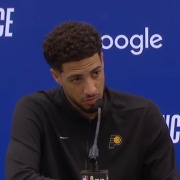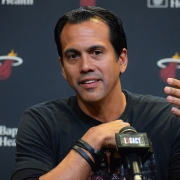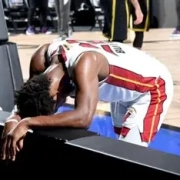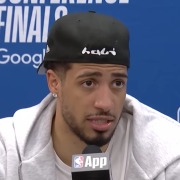
Mateo’s Hoop Diary: “We have to be better”: The Heat failed to complete a fourth-quarter comeback in Game 2

The Heat nearly completed a 13-point fourth-quarter comeback, but Donovan Mitchell’s on-the-dribble 3-pointers denied the upset as the series shifts to Miami for Games 3 and 4. He had 17 of his 30 points in the fourth quarter and logged all but one of his team’s field goals late. 


Despite starting Davion Mitchell for Alec Burks and sparking an early burst that put the Heat ahead by eight, the Cavaliers took control on transition attacks and a surplus of 3-pointers, totaling 14 in 23 attempts, giving them a 17-point edge at halftime. Adding insult to injury, four long-range bombs belonged to former Heatle Max Strus.


The defense was brutally sullied as the talent differential looked as wide as Lake Erie. Tyler Herro had 17 points on 63.6% shooting, and Haywood Highsmith made three treys without a miss, but the Cavaliers had six players doing damage. 


Then Herro did the heavy lifting for his club, nailing a 3-pointer and finessing his way into the paint for a floater and two layups. Yet it wasn’t enough as they momentarily fell behind by 19 despite the Cavaliers downshifting to fourth gear. 


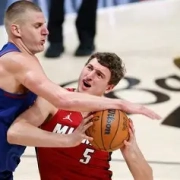
Subsequently, the final frame showed the Heat’s real character and validated everything the coaching staff has done with Nikola Jović, even with his late misses. He recovered an offensive rebound that supplied a second-chance triple, set up Herro in transition, which cut the deficit to two, and dribbled inside the lane for a scoop. Davion Mitchell also scored 14 fourth-quarter points on 83.3% shooting. Haywood Highsmith nailed two treys. And Bam Adebayo set up three teammates and sacrificed body, screening and going for rebounds. 


Yet, Jović lost the ball, and Spida crossed him up on the next possession, burying a 3-pointer in his face. On the following play, Mitchell forced the switch on Herro, but as Davion tried to rotate back, an opening was taken that resulted in a 31-foot splash, putting the Cavs up by seven with under two minutes.  On top of that, Jović misfired a great look in the corner that would have kept the team on life support.


The Heat lost 121-112. They allowed 19 points off turnovers plus were outscored on the break by 11. And they didn’t get enough from Andrew Wiggins who was invisible on offense with 10 points on 30% shooting.


After the game, Darius Garland was asked in the locker room about the game plan against the Heat. He said, “Pick on Tyler Herro. Pick on their weak defenders. Go after them.” 


And just like that, there was bulletin board material. In spite of Herro’s defensive limitations, he was easily spraying and dribbling by everyone in front of him. 


On the losing side, coach Erik Spoelstra said, “We had our opportunities… we struggled to contain Mitchell, obviously, down the stretch. He made some tough shots; he did what he typically does.” He was pleased with Jović’s performance, too. 


Adebayo credited the Cavaliers’ shotmaking, and Herro said, “You can take some things, the positives from this and try to carry it over in Game 3.”

Game 3 is on Saturday. The Cavaliers are ahead in the series 2-0.

Mateo’s Hoop Diary: “When our defense is at its best… we can make an impact”: The Heat are already in danger after losing Game 1

At practice a day before Game 2 in Cleveland, Heat captain Bam Adebayo said the team has to force the Cavaliers into tougher shots. Tyler Herro echoed those sentiments by wanting to be a more annoying pest on the ball. 


Bless their souls, but this team has no chance despite claims of being more physical. In fact, Frankie DeCicco had better odds of surviving a car rigged with explosives than the Heat’s chances of advancement.  


They might seize a game, sparing them the indignity of a sweep. Winning two? Fuhgeddaboudit, but that would be the highlight of the season because it would grant the Heat a third game at home, giving their ushers an opportunity to pocket extra dollars because they are paid per appearance.


The Cavs have three options getting separation on the dribble. The Heat’s help defense is not in position to stop them after they dish to the perimeter. And the Heat’s rookie Kel’el Ware is likely too inexperienced and lacks the strength to overpower Jarrett Allen and Evan Mobley.


The Wine and Gold commit fewer giveaways, too, and when that’s combined with their edge on the glass, it results in eight more field goal attempts than Miami. Coach Erik Spoelstra also praised Allen, who had six offensive rebounds, for his “intent,” bludgeoning the paint and glass. 


Starting Davion Mitchell, who played 34 minutes on Sunday, could be one of the Heat’s changes that bothers the hosts earlier because of his on-ball defensive skills. He spent most of his guarding time on Donovan Mitchell, holding him to two makes in six attempts, including 25% from 3-point range. And he was the Heat’s most accurate volume scorer, earning the right to replace Alec Burks, who did not offer much in 15 minutes. 


Additionally, the Heat must find more ways for Andrew Wiggins’ athleticism to pressure Cleveland, perhaps by pushing the pace, and they need extra quality 3-point attempts instead of hunting the mid-range area. The fourth quarter was their only stretch of inaccurate deep shooting, and they had cut a 17-point deficit to six at the end of the third. 


So what happened? The Cavaliers flexed the power that all great teams have: getting serious for one quarter and that being enough. 


The younglings- Jaime Jaquez Jr., Nikola Jović and Pelle Larrson- were stashed for all but a minute of Game 1. If any developmental projects will get time, it’s Jović because he’s a more reliable release valve and an open-court threat. 


Mateo’s Hoop Diary: The Heat lacked defensive answers and enough firepower in the Game 1 loss to the Cavaliers

The Heat lost Game 1 because they were the smaller, slower, and weaker team against a machine that didn’t show up in top form. They also rolled into the match physically, mentally and emotionally spent after surviving two elimination games in the Play-In Tournament. They played well for their standards and hung around with the Cavaliers for three quarters, but they were overwhelmed by artillery strikes late.


Considering their 37-win record matching up against the Cavaliers’ 64 dubs, it was a surprise the Heat were stronger than a sparring partner. Aside from Donovan Mitchell’s 30 points that came via blow-bys and jumpers, Ty Jerome inflicted 28 digits on 67% shooting off the bench. At one point, the latter went on a victim spree, the metaphorical equivalent of the Heat getting shot up worse than Scarface at his last stand.


Tyler Herro said the Cavs’ physicality dictated terms. And coach Erik Spoelstra talked about watching the film and improving, but that’s something more the Cavaliers can do. 

The Heat’s most promising spurt of the opening quarter came after Spoelstra summoned his troops as they fell below nine points in the first few minutes. They answered with 11-2 run, but the Cavaliers figured them out like a boxer who takes a few rounds to decipher their rival.


A Cavalanche followed, including six triples and the hosts climbed to a 17-point lead. Naturally, the Cavaliers, like a prizefighter in a bout beneath their level, got bored, and their intensity waned by 40° to close the half as the Heat brought the deficit down to eight on 3-pointers from Tyler Herro, Duncan Robinson, and Davion Mitchell.


At halftime, the Heat still had a pulse down 62-54. Subsequently, they had no answers for Donovan Mitchell and Darius Garland’s paint pressure. Yet, the team’s eight second-chance points, Bam Adebayo’s assertiveness near the paint, and the rest of the squad’s three 3-pointers kept the Heat in the game after falling behind by 13 and closing it to six with 49 seconds to go in the third.  


The Heat flashed a zone to start the fourth quarter, but no scheme could restrain Jerome’s spot-up, pull-up shots, and floaters. Adebayo’s three jumpers and Davion Mitchell’s paint strikes were the team’s last real retaliatory efforts, but it didn’t matter because they were outclassed midway through the period. 


The Heat lost 121-100. The Cavaliers picking up 14 offensive rebounds and committing seven fewer turnovers put them in position to take eight more field goals, making six. 


Takeaways:


  • In spite of Kel’el Ware’s two blocks, his inexperience made him a target and limited his minutes to 19. His timing was off as a helper, too. 


  • The Cavaliers have three options in Mitchell, Jerome and Darius Garland who can create separation on the dribble and break down Miami’s defense. They combined to score 85 points on 61% accuracy. 


  • Cleveland’s length and quick help defense held the Heat’s half-court attack to 89 points per 100 plays, good enough for the 26th percentile, per Cleaning the Glass. 


  • Notably, the Heat only attempted five shots at the rim, making all, but most of their looks were in the paint non-restricted area, shooting 12.3% above the league average. 


  • Andrew Wiggins had 14 points on 45% shooting, but he was not a big enough part of the offense. He is one of the Heat’s top-two athletes and needs to be more active, curling around screens and demanding the ball.


  • Herro and Adebayo were the Heat’s main scorers, but they totaled 45 points on 42.5% shooting.


The Miami Heat Make Play-In History — Can They Shock the Cavs?

The Miami Heat Make Play-In History — Can They Shock the Cavs?
The Miami Heat became the first 10-seed to advance out of the NBA’s Play-In Tournament, earning the 8-seed and a first-round matchup with the top-seeded Cleveland Cavaliers. This series promises gritty, hard-nosed basketball, as both teams boast top-10 defenses anchored by multiple All-NBA-caliber defenders.

We’ll get Mitchell vs. Mitchell, Bam and Ware vs. Mobley and Allen, Max Strus facing his former team, and the emergence of a budding superstar in Tyler Herro.


Quick Notes:

  • If Miami wins this series, it will mark the largest upset in NBA playoff history in terms of win differential between seeds (27 games). The current record is 21, set in 1994 when the Nuggets upset the SuperSonics.

  • Miami leads the all-time series 80–53.

  • This will be the first playoff meeting between these two franchises.

  • The Cavaliers are heavy favorites:
    Odds via FanDuel – Series odds: Cavaliers -4000, Heat +1500.

Now, those odds may look extreme — but they’re not unreasonable. Still, this matchup is closer than the numbers suggest. Here’s how I see the series playing out:


Miami’s Rotation and Matchups

For Miami, I’d like to see Davion Mitchell take Alec Burks’ spot in the starting lineup. That move would give the Heat more perimeter defense from the jump and allow the matchups to look like this:

  • Davion Mitchell on Donovan Mitchell

  • Tyler Herro on Darius Garland or Max Strus

  • Andrew Wiggins on Garland or Strus

  • Bam Adebayo on Evan Mobley

  • Kel’el Ware on Jarrett Allen

Off the bench, the most important player might be Haywood Highsmith. His defensive versatility was key in Miami’s Play-In victory over Atlanta, and his ability to guard multiple positions will be crucial when Miami needs to rest its starters.

Offensively, Miami will need meaningful contributions from their second unit. Cleveland has five players averaging double figures and a deeper bench overall. That means Miami will have to lean on Duncan Robinson, Alec Burks (if he’s coming off the bench), Highsmith, and maybe even Nikola Jovic to provide a scoring spark. Cleveland’s advantage is depth — but Miami’s advantage is Erik Spoelstra.

That’s no disrespect to Kenny Atkinson, but Spoelstra has done more with less, brought this team back from the dead, and proved time and again why you never count the Heat out.


“It’s Not a Series Until a Team Loses at Home”

The Cavaliers went a dominant 34–7 at home this season and have home court throughout this series. If Miami wants any real shot, they’ll need to steal one in Cleveland and head back to South Beach tied 1–1. Game 1 is the swing game. Take that, and the tone of the entire series changes.

Three Keys for a Miami Upset

  1. Avoid the Droughts
    The biggest Achilles’ heel for Miami this season has been offensive inconsistency. The Heat blew a league-high 22 games in which they held double-digit leads, often because of one cold quarter that turned momentum. Against a disciplined, well-coached Cavs team, those lulls will get punished. Miami can’t afford a sub-25-point third quarter or a 2-for-15 shooting stretch — they need to string together four full quarters of competitive basketball.

  2. Tyler Herro Has to Be That Guy
    Tyler Herro has blossomed into more than just a scorer — he’s a playmaker, shot-creator, and the engine of this offense. If Miami’s going to pull this off, Herro has to step into the spotlight. Herro was all in the spotlight in the play-in and will have to continue his surge as Miami heads to Cleveland. He’ll see a ton of Donavan Mithcell, Max Strus, and maybe even Evan Mobley on switches, but if he can navigate those matchups and give Miami 25+ a night efficiently, it’ll open up the floor for everyone else.

  3. Keep the Frontcourt Battle Close
    Bam Adebayo and rookie Kel’el Ware will have their hands full with Evan Mobley and Jarrett Allen, who anchor Cleveland’s defense and dominate the glass. Miami doesn’t have to win the paint — but they can’t get crushed in it either. If Bam can hold Mobley in check and Ware gives them quality minutes protecting the rim and rebounding, it’ll limit second-chance opportunities and keep Miami in the fight.

Prediction: Heat Push It to Six, But Cavs Advance

Miami will battle. They’ll scrap, claw, and make Cleveland uncomfortable at times — that’s what Spoelstra teams do. Tyler Herro will have moments that make you think, “Maybe they can pull this off,” and Bam will bring his usual defensive brilliance. Expect the Heat to steal at least one on the road and defend their home court once.

But ultimately, Cleveland’s depth and efficiency on both ends of the floor will prove too much. The Cavaliers are elite at limiting mistakes, defending without fouling, and converting their offensive possessions into quality looks. Over the course of a seven-game series, that level of discipline usually wins out.

Cavaliers in 6.


The NBA’s Tanking Meta vs. Heat Culture: Why Miami Will Never Embrace the Fall

The NBA’s Tanking Meta

Tanking has become the NBA’s “meta” strategy, with teams intentionally losing games to secure a high lottery pick and land top-tier talent in the draft. This philosophy is completely counter to everything Pat Riley has built in Miami over the past 30 years. While some Miami Heat fans may entertain the idea of tanking, it’s not something that will happen—Miami’s struggles this season are simply a result of not being a great team, not because they’re deliberately losing.

A Season Defined by Blown Leads

This season has been a rollercoaster for the Heat, primarily characterized by blown leads. In 21 of their 43 losses, Miami held a double-digit lead. Had they won just five of those games, they would be near the top of the play-in tournament, and with a few more wins, they could have avoided the play-in altogether. Instead, Miami finds itself 7 games under .500, trapped in the play-in tournament with little hope for a higher seed. However, as always, the Heat won’t give up—they will enter the play-in tournament with the internal expectation that they can win, because that’s what the Miami Heat do.

Lottery Dreams: Slim Chances

It’s true that there’s a lot of high-end talent in this year’s lottery, headlined by Cooper Flagg, but let’s face it—the odds of the Heat winning the lottery are slim. Miami currently holds the 11th-worst record, giving them just a 1.7% chance at the first overall pick and a 8% chance at a top-four pick. While lottery luck is unpredictable (remember Cleveland’s improbable rise to the No. 1 pick with a 1.4% chance), betting on those odds is unrealistic. In fact, the chances of the Heat winning a top pick are far too low to make tanking a reasonable strategy.

During Miami’s 10 game skid those odds were much higher, but they were never going to fall out of the play-in tournament.

Additionally, there are long-term consequences to missing the playoffs this season. Miami risks losing the protections on first-round picks owed to Oklahoma City and Charlotte. The Heat’s front office isn’t just concerned with this year’s playoff hopes—they’re worried about future setbacks if those picks slip away. The protections are meant to guard against potential catastrophe, keeping Miami’s future intact.

Why Miami Won’t Tank

Under current ownership and front office management, tanking simply won’t happen. Even when Pat Riley eventually moves on, the Heat will likely promote someone from within the organization who shares Riley’s values. Miami has a winning culture that has been built over the past three decades: three NBA championships, multiple deep playoff runs, and a consistent ability to be competitive. Since 2005, the Heat have finished under .500 just four times (counting this year).

Pat Riley, Erik Spoelstra, and Jimmy Butler have all consistently rejected the idea of tanking. The Heat’s philosophy is grounded in winning—not losing to improve in the future.

Is Miami’s Stubbornness Holding Them Back?

Miami’s resistance to tanking is admirable—but is it actually holding them back? Since 2014, the Heat have had only one truly elite season (2021-22, when they were first in the East but fell short in the Eastern Conference Finals) and a few deep playoff runs (Bubble and 2022-23). But they’ve yet to win a championship during that stretch. More often than not, they’re stuck in a cycle of being good—but not good enough.

In contrast, teams like the Boston Celtics, San Antonio Spurs, and Memphis Grizzlies have embraced high draft picks to secure franchise-altering talents like Jayson Tatum, Jaylen Brown, Victor Wembanyama, and Ja Morant. Miami, however, has relied on undrafted players, mid-tier free-agent signings, and aging stars.

If the Heat had drafted a player like Luka Dončić, Anthony Edwards, or Jayson Tatum, would their future be brighter? Absolutely. Instead, they are left hoping a superstar trade materializes while refusing to position themselves to draft one.

The ‘Tank and Fail’ Myth

One of the Heat’s primary arguments against tanking is that it leads to a “losing culture.” But history has shown this is not true. The Golden State Warriors went through years of mediocrity before drafting Stephen Curry, Klay Thompson, and Draymond Green. The Milwaukee Bucks were irrelevant until they landed Giannis Antetokounmpo. Even the Grizzlies embraced a quick rebuild, landing Ja Morant and Jaren Jackson Jr., and are now among the top teams in the Western Conference.

Meanwhile, Miami’s alternative strategy hasn’t exactly guaranteed success. The Heat have spent years chasing marquee players—Kevin Durant, Donovan Mitchell, Damian Lillard—only to strike out each time. At some point, the Heat have to ask: is this strategy working?

A Middle Ground: Adapting the Heat Way

Miami likely won’t embrace tanking, but they can’t continue to stand still. If the Heat won’t bottom out, they must pivot their strategy. Here’s how they can adapt:

  • Stop overvaluing role players – Miami’s refusal to trade key role players like Tyler Herro and Duncan Robinson is one of the reasons they’ve failed to land superstars. The Heat need to take bigger swings for stars or risk being stuck in mediocrity.

  • Get aggressive in the draft – If tanking isn’t an option, the Heat need to get creative with moving up in the draft. They should aggressively pursue draft picks, especially ones that could land them high-upside talent. However, the Heat have repeatedly mismanaged their draft capital, putting themselves in a poor position to do this.

  • Accept short-term pain for long-term gain – If Miami isn’t in a position to win a title this season, they should consider a strategic reset rather than pushing for a first-round exit. Sometimes, the smartest move is to retool and plan for the future.

Final Verdict: Is the Heat Way the Right Way?

Miami’s unwavering commitment to competitiveness is commendable, but at some point, they must ask themselves: is consistent mediocrity enough? Or is their refusal to embrace a reset actually preventing them from achieving championship contention?

Right now, the Heat aren’t tanking—but they aren’t winning, either.

Heat Culture Doesn’t Tank — It Competes

“If you have the guts to fail, you have the guts to succeed.” The Heat have lived by this mantra among many others, never embracing failure as a strategy. No matter how tough the season has been, Miami remains committed to competing to the final buzzer. Tonight’s game against Chicago is a perfect illustration of that mindset: a must-win battle with real stakes, and the Heat wouldn’t have it any other way.

With a win tonight, Miami could tighten their grip on the 8-seed and set themselves up for a more favorable play-in path. Lose, and they’ll face the tougher climb from the 9/10 spot. Either way, you can count on one thing — this team will fight. Not for lottery odds, but for pride, for culture, and for a shot at postseason glory.

In a league increasingly dominated by tanking narratives, the Miami Heat remain the outlier. Even in a turbulent season filled with adversity, they refuse to abandon their identity. Whether it’s tonight in Chicago or in the play-in tournament ahead, this team will keep swinging — because that’s what Heat culture demands.

Will the Miami Heat Make the Playoffs?

The Miami Heat are locked into the NBA’s play-in tournament for the third straight season. Just a short time ago the Heat were at rock bottom, losing ten straight, leading many fans to throw around the idea of “tanking”. But this is the Miami Heat we are talking about, and that’s simply not a reality. This season will be Miami’s first losing season in six years, yet they still have the capability to make the playoffs, the question is will they?

The Heat ripped off six straight dominating wins before their heartbreaking loss to the Grizzlies Thursday night, but they seem to have finally caught their stride. The rotation seems solidified, they have gotten the little things under control and have seen great improvement from their young stars.

Miami finds themselves as the East’s 9 seed which would mean they’d have to win 2 straight games to make the playoffs. But if they can chase down the Hawks (1.5 game lead), or the Magic (2.5 game lead) they would have two chances to find their way into a matchup with either Boston or Cleveland.

With just five games left on the schedule, the Miami Heat still have a narrow window to climb out of the 9th seed and secure a more favorable spot in the play-in tournament. Their path won’t be easy, but the opportunity is there.

Miami’s Remaining Schedule:

  • vs. Bucks (Apr 5)

  • vs. 76ers (Apr 7)

  • at Bulls (Apr 9)

  • at Pelicans (Apr 11)

  • vs. Wizards (Apr 13)

While Miami’s final stretch includes tough matchups against Milwaukee and Chicago, both games are winnable especially if Milwaukee is without Damian Lillard. The most critical game may come in Chicago, where a win could help bury the Bulls’ fading hopes while pushing the Heat closer to the 8th seed. Closing the season at home against the lowly Wizards could offer a much-needed tune-up or momentum-builder entering the play-in.

The Teams They’re Chasing:

Orlando Magic (7 seed, 2.5 games ahead of Miami):

  • vs. Hawks (Apr 8)

  • vs. Celtics (Apr 9)

  • at Pacers (Apr 11)

  • at Hawks (Apr 13)

Orlando’s schedule is no cakewalk. They face three playoff teams and finish with a home-and-home of sorts against the Hawks. If the young Magic stumble, the door opens for both Miami and Atlanta to make a move.

Atlanta Hawks (8 seed, 1.5 games ahead of Miami):

  • vs. Knicks (Apr 5)

  • vs. Jazz (Apr 6)

  • at Magic (Apr 8)

  • at Nets (Apr 10)

  • at 76ers (Apr 11)

  • vs. Magic (Apr 13)

The Hawks are the most volatile wild card in the mix. A six-game closing slate, including two games against Orlando and a back-to-back this weekend, gives them chances to both rise or fall quickly. Miami will need help from New York and Philadelphia to keep Atlanta within reach. If Orlando can sweep the Hawks Miami will be bound to pass them in the standings.

Chicago Bulls (current 10 seed):

  • vs. Blazers (Apr 4)

  • at Hornets (Apr 6)

  • at Cavaliers (Apr 8)

  • vs. Heat (Apr 9)

  • vs. Wizards (Apr 11)

  • at 76ers (Apr 13)

The Bulls still have a heartbeat, but a Heat victory in Chicago would all but end their chances of leaping Miami. The Bulls have shown fight but are also prone to collapse late in games. Their inconsistency might be Miami’s biggest ally.

The Heat should get some help down the stretch as Andrew Wiggins will get healthy for the last few games and ultimately for the play-in tournament.

The Heat have the best coach and arguably the best roster in this bunch. If they can secure the 7-8 matchup, it’s hard to imagine them losing two in a row. If Miami can handle business down the stretch and get a little help from the teams above, they could avoid the dreaded 9-10 spot altogether. It won’t be easy—but then again, nothing about this season has been. With Bam Adebayo and Tyler Herro clicking, and the supporting cast stepping up, Miami might be hitting their stride at just the right time. The playoffs aren’t promised, but they’re well within reach. One thing is for sure: the Heat won’t go down quietly.

Pelle Larsson: Another Hidden Gem?

Pelle Larsson: Miami Heat’s Rising Star with a Promising Future

Pelle Larsson’s recent surge in performance and growing role within the Miami Heat’s lineup speaks volumes about his long-term potential with the organization. After being drafted by the Houston Rockets in the 2024 NBA Draft and traded to the Heat in a three-team deal, Larsson has quickly capitalized on his recent opportunities, earning a reputation as a reliable two-way player capable of impacting the game both on and off the ball.

Recent Impressive Performances

Larsson’s recent string of performances has demonstrated just how ready he is to contribute to the Heat’s immediate and future success. In his last three games, he’s averaged 15 points, 5.6 rebounds, and 4.3 assists per game, showing consistent scoring and a growing comfort with the Heat’s system. His standout line of 16 points, 4 rebounds, and 4 assists in a win over a tough Boston Celtics team where he was seen locking down Jayson Tatum, perfectly encapsulated his ability to deliver under pressure.

Notably, his well-rounded contributions extend beyond just scoring. Over the past three games, Larsson has demonstrated his defensive prowess and versatility, averaging 2 steals per game (four vs Philly), solidifying his reputation as a key player on both sides of the court. These performances have only amplified the Heat’s confidence in his future.

Coach Spo and Teammate Endorsements

Head coach Erik Spoelstra has praised Larsson’s growth, acknowledging the hard work he’s put in since joining the team. “He understands what his role is. He came in as a role player, elite role player in college,” Spoelstra said on March 3rd. While some may view his role-player background as a limitation, the Heat view it as a significant strength. Larsson’s understanding of his role, combined with his continued improvement, means he’s poised for more responsibility as he refines his game.

 After defeating the Celtics, Spoelstra also highlighted Larsson’s intangible qualities: “He does a lot of winning things. Tonight, it showed up in the box score.” That ability to impact the game without necessarily needing to be the focal point is what makes Larsson a valuable asset long term.

His growth has also earned recognition from his peers, with fellow player Davion Mitchell calling him “underrated” for his defense. Mitchell was quick to highlight Larsson’s defensive potential, stating, “He’s going to be a scary defender in years to come.” His defensive upside—combined with his improving offensive game—positions Larsson as one of the Heat’s most intriguing young prospects.

Contract and Role Moving Forward

Larsson’s contract with the Heat, a 3-year, $5.4M deal, further solidifies Miami’s long-term investment in him. The contract includes team options for the next two years, giving the Heat the flexibility to see how his game develops before making a longer commitment. At just 24 years old, Larsson has time to grow, and the Heat’s culture of development could allow him to unlock his full potential over the next few seasons.

As the team navigates through the season with injuries to key players like Wiggins and Duncan Robinson, Larsson has taken full advantage of his starting opportunities, proving he can be relied upon in bigger roles. His multi-dimensional skill set, including his scoring, playmaking, and defensive ability, makes him an ideal fit for the Heat’s system.

Long-Term Potential

Larsson’s versatility is one of his most exciting attributes. His ability to contribute as both a scorer and a defender will only become more refined as he gains more experience in Miami.

His recent performances:

  • • 16 pts, 4 asts, 4 rebs, 1 stl
  • • 15 pts, 7 rebs, 5 asts, 1 stl
  • • 14 pts, 6 rebs, 4 asts, 4 stls, 2 blks

With continued development, Larsson could emerge as a significant piece in the Heat’s future. The combination of his strong defense and burgeoning offensive game gives him the foundation to become an impact player. As he continues to earn more time in the starting lineup, Larsson will have ample opportunities to develop into a player who can contribute to the Heat’s success for years to come. With the Heat finally catching their stride, Larsson could even gain some playoff experience, which would further accelerate his growth.

Conclusion

Pelle Larsson’s consistent performances, defensive potential, and work ethic point to a bright future with the Miami Heat. With strong backing from Coach Spoelstra and his teammates, his ability to carve out a role as both a reliable starter and two-way player gives Miami a valuable asset moving forward. At just 24 years old, Larsson’s best basketball is still ahead of him, and with the Heat’s player development system behind him, he’s poised to become a core piece of the team in the seasons to come.

Heat vs. Warriors: Jimmy Butler’s Miami Homecoming

If I told you at the end of the 2020 Finals that Jimmy Butler would one day return to a house divided as a member of another team, you would have called me crazy. If I told you after the miracle run as an eighth seed that Butler’s Heat tenure would eventually come to a screeching halt, you might have called me crazy. And if I told you that the guy who embodied the franchise’s “values” so well would try to discredit the very nature of it, you also would have called me crazy.

But here we are, March 25, 2025, as Jimmy Butler and the Golden State Warriors come to the Kaseya Center for a nationally televised, highly anticipated showdown on TNT. Since the Butler trade, both franchises have gone in completely opposite directions—the Heat have fallen to 11 games under .500, while Butler and the Warriors have climbed 11 games above .500 and are battling in the competitive Western Conference.

Much of tonight’s game will be wrapped in narratives: Was Jimmy the problem? Why can’t the Heat win? Will the organization take the high road and honor him with a tribute? But at the end of the day, Jimmy Butler is returning to Miami—the place where he had the most success of his fascinating career.

Butler’s comments leading up to tonight’s matchup have reignited frustration among many Heat fans. His remarks include:

On Heat Culture: “I’m not saying this in a bad way, but I think ‘Heat Culture’ is a little bit overused. It’s a great organization, but I think a large part of that culture is just getting guys to buy into a winning mindset. I’m not saying this to talk down on it, but I think whenever you get some really good players, you can name it whatever you want.”

On being viewed as a villain: “No, I’m always painted as the bad guy. Everywhere I’ve been, I’ve always been the problem. Okay. I’ll take it. I don’t got nothing to say. I’m not mad at being the bad guy. It’s all about how things are portrayed. Some people talk to the media, some don’t. I’ve never been one to tell my side of the story to almost anybody. Just let everybody think that this is what happened. We’ll ride with it, and then in like a year’s time, it’s gonna be somebody else’s fault.”

On a tribute video: “Would I watch? Yeah, I would watch it, if they have one. If they don’t, it makes no difference to me.”

While Butler insists this is just another game, given how his tenure ended, it’s hard to believe that’s entirely the case.

His comments make it clear he’s ready to move on, which makes this return bittersweet for Heat fans. For five years, Miami was his home. The team that shouldn’t have been there was always there. Jimmy was “Heat Culture”—he embodied it more than anyone. His departure and subsequent criticisms of the organization should serve as a wake-up call for the stars still here and the front office.

As Butler and the Warriors push for a playoff spot, the Heat are stuck treading water in the play-in—a position that has become far too familiar for Erik Spoelstra’s squad. And in a way, Butler made a fair point: the fans who resent him should also direct their frustration at the front office. Year after year, Miami failed to add a legitimate star to pair with Butler, instead relying on the marketing of “Heat Culture” as a selling point. But in a league filled with teams stockpiling both superstars and depth, that philosophy has yet to deliver a championship—and doesn’t seem poised to anytime soon.

Tonight’s game should be competitive, particularly if Stephen Curry is available. But beyond the Xs and Os, the real intrigue lies in how the Heat will respond. This season has been defined by drama, blown leads, and inconsistency from Miami’s supposed stars, all culminating in a divided fanbase and a complicated homecoming for Butler.

This isn’t how anyone envisioned Jimmy Butler’s return to Miami—but it’s the reality. It’s who he is. It’s what happens. And while the season has been a mess, one thing is certain: A Heat win tonight would put a smile on a lot of faces—especially if Butler underperforms.


Dolphins Sign James Daniels – A Fitting Pickup at Guard

The Miami Dolphins have made a significant move to bolster their offensive line, signing veteran guard James Daniels to a three-year, $24 million contract, a bargain for a player of his caliber. This addition addresses one of Miami’s biggest weaknesses from last season: inconsistent guard play. At 6’4” and 327 pounds, Daniels brings size, athleticism, and versatility—qualities that make him an ideal fit for the Dolphins’ system.

James Daniels’ Background & Experience

Originally a second-round pick in the 2018 NFL Draft by the Chicago Bears, Daniels quickly established himself as a reliable presence on the offensive line. Over four seasons in Chicago, he showcased his ability to play both guard and center, demonstrating the type of versatility that NFL teams covet. In 2022, he signed with the Pittsburgh Steelers, further solidifying his reputation as a durable and technically sound interior lineman. He played three seasons with Pittsburgh before suffering an Achilles injury that cut short his 2024 season after just four games. Before going down, he was the highest-graded interior offensive lineman in the NFL, earning an elite 92.9 PFF grade, ranking first among all interior linemen through Week 4.

A Signing Similar to Aaron Brewer?

The Dolphins’ front office has made it clear that they value versatility on the offensive line, a trend that continues with Daniels’ signing. Much like Aaron Brewer last offseason, Daniels has experience at both guard and center, giving Miami crucial flexibility should injuries arise. Brewer’s ability to slide inside when needed was a valuable asset, and Daniels is expected to provide a similar safety net while also being an immediate upgrade as a starting guard.

Daniels and What He Could Bring

On talent alone, Daniels was among the best guards available in free agency, though he is coming off a 2024 season cut short after four games due to an Achilles injury. If healthy, he has the potential to be a top-tier interior lineman, as evidenced by his dominant start to last season. Daniels has played both left guard and right guard in the NFL, so he could wind up at either position in Miami. He has started 84 of his 90 NFL games in his first seven seasons, showcasing his reliability and experience.

How Daniels Fits in Miami’s Scheme

One of the Dolphins’ biggest issues last season was unstable guard play, with a rotating cast that included Liam Eichenberg, Isaiah Wynn, and Robert Jones. All three of them are set to become free agents, and while it’s possible that Miami could bring one or more of them back, the team clearly wanted an upgrade. Daniels provides that upgrade if he can return to full strength.

His athleticism and movement skills make him a strong fit for the Dolphins’ run-heavy, outside-zone approach, which relies on linemen being able to get to the second level efficiently. Additionally, his pass protection is an upgrade over last year’s options, which is critical for keeping Tua Tagovailoa upright and healthy. James Daniels allowed just two sacks in 2023, and was only penalized two times, another crucial thing for Miami’s offense.

Final Thoughts

The Dolphins entered the offseason needing a dependable and experienced interior lineman, and James Daniels checks all the boxes. His combination of size, athleticism, and versatility makes him a strong addition to Miami’s offensive line, while his experience at both guard and center provides crucial depth.

If Daniels stays healthy and performs to expectations, this could be one of the Dolphins’ smartest offseason moves, helping solidify an offensive line that has been a weak point for years.

The Curious Case of Terry Rozier

Terry Rozier’s Decline: What Went Wrong?

A year ago, the Miami Heat traded a 2027 first-round pick and Kyle Lowry to the Charlotte Hornets for Terry Rozier—a move that, at the time, seemed like a great acquisition. Miami added a playmaking and scoring guard in Rozier, who was averaging a career-high 23.2 points per game along with 3.9 rebounds, 6.6 assists, and 1.1 steals. He was the Hornets’ top option and was expected to fill a much-needed offensive void for the Heat.

The trade was widely praised by the national media:

  • Stephen A. Smith on ESPN’s “First Take”: “Terry Rozier can play, and he has the personality that fits right in with the toughness of the Jimmy Butlers, the Bam Adebayos of the world. I love this move for the Miami Heat… Look out, Miami obviously could be a threat.”
  • Bill Simmons on Twitter: “I’ve been terrified of Miami the most this whole time — not Philly, not Milwaukee, just Miami. They were always Barzini this year with the Lowry [contract] expiring, plus picks. Rozier is an absolute home run for them.”
  • Kendrick Perkins on ESPN’s “First Take”: “I actually love this trade for the Miami Heat. You know why? We talk about that Heat culture — Terry Rozier hasn’t played with a team like the Miami Heat since he left the Celtics. Now all of a sudden, you get a coach like Erik Spoelstra who’s going to hold you accountable. You can’t shortcut that system.”

The move had an immediate impact. Rozier elevated Miami’s offense last season before suffering a neck injury that forced him to miss the playoffs. He averaged 16.4 points and 4.6 assists in 31 games for the Heat before going down.

2024-25: A Season Gone Wrong

Rozier was healthy to start this season, but things quickly went downhill. His struggles have been apparent from the start of the 2024-25 campaign, as his shooting efficiency has plummeted and his role in Miami’s offense has become increasingly inconsistent. Through the first few months, Rozier has posted career-low shooting percentages, failing to find his rhythm alongside Tyler Herro and Bam Adebayo.

One of the biggest concerns has been his three-point shooting, which was expected to be a major asset. Last season, Rozier shot 35.8% from beyond the arc with the Hornets and 37% with Miami. This year, however, that number has dipped below 30%. His shot selection has also been poor, as he forces difficult attempts rather than playing within Miami’s structured offense. When Rozier is on the floor, the offense stagnates, as seen in Miami’s nationally televised loss to Cleveland on TNT.

It’s hard to fathom just how far Rozier has fallen in such a short period. When Miami acquired him last season, the move was met with near-universal praise. He was supposed to be the missing piece—an explosive scorer and secondary playmaker who could take pressure off Jimmy Butler and Tyler Herro. But now, just over a year later, he’s become an anchor weighing the team down.

His numbers since January 1st are downright abysmal:

  • 26.1% from three
  • 33 turnovers
  • 33 fouls
  • 33 made threes

This isn’t just a shooting slump—it’s a complete collapse in efficiency, decision-making, and overall impact. The eye test confirms it. Every time he steps on the court, the offense stalls. His shot selection is reckless, his turnovers are costly, and his inability to operate within Erik Spoelstra’s system has raised serious questions about his role moving forward.

Why Does Spoelstra Keep Playing Him?

That’s the million-dollar question.

There’s no doubt that Spoelstra is one of the best coaches in the NBA, and he deserves credit for keeping Miami competitive despite injuries to key players. But his insistence on playing Rozier heavy minutes is baffling. Rozier isn’t an elite defender, nor does he provide veteran leadership that stabilizes the team. He is actively hurting Miami’s chances of winning games.

Rozier is not currently the player he once was and hasn’t made the most of his opportunities, a situation that would see most go to the bench. Rozier is not a NBA caliber option right now and is taking reps from the younger Heat gaurds.

It’s even more frustrating when considering the alternatives. Davion Mitchell, while not a perfect player, brings defensive intensity and better decision-making. Even staggering more minutes for Pelle Larsson and Duncan Robinson would make more sense than continuing to watch Rozier derail Miami’s momentum on a nightly basis.

Is this a case of the front office refusing to admit a failed trade? Does Spoelstra have an unexplained loyalty to Rozier, or does he genuinely believe the other options aren’t any better? Whatever the reason, Rozier cannot continue getting extended minutes at the expense of players who may contribute more effectively.

What Happened to Terry Rozier?

That’s another question without an easy answer.

A year ago, Rozier dropped 34 points while outplaying Jalen Brunson. Now, he’s struggling to score in double digits efficiently. Whether it’s a confidence issue, a decline in athleticism, or simply a poor fit in Miami’s system, something has gone seriously wrong.

At this point, the Heat need to make a decision—one that involves significantly reducing Rozier’s role in Miami’s offense.