Mateo’s Hoop Diary: Duncan Robinson’s time in Miami, notes on Satou Sabally and more

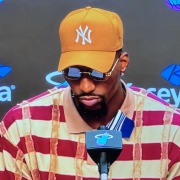
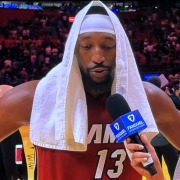
Duncan Robinson exercised his early termination option and is a free agent. This now gives the Heat the chance to use the full mid-level exception on anyone on the market. Considering the Heat’s suspect outside shooting and Bam Adebayo’s comfort in playing with Robsinson, he probably figures he can get more than $10 million guaranteed. He conspicuously missed exit media interviews after the Heat were swept by the Cavaliers.


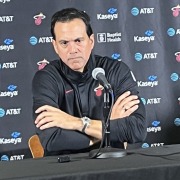
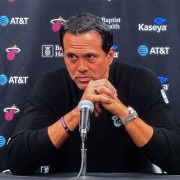
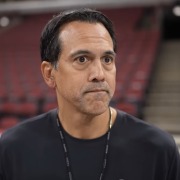
After seven seasons, including six postseason appearances, as a Heatle, Robinson will be remembered as arguably the team’s top sniper ever. He never downed a shot of consequence like Ray Allen’s heartbreaker against San Antonio in Game 6, but he was a higher volume marksman (Allen’s Miami years). After he made his 500th trey as the fastest player in NBA history, coach Erik Spoelstra said it was staggering. “It really is a credit to how much work he has put into his craft to develop his shooting ability on the move, under duress and evolve versus different coverages and scouting reports that are designed to take him out of that shot.”


He is first all-time in regular season made triples (1,202) and first in the playoffs (147) for the Heat. He was an essential piece of the Heat’s 2020 outfit that made the Finals, losing in six to the Lakers, and on the eighth-seed crew in 2023 that also advanced to the championship round, losing in five to the Nuggets.  


To Robinson’s credit, he improved after Max Strus usurped his position and later left for the Cavaliers. His handle and inside off-ball movement became more of a feature, making him more than a 3-point threat. He is a decent connector on hand-offs, too, slipping the pass back when crowded, mainly to Adebayo. In fact, Robinson was second in assists to Adebayo (53), counting all Heatles in 2024-25.


His time has mattered. Don’t forget that he and Udonis Haslem are the only undrafted players in Heat history to log at least 4,000 points. 


LeBron is coming back for a 23rd season:


The all-time minutes leader, who will turn 41 on Dec. 30, will add to his record with another tour of duty as he has opted into his $52.6 million player option. His agent, Rich Paul, says he wants to compete for another title, but it would have been more accurate if he said, “Ol ‘Bron wants to win his way.”


No matter his age, James will always be an attraction if he’s wearing shorts and sneakers because he’s one of the game’s titans. Yet it’s hard to justify his salary when his legs don’t have the juice late in games as he used to, and he does not guard at a high level full-time. It’s impossible to win with his defensive impact combined with Luka Dončić’s refusal to guard. 


Paul also wanted to “evaluate what’s best for LeBron.” Got to wonder if that means legacy is more important than finances, which is only possible since he is the rarest of athletes as a billionaire. Keep in mind that his current salary is 5.26% of a billion dollars. With money like that, what helps him more: another short, max deal (over 38 rule ) or more championships to elevate his all-time status? 


(Forget about him taking the MLE or vet minimum.)


Keep eyeballs on Satou Sabally and the Mercury:


Satou Sabally is a top-level player because if her offense isn’t working, she will guard like she’s possessed. Her 3-point shot has disappeared, but she’s still dangerous at close range and is the Mercury’s leading scorer in her first season with her new club. 


Interestingly, Sabally recently told Lisa Leslie in an interview for Just Women’s Sports that felt she finally arrived in the WNBA when getting to Phoenix, which proves there is some good Mat Ishbia has done since acquiring the Mercury and Suns. The way she defends, the honeymoon period may never end. Her combination with new addition Alyssa Thomas and All-Star guard Kahleah Copper is the nucleus of one of the league’s top four teams. 


Sabally’s reps in Unrivaled, the three-on-three league created by Napheesa Collier and Breanna Stewart, sharpened her conditioning plus timing on reads, and her workouts with Jimmy Butler have paid off as she’s 12th in the first All-Star voting returns.


One of the best actions to use her in a horns set as the ball handler or cutter, taking advantage of her 6-foot-4 stature and power as she plunges toward the rim after crossing the screen. Additionally, Thomas is the teammate she has the best connection with, being the recipient of 21 baskets.  


After five seasons in Dallas, the Mercury are easily the best squad Sabally has been on. The Mercury are on pace for 31 wins and she’s never been on a team with more than 22. 


Kasparas Jakucionis to the Heat: A Surprise Slide, a Perfect Fit

Kasparas Jakucionis Falls to No. 20 — and Right Into Miami’s Hands
(Pronounced: CAHS-per-us yah-koo-CHOH-nis)

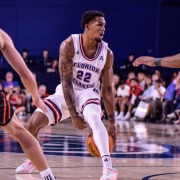
For a team needing a point guard, shooting, and long-term upside, the Miami Heat found all three with the 20th pick in the 2025 NBA Draft. Kasparas Jakucionis, the Lithuanian-born combo guard who starred at Illinois and developed through the prestigious FC Barcelona system, wasn’t expected to be available this late. He didn’t even work out for the Heat. And yet, here he is — a lottery-level talent joining one of the NBA’s most structured and demanding cultures.

A Dream Realized

“I’m so excited. I’m just grateful for this moment, to be in this place, to get this opportunity to get my name called. It’s special for me. It’s what I was working for, all my life, since I was little. It’s a dream, but now it’s just the beginning.”
— Kasparas Jakucionis

It’s clear the moment wasn’t lost on him — nor the opportunity ahead.

“I think I can prove a lot there… I’m ready to work.”

Though he didn’t meet with Miami pre-draft, Jakucionis immediately pointed to the fit:

“The playmaking ability is what I do. I’m just grateful to play with a guy like Adebayo, play pick-and-roll.”

He also noted his excitement about teaming up with Tyler Herro and mentioned that he speaks fluent Spanish — a small but useful detail in Miami’s diverse locker room and city culture.

Heat’s Perspective: Adam Simon on the Pick

Vice President of Basketball Operations Adam Simon offered a candid look into the Heat’s thinking:

“I think this draft was a little different. It was a pretty unanimous top 8 from our board… Looking at this draft, it was a literal unpredictable.”

“We didn’t think he would be there. We had him higher than where we took him.”

The Heat tried to get Jakucionis in for a workout, but didn’t push too hard, assuming he’d be gone before their pick:

“We tried to get him in, but we didn’t think he’d be there at 20. We spent some time with him in Chicago.”

Simon highlighted his driving ability, vision, and overall offensive skill set:

“He showed versatility in his playmaking… His handle’s really strong, he understands the game very well. He’s a true leader, someone who can get the team organized.”

“He’s a very good scorer, he can get downhill and also make reads, and that’s just part of the learning process.”

Even with Jakucionis shooting just 31.8% from three in college, the Heat believe in his long-term potential:

“He’s projected based on our analytical numbers to become a good shooter.”

“There’s things in his game that he certainly has to work on… What he’s accomplished at the junior levels — everywhere he’s played, he’s been effective and efficient.”

Defensively, Simon acknowledged the limitations — but also emphasized mindset:

“What he has is a toughness to him. He has an edge, he has an IQ.”

“He’ll be an astute learner in our defensive systems. I think he’ll be able to defend at a high level in our league.”

On the concern of turnovers, Simon struck a patient tone:

“Turnovers are high, but they’re turnovers you can work with.”

And when asked about the bigger picture:

“It was important for us to make this pick tonight… It’s more important now to have more rookie-scale deals in the modern NBA.”

Offensive Conductor with High Upside

Jakucionis’ biggest strength? Running an offense with poise and vision. He’s not just a passer — he’s an orchestrator. At Illinois, he averaged 15.0 points and 4.7 assists per game, but the raw numbers don’t capture his feel. He reads defenses like a veteran, shifts pace effortlessly, and manipulates defenders with head fakes and body positioning.

In the pick-and-roll, he’s exceptional — threading tight windows and keeping defenders guessing. His ability to drive with control and finish through contact (71.7% at the rim) gives him real versatility, even without elite speed.

His three-point shot dipped after a midseason forearm injury, but early-season tape showed pull-up range and confidence. He finished at 31.8% from deep — below ideal, but promising, especially considering his 84.5% free-throw mark.

The main concern? Turnovers. At 3.7 per game, many were the product of overdribbling or hunting for highlight assists instead of making the simple play. It’s part of the young creator learning curve, but a clear development area.

Defensive Questions, Competitive Edge

Defensively, Jakucionis competes — but his tools are limited. The claims of lateral burst limitations have been debunked and I would say he just more so can’t play above the rim. He isn’t a disruptive playmaker yet still, he rotates well, stays locked in off the ball, and doesn’t take plays off. With added strength and coaching, he could become a neutral or slightly below-average defender. But he’ll need to be paired with better athletes on that end to stay out of mismatches.

Jakucionis rebounding ability is worth noting as well as he averaged 5.7 rebounds per game and is willing to play physical.

The Heat believe his edge and IQ can close the gap. As Simon put it: “He’ll be an astute learner in our defensive systems.”

National Perspective: A Steal at 20

ESPN draft analyst Jonathan Givony ranked Jakucionis No. 11 on his top 100 board and called it “surprising” that the Lithuanian guard slid to 20. But any disappointment over falling out of the lottery, he noted, was likely short-lived:

“Any temporary disappointment over the money he lost was probably replaced by the realization he landed in arguably the most desirable situation of any guard prospect in this draft — a team desperate for shot creation and playmaking.”

Givony praised Miami as an ideal landing spot, citing Jakucionis’ “culture and toughness” fit and his ability to play multiple backcourt roles. He called the pick his favorite of the draft outside the top 10.

“It wouldn’t be surprising to see him eventually emerge as the franchise’s future point guard, thanks to the savvy he displays running pick-and-roll and his exceptional feel for the game.”

His national media backing further cements what the Heat clearly believe: they got their guy, and he might be more than just a rotation piece. He might be a building block.

I struggled to find anyone who believes Jakucionis was a bade for the selection for the Heat except one National media member who has his own history with the franchise.

Trade Context: The Butler Deal

The Heat’s selection of Jakucionis also takes on more meaning in light of the blockbuster trade that sent Jimmy Butler to Golden State. In return, Miami received Andrew Wiggins, Kyle Anderson, Davion Mitchell, and the No. 20 pick — which became Jakucionis.

In essence, Miami turned an aging star into a defensive wing (Wiggins), a gritty guard (Mitchell), a versatile veteran (Anderson), and a high-upside young playmaker. The Heat didn’t just rebuild — they reshaped.

Long-Term Outlook

Jakucionis projects as a high-IQ second-unit playmaker with eventual starter potential. If his shot stabilizes and he cuts down on turnovers, he could become the kind of steady, creative guard every contender needs — someone who makes others better and raises the floor of a team’s offense. If not, he still profiles as a valuable bench piece with international experience, toughness, and leadership.

The floor is high. The ceiling? Higher than where he was drafted.

Mateo’s Hoop Diary: Thunder triumph in Game 7, capturing the NBA title

The Pacers failed to complete another signature, improbable comeback after being dropped into a large fourth-quarter crater, starting with Shai Gilgeous-Alexander’s right-side triple. Bennedict Mathurin’s rim attacks and trips to the line kept the Pacers’ faint heartbeat pumping, yet the Thunder triumphed thanks to drawing cheap fouls and holding their guests to 33.3% shooting late. The hosts were subsequently crowned champions in front of their passionate supporters, most of whom refused to sit for the entire Game 7.


Tyrese Haliburton stood on crutches, saluting his teammates in the tunnel as the podium was quickly assembled on the court for the championship presentation. Confetti rained as the players raised and surrounded the Larry O’Brien trophy, and SGA lifted his Finals MVP prize as the crowd screamed in adulation for the second-youngest group to win it all. 


SGA said winning took “so much weight off my shoulders; so much stress relieved. No matter what, you go into every night wanting to win, and sometimes it doesn’t go your way. And tonight could have been one of those nights [but] we found a way.” He also said the Thunder have room to grow.


Haliburton suffered an Achilles injury following three made triples in the first quarter as he attempted to dribble past SGA. The Pacers led 48-47 at halftime as four of them logged three shots apiece.  Mathurin later started the second half for them while Alex Caruso did, in place of Isaiah Hartenstein for OKC. The Pacers followed through, giving up control and wasting TJ McConnell’s 12-point blaze with seven turnovers courtesy of tight pressure. Jalen Williams also got his licks in, dribbling through the lane for a left-handed scoop and connecting on a mid-range jumper over Myles Turner. 


OKC’s skittish finish included SGA plus Williams shooting 11 blanks in the fourth quarter. Yet there were some overwhelming factors: two of Cason Wallace’s steals were in Indiana territory and he made two treys; Chet Holmgren had four blocks in the second half after getting attacked a few times before intermission; 22 second-chance points; 23 points off turnovers. 


The Thunder used their last timeout with four minutes left trying to inbound the ball against full-court pressure. Next, Aaron Nesmith fouled out by falling onto SGA while trying to hound the ball as the Thunder were up 10  late and it was curtains. OKC won 103-91 and held Indiana’s half-court attack to 81.9 points per 100 plays, good enough for the 13th percentile, per Cleaning the Glass.


Williams said it would take him a couple of days to get back to Earth as he addressed reporters with the trophy seated to his left on the table.


Breaking Down the Pod: Miami Heat: Most Valuable, Jovic, Ware or 20th Pick?

🧩 Breaking Down the Pod: Episode 7
🎧 Listen on Apple Podcasts
🎧 Listen on Spotify

As the Miami Heat gear up for the NBA Draft and brace for potential trade season shakeups, the Five on the Floor crew dives into an intriguing question: would Niko Jović or Kel’el Ware be selected higher than the 20th pick if they were prospects in this draft?

In this episode, Ethan Skolnick, Greg Sylvander, and Digital Adel weigh each player’s upside, the league’s current scouting tendencies, and what that says about how Miami should value its own assets. With speculation swirling and front-office decisions looming, this conversation arrives at the perfect time.

Miami Heat Once Again in Trade Rumors

The Miami Heat are always thrown in trade rumors for numerous superstars, and this year it comes back once again with rumors swirling around Kevin Durant (who was just traded to the Rockets). Today’s discussion is whether or not Kel’el Ware or Nikola Jovic are worth more than the upcoming 20th overall pick in regard to assets.

So, who has more value?

Adel’s POV

Available at pick 20- Jase Richardson (Greg says), Nolan Traore, Danny Wolf (received a green room invite, unicorn like phenomenon), Thomas Sorber (strongest hands, 7’6 wingspan, dawg). Adel believes that if Jovic was next to Bam in the starting lineup it is cleaner on the offensive end, Jovic isn’t sturdy in post defense as he is more of an outside big. His improvements were seen in using his length and proper angles, yet he believes the inside defense is worse. Believes Danny Wolf is the perfect one for one switch with Jovic.

“My contention that no one can really answer is the teams biggest need last season was a primary ball handler and facilitator. Niko was on the team. He wasn’t that type of guy to solve that issue. He has the opportunity to showcase that part of his game especially when all the guards were injured and we didn’t see it. How can we say it’s the team holding him back or he’d pop somewhere else when he has all the opportunity in the world to display that all season”

  1. 20, if Sorber is there
  2. Ware
  3. Niko

Greg’s POV

Says Ware has more value to the Heat due to upside play. Claims Niko would be as impactful in a different system as the Heat haven’t added an engine to change the offensive scheme. Ware and Adebayo need more run together and is more valuable to a contending starting lineup for the Heat. Greg reiterates that they are talking about the importance to Miami, any player that is going to get paid a lot more money is less worthy in the trade market than a rookie salary, in regard to Niko (least value). Ethan adds that he also has less value to your team due to tax brackets and aprons. Greg thinks Niko has more value than pick #20.

  1. Ware
  2. 20, salary purposes
  3. Niko

 “It’s a shame because I think Nico is a project that they thought if that pick hit it could really be transcendent to a lot of things that they were trying to do”

Ethan’s POV

Believes Jovic has the strong upside as well just not sure Miami will play in to it. Claims Jovic and Bam look better together than Ware and Bam so far. If Niko or Ware is not including in the deal for KD Ethan believes Jovic would start over Ware because KD has not played the 3 and has played more 5 than the 3 over the last bunch of years. Guys guard up when they get older. Believes the fit with Jovic would be easier and Ware coming off the bench would bring a perfect rotation. Wants Ware to work on his physicality.

“I think Niko is going to be a really good player, just not here.”

  1. Ware
  2. 20
  3. Niko

Notes

  • Jovic is only 22.
  • Jovic is almost up for an extension.
  • Ware better than Whiteside to start and doesn’t have the same concerns, processes faster.
  • Pick 20 gives Miami their choice for their future schemes.

So for me the value of each player depends on who Miami is getting in return and if the direction of the team itself. Say Miami trades for Giannis, any and everything is on the table, Ja Morant, then Ware has more value. But as for who currently has more value for the Miami Heat, I Will agree with Ethan and Greg. Miami will have a plethora of options available at 20 whether it is in the front court or the back court and for Ware, he has massive upside and has shown flashes of being a high impact player in this league, especially next to Bam Adebayo. To their points many aspects of Ware’s game need touched up, but you can’t teach athleticism and raw talent. I trust Miami’s coaching staff to develop Ware into one of the leagues next dominant bigs. As for Jovic the opportunities have been there but also hindered as Ethan and Greg pointed out minutes with Rozier, injury troubles, and other rotational/scheme issues. But Adel brings a fair point in regard to the fact Jovic has been given the opportunities and rather needs work in refining thinks such as his handles and overall consistency in his play.

  • Ware
  • 20
  • Jovic

📣 Sponsors:

💬 Join the Heat Community:
Get exclusive updates, inside info, and smart fan discussion on the Off The Floor Discord (scroll down after clicking).

🔥 5OTF Special Offers:

🐬 Dolphins Fan?
Join the exclusive OnlyFins Discord for all things Miami Dolphins.

Mateo’s Hoop Diary: Paige Bueckers is separating herself for the Rookie of the Year crown

Paige Bueckers led the Dallas Wings to their third win of the season, chopping down coverages like The Bride in Kill Bill against the Connecticut Sun. They sent doubles at her, and she wasn’t fazed by the pressure, either. It’s their second straight win, coming after a seven-game skid, and it was her fifth time leading her team in shots.


Coach Chris Koclanes hasn’t been so relieved at pressers since training camp. His bold move of having DiJonai Carrington come off the bench paid off as she supplied seven offensive rebounds and extended the lead to seven with 45.1 seconds left on a driving right-side layup.


Bueckers drilled 11 second-quarter points, curling around a stagger screen for a triple and made four mid-range jumpers. Her partner on four of those baskets was Li Yueru, who helped with screening and passed to her after offensive rebounds. Bueckers said after the game, “It’s super fun to play with her. She is super smart and has a high IQ…”


Bueckers is the leading rookie scorer (18.0) by 4.4 points. She is notably making 53.5% of her shots in the paint non-restricted area, which is one of the hardest spots to score because defenses collapse there against penetration. Additionally, she’s nailing 46.6% of her middies, which is her favorite look.


She still isn’t taking enough 3-pointers, but the team should change that immediately because she’s a deadeye despite her splits hovering at 33%. The most she’s hoisted is seven versus the Phoenix Mercury (71.4%) and five against the Minnesota Lynx (40%) and Golden State Valkyries (0%). She and Arike Ogunbowale can help each other here by running more two-woman sets, taking advantage of the separation they create on the dribble to make corner feeds or above-the-break passes. Defenders naturally overload on the ball. 


Bueckers’ confidence is rising with every match and it only took her 11 games to hit 35 points and three to record her first double-double of 12 digits and 10 offerings. She’ll doubtlessly continue on this pace and run away with the rookie of the year award because she’s a much deadlier threat to score and create for others than all her drafted peers. 


The Wings are logging the second-highest pace, but have the second-worst record in the WNBA as they are three games out of the eighth spot with 30 outings left.  They can still turn things around, but their defense will have to protect the 3-point line better and be sharper against screen rolls.


Mateo’s Hoop Diary: The Pacers crushed the Thunder, forcing Game 7 for the championship

The Pacers defiled the Thunder, sparing their followers the indignity of a rival championship ceremony at home. The fourth quarter was garbage time thanks to a cascade of 3-pointers, a healthy dose of fastbreak points, and Pascal Siakam plus TJ McConnell lighting up schemes at short and mid-range.


Game 7, the first of the Finals since 2016, is for all the marbles on Sunday in OKC. Coach Rick Carlisle didn’t want to reminisce, saying it was meaningless because only one thing mattered.


The Pacers failed to launch on time and were down eight early after missing their first eight shots. Jalen Williams grilled Aaron Nesmith and Myles Turner on the dribble, but Pascal Siakam’s second-chance jumper in the middle ignited the firing squad’s nine first-half trifectas. It was like watching children thrash a cheap piñata. Tyrese Haliburton, whose status was in question before the game with a calf strain, contributed a dozen points, plus made the feed to Siakam for the booming dunk over Williams on the break. Siakam also nailed a left-side turnaround jumper over Alex Caruso, sending the Pacers to halftime ahead by 22.


Turner failed to register a field goal in six tries, but it didn’t matter because Chet Holmgren was invisible in OKC’s offense, the Thunder had only one made triple in 11 attempts and had committed 12 turnovers by intermission. 


Then Indiana’s defense was as tight as stainless steel handcuffs, contesting drives and jumpers promptly, and it didn’t allow a field goal for five minutes. Additionally, Siakam extended possessions with four offensive rebounds, and four Pacers connected on five 3-pointers, including Ben Sheppard’s 26-footer to end the period up 30.


None of OKC’s starters played the fourth quarter. Haliburton was the only one for Indiana that didn’t, but the others were on the bench after a few minutes. 


The Pacers won 108-91, holding their guests’ half-court offense to 81.7 points per 100 plays, good enough for the 13th percentile, per Cleaning the Glass. 


Carlisle said Game 7 would be a monumental challenge. Home teams win Game 7 of the Finals 78.9% of the time, per the NBA’s Facts and Figures. After the game, Siakam was asked what it takes to win one. He said there are no secrets between teams this late in a series, but that it’s about “who wants it more.”


South Florida’s Greatest Dynasty? The Panthers Are Coming for the Crown

🏆 South Florida’s Greatest Dynasty?

How the Panthers’ Back-to-Back Cups Compare to the Dolphins’ Perfection and the Heat’s Star Power

A dynasty — a team with sustained success, usually capped off by multiple championships. In South Florida, dynasties seem to prefer symmetry. The region now joins Boston (Bruins, Patriots, Red Sox) and Chicago (Bulls, Cubs, Bears [pre-merger]) as one of just three U.S. cities where three different major sports franchises have gone back-to-back.

Winning one championship is hard enough — winning another, in a different year, in a different locker room, with different pressure? That’s something special. Since the Super Bowl era began, only 8 NFL teams have repeated as champions. In the NBA, 14 dynasties have done it. The NHL has seen 17 repeat champions, while in Major League Baseball, it hasn’t happened since the Yankees of 2000.

Now, in South Florida, we’ve seen it happen three times — in three different ways. The perfect Dolphins. The star-driven Heat. And now, the gritty and relentless Panthers.

So the question isn’t just whether the Panthers belong in the dynasty conversation — it’s whether they’ve already surpassed some of South Florida’s legends. And maybe, just maybe, whether they’re not done yet.


🐬 The Gold Standard — 1972–73 Miami Dolphins

The only perfect season in NFL history isn’t just a football milestone — it’s a cultural artifact. Don Shula’s Miami Dolphins didn’t just win — they ruled. Their dominance in the early ’70s, particularly over the course of the 1972 and 1973 seasons, still looms over pro football like a monument carved in granite.

In 1972, the Dolphins went 17–0 — sweeping through the regular season, playoffs, and Super Bowl VII with methodical, physical, mistake-free football. In 1973, they came back hungrier, going 15–2 and winning back-to-back Super Bowls. That made it three straight Super Bowl appearances, two rings, and an unblemished legacy.

Key names: Bob Griese, Larry Csonka, Paul Warfield, Mercury Morris, the “No-Name Defense” — and of course, Shula, the NFL’s all-time wins leader.

Legacy: These Dolphins didn’t just win. They embodied perfection. In an era without a salary cap, where dominant teams could keep their rosters intact, they stood out even among greats. No excuses, no losses.

Shula’s Dolphins were perfect. Almost nothing can top that. That’s why, even in 2025, they remain South Florida’s dynasty gold standard.


🏀 The Big Three Heat — 2012–13 Miami Heat

Fast forward four decades and you find a completely different kind of dominance. Where the Dolphins imposed their will through structure and toughness, the Miami Heat of the early 2010s took over through star power, speed, and cultural gravity.

The Big Three of LeBron James, Dwyane Wade, and Chris Bosh changed the way teams were built. They weren’t just playing for Miami — they made Miami the center of the basketball universe. With Erik Spoelstra at the helm, the Heat reached four straight NBA Finals and brought home back-to-back championships in 2012 and 2013.

In 2012, they beat a young Oklahoma City Thunder team led by Kevin Durant, Russell Westbrook, and James Harden. In 2013, they survived one of the most legendary series in NBA history — a seven-game battle with the San Antonio Spurs, punctuated by Ray Allen’s miracle three-pointer in Game 6.

Style: Star-driven, fast-paced, emotionally charged.

Legacy: Culturally, no South Florida team had a bigger spotlight. The Heat were villains, then heroes. They were expected to win — and they did. But they also lost two of those four Finals, which dims the dynasty shine slightly.

While the Dolphins were dominant and disciplined, the Heat were brilliant and burning hot — a flash of electricity that changed the game.


🏒 The Newest Dynasty — 2024–25 Florida Panthers

And now, the Panthers.

If the Dolphins were perfect and the Heat were powerful, the Panthers are persistent. They’re the least flashy of the bunch — but maybe the most resilient. And unlike the Heat or Dolphins, the Panthers have done this in the modern era of maximum parity — where repeating is nearly impossible, and where no team can buy a dynasty.

In 2024, the Panthers went up 3–0 in the Stanley Cup Final against the Oilers — then nearly collapsed, dropping three straight before winning Game 7 at home. In 2025, they faced the Oilers again — and this time won in six. Three of those games went to overtime. The Panther’s led for the majority of the series and in a way it was a “six game sweep.”

These last two years have been survival.  And survival is a kind of dynasty all its own.

Core stars: Aleksander Barkov, Matthew Tkachuk, Sam Reinhart, Sergei Bobrovsky, Sam Bennett, Aaron Ekblad, and a key veteran addition in Brad Marchand.

Coach: Paul Maurice, a quiet master of emotional balance and system discipline.

Panthers coach Paul Maurice “… this is the best team I have ever coached.”

GM: Bill Zito, now firmly in the conversation as one of the best general managers in all of sports. His blend of analytics, scouting, and locker room intuition has built a team that’s deep, structured, and ruthless.

Notable moves made by Florida Panthers GM Bill Zito to build this dynasty: – Claimed Forsling off waivers – Traded for Tkachuk – Traded for Reinhart – Traded for Bennett – Traded for Montour – Traded for vets at deadline (Marchand, Tarasenko) – Traded for Seth Jones

Why they’re different:

  • Thriving in a salary cap era

  • Most of their core is under contract through 2026–28

  • Bobrovsky is coming off his best season yet

  • Zito keeps winning trades, extending the window

This team isn’t a Cinderella — they’re a juggernaut in work boots. And they’re not done yet.


🎯 Coaching the Greats

All three dynasties had a legendary leader:

Coach Team Legacy
Don Shula Dolphins NFL wins king. The architect of perfection.
Erik Spoelstra Heat NBA’s top tactical mind. Still evolving.
Paul Maurice Panthers Finally crowned. Quietly brilliant.

📈 Ranking the Dynasties — For Now

Rank Team Titles Context Legacy
🥇 1 Dolphins (1972–73) 2 No cap, perfect run Only perfect season in NFL history
🥈 2 Panthers (2024–25) 2 Cap era, repeat grind Built-to-last in parity-heavy NHL
🥉 3 Heat (2012–13) 2 Superteam peak Cultural icons, 2–2 Finals record

🐾 Final Thought: This Dynasty Isn’t Done

The Dolphins will always be first until someone adds a third title. But the Panthers? They’re not just challenging for first — they’re building a case for something bigger. A modern dynasty that wins with culture, not stardom. With depth, not hype. With persistence, not perfection.

If they go back-to-back-to-back?

We’ll have a new conversation.

Mateo’s Hoop Diary: The Thunder separated themselves in the fourth quarter, taking a 3-2 lead in the Finals

The Thunder were the more macho and disciplined team, chopping down the Pacers in Game 5 of the Finals with 32 points off turnovers and Jalen Williams’ 40-digit discharge. He said after the match, “I’d be lying if I said I could imagine doing what I did tonight, but I definitely could have seen myself here a long time ago…” The winners of Game 5 of the Finals after a tied series win the championship 74.2% of the time.


Coach Rick Carlisle called a timeout as the Pacers went down 17-12 when Shai Gilgeous-Alexander drove against Pascal Siakam in transition for a left handed layup. Carlisle then had to be restrained and earned himself a technical foul complaining to the ref as SGA zigzagged upcourt for another transition basket. His gripe was Lu Dort not getting flagged for contact on Andrew Nembhard on the previous possession but he did as the period went on. 


Seven turnovers and weak corner protection also set Indiana back as they went down by 10 going into the second quarter. Their deficit briefly expanded to 18 before halftime as they couldn’t outmaneuver Chet Holmgren’s tentacles at close range or suppress Williams’ rim pressure. Tyrese Haliburton was no help to Indiana, laboring through a calf strain, missing all five attempts against tight coverage and went into the break with a donut on the stat sheet. 


The Thunder had forced 10 turnovers and had a 12-0 advantage in fastbreak points at halftime. 


Williams followed up with more damage to Indiana, cutting up the middle on an ATO play, making a transition layup and burying a 3-pointer.  Subsequently, TJ McConnell extended the Pacers’ lifespan, shattering OKC’s coverages with screen rolls. Carlisle then made the mistake of holstering one of his best weapons, rolling most of the fourth quarter with Haliburton instead of McConnell. He said he was fatigued after the game.


Siakam’s rampage cut the deficit to two, but nonstop giveaways, pick-6s, plus Williams’ blow-bys through the middle and a shot over Aaron Nesmith at the nail spoiled Indiana’s comeback. Carlisle inserted McConnell back in during the last few minutes for Andrew Nembhard, but it was too late by then as the Thunder led by 14.


The Thunder won 120-109 while the half-court attack was slowed to 97.7 points per 100 plays, good enough for the 61st percentile, per Cleaning the Glass. They committed 11 less turnovers, outscored their guests in second-chance points (21-17) and made 14 triples to their 11. Four Thunder players logged at least three 3-pointers. The Game 4 win on Friday only had three logged for the group.


On the losing side, Carlisle said Haliburton was not “100%,” but he insisted on playing despite concerns at halftime. When asked about how the Pacers would stop Williams’ rim attacks, he  answered, “Get in front of him. Keep him from driving. Communicate better. Help when necessary.”


Is It time For the Miami Heat to Trade Tyler Herro

The Herro Question: Why Miami Must Consider a Seismic Shift After the Bane Blockbuster

The NBA offseason has officially ignited with a boom. The Memphis Grizzlies, long lauded for their player development, just sent Desmond Bane to the Orlando Magic for a truly staggering return: Kentavious Caldwell-Pope, Cole Anthony, four unprotected first-round picks, and a valuable pick swap. This isn’t just a trade; it’s a recalibration of the league’s trade market, and it sends a clear message to teams stuck in the middle: your young, talented assets might be worth far more than you think.

For the Miami Heat, currently engaged in fervent discussions with the Phoenix Suns for the 37-year-old Kevin Durant, this Bane blockbuster creates a fascinating, and perhaps necessary, inflection point. With Jimmy Butler now off the roster and the team perpetually hovering in that uncomfortable “good, but not great” tier, the Heat needs to make a bold move. And the Desmond Bane trade provides a compelling blueprint for why that move might involve parting ways with Tyler Herro.

Herro, at 25 years old and coming off his first All-Star appearance, is undeniably a talented scorer. He’s shown consistent growth since entering the league, flashing the offensive prowess that has made him a fan favorite in South Beach. He’s currently under a four-year, $130 million extension that runs through the 2026-27 season, but an even larger extension looms this October, potentially tacking on an additional three years at nearly $50 million annually through 2030.

This is where the calculus becomes critical for Pat Riley and the Heat front office. While Herro’s regular-season scoring is valuable, his playoff performances have often been a different story. The bright lights of the postseason have frequently seen his efficiency dip and his defensive limitations become more pronounced. In a league where championships are won in the crucible of the playoffs, a player due for a max contract must perform at an elite level when it matters most.

Furthermore, Herro’s widely publicized “off-court antics,” most recently highlighted by his appearance on an Adin Ross stream, raise questions about his overall fit within the famously disciplined Heat culture. While these incidents may seem minor, they add another layer to the evaluation of a player on the cusp of a truly massive financial commitment.

Now, consider the Bane trade. Bane is a high-level 3 point shooter, incredibly efficient, and a vital piece for any contending team. But Herro, an All-Star and primary offensive initiator, could reasonably command an even greater bounty. If the Grizzlies netted four unprotected first-round picks and a pick swap for Bane, what could the Heat secure for Herro?

Imagine a scenario where the Heat could acquire a package including four, five, or even more future first-round picks, potentially along with promising young players on rookie deals. This kind of haul would instantly replenish Miami’s depleted asset cupboard, providing the flexibility to either aggressively pursue another superstar down the line or build a younger, more cost-controlled roster that aligns with a fresh long-term vision.

Even as the Heat reportedly continue their pursuit of Kevin Durant, a Herro trade could facilitate that acquisition. Instead of merely offering Herro in a direct swap, a separate trade for picks and assets could then be leveraged to create an even more enticing offer for Durant or another top-tier talent. The market has proven that draft capital is king, and the Heat need to re-stock their war chest.

The “middle ground” is a dangerous place in the NBA. It’s where teams languish, good enough to avoid the lottery but never truly good enough to contend. With Jimmy Butler’s departure and the shifting landscape of the Eastern Conference, the Heat needs to pick a direction. Doubling down on Herro with a max extension, despite his regular-season brilliance, risks cementing their place in that purgatory if his playoff struggles and defensive liabilities persist.

The Desmond Bane trade is a wake-up call. It’s a flashing neon sign indicating the immense value of tradable, ascending talent. For the Miami Heat, it’s an undeniable avenue to explore. Pat Riley’s legacy is built on bold moves. This might be the moment for another one – a seismic shift that reshapes the Heat’s future and finally pushes them out of the middle. The question isn’t whether Tyler Herro is a good player; it’s whether his value as an asset, right now, outweighs his long-term fit as a max-contract player on a championship contender. The market, as Memphis just showed, has provided a compelling answer.

“It comes down to the moments and who is willing to make winning plays…”: The Thunder broke the Pacers’ hearts in Game 4, tying the series at 2-2

The Thunder’s late defense intensified, and Shai Gilgeous-Alexander the Great rescued his club in the fourth quarter on a spree of free throws and jumpers, taking Game 4 and tying the Finals at 2-2. He said after the game, “I knew what it would have looked like if we lost tonight, and I didn’t want to go out not swinging…”


The first change from the last match was Isaiah Hartenstein returning to the Thunder’s starting lineup after three on the bench behind Cason Wallace. The Pacers deployed double and triple full-court press plus hounded the ball and passing lanes. But Jalen Williams and Alex Caruso got loose, attacking the rim six times. Additionally, Pascal Siakam carved up OKC with four steals, a corner tray and a powerful dunk through the middle, but the Pacers were up only 35-34 at the end of the first quarter.  


SGA subsequently was his team’s main source of offense in the second quarter, nailing two pull-up jumpers and slicing into the lane for two layups as no teammate had more than a field goal. They briefly claimed a six-point lead, but the Pacers closed the period on a 15-6 run.


The Thunder were down 60-57 at halftime after six ties and five lead changes. They had one made 3-pointer to Indiana’s seven.


Then SGA, Williams and Caruso carried the Thunder in the third quarter with shots from short, mid and long range, but the Pacers, even with three missed freebies, pulled ahead by seven, downing four more triples and seven free throws. 


Next, the Thunder cranked up their defensive potency by 40° and tied the game four minutes into the fourth quarter. They prevented the Pacers any made 3-pointers in eight tries by challenging promptly and suffocating everyone minus Tyrese Haliburton. On top of that, SGA took over, scoring 15 points on free throws, a drive-by, and two pull-up jumpers, which included nine straight digits in the last four minutes. “When I was a kid, shooting on my driveway, I’d count down the clock for those moments, and now I get to live it,” SGA said.


The Pacers had a faint pulse, down four with 23.1 seconds left, but Bennedict Mathurin’s three consecutive missed free throws put the final nail in their coffin. 


The Thunder won 111-104 despite their half-court attack getting derailed to 86.7 points per 100 plays, good enough for the 22nd percentile, per Cleaning the Glass. They also outscored the Pacers in four key areas: paint points (50-36), fastbreak points (10-9), second chance points (23-11) and points off turnovers (25-23).


Game 5 is Monday in OKC.