Brian Dunseth Opens Up on Miami Days to Five Reasons Sports
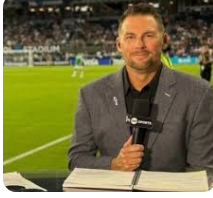
We are just one month away from the 2026 MLS season, and for the first time ever, Inter Miami will be entering the season as the reigning national champions. It is shaping up to be a mouth-watering campaign in American soccer, and one man who will be watching closely is Brian Dunseth.
Born in Upland, California, on March 2, 1977, Dunseth started playing for Upland Celtic and eventually earned himself an invitation to a tournament in England at the age of 12, only to be cut after the tournament. Similarly to others like Keinan Davis, Dunseth was forced to deal with early rejection and get back on his feet. He started working alongside two ex-convicts and making $2.75 an hour as a dishwasher at a convalescent hospital, but he never gave up his dreams of becoming a player and started excelling for Damien High School. Dunseth was one of the last players recruited to Cal State Fullerton, who agreed to pay for his parking, books, and one meal per day, but not his school expenses, and he took advantage of this opportunity by transitioning from an attacking midfielder to a center back.
“I think it’s a natural evolution for a lot of guys,” stated Dunseth in an exclusive Five Reasons Sports interview. “The reality is I wasn’t good enough to take that next step into the college game to be more of a creative player. The way that I grew up in Southern California, there was such a heavy Hispanic influence and culture with the teams I played for. As I progressed, and after I got cut from the Upland Celtic team, I decided that I wanted to start playing up. All of a sudden, instead of trying to play for the best team in my age group, I would actually go down a level. If it was the Gold League, I wanted to go to the Silver League, but I wanted to play up a year, and then the next year, I decided, ‘Well, this is great, how can I play up 2 years? The next thing I knew, by the time I was 15 or 16, I was effectively playing with 18-year-olds in the under-19 category, but I was down a level. And it taught me about speed and strength and athleticism and all of these things, and how important the technical touches were.”
“I vividly remember the conversations in Spanish, the ‘Vamos’ shouts, people telling me to pass and move, to play the ball, don’t get caught in possession, let the ball do the work. I think it was really beneficial when I moved to center back. At that time, I was around 6’1″, 170 pounds, I was lean, big, and strong, I was always really strong in the air, and really good with both feet. I started to realize that there were other players that had more talent in their pinky toe than I had my whole body, and my focus became, ‘I’m gonna find the margins of success as a defender, I’m gonna learn the dark arts, where it was gonna be a thumb to the ribs or a little pinch of the armpit hair, or a forearm leading with my head. My first training session with New England, Alexi Lalas got me in the back of the head and was like, ‘Get your elbows up.’ It was just one of those things where if I wanted to play, I knew it was either going to be anywhere across the back four, primarily as a center back, although I always felt really comfortable as a defensive midfielder. I knew dropping back was effectively gonna be my only chance to continue to elevate my opportunities, but playing in the attacking phase of play was super beneficial for the majority of my career, because it made me extremely comfortable with the ball under pressure.”
Dunseth excelled in Fullerton and eventually earned the attention of the US national team set-up, being called up for the 1997 FIFA World Youth Championship (now the U-20 World Cup) in Malaysia. After returning, he became one of the first players to sign a Project-40 (now Generation Adidas) contract, enabling him to be fast-tracked into the league and sign a contract with the New England Revolution on July 5, 1997. Similarly to other center backs like Wayne Thomas, Dunseth combined brilliant timing with stellar aerial skills and forceful tackling, as well as an impressive passing ability on the ball. Dunseth emerged as a key figure in defense for New England, scoring his first-ever senior goal against Miami Fusion and playing 84 times – during that time, he also represented the USA in the 2000 Summer Olympics. And on June 20, 2001, Dunseth was traded to Miami for Jay Heaps and a second-round pick in the 2003 MLS SuperDraft.
“New England coach Fernando Clavijo and I had a lot of miscommunications together. I don’t regret any of it, because I think I handled myself correctly with the way that this was all transpiring. After the Olympics, it was made clear that I didn’t have a future role with the club, even though the Revs wouldn’t move me. And Tom Fitzgerald, rest in peace, he was an amazing human being and the Columbus coach. He was trying to get me to the Crew, where I ended up later, but through that pit stop with Ray Hudson in Miami. I can vividly remember every single day after training. I’d go get some lunch…this is before there was food in locker rooms and all of this incredible infrastructure that I’m now envious of. I’d go to lunch and come back in the afternoon, because I knew Fernando was at the office, and I’d knock on his door and say, ‘Hey, Fernando, you got a second?’ He got so pissed at me because I continued to badger him. He wasn’t playing me, and there was nothing I could do.’ I’ll never forget this: he would just repeat the same song and dance every single day. I’d say, ‘Hey, Fernando, it’s not working out, I’d really like the opportunity to move.’ And he’d go, ‘Brian, the thing is that nobody wants you.’ I’m not joking, it was at the start of the 2001 season, and then, all of a sudden, I’m driving downtown to Boston to go meet a friend, and I get the phone call from Miami coach Ray Hudson and Miami GM Doug Hamilton, another man that passed away recently who had a huge influence on my life. Doug was the guy that signed me to Adidas, and now he’s my general manager in Miami…Doug and Ray are like, ‘Get your ass down here.’ I take a U-Turn and drive 90 miles an hour, pack my stuff, head to the airport, and then go down to Fort Lauderdale.”
The Miami Fusion came into Major League Soccer in 1998, during its third season, becoming one of the league’s first two expansion teams alongside Chicago Fire. After exiting the first round of the MLS Cup Playoffs in their first two seasons, Miami missed out on the postseason in 2000, before bouncing back in 2001. They finished with the best regular season record in MLS and took home the Supporters’ Shield en route to losing to San Jose in the semifinals. That would end up being the last-ever match in club history, with Miami folding in January 2002 after four years of lackluster ticket sales and revenue.
“My first training session, Ray says to me, ‘Brian, I’ve been trying to get you for a year and a half!’ I was like, ‘Oh Fernando, you motherf****r.’ Jay Heaps went to New England, I went down to Miami Fusion, and they obviously got better at the deal because Jay became iconic in those championship matches and ended up being the television guy and the head coach, and me and a bag of soccer balls and a bent bicycle pump went down to Miami. That team was extraordinary: in my opinion, if you put them up against any of the best teams that have played in MLS, that group of players would have not only held their own, but probably come out on top. It sucked, because we knew what was coming. We all knew we were going to be contracted, all of that conversation. It was Kansas City, it was Dallas, it was Tampa, and it was us. And at the time, the owner, Ken Horowitz, it felt like he was counting ice pebbles, that’s how tight the budget was. It was like a champagne life on a beer budget, but in the midst of this, Ray had us flying high.
“He would always acknowledge that there were some financial issues happening at the club, and there was kind of the great unknown at the end of the season, and he would always write “F-U-C-K E-M’ on the board, and that’d be the last thing. That was our mentality. We knew that there was a great unknown on that backside of the season, so why not go out and try to do the incredible? And it’s also in the midst of 9/11 – we were actually scheduled to fly that day to New York to play the Metro Stars, and two days later, we were going to be across the street from the Pentagon to play D.C. United. The whole return-to-play process was incredible and it felt like, during the playoffs, all the referees were against us. It felt like everybody wanted us out, so there was almost like a justification of why MLS was closing down the Miami Fusion at the time. That’s how we made it out in our minds. But yeah, we were… we were one defensive Troy Dayak header away from going to an MLS Cup Final against the LA Galaxy in Columbus. Dwayne De Rosario ended up lifting that trophy, subsequently, with San Jose, and a couple of days later, I underwent hernia surgery and went to go pick up my check. And Ray goes, ‘Brian, that’s the last check you’re ever gonna get as a Fusion player. And I was like, ‘What are you doing?’ He goes, I don’t f***ing know, man! Next thing you know, he’s head coach at D.C. United, Doug’s the president of LA Galaxy, every player’s going in different directions, and I was picked by the Columbus Crew, which ended up being a really special 18 months.”
Dunseth was selected by Columbus Crew in the 2002 MLS Dispersal Draft, helping them win the U.S. Open Cup, before making the move to Dallas Burn (now FC Dallas) in September 2003, where he spent just a few months before moving to Swedish side Bodens BK. He bounced around from Real Salt Lake, Chivas USA, and LA Galaxy before hanging up his boots in 2006; two decades later, he’s now one of the most prestigious soccer commentators in the game for Apple TV.



Dunseth’s story shows that every small step counts, whether in soccer or in getting the right sports equipment. Online shopping can be tricky, but reading about others’ experiences can help. I often check guidance and reviews about order handling and product quality at https://fanatics.pissedconsumer.com/customer-service.html , which gives peace of mind before committing to purchases. It’s amazing how preparation off the field can complement dedication on it.
sdfgdshghdfh dfgh fdghd hdfh sgffds gsdfgsdfgsdfg [asd3](https://google.com/) dsfgsdg sdfgsdfgsdfgs dfgsdgsdfgsdfgdsgds