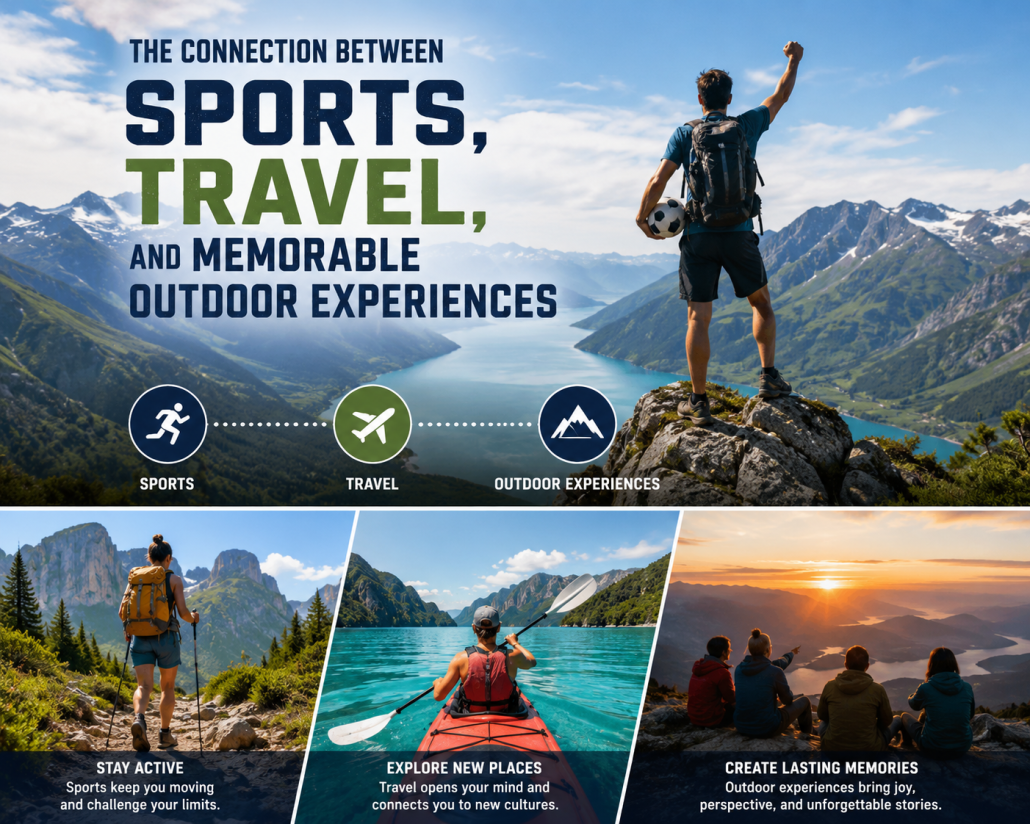
The Connection Between Sports, Travel, and Memorable Outdoor Experiences
30-Second Summary
- Sports and travel are closely connected because both bring excitement, discovery, and personal growth. Outdoor sports such as hiking, surfing, cycling, skiing, and kayaking allow travelers to experience destinations actively rather than merely observe them.
- These activities create stronger memories, improve health, build confidence, and help people connect with nature and local cultures.
- From mountains to beaches, sports turn travel into unforgettable outdoor experiences.
Introduction
Sports and travel have always shared a powerful connection. Both involve movement, discovery, challenge, and excitement. When people travel, they often seek experiences that differ from their daily routine. Sports provide exactly that. Whether it is hiking through the mountains, surfing in the ocean, cycling along country roads, skiing on snowy slopes, or playing beach volleyball during a vacation, sports turn ordinary trips into unforgettable outdoor adventures.
Travel gives people the chance to explore new places, while sports allow them to experience those places actively. Instead of only seeing a destination, travelers can feel it through physical activity. The sound of waves while surfing, the fresh air during a mountain hike, the silence of a forest trail, or the thrill of rafting down a river create memories that last much longer than simple sightseeing.
Sports Make Travel More Exciting
Sports add energy and purpose to travel. A person visiting a coastal destination may enjoy the scenery, but participating in water sports makes the visit more personal and exciting. Swimming, snorkeling, kayaking, surfing, and paddleboarding allow travelers to connect directly with the sea. Famous places such as Bali’s beaches attract visitors not only for their beauty but also for the sports and outdoor activities they offer, making the trip more meaningful.
Adventure sports are especially popular among travelers who want excitement. Activities such as rock climbing, paragliding, scuba diving, mountain biking, and zip-lining create a sense of achievement. These experiences push people beyond their comfort zones and help them build confidence. A traveler may forget the name of a restaurant or hotel, but they will always remember the first time they jumped from a cliff into clear water or completed a difficult hiking trail.
Travel Helps People Discover New Sports
Travel also introduces people to sports they may never experience at home. Someone from a city may discover skiing in the mountains. A person from a landlocked area may try surfing or sailing for the first time. A traveler visiting rural areas may join local games or traditional outdoor activities. These experiences create cultural understanding because sports often reflect the lifestyle, history, and environment of a place.
For example, football may bring people together in many countries, while cricket is deeply loved in South Asia, Australia, and England. Martial arts, camel racing, surfing, rowing, and snow sports all tell stories about the regions where they are practiced. Through sports, travelers learn how people live, celebrate, compete, and connect with nature.
Outdoor Experiences Create Strong Memories
Outdoor experiences are memorable because they involve the senses. Travelers remember the smell of pine trees during a hike, the warmth of sunlight on a beach, the cold air on a mountain, or the sound of birds during a morning walk. Sports make these moments stronger because the body and mind are fully involved.
When people participate in outdoor activities, they feel present. They are not just looking at a place through a camera; they are living inside the experience. This is why a camping trip, a cycling tour, or a kayaking journey can become one of the most meaningful memories of a person’s life.
Sports, Travel, and Personal Growth
The connection between sports and travel is also linked to personal growth. Outdoor sports teach patience, discipline, courage, and teamwork. Hiking teaches endurance. Surfing teaches balance and persistence. Team sports teach cooperation. Adventure sports teach courage and decision-making.
Travel often brings uncertainty, and sports help people face that uncertainty with confidence. A person who completes a challenging trek may return home feeling stronger. Someone who learns to dive may gain a new respect for marine life. A traveler who plays with locals may develop friendships despite language barriers.
Health Benefits of Active Travel
Sports-based travel is also good for health. Many people spend too much time sitting indoors, using screens, or following stressful routines. Outdoor sports provide exercise, fresh air, sunlight, and mental relaxation. Walking tours, hiking, swimming, cycling, and climbing improve physical fitness while also reducing stress.
Active travel can make vacations more refreshing. Instead of returning home tired from only shopping or sightseeing, travelers often feel energized after spending time outdoors. Nature and physical activity together support both the body and the mind.
Cultural Connection Through Sports
Sports can break social barriers. A simple game can connect strangers from different countries. Tourists may join locals in a football match, a beach game, a boat race, or a cycling event. Even without speaking the same language, people can communicate through movement, teamwork, and shared enjoyment.
Major sporting events also encourage travel. People travel to watch the Olympics, World Cup, tennis tournaments, marathons, cricket matches, and cycling races. These events create a festive atmosphere and allow visitors to experience the culture of the host city or country.
Nature Becomes More Meaningful Through Sports
Sports help travelers appreciate nature more deeply. A person hiking in the mountains comes to understand the beauty of the landscape through effort. A scuba diver sees the ocean as a living world, not just a view. A cyclist notices small villages, farms, rivers, and trees that might be missed from a car window.
Outdoor sports often inspire people to protect the environment. When travelers experience clean beaches, forests, rivers, and mountains, they understand why these places must be preserved. Responsible sports tourism encourages respect for nature and local communities.
Conclusion
Sports, travel, and outdoor experiences are connected because they all involve movement, discovery, and emotion. Travel takes people to new places, sports help them experience those places actively, and the outdoors provides the natural setting that makes everything unforgettable.
The best memories often come from moments when people challenge themselves, connect with nature, and share experiences with others. Whether it is hiking a mountain trail, surfing at sunrise, cycling through villages, or playing a simple game on the beach, sports make travel richer and more meaningful.



Active travel is the most memorable because you don’t just see beautiful places, you experience them. A good hike or bike ride leaves behind far more memories than a regular excursion, and https://everdayglow.com/ always has reviews of everything from travel services to ideas for independent itineraries. This content complements active travel well, and it helps you plan your itinerary to make it as action-packed as possible.
Hiking, cycling or kayaking allow you to see places that you can’t reach by car or tour bus. In addition, active recreation helps not only to get to know nature and local culture better, but also to return home with vivid impressions, and not just photographs.
During my recent cycling trip through the Carpathians, I fully immersed myself in the atmosphere of sports travel and unforgettable outdoor experiences — fresh air, challenging climbs, and stunning landscapes. After the trip, I ended up with numerous video files from different cameras and my phone that needed to be combined into one high-quality video. That’s when https://www.movavi.com/support/how-to/how-to-merge-mkv-files/ became a real lifesaver — it quickly and easily merged all the MKV files into one. Now I can relive these bright moments over and over, share them with friends, and plan new adventures. Thanks to this tool, the memories of my sports travels stay vivid and convenient to edit.