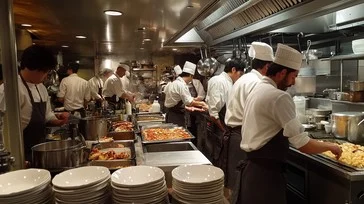
The Hidden “Playmaker” in Modern Kitchens: Why Precision Tools Are Reshaping Culinary Performance
In sports, the difference between a good team and a great one often comes down to execution under pressure. The same logic now applies to modern kitchens across Europe and increasingly in global markets, where consistency, speed, and precision determine success.
From busy cafés to high-end catering operations, chefs are relying more on specialized tools that streamline production without sacrificing quality. One of the most talked-about developments in this space is the growing use of nitrous oxide systems that improve texture control and efficiency in food preparation.
In fact, demand has grown so rapidly that many professionals now explore platforms where they can safely buy nitrous oxide online as part of upgrading their kitchen operations for speed and consistency.
Why Kitchens Are Starting to Think Like Coaching Staff
If you look at a professional kitchen through a sports lens, every tool has a role—some are starters, others are rotational players, but only a few truly change the pace of the game. Modern culinary systems built around nitrous oxide technology are becoming those difference-makers.
They allow chefs to execute repetitive tasks with precision, especially in high-pressure environments where timing is everything. Instead of relying on manual effort, kitchens can now standardize output across hundreds of servings.
Key advantages driving adoption include:
- Faster preparation of whipped cream and foams
- Consistent texture across large production batches
- Reduced manual workload during peak service hours
- Improved workflow efficiency in high-volume kitchens
In competitive food service environments, these advantages translate directly into customer satisfaction and operational stability.
The “Consistency Over Hype” Philosophy in Culinary Equipment
Just like championship teams prioritize systems over highlight moments, modern kitchen professionals are shifting toward tools that deliver reliability over novelty. The focus is no longer on flashy techniques—it’s about repeatable performance.
This mindset is shaping how chefs evaluate their equipment. Instead of asking “what’s new?”, the question has become “what works every single time under pressure?”
Core principles behind this shift include:
- Operational stability during peak demand
- Predictable results across multiple uses
- Scalable performance for both small and large kitchens
This mirrors elite sports strategies, where disciplined execution consistently outperforms unpredictable brilliance.
Product Variations and Strategic Kitchen Usage
In professional cooking, different tasks require different tools, just like different matchups require different lineups. Nitrous oxide-based systems come in various formats designed to match kitchen scale and demand intensity.
Common Usage Categories
| Format Type | Ideal Use Case | Strength |
| Small capacity units | Home kitchens and cafés | Easy handling and storage |
| Medium capacity units | Bakeries and dessert shops | Balanced output and efficiency |
| Large capacity units | Hotels and catering services | High-volume continuous operation |
Each category is designed to reduce downtime and improve efficiency depending on production needs.
How Efficiency Impacts Modern Kitchen Performance
In high-pressure environments like restaurants, hotels, and catering services, efficiency is not optional—it’s essential. Even small improvements in workflow can significantly impact output during peak hours.
Nitrous oxide systems contribute to this efficiency by:
- Reducing preparation time for dessert components
- Ensuring uniform product consistency
- Minimizing manual labor in repetitive tasks
- Supporting faster table turnover in busy venues
This is especially important in urban hospitality markets where customer expectations are high and service speed directly affects business reputation.
Flavor Innovation and Creative Control in the Kitchen
Beyond efficiency, modern culinary tools are also enabling creativity. Some systems now offer flavored options that allow chefs to experiment with presentation and taste profiles without changing their core workflow.
Popular variations include:
- Original neutral – used for standard whipped cream applications
- Strawberry-infused – ideal for desserts and sweet beverages
- Coconut-infused – commonly used in tropical or fusion recipes
These options give chefs more flexibility in menu design, allowing them to introduce new flavors while maintaining operational consistency.
Real-World Performance Comparison in Kitchen Environments
To better understand how these tools perform in practice, it helps to compare them across different kitchen scenarios.
| Scenario | Demand Level | Ideal Setup Type | Outcome |
| Café morning rush | Medium | Small to medium units | Fast, consistent service |
| Bakery production cycle | High | Medium units | Stable dessert output |
| Large catering events | Very high | Large capacity systems | Continuous operation |
This breakdown highlights how scalability plays a key role in modern kitchen planning, especially for businesses handling fluctuating demand.
Why Professional Kitchens Are Re-Evaluating Their Toolkits
Across global food markets, including Europe and expanding international regions, kitchen professionals are increasingly treating equipment selection as a strategic decision rather than a basic operational one.
This shift is driven by:
- Rising customer expectations for presentation quality
- Increased competition in food service industries
- Need for faster service delivery without quality loss
- Greater emphasis on cost efficiency and scalability
In this environment, tools that deliver consistent performance under pressure are becoming essential assets rather than optional upgrades.
As culinary operations continue to evolve, the gap between average and high-performing kitchens is increasingly defined by how well they integrate efficiency-focused systems into daily workflow—especially in fast-paced service environments where every second counts.



Review the in n out allergen menu to find ingredient and allergen information, making it easier to choose meals that suit your dietary preferences.
speed stars keeps players intensely focused; in this game, stability is just as crucial as top speed. Ultimately, the combination of simple controls and the need for high precision creates the game’s unique appeal.