El premio a la rotación de los Marlins

La rotación de los Marlins de Miami ha sido por lejos lo mas destacado de este equipo en los primeros tres meses de campaña.

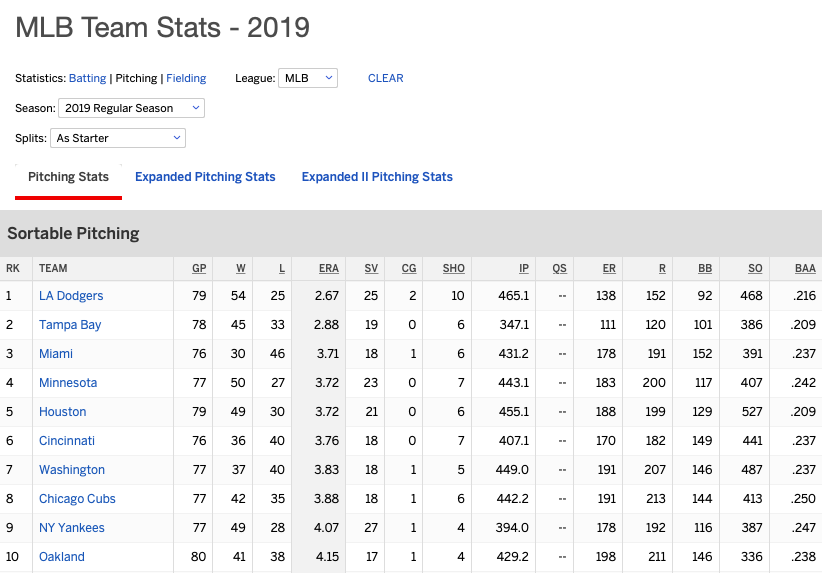
Tras la jornada del domingo, la rotación de los Marlins tiene la octava mejor efectividad de todas las Grandes Ligas, y la quinta mejor de la Liga Nacional.

Caleb Smith fue el principal artífice durante el primer mes de la temporada, y luego sus compases fueron acompañados por el resto de la orquesta, con un Pablo López haciendo ajustes, un Sandy Alcántara superando sus problemas de descontrol, Trevor Richards a la calladita sacando outs por montones con su cambio, y con unos jóvenes dando la cara cuando les ha tocado surgir.

José Ureña dio paso a Jordan Yamamoto por una lesión que aún no sabemos cuánto tiempo lo va a mantener lejos, y el novato ganó sus tres primeras salidas, permitiendo apenas dos carreras.

Eliéser Hernández y Zac Gallen también destacaron en sus salidas, y pese a pequeños sobresaltos en algunos episodios, han seguido por la misma línea que trazó Smith al comienzo de la temporada.

El premio a la rotación: Alcántara al All Star Game

Sandy Alcántara fue el escogido por el cuerpo técnico de la Liga Nacional para representar a los Marlins de Miami en el Juego de Estrellas de las Grandes Ligas.

El dominicano no ha sido el mas efectivo de los cinco primeros escogidos por Mattingly para integrar la rotación, pero de los que quedan saludables, es el que tiene mejor efectividad, con 3.86, en 16 aperturas.

Trevor Richards le sigue de cerca, con 4.02, en 17, y lo supera en ponches 83 a 65, y en promedio en contra, con .237 vs .255 que le batean a Alcántara.

Si se quería premiar a algún lanzador de los Marlins, Alcántara o Richards eran los escogidos, y al final, se decantaron por Alcántara.

Miguel Rojas se quedó en el círculo de espera

El campocorto de los Marlins se asomaba como una opción interesante para representar al equipo en el Juego de Estrellas.

Ha jugando un campocorto excepcional con jugadas espectaculares a lo largo de la campaña, y de mantenerse sano va a estar en la conversación para los considerados para el guante de oro en la Liga Nacional.

Su defensive WAR es el segundo mejor de la liga, con 1.6, solo detrás de Nick Ahmed, con 2.0.

Además, Rojas está teniendo un muy buen año con el madero bateando .287 (tercer mejor promedio de la Liga Nacional), .350 de OBP (cuarto en la liga detrás de Manny Machado, Corey Seager y Trevor Story con 20 dobles (empatado en el segundo lugar de la liga con nombres como Javier Baez, Trevor Story, Nick Ahmed y Paul DeJong).

En Junio terminó de ajustar su swing como primer bate del equipo, y para algunos, esto podía haberle dado el último empujón para ser escogido.

Al final, Paul De Jong y Trevor Story fueron los escogidos por la MLB según los votos de los fans y los votos de los propios jugadores.

Tampa Bay/Montreal experiment is not without precedent

One of the topics of discussion during the first English Cinco Razones Podcast was the Tampa Bay Rays’ plan to play half of its home games in Montreal beginning in 2024.

The location sounds completely and idiotically random but considering the fact that the Expos left Montreal after the 2004 season to became the Washington Nationals and Olympic Stadium has remained intact for the use of the Montreal Alouettes of the Canadian Football League and the Montreal Impact of Major League Soccer.

The Toronto Blue jays also play exhibition games at Olympic Stadium just before Opening Day in recent years. Vlad Guerrero Jr., who’s father was the Expos last superstar, put his name on the map when he hit a walk-off home run against the St. Louis Cardinals in his old man’s stomping grounds.

So the fact that it’s the only other MLB ballpark that is without a team makes it understandable that it is the first place the Rays would look towards to as a vacation home. There aren’t that many other big league capacity facilities that are without a tenant.

This idea is not without precedent. Ironically, the Expos tried this in 2003-04 with Puerto Rico, playing 22 home games in Hiram Bithorn Stadium. Those were also the franchise’s last two years in Montreal. In 2003, the Expos started the season in San Juan for 11 games before their “home” home opener in Montreal on April 22 against the Arizona Diamondbacks. That game netted an attendance total of 36,879 but most of the games were below 10,000. The San Juan games ranged between 10,296-17,906.

Miami Marlins catching coach Brian Schneider began his playing career with the Expos during that time. From his experience, it seemed to be a successful experiment.

“The first year I really enjoyed it,” Schneider said. “The fans were awesome. They came out. It’s different playing there, playing the music, it was a different atmosphere so we had a good time.”

The attendance figures in Montreal were similar to what the Marlins are actually getting now but in a state of the art ballpark, which wasn’t the case with Olympic Stadium. They returned to San Juan in June for six games between two long road trips. As much as they were embraced as the home team in San Juan, it wasn’t the home of the Expos. The team played 22 game away from Montreal from May 25-June 20.

This was actually a competitive team in Montreal, despite being own, operated and neglected by Major League Baseball. The Expos entered September at 71-67 and still in the wild card race with the Florida Marlins. Their last series of the season was in San Juan and the Marlins took three of four games and went on to win the World Series. By that time the nostalgia of playing in Puerto Rico have worn off, once it was realized to be an extension of a long road trip.

“It got really tiring towards the end of the season down there because we were going back and forth,” Schneider said.

The Expos finished the 2003 season with an 83-79 record. With no Vlad Guerrero and no Javier Vazquez, the Expos finished 67-95 in their final season. The Expos started the 2004 season playing six games in San Juan, three games in Montreal and the rest on the road during the month of April and went 5-19. They spent the first and last week of May in Montreal but attendance never reached the 10,000 mark and even dipping as low as 3,609.

Montreal had only one homestand in June and July. The Expos returned to San Juan in July but only topped 10K once. The Expos finally had a normal final two months of the season, staying in Montreal instead of having to go back and forth. The Expos played their final home game against the Marlins and Carl Pavano, who debuted in Montreal but made his bones in Florida, got the win.

Interestingly so, the Puerto Rico experiment wasn’t a sign to the players that the Expos were eventually going to leave town. It wasn’t until their home finale that the relocation to Washington was announced.

“We actually had no idea that was going to happen,” Schneider said. “We know we made some trades, with the Bartolo Colon trade and getting rid of Cliff Lee and Grady Sizemore, they thought our team was getting dissolved. So we didn’t know if we were going to go to Washington or not. We didn’t even know if we were going to have a franchise in a couple years. We were just enjoying it and going down there (to Puerto Rico). We had no idea what was going to happen to the franchise.”

Jeffery Loria was actually the Expos’ last owner before selling it to MLB after the 2001 season and using that money to buy the Marlins off John Henry, who went from that to owning the Boston Red Sox. Contraction was on the table in 2002 around the time of the aforementioned trade for Colon, until the CBA put the kibosh on that idea until 2006. By then it wasn’t necessary.

The situations between what Schneider’s Expos went through with Puerto Rico and what Rays owner Stuart Sternberg plans to do in Montreal will be completely different. The Rays have been locked into a 30-year lease in Tropicana Field since their inaugural season. That ends in 2027, which would be three years going into this proposed plan.

Unlike the Puerto Rico prototype, the Rays reportedly plan to build a new open-air stadium in each city for less than the reported $1.2 billion cost of the Rangers’ new retractable-roof stadium in Arlington that is set to open in 2020. The plan in terms of scheduling seem to be to split the season in half, starting in Tampa Bay during the spring and Montreal during the summer. It’d be interesting to know how the playoffs would be divided up. The Rays could be the first team ever with homes field advantage.

Schneider said he’s happy for Montreal potentially getting a second chance at big league baseball and said if the city were to have a new ballpark downtown, it would be “a home run.”

However getting the Players Association to sign off on the idea seems to be the biggest complication. The union and MLB are already disagreeing over whether needing to have two “homes” falls under rules of the National Labor Relations Act. That might be what puts an end to it before it ever begins.


Welcome to Pat Riley’s rightful final rush for relevance

The tales all run together now, especially those about anything prior to 2010, which is all anyone still seems to vividly remember. But, back in 2003, before he pulled off the greatest coup in free agent history, the one that every other franchise has spent the past decade trying to replicate, Pat Riley pulled one over on Donald Sterling that even Sterling’s shady girlfriend couldn’t top.

The Heat were coming off an anomaly in Riley’s tenure to that point. They had experienced some euphoria, notably the fortune-altering acquisition of Alonzo Mourning, and some excellence from the teams that Mourning anchored. And they had experienced agony, whether those three playoff series losses to the lower seeded, ultra obnoxious New York Knicks, or Mourning’s horribly timed kidney disease, right when Riley had reshaped and refreshed the roster for a real run.

But they had not experienced irrelevance. Never. They were not boring. They were not forgotten.

Those 2001-02 and 2002-03 seasons were different however. Different, as in dull. The first featured a collection of castoffs on close to their last legs, the Kendall Gills and the Jimmy Jacksons and the Travis Bests and the Cedric Ceballos’s, with the latter’s most considerable contribution coming in the form of the messy Cheetos he shared with teammates in the pre-game locker room. By the next season, Riley had turned most of those relics to dust, replacing with some younger pieces like Caron Butler. But the Heat won just 25 games and the Dolphins, of all things — with Ricky Williams rampaging and Jason Taylor terrorizing — were far more compelling. That, however, was just seen as a bridge period by the fans who still trusted him to build again.

They always believed he had a plan — and plans after the plan.

And this one was a doozy, preying upon the penurious nature of the Clippers’ repugnant owner and the vagaries of restricted free agency. He went after Elton Brand. When he might have really wanted Lamar Odom. Riley extended an offer sheet to the Clippers’ smart, skilled big man, knowing Sterling, to save face, might actually match that one. Brand wanted to be here, and was disappointed when he — having left his phone by his belongings on the beach — returned to the device to learn that he was heading back to the Sterling sweatshop. That’s when Riley swooped in and offered a contract to Odom, a versatile forward he had coveted since the draft.

Sterling didn’t match that one.

Odom resurrected his reputation in that good old Heat culture, enough that he became the key piece the Lakers — and specifically Kobe Bryant — wanted when their situation with Shaquille O’Neal soured. And so Riley fast-tracked the Heat not merely to relevance but, in 2005-06, a parade. That parade on Biscayne Bay he had promised.

So here we are again. The Heat are not as irrelevant as they were after that 2002-03 season. But they’re not especially interesting either, and this has gone on longer, ever since the Heat exchanged the likes of LeBron James for Danny Granger and Josh McRoberts and Shabazz Napier in 2014. With Wade retired (we think), there’s no star, nothing close, no one who is at a higher level, or even projects at a higher level, than the most productive or promising player on any other team in the league. Not one. Go through it. And this is coming from someone who likes The Kids quite a lot. And now, unlike then, faith in Riley among the fan base is shaken. The Twitter reaction not just to the Tyler Herro selection but especially to Riley’s roster explanations afterwards was strikingly strident. Many just want him to go at this point, not caring or even aware that this organization was going nowhere before him and not clear on who will make it go after.

Is everyone spoiled? Sure. But he made them that way. That’s his fault. The Heat’s youngish fans are his children. He made basketball matter here, matter way too much in their lives, simply through the cavalcade of players and personalities he introduced to this area, and now it doesn’t matter anything like it did, and he bears some responsibility for that too. The Heat botched much of the 2016 and 2017 summers, no matter why they say they made some of the moves they did. Nothing justifies granting four lucrative seasons to James Johnson after four good months in a career of largely unremarkable achievement. The Heat have done plenty of good in the interim, with smart extensions and creative additions. But they should be major free agent players now, for everyone who likes the beach and a lower tax rate, and they’re not, and that’s why.

And so, in the national conversation about the NBA, the Warriors matter, the Raptors matter, the Sixers matter, the Nets matter, even the freaking Knicks matter, until they overpay two role players because no one of note wants to come to the Mecca.

The Heat have not mattered in that discussion. Not like they should. Not like he should.

That’s why Riley has to get Jimmy Butler now.

For relevance.

Is Butler the star who I would choose to reset the course of the franchise? Hardly. He will be 30 this season, but may be 35 in Thibs years. He doesn’t shoot the three all that well, which is a concern as he ages and other actions don’t come as easy. He is a notoriously difficult teammate, though the Heat may need one of those — and they will welcome his absolute insistence against taking the slightest bit of shit. He’s going to be crazy expensive by the end of that deal, unless the salary cap nearly doubles.

But he’s a starter star, and the Heat need that.

Now.

He’s the star who may attract another, because no one on this roster is doing that. In fact, it’s Dwyane Wade — now free of the NBA’s inane tampering restrictions — who is the draw for Butler, who seems to see himself as the natural heir. Butler wants to be here. That’s clear. That’s been clear. Houston makes no sense, not with the two egos and ball-bouncers already in play there. Philly only makes sense if the 76ers offer a fifth year, which they seem disinclined to do when they have two mercurial max talents on the roster.

Butler may not be a lead guy on a champion.

But he’s not a third wheel either.

Here he would be first, until he is second, and his presence may help the Heat get the guy who supplants him. He would re-energize the fan base. He would re-energize Riley. He would re-energize Erik Spoelstra, who has appeared worn of late, and it can’t just be the baby. Maybe it’s the roster. If it is, that’s understandable.

But really, this is about Riley. It always is. This was Dwyane’s house, but he sits high in the castle.

Why the hell do you think he is still there, when there are capable replacements in the front office?

To watch a bunch of B-plus talents grow on their own?

Don’t we know better by now?

Riley told me, after LeBron left, that his plan was to win one more championship and disappear before the champagne even spilled. Just sprint out of the arena with his wife Chris, over to a plane, off to France, into solitude, and self-imposed irrelevance. Not the kind the Heat have now. By choice. Not by mistake.

Butler may not deliver a title, but he will deliver hope. He will deliver anticipation. He will deliver ticket sales. He will push the Dolphins back to the background, Manny Diaz back to the transfer portal. He will get an occasional ESPN crew out here. He will be an attraction. Not LeBron. Not Shaq. Not Zo. But something.

And the Heat have always been something under Riley.

Something to be seen. Something to be emulated. Something, at times, to be feared.

Not something to be ignored.

So this is it. They’ve been setting up for this. You can see it. They knew Butler wanted to be here. They have the best cap guy in the business, in Andy Elisburg. Jimmy just needs to say the word. If the Heat’s pitch moves him, money can always be moved. Chairs can be rearranged. Roles can be filled. This is the Riley way. Get the star. Figure it the f— out later. This is who he is. This is what he does. This is why he’s still here, even if some of you would rather he scram.

He has been an NBA prince and kingmaker, but he is still a Schenectady scrapper, told by his father to plant his feet and make a stand. This is the last stand, at least in this arena. This stretch of three offseasons. This is a role he seems to relish, as much as jostling with Jerry West in a practice, when he was little more than a sparring partner. He’s an avowed Republican who remains clinically obsessed with a famously liberal songwriter, someone who made sure that “The Rising” was playing as often as possible in his arena, even though few of his players thought of anyone but him as The Boss or would ever go to Asbury Park.

“Lost track of how far I’ve gone
How far I’ve gone, how high I’ve climbed
On my back’s a sixty pound stone
On my shoulder a half mile of line”

This situation isn’t nearly as important as what that song references. It’s not life and death. But for Riley, this is the calling. The climb back to relevance. The rising starts with Jimmy Butler, even if it can’t end there. Go get ’em, Pat. Close the deal. Sell what you’ve done, and what you can still do, to Butler. Sell some of your assets to Brand if necessary, now that your former free agent target could now be your trading partner, as the 76ers general manager. You’ve been around that long. But since you’re still here, time for one last rightful rage against the dying of the light.


Ethan J. Skolnick is the host of the new Five On The Floor podcast, and will be writing regularly about the Miami Heat for this site. 

Is it the time to call out Marlins fans?

Fans have not supported the Miami Marlins this season, and some may say they don’t have a reason to.

Little by little, those excuses are falling off the table.

The Miami Marlins just swept the Philadelphia Phillies at their place to get their twentieth win in the last thirty five games.

Jordan Yamamoto had another great performance, even though he walked the first three batters he faced, coming up with a great comeback and keeping his ERA under 1.00 (0.95) in his first three outings.

For some, it is the right time to get to Marlins Park and support the team, now that they’re not just playing better baseball, but also sweeping playoff contenders with a young core group.

I am very excited with what we’re seeing this season, with young arms shining and a couple of bats waking up and supporting their pitchers to get wins.

After all, that 10-35 start had us all thinking this could be a negative record-setting season.

The Marlins are doing their best to put a competitive team on the field and the latest moves show they’re trying to win some games right now too.

However, I would not go too far and call Marlins fans out yet.

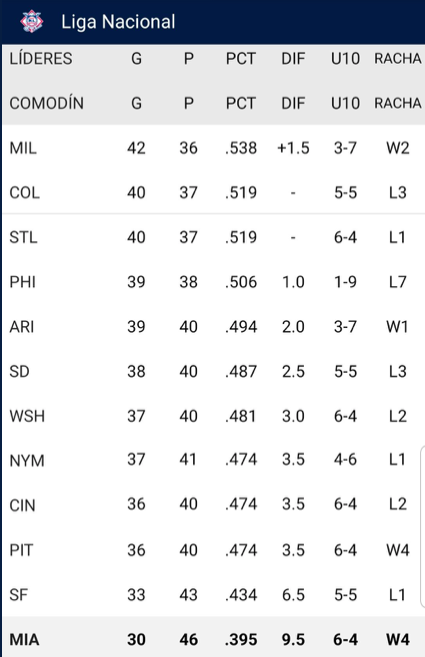
Even though the Marlins have had a positive month of June so far, and they’re winning in a much more consistent basis, they’re sitting with the worst record of the National League.

Three games behind the Giants, six games behind the Pirates, Reds and Mets and six and a half from the Nationals, their next rival at Marlins Park starting on Tuesday.

The Marlins are playing much better, but I still think we can’t just expect the fans to show up right away just because of that.

They have the third best ERA among starters in the majors, and that’s a great start of a rebuilding of a team.

Still, I am not sure Marlins Park will start filling up more just because of that.

On Tuesday Marlins fans will have a great opportunity to see one of the or the best pitcher in baseball in Max Scherzer, facing one of the best pitchers in the Marlins system in Zac Gallen for the first time.

Will the fans come to support the Marlins’ rookie?

I think it’s not that easy. Marlins fans have suffered different rebuildings and have never been a consistent fan base during regular season games here in Miami.

Even when the team had Stanton, Yelich, Ozuna, Realmuto, Gordon and José Fernández, the park didn’t fill up.

Nowadays, there’s just not a real link between the team and the community. That takes time to build, and the Marlins are in the right track.

But it’s too early to call out Marlins fans…


Cinco Razones Podcast will be recording their first episode in English to talk about the Marlins on Thursday at Marlins Park, so if you want to see them, and support the team, know they (Ricardo, Leandro, Alejandro, Dutch, and Tony) will be there this week. 

Exploring Tyler Herro’s Offensive Upside

With the 13th pick in the 2019 NBA Draft, the Miami Heat select … Tyler Herro from the University of Kentucky.

Not Sekou Doumbouya, the International Man of Mystery.

Not Kevin Porter Jr., the domestic Man of Mystery with the most boom-or-bust equity in the draft.

Romeo Langford? Brandon Clarke? Nassir Little?

Nope, nope, nope.

The Heat valued the offensive promise of Herro, a 6’6 guard with a silky jumper and enough brashness to make Sidney Dean blush.

(No, not that Sidney Dean.)

The reaction to the selection was mixed, to be kind. The most common complaints revolve around Herro’s short wingspan (a little over 6’3) and a perceived lack of upside. He’s not growing longer arms – not legally, anyway – so that’s just something I, er, we have to get over. Is the second point fair or accurate?

Well, that’s what this piece is for.

The Good

It’s pretty easy to justify the selection. The Heat took the temperature (ha) of the league and recognized their need for shooting**. They needed someone that could not only convert catch-and-shoots, but could also bend defenses with off-ball movement. I would imagine they also grew tired of losing close games because of missed free throws.

**We’ll just ignore the fact that they traded two plus-shooters for tax shavings four months ago.**

Herro fits the bill. He graded out in the 70th percentile on spot-up possessions last season, via Synergy Sports. His 35.5 percent clip from three (31.9 percent from NBA three) isn’t elite, but his 93.5 percent mark from the free throw line is a great indicator of his prowess moving forward.

Kentucky had Herro run off a ton of pindowns to flow into jumpers or secondary pick-and-rolls last season. The foundational footwork, as well as his ability to quickly catch, square, and fire away is there to be an off-movement threat on the next level. He’s not a JJ Redick or Wayne Ellington-level mover, but there’s a reasonable path to hitting the next tier.

The Bad

There’s also room to criticize the pick.

Completely ignoring the other players on the board at the time, there should be legitimate concerns about how Herro’s defense translates. He fights hard and displays a solid understanding of what’s happening around him, but, man, it’s just hard to get past the lack of length and burst.

Herro has alligator arms and isn’t explosive laterally. He’s not going to be able to hang with the NBA’s speediest guards, nor does he have the length to consistently alter shots of bigger wings.  He projects mostly as a one-position defender.Within that specific context, the comparisons to Tyler Johnson are valid.

The Big Question

It’s pretty safe to bet on Herro being a plus-shooter with a capped defensive ceiling. The swing skill for Herro, at least to me, is overall shot creation. His ability, or inability, to do that for himself and others is what will determine how good that pick is.

Kentucky mostly used Herro as a secondary on-ball threat, particularly at the end of their motion/weave stuff in the half-court. It’s telling (and smart) that they worked to shift the defense before having Herro attack. In general, attacking bent defenses is a good thing that often leads to advantage situations. In the case of Herro, giving him a head start was a way to hedge against his lack of on-ball juice (more on that shortly).

We’ll start here, though: Herro generated a combined 75 points on 68 possessions in pick-and-roll or isolation situations (passing included) last season, via Synergy. That’s not an incredibly large sample, but a 1.10 points per possession mark is pretty darn good. Mix in his efficiency as an off-the-bounce shooter (0.991 PPP, 82nd percentile) and tear dropper (1.08 PPP on floaters), and there are positive indicators of creation ability hiding in plain sight.

The pick-and-roll possessions are what I really want to focus on. Not only does that make up the majority of the creation sample (52 of the 68 possessions), it’s the area the Heat need the most help in. The Heat finished 29th in pick-and-roll ball-handler offense (passes included), generating just 92.1 points per 100 possessions.

I went back and watched all 52 of Herro’s logged pick-and-roll possessions on Friday, and tweeted about some of them on Twitter, which you can find here. More than anything, I wanted to get a feel on, well, his feel. How quickly was he processing the coverages being presented to him? What passes are in his arsenal? What’s his pace like? Does he make sound decisions? Were there any advanced flashes — putting defenders in jail, timing passes, weakside corner skips on the move — or did he just play things safe?

I’ll say this much: I understand why the Heat have optimism, even if I don’t necessarily agree with all of it.

Passing Chops

The first thing that stood out to me is that Herro doesn’t make outright bad decisions. He committed seven turnovers in his 52 pick-and-roll possessions; only three of them came as a passer. The context of him being a secondary option matters, but it also speaks to the trust (albeit small, in terms of the sample) he earned at Kentucky to finish possessions.

Herro seems to have solid recognition skills. That should translate well at the next level. He uses the early portions of possessions to diagnose how defenses defend ball screens, then often chooses the right method of attack once the ball swings his way.

Ashton Hagans runs a pair of pick-and-rolls. The first comes during the initial push in transition, and you’ll notice Mississippi State tries to “ICE” the screen — the perimeter defender positions his body to force Hagans down the sideline instead of allowing him to get to the middle of the floor. After Hagans resets, he calls for a high ball screen in the middle of the floor, revealing Mississippi State’s preferred method of defending by bringing the big man up to “catch” the driver.

Herro downloads all of this.

The ball eventually finds Herro, who already knows the big will show somewhat high on the screen. Equipped with that knowledge, Herro releases an early forward pass to a slipping PJ Washington, completely catching the defense out of position. The pass isn’t well thrown, but Washington corrals it and attacks before getting fouled.

You can see a similar thing happen here:

Again, Herro reads what the big defender is doing in pick-and-roll before using that information for himself. As he tries to attack to his left, the big steps up to contain the drive. That leaves a window for a pocket pass, which Herro executes well.

The one consistent thing across Herro’s pick-and-roll film is his ability to read the big. That’s a legitimate positive. The next step, and what would raise his ceiling as a playmaker, is to shift focus to the help defender. That’s what separate good pick-and-roll players from advanced ones. In fact, it’s one of the things Justise Winslow said he’s picked up from Dwyane Wade over the last year or so.

Herro isn’t making advanced reads yet. In the 52 pick-and-roll possessions he logged, I was only able to see two (2) skips to the weakside corner. Even within the context of looking for flashes, that’s a pretty low sample. You’d like to see more of those when trying to project him as a plus-playmaker on the next level.

The good news is that Herro does have good feel and makes pretty good decisions. That’s a solid foundation to expand off of. If the reports of Herro being an absurdly high-level worker are true, and they seem to be, it’s easy to be optimistic that he could become more.

Scoring Repertoire

I don’t know if you’ve heard, but Tyler Herro is a bucket.

We’re working with a limited sample here, but his efficiency as a pick-and-roll scorer still pops off the screen. 31 points on 25 possessions. 13-of-20 clip from the field. Adjusted field goal percentage of 72.5!

Herro’s end-game was often the pull-up jumper. Via Synergy, 12 of his 20 shot attempts were off-the-bounce jimmies. He drilled seven of them, giving him a 58.3 percent clip. That number isn’t sustainable – we might actually be looking at a Curry-like shooter then – but the film is encouraging. His handle isn’t great (more on that later) but he’s able to quickly shift from dribbler to shooter in one fluid motion. His balance is superb, and that allows him to float into, or fade away into comfortable looks.

Herro’s ability to read the big here is key. He watches their feet, mixing in subtle fakes to keep them off-balance. He doesn’t need much time (or space) to flow into his jumper, so one false move is all he needs to capitalize on.

Herro’s intermediate touch is why the Heat are excited about his three-level scoring potential. He has the shot repertoire necessary to beat “Drop” coverage. That includes less-than-analytically-ideal shots like floaters. He shot 14-of-26 on runners this past season, though obviously they didn’t all come in pick-and-roll situations. Still, it’s a great tool to have in the bag.

The issue is that Herro doesn’t have a particularly advanced handle, which would be fine if he had the explosiveness to compensate. He, uh, does not have the explosiveness to compensate.

Herro just can’t consistently puncture defenses on his own merit. He needs a bent defense and a great screen to get downhill, and even that isn’t enough to create separation all of the time. If he can’t slither through creases, he’s forced into one-on-one scenarios that will be much harder than he faced at Kentucky. The athleticism jumps a tier or two in the NBA, as does the length of the defenders he’ll face.

Herro won with tough shots at Kentucky, but the margin for error was already pretty thin. It’s going to be virtually non-existent on the next level. It’s unclear how much better he’ll get as an athlete, but he has to get stronger and gain a better understanding of attacking angles.

I’m just … not sure I see three-level scoring upside with Herro. The pull-up shooting from middy and deep will likely translate. The finishing is worth the skepticism. He was flat-out bad around the basket last season. He needed the floater to be successful. At a certain point, the lack of vertical pop and length is hard to overcome. That especially hurts if you’re hoping there’s some Devin Booker-esque hidden upside as a primary creator.

A small guy like Isaiah Thomas was always an elite finisher. Justise Winslow became a slightly-above average one last season, but he always had the first step (and size) to get to the rim whenever he wanted. Herro can’t consistently get there, and struggles to finish over length when he does.

One thing that’ll help for sure: he’ll have the best screen setters he’s had in his life.

Watching PJ Washington go through the motions as a screener was frustrating to me. I can’t imagine how Herro felt. The NBA is a spacier game in general. Bigger courts, better shooters. Getting lead blocks from Bam Adebayo and Kelly Olynyk will give him even more space to work with. If you’re trying to find a path to success, it’ll be with the Heat giving him consistent head starts with off-ball action and hard screens, and Herro developing some craft or off-timing drives like a Goran Dragic.

There’s room for optimism with Herro offensively. As much as, uh, some people went to Tyler Johnson or Wayne Ellington comps, the film makes it clear that those examples are selling him short. There’s legit passing feel and pull-up equity present that the other two never had. Herro’s a little bigger than both, and will get stronger on the next level. There’s plenty to like here.

But if you’re hoping for a Booker or Donovan Mitchell-like surprise leap, you might want to hold your breath.
The Miami Heat Beat Big Board: Guards

Your Tankathon simulations were futile. Sorry. The Miami Heat will be drafting 13th.

With that finally being settled, the Heat Beat/Five Reasons crew will be rolling out some piping hot draft #content for you. We — as in myself, Greg “Leif “Sylvander, and Jack Alfonso — will kick things off with some general big boards, covering players that may be available around Miami’s range. We’ll start with the guards, then roll out our top wings (and forwards) and bigs in later pieces. After that, you’ll be getting more deep dives on individual prospects as we get closer to draft time.

To the guards!

Tier 1

Coby White, North Carolina freshman, Combo Guard, 6’5” 185 lbs

Stats: 16.1 points, 3.5 rebounds, 4.1 assists, 42/35/80 shooting split

White would be another over the moon prospect for the Heat. Mock drafts across the internet have the UNC guard going anywhere from Top 5 to Top 20. With a rare mix of speed and craftiness, White makes for a blur on offense that wastes very little motion in his explosive moves to the basket. Has all the makings of a dynamic lead guard with a style of play that resembles the craft of Deron Williams, scoring ability of Gilbert Arenas and even shades of a player like Cuttino Mobley with his underrated spot up shooting ability.

His biggest opportunity is to improve decision making, timing and pace, particularly in the half court. White seems to have major guts, which is a prerequisite to being a leader of Heat Culture. Another no brainer selection for the Heat if available. White has absolute star potential with upside resembling a player like Trae Young in terms of overall impact. -Greg

Darius Garland, Vanderbilt Freshman, Guard, Lead Guard, 6’2 175 lbs

Stats: 16.2 points, 3.8 rebounds, 2.6 assists, 54/48/75 shooting split

Five games.

That’s the college sample we have to work with when it comes to Mr. Garland. In that small sample, it’s hard not to come away intrigued.

In a league that’s being defined by shifty pull-up virtuosos, Garland looks like the best of the bunch among the projected lotto talents. He has an advanced handle and a quick trigger, making him a rare “Drop” defense killer if you give him an inkling of space. If you believe in that skill — and I do — there’s a case to be made that he could end up being the best point guard in this class five or so years from now.

Obviously, there are some concerns. There are … I don’t want to say “questions”, but we need to see more from him as a passer. He didn’t show many advanced flashes in pick-and-roll, and certainly not to the level (or consistency) of Ja Morant. And like Morant, Garland’s slight frame raises some flags about his ceiling as a finisher and defender.

But if there’s anything the Heat are missing, it’s a guy that can make those pull-ups. In the event that Garland doesn’t prove to be more than a, say, Jeff Teague-level facilitator, you just let Justise Winslow puncture defenses and let Garland feast off of those opportunities. -Nekias

Tier 2

Romeo Langford, Indiana Freshman Guard, 6’6” 215 lbs

Stats: 16.5 points, 5.4 rebounds, 2.3 assists, 45/27/72 shooting split

Let’s start with the negatives.

Langford was a top 5 recruit coming out of high school and had a relatively disappointing year with the Hoosiers. His jump shot was unreliable, his effort and decision-making have been called into question, and it’s doubtful that he’s athletically explosive enough to make these weaknesses irrelevant. There are questions about his ability to play off ball efficiently, which complicates his fit on a Heat team that seems sold on Justise Winslow as their point guard.

All this said, I love Langford for Miami. As a fellow Hoosier, I may be biased, but if Romeo lands in the right situation, he has All-Star level potential. With his 7 foot wingspan, he should be able to guard multiple positions at the next level, giving the Heat a potentially lethal group of defensively versatile youngsters. The idea of Romeo, Winslow, Adebayo, and Richardson sharing the court, leaping into passing lanes and terrorizing opposing ball-handlers is enticing.

As for the offensive end, there is cause for concern about his ability to play off-ball, but it is worth mentioning that he had a torn ligament in his hand for most of his time with the Hoosiers. His inconsistent shooting is still worth consideration, but the hope is that his percentages improve with the health of his hand. He could be a valuable secondary ball handler alongside Justise, and his ability to penetrate the defense and draw fouls could be exactly what Miami’s offense needs to regain relevance. If he’s still available, he’d be a great pick for the Heat late in the lottery. -Jack

Kevin Porter Jr, USC freshman, 6’6” 218 lbs

Stats: 9.5 points, 4.0 rebounds, 1.4 assists, 47/41/52 shooting split

*only appeared in 21 games (4 starts)

Porter Jr has the talent of a Top 5 pick. The ultimate boom or bust gamble. An up and down freshman season at USC left question marks surrounding his durability and maturity. Porter possesses the tools and upside to become a dynamic volume scorer, while also possessing the necessary size to defend 2s at the NBA level once he grows into his 6-6 frame.

One concern as it relates to his offense at the highest level was his poor 52% free throw shooting in college. Questions regarding coachability make it crucial that Porter Jr land with an organization that has structure, veteran leadership and you guessed it, CULTURE. The workout and pre-draft interview process will be the key to Porter landing in the lottery. He checks all the boxes of an on-court workout wonder who could see a rise during workouts.

In my opinion the Heat will likely pivot in a different direction come draft night if he doesn’t win the interview process in convincing fashion. The Heat’s well documented challenges related to character issues in recent years will likely influence an attempt to avoid such headaches with this lottery pick.

Porter Jr could be a Jimmy Butler/Jamal Crawford/Zach LaVine-like hybrid stylistically. Or he could be Deshawn Stevenson. Feels like too risky of a lottery selection for the Heat, but with the Heat starved for star power and a willingness to gamble, Porter is worth keeping an eye on. -Greg

Under The Radar

Tyler Herro, Kentucky Freshman, Guard 6’5” 195 lbs

Stats: 14 points, 4.5 rebounds, 2.5 assists, 46/36/94 shooting split

Well, I know Giancarlo Navas hates this guy. Herro is pretty small, with a wingspan that leaves a lot to be desired. He’s not very explosive, not incredibly quick or strong, doesn’t play above the rim. He’s not a great passer or ball handler either. His value is solely as a shooter, which isn’t encouraging given his inconsistency from long range.

That said, he could be a valuable shooter off the bench. He’s got a good feel for the game, and Spoelstra could have some fun running him off screens and creating open looks for him. Coaches love this guy. As a gym rat and a scrapper, he’d be wonderful fit with the Heat’s culture. He plays the game the right way. He’s still young, and with his high motor and impressive basketball IQ, he’s going to get the most out of his abilities, hustling and grinding his way into a NBA rotation.

Character is the reason you draft this guy, and character trumps talent at the end of the day. He’s a guy you want in your locker room, a guy you’d love your daughter to date. This is the kind of high-intangible, lunch pail guy who you love to root for. He may not be the most physically gifted player in the draft, but his athleticism will sneak up on you. He’s deceptively quick.

Unless Miami ends up picking in the late 1st, early 2nd round, he likely won’t be in their range, but if Herro’s a Heat player at the end of draft night, it’ll be a win for every South Floridian with an undercut and a pair of New Balances. -Jack

Carsen Edwards, Junior, Purdue, 6’0 200 lbs Guard

Stats: 24.3 points, 3.6 rebounds, 2.9 assists, 39/36/84 shooting split

A longstanding lament among Heat fans has been the lack of a go-to scorer. Since the days of Dwyane Wade’s prime, Miami has struggled to find a player that could get consistent buckets on his own. If scoring is what you want, Carsen Edwards may be your guy.

Carsen Edwards gets buckets. That’s the start and end of it. That’s what he does. As a point guard at Purdue, Edwards had the green light to let it fly. He’s crafty with the ball, reliable at the rim, and dangerous from downtown. He. Gets. Buckets.

The issue is… everything else. Edwards is undersized, not always efficient, and lacks much else outside his scoring ability. He’s not going to facilitate everything on offense and probably won’t get you many stops on defense. If his scoring efficiency doesn’t improve at the NBA level, it’s hard to imagine him sticking anywhere.

That said, Miami might be a good place for him. With Justise Winslow handling the traditional point guard duties on offense, a scorer like Edwards could thrive. Without the pressure to consistently create offense for others, Carsen could focus on getting buckets. The defensive concerns are hard to get past, but the Heat have the personnel to make up for his deficiencies. Edwards would be an interesting addition to the Heat. He’d certainly address a need, but whether what he adds in scoring makes up for his weaknesses remains to be seen. -Jack

The Miami Heat Beat Big Board: Wings

This is a re-post from last month…

Your Tankathon simulations were futile. Sorry. The Miami Heat will be drafting 13th.

With that finally being settled, the Heat Beat/Five Reasons crew will be rolling out some piping hot draft #content for you. We — as in myself, Greg “Leif “Sylvander, and Jack Alfonso — will kick things off with some general big boards, covering players that may be available around Miami’s range. We started with the guards; now it’s time to knock out the wings.

Tier 1

Cam Reddish, Duke, Freshman, Wing, 6’8” 218 lbs

Stats: 13.5 points, 3.7 rebounds, 1.9 assists, 36/33/77 shooting split

Considered by many to be one of the most intriguing, yet unpredictable prospects at the top the 2019 draft class. Recent reports of the potential for Reddish to slide in the draft seemed impossible a year ago. His strength as a shooter seemed to fade as the season came to a close. That dip in outside shooting, combined with questions regarding his effort, intensity and defensive IQ have contributed to him potentially being this year’s Caron Butler or Justise Winslow who slides down the board.

Let’s start with the good. Reddish displays some of the traits that have drawn comparisons to Paul George, Gordon Hayward and Rashard Lewis. He’s a versatile scorer with outside shooting touch. His catch-and-shoot ability (particularly as a trailing player in secondary fast breaks) make him an attractive option for Miami who lack wing scoring and are intent on updating offensive schemes to help find ways to get easy buckets in transition. If he reaches his potential, Reddish’s upside is that of an All Star.

His lone year at Duke may be a sign that it may take more time for him to reach his potential than some anticipated. He struggled as a third banana alongside Zion Williamson and R.J Barrett. It felt like he could never find his groove in Duke’s cramped up offense, and that was reflected in his efficiency numbers.

That being said, his size, ball handling, passing and scoring make for a strong base skill set that eventually could blossom into the ability to even initiate offense from the wing, a la PG. He has the tools to be a good defender on the wing at the pro level. His 7-1” wing span is intriguing as the Heat continue to try to build a roster that is as position-less and switch-capable as possible.

In short – Reddish could be JR Smith or the next PG or discount bin KD. If he is there at 13, some within the Heat organization with Duke ties would be heavily inclined to select Reddish. -Leif

De’Andre Hunter, Virginia, Sophomore, Wing, 6’7”, 225 lbs

Stats: 15.2 points, 5.1 rebounds, 2.0 assists, 52/44/78 shooting split

De’Andre Hunter is one of those prospects that can get you day-dreaming. Wingspan. Athleticism. Wingspan! Hunter has long arms. It may sound like a trivial thing to harp on, but it’s not. Miami’s three young guys are all versatile defenders, with the ability to guard at least two positions. Adding a guy like Hunter with his impressive wingspan, strong body, and consistent effort, could help turn the Heat into a nightmare for opposing offenses.

Hunter should be a good shooter at the next level. He also seems to be a smart guy with a feel for where to be on the floor. There aren’t any huge red flags in his game. The question for Hunter is, weirdly, upside. He’s not the youngest guy in the draft, and he’s not one of those guys who could just take over games at the college level. There isn’t much “shake” in his game, which puts a cap on his potential as a shot-creator.

I think Hunter will be a valuable role player on offense. If you’re looking for a go-to scorer, Hunter doesn’t seem to be that guy. If Miami calls his name on draft night, fans should still be thrilled. He just isn’t the sexiest prospect out there. -Jack

Tier 2

Sekou Doumbouya, France, N/A, Wing, 6’8 205

Stats (per 36): 13.9 points, 6.2 rebounds, 1.4 assists, 1.6 steals, 1.0 blocks, 47/29/76 shooting split

Oooh, buddy, am I intrigued here.

Doumbouya is raw, but he has the kind of tools (hello, 7’2 wingspan!), athleticism chops, and ball skills to make him the type of late lottery flier the Heat should consider. There’s legit point-forward potential here, and that shines through when he’s running the open floor. He’s showcased some nice reads in half-court situations, but I’d like to see a little bit more.

He’s come on pretty strong overseas over the last month or so, getting accustomed to the physicality of playing against guys much older/stronger than he is. It’s not fair to make “Next Giannis” declarations; I have some questions (that’ll come in a breakdown further down the line) that gives me pause. However, it’s hard not to be excited about his ability to handle the ball and finish inside. His length and athleticism also makes him an ideal fit in a switch-y scheme, provided he gets stronger. -Nekias

Nassir Little, North Carolina, Freshman, Wing, 6’6 205

Stats: 9.8 points, 4.6 rebounds, 0.7 assists, 48/27/77 shooting splits

Not many players disappointed relative to their pre-season hopes quite like this guy.

Little entered the season as one of the nation’s top five prospects, an tremendous athlete with an NBA-ready frame. He projected as arguably the best 3-and-D (and more) prospect in the class, but things quickly fell apart during his lone year at North Carolina.

Little showcased his athleticism in the open floor and show plus-impact as an on-ball defender. That’s pretty much where the positives ended. His lack of fluidity limited his shot creation abilities. The lack of feel reared its ugly head with questionable decisions with the ball, and a plethora of off-ball lapses on the other end.

There’s hope for him, of course. You can’t teach that kind of athleticism, and by all accounts he’s a tremendous young man with a great work ethic. The Heat would love him as a person. There’s a plus-shooter with the ability to abuse opponents on shaky close-outs in there. With more reps (and some patience), there’s potentially a good defender in there. For now, the mocks that have him going mid-late first round are well within reason.  -Nekias

Tier 3

Nickeil Alexander-Walker, Virginia Tech, Sophomore, 6’5 205

Stats: 16.2 points, 4.1 rebounds, 4.0 assists, 47/37/78 shooting split

I’m pretty confident calling NAW (boy, do I love that) one of the most skilled players in this draft. He isn’t just a good shooter, he’s a multidimensional one. He can make teams pay on spot-up attempts, come off pindowns or flares, or catch, pump, then fire off the bounce. There’s secondary creation ability to like, as he has all of the basic high pick-and-roll reads down. His ability to pull-up can hurt teams that employ “Drop” schemes”, and that’s certainly something the Heat need someone other than Josh Richardson to do on a consistent basis.

It’s cliche, but my concerns with NAW are all based on his athleticism. He just isn’t explosive, and I just worry that he won’t be the kind of three-level threat his skills should allow him to be. Airspaces will close quicker in the NBA. Teams are more physical at the rim, and he wasn’t this super elite finisher in college. He should be a fine team defender, and his near 6’10 wingspan should make him somewhat switchable. He may not be able to handle elite-quickness guys, but that’s what Josh Richardson or Justise Winslow should be there for. This would be a good value pick for the Heat if they trade back. -Nekias

Keldon Johnson, Kentucky, Freshman, Wing, 6’6, 211 lbs

Stats: 13.5 points, 5.9 rebounds, 1.6 assists, 46/38, 70 shooting split

I’m sure Bam Adebayo wouldn’t be mad about getting to play with another high-flying Kentucky Wildcat.

Keldon Johnson has a lot of tools to be excited about. He’s an impressive athlete with a work ethic that could earn the adoration of the Miami Heat coaching staff. Physically, Keldon has everything you could possibly ask for in a young wing prospect. He has the potential to be a more-than-reliable defender, and his 38 percent accuracy from behind the arc should give people hope that he can do more than just jump at the next level. If Keldon puts it together he could be a valuable 3&D player with the ability to get out and finish in transition.

I have concerns about the shooting though. He shot a solid percentage in his one season at Kentucky, but his relatively low free throw percentage may be cause for concern with regard to his jumper. He’s certainly not a natural born shooter, and if he can’t succeed as a catch and shoot guy, his offensive utility becomes incredibly limited.

Johnson has good physical tools, but doesn’t seem like a guy you can count on to break down a defense. Creation in general seems like a question mark. He’s not a great passer or shooter. He isn’t the most creative scorer. I think Johnson has a spot in this league, but with his question marks on the offensive end, I worry that Miami is not that spot. -Jack


The Miami Heat Beat Big Board: Bigs

This is a re-post from earlier this month…

Your Tankathon simulations were futile. Sorry. The Miami Heat will be drafting 13th.

With that finally being settled, the Heat Beat/Five Reasons crew will be rolling out some piping hot draft #content for you. We — as in myself, Greg “Leif “Sylvander, and Jack Alfonso — will kick things off with some general big boards, covering players that may be available around Miami’s range. We started with the guards, added the wings. and knocked out the forwards. Now we’ll touch on some of the bigs. This one will be shorter for obvious reasons — just look at the roster for crying out loud.

Tier 1

Bol Bol, Oregon, Freshman, Center, 7’2” 207 lbs

Stats: 21.0 points, 9.6 rebounds, 1.9 assists, 0.8 steals, 2.7 blocks, 56/52/76 shooting split

Say hello to the only center I think the Heat seriously consider at 13.

Bol Bol, the large adult son of former NBAer Manute Bol, is an absolutely massive human. 7’2 guys with 7’7 wingspans don’t grow on trees. Once you add in the combination of shooting and ball-handling, you’re looking at, without hyperbole, one of the five most unique draft prospects ever.

It must be emphasized that Bol isn’t a knocks-down-open-spot-ups guy, he’s a legit shooter. He already has NBA range and has flashed the ability to knock down one or two-dribble pull-ups. Post fades are part of his offensive repertoire. With his release point, good luck contesting those fadeaways, much less blocking them.

On the defensive end, Bol does two things at a high level. He challenges shots at the rim, and ends possessions. His 12.4 block percentage and 29.0 defensive rebound percentage are both elite marks.

That’s … probably where the positives end.

Bol has great shooting touch and a nice handle, but I worry about how effective he’ll be using both. He’s not a great screener at this stage. He’s never really had to be, and that shows through with poor positioning and timing. His frame further limits him in that regard, and I imagine that’ll be amplified on the NBA level.

It’s hard to get super excited because of how easily he can be bodied up. The fadeaway on the block is a nice counter, but if he can never establish deep post positioning against fellow bigs, how efficient of a post scorer will he be? His release point on threes is a little low. It helps that he’s tall as crap, but NBA close-outs — and the length and speed of the defenders closing out — are a different beast. His release will need to be altered slightly — in speed or in terms of the release point — to fully optimize him as a pick-and-pop threat.

For a guy that’s as nimble as Bol is with the ball, virtually none of that translates defensively. On top of being pretty weak, he moves poorly. Very poorly. There’s no hope of him defending in space right now. Simple ball moves get him out of position, and poor hips make it nearly impossible for him to recover. Zone may be the only way to hide him. That makes him a bit of a fit in Miami, but it puts his overall impact into question.

Aside from the (super)stars, bigs are mostly defined by their defense in today’s NBA. If Bol can’t close out games for you because of the defensive end, he has to be outlier good offensively to compensate. Bol has outlier traits, but I don’t think he’s outlier good. And that’s before getting into a frame that will likely be tough to build up, and a history of lower body injuries.

I love Bol. I love the idea of Bol. In fact, he’s a three-time Finals MVP in my online league on 2K19. If there’s anybody rooting for him to succeed, it’s me. I just have serious doubts about the likelihood of that happening. If the Heat are going to make an upside play, Kevin Porter Jr. or Sekou Doumbaya probably makes more sense. -Nekias


Tier 2

Bruno Fernando, Maryland, Sophomore, Forward, 6’10” 237 lbs

Stats: 13.6 points, 7.5 rebounds, 2.0 assists, 1.9 blocks, 61/30/78 shooting split

Bruno Fernando may be the Heat’s favorite big man in this entire draft.

Fernando projects as an NBA center, which could become a position of transformation and need depending on a variety of factors. He’s a rim runner who finishes at a high clip. He has no issue banging down low and scrapping for rebounds. His body is NBA ready; his motor may force coaches to find a role for him immediately. The fact that he’s a 70-plus percent free throw shooter provides hope he can become a shooting threat at some stage of his career.

Fernando’s overall impact and offensive ceiling remain questionable because of stiff hips maneuvering in the post and foul issues. He can also be occasionally turnover prone and would really need a star player that could draw attention and find him for lobs. If the Heat and Hassan Whiteside decide to go their separate ways and want to try Adebayo at the big forward spot, Fernando becomes more viable. -Leif

Nic Claxton, Georgia, Sophomore, Center, 6’11 220

Stats: 13.0 points, 8.6 rebounds, 1.8 assists, 46/28/64 shooting split

At least one of two things would have to happen to make this a viable selection, and it’d probably take both. The Heat would need to slide back in the draft, and Bam Adebayo would need to be part of a star trade. If you want to keep scrolling past this section, I don’t blame you. The latter is mostly a function of an awkward offensive fit.

The intrigue of Claxton is his switchablity. He might be the best lateral mover among non-Zion, non-Clarke bigs in this year’s class. He has great feet, good instincts, and attacks shots at their apex. Offensively, he’s a solid finisher with budding on-ball skills worth exploring in doses. He’s flashed a jumper, though it still needs some work extending it past 18 or so feet. He averaged 2.0 attempts from three in his last season at Georgia, so he at least seems to want to take them.

Again, this is very much a trade-back target, but he fits the mold of what the Heat would want from a big man. High motor, good on the glass, switchable defensively. There’s a lot to like here. -Nekias

Tier 3

Naz Reid, LSU, Freshman, Center, 6’10 250

Stats: 13.6 points, 7.2 rebounds, 0.9 assists, 0.7 steals, 0.7 blocks, 47/33/73 shooting split

One of Miami’s bigger longterm questions is whether Bam Adebayo can hold his own at the center position. Many believe he’s better suited at the 4 spot. His jump shot (or lack thereof) would require Miami to find a stretch big to pair with him so as not to lose any offensive potency. Naz Reid may be your answer.

He’s got good size, a promising jumper, and solid playmaking potential. Putting him alongside Bam would give you two versatile bigs who can put the ball on the floor and threaten defenses with their mobility. If Naz can turn into a reliable shooter, and Bam can improve his range a bit (I think he can) they’d be an intriguing offensive pairing. I’m also a sucker for the scoring sixth man bigs à la Enes Kanter, so Naz attracts me in a lot of ways.

Defense would be the question with this duo. I’m unsure whether Naz gives you the rim protection or strength to grant you a formidable inside presence. He’s not the most agile big and he’s not a tower like Whiteside or Gobert. He doesn’t exactly solve the supposed problems presented by Bam’s size.

Offensively, it’s a fun pick. Naz, Bam, and Justise on the floor together would allow Spoelstra to be really creative. Defensively, it could be an issue. You either trust Bam to be able to protect the rim or you don’t. If you don’t, Naz isn’t your guy. -Jack

Tacko Fall, Central Florida, Senior, Center, 7’7” 289 lbs

Stats: 11.1 points, 7.6 rebounds, 0.5 assists, 0.2 steals, 2.6 blocks, 75/0/36 shooting split

More like Facko Tall. Ha! Spoonerisms! Gotta love em.

This dude is tall. Super tall. Maybe too tall. I know most NBA players are tall. Even the short ones are tall. But Fall…. I mean this guy. That man is tall. Tacko measured at 7-foot-7 in shoes with an 8-foot-2¼ wingspan and a 10-foot-2½ standing reach. That’s pretty big. Historically big. An absolute unit. It’s hard to say much else beyond that.

He’s obviously a good shot blocker, reliable rebounder, a solid inside scorer, an imposing presence in the paint. He also shot under 40% from the free throw line at UCF. His success from distance has actually diminished from year to year so it’s hard to be optimistic about his improvement in that regard. For what it’s worth, he did have a strong showing at this year’s combine and impacted the game on both ends of the floor. The loss of weight (listed at 310 on SportsReference, weighed in at 289 at the combine) helped his mobility. His ability to defend in space will be the swing-skill for him.

Being able to throw the ball up to a guy who’s half a foot taller than the tallest player on the opposing team is quite an asset. He’s Boban-esque in that regard. But if he’s not an absolutely dominant inside presence, he’s unplayable. With the Heat, there is always the Bam question. Do they need to pair him with a true center? Tacko is nothing if not a true center.

Unless Bam develops his jumpshot quick, the Tacko/Bam pairing simply won’t work on offense. Tacko Fall is likely a second round pick. He’s as sexy a second round pick as you can get. -Jack


For the FORWARDS, Click HERE.

The Miami Heat Beat Big Board: Forwards

This is a re-post from late May….

Your Tankathon simulations were futile. Sorry. The Miami Heat will be drafting 13th.

With that finally being settled, the Heat Beat/Five Reasons crew will be rolling out some piping hot draft #content for you. We — as in myself, Greg “Leif “Sylvander, and Jack Alfonso — will kick things off with some general big boards, covering players that may be available around Miami’s range. We started with the guards and added the wings. Now it’s time to knock out the forwards.

Tier 1

Brandon Clarke, Gonzaga, Junior, Forward, 6’8” 215 lbs

Stats: 16.9 points, 8.6 rebounds, 1.9 assists, 1.2 steals, 3.2 blocks, 71/27/69 shooting split

Can you say Miami Heat player? Defensive versatility is the calling card for Gonzaga’s best all around player last season. Clarke possesses the fast twitch athleticism and defensive IQ necessary to be an All-NBA defender. He has that type of upside on defense.

Clarke moves his feet on defense like Bam Adebayo when guarding quicker players and is explosive off the ground, especially on the 2nd or 3rd jump. These physical gifts help offset his lack of size as a projected 4 at the pro level. His versatility also should allow him to defend multiple positions, even as a small ball 5 or oversized 3. Again, the versatility is intriguing. Instincts and ability to slide into pretty much any defensive scheme make him a particularly intriguing option for the always defensive oriented Heat. His success as a pick and roll defender add to his intrigue as it pertains to fitting in Miami.

Clarke’s offensive development, particularly increasing his range to beyond 17 feet, will determine his offensive upside. He may end up a bit like Shawn Marion was as an offensive player, which while limited, can still be valuable. The one downside would be the Heat sorely lack offense and this pick would be almost solely about defense initially.

One scout I spoke with, on the condition of anonymity, said of Clarke: “Incredible finisher, great leaper, super mobile, excellent rim protector and shot blocker, can switch a bit on the perimeter, has some passing chops, shot is not completely broken. He was the 2nd, or at worst 3rd, best player in college basketball this year.”

While I personally think that opinion is probably on the slightly optimistic side for Clarke, it can’t be ignored that Clarke turned heads with his team first play and all around defensive dominance last season. Think Kenyon Martin meets Paul Millsap with a smidge of Jordan Bell, an evolved Taj Gibson and maybe even a little Paskal Siakam from a stylistic perspective. If the offensive scoring punch cannot be acquired at 13, I expect Clarke (if he makes it to 13) to be another primary player of consideration for Miami. -Leif

Tier 2

PJ Washington, Kentucky, Sophomore, Forward, 6’8” 235 lbs

Stats: 15.2 points, 7.5 rebounds, 1.8 assists, 1.2 blocks, 52/42/66 shooting split

Early indications are the Heat are intrigued by the skill set and potential fit of Washington as a stretch 4 alongside the existing core of . The Heat like the offensive versatility that Washington brings to the table. He’s also wiry strong in a way that lends itself to being able to eventually matchup physically with most 4s in the league. Heat strength and conditioning regiments will only further develop the already strong Kentucky forward.

While Washington is undersized in a traditional sense, measuring 6’ 6.5” barefoot and 6’8” in shoes, he has some of the physical traits that are typically coveted by Heat brass, posting 7′ 2.5” wingspan, 8′ 11” standing reach and 6.85% body fat. A front court duo of Adebayo and Washington has the potential to be a potent combination due to both players ability to pass and initiate offense. Heat fans will also recognize Washington’s signature elbow jumper, reminiscent of a similar shot cultivated by Mr. 305 himself Udonis Haslem.

Ball handling and post scoring project to be two of the biggest areas of opportunity for Washington to expand his game. Luckily those are not necessarily the aspects of the PF position necessary to fit alongside the Heat’s core, provided they eventually find a way to add another alpha play maker at another position.

Although some may say #13 may be a bit high for PJ Washington, he is currently among my leaders in the clubhouse should the Heat stay at 13. Although I will caution that is far too early to nail down the most likely candidates at the back of the lottery. Surprises are sure to unfold as the draft nears. That said, Heat fans should get to know PJ Washington. -Leif

Rui Hachimara, Gonzaga, Junior, Forward, 6’8 230

Stats: 19.7 points, 6.5 rebounds, 1.5 assists, 59/42/74 shooting split

It’s easy to see the intrigue with Hachimara. He’s a good athlete with elite measurables (hello, 7’2 wingspan!) and has no issue getting buckets. The Heat not only need a bucket-getter, but a long term option at the 4. Hachimara appears to check those boxes.

He’s a monster in the mid-post with the ability to finish over and through contests. The three-point shot isn’t as good as the numbers advertise, but there’s enough touch there to project plus-impact in that regard.

There are just some very obvious holes that I can’t really get past.

The biggest one: Hachimura has virtually no feel for the game at all.

He’s an absolute train wreck defensively with no real ability to track two actions at the same time. It’s true that he hasn’t played basketball for long, but that’s also part of the problem. You can (mostly) improve your tangible skills with enough reps — ball-handling, shooting, finishing. Feel is a trait that you either have or you don’t. Unless you’re putting Hachimura in a switch-literally-everything scheme so he doesn’t have to think, it’s hard to see him being able to defend well enough to be a real impact player on the next level.

I want no parts. And don’t worry, he’ll be one of the players I break down with film to further hammer home the point. -Nekias

Tier 3

Grant Williams, Tennessee, Junior, Forward, 6’7 236

Stats: 18.8 points, 7.5 rebounds, 3.2 assists, 1.1 steals, 1.5 blocks, 56/33/82 shooting split

We can get the negatives out of the way early. The perimeter stroke is questionable. Williams is very much a mid-post-and-in type of player. He projects as a 4 at the next level, and his size makes that an odd fit in Miami long term.

What makes Williams intriguing is what makes Hachimura a no-go as a prospect for me. He knows how to play the game. Williams sees the floor incredibly well and can make the skips needed to keep an offense flowing. Add in his ability to finish, and he projects as a guy that can dice teams up in short-roll situations. He’s also a darn good defender that doesn’t mind mixing it up with players with a size advantage.

A Williams selection would make the most sense if the Heat trade back to the 17-21 range. I’m not sure that happens, but he’s a Heat pick if I’ve ever seen it. -Nekias

Cam Johnson, North Carolina, Senior, Forward, 6’9” 210 lbs

Stats: 16.9 points, 5.8 rebounds, 2.4 assists, 5146/81 shooting split

Johnson is an incredibly reliable shooter with beautiful form. In an NBA world where spacing is everything, on a Heat team that has often been desperate for snipers, a guy like Cam who can move well off ball and knock down shots consistently is precious as gold. Ideally, Johnson and J-Rich beyond the arc give Justise and Bam the space they need to work inside.

There are question marks though. I’m not particularly high on his defensive potential. He’s not a great athlete and he’s pretty lanky. He can possibly hold his own on defense, but I’ll be shocked if he’s ever above-average on that end.

The biggest concerns are his health and age. He’s already 23, which is fine, but he wouldn’t give the Heat much upside. He’s also had knee issues and hip surgery that call into question his ability to stay on the floor consistently. There’s a fit in Miami, but I think he’s a guy you trade back for.  -Jack

Mfiondu Kabengele FSU, Sophomore, Forward 6’10, 240 lbs

Stats: 13.2 points, 5.9 rebounds, 1.5 blocks, 50/37/76 shooting split

This is another under the radar prospect worth keeping an eye on for Miami. Kabengele is one of the best shooting big men in this draft. He has a nice stroke from mid-range and can also make open threes from everywhere. He’s physically imposing to the point that he is unlikely to be pushed around by very many NBA bigs from day one. His athleticism and potential for a potent face-up game are intriguing.

He reminds me of Serge Ibaka — not as good in the low post, but maybe a bit more versatile. Already being 22 years old may cap his upside, but it doesn’t concern me much. He’s still raw in many ways, so this pick would require patience. However, his combination of NBA frame, strength, and shooting make him worth monitoring. -Leif

The best man should be the Dolphins’ QB

One of the first things head coach Brian Flores established when he took command of the Miami Dolphins is that no one on the roster is truly safe.

“I think everyone’s got to work to start in this league and on this team.” Flores said during OTAs. “I think there’s no doubt about that. I would say there’s no sacred cows, not in this game. I think you have to earn what you get. That’s the case for everyone on the team.”

Yet as training camp draws closer, the consensus is that Josh Rosen should start the season regardless of the circumstances. On the surface, it makes complete sense; Ryan Fitzpatrick is obviously not the future of the franchise, and yet throughout the offseason program, all reports indicated that Fitzpatrick was ahead of Rosen by leaps and bounds.

So why, given Flores’ comments, would it be acceptable to name Rosen the starter if everyone knows that Fitzpatrick is outplaying him?

Simple answer. It’s not.

Flores has a unique opportunity here in Miami. There is no established starter at quarterback, for the first time since Ryan Tannehill was drafted back in 2012, there is a legitimate competition to determine who will be throwing the football in 2019.

It behooves any coach to stay true to his word, particularly when he’s first starting out. If he says that all positions are up for grabs, then he must follow through on that statement, especially regarding the most important position on the team. It does not matter that Rosen is younger and has potential to be a franchise QB, it does not matter that the aging Fitzpatrick won’t be here beyond 2020 at the latest. Whoever wins the competition, regardless of the circumstances, should start the season.

That sends a message to the rest of the locker room: no position is above scrutiny. If you perform, you play. If you don’t, you’re benched. Players respect that when even QB is included.

And that is where Josh Rosen could see his chance. If he loses the competition, but Fitzpatrick starts to struggle during the season, Flores gets to keep his word and still let Rosen play and be evaluated.

If Rosen is truly franchise worthy, he won’t need all 16 games to be evaluated. He’ll make it known very quickly that he’s the man. So may the best man win.


Luis Sung (@LuisDSung) has written for Dolphins Wire and several other outlets. Photo by Tony Capobianco.