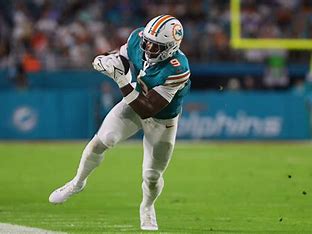
Should the Dolphins Trade Jonnu Smith or Pay Him?
A Breakout Season on a Bargain Deal
Jonnu Smith was signed last offseason on a two-year, $8.4 million “prove-it” deal—and prove it he did. Smith brought new life to a position that has been historically dormant in the Dolphins’ offense, breaking Miami’s single-season tight end records in receptions (88), yards (884), and touchdowns (8).
Smith thrived in Mike McDaniel’s system, especially when quarterback Tua Tagovailoa was healthy. He became a security blanket over the middle, stretched the field, and played well above his contract. Naturally, after a Pro Bowl season, Smith now wants a raise—while still remaining a Dolphin.
As NFL insider Ian Rapoport said:
“I know he wants more money but would like to stay [in Miami]. I know he wants a lot.”
— @PatMcAfeeShow
Contract Talks and Trade Rumors
Despite his desire to stay, contract negotiations have hit a snag. Smith is due $4.8 million this season and is seeking a restructured deal that better reflects his production.
Per Adam Schefter:
“The Dolphins have had trade discussions with the Pittsburgh Steelers… after Smith expressed interest in reworking his deal… His preference is to stay in Miami under a reworked deal.”
— @AdamSchefter
Just months ago, the narrative around Miami’s offseason centered on stars like Tyreek Hill and Jalen Ramsey. Now, the front office faces a difficult decision regarding its only 2024 Pro Bowler.
Miami’s Tight End Expectations
The Dolphins reportedly want more from their tight ends in the blocking department. While Smith’s receiving skills are elite, his run-blocking has been inconsistent. To address this, Miami signed Pharoah Brown, a more traditional inline blocker.
Still, questions linger: If Miami was considering moving on from Smith, why didn’t they draft Penn State’s Tyler Warren—arguably the best all-around TE prospect left on the board? The answer isn’t clear, but it adds to the confusion.
Let’s break down both sides of the debate.
Case to Keep Jonnu Smith
There’s no denying Smith earned a raise. He was “Mr. Reliable” in 2024, delivering elite production and leadership without the off-field noise associated with other stars.
With the addition of Pharoah Brown to help handle blocking duties, Miami could deploy Smith primarily as a receiver—his strength.
Smith hasn’t requested a trade and has remained committed to Miami. He’s a valuable veteran presence for a roster filled with young talent and developmental players. If the Dolphins are serious about rebuilding their culture, rewarding a player like Smith—who’s produced, led, and stayed drama-free—is essential.
As long as a lot isn’t A LOT this should be a no brainer.
Case to Trade Jonnu Smith
At the same time, there are valid reasons to consider a trade.
Smith is entering his age-30 season, and the Dolphins are in one of the worst salary cap positions in the league. Years of bad contracts and questionable roster management have forced the team into tough choices. Trading Smith now—while his value is at its peak—could help Miami recoup assets or fill other roster holes.
There’s also the financial disparity: Smith is currently the 32nd highest-paid tight end by average salary, yet produced like a top-10 player. Nine TEs are making at least $12 million per year; two make $19 million. Smith deserves a raise—but can Miami afford to pay that premium?
Additionally, Miami’s signing of Nick Westbrook-Ikhine—an underrated physical pass catcher—may signal a desire to shift the offense toward more traditional wide receiver targets. Westbrook-Ikhine can replicate some of Smith’s role while a tight end like Brown or one acquired in a trade can handle the blocking and the simple route tree of a traditional, fully rounded tight end.
Final Thoughts
There’s no easy answer. Jonnu Smith’s resurgence was one of the best stories of Miami’s 2024 season, and his departure would sting. But this is a cold, cap-driven league. Unless both sides can find a middle ground, the Dolphins may be forced to move on from their record-setting tight end.



Locksmith in Leeds won’t help with sports decisions, but when it comes to the Dolphins’ dilemma, trading Jonnu Smith or paying him is tough. His performance and fit are key factors. Paying him rewards proven talent, while trading could free up cap space for future moves. Ultimately, the decision balances team needs, budget, and potential returns. Dolphins must weigh short-term impact against long-term strategy carefully.