The Great American Spectacle: How the Sports Bar Became Football’s True Home Field
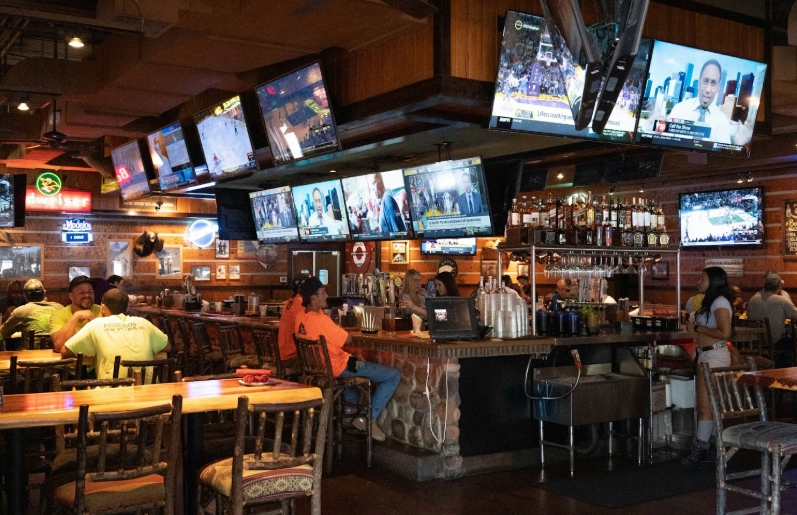
The American sports bar is more than just a place with cold taps and a lot of TVs. It’s a crucial piece of the American football experience, serving as a communal, often chaotic, living room where the tribal energy of the game is magnified. It’s where rival fans tolerate each other for three hours, where the referee’s decisions are endlessly debated and where the volume is always too high (in a good way).
The history of this institution is deeply tied to the rise of professional football. In the 1960s and ’70s, as the NFL expanded its reach via television, fans needed a central gathering spot. Local taverns evolved, adding crucial technologies (like bigger screens and satellite dishes) to become dedicated viewing temples. The true Super Bowl atmosphere, for most, was never in the stadium; it was squeezed shoulder-to-shoulder next to fifty strangers at the local spot. This communal roar, that spontaneous eruption when a tight end makes a diving catch, is a cultural ritual as important as the tailgate itself.
The New Age of Interaction in the Bar
Fast forward to today, and the modern sports bar experience is being subtly but powerfully transformed by technology and law. It’s no longer a passive viewing experience. Every phone is now a live ticker, a second screen and an interactive tool.
The fan experience has become deeply personalized, even while maintaining that communal vibe. While we’re all watching the same play, we’re now engaging with the game in wildly different ways thanks to immediate digital access. Whether you’re cheering on the Dolphins or tracking a rival’s score, the information you need is in your hand, instantly.
This blend of collective viewing and individual access is especially pronounced in states where local discourse around the activity is shifting. Even in regions where the legal landscape is still evolving, like the conversation around Alabama sports betting, the conversation in the bar has changed. Fans are discussing lines, odds and potential outcomes in a way that would have been confined to whispered conversations a decade ago. Now, with the smartphone being ubiquitous, opportunities are limitless; fans take advantage of the vast data at their fingertips, constantly checking predictions for the upcoming NFL season and tracking real-time fluctuations.
The Two Screens: Communal Roar and Private Data
The modern football bar is defined by the tension between its giant central screen and the constellation of flickering, personal phone screens below it. The big TV provides the moment. You know, the touchdown, the turnover, the dramatic flag. But the phone provides the context: the statistics, the fantasy football scores and the odds updates.
This digital layer has intensified the experience. The fan is now constantly calculating, cross-referencing their personal investment with the public outcome. You might be watching a crucial fourth-down stop in a Jets game, but your friend next to you is sweating a separate outcome entirely. Perhaps a prop wager tied to a Dolphins receiver. The communal noise remains, but the focus is now often driven by individual data streams. This evolution is universal, touching fans across our beloved country. From the packed bars of Manhattan (where fans often check lists of the most popular New York sports betting apps ranked by users) to quieter neighborhood venues everywhere else.
The sports bar has adapted, but its core function remains unchanged: to provide a vibrant, collective atmosphere for America’s favorite sport. The technology has simply given us more ways to plug in, making the three-hour game even more intense and interactive than ever before. So, this season, make sure you show some love to your local spot.



There is nothing like the raw, chaotic energy of a packed sports bar on Sunday. You can’t replicate that genuine fan passion in a rigid Mii Creator template.
Great article! The way sports bars blend communal energy with personal phone screens really captures modern fandom. It’s true—the roar of a crowd in a packed bar hits differently than watching alone. This reminds me of watching Premier League games back home—nothing beats the pub atmosphere, though I finally made it to Wembley Stadium last year. Amazing experience, but honestly? The local spot still feels like football’s true home. Something special about sharing those moments with regulars who’ve become family
The sports bar captures the essence of football culture brilliantly! It’s a perfect blend of excitement.