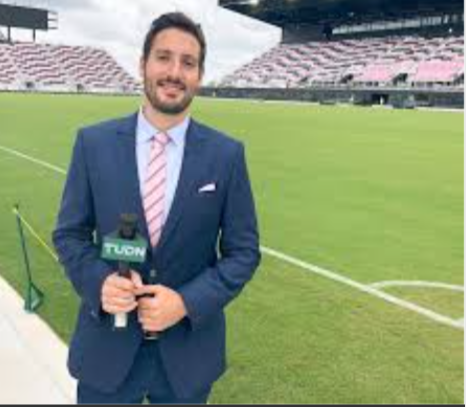
Nico Cantor: How a Miami Native became a top voice in American Soccer
The apple doesn’t always fall far from the tree, and that’s proven to be the case with Nico Cantor.
Born and raised in Miami, Nico is the son of a Honduran mother – Liliana Williams – and an Argentine father – Andrés Cantor. Andrés has emerged as one of the most iconic announcers in soccer history with his famed lines like ‘”El árbitro dice que no hay tiempo para más” and ‘”¡Goooooooooool!”, winning six Emmy Awards, covering multiple World Cups, Olympics and other tournaments, and featuring in TV shows like The Simpsons and Phineas & Ferb as well as movies like Muppets Most Wanted and Speed Racer. Similarly to the likes of Kevin Egan and Rod Underwood, Nico was obsessed with the beautiful game from the very start. Nico played soccer and volleyball in high school, leading Ransom Everglades to a district championship as a freshman, earning the captain’s armband in his junior year, and gaining All-County honors as a senior. He then headed north and enrolled in New York University, where he graduated with degrees in Broadcast Journalism and Romance Languages.
“If people ask me ‘What would you be doing if you weren’t working in broadcasting, I think it would be something linguistics-related, like teaching or studying linguistics…that’s the other thing that, beyond the sports world, I feel really passionate for,” stated Cantor in an exclusive Five Reasons Sports interview.
Cantor started working for his father’s Fútbol de Primera radio station before deciding to join his father’s rival network – Univision Deportes (now TUDN) – where he worked as a studio analyst and U.S. Men’s National Team reporter, in addition to providing English and Spanish commentary for Univision’s coverage of Major League Soccer and Liga MX, polishing his skills on the assignment desk and the station’s flagship program ‘República Deportiva,’ and its live whip-around soccer program ‘Zona Fútbol.’ Eventually, these impressive skills caught the attention of CBS Sports, who had recently taken over the English-language UEFA Champions League broadcasting rights, replacing Turner Sports ahead of schedule. Rather than continuing his career progression at a Spanish-language network, Cantor elected to make the permanent move to English and join CBS in October 2020.
“It was a little bit strange, because CBS picked up Champions League rights when Turner relinquished them with everyone going into lockdown and all sports stopping. That was in August 2020, and the Champions League didn’t pick up again until October. In between that time, the CBS executive Peter Radovich, Jr. had gotten in contact with my agent and offered me a job.”
By accepting this new position and starting his professional journey with CBS, Cantor took on a new role, and a new travel itinerary. Just as Danny Higginbotham was going from England to the United States, Cantor started to make the inverse move, traveling back and forth between London and Miami in order to cover the biggest tournament in club soccer. He spent three years jetting back and forth between Miami and London before eventually moving to Connecticut in 2023 after the launch of the CBS Sports Golazo Network, the first U.S.-based digital network with 24-hour, direct-to-consumer soccer coverage, which is available on CBSSports.com, the CBS Sports app, and on Paramount+. After a year in Connecticut, Cantor decided to move to Queens with his wife, where he has remained ever since.
Whilst he works as a reporter for CBS Sports’ Concacaf and UEFA Champions League coverage and as an analyst for CBS Sports Golazo Network’s flagship morning show Morning Footy, Cantor’s main gig has come as the host of CBS Sports’ live whip-around program, “The Golazo Show.” This is the soccer version of NFL RedZone, but as opposed to Scott Hanson, Cantor is constantly keeping viewers plugged in with important details from Galatasaray’s impressive recent away form to how Thomas Grønnemark revolutionized Liverpool’s set-piece strategy. More than anything, though, he’s serving as a role model for millions of Latino-American kids who, for the first time, are finding someone who looks like them and talks like them on the TV screen.
“I don’t know if I’m doing a good job or not, but I definitely want to help that demographic group feel represented because I’m part of them. I would watch American soccer broadcasts growing up, and I wouldn’t see a lot of people that sounded like me. I thought that to be on English language TV in the United States, you had to have no accent and the most American broadcaster voice possible, and I’m the furthest thing from that.People think I’m not from the United States with the accent that I have, and I try to explain that it’s a Miami thing, it’s a very Latinized English that throws people off at first. There are some Miamians that speak pristine English, and then there’s a lot of Miamians that have this sort of tonality to their vowels that make them sound like they’re not from the United States, but I will argue it is one of the most American accents. When people ask me, ‘Where are you from?’ before the United States, before Argentina, and before Honduras, I’ll say Miami, because that’s where I’m from. Ironically, I think it’s kind of advantageous that I do have an accent. Regardless, I didn’t hear people with accent that sometimes struggle to find the right word either in English or in Spanish. I was schooled in English, so although it sounds like Spanish is my first language, there are times that I’m speaking Spanish, and I forget what the word is, and I know it in English, and I can’t think of it, and I’m like ‘God help me try to figure out this word in Spanish, and it doesn’t happen’ and vice versa.”
“I know a lot of people in the United States feel represented by that, that maybe speak in Spanish to their parents and English to their siblings, which was the case in my household. Especially in the United States, where I bet everybody that is Latino has had this multicultural Latino, Pan-American experience where they have friends from so many Latin American countries, and there are rivalries whenever their national teams play in World Cup qualifiers or in major tournaments like Copa América. That was so much fun growing up, and as a Latino in the United States, having had those experiences, I feel like you have to speak for everyone. I’m not just representing Argentinians or Hondurans, because my dad’s Argentine, and my mom’s Honduran, I want to represent Colombia, I want to represent Costa Rica, I want to represent Mexico, I want to represent every single country, because I know somebody in this country that has had that experience, and I want to be faithful to that representation on air.”



Really enjoyed learning about Nico Cantor’s bilingual, bicultural path in sports broadcasting—especially how he turned his Miami-rooted voice into a strength. For fans who also love building, tinkering, and creative problem-solving, scrap mechanic offers great sandbox tools to express that same kind of ingenuity.
Really enjoyed reading Nico Cantor’s story. His journey shows how authenticity, hard work, and embracing your background can open doors in sports broadcasting. I also appreciate how language and culture shape communication, much like exploring a diccionario de sueños helps people understand different meanings and perspectives. Wishing him continued success!
Resulta inspirador ver cómo Nico Cantor ha logrado representar a la comunidad latinoamericana en el mundo del fútbol, especialmente en su papel como anfitrión de “The Golazo Show”. Su experiencia personal y su acento distintivo reflejan la diversidad de voces en Estados Unidos, lo que puede ser alentador para muchos jóvenes que buscan un camino en la comunicación deportiva. Además, me parece interesante cómo su historia puede ser útil para aquellos que consideran una carrera en medios, ya que destaca la importancia de la autenticidad y la representación. Para más consejos sobre cómo jugar y disfrutar de diversas experiencias, puedes visitar Apostate Verity.
Great read! It’s cool to see how Nico Cantor followed in his dad’s footsteps but made his own name in soccer. Being from Miami and having that Honduran-Argentine background must give him a unique perspective. Keep up the good work, Nico!
Téléchargez Null’s Brawl dernière version pour débloquer tous personnages et profiter nouvelles fonctionnalités.
Smaptroid is an easy to use platform that helps users discover and download useful apps quickly. The website design is straightforward and beginner friendly. Smaptroid focuses on providing updated content and clear instructions for better understanding.
Wow, what an inspiring journey Nico Cantor has had! From growing up in Miami surrounded by a multicultural soccer environment to becoming a prominent voice on CBS Sports, his story really highlights how passion, persistence, and representation can shape a career in sports media. For soccer fans who want to follow live matches and enjoy the same energy that Nico brings to the commentary, platforms like Magis TV make it incredibly easy to watch live sports for free and in HD quality. It’s amazing how you can now catch everything from UEFA Champions League games to MLS matches in real-time, all while enjoying crystal-clear streaming. For anyone who wants to stay up-to-date with the beautiful game and feel the excitement just like the pros, Magis TV is a game-changer for live soccer viewing ⚽📺
hollow knight emphasizes exact timing and smart positioning through its combat system. The Nail is central to both attack and defense, while Soul gained from combat fuels spells, healing, and Nail Arts.