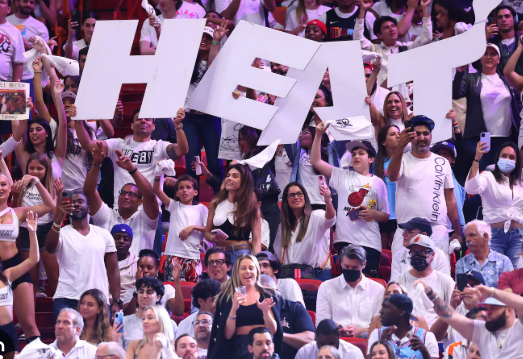
Heat, Dolphins, Panthers, Marlins: Why South Florida Has The Most Engaged Sports Fans In America
South Florida fans don’t follow teams from a distance. They show up in arenas, fill timelines and keep different franchises in daily conversation.
Miami’s claim as America’s most engaged sports market starts with range. The Heat, Dolphins, Panthers and Marlins don’t share the same season rhythm or the same kind of fan culture, yet each gives supporters a different entry point into sports life. That mix makes engagement visible all year, from Kaseya Center nights to Hard Rock Stadium Sundays, Sunrise watch parties and baseball debates.
The Crowds Keep Showing Up
Attendance remains the clearest public signal. The Heat drew 808,063 fans in 2025-26, third in total NBA attendance, even as the league itself was enjoying another strong gate year. For a team moving through transition, that says plenty about habit, loyalty and the city’s attachment to basketball as a nightly ritual.
The Panthers may provide the stronger piece of evidence because hockey once looked like the region’s hardest sell. Hockey Reference’s 2025-26 attendance table lists Florida at 19,677 per game and 812,703 total, above listed capacity. A banner-raising night sellout of 19,655 captured the local feeling as the back-to-back champions opened another season in Sunrise.
Football Travels Beyond Sundays
The Dolphins remain the market’s weekly driver. ESPN’s 2025 attendance report listed Miami at 604,106 for nine home dates, while Pro Football Reference data put the average at 67,123. The record mattered less than the routine: full tailgates, packed local bars, postgame radio and Monday arguments from Fort Lauderdale to Homestead.
That commitment also travels. Reuters reported that the Dolphins’ 2025 overtime win over Washington in Madrid averaged 5.9 million viewers on NFL Network and peaked above 8 million, ranking among that channel’s most-watched international games. Miami’s fan base now exists in-person, across national and even international broadcast windows.
Baseball Shows The Complicated Side
The Marlins are a useful stress test. Their 2026 attendance had started slowly, with Baseball Reference showing 12,557 per game at one point. Yet engagement is measured by more than an average gate during a rebuilding cycle.
When the product and opponent meet the moment, fans respond fast. MLB.com reported that the Marlins’ 2025 sweep of the Yankees drew 101,545 fans across three games, a loanDepot park record for a three-game series. A March 2026 Marlins outlook also showed why the baseball conversation keeps moving: pitching depth, young players and cautious optimism still give fans something to argue about before summer settles.
What’s Missing Right Now
One modern engagement layer remains restricted. Since the Supreme Court’s 2018 PASPA decision, states have made their own rules on sports betting. While 38 states, including Florida, permit sports betting in some form (such as retail-only or at tribal casinos), mobile and online wagering is fully operational in 30, plus in Washington DC.
Florida is one of the handful of states in which sports betting has been made legal only in partnership with a local Casino operator. It gives the Seminole Tribe’s Hard Rock Bet brand sole license to operate in the state, so South Florida fans don’t currently have a competitive set of regulated online sportsbook platforms. They also don’t have regulated online casino apps like players in other North American markets. Canada gives a clear contrast: Casino.org ranks the best real money casinos in Canada, by factors such as payout speed, game choice and payment methods, showing how much more choice some fans can browse where casino play is legal and regulated.
Media Turns Interest Into Routine
The strongest fan bases keep the talk going long before, during and well after games, and South Florida is no exception. Local radio, team podcasts, beat writers, fan accounts, short-form video and live postgame streams make every roster decision feel immediate. PwC’s 2026 analysis of digital fan engagement says teams are increasingly building unified platforms that connect live games, membership, community hubs and fan data. That fits how Miami fans already consume sports: across screens, between fixtures and through a daily cycle of clips, alerts and debate.
That daily media layer also connects the teams. A Heat trade rumor can sit beside Dolphins roster speculation, Panthers injury updates and Marlins prospect news in the same social feed. Fans don’t have to choose one channel of attention. They can move between games, clips, newsletters and podcasts without leaving the local conversation.
The Case For South Florida
South Florida’s case rests on intensity plus variety. The Heat deliver consistent arena demand. The Dolphins dominate the weekly mood. The Panthers have turned championship success into one of the NHL’s liveliest home atmospheres. The Marlins show that even a difficult attendance profile can flip quickly when hope, rivalry and timing line up.
Few American markets ask fans to stretch across such different sports cultures. South Florida does, and its fans keep accepting the invitation. In person, online and through local media, they turn support into a year-round habit rather than a seasonal hobby.



Great!
Compared to full-sized dolls—which entail high procurement costs and significant maintenance challenges—male torso sex doll are far easier to purchase in bulk, clean, disinfect, and store. For operators, they represent a low-cost, high-return investment that enhances the service experience and generates additional revenue.