Stuck in the Middle: The Miami Heat’s Identity Crisis

The Miami Heat are in basketball purgatory—too good to tank, too flawed to contend. Miami continues to hover around the middle of the Eastern Conference standings, clinging to hope built on culture rather than elite talent.

This isn’t a new problem. Over the past four seasons, the Heat have made one Finals appearance and two Eastern Conference Finals, but each run felt more like a gritty overachievement than a sign of sustainable dominance. In 2024-25, that overachievement is no longer hiding the cracks. They’re not rebuilding, but they’re not evolving either.

Despite the rumors that seemingly tie the Heat to every star available—from Kevin Durant to Damian Lillard—Miami hasn’t landed one since Jimmy Butler arrived in 2019. Pat Riley and the front office have prioritized continuity and internal growth, but that patience now looks more like stubbornness. The Heat have failed to make a significant move to elevate their ceiling or bottom out for a reset.

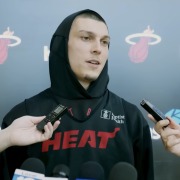
This leaves them stuck in the NBA’s worst spot: mediocrity. Miami doesn’t own the young core or draft capital to pivot quickly, and their reliance on undrafted players, while admirable, has diminishing returns when it’s not paired with top-end talent. Tyler Herro’s offensive game is evolving, Bam Adebayo is a defensive anchor, and others have shown promise—but none are franchise-altering players right now.

 Miami’s ceiling seems capped unless something drastic changes.

The solution? There isn’t a clear one. Blow it up, and you risk wasting Bam’s prime and alienating fans who have grown attached to this core. Run it back, and you’re once again hoping that “Heat Culture” can outweigh talent disparities in a playoff series.

For now, the Miami Heat are the NBA’s equivalent of treading water. Not drowning, not swimming toward a title—just staying afloat, waiting for something to happen. But in today’s NBA, waiting often means falling behind.

All this means is Miami must pick a direction—either push all their chips in to compete now or commit to a real rebuild centered around Bam and their young assets. Hovering in the middle only delays the inevitable. They can no longer afford to stay stuck in neutral while the rest of the league accelerates.

Whether it’s a bold trade to chase a title or a reset that embraces the long game, the Heat need a path that leads somewhere—up. Because if they stay on the path, they’re on now, they risk becoming everything they’ve never wanted to be,  irrelevant.

A Big Three in the Making? What a Kevin Durant Trade Could Mean for the Miami Heat

As the NBA playoffs rage on, a seismic rumor is shaking up the league’s narrative: Kevin Durant to the Miami Heat.

No, it’s not official. But the whispers are getting louder. With Miami looking for a new direction and Durant reportedly unhappy with Phoenix’s direction, the fit suddenly feels real. If it happens, it reshapes the Eastern Conference overnight.

The Current Eastern Landscape: Who’s Standing Tall?

This season, the East has been a rollercoaster. The Knicks and Pacers are standing tall amid injuries that have crippled the Celtics and Sixers, turmoil in Milwaukee, and disappointment in Cleveland. Meanwhile, the rest of the conference struggles to find consistency. The Heat remain in the mix, quietly waiting in the background.

Miami has shown a willingness to manage an aging star, eager to get back into serious contention. Every year brings its share of trade rumors, but this one could be different. The question is: even with Durant, would the Heat have enough to topple the conference’s top contenders? Or would it just be another high-profile gamble in a league that’s always hungry for the next big shakeup?

Kevin Durant’s Fit with the Miami Heat: A Perfect Match?

At first glance, Kevin Durant joining the Miami Heat makes a lot of sense on paper. Durant is one of the most versatile scorers in NBA history, capable of creating his own shot from anywhere on the court. Pairing that with Miami’s physical, defense-first mentality led by Erik Spoelstra and Bam Adebayo could create a well-rounded championship contender.

Durant’s ability to stretch the floor with his shooting would open up driving lanes for Herro and other playmakers, giving the Heat’s offense more dynamism and unpredictability. Miami’s emphasis on tough, smart defense would also benefit from Durant’s length and experience—he’s not just a scorer but a capable defender when motivated.

Offensively, Durant would take some pressure off Miami’s perimeter shooters allowing them to flourish in catch-and-shoot roles. Meanwhile, his presence would force opposing defenses to focus more attention on Miami’s star players, creating space and opportunities for the entire roster.

Leadership-wise, Durant’s championship experience with the Warriors and Nets adds a new dimension. Miami has built a culture of accountability under coach Erik Spoelstra and President Pat Riley, and Durant’s veteran mindset could blend well—or become a point of tension. Given Miami’s history of managing star egos effectively, there’s reason to believe they could integrate Durant’s superstar presence into their locker room culture.

All told, if the Heat pull off this deal, the combination of Durant’s scoring prowess and Miami’s team-oriented toughness might just be the key to pushing them from contenders to champions.

The Trade Package: A Realistic Path to Durant?

For Miami to land Kevin Durant, they’d have to part with a mix of young talent, veteran shooting, and draft capital. A realistic offer might look like this:

Miami Receives:

  • Kevin Durant

Phoenix Receives:

  • Kel’el Ware (or Nikola Jović, depending on who’s dealt)

  • Andrew Wiggins

  • Duncan Robinson

  • Two future first-round picks

From Phoenix’s perspective, this brings in a promising big man, a sharpshooter in Robinson, and a wing in Wiggins who can still contribute at a high level—plus draft capital to reset the clock. For Miami, it’s all-in on a win-now window.

This trade allows the Heat to keep their core trio of Bam Adebayo, Tyler Herro, and Durant intact. More importantly, it opens up new offensive possibilities and defensive versatility, especially with Bam anchoring the back line.

And while trading away picks limits future flexibility, Miami’s history under Pat Riley has always leaned toward aggressive moves for proven stars over future unknowns. This deal follows that blueprint.

A New Big Three in the East: Herro, Bam, and Durant

If Kevin Durant joins the Heat, Miami’s core would transform into one of the most intriguing Big Threes in the Eastern Conference. Jimmy Butler has long been the heart and soul of Miami’s grit and grind, but with Durant, the offensive firepower would skyrocket. Pairing KD with Bam Adebayo—a versatile two-way force—and Tyler Herro, an emerging sharpshooter and scorer, gives Miami a unique blend of scoring, defense, and youth.

Ranking Justification:

Based on this breakdown, I still lean towards ranking the potential Heat’s Big Three as the third best in the East, but with the potential to rise:

  1. Tatum, Brown, and White: Their established two-way chemistry, consistent high-level play, and proven playoff success give them the edge.
  2. Brunson, KAT, and Hart/Bridges: The Knicks have showcased their abilities this postseason and are a step away from the finals, demonstrating their current high level of play and potential.
  3. Herro, Bam, and Durant: The offensive ceiling with Durant is incredibly high, and Bam provides an elite defensive anchor. However, the trio would need time to build chemistry, and Durant’s age and injury history introduce some uncertainty. If they gel quickly and Durant stays healthy, they could easily surpass the Sixers.
  4. Mitchell, Garland, and Mobley: They have potential, but their playoff performances and defensive consistency haven’t reached the level of the others.
  5. Haliburton, Turner, and Siakam: While talented, they might lack the consistent high-level scoring punch and defensive versatility of the top three yet they still remain in the playoffs so we will see how they continue to develop.
  6. Embiid, Maxey, and Paul George: The sheer offensive firepower and defensive potential are immense, but the significant health concerns surrounding Embiid make them a riskier proposition.

While Herro is still developing as a star, the combination of his shooting and playmaking with Bam’s inside presence and KD’s scoring versatility would push Miami into the upper echelon of the East’s contenders.


The Risks: Age and Durability Concerns

The obvious risk is Durant’s age and injury history. At 36, he’s no longer the young, explosive scorer he once was. The last few seasons have been marred by injuries, and durability will be a major question mark if Miami bets heavily on him to carry a significant load.

Miami’s history and apparent willingness of managing star minutes and load is a plus, but relying on Durant to be the difference-maker in high-stakes playoff moments comes with some gamble. There’s also the question of how much the Heat are willing to sacrifice long-term flexibility and cap space to accommodate a veteran star potentially nearing the twilight of his career.


Flexibility and Future Outlook

Despite those risks, the addition of Durant could actually give Miami more flexibility in roster construction. KD’s ability to play multiple positions and stretch the floor allows the Heat to mix and match lineups creatively, freeing up role players to thrive around the trio.

Keeping Jovic or Ware will be essential in the success of a KD, Bam and Herro “big three” and Miami will be right amongst the top of the East.

A view I give for those to think about, KD is on an expiring and it is currently unknown if he is looking for an extension (like Jimmy was), Herro is up for a max extension, and it is plausible that the Heat don’t know if he deserves it yet.

Well if Herro once again leaps to that next level with a guy like Durant, Herro can prove to himself and the Heat that he is worth the money, and if it works out with KD, Miami could  extend him (albeit they would have to match other offers), or pivot to one of the available free agents next summer (Fox, Young, Doncic, Simons). This is just a way to think in the shoes of the front office, a move for KD can really show if Bam and Tyler can bring a championship back to South Beach.

Depth Still a Priority

While Kevin Durant would undoubtedly bring elite scoring, championship experience, and star power to South Beach, the Miami Heat’s issues run deeper than just adding one superstar. Durant alone won’t solve the team’s lack of depth, which was exposed during last year’s postseason and has continued to plague the roster. Miami needs consistent bench production, reliable secondary scoring, and interior presence—especially if they plan to compete with the deeper, more balanced contenders in the East. The front office must ensure that acquiring Durant doesn’t come at the cost of gutting the supporting cast, or they risk repeating the same mistakes that have kept them from raising another banner.

Conclusion: A Gamble Worth Making?

In today’s NBA, championship windows are short, and opportunities to land a generational scorer like Kevin Durant don’t come often. For the Miami Heat, the decision to pursue Durant is not without risk—but it’s the kind of calculated swing Pat Riley’s front office has taken before. If Miami believes in the foundation of Bam Adebayo and Tyler Herro, bringing in Durant could be the catalyst that transforms a solid core into a legitimate title contender.

Durant’s arrival wouldn’t guarantee a ring, but it would raise Miami’s ceiling, add another chapter to their fearless pursuit of greatness, and potentially usher in a new era of Heat basketball. Whether it ends in a parade or another “what if,” the move would undeniably make Miami the center of the NBA conversation—and that alone might be worth the risk.

A Different Heat: What Separates Miami from the NBA’s Elite?

In the playoffs, it’s all about getting hot at the right time—as the Miami Heat have famously shown us in recent years. But it’s also about something even more crucial: health. No team knows that better than Heat fans. This season, Miami had neither—and in the past, it was always one or the other. They didn’t get hot, and they didn’t stay healthy. But even if they had, it likely wouldn’t have changed their fate.

Why? Because this Miami Heat squad lacked what every remaining playoff team has in abundance: superstar power and reliable depth.

Miami currently leans on Bam Adebayo and Tyler Herro—two talented players, no doubt—but they are “B-tier” stars in an “A-list” league. Bam is an elite defender and connector, but not a go-to scorer. Herro is a skilled shot-maker, but streaky and injury-prone. Without a true alpha, and with the Jimmy Butler era officially over following his trade to Golden State, the Heat entered the playoffs with no clear identity—and no margin for error.

That wasn’t the case with past Heat champions. The 2006 squad had a prime Dwyane Wade, who took over games like a superstar, and Shaquille O’Neal, still commanding double-teams. Their supporting cast—veterans like Alonzo Mourning, Gary Payton, Antoine Walker, and Udonis Haslem—provided size, experience, and stability.

The Big Three era? A masterclass in both top-end talent and role-player execution. LeBron James, Wade, and Chris Bosh formed a nearly unstoppable core, but it was the depth—Ray Allen’s clutch shooting, Shane Battier’s defense, Mike Miller’s toughness, and Mario Chalmers’ versatility—that gave Miami the firepower to compete with any team in any situation.

Today’s Heat don’t have anything resembling that formula. No MVP candidate. No top-15 scorer. No bench filled with battle-tested veterans or reliable young producers. Just a lot of questions—and a widening gap between them and the NBA’s elite.

The Star Power Gap

Every team still fighting in the playoffs is led by a franchise cornerstone who can take over games in the biggest moments:

  • Shai Gilgeous-Alexander is playing like the best guard in the world and has turned the Thunder into a legitimate title threat.

  • Jalen Brunson has ascended to All-NBA levels for the Knicks, now joined by Karl-Anthony Towns as a versatile big with All-Star credentials.

  • Tyrese Haliburton has blossomed into a true floor general and emerging superstar, leading the league’s most explosive offense, while the Pacers’ depth—with players like Pascal Siakam, Myles Turner, and a high-powered bench—has made them one of the most balanced teams still standing.
  • Donovan Mitchell is healthy, explosive, and carrying the Cavaliers with a complete offensive arsenal.

  • Nikola Jokić remains arguably the best player in basketball and the engine of the Nuggets, even if Denver’s supporting cast is inconsistent.

  • Boston boasts a three-headed monster with Jayson Tatum, Jaylen Brown, and Kristaps Porziņģis—though injuries to Tatum and Porziņģis, combined with cold shooting from three (their offensive lifeblood), have exposed their vulnerabilities.

  • Anthony Edwards has exploded into superstardom, giving the Timberwolves a fearless closer alongside Julius Randle, who’s finally thriving in a complementary role.
  • Even the Warriors, who traded for Jimmy Butler, remain star-powered on paper—but without Stephen Curry, their ceiling has a clear limit.

The Heat? They traded away their closer and leader, and they didn’t have a true first option left to step into that role.

Lacking the Bench

If you’re not star-heavy, you’d better be deep. In the past, Miami thrived on depth—unearthed from the G-League, undrafted gems, and the Heat’s unmatched development program. But that edge has dulled. Caleb Martin regressed. Nikola Jović and Jaime Jaquez Jr. are still learning. Duncan Robinson went cold. Kyle Lowry was traded. And with injuries up and down the lineup, Erik Spoelstra spent the season cycling through emergency options just to patch together rotations.

Compare that to the Thunder’s youthful balance, the Knicks’ gritty depth, the Cavs’ two-way flexibility, or even Denver’s playoff experience. The Celtics, when healthy, can run three bench shooters at once. Miami simply doesn’t have that luxury anymore.

The Heat Culture Ceiling

Miami still has its culture. Still has one of the best coaches in the league. Still plays hard every night. But in today’s NBA, culture alone doesn’t win championships. You need talent. You need buckets. And you need a margin of error wide enough to survive injuries and shooting slumps.

Right now, the Heat have none of that. They have limited draft capital. No cap space. And no clear path to acquiring the kind of top-15 player every other contender seems to have.

What’s Next?

The Jimmy Butler trade signaled a transition—but it hasn’t yet turned into a rebuild or a retool. Miami is in limbo: too competitive to tank, too flawed to contend. Without a blockbuster move or a leap from one of their young players, they’ll likely stay stuck in the middle. Meanwhile, teams like the Thunder and Knicks are surging forward with modern rosters built around both stars and depth.

So yes, the Heat showed the NBA how to defy odds and make deep runs off of grit and culture. But that story only works when you have someone like Butler dragging you through the fire. Without him, and without a replacement, the gap between Miami and the NBA’s upper echelon has never felt wider.

Mateo’s Hoop Diary: The Mother’s Day massacre says more about the Pacers than the victimized Cavaliers

The Pacers took a gigantic 3-1 lead in the series as they shamed the first-seeded Cavaliers by 20 and at one point led by 44. They flexed most of their powers as they sensed weakness in their opponent, leaving them with an indelible nightmare. Keep in mind that a 3-1 comeback has been completed only 13 times in NBA history. The Nuggets were the last to do it in consecutive series in the 2020 bubble.


That didn’t stop Cavaliers owner Dan Gilbert from trying to channel the spirit of their past championship team on his X(formerly Twitter) account: “Hey @cavs fans… yes it was an ugly one, but we’ve been here before. Time to get 3 in a row, 2 of them coming at home. Let’s start with Game 5 on Tuesday. #Believeland”


The hosts of the Gainbridge madhouse didn’t even need Bennedict Mathurin, one of their top bench players of the series, who got ejected for swiping at De’Andre Hunter over seven minutes into the game. Obi Toppin was the go-to reserve, tattooing 20 points on 64% shooting on Cleveland before the fourth quarter. 


The Cavaliers were a -390 favorite on DraftKings and -550 on FanDuel before the series started. They won 64 regular season matches and destroyed the Heat by a combined 122 points in a sweep in round one. Yet their injuries soured the season. They were dangerous in the first three games primarily because Donovan Mitchell is having an epic playoff run. He hurt his ankle during halftime warmups and didn’t play the second half of Game 4. 


As the series shifts to back to Cleveland for Game 5, the Cavaliers are likely as finished as a medieval prisoner headed for the chopping block. And how can they not be mentally shattered? They’ve been getting physically pounded all series, the Game 2 loss was one of the worst in franchise history in spite of the absences to Evan Mobley, Darius Garland and Hunter, and the latest beat down had them dazed and confused like a prime Deontay Wilder right hand to the dome.


The Pacers are a threat to win it all because they understand better than any team that the pass is way more effective than dribbling to move the ball. They log the most passes in the playoffs and 23.4 more than the second team, which is the Warriors. 


Indiana has a great squad- athleticism, size and speed- around an unselfish superstar who can hit big-time shots. Tyrese Haliburton hunted Jarrett Allen at the end of Game 1 and buried the winning shot in his face with a step-back trey two nights later. At least four Pacers are shooting a minimum of 44% on playoff 3-pointers and six are averaging double-figure scoring. Nikola Jokić must be watching, wishing and wondering how the Nuggets could have a bench like theirs. And Pat Riley can’t help but notice how far off the Heatles are from Eastern contention. 


The Pacers are on the verge of consecutive Eastern Conference Finals trips and have replaced the Heat following the 2023 playoffs as the conference’s top culture because they maximize talent and can win as the underdog. Still, coach Rick Carlisle said his team hadn’t done anything yet and would “keep approaching this like we have everything to prove. We know people don’t believe in us…” 


Haliburton said the team can be counted on to respond the right way. He’s correct. How many more times do they have to prove it?


No Regrets, Still Respect: Pat Riley Reflects on Jimmy Butler Fallout

Hostile Butler Breakup Overshadows Season

The Miami Heat’s chaotic 2024–25 season came to a close with a sharp dose of honesty from team president Pat Riley. Speaking to reporters at his end-of-year press conference, Riley didn’t shy away from the elephant in the room — the team’s midseason split with Jimmy Butler.

“In the middle of the year, we made a decision,” Riley said. “Jimmy’s situation wasn’t fun. It was ugly. But I don’t want it out there that I didn’t appreciate him. That I didn’t love this guy. Those things happen.”

Butler, known for his playoff heroics and alpha mentality, was traded after weeks of internal drama and public tension with the front office. The breakup left Miami with a disjointed, underwhelming roster that struggled to stay afloat in the Eastern Conference.

Riley Stands Firm on No Extension

Despite Butler’s past contributions, Riley remained firm on the team’s decision to deny him a contract extension before the season.

“No, I’m not going to apologize for saying no on the contract extension when we didn’t have to,” he added. “And I don’t think I should. I’ll always say that to players — if I was coaching, I’d say, ‘Keep your mouth shut, and I’ll see you next training camp.’ Then you get back on the court.”

Impact on Team Chemistry

The fallout from Butler’s departure lingered throughout the season and had a noticeable impact on the Heat’s performance.

“There’s no doubt that what happened with Jimmy had a tremendous impact on our team,” Riley said. “There’s no doubt about it. The buck stops with me. I’ll take that hit you want it.”

Without their vocal leader and go-to scorer, the Heat never found the right rhythm. The remaining roster — built around Bam Adebayo — was uneven, lacking both firepower and identity.

Time for Change: ‘We’re Not Running It Back’

Looking ahead, Riley made it clear the current version of the Heat has reached its ceiling.

“This team isn’t good enough to compete for a title,” he stated. “We’re not going to run it back next year.”

That statement signals an offseason of significant roster movement. With Adebayo as the centerpiece, the Heat will need to find a new star — or several new pieces — to return to title contention.

Legacy, Pressure, and the Next Chapter

Despite his status as one of the most respected front-office executives in league history, Riley has struggled to build a sustainable contender since the Big Three era. Miami’s Finals run in 2023 now looks like an outlier rather than a stepping stone.

This offseason represents a pivotal moment. If Riley can reshape the roster and find new leadership on the court, the Heat may again rise in the East. But for now, the franchise faces hard questions, a fractured identity, and an offseason clouded by what-could-have-beens.

Reading Between the Lines: Pat Riley’s Presser Points to a Kevin Durant Pursuit

Pat Riley didn’t need to say Kevin Durant’s name.

As he wrapped up his annual end-of-season press conference on Monday, the Miami Heat president left behind a trail of cryptic but calculated quotes — and a clear message beneath it all: the Heat are gearing up to chase an alpha, and all signs point to Kevin Durant.

From opening with a refusal to rehash the regular season — “I don’t wanna really discuss” — to ending with a declaration on acquiring a star — “If that talent can help and he’s humble, that’s fine. If it translates to winning, that’s all that counts” — Riley sent a signal to the rest of the NBA. Miami is plotting something big. Again.

The Blueprint Is in Motion

The word “blueprint” came up more than once during Riley’s time at the podium — a nod to the long-term planning Miami has famously leaned on in the past.

“We took the deal that we felt was best for us now and in the future,” Riley said of the Jimmy deal, “Our draft picks are in better order… we have a lot of flexibility. That’s where the blueprint is coming from this summer.”

That flexibility didn’t happen by accident. The Heat were boxed in by salary and short on picks as recently as February. Now, they’re one Kevin Durant trade away from what they believe is transforming again — just as they did in 2010.

When asked if the long-term planning approach used before the Big Three era still applies, Riley admitted: “It’s a little bit different in how you plan now.” But the context is the same: Riley doesn’t wait for change. He engineers it.

Durant Fits the Mold, Again

Riley spent several minutes defending the viability of aging stars, even while most around the league are shifting toward youth.

“I think an aging great, great player who may not be able to carry a team… together, they can rise in the Playoffs,” Riley said, citing the Warriors’ veteran core. “You have to pick out the right one. But I’m not against that, no.”

Durant, 35, still averaged over 27 points per game on elite efficiency. He may no longer carry a team alone, but in Miami, he wouldn’t need to. With Bam Adebayo and Tyler Herro, he could be the final piece in a reloaded contender.

And crucially, Riley said he’s open to bringing in a true alpha — but with one caveat: “If that talent can help and he’s humble, that’s fine. If it translates to winning, that’s all that counts.” Durant, has never been a locker room problem. In fact, he’s admired Miami’s culture — and was once close to joining it.

“Run it back? We’re not gonna do that.”

That quote from Riley couldn’t be clearer. He shut the door on continuity, despite praising the team’s heart and competitiveness. While internal growth will always matter, he admitted: “I don’t think we can go there.”

So what can they do?

Riley hinted at “lateral trades,” pointing to the 2020 additions of Jae Crowder, Andre Iguodala, and Solomon Hill. But he also noted that those moves didn’t cost an alpha — a sign that Miami might be looking to add without subtracting its core.

“We know what we have to do,” Riley said. “We’ve done this before.”

Herro and Bam Staying Put?

When asked about Tyler Herro’s future, Riley praised his timing and fit: “I’m glad that we got him. Got he and Bam at the right time and we’ll move forward with that.” He echoed Herro’s “pay me now or pay me later” line but added, “We haven’t committed to it. We’ve already talked to him about it. He’s cool.”

It’s possible Herro could be part of a Durant deal, but Riley’s tone suggested the Heat may instead aim to add to their core — not dismantle it. That would mean finding a way to land Durant while keeping Herro and Bam, potentially with a larger package centered on draft capital and other players like Jaime Jaquez Jr. or Nikola Jović.

What’s Next

The final takeaway from Riley’s remarks: Miami “probably” won’t run it back. They’re prepared for major change. And they believe they have the infrastructure, cap flexibility, and credibility to make a move.

All that’s left is the right star to become available.

Durant fits the description. He’s an aging alpha who can still dominate, respects the Heat’s culture, and could slide into a Big Three that’s already built to win now. If the Suns make him available, Pat Riley will be on the phone — and this time, he may not leave empty-handed.

Mateo’s Hoop Diary: Draymond Green earns fifth playoff technical foul

Another Warriors game, another exhibit of Draymond Green crossing the line and acting like the victim. With five playoff technical fouls in only nine outings, Green’s getting a warning letter plus a $4,000 fine and is two away from a mandatory suspension. 


During Game 2 of the Timberwolves v. Warriors, Naz Reid committed a reach-in foul against Green to free the ball and instantly was countered with a flailing arm to the head that dropped him. Stan Van Gundy stupidly wondered if there was intent by the league’s dirtiest player on the TNT broadcast when Green’s dangerous stunts on Tari Eason and Jalen Green happened as recently as the last round.


At some point in the game, a fan allegedly spat some racial smack at Green, getting tossed by arena authorities. This likely had Green more upset after the game, when he gave a brief statement: “The agenda to continue to keep making me look like an angry black man is crazy. I’m sick of it. It’s ridiculous.” 


There is no conspiracy by media folk, who are also his colleagues, because of his roles at TNT and Volume Sports, to sully his reputation. He does that himself whenever he tries to hurt another with non-basketball tactics. MMA moves are a part of his arsenal because of his limitations as a player and his inability to control his violent temper. Yet Steve Kerr said after the game that these things happen because he cares too much. If only someone would have asked the coach how his player’s actions aren’t poisonously selfish.


The only reason people want to question Green is because he’s the same guy who laid out Jordan Poole, threatened his coach, choked Rudy Gobert, windmilled on Jusef Nurkić’s head and kicked Steven Adams’ bollocks, aside from the innumerable list of priors. His postgame comments were BS. He’s upset at the consequences of being a dirty player and thinks his one-day hall-of-fame status should exempt him from reproach.


The series is tied at 1-1, and the new hosts in Golden State will be without Stephen Curry until at least May 14, as he suffered a left hamstring injury early in Game 1. As a result, they played 14 guys on Thursday, the most in the playoffs since 1998. Additionally, when considering Jimmy Butler’s comfort in taking a lesser role, Green will have to be more than an ordinary player for the Warriors to have a chance of advancing. To his credit, Green wasn’t guarded in Game 1, punishing the Wolves for it, but that’s not who he is. The only things he’ll lead the playoffs in are technical (5) plus flagrant fouls (2) accumulated even with an early exit. 


Mateo’s Hoop Diary: The second round shows how far away the Heat are from competing

It was a hard, frustrating season for the Heat faithful because their crew stunk and was drawn and quartered in four games by the Cavaliers. Round two, which has featured only prosperity for the visitors, also shows how far away they are from the serious teams.


The Cleveland-Indiana series kicked off Sunday with Darius Garland (toe) out for the former. That version of the Cavaliers trashed Kaseya Center by a combined 92 points. Then the Pacers outplayed them and claimed Game 1 in Cleveland as Tyrese Haliburton was the best player late, hunting down Jarrett Allen for a deep jumper and blow-by on the right side.


The Pacers seized one of the most memorable playoff wins of the last five years two nights later. One side will remember it as a breakthrough performance and the other as a nightmare that possibly ended their season.


The Pacers looked like they were going to blow their golden opportunity because they showed up playing with less force, almost expecting the wounded Cavs to surrender. Evan Mobley (ankle), Garland (toe) and De’Andre Hunter (thumb) were absent, but Mitchell was dragging his crew with a superhero discharge reminiscent of LeBron James’ last ride with Cleveland in 2018.


The guests were down 17 in the late third quarter and didn’t yield because they have high basketball character and one of the league’s brightest stars as the lead decision-maker.


The short-staffed Cavs had chances to get away as they were up seven with 48 seconds left, but their night ended with Haliburton hitting a 24-foot step-back game-winning triple in Ty Jerome’s face. The series is now 2-0, shifting to Indiana.


There’s not much coach Kenny Atkinson can tell his team after that. Times have changed, but perhaps he should listen to coach Paul Westphal’s public comments after the ‘93 Suns fell 2-0 at home and won the series in five after he guaranteed it.


Here’s the difference between the Heat and Pacers. The latter’s star player has a rare takeover ability, and his supporting cast of Rottweilers can defend up top and below. The Heat has two nice players in Bam Adebayo and Tyler Herro, but they aren’t at that level of shot creation plus the outfit around them is unready and not talented enough to stay out of the Play-In Tournament.


Only teams with stars do anything unforgettable. The Pacers are on the verge of becoming the NBA’s biggest spoilers.  Remember when that was the Heat two and five years ago?


But what about the differences between the Cavs and the Heat? Simplifying things: they are Air Force One at full strength, and the Heat is a commercial airliner. Additionally, Cleveland’s Game 2 loss is a perfect example: Mitchell was an unstoppable force and Max Strus plus Allen had big-time contributions. Jimmy Butler was the last person who wore Heat colors and could carry inferior players. On top of that, Butler was also instrumental in helping the Warriors, his new team, defeat the hosting Timberwolves on Tuesday while Stephen Curry left early in the second quarter with a hamstring strain.


 The Heat will only take the next step when they find someone else to handle the responsibilities of being the guy. If they know what’s good for them, they’ll find someone who can also get their offense into triggers quicker to exploit Adebayo’s athleticism to the highest power.


Being a cute team is not enough for the hardest-working, best-conditioned, most professional, unselfish, toughest, meanest, nastiest team in the NBA.


Dwyane Wade vs. James Harden: Why D-Wade Will Always Be Better

Dwyane Wade vs. James Harden: Why D-Wade Will Always Be Better

By age 35, both Dwyane Wade and James Harden had carved out Hall of Fame careers. Wade, revered for his midrange mastery, slashing brilliance, and defensive grit, and Harden, a statistical marvel who redefined offensive efficiency with step-backs and free throws. But when the lights shine brightest—when reputations are forged in fire and banners are raised—Wade simply stands taller. This isn’t a spreadsheet debate. It’s about legacy. It’s about moments. It’s about what truly lasts.


Accolades by 35: Rings Matter More Than MVP Votes

Let’s start with the scoreboard that matters most: championships.

Dwyane Wade by 35:

  • 3× NBA Champion (2006, 2012, 2013)
  • 1× Finals MVP (2006)
  • 12× All-Star
  • 8× All-NBA (2 First Team, 3 Second, 3 Third)
  • 3× All-Defensive Team

James Harden by 35:

  • 0× NBA Champion
  • 0× Finals MVP
  • 1× MVP (2018)
  • 11× All-Star
  • 7× All-NBA (6 First Team)

Harden’s accolades reflect individual brilliance, but Wade’s tell a broader story—team greatness, postseason impact, and sustained excellence on both ends. He was the undisputed alpha of a title team in 2006, the steady veteran in 2012–13, and the bridge between eras in Miami. Harden, despite multiple super teams and MVP-caliber teammates, never returned to the Finals after losing to Wade and the Heat in 2012—and that’s not a coincidence, it’s a pattern.

Wade wasn’t just a scorer—he was a relentless defender. He led all guards in blocks multiple seasons, routinely guarding the opposing team’s best perimeter threat. Harden, meanwhile, became notorious for defensive lowlights and lapses in effort. One played both ends with pride. The other often coasted on one side of the floor.


Statistical Showdown: Harden’s Volume vs. Wade’s Two-Way Value

Compare their production by age 35:

Wade (2003–2017):

  • Regular Season: 22.7 PPG, 4.7 RPG, 5.6 APG, 48.4% FG, 1.6 SPG, 0.9 BPG
  • Playoffs: 22.3 PPG, 48.0% FG in 171 games
  • Advanced: 23.7 PER, +5.0 BPM
Harden (2009–2025):
  • Regular Season: 24.1 PPG, 5.6 RPG, 7.2 APG, 43.9% FG, 1.5 SPG, 0.5 BPG
  • Playoffs: 22.4 PPG, 42.2% FG in 165 games
  • Advanced: 23.7 PER, +5.9 BPM

Harden’s edge in volume and passing is clear. But Wade was more efficient, more versatile, and far more balanced. His field goal percentage was significantly higher despite a tougher shot diet and fewer gimmicks (no foul-hunting theatrics here). And while Harden’s playoff numbers fall off, Wade’s stayed consistent—even elevated—against the league’s best defenses. Stat sheets are useful, but context matters.

Harden’s reliance on drawing fouls, isolation dribbles, and high-usage systems helped inflate his stats—but also made his game harder to replicate under playoff intensity. Wade’s style, built on athleticism, footwork, and feel, translated under any system, in any era.


Game 7 Ghost: Harden’s Glaring Weakness

Playoff performance separates the good from the great—and this is where Harden’s legacy takes a hit. He’s 3–4 in Game 7s, and his numbers in those games are troubling:

Game 7 Averages: 19.3 PPG, 7.9 APG, sub-40% FG

  • 2018 vs. Warriors: 2-of-13 from 3 in a 27-straight-miss debacle
  • 2023 vs. Celtics: 9 points, 5 turnovers in a critical loss
  • 2025 vs. Nuggets: -29 plus-minus in a home elimination game

From Brooklyn to Philly to L.A., Harden has often shrunk in the biggest moments. He’s had more than enough talent around him—Chris Paul, Kevin Durant, Joel Embiid, Kawhi Leonard—and still, no return to the Finals. The common thread? James Harden.

Harden scored 10 points with 6 turnovers in a closeout game at home. Wade dropped 43 in a must-win Finals game on the road. That’s the difference.


Wade: A Proven Closer and Championship Pillar

Now flip the lens.

In 2006, Wade averaged 34.7 PPG in the Finals, singlehandedly toppling the Mavericks in one of the greatest postseason performances ever. His Game 3 heroics sparked a 4-0 run to clinch Miami’s first title. At 24, he was already a closer. In 2012 and 2013, he adapted his game next to LeBron James and still played a critical role in back-to-back titles, never demanding the spotlight—just delivering in it.

He never avoided the big moment. He owned it.

  • 3–2 career record in the Finals
  • No flameouts, no quit narratives
  • Played hurt, sacrificed ego, and still produced

Wade was a competitor first, star second. He took charges, chased blocks, and never let legacy moments slip through his fingers. That’s what separates champions from stat kings.


Legacy Check: What Defines Greatness?

Harden will retire as a Hall of Famer—his offensive resume is too good not to. But the story will always include caveats: no rings, postseason letdowns, and exits that felt more like escapes. Even in his MVP season, the conversation was about how far Houston could go in spite of his playoff history.

Wade? He’s enshrined in both Springfield and NBA lore. A cultural icon in Miami. A Finals MVP. A clutch legend. A two-way dynamo.

So let’s call it what it is:

If you want numbers, Harden wins some arguments.
If you want winners, leaders, and clutch greatness—Wade never loses them.

Until Harden rewrites his postseason script—and that window is closing fast—D-Wade will always be better.

When the careers are over and the banners hang, one name echoes in championship lore. The other echoes in “what ifs.”

Wade didn’t just play in the big moments—he defined them. That’s why he’ll always be better.

Can the Heat Justify Giving Tyler Herro a Max Deal?

From Bubble Breakout to Big Decisions

Tyler Herro first captured the NBA spotlight during the 2020 Bubble Playoffs, where he played beyond his years as a 20-year-old rookie on a title-contending Miami Heat squad. Averaging 16.0 points per game across 21 postseason contests — including a legendary 37-point outburst against Boston in the Eastern Conference Finals — Herro quickly earned a reputation as a fearless shot-maker and rising star. His swagger, scoring ability, and poise on the big stage made him a household name and a core piece of the Heat’s future. But five seasons later, the question lingers: Has Herro grown into the franchise cornerstone Miami hoped for — or simply a really good scorer on a team still searching for its identity?

Contract Details

With a $149.7 million extension on the table this October, the Miami Heat must decide if Tyler Herro is worth a deal that would pay him $50+ million annually through 2030.

Tyler Herro isn’t new to big-money conversations — he already secured a 4-year, $130 million extension from the Heat in 2022, the same offseason Darius Garland landed his five-year, $193 million max rookie extension with Cleveland. At the time, both guards were seen as franchise cornerstones. Now, three years later, Garland’s contract is trending toward value while Herro’s future hangs in the balance — especially with a new deal potentially paying him $50+ million per year starting in 2027-28.

Starting October 1, the Miami Heat can offer Tyler Herro a three-year, $149.7 million contract extension — a deal that would eventually pay the 25-year-old guard $50 million a year. Herro is already locked in for $64 million over the next two seasons, but the question now is whether Pat Riley and the front office believe he’s worth max money through 2031. If no extension is signed by October 20, Herro becomes eligible for an even bigger four-year, $206.9 million extension in the 2026 offseason.

Herro isn’t ducking the conversation.

“Everyone knows I want to be here long term,” Herro said. “I’m excited to see what the organization has to say. We’ll see if they want me here as much as I want to be here.”

On paper, Herro’s case is compelling — an ascending scorer with All-Star flashes and a defined role in Erik Spoelstra’s offense. But for a franchise facing a possible roster shake-up and already burdened with large contracts, the price tag might give them pause.

What the Numbers Say

Data found via Basketball Reference.

Herro just wrapped up a strong 2024-25 campaign, averaging 23.9 points, 5.5 assists, and 5.2 rebounds per game while shooting 47.2% from the field, 37.5% from three, and 87.8% from the free-throw line. It was arguably his most complete season yet — with career highs in scoring, assists, and efficiency.


Season G PTS AST REB FG% 3P% FT% eFG% PER WS
2024-25 77 23.9 5.5 5.2 47.2 37.5 87.8 56.3 19.7 7.4
Career 361 19.4 4.0 5.0 44.8 38.2 87.4 53.4 15.9 19.9

Herro finished the season top 20 in scoring league-wide and showed growth as a playmaker. His career-best 56.3% effective field goal percentage signals improved shot selection and efficiency — critical traits for a lead guard in a modern offense.

Playoff History and Clutch Performance: Still Room to Grow

Despite his postseason heroics as a rookie in the 2020 Bubble (16.0 PPG in 21 games), Herro’s playoff track record since has been mixed.


Year G PTS FG% 3P% REB AST
2019-20 21 16.0 .433 .375 5.1 3.7
2021-22 15 12.6 .409 .229 3.9 2.8
2024-25 4 17.8 .415 .310 3.5 2.8
Career 50 14.6 .414 .328 4.2 3.3

While he’s averaged 14.6 points over 50 playoff games, his shooting percentages — particularly from three (32.8%) — have dipped under pressure. That was shown at a premium this season, as Herro was one of the worst performers in the clutch amongst the entire NBA. In the last five minutes of games with the score within five points, he appeared in 35 such contests, averaging just 3.0 minutes per opportunity with a Net Rating of -0.7. His True Shooting Percentage (TS%) in those moments was an alarming 37.0%, and he posted a 31.9% eFG, with a usage rate of 30.9% — suggesting he wasn’t shying away from the moment, but also not converting. For someone commanding a near-max deal, that’s something Miami has to weigh.

Defensive Concerns

Statistical Data found via- CraftedNBA.Com

While Tyler Herro continues to blossom offensively — ranking in the 95th percentile in offensive load, 96th in creation, and 95th in overall CraftedOPM — his defensive impact is still a glaring weakness for the Miami Heat.

Herro posted a Defensive Rating of 112.6 this season, a figure that becomes even more problematic when paired with his 9th percentile CraftedDPM (Defensive Plus-Minus). He struggles to generate defensive events — sitting in just the 19th percentile in deflections, 13th percentile in block rate, and 18th percentile in defensive rebounding. Opponents actively exploit him in pick-and-rolls, and his rDTOV (rotational defensive turnovers forced) of -0.5 ranks in the 12th percentile, suggesting minimal disruption to opposing offenses.

That liability was on full display in Game 1 of Miami’s playoff series against Cleveland. The Cavaliers hunted Herro on switches, forcing him to defend elite scorers and sharp-shooting wings in constant motion. They scored 64 points on the 36 possessions where Herro was targeted, and Ty Jerome — a Sixth Man of the Year finalist — exploded late to seal the win.

Herro’s lack of versatility (34th percentile) and limited rim protection (54th percentile Rim Defense, but -1.2 value) force Erik Spoelstra into a tough dilemma: keep his most dynamic scorer on the floor or close games with stronger defenders.

This also helped the Heat blow numerous leads as they didn’t have a #1 guy to take over late, both on offense and defense. Make a play and then hit a big shot, every night they were trying to find the guy who would step up, a similar theme for the last few seasons (other than playoff Jimmy). Can you pay someone the max value contract if they can’t produce like it?

So How Does Tyler Compare?

But to fairly assess his value, we have to look beyond box scores and examine those most similar to him: Darius Garland, Jamal Murray, Devin Booker, and Anfernee Simons.

Darius Garland signed a near-identical max extension and plays a similar offensive role — a high-usage, shot-creating guard. But what separates Garland is his role as a clear No. 2 option behind Donovan Mitchell, a willing facilitator with elite passing vision and the ability to bend defenses without needing to be a volume scorer. In Cleveland’s system, he’s not expected to carry the entire offensive burden — just play off Mitchell and make others better. That’s a more complementary — and sustainable — usage level than Herro’s high-creation rate suggests.

  • Contract Terms: 5 yr(s) / $197,230,450
  • Garland has a max hit of $44 million which would be a fair valuation for Herro, given Miami adds a superstar.

Jamal Murray, like Herro, is a score-first guard with questionable defense, but the gulf lies in championship pedigree. Murray is a proven playoff riser who has consistently elevated his game alongside Nikola Jokić on the biggest stage. He doesn’t just put up numbers — he wins with them. That’s a level of impact Herro has yet to show in deep postseason runs, where his defensive limitations become more exploitable and his scoring comes with more resistance.

  • Contract Terms: 4 yr(s) / $207,845,568
  • The same one Herro will be up for if Miami waits until the 2026 offseason.

Devin Booker, despite a string of injuries, has cemented himself as one of the league’s premier scorers. He can carry an offense, bend schemes, and create for others. Booker’s usage and skill set are simply more advanced, and he’s shown the ability to toggle between lead guard and off-ball assassin. Herro doesn’t have Booker’s isolation gravity or midrange prowess, nor the size and strength to consistently take on top defensive assignments.

  • Contract Terms: 4 yr(s) / $220,441,984
  • Part of a failed Suns super team, interesting to see where he may end up.

Anfernee Simons, the most apt comparison. Like Herro, Simons is a volume scorer on a non-contending team, often tasked with doing more than he’s truly capable of. Neither is a true No. 1 option, and both may be miscast as franchise centerpieces when their best role is likely as a No. 2 or 3 scorer next to a primary initiator. They both struggle defensively, provide little off-ball impact when not scoring, and operate best in a freedom-first system. The difference? Simons’ $100 million deal is more palatable for his role and output — whereas Herro’s higher price tag demands greater two-way contribution or playoff impact.

  • Contract Terms: 4 yr(s) / $100,000,000
  • Simons is in a very similar situation, possible trade target, extension decision looming, not a proven #1.

So where does Herro stand?

Herro’s’ looking to get paid like a lead guard, produces like a second option, remains inconsistent in the clutch, and defends like a fringe starter. That financial and on-court identity crisis is the crux of Miami’s dilemma. They can’t build a contender around a guard who needs the ball but doesn’t elevate others or defend. Yet they also can’t maximize Herro unless they minimize his usage and surround him with dominant two-way stars.

  • on potential extension during 4/30 Exit interview: “Big deal? Not the biggest deal but I would love to be here. The front office, the organization, I think the city, everyone knows how much I love Miami. I’ve been here since I was 18, 19, I got two kids here, so. This is really home for me. I love being here. Basketball is why I’m here at the end of the day, I want to win and I know how badly this organization and this city wants to win. So, I would love to be here. We’ll see what happens. If it doesn’t get done in October I think we could get it done next summer, just be a little bit higher price. So we’ll see.”

The Max: Still Too Much?

The Miami Heat can offer Tyler Herro a three-year, $149.7 million contract extension as early as October 1st.

If both sides wait until the 2026 offseason, Herro would be eligible for a four-year, $207 million extension.

And if he makes an All-NBA team next season, Herro could even qualify for the supermax — a five-year deal worth up to $380 million.

The question is: should the Heat commit to Herro at those numbers?

Is there a path where a Herro extension works
He’s only 25, continues to improve, and could grow into a superstar. Yet the longer the Heat wait, the more costly it could be.

The Verdict: Worth the Max?

If Miami wants to extend Herro, it has to come at a reasonable price, one that makes both the Heat and Herro happy.

Tyler Herro won’t have a public fallout like Jimmy Butler did, but that deadline gives the Heat a window to shift their direction — and potentially his future — before the season settles in.

If Miami can package expiring contracts and land a superstar, Herro’s value rises to the level of someone like Darius Garland. But if the front office stands pat and treats Herro as its No. 1 option moving forward, it signals a lack of clear direction — and that’s a concerning outlook for the team’s future.

Yes, Miami can justify a big extension for Herro if they make a significant move, but they’re already paying Bam Adebayo $55 million annually. Without added star power, tying up near-max money in Herro, a player who hasn’t consistently produced in the postseason or on both ends of the court, could hurt the team long term as they would just be “running it back” once again. Herro might want to be the face of the franchise — but Miami needs him to be the foundation, not just the frame.

Tyler Herro isn’t a max player in the traditional sense. He’s not the engine of a championship team, not the go-to closer in crunch time, and not someone who elevates teammates on the defensive end. But at just 25 years old and coming off his best season yet, he’s far too valuable to let walk for nothing.

So, what’s the solution?

If the Heat see Herro as part of the future — but not the future — a compromise extension in the $40–44 million annual range makes the most sense. It’s still a huge payday but gives Miami flexibility to chase a star via trade or free agency. Ideally, the deal would include incentives tied to playoff wins or All-Star appearances, or even a team option, protecting Miami in case Herro plateaus.

That’s saying Herro would be down for this, might be more plausible if Miami lets his contract play out.

 If Herro and Miami wait until 2026, his next max offer would rise even higher, and Herro would likely feel disrespected without it. Locking him in now — at a discount — gives the Heat both trade value and financial control, even if they don’t view him as a long-term cornerstone.

But if Miami passes on an extension? Then Herro may become less about “can we win with him?” and more about “how can we use him to get the guy we can win with?”

An interesting decision looms but Miami must make a decision, sooner rather than later.

******

Use the code FIVE at PrizePicks.com for $50 to play fantasy sports.