South Florida Sports: The Peaks, the Pitfalls, and the Path Back to Glory

South Florida Sports: The Peaks, the Pitfalls, and the Path Back to Glory

South Florida’s sports scene is a rollercoaster of passion, heartbreak, and untapped potential. From the sun-soaked beaches to the electric arenas, this region has produced some of the most iconic moments in sports history—and some of the most frustrating. The Florida Panthers are rewriting their legacy as a hockey powerhouse, the Miami Heat are searching for their next spark, the Dolphins remain trapped in a cycle of “almost,” and the Marlins are a masterclass in squandered opportunity. Here’s a deeper look at where each franchise stands in June 2025, the forces shaping their trajectories, and the bold moves needed to restore South Florida as a sports mecca.

Florida Panthers: South Florida’s New Standard

The Peak of Excellence

The Florida Panthers have transformed from the NHL’s perennial punchline to its gold standard. General Manager Bill Zito’s vision—rooted in gritty identity, strategic acquisitions, and homegrown talent—has made Sunrise the envy of hockey markets. Since their 2023 Stanley Cup Final run, the Panthers have consistently been among the NHL’s elite, winning last year and now facing Edmonton again for the Stanley Cup. Aleksander Barkov’s leadership, Matthew Tkachuk’s fire, and Sergei Bobrovsky’s goaltending have created a core that’s both sustainable and lethal. If they hoist the Cup this year, they’ll join the 1972 Dolphins and the Heat’s Big Three era as South Florida’s defining dynasties, solidifying their place atop the region’s sporting hierarchy. Bill Zito is the blueprint for success in South Florida sports management.

What’s Working

Zito’s front office has mastered the balance of analytics and intangibles. Trades like Tkachuk (2022) and draft gems like Anton Lundell have built a roster with depth and versatility. The team’s “work-hard, win-hard” culture resonates with fans, with home games at FLA Live Arena averaging over 18,000 attendees this season—a stark contrast to the empty seats of a decade ago. Coach Paul Maurice’s system emphasizes speed and physicality, making the Panthers a matchup nightmare. They have built this thing from the ground up, proving that patience and a clear vision can lead to sustained success.

The in-season acquisition of Brad Marchand may be the best in South Florida sports history. 

The Pitfalls

Success breeds pressure. The Panthers face rising salary cap constraints, with Tkachuk and Barkov’s contracts eating up significant space (combined $19.5M AAV through 2030). Losing key depth players to free agency could disrupt their balance, and Bobrovsky’s age (36) raises questions about long-term goaltending stability.

The Move: Sustain the Core While Investing in Youth

The Panthers’ path to continued glory lies in consistency and staying with the grind. Zito has done a great job putting the Panthers back on the map and looks to keep it that way for a very ling time.

Miami Heat: Consistency Meets the Crossroads

A Legacy of Grit, Stalled by Stagnation

The Miami Heat are South Florida’s most reliable winner, with three championships (2006, 2012, 2013) and a culture that’s the envy of the NBA. Pat Riley’s “Heat Culture” mantra—discipline, toughness, and accountability—has kept them relevant for two decades. Yet, the Heat are mired in mediocrity. They’re neither bad enough to tank nor elite enough to challenge the East. The Heat have brought great success but are now stuck in the middle, a team built on consistency that has hit a crossroads.

What’s Working

Erik Spoelstra remains a top-five coach, maximizing lineups with his defensive schemes and player development (e.g., Bam Adebayo’s rise to All-NBA status). The Heat’s front office is still respected, with a track record of landing stars like LeBron James and Butler. Culture keeps them competitive—evidenced by their 2023 Finals run as an 8-seed. They have the coach, the front office, and the mindset to win.

The Pitfalls

The roster lacks a true “superstar”, they sport Tyler Herro and Bam Adebayo who are two stars. But when you don’t have a superstar, you better have depth, and this is something the Heat have lacked. Miami has a few young pieces to build off of but will need to decide who will be here in the future to help bring a championship back to the Heat.

The Move: Pick a Direction

The Heat must commit to a direction, and they cannot continue to “run it back.”  Whether it’s blowing it up to build around Bam or swinging for a superstar, the Heat need more than culture to compete in the modern NBA. They’ve got the infrastructure, but the roster doesn’t match the ambition. The Heat’s infrastructure is championship-caliber; the roster needs to catch up, and they need the players to do it.

Miami Dolphins: Talent, Hype, and the Curse of the “Same Old Dolphins”

The Eternal Enigma

The Miami Dolphins are South Florida’s most perplexing franchise. Many years they boast playoff-caliber talent and sported one of the best offenses in NFL history in 2023. Yet, they haven’t won a postseason game since 2000—the NFL’s longest drought. Each season full of promise unfulfilled, marked by late-season collapses and injuries. They are the epitome of constant disappointment and false hope, always wasting their potential. They are simply the “Same Old Dolphins.”

What’s Working

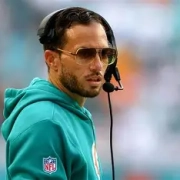
Coach Mike McDaniel’s offensive scheme is dynamic. Hill and Jaylen Waddle form one of the league’s best receiver duos, and the defense, under new coordinator Anthony Weaver, has shown flashes of dominance. On paper, they can have one of the NFL’s most talented teams.

The Pitfalls

Injuries have decimated the roster—Tua’s concussions, Tyreek’s wrist, Chubb and Phillips injuries. GM Chris Grier’s tenure (since 2016) is marred by cap mismanagement ($38M in dead cap space in 2024) and draft misses (e.g., Noah Igbinoghene). The “Same Old Dolphins” moniker persists because they falter in big moments, going 1-11 against winning teams since 2022. Whether it’s injuries, coaching, or something else, the outcome remains the same. One common denominator since 2000? Chris Grier.

The Move: Win a Playoff Game or Overhaul the Front Office

For the Dolphins, this season, they need to win a playoff game. Grier’s 9-year tenure (and those before him) has yielded zero postseason wins—unacceptable for a market this passionate. If they fail to win a playoff game in 2025, Chris Grier needs to go, and the front office needs to be reset. This would enable them to get out of the salary cap hell they always find themselves in, giving aging stars big money, seemingly paying the wrong newcomers while letting homegrown stars walk. It’s a bad pattern they can’t shake. Restructure the cap, prioritize offensive line stability, and consider a veteran backup QB to mitigate Tua’s injury risk (maybe even a new one). Fans deserve a team that matches their loyalty.

Miami Marlins: Rock Bottom in Little Havana

A Franchise Adrift

The Miami Marlins are a tragedy wrapped in a teal uniform. Despite two improbable World Series titles (1997, 2003), they’ve become MLB’s poster child for dysfunction. In 2025, they’re on pace for 90+ losses (projected 61-101), with attendance at loanDepot park averaging under 12,000—3rd lowest in MLB. Trading away stars like Jazz Chisholm Jr. (2024) and failing to develop prospects have left the roster barren. Owner Bruce Sherman’s cost-cutting philosophy has alienated a fanbase desperate for hope. They are the bottom of the barrel, the incompetent franchise that everyone wishes would show some sort of guts to win.

What’s Working

Not much. Young pitchers like Eury Pérez (pre-injury), and Max Meyer show promise, hitters like Griffin Conine (pre-injury), and Xavier Edwards, but the farm system ranks 21st in MLB (per Baseball America, 2025). The 2023 playoff appearance feels like a fever dream. Year after year, stars are traded away, miserable baseball is played, and the attendance backs it up.

The Pitfalls

Ownership’s reluctance to spend (2025 payroll: ~$67M, lowest in MLB) and a lack of organizational vision have created a cycle of futility. Since 2003, the Marlins have had five winning seasons. Fans have stopped showing up, and Miami’s vibrant baseball culture—rooted in its Latin American community—deserves better. A beautiful stadium with a great backdrop is consistently filled with a poor product on the field.

The Move: Change Ownership or Change Philosophy

The Marlins must find ownership that cares about winning and start making moves to get them back to that glory they felt in ’97 and ’03. A new owner with Jeffrey Loria’s ambition (minus the chaos) could revive the franchise. Barring that, Miami must commit to a true rebuild invest in scouting, develop hitters to complement the pitching pipeline, and market the team to Miami’s diverse fanbase. Stop trading stars for pennies—build around them.

Final Thoughts: A Tale of Four Franchises

South Florida’s sports landscape is a microcosm of what makes fandom exhilarating and exasperating. The Panthers have cracked the code: a clear identity, aligned leadership, and relentless ambition. The Heat have the foundation and championship history but need a spark. The Dolphins continuously have the talent but lack the execution from those in charge. The Marlins? They need a complete reset. If each franchise can borrow from Zito’s Panthers playbook—prioritizing culture, strategic roster-building, and fan engagement—South Florida could become a sports juggernaut once again. The ingredients are there. It’s time to cook.

Mateo’s Hoop Diary: The Pacers stunned the Thunder, seizing a 1-0 lead in the Finals

The Pacers muffled the roars inside the cavernous Paycom Center with a 12-2 run in crunch time, ripping victory from the Thunder’s grasp to take a 1-0 lead in the Finals.  


The Thunder were in control for 45 minutes as their instruments of destruction dismantled defenders and held the Pacers’ half-court attack to 97.9 points per 100 plays, good enough for the 53rd percentile, per Cleaning the Glass.


OKC’s coach, Mark Daigneault, said the game was a starting point, not an endpoint, and his team needs to improve in Game 2.


The Thunder’s first change was inserting Cason Wallace for Isaiah Hartenstein in the starting lineup. Their pressure forced nine first-quarter turnovers, breaking Indiana’s rhythm like missed notes on the strings, and Shai Gilgeous-Alexander stabbed the paint thrice, beating Myles Turner and Andrew Nembhard on the dribble.  


They had a nine-point lead going into frame two and ended the half up a dozen, products of implacable hassling, raising Indiana’s turnover count to 19, Lu Dort’s three trifectas, and SGA nailing a pair of jumpers plus dribbling left through the lane for a scoop.


At intermission, the Pacers had four fewer field goals than giveaways. The Thunder took 18 more first-half shots and had nine points on off turnovers. Daigneault said, “We didn’t get the kind of juice for that squeeze that we normally do when we turn teams over…”


Then their defense started to crack in the last minute of the third quarter, giving up corner triples to Thomas Bryant and Pascal Siakam. SGA subsequently connected on a pull-up 3-pointer on the next possession, putting the Thunder up nine going into the fourth quarter. 


The Thunder opened the period on a 12-3 run, which included Jalen Williams’ pick-6 in their own territory, pushing the advantage to 15. OKC’s largest lead of the evening compelled coach Rick Carlisle to call a stoppage, and the Pacers followed up with a flurry, cutting the edge to eight with under eight minutes left. Then they let Indiana get within one point after Obi Toppin, Turner and Andrew Nembhard made 3-pointers, and Siakam had a key putback.


The Thunder were like a boxer who couldn’t put down a hurt opponent. SGA, guarded by Nembhard, missed a pull-up jumper with 11 seconds left, and Aaron Nesmith flew in for the miss. Next, Haliburton dribbled up the court, dropping a 21-foot pull-up shot on the right side, leaving .3 seconds remaining. He later said at the on-court interview that, “Coach trusts us in those moments to not call timeouts…”


The Pacers won 111-110 after Turner denied the lob to Chet Holmgren. They made 46.2% of 3-point attempts, their bench outscored OKC’s 39-28, and they never led until Haliburton’s jumper. Carlisle said, “We’ve had a lot of experience in these kinds of games and our guys have a real good feel for what it’s all about: giving ourselves a chance, and we got fortunate but made plays.”


The winner of Game 1 of the Finals on the road wins the series 44.4% of the time, per the NBA’s Facts and Figures. 


Game 2 is on Sunday.


Panthers Go From Hunters to the Hunted in Stanley Cup Final Rematch Against Oilers

For a few years “Time to Hunt” was a marketing slogan used by the Florida Panthers organization, including in last year’s postseason, where the team won its first Stanley Cup in franchise history.


This season, Florida are no longer the hunters, rather, what is the case for every reigning champion in any sport, the defending Cup champions are now the ones being hunted.


Who are the ones chasing them? It’s the same Edmonton Oilers team they completed the hunt against last season.


Same teams. Same buildings. One year apart.


Hungry for redemption from last season’s final, the Oilers mission was to get back to this point. And they did.


“We’ve been preparing for this all year long,” Oilers captain Connor McDavid said at Stanley Cup Final media day.


If any team knows what McDavid and the Oilers are feeling headed into a second-consecutive Stanley Cup Final, after losing the previous year, it would be the Panthers. Florida returned to the Cup Final one season after losing in 2023, though, unlike Edmonton, they wouldn’t have to face the team that beat them for a second straight season.


“The first time, we were just excited to be there and maybe that moment might’ve been too big,” Panthers forward Sam Bennett said when asked about being in the final for a third straight year. “Just too content with just being there. Now, there’s still a job to do. We’re not going to be content until that job is done. That’s pretty much our mindset and what we’re focused on.”


Going into the 2023-24 season the Panthers had one goal in mind — get back to the final and finish the job. This time around the Oilers echoed a similar message.


“[The Panthers] have our complete focus,” McDavid said. “All of our energy is going into beating the Florida Panthers. There should be nothing else on anyone’s mind.”


Storylines of Edmonton getting revenge, McDavid and Draisaitl finally getting their Cup — Canada getting back the Cup, have unsurprisingly taken over this series since the rematch was set in stone a little less than one week ago.


But the Panthers are also looking to write another chapter in their ongoing story. Entering their third straight Stanley Cup Final (just the second team since 1984 to do so), and a chance to win back-to-back Cups, Florida wants nothing more than to ruin any happy endings for their opponent.


As Matthew Tkachuk took his seat for Stanley Cup Final media day, an image of him hoisting the Cup after last year’s Game 7 win was hanging next to his pod.


“Was that planned?” the Panthers star forward asked.


A reminder, both of what they’ve accomplished and what they aspire to chase.


“It’s why we’re here,” he added. “Playing hockey in June for the third straight year and a chance to be a part of history. We’ve had two kicks at it so far and they’ve been very different summers. So, we’re hoping for the good one.”


Every little kid who has laced up the skates as a hockey player dreams of winning the Stanley Cup. Most of this Panthers group has already fulfilled that dream, one only so many players in hockey history can say they accomplished.


The Panthers aren’t satisfied with just one.


“It makes you greedier,” Tkachuk said.  “It was such an incredible, life changing moment and you just want to do it again.”


One Panther who is looking to “do it again” is someone that wasn’t on the team last season. That’s Brad Marchand.


Marchand won the Stanley Cup in his first “full” NHL season with the Boston Bruins back in 2011 (played just 20 games the season before). 14 years later, with over 1,270 career games (regular and postseason) and two more appearances in the final under his belt (losing in both 2013 and 2019 with the Bruins), Marchand, now a 37-year-old veteran, is looking to get his name on Lord Stanley’s Cup again, this time with Florida.


“It’s a different opportunity than what I’m used to,” said Marchand, who was acquired by the Panthers at the trade deadline this season. “I was just excited to be here. With the depth that this team has and the guys — the leadership group they already have, it felt easy to kind of come in and follow suit. Watch what the guys do and just be a part of it.”

New York Knicks fire Tom Thibodeau

In a surprising turn of events, the New York Knicks have decided to part ways with head coach Tom Thibodeau. This decision comes on the heels of a season that saw the Knicks reach the Eastern Conference finals for the first time in 25 years, which makes the timing of the firing all the more perplexing. Many observers are left wondering what this means for the organization moving forward.

Tom Thibodeau, known for his defensive prowess and intense coaching style, took the Knicks from the depths of the NBA to playoff contention. Under his leadership, players like Jalen Brunson flourished, helping to establish a competitive identity for the franchise. Brunson, who emerged as a star during the playoffs, was a key component of the team’s success and a fan favorite. The question now arises: how will the Knicks replace not only Thibodeau’s coaching expertise but also the chemistry that developed during his tenure?

As the dust settles on this unexpected firing, the Knicks front office is likely evaluating potential candidates for the head coach position. The team will need someone who can build on the momentum established by Thibodeau, ensuring that the squad remains competitive in the ever-challenging landscape of the NBA.

Fans and analysts alike are eager to see how this decision will impact the future of the franchise. With a talented roster that includes Jalen Brunson and other promising players, the Knicks are at a pivotal crossroads. The next head coach will have the crucial task of harnessing that talent while also establishing a new system that could resonate with both the players and the fanbase.

In conclusion, the firing of Tom Thibodeau marks a significant moment in the history of the New York Knicks. As the team looks to the future, they must navigate this transition carefully to ensure they continue to build on the success achieved under Thibodeau. The upcoming weeks will be critical as the Knicks search for a new leader who can guide them back to the heights of NBA glory.

Surprising Pacers and Dominant Thunder advance to NBA Finals

In a season filled with surprises and standout performances, the Indiana Pacers and the Oklahoma City Thunder have emerged as the two teams battling for the NBA Championship. Few expected the Pacers to rise from the Eastern Conference, but the combination of Tyrese Haliburton’s playmaking ability and Pascal Siakam’s scoring prowess has propelled them into the Finals.

The Pacers’ journey to the Finals was marked by resilience and teamwork. Haliburton, known for his exceptional vision and court awareness, has been instrumental in orchestrating the Pacers’ offense. His ability to create shots for his teammates and score efficiently has made him a key player throughout the postseason. Meanwhile, Siakam’s versatility and experience have added another layer of depth to the Pacers’ lineup. Together, they have formed a formidable duo that has surprised critics and analysts alike.

On the other side of the court, the Oklahoma City Thunder have solidified their status as a powerhouse in the NBA. With Shai Gilgeous-Alexander leading the charge as the league MVP, the Thunder possess not only a star player but also a roster filled with young talent and future assets. Gilgeous-Alexander’s scoring ability, defensive skills, and leadership qualities have made him a central figure in the Thunder’s success. Alongside a supporting cast that includes several promising players, the Thunder are poised to be contenders for years to come.

As the Finals approach, Oklahoma City enters as the heavy favorite. Their combination of star power, depth, and playoff experience gives them an edge over the surprising Pacers. However, the Pacers have proven they are no underdogs. Their unexpected rise to the Finals is a testament to their hard work and determination.

Fans can expect an exciting matchup, with the Pacers looking to defy the odds and the Thunder aiming to assert their dominance. The clash of styles and strategies between these two teams will undoubtedly make for a thrilling NBA Finals, showcasing the best of what the league has to offer. As the spotlight shines on Haliburton and Gilgeous-Alexander, the basketball world eagerly anticipates how this series will unfold.

Mateo’s Hoop Diary: The Pacers eliminated the Knicks in Game 6, advancing to the NBA Finals

The Pacers chopped down the Knicks in Game 6 to advance to the NBA Finals. They were greyhounds in transition, they punished New York’s 17 giveaways with 34 digits, and Pascal Siakam terrorized them at short, mid and long range.


The Pacers’ faithful supporters celebrated their second trip to the NBA Finals and first in 25 years. Siakam won the Eastern Conference Finals MVP named after Larry Bird and it was handed to him by Pacers great Reggie Miller.


Coach Rick Carlisle said that Game 1’s fluky ending put them in position to lead. He also said Thomas Bryant, who added three treys off the bench in Game 6, contributed to the win. 


Early on, Tyrese Haliburton missed all four shots yet had four offerings to three teammates in the first quarter. The Knicks were on the Pacers’ heels but fell into Indiana’s trap by playing at their speed. 


Siakam ran in two more fastbreak baskets and nailed a pull-up trey over Karl-Anthony Towns, plus Haliburton added eight points from deep and short range. Yet the Knicks never fell behind by more than five in the period because of Towns and OG Anunoby’s paint pressure.


The Pacers went to halftime ahead 58-54, with five extra made 3-pointers than their visitors. Then they came out of the break like racers of the Indy 500, taking a 15-point lead five minutes in and forcing four turnovers. Siakam added another 10 points on jumpers and layups, and Haliburton minced coverages with his passing. 


Eventually, the Knicks cut the lead to nine with 10 minutes left, but Andrew Nembhard’s defense slowed down Jalen Brunson, and Haliburton targeted  Towns twice on screen rolls, and pierced the lane two extra times, preventing any chance of a comeback. 


The Pacers couldn’t be stopped in transition and won 125-108. Their defense halted New York’s half-court attack to 93.5 points per 100 plays, good enough for the 39th percentile, per Cleaning the Glass.


After the game, Siakam praised Nembhard’s defense and could tell by the look in his eyes that he was ready. “That guy is special.”


Carlisle said his team can’t celebrate too much. “Getting to the NBA Finals is an achievement, but if you start looking at it that way, you’ll go into it with the wrong mindset.” 


The Pacers, who are winners of three ABA Finals (1970, 1972, 1973)  will play the Thunder in Game 1 of the Finals on June 5. Teams that win Game 1 of the Finals win the series 70.5% of the time.


Breaking Down the Pod: The Truth About the Miami Heat, Spending, The Tax and Results

💸 Breaking Down the Pod: Are the Miami Heat Actually “Cheap”? A Look at NBA Luxury Tax Spending Since 2012

Welcome back to Breaking Down the Pod, your fan-first breakdown of the Five on the Floor podcast. In this episode, Ethan Skolnick and Greg Sylvander dig into one of the more heated narratives surrounding the Miami Heat: Does the front office spend enough to win? And how does that compare to the rest of the NBA?

🎙️ Episode Review: NBA Luxury Tax Spending — How It Matches Up with Wins

Podcast Hosts: Ethan Skolnick & Greg Sylvander
Main Question: Are the Heat truly being outspent—or are fans misreading the big picture?
Data Source: Chart via @NBA_University (May 27, 2025)
Sponsors: PrizePicks.com (code: five), Water Cleanup of Florida
Special Offers: CigarsInternational.com (code: FIVE20), Mood.com (code: FIRST20)

▶️ YouTube
🎧 Apple Podcasts
🎧 Spotify

Image Used for Discussion via @NBA_University Image

Unpacking the Price of Success: 

The Miami Heat’s Financial and On-Court Performance Since 2012 

The Miami Heat have a funny way of being right in the middle of the pack when it comes to a lot of things—especially lately. It turns out they’re in that same middle tier when it comes to luxury tax spending since 2012. But “middle of the pack” doesn’t always tell the full story—especially when your results far exceed what others in your spending bracket have to show. 

 📊 Key Stats (2012–2025) 

  • Win %: 58.5% 
  • Playoff Wins: 92 
  • Championships: 2 
  • Luxury Tax Years: 6 
  • Highest Tax Year: 2013 
  • Total Tax Paid: $74,189,772 

 🔍 What the Data Reveals 

A recently compiled dataset from @NBA_University offers a fascinating glimpse into the correlation between luxury tax spending and competitive success. While some teams swing big financially for minimal return, others—like the Miami Heat—make every dollar count. 

Miami’s 58.5%-win rate since 2012 is impressive, but it’s their 92 playoff victories that place them in rare company. Only a handful of franchises can claim that level of postseason experience in that time. And perhaps most crucially, they’ve secured two NBA championships in this span, tied for second most in the league. 

💰 Spending Without Waste 

Financially, the Heat have taken a balanced approach. They’ve paid the luxury tax in six different seasons, peaking in 2013. Their total tax bill: $74 million—a substantial figure, yet modest compared to teams like the Warriors who’ve spent over $750 million. 

But unlike some franchises that have overspent into irrelevance, the Heat’s spending has been measured, strategic, and often effective. They’re firmly in the top half of tax-paying teams, but they haven’t overcommitted. This middle-ground approach has allowed them to stay competitive while retaining flexibility—something many luxury-tax teams envy. 

Now there have been many bad moves that have maybe even further limited the Heat’s success and ability to add more championships, Rozier, Whiteside, Duncan, injuries. But that is all part of the game. These deals must be assessed and criticized but the bigger picture remains.

What Ethan and Greg Had to Say

They organize the teams by tax brackets. They mention the success of the Pacers, Hawks, and Grizzlies. Paying no tax doesn’t mean that you will “suck”, but it doesn’t really equate to winning, but remember as I was told in business statistics, correlation does not mean causation. The top taxpayers are highlighted by the Warriors who have the most titles, playoff wins, and tax years all for an extra $750 million yet it’s paid off. Ethan believes that most anyone will take the tax years if the owner can handle it for the Warriors success. Value goes up etc., its business, winning brings revenue and winning builds culture.

They then go into the Clippers who just can’t get across the finish line, all this money spent with nothing to show for it (poor money spent).

Ethan- “Just spending is not enough, look at the Nets. They have been worse than the Hawks!”

Greg- “Thye are the biggest example of completely overspending and having nothing to show for it.”

Ethan was direct about two narratives that don’t hold up under scrutiny:

“There’s two cases you cannot make here—not if you’re being intellectually honest. The first is that they’re cheap. This chart doesn’t indicate that. It doesn’t show they’re the biggest spenders, but it certainly doesn’t show they’re cheap. They’ve spent when appropriate.”

He continued:

“Sometimes they’ve even tried to overspend. Giving Caleb Martin that money last year would’ve been a disaster in retrospect. They’ve generally spent in the upper third of the league—around 12th overall. So no, you can’t make the ‘cheap’ case.”

“And the other case you absolutely cannot make—and if someone is making it, I can’t respect their opinion—is that this team has been consistently mismanaged. Argue they should spend more? Fine. But say they’re mismanaged? No way.”

Greg reminds everyone how anyone would like to be in Miami’s shoes, they are the image that the league looks towards.

🗣️ What I Have to Say

This chart is revealing in all the right ways. It doesn’t just show who spends the most—it shows who spends well. And despite being in the “middle” financially, Miami shines near the top in performance. That’s no accident.

Even through some tough stretches—the Whiteside years, the injury-plagued 2020 Finals run (remember Bam and Goran?), the Rozier trade that didn’t pan out—this team has stayed competitive. They’ve missed on moves like anyone else, but those misses haven’t defined them.

This chart doesn’t tell us everything. It doesn’t account for injuries, bad luck, or market dynamics. But what it does show, loud and clear, is organizational competence.

Miami is a franchise that knows how to spend, when to spend, and when to walk away. The fact they’ve done all this without hitting Warriors-level tax numbers is even more impressive. There are at least 20 other franchises that would trade places with the Heat today, and that’s saying something.

For me this chart may not show the causation and the deeper issues, but I can promise you one thing just like Ethan said it shows you who is good at their job. 

🧭 It’s All About Perspective

In sports, everyone swings and misses—from the security guards to the concession workers, players, coaches, scouts, and even journalists. Mistakes are part of the game. Sometimes a decision doesn’t pan out. Sometimes the lights are too bright. But when missteps become patterns, that’s when there’s a problem.

Winning? There’s nothing wrong with that.

The Miami Heat aren’t in a perfect position right now, but they’ve earned the respect of everyone in the league. They’ve been here before. And if history tells us anything, it’s that they usually find a way through.

Haven’t Pat Riley and Erik Spoelstra earned that trust?

It’s okay to question decisions. That’s part of being a fan, reporter, and even just a human being, its natural. But it’s not okay to say this franchise is cheap or mismanaged—because there are at least 20 other franchises that would gladly trade places with the Miami Heat, even going back further than this chart shows.

🧠 Final Analysis: Respect Where It’s Due

The Miami Heat have not spent like the Warriors—but they haven’t needed to. They’ve maintained championship-level relevance for over a decade, and they’ve done it with fewer financial swings. Even through missteps (Rozier trade, injury years, the Whiteside saga), the franchise has stayed in the hunt.

Are they cheap? No. Are they the biggest spenders? Also no. But are they mismanaged? Absolutely not.

What this chart really shows is who knows how to build a culture, find value, and maintain competitiveness. Pat Riley and Erik Spoelstra have earned that trust, and this data reinforces why.

What is your biggest takeaway from this chart?

Breaking Down the Pod: Miami Heat Strategy — Shift Back to a Midrange Emphasis?

🎧 Breaking Down the Pod: Should the Heat Embrace the Midrange Again?

Welcome back to Breaking Down the Pod—your go-to spot for sharp, fan-first insights on the Five on the Floor podcast. This time, Ethan Skolnick and Brady Hawk dig into one of the most debated topics surrounding the Miami Heat: is it time to lean back into the midrange game?


🎙️ Episode Review: Miami Heat Strategy — Shift Back to a Midrange Emphasis?

Podcast Hosts: Ethan Skolnick & Brady Hawk
Main Question: Should the Heat reintroduce more midrange action, especially for Tyler Herro?
Sponsors: CousinsUSA.com/5RSN, PrizePicks.com (code: five)
Special Offers: CigarsInternational.com (code: FIVE20), Mood.com (code: FIRST20)

🎙️ Listen here:
▶️ YouTube
🎧 Apple Podcasts
🎧 Spotify


🔍 Why Midrange? Why Now?

As we get deeper into the NBA playoffs, one thing is clear: the best teams—and their stars—score from all three levels. Despite analytics pushing teams toward threes and rim attempts, many of the game’s elite still thrive in the midrange. That’s no coincidence. Open midrange shots are available, and great players can punish defenses when given that space.

That sets the stage for this episode, which was sparked by a key question Brady Hawk asked Tyler Herro at the Heat’s end-of-season press conference:

Brady Hawk:
“Tyler, you were talking about your offensive role heading into the season and how much it changed. I know there’s been some back and forth on whether the mid-range shot would be a major part of your offense. Do you see the way you’re being guarded now as a reason to go back to it—where the midrange is actually a good shot for you in the half court?”

Tyler Herro:
“Yeah… Me and Spo go back and forth on it. He wanted me to play more off the ball this season.
But with the way I’m guarded sometimes, the midrange is the shot to take.
What matters most is making the right play—and whatever that leads to, hopefully it leads to wins.”


🧠 Breaking It Down

That moment becomes a launchpad for the pod’s broader conversation. Ethan and Brady dig into the following:

🔄 Why the Heat shifted away from midrange

Spoelstra has clearly leaned into a more modern, three-point-heavy approach. But that shift may have come at the cost of some of the team’s natural strengths—especially players like Herro, who excel in that 15–18 foot zone.

Ethan:

“What they give you sometimes ends up being the best shot if it’s open—and that is the mid-range. Kawhi Leonard won a championship in Toronto knocking down midrange jumper after midrange jumper.”

🧱 Herro’s fit in the offense

Herro’s increased off-ball role may not unlock his full potential. He’s proven he can hit midrange shots—especially when defenses run him off the three-point line or wall off the rim. When the spacing isn’t there, the midrange often is.

🔄 Roster identity & fit

Brady compares the situation to what works for stars like Shai Gilgeous-Alexander (SGA). The Thunder surround him with scoring threats so he can operate freely at all three levels. That hasn’t consistently been the case in Miami.

Brady:

“If Miami builds around Tyler and Bam, they have to get scoring on the outside”

That’s how you unlock three-level scoring—and take the pressure off Herro and Adebayo to do everything.


🔁 What Comes Next?

The midrange question is really an identity question:
Do the Heat adjust the scheme to fit their personnel—or force players like Herro to fit the scheme?

Ethan:

“I just want players shooting the shot that’s most comfortable for them.”

That’s a simple idea with big implications. If the midrange is open, and the player is confident—why not take it?


👀 The Wiggins Factor

They also talk about Wiggins—someone who never quite found a consistent role to help evaluate his impact. He’s used to adjusting, but injuries and inconsistency held him back.

Brady:

“It’s not just about where Wiggins gets his shots—it’s about how many he takes. When he’s assertive, the offense flows better.”

The same principle applies to Herro: he’s got to be the bucket-getter, and it will be easier for him with a better constructed roster and other willing but most importantly capable scorers.


📌 Final Thoughts

Miami has some real offensive deficiencies—and the midrange debate won’t be fully settled until the roster is set. But one thing is clear: if the Heat want to build around Tyler Herro, they need to add shooters who create space and give him room to operate.

Defensive pressure has taken away some of Herro’s three-point volume, making it harder to stick with the modern “threes and layups” model. More spacing = more freedom. The midrange becomes a viable option again when there are consistent threats both inside and out.

Brady even suggests Miami might look for outside shooting in the draft. That could be key.

Another concern? Free throws. Miami lacks a true foul-drawer right now. That hurts the offense—and limits the value of midrange play unless you’re getting to the line, too.

Could that be Bam’s next evolution? It should be.

So should the Heat embrace the midrange?
Maybe—but only if they build the right roster around it. The stars can thrive in that space. The role players need to clear the way.

Should the Dolphins Trade Jonnu Smith or Pay Him?

A Breakout Season on a Bargain Deal

Jonnu Smith was signed last offseason on a two-year, $8.4 million “prove-it” deal—and prove it he did. Smith brought new life to a position that has been historically dormant in the Dolphins’ offense, breaking Miami’s single-season tight end records in receptions (88), yards (884), and touchdowns (8).

Smith thrived in Mike McDaniel’s system, especially when quarterback Tua Tagovailoa was healthy. He became a security blanket over the middle, stretched the field, and played well above his contract. Naturally, after a Pro Bowl season, Smith now wants a raise—while still remaining a Dolphin.

As NFL insider Ian Rapoport said:

“I know he wants more money but would like to stay [in Miami]. I know he wants a lot.”
@PatMcAfeeShow

Contract Talks and Trade Rumors

Despite his desire to stay, contract negotiations have hit a snag. Smith is due $4.8 million this season and is seeking a restructured deal that better reflects his production.

Per Adam Schefter:

“The Dolphins have had trade discussions with the Pittsburgh Steelers… after Smith expressed interest in reworking his deal… His preference is to stay in Miami under a reworked deal.”
@AdamSchefter

Just months ago, the narrative around Miami’s offseason centered on stars like Tyreek Hill and Jalen Ramsey. Now, the front office faces a difficult decision regarding its only 2024 Pro Bowler.

Miami’s Tight End Expectations

The Dolphins reportedly want more from their tight ends in the blocking department. While Smith’s receiving skills are elite, his run-blocking has been inconsistent. To address this, Miami signed Pharoah Brown, a more traditional inline blocker.

Still, questions linger: If Miami was considering moving on from Smith, why didn’t they draft Penn State’s Tyler Warren—arguably the best all-around TE prospect left on the board? The answer isn’t clear, but it adds to the confusion.

Let’s break down both sides of the debate.


Case to Keep Jonnu Smith

There’s no denying Smith earned a raise. He was “Mr. Reliable” in 2024, delivering elite production and leadership without the off-field noise associated with other stars.

With the addition of Pharoah Brown to help handle blocking duties, Miami could deploy Smith primarily as a receiver—his strength.

Smith hasn’t requested a trade and has remained committed to Miami. He’s a valuable veteran presence for a roster filled with young talent and developmental players. If the Dolphins are serious about rebuilding their culture, rewarding a player like Smith—who’s produced, led, and stayed drama-free—is essential.

As long as a lot isn’t A LOT this should be a no brainer.

Case to Trade Jonnu Smith

At the same time, there are valid reasons to consider a trade.

Smith is entering his age-30 season, and the Dolphins are in one of the worst salary cap positions in the league. Years of bad contracts and questionable roster management have forced the team into tough choices. Trading Smith now—while his value is at its peak—could help Miami recoup assets or fill other roster holes.

There’s also the financial disparity: Smith is currently the 32nd highest-paid tight end by average salary, yet produced like a top-10 player. Nine TEs are making at least $12 million per year; two make $19 million. Smith deserves a raise—but can Miami afford to pay that premium?

Additionally, Miami’s signing of Nick Westbrook-Ikhine—an underrated physical pass catcher—may signal a desire to shift the offense toward more traditional wide receiver targets. Westbrook-Ikhine can replicate some of Smith’s role while a tight end like Brown or one acquired in a trade can handle the blocking and the simple route tree of a traditional, fully rounded tight end.


Final Thoughts

There’s no easy answer. Jonnu Smith’s resurgence was one of the best stories of Miami’s 2024 season, and his departure would sting. But this is a cold, cap-driven league. Unless both sides can find a middle ground, the Dolphins may be forced to move on from their record-setting tight end.

Mateo’s Hoop Diary: “I’m going to be all over the film”: The Pacers dropped Game 5 in New York

The Pacers were outhustled and outmuscled, plus Jalen Brunson turned into Rambo in Game 5, shifting the series back to Indiana. He scored 32 digits on 66.7% shooting, which included a 16-point blaze in the third quarter on blow-bys and jumpers.


Coach Rick Carlisle said his team didn’t play with the force needed, and they couldn’t generate enough traction to get out of the hole. One of the early warnings that the Pacers weren’t sharp was Andrew Nembhard aborting a layup for a pass to the corner that missed. 


The Pacers never led, were shut down at the rim, and were beat in two key areas: paint points 60-34 and second-chance points 13-7. Brunson and Mikal Bridges also made six shots at mid-range. 


Tyrese Haliburton was pressured and unable to hit shots on the move. Pascal Siakam was outplayed by Karl-Anthony Towns, who bulldozed into the lane for nine baskets. New York also won the 50-50 balls and, at one point, was in such control that they played Landry Shamet and Precious Achiuwa, their 10th and 11th men in playoff minutes.


The Pacers emerged from halftime down 11 and didn’t help themselves by recording more turnovers (8) than field goals (7) in the third quarter, four coming from poor passes. On top of that, the Knicks extended their edge to 22 as Deuce McBride nailed a step-back jumper over Bennedict Mathurin on the baseline at the end of the period.


A 12-point deficit was the closest the Pacers could get in the fourth quarter, but Josh Hart drove left on Andrew Nembhard for a two-footer and cut up the baseline for a layup, freezing Indiana’s progress. 


It didn’t matter that the Knicks weren’t a factor from a long-range because their inside action was like repetitive shots to the spleen, kidneys, and liver, which eventually caved the Pacers in. On the other side, the visitors were impeded in the half-court to 89.3 points per 100 plays, good enough for the 31st percentile, per Cleaning the Glass. 


Siakam was off target on drives and jumpers, but he was the only visiting starter to break double-figures (15) and no other logged above eight points. Their five-man unit only splashed three trifectas, too. 


The Pacers lost 111-94. They had their most turnovers of the playoffs (20) and made only a third of 3-point attempts.


After the game, Siakam said, “We fought tonight, and they were the better team…”


Haliburton said, “We gotta be better as a group. I think our pace has to be better, and that starts with me.”


Game 6 is on Saturday.