Jaylen Waddle: Time to Take Over

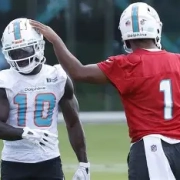
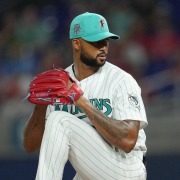
Jaylen Waddle was the Miami Dolphins’ 6th overall pick in the 2021 NFL Draft, reuniting with his former Alabama quarterback, Tua Tagovailoa. Now entering his fifth season, Waddle stands at a career crossroads — and the opportunity to emerge as the Dolphins’ true No. 1 wide receiver has never been clearer.

Last offseason, the Dolphins showed their belief in Waddle by signing him to a 3-year, $84.75 million extension, keeping him in Miami through 2028 at a total value of $104.6 million. With Tyreek Hill (31), facing mounting off-field issues, and carrying a hefty contract, the torch is primed for a new carrier.


Career Snapshot (62 Games)

  • Receptions: 309

  • Receiving Yards: 4,129

  • Receiving Touchdowns: 20

  • Scrimmage Yards: 4,182

  • Total Touchdowns: 21

  • Yards per Touch: 13.0

Per 17-Game Average:
85 receptions, 1,132 yards, 5 touchdowns


Trends & Takeaways

Explosive Start (2021–2022):
Waddle burst onto the NFL scene with a record-setting 104 receptions as a rookie, breaking Jarvis Landry’s Dolphins record and topping Anquan Boldin’s NFL rookie mark. That breakout year earned him a spot on the PFWA All-Rookie Team. He followed it up with a staggering 18.1 yards per catch in 2022, showcasing his big-play ability alongside Tyreek Hill.

Steady but Quieter (2023–2024):
While his targets and touchdowns dipped in the past two seasons, Waddle remained one of the league’s most efficient pass-catchers, including a 69.9% catch rate in 2024 — among the NFL’s best. He also continued to protect the football with only three fumbles across 321 career touches.

Health Check:
Aside from missing five combined games in the past two seasons, Waddle has been largely durable and consistent.

Elite YAC & Speed:
A former track standout with 4.29 speed, Waddle remains one of the most dangerous threats after the catch, using agility and acceleration to turn short throws into explosive gains.


New Voice, New Direction: Robert Prince Steps In

This offseason brought a major coaching change: the Dolphins parted ways with receivers coach Wes Welker and brought in veteran Robert Prince. Prince, 60, has decades of experience, coaching for teams including the Falcons, Jaguars, Seahawks, Lions, Texans, and Cowboys, along with seven college programs.

“What we’re trying to do is get them to play fast, physical and with elite technique,” Prince said. “In the meeting room, it’s about mastering the details — the routes, the releases, the top of the route — and on the field, it’s all about execution.”

Prince has a direct but supportive coaching style. “They’ll know when I like it, and they’ll know when I don’t,” he explained. “Coaching is like raising a child — you set expectations, you inspect what’s done, and then you give feedback. That’s what we’ve been doing.”

Robert Prince on Jaylen Waddle:

“The thing with Jaylen — he’s a very explosive player, very dynamic. When the ball’s in the air, he can go get it. And once it’s in his hands, he’s a dangerous run-after-catch guy. We’re just working on our techniques and fundamentals to help him get even better.”

His arrival signals a fresh approach and renewed emphasis on fundamentals — a perfect match for a player like Waddle, who thrives when technique meets raw athleticism.

 Wide Receivers Coach Robert Prince meets with the media | Miami Dolphins


The Moment is Now

There’s no denying Waddle’s talent. But this season, he must show he’s not just part of the offense — he’s the focal point.

The struggles of 2024 — quarterback inconsistency, offensive line woes, and a sputtering run game — contributed to his dip in production. But with a healthier Tua, a fortified offensive line, and a new coaching voice, Waddle is primed for a resurgence.

This could be a transitional year for Miami’s receiver room. If Waddle reclaims his dominant form, the Dolphins may look to shift resources and focus his way, potentially drafting or signing a complementary young receiver to build the next elite duo.


Bottom Line

There’s still time for The Cheetah and The Penguin to make noise as one of the NFL’s most electric receiver duos. But as the 2025 season unfolds, don’t be surprised if Waddle begins to emerge as the alpha. With elite speed, improving technique under Robert Prince, and a chip on his shoulder, Jaylen Waddle is ready to stop sharing the spotlight — and start owning it.

Breaking Down the Pod: Should the Miami Heat Refresh the Coaching Staff?

🧩 Breaking Down the Pod: Episode 3

🎧 Should the Miami Heat Refresh the Coaching Staff?

📢 Don’t miss a pod!
Subscribe to Five on the Floor on Spotify, Apple Podcasts, and YouTube.

Podcast Hosts: Ethan Skolnick & Sean Rochester
Sponsors: Water Cleanup of Florida, PrizePicks.com (code: five)

🧠 The Pod’s Premise

This episode circles a major offseason question: Is it time for a new voice on the Miami Heat’s coaching staff? With longtime assistant Chris Quinn reportedly in the mix for the Phoenix Suns head coaching job, Ethan and Sean examine what a staff shakeup could look like—and if Miami would ever actually consider going outside the family tree.

📌 Key Points from Ethan & Sean

🔄 The Heat Are Insular—By Design

Ethan calls the Heat a “very insular organization.” They hire their own, promote from within, and emphasize culture above all.

“The Heat are a very insular organization… They hire their own, which can be a really good thing for stability, understanding the quote-unquote culture. And it has worked.” — Ethan Skolnick

But there’s a potential downside: too much internal familiarity can lead to a lack of fresh ideas.

“There can be kind of a groupthink scenario… If you look at the Heat’s recent assistants—Chris Quinn, Malik Allen, Anthony Carter, Karon Butler, Wayne Ellington—all played for the team. Even going back to Pat Riley, it was Bob McAdoo and others with ties. They stay in-house (Sean added).” — Ethan
“You’re not going to pick someone completely opposite of you. But new ideas in the room can be beneficial—as long as there’s still alignment.” — Sean Rochester

🚪 Chris Quinn May Leave—And He Could Take People with Him

There are conflicting reports about Quinn’s position in the Suns’ search, but if he leaves, it might not be solo.

“If he meshes with guys on this staff, they might go with him.” — Sean

The Heat could promote from within, but the real question becomes: what kind of voice do they promote?

🧪 What Would a New Voice Bring?

⚙️ The Offense Needs Help

The offense has been stuck. Ethan and Sean both agree that injuries, regression, and shaky performance from key players (Rozier, Jaquez) have hurt. But there’s a systemic element, too.

“They tried. And Jimmy took offense to it.” — Ethan, on trying the threes-and-layups model

“It’s not just about the ‘Heat Way’ anymore. It’s about the right way.”

Ethan even floated a big name for conversation’s sake:

“You want a new voice? Think Mike D’Antoni—not necessarily as a hire, but as a reference point. Someone who brings an offensive blueprint that rethinks the room.” — Ethan

Sean grounds the point:

“You still need talent. You can marginally improve a system, but without an elite scorer, you’re limited.” — Sean


🧩 The “Missing Piece”: Player or Coach?

Sean leans player—he believes the offense will always stall without a go-to elite scorer. But both agree: even without the star, the system can be modernized.

“Change the offense—whether you bring in an assistant or not—to something that better highlights the guys.” — Sean

They also touch on the idea of a “coach on the floor”—someone Spoelstra can trust to run the offense when things get muddy.

“Spo needs a little bit of offensive tweaks and he needs a coach on the floor… someone who’s been in those situations, gets the ball to the right guy at the right time, throws it to Bam and gets out of the way.” — Ethan

🧠 My Take

The Heat don’t just promote from within—they trust from within. That trust built Spoelstra, developed Chris Quinn, and helped sustain one of the most stable franchises in sports.

But that trust comes at a cost when the offense flattens year after year. Internal hires start sounding like echoes in the same hallway.

I loved Ethan’s point about Spo looking outside the box—like when he sought insight from Dolphins coach Mike McDaniel. Spo clearly wants fresh perspective. The question is: will the organization actually give him one in the room where it matters?

Right now, the Heat don’t have a “coach on the floor.” Kyle Lowry once filled that void. His absence is felt—not just in stats, but in orchestration. Ethan’s point hits: they don’t have someone who can slow things down, make the right read, and tell Spo, “I’ve got this.”

This isn’t about blowing up the bench. It’s about breaking the echo chamber.

I want Miami to bring in an offensive-minded coach—someone who can freshen things up and provide a new voice in the room. Sometimes, all it takes is a different perspective for something to click. A new voice can unlock something that’s already been said, just not heard the same way.

Find the fit. Embrace the offense.


Final Thought

This isn’t a crisis. Chris Quinn might stay. The Heat might keep it in the family. But when the offense sputters and Spoelstra starts seeking out outside philosophy? That’s a cue to listen.

“The culture isn’t broken. The blueprint isn’t flawed.
But the house? It could probably use some new furniture.”


Reader Question

Who would you like to see Miami bring in to refresh the coaching staff?
Would someone like Michael Malone interest you?
Drop your dream name—realistic or not—in the comments.

Mateo’s Hoop Diary: Dwyane Wade and Mychal Thompson address Heat business

Jimmy Butler’s playoff ride with the Warriors was cut short because they came across a superior team, and Stephen Curry hurt his hamstring, only playing 13 minutes of the series versus Minnesota. Butler’s pelvis contusion was a factor, but he still had big-time outings after and too many moments of looking to pass first, second and third. Sometimes the right play is making it for yourself, especially when two of the weapons are Draymond Green and Brandon Podziemski.


Dwyane Wade added credibility to his criticisms of Butler as his 2006 Finals MVP trophy rested on his torso as he sat for an episode of his podcast. He said Butler took his foot off the gas, which put more pressure on Jonathan Kuminga after securing a two-year, $121 million extension. Wade also said it was reminiscent of Butler not looking at the basket in the 2023 Finals against Denver.


Butler attempted a sparse nine and 11 attempts in the Warriors’ Games 4 and 5 losses as Julius Randle plus Anthony Edwards took over the series.


Twice champion under Pat Riley’s coaching with the Lakers, Mychal Thompson said on May 5 that the Heat president made the right choice in trading Butler. He said, “You’re always going to lose that battle if you’re gonna go head-to-head against Pat Riley, so they did the right thing. If you’re not going to go along with the Miami culture, or program, or Riley’s rules, you gotta go. Jerry West told me that…”  


Butler’s agent, Bernie Lee, playfully wrote on his X(formerly Twitter) account that Wade’s podcast can kick rocks and that his client’s playoffs started on Feb. 1, which he’s correct about. The Warriors’ record was 24-24 that day and the margin for error was slim as four other teams were in a race with them for the four play-in spots. Butler added a dimension as a playmaker that Andrew Wiggins couldn’t give them and got to the line more, putting more pressure on opposing defenses. Curry also raised his production as a result of the pairing.


They’ll need to get lucky with health next season to have a chance. Yet consider this: no team has won a title with its top three players being 35 and 37 years old. It’s too hard to do what the 2011 Mavericks did: winning with the top guys being 33 and 38. Furthermore, if Kuminga is kept around, they’ll need him to be the third scorer consistently and more of a defensive presence because the team lacks high-level athleticism.


As for the Heat, it will be a while until they are as good as they were with Butler again. They likely can’t make real improvements without doing something bold, like trading Tyler Herro or Bam Adebayo.


Mateo’s Hoop Diary: Pacers take first blood in the Eastern Conference Finals behind a wild comeback fueled by Nesmith, Haliburton and Nembhard

The Pacers got their fifth road win of the playoffs after they were close to flatlining when the Knicks were up 14 points with three minutes left. Jalen Brunson picked up his fifth foul early in the fourth frame, but his crew had taken over with deep jumpers plus a barrage of inside action as there fans celebrated in the stands and were ready to swarm the streets.


Tyrese Haliburton’s 24 points, Myles Turner’s scorching outside shooting, and Pascal Siakam’s performance were an afterthought up to that moment.


Then Aaron Nesmith sprayed five 3-pointers on the catch and dribble, the last two delivering the catastrophic power of a Howitzer to Knicks’ minds. The Pacers won a challenge in between following Siakam tipping a loose ball that was initially called a foul under the rim on him against OG Anunoby. Additionally, Karl-Anthony Towns and Anunoby missed critical freebies, the latter keeping the Knicks only up by two with seven seconds left. For New York, it was reminiscent of the main character of a horror film realizing their impending doom.


Haliburton subsequently dribbled upcourt into the lane, retreated, and hit a deep jumper over Mitchell Robinson that kissed the back iron and fell in from shot-clock height. He grabbed at his throat, doing Reggie Miller’s choking celebration from Game 5 of the ‘94 ECF before the replay showed the tip of his foot on the 3-point line.


Andrew Nembhard followed up with his own heroics after the hosts led by four in overtime, making a shot in the corner, attacking Brunson on a blow-by and scoring on a slot cut on a feed from Haliburton. And former Knick, Obi Toppin, seized victory from New York’s jaws with a baseline putback and a screen roll dunk.


The Pacers won 138-135 with 23 of their points coming via second chances and 27 on New York’s turnovers. On top of that, their half-court attack scored 109.9 points per 100 plays, good enough for the 83rd percentile, per Cleaning the Glass. Coach Rick Carlisle said his team wouldn’t get too excited about it because both sides have to clean things up and “Game 2 is going to be another war.”


Nesmith finished with 30 points on 69.2% shooting and became the first player in NBA history to nail six fourth-quarter triples in a playoff game, per NBA communications. He said the end of the game was a blur. “I didn’t really realize what I was doing in the moment. I was just trying to win a basketball game.”


Additionally, Haliburton had 31 digits on 52.5% shooting and 11 assists. He said doing Miller’s celebration felt right, but someone quickly told him it was a two-pointer.

Game 2 is on Friday. Before the 2025 playoffs started, the winners of Game 1 in a best of seven series advanced 75.2% of the time.


Breaking Down the Pod: Can the Miami Heat Salvage Terry Rozier?

🧩 Breaking Down the Pod: Episode 2

🎧 Can the Miami Heat Salvage Terry Rozier?

📢 Don’t miss a pod!
Subscribe to Five on the Floor on Spotify, Apple Podcasts, and YouTube.

Podcast Hosts: Ethan Skolnick & Brady Hawk
Sponsors: InsuranceByLinnette.com, PrizePicks.com (use code: five)


Welcome back to Breaking Down the Pod, where I pull out the top insights and debates from Five on the Floor episodes—and add my take. This pod: Terry Rozier, and whether the Heat can salvage him after one of the worst drop-offs we’ve seen in recent team and NBA history.

Rozier arrived in Miami to real expectations. The Heat gave up a first-round pick and the financial flexibility of Kyle Lowry’s expiring contract to bring him in. What they got instead? A neck injury, a scandal, a loss of rhythm, and a version of Rozier that simply didn’t fit in Miami’s ecosystem.


🧠 The Pod’s Premise

Both Ethan and Brady are clear:
Rozier’s time in Miami hasn’t just been bad—it’s been historically bad and unlikely to recover in this setting.

“You’re not getting an asset back for Terry Rozier at this point.” — Ethan Skolnick

They tried to brainstorm Heat players who’ve had similar bounce-back stories—Duncan Robinson was mentioned, and his situation was identified as a shooting slump—but the consensus was clear: Rozier’s fall was deeper, and his path to recovery less likely.


📉 Key Points from Ethan & Brady

📌 The Role Was Maximized (To a Fault)

  • Spoelstra gave Rozier every chance. He was slotted into a maximized role, even when the fit didn’t make sense.

  • Ethan suggests it looked like Spo was hoping Rozier would figure it out—but that never materialized.

📌 It Was a Mistake—And the Front Office Knows It

“It was a mistake trade. They know it was a mistake trade. It’s not a mistake you can repeat.” — Ethan

  • Both hosts agree: this wasn’t a situation that can be repeated or justified again.

  • Ethan even cautions against making the same mistake in future deals: “Don’t go get scorers from bad teams.”

📌 Rozier’s a Good Teammate, Not a Locker Room Issue

  • Brady emphasizes it’s not urgent to move him.

  • Rozier has been liked in the locker room and isn’t a distraction—but his role is shrinking regardless.

📌 Ideal Outcome? Include Him in a Bigger Deal

  • Brady floats another scenario: if the Heat make a bigger trade (like for a star), Duncan Robinson becomes the salary filler, and Rozier ends up as the backup PG by default “he identifies this as the only “weird” scenario and the Heat should see what comes at the deadline.

  • Still, Brady is doubtful:

“I don’t see him honestly getting a major role with this team.”


🔍 My Take

Terry Rozier was once a great scorer at all levels—and when he arrived in Miami, it looked like he might elevate their offense for good.

And for a moment, he did.

Last season, after the trade from Charlotte, Rozier gave Miami a jolt—averaging 16.4 points and 4.6 assists in 31 games—before suffering a neck injury that sidelined him for the playoffs. The hope was he’d return stronger, settle in, and become the Heat’s missing offensive gear.

Instead, 2024-25 went completely sideways.

Rozier came into the year healthy, but his rhythm never followed. He’s looked completely out of sync in Miami’s offense, struggling to mesh with Tyler Herro and Bam Adebayo. His three-point shooting—a career strength—has cratered, dropping from a combined 36.6% last season to under 30% this year. His decision-making hasn’t helped, as he’s frequently forced shots and disrupted Miami’s offensive flow.

The stats tell a clear story:
  • 2023-24 (MIA): 16.4 PPG, 4.6 AST, 37.1% 3PT

  • 2024-25 (MIA): 10.6 PPG, 2.6 AST, 29.5% 3PT on 25.9 minutes per game

That’s not just a dip. That’s a collapse. And when you look to his stats in Charlotte, its inexplicable.

And unfortunately, it’s turned Rozier into exactly what the Heat can’t afford: a high-usage guard who’s hurting their half-court execution and dragging down the second unit. Watch their loss to Cleveland on TNT (and many more games)—it’s all there in slow motion. Stagnant offense. Tough shots. No flow.

What’s wild is how fast this happened. Just a year ago, the trade was universally praised. Rozier was supposed to be a dynamic shot-maker and secondary creator. Now? He’s viewed internally and externally as a contract to move, not a core piece.

I agree with Brady: it’s not urgent to dump Rozier, but the longer he’s in this limbo role, the more it reinforces the mistake. His Heat tenure isn’t beyond repair—he’s not toxic, he’s not washed—but it’s very likely going to take a new team to reboot him.

If the Heat can fold him into a larger trade, great. If not, they may have to wait this out—but hoping Rozier turns back into a winning player in this system is not realistic at this point.


📊 The Numbers

Season Team GP MPG PPG APG 3P% FG% Role
2022-23 CHO 63 35.3 21.1 5.1 32.7% 41.5% Primary
2023-24 CHO 30 35.5 23.2 6.6 35.8% 45.9% Focal scorer
2023-24 MIA 31 31.5 16.4 4.6 37.1% 42.3% Secondary
2024-25 MIA 64 25.9 10.6 2.6 29.5% 39.1% Inconsistent

Rozier’s efficiency drop, and role reduction aren’t just signs of decline—they’re signals that he hasn’t found comfort or clarity in this Miami system.

🧠 Final Thought: The Yips?

Honestly, I have no real explanation for Rozier’s fall-off. The closest thing I can compare it to is the yips—a mental block that affects athletes across all sports. Some examples include Chuck Knoblauch, Rick Ankiel, Simone Biles, Brett Maher, and many others. It’s rarely talked about, but it’s very real.

When you see Rozier hesitate, overthink, or force things in ways that feel unnatural, it starts to feel like something mental is weighing him down. And that’s not something you fix with film study or more reps—it takes time, confidence, and usually a change of scenery.

I agree with Ethan and Brady: Rozier may still have game left in him. But if he’s going to find it again, I just don’t see that happening in Miami.

Breaking Down the Pod- Will Kel’el Ware Ever Reach Bam Adebayo’s Level?

🧩 Breaking Down the Pod: Episode 1

🎧 Will Kel’el Ware Ever Reach Bam Adebayo’s Level?

📢 Don’t miss a pod!
Subscribe to Five on the Floor on Spotify, Apple Podcasts, and YouTube.

Sponsors: RealEstateShoppeFL.com, PrizePicks.com (use code: five)


Welcome to the first installment of “Breaking Down the Pod”, a new series where I dive into episodes from our team at Five on the Floor—pulling out the key takeaways, heated debates, and adding my own thoughts on the conversation.

We’re kicking things off with a big one: a bold question about the Miami Heat’s rookie big man, Kel’el Ware.

Podcast Hosts: Ethan Skolnick & Alex Toledo


🧠 The Premise

With Ware earning a spot on the Kia NBA All-Rookie Second Team, hosts Ethan Skolnick and Alex Toledo compare his promising rookie campaign to Bam Adebayo’s early years. Could Ware follow a similar path? Could he one day surpass Bam?


📊 Stat Check

Rookie Year Comparison:

Stat Bam Adebayo (2017–18) Kel’el Ware (2024–25)
PPG 6.9 9.3
RPG 5.5 7.4
BPG 0.6 1.1
FG% 51.2% 55.4%
3P% 0.0% (0/7) 31.5% (35/111)
FT% 72.1% 68.7%
Games Played 69 64
Games Started 19 36

Ware also impressed in Summer League, averaging 16 points, 9 rebounds, and 2.5 blocks per game on 55% shooting. The raw tools? Absolutely there.


🎙️ Podcast Highlights

Toledo sees Ware as a potential high-level role player, praising his tools but pointing to a long developmental road ahead. He highlighted how both Bam and Ware entered the league as screen-and-roll bigs, but emphasized the key differences:

  • Ware is more of a vertical athlete, a rim protector who still over-commits in pick-and-roll coverage, bites on fakes, and lacks the polished decision-making.

  • Bam has evolved into a 20/10/5 player with elite defense, court vision, and the ability to switch 1-through-5—traits that go beyond raw stats.

Ethan added that even Bam himself sees DPOY potential in Ware, which speaks volumes.

“I seen a kid that, Spo didn’t play him and the beginning but we was begging him to play…I’m proud of him…I said it before I think he can be a great player in this league…”

Ethan also noted how the game seems to come easy to Ware due to his size and athleticism:

“There are nights you just look up and he’s got 14 and 9 — and you’re wondering how the hell it happened.”

But Ethan also emphasized Bam’s basketball IQ, calling him a “smarter player” who reads the floor and reacts at an elite level—something Ware hasn’t shown yet.

Ultimately Alex and Ethan’s discussion led to them concluding that for the right guy, Ware is available for the taking, but there is untapped potential there, one that Ethan projects to be possibly higher than Alex does.


🧱 My Take

Kel’el Ware’s ceiling is out of this world. At 7’0″ with a 7’5″ wingspan, he’s an athletic freak who can shoot, block, and finish at the rim with ease. The comparison to Bam is fair in terms of physical growth and potential—but let’s be real: there’s a massive gap in skill, motor, and defensive discipline right now.

In the playoffs, we saw him get pushed around physically, especially by veteran frontcourts. His positioning and footwork were exposed, particularly by Cleveland.

That said, there’s proof he’s willing to work. At Indiana, after being knocked for his motor and consistency, he responded:

“Being pushed outside my comfort zone definitely helped me out. Every day in practice I was being pushed to go past the limit.”

That mentality matters.

For Ware it is going to be about continuing to develop the fundamentals and strength required to play big in today’s NBA. Even Chet Holmgren has room to grow, especially in the strength department.

I look for Ware to work with someone in these areas to help accelerate his growth and reach his untapped potential. It will be a big summer for Ware as trade rumors rise and the hunt for an All-Star selection begins.

Here was my take in December- WAM


🔁 Final Verdict

Can Ware reach Bam’s level?

Yes—but only if the Heat continue to mold him with the same patience and intensity, they gave Bam. He needs to improve his strength, motor, footwork, and defensive reads. But he’s shown enough flashes—and if given the time and developmental support, the sky truly is the limit.

As Toledo and Skolnick agree: Ware isn’t completely untouchable, but for the right deal, maybe. That alone says a lot about how highly he’s already valued.


📣 Join the Community

  • Off The Floor Discord: Click Here (scroll down)

  • OnlyFins (Dolphins fans): /discord

‘We Want To Keep Going’: Panthers Untroubled With Quick Turnaround To Start Eastern Conference Final vs Hurricanes

There was little time for the Panthers to bask in the excitement of Sunday’s 6-1 Game 7 win in Toronto.  


Less than 48 hours after knocking out the Maple Leafs in the second round of the Stanley Cup Playoffs, Florida will take the ice in the Eastern Conference Final for a third-consecutive season. And for the second time over that span, their opponent will be the Carolina Hurricanes. 


“I think it’s kind of nice when you get only one day off in between (Game 7 and the start of a new series),” Panthers forward Carter Verhaeghe said. “You’re kind of still in that do-or-die mindset and I think that’s kind of what the playoffs are all about. It keeps you in it.”


Florida swept Carolina in a highly-entertaining yet draining Conference Finals matchup. Matthew Tkachuk took the spotlight in the series two years ago; the Panthers’ star forward had the winning goal in quadruple overtime of Game 1, which was the sixth longest game in NHL history (139:47 game duration). Tkachuk scored the OT winner again in Game 2, this time doing it less than two minutes into the first extra period. He played hero once more after scoring the series winning goal in Game 4 with four seconds to go in regulation, leading the Panthers to its first Stanley Cup Final appearance since 1996. 


Carolina comes into the Conference Finals a tad bit fresher than their opponents after winning each of the past two series in five games, defeating the New Jersey Devils in round one and the Eastern Conference — regular season — winning Washington Capitals in round two — with clincher being of May 15, five days before the ECF. Florida also won their first round series in five games against the Tampa Bay Lightning before going all the way to Game 7 against Toronto, just two nights before Game 1 vs the Hurricanes. 


Despite the quick turnaround and less rest days compared to their opponent, the Panthers are more than content to keep the gears going into the next round. 


“I would schedule it exactly as it is now given the choice,” Panthers head coach Paul Maurice said. “We’ve been through a Game 7 before. Last thing that we would want to do is play Game 7 in Toronto and play [again] in two days. You can’t fly home, get on a plane and fly back. Now the emotion and everything comes right out of it. We want to keep going.”


He added: “We played nine games in 15 days at the end of the season. We just played three games in a row and had two days off at the start of it. This is the lightest schedule we’ve had this year. Like, we’re fine.”


History will look back on the series two years ago and see the Hurricanes didn’t win a single  game. But that matchup was closer than the final results show. Each game was settled by one goal, with three of those coming down to the final shot of the night.  


“I don’t think really anybody enjoys playing Carolina,” Tkachuk said on Monday during ECF media day. “They are a tough team to play against and they make it hard on you every game.


“But yeah, there were good memories here in this building a couple years ago and [in] that whole series for us, but it’s all back to zeros now. It’s a new year. New series.”


The Panthers are looking to win the Prince of Wales Trophy and reach the Stanley Cup Final for a third year in a row, while the Hurricanes are trying to take the next step after losing in the ECF twice in the previous six seasons. 


“They play a hard-nosed in your face kind of game,” Panthers forwards Evan Rodrigues said of the Hurricanes. “It’s not going to be pretty. It’s not going to be cute.”


Offensive contributions have come across the board for the Hurricanes this playoff run. Sebastian Aho and Seth Jarvis are tied for the scoring lead with 10 points a piece, while Andrei Svechnikov is right under them with nine points — eight of those being goals (second most in 2025 playoffs). 


“They play a simple game, there’s no secret plays, no things like that,” Panthers defenseman Seth Jones said of Carolina. “They’re a very straight forward hockey team… they’re in your face. Their penalty kill is great — in your face. There’s not a lot of space out there, it’s kind of a similar style to [what] we play. I think you’re going to see two similar styles going at it.”


Arguably the most impressive piece of Carolina’s puzzle this postseason has been its stellar goaltending. Frederik Andersen far and away has the best stats among any goalie in the playoffs, posting a 1.36 GAA and .937 save percentage in nine starts. 


Similar to the squad in Raleigh, the defending champions have seen a well balanced team effort thus far in the playoffs. 17 different players scored at least one goal through the first two rounds for the Panthers. Sam Bennett leads the team with 6 goals, while Eetu Luostarinen and in-season trade acquisition Brad Marchand tied with a team-leading 12 points. 


As the higher-seed, Carolina will host the first two games of the 2025 Eastern Conference Final. Puck drop for Game 1 is set for Tuesday, 8 p.m. EST from the Lenovo Center in Raleigh, NC.

Miami’s Front Seven Is Built to Dominate in 2025

Miami’s Front Seven Is Built to Dominate in 2025

The Miami Dolphins haven’t been known for their front seven prowess in quite some time. But that narrative is set to change. Under defensive coordinator Anthony Weaver, the Dolphins’ defensive front is loaded with talent, speed, and physicality — a clear shift from past years.

Weaver revitalized Miami’s defense during a turbulent 2024 season, helping keep the team afloat while starting quarterback Tua Tagovailoa missed time due to injury. Despite battling inexperience and injuries on all three levels, Weaver’s unit finished the year as the No. 3 defense in football — without a single Pro Bowler.

“I guess we’re a little bit like the ‘No Name Defense,’” Weaver said back in January. “Hopefully we get in and we’ll give them a reason to talk about us.”

In 2025, expectations are higher. The front seven now features veteran leadership, high-upside youth, and a coach whose vision for this group is clear: fast, physical, and versatile. As Weaver put it: “You do it through your actions… solve all our problems with our pads. Hopefully at the end of the day they say we are bullies.”

Let’s break down each position group and examine the potential of what could be one of the most exciting defensive fronts in football.

Defensive Scheme Overview

The Dolphins operate out of a base 3-4 alignment, which allows Coach Weaver to maximize his personnel by utilizing players in multiple roles. This scheme emphasizes pressure, speed, and disciplined gap control — key traits that align well with the Dolphins’ current defensive roster. With Weaver’s creativity and this unit’s flexibility, Miami is set to bring a versatile and aggressive front to every game.

Position Group Breakdowns

Defensive Ends (LDE & RDE)

Key Players: Kenneth Grant, Zach Sieler

Zach Sieler has quietly become one of the NFL’s most consistent interior linemen, and this year he’ll be expected to take on an even larger leadership role. The addition of Kenneth Grant provides a perfect complement — a powerful run stuffer with massive upside. Grant, a rookie, brings size, strength, and untapped potential. Playing alongside Sieler and benefiting from elite edge rushers around him should accelerate his development and allow him to contribute early.

Future spotlight teaser: A full breakdown on Kenneth Grant is coming soon — but let’s just say, Dolphins fans should be excited.

Prediction: Between Sieler’s polished skill set and Grant’s raw power, expect 10–12 sacks combined — with Grant flashing disruptive potential as the season progresses.

Nose Tackles (NT)

Key Players: Benito Jones, Jordan Phillips, Zeek Biggers

This is arguably the thinnest group in the front seven. Benito Jones remains a solid anchor in the middle, but depth remains a concern. Jordan Phillips and Zeek Biggers offers developmental upside, yet neither is a guaranteed contributor. Don’t be surprised if Miami explores an additional move here before camp concludes.

Prediction, help anchor top 10 run defense.

 Outside Linebackers (OLBs)

Key Players: Jaelan Phillips, Bradley Chubb, Chop Robinson, Mohamed Kamara, Quinton Bell

When healthy, this group rivals any pass rush corps in the NFL. Jaelan Phillips and Bradley Chubb are proven edge presences, while last season saw the emergence of Chop Robinson, whose athleticism and burst give Miami another dynamic weapon off the edge. Mohamed Kamara and Quinton Bell provide intriguing depth and developmental upside — and there may not be a better group in the league for them to learn from.

Last year, the Dolphins averaged just 2.1 sacks per game — 26th in the NFL. That number must improve. With Weaver’s influence and this group’s potential, expect that stat to climb significantly. A dominant pass rush will be critical for a secondary still finding its footing.

Prediction, 25+ sacks as a unit.

Inside Linebackers (ILBs)

Key Players: Jordyn Brooks, Tyrel Dodson, Willie Gay Jr., K.J. Britt, Channing Tindall

Jordyn Brooks and Tyrel Dodson proved to be a formidable duo last season — physical, fast, and instinctive. The additions of Willie Gay Jr. and K.J. Britt only strengthen this group, especially against the run. Lateral quickness, gap discipline, and the ability to chase plays sideline-to-sideline make this unit one of Miami’s most improved.

Channing Tindall has yet to fully develop into a defensive mainstay, but he remains a core special teamer and depth piece. Each of these players will be featured in future position spotlights as camp progresses, but it’s safe to say this room is deep, athletic, and much stronger than in recent years.

Prediction, help anchor top 10 run defense and add 5+ interceptions as a unit.

Leadership and Identity

The Dolphins are looking to become a more physical team both on offense and defense. But they are also still full of speed in this front seven. It will be essential for the Dolphins to have leaders step up on the defensive side of the ball, losing Calais Campbell, Jalen Ramsey(?), Jevon Holland, Jordon Poyer, and Emmanuel Ogbah. The Dolphins will need someone to step up.

Here is an article on who that could possibly be (Filling the Leadership Void: Who Will Step Up for the Dolphins in 2025?). I had originally written about Ramsey, but I fully expect Jordyn Brooks and Zach Sieler to step up for this team.

As for the identity, Anthony Weaver wants the Dolphins to be (Anthony Weaver’s Impact and His Future as a Head Coach) “bullies” as he stated last August, and his new look personnel gives him the ability to make this a reality.


Outlook

Overall, Miami’s front seven has the talent and coaching to rank among the NFL’s elite in 2025. The pass rush should improve significantly, potentially pushing the Dolphins’ sack totals into the top half of the league. The ILB group’s depth and athleticism will bolster run defense, while the DEs provide a solid foundation. Addressing NT depth and maintaining health are key to unlocking this group’s full potential. If Weaver’s vision of a fast, physical, and versatile unit comes to fruition, this front seven could transform Miami’s defense into a true powerhouse, making them a formidable challenge for any offense.
Prediction, even with a weak cornerback room, the Dolphins front seven helps Anthony Weaver lead a top 10 defense and one that helps the Miami Dolphins reach the playoffs.

Mateo’s Hoop Diary: The five best things about opening weekend in the WNBA

The WNBA’s opening weekend kicked off and there was no shortage of high-level entertainment. There were record-setting nights, DeWanna Bonner moved past Tina Thompson for third all-time in WNBA regular-season scoring and the number one pick Paige Bueckers was ordinary in her debut against the Lynx.


Notably, the Valkyries’ first ever home game had the largest weekend attendance at 18,000+ fans per ESPN.


Let’s review what stood out over the opening weekend:


1. Napheesa Collier is a lethal weapon:


The Lynx started the season without versatile sharpshooter Kayla MacBride (personal reasons) and Alanna Smith (thigh injury, came back for the second game). Their absences weren’t felt too much against mid-level outfits, as last year’s runners-up relied on their star player. Napheesa Collier tore past schemes against the Wings and Sparks with cuts, catch-and-shoot jumpers, and catch-and-go moves. She was the weekend’s second-leading scorer, averaging 28.5 points on 56.4% shooting, with five rebounds and 2.5 assists.


Collier is the best player in the WNBA at moving without the ball, and she is also one of the most relentless paint attackers. After Friday’s win over the Wings, she said, “More than MVP, I want us to win a championship this year so that’s what I’m focused on. The awards come after that.”


2. The revamped Fever:  


The Fever had their largest season-opening win in franchise history (93-58) as the Sky visited, and coach Stephanie White got her first dub with her new team. Caitlin Clark registered a triple-double- 20 points, 10 rebounds and 10 offerings- as the team ran extra motion in the offense and was more prepared on defense.


The Fever’s new additions, Natasha Howard and DeWanna Bonner, fit well too. The former is a two-way pest who fights for 50-50 balls and is ultra-efficient at the rim. The latter only made 22% of attempts but is another sharpshooter who will thrive on the separation created by Clark and Aliyah Boston.


They led by as much as 35, but the score could have looked much uglier if the Fever hadn’t missed nine free throws or had the services of their other release valve, Sophie Cunningham.


3. Kelsey Plum is getting her respect back


Plum debuted with her new LA squad after being traded in a six-team deal. She looked like her old self, strong and scoring on the catch plus dribble from short and long range. She finished with 37 points, a WNBA record in a season opener, on 58% shooting, spoiling the Valkyries’ first home regular-season game.


The Sparks next hosted the Lynx on Sunday, losing 89-75. Plum fouled out from an off-hand push, but her early fourth-quarter close-range basket cut the deficit to five before the Sparks fell apart.


Plum’s potency dropped off last season, but it can’t be ignored how she was going through the struggles of an embarrassing divorce from an idiot.


4. Natasha Cloud gives the Liberty another dimension:


The defending champs’ backcourt is more dynamic than it’s ever been since Sabrina Ionescu, Breanna Stewart and Jonquel Jones teamed up in 2023. Natasha Cloud, 33, averages a 2.52 assist-to-turnover ratio for her career, and she has burst on the dribble, getting two feet inside the paint when she wants. She is also a great option when Ionescu can’t get open. For example, the team could have Stewart, Jones or Ionescu as the screeners for Cloud to get inside and/or have one of them in the corner. The defense usually sags off the corners to prevent dribble penetration.


5. Angel Reese is adding more moves to her game:


Coach Tyler Marsh has the right ideas for Reese, expanding her offense farther away from the basket so that the tandem with Kamilla Cardoso continues to blossom. Reese was attacking more on the dribble from the perimeter. This is an excellent idea because a larger, athletic body like hers puts more pressure on a defense when forcefully slashing to the basket. For now, her handle has to get tighter because it’s too easy to rip the ball from her. It will be one of the points of emphasis this season.


Stuck in the Middle: The Miami Heat’s Identity Crisis

The Miami Heat are in basketball purgatory—too good to tank, too flawed to contend. Miami continues to hover around the middle of the Eastern Conference standings, clinging to hope built on culture rather than elite talent.

This isn’t a new problem. Over the past four seasons, the Heat have made one Finals appearance and two Eastern Conference Finals, but each run felt more like a gritty overachievement than a sign of sustainable dominance. In 2024-25, that overachievement is no longer hiding the cracks. They’re not rebuilding, but they’re not evolving either.

Despite the rumors that seemingly tie the Heat to every star available—from Kevin Durant to Damian Lillard—Miami hasn’t landed one since Jimmy Butler arrived in 2019. Pat Riley and the front office have prioritized continuity and internal growth, but that patience now looks more like stubbornness. The Heat have failed to make a significant move to elevate their ceiling or bottom out for a reset.

This leaves them stuck in the NBA’s worst spot: mediocrity. Miami doesn’t own the young core or draft capital to pivot quickly, and their reliance on undrafted players, while admirable, has diminishing returns when it’s not paired with top-end talent. Tyler Herro’s offensive game is evolving, Bam Adebayo is a defensive anchor, and others have shown promise—but none are franchise-altering players right now.

 Miami’s ceiling seems capped unless something drastic changes.

The solution? There isn’t a clear one. Blow it up, and you risk wasting Bam’s prime and alienating fans who have grown attached to this core. Run it back, and you’re once again hoping that “Heat Culture” can outweigh talent disparities in a playoff series.

For now, the Miami Heat are the NBA’s equivalent of treading water. Not drowning, not swimming toward a title—just staying afloat, waiting for something to happen. But in today’s NBA, waiting often means falling behind.

All this means is Miami must pick a direction—either push all their chips in to compete now or commit to a real rebuild centered around Bam and their young assets. Hovering in the middle only delays the inevitable. They can no longer afford to stay stuck in neutral while the rest of the league accelerates.

Whether it’s a bold trade to chase a title or a reset that embraces the long game, the Heat need a path that leads somewhere—up. Because if they stay on the path, they’re on now, they risk becoming everything they’ve never wanted to be,  irrelevant.