What the 2026 Draft Taught the Players Still in Columbus
The 2026 NFL Draft ran three days in Pittsburgh, and when it was over, Ohio State had placed 11 players, 7 defensive, across all seven rounds. The names at the top were the ones that made history: Arvell Reese fifth overall to the New York Giants, Sonny Styles seventh to the Washington Commanders, Caleb Downs eleventh to the Dallas Cowboys, Kayden McDonald thirty-sixth to the Houston Texans. Four defenders in the top 36 picks from a single coordinator’s first season in Columbus. A feat that hadn’t been accomplished in the modern era.
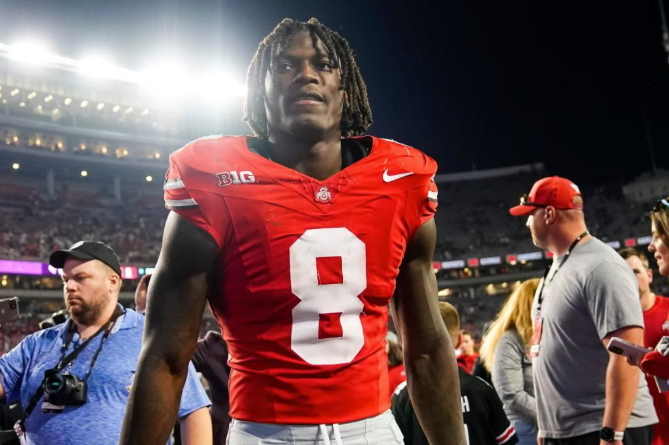
By the time the final pick was announced, the players still on Ohio State’s roster were already preparing for what comes next. Payton Pierce watched Reese go fifth. Kenyatta Jackson Jr. watched his former linemates Caden Curry and Eddrick Houston hear their names called on Day Three. Earl Little Jr. watched Caleb Downs, the player whose safety position he is now inheriting, go eleventh overall to Dallas. The 2026 draft didn’t just validate what Patricia built in Year One. It showed the players still in Columbus exactly what the system produces when you execute it.
A Template, Not a Trophy
The distinction matters. Draft results can validate a program’s prestige, and Ohio State has never lacked for that. What the 2026 results provided was something more specific and more concrete: a visible development arc for players who weren’t projected to go where they went.
Three of the four defensive first-rounders were not projected there entering the 2025 season. Reese finished the year with 69 tackles, 10 tackles for loss, and 6.5 sacks, numbers Patricia’s system generated by identifying Reese’s athleticism and explosive burst as edge tools and deploying him in a hybrid role that allowed him to attack from multiple alignments. McDonald arrived with limited starting experience and left as the Big Ten’s Defensive Lineman of the Year, the first unanimous All-American at that position from Ohio State in 55 years. The draft results were specific coaching evidence, and every player still in Columbus understood the difference between that and program prestige.
Payton Pierce is now in the linebacker room. He enters 2026 with 47 career tackles, a forced fumble in the Cotton Bowl, and a full understanding of what the position looks like at its ceiling in Patricia’s system. He spent two seasons watching Reese and Styles work. He knows the concepts, the alignment variations, the coverage responsibilities. He has seen what executing all of it correctly does on a draft board. That’s a template with a specific destination.
The Culture Downs Left Behind
Caleb Downs is a Dallas Cowboy now, but the standard he established during the 2025 season didn’t leave with him. Early in spring camp last year, Downs pushed to remove championship banners from the weight room, making the argument that a new team earns nothing from a previous team’s accomplishments. “You have to reset at some point,” he said. “The new guys that walked in there, they haven’t earned anything. We as the new 2025-26 season, we haven’t earned anything.”
The players who were in that room when Downs said it are still in Columbus. The culture he articulated, that the standard has to be re-earned every year by the people currently in the building, is now theirs to carry. Kenyatta Jackson Jr., who had 6.5 sacks and 11 tackles for loss in 2025 according to post-spring depth chart projections, returned for his senior season when he had a legitimate path to the draft. His decision to stay is itself a message to the room about what this opportunity is worth.
The System Is Already Installed
The single biggest advantage the 2026 defensive group has over the 2025 group is fluency. Matt Patricia spent Year One building terminology, culture, and scheme understanding from scratch with a group that had never run his concepts before. The players on the 2026 roster don’t need that introduction. They know what the system asks of them, they’ve seen what it produces when they execute it correctly, and they have the specific, concrete evidence of the 2026 draft to remind them what’s at stake.
That knowledge is not replaceable by any portal addition or highly recruited freshman, regardless of ranking. It lives in the players still in Columbus who were part of what happened in 2025.



Menuz Sg simplifies this journey by bringing together restaurant menus, food categories, meal prices, dining information, and useful restaurant details into one easy-to-use platform. Instead of spending valuable time searching multiple websites, diners can quickly compare restaurants and discover dishes that suit their Chiko Pollo Menu, dietary preferences, and budgets. This convenience has become increasingly important as digital dining research continues to grow.
Solid breakdown of how the 2026 draft reshaped the Columbus roster. Curious to see which of these young guys actually get meaningful minutes once the season tips off.