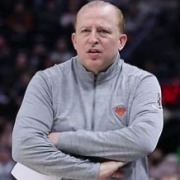
Chris Grier Must Nail the 2025 NFL Draft

The Miami Dolphins have put themselves in a precarious situation, one that has the job security of both Chris Grier and Mike McDaniel in question. The Miami Dolphins cap situation and contracts to ageing stars have left them with the need to draft players that make an immediate impact, if not Chris Grier may soon be out the door.

This year’s NFL Draft is deep, especially at Miami’s positions of need (CB, G, IDL, S, & TE).

*Here are some other articles to prepare you for the NFL Draft*

Get to Know Nick Emmanwori: The Rising Safety Prospect Miami Could Target

Will Johnson: The Cornerback Miami Can’t Overthink at Pick 13

Who to Pair with Zach Sieler? 2025 NFL Draft Interior Defensive Line Outlook

Dolphins’ Cornerback Search: Ranking 2025 NFL Draft Prospects to Pair with Jalen Ramsey (Written before Ramsey trade news).

Tyler Warren at 13? Why the Dolphins Should Look Elsewhere

Elite Picks at No. 13

These players would not only fill pressing needs but have Pro Bowl ceilings and could make a Day 1 impact.

  • Mason Graham (IDL, Michigan) – A disruptive force with elite quickness and technique. Would solidify the defensive interior alongside Zach Sieler and bring much-needed energy to an empty position group. Rumors are he could fall to Miami at 13 and if he does Miami must take him.

  • Will Johnson (CB, Michigan) – Long, athletic, and sticky in man coverage. Johnson could be Miami’s future CB1 — a need with Jalen Ramsey rumors and the inexperience of the current group.
  • Jahdae Barron (CB/Nickel, Texas) – One of the best nickel defenders in the draft. With the NFL shifting to three-receiver sets, having a versatile, physical corner like Barron is a game-changer.

Great Picks at No. 13

These players have All-Pro potential but may come with slight projection concerns or positional overlap.

  • Walter Nolen (IDL, Ole Miss) – Powerful and explosive, though raw. If developed properly, he could be a major presence in the trenches for years.

  • Kenneth Grant (IDL, Michigan) – Huge and athletic with surprising agility for his size. A great option to rotate and eventually start on the defensive line.

  • Kelvin Banks Jr. (OT, Texas) – Could play guard but Banks would likely take over Patrick Paul’s spot at tackle.

Good Picks at No. 13

These prospects are talented but might be better suited for a trade-down scenario or come with development needs.

  • Tyler Warren (TE, Penn State) – A versatile tight end who can block and contribute in the passing game. He’s rising up boards and is a great player, but not in Miami’s biggest need.

  • Malaki Starks (S, Georgia) – Athletic and instinctual, Starks is a playmaker but still raw in coverage. Would add youth and speed to the secondary.

  • Nick Emmanwori (S, South Carolina) – A physical, hybrid safety who fits Miami’s style. Might be available in a trade-down, but would help immediately in the box.

  • Derrick Harmon (IDL, Oregon) – Not as flashy but incredibly solid and reliable. A strong motor and football IQ make him a safe pick with starter upside.

Miami will likely address a combination of corner, defensive tackle, and offensive linemen with their first three picks, but is there a way to ensure Chris Grier doesn’t mess this up?

Trade-Down Scenario: The Smart Play

Unless one of Miami’s blue-chip prospects are there at 13, trade down, and acquire some more picks.

Some of these prospects — particularly from the “Good” tier — could be available later in Round 1. A suggested move: trade down to a pick in the 20s (Denver at No. 20 has come up in mock scenarios). Doing so would likely give Miami an extra pick in the top 100, creating more flexibility and lessening the risk if others picks don’t immediately hit.

Rounds 2 and 3 are where good front offices separate themselves. Miami has to hit on these picks — not just to build depth, but to patch real holes in the starting lineup. With needs all over the secondary, interior offensive line, and defensive front, there’s no excuse for missing in such a crucial draft.

Round 2 Targets

  • Jonah Savaiinaea (OL, Arizona) – A physical and experienced lineman who can play both guard and tackle. Offers versatility and a plug-and-play attitude that fits Miami’s win-now needs.

  • Donovan Jackson (G, Ohio State) – A mauler in the run game with great athleticism. Has the pedigree and polish to compete for a starting spot immediately on the interior.

  • Darien Porter (CB, Iowa State) – Long, fast, and rangy. A wide receiver turned corner who can fly on special teams and develop into a great defensive back.

  • Shavon Revel (CB, ECU) – One of the best small-school corners in the class. Long arms, aggressive at the catch point, and a sleeper who plays with swagger. He is coming off a knee injury and could even slide into round one for the 5th year option.

  • Trey Amos (CB, Ole Miss) – Solid technique and SEC experience. Would be thrown into competition to start on the boundary.

  • Mason Taylor (TE, LSU) – Son of Hall of Famer Jason Taylor, but he’s carving out his own name. A true two-way tight end with sure hands and blocking ability. The bloodlines don’t hurt, either.

  • Alfred Collins (IDL, Texas) – Has flashed elite traits but needs consistency. Huge size, 6’6. 330.

  • Tyleik Williams (IDL, Ohio State) – Quick, disruptive, and powerful. Would thrive in a rotation and eventually develop into a high-volume starter.


Round 3 Targets

  • C.J. West (IDL, Indiana) – Underrated but explosive. A strong motor and violent hands make him a potential late-round steal with starter upside.

  • Deone Walker (IDL, Kentucky) – A huge body with rare movement skills. Scheme-versatile and would thrive in Miami’s hybrid front — but needs to refine technique and pad level.

  • Kobee Bryant (CB, Kansas) – Competitive and instinctual with strong ball skills. Could challenge for playing time early in an inexperienced Miami secondary.

  • Miles Frazier (OL, LSU) – A strong interior lineman with upside and experience. Might need a year to develop but has the traits to eventually start at guard and would immediately compete with Liam Eichenberg.

There are many other options available in round three, but these our guys I believe could immediately compete as starters. 


Bottom Line

This draft is loaded with talent at the exact positions Miami needs to fix — cornerback, interior defensive line, and guard. Whether it’s the elite cornerback duo of Will Johnson and Jahdae Barron, disruptive interior linemen like Mason Graham and Walter Nolen, or plug-and-play guards such as Donovan Jackson and Jonah Savaiinaea, the Dolphins are staring at a golden opportunity to reload. Chris Grier cannot afford to get cute or overthink these selections — not with job security on the line and holes that must be filled immediately. Ignoring these core needs in favor of luxury picks or long-term projects would be malpractice in a draft class this deep and aligned with Miami’s deficiencies. The blueprint is simple: fill the trenches, fix the secondary, and don’t miss.


Mateo’s Hoop Diary: “We have to be better”: The Heat failed to complete a fourth-quarter comeback in Game 2

The Heat nearly completed a 13-point fourth-quarter comeback, but Donovan Mitchell’s on-the-dribble 3-pointers denied the upset as the series shifts to Miami for Games 3 and 4. He had 17 of his 30 points in the fourth quarter and logged all but one of his team’s field goals late. 


Despite starting Davion Mitchell for Alec Burks and sparking an early burst that put the Heat ahead by eight, the Cavaliers took control on transition attacks and a surplus of 3-pointers, totaling 14 in 23 attempts, giving them a 17-point edge at halftime. Adding insult to injury, four long-range bombs belonged to former Heatle Max Strus.


The defense was brutally sullied as the talent differential looked as wide as Lake Erie. Tyler Herro had 17 points on 63.6% shooting, and Haywood Highsmith made three treys without a miss, but the Cavaliers had six players doing damage. 


Then Herro did the heavy lifting for his club, nailing a 3-pointer and finessing his way into the paint for a floater and two layups. Yet it wasn’t enough as they momentarily fell behind by 19 despite the Cavaliers downshifting to fourth gear. 


Subsequently, the final frame showed the Heat’s real character and validated everything the coaching staff has done with Nikola Jović, even with his late misses. He recovered an offensive rebound that supplied a second-chance triple, set up Herro in transition, which cut the deficit to two, and dribbled inside the lane for a scoop. Davion Mitchell also scored 14 fourth-quarter points on 83.3% shooting. Haywood Highsmith nailed two treys. And Bam Adebayo set up three teammates and sacrificed body, screening and going for rebounds. 


Yet, Jović lost the ball, and Spida crossed him up on the next possession, burying a 3-pointer in his face. On the following play, Mitchell forced the switch on Herro, but as Davion tried to rotate back, an opening was taken that resulted in a 31-foot splash, putting the Cavs up by seven with under two minutes.  On top of that, Jović misfired a great look in the corner that would have kept the team on life support.


The Heat lost 121-112. They allowed 19 points off turnovers plus were outscored on the break by 11. And they didn’t get enough from Andrew Wiggins who was invisible on offense with 10 points on 30% shooting.


After the game, Darius Garland was asked in the locker room about the game plan against the Heat. He said, “Pick on Tyler Herro. Pick on their weak defenders. Go after them.” 


And just like that, there was bulletin board material. In spite of Herro’s defensive limitations, he was easily spraying and dribbling by everyone in front of him. 


On the losing side, coach Erik Spoelstra said, “We had our opportunities… we struggled to contain Mitchell, obviously, down the stretch. He made some tough shots; he did what he typically does.” He was pleased with Jović’s performance, too. 


Adebayo credited the Cavaliers’ shotmaking, and Herro said, “You can take some things, the positives from this and try to carry it over in Game 3.”

Game 3 is on Saturday. The Cavaliers are ahead in the series 2-0.

Mateo’s Hoop Diary: “When our defense is at its best… we can make an impact”: The Heat are already in danger after losing Game 1

At practice a day before Game 2 in Cleveland, Heat captain Bam Adebayo said the team has to force the Cavaliers into tougher shots. Tyler Herro echoed those sentiments by wanting to be a more annoying pest on the ball. 


Bless their souls, but this team has no chance despite claims of being more physical. In fact, Frankie DeCicco had better odds of surviving a car rigged with explosives than the Heat’s chances of advancement.  


They might seize a game, sparing them the indignity of a sweep. Winning two? Fuhgeddaboudit, but that would be the highlight of the season because it would grant the Heat a third game at home, giving their ushers an opportunity to pocket extra dollars because they are paid per appearance.


The Cavs have three options getting separation on the dribble. The Heat’s help defense is not in position to stop them after they dish to the perimeter. And the Heat’s rookie Kel’el Ware is likely too inexperienced and lacks the strength to overpower Jarrett Allen and Evan Mobley.


The Wine and Gold commit fewer giveaways, too, and when that’s combined with their edge on the glass, it results in eight more field goal attempts than Miami. Coach Erik Spoelstra also praised Allen, who had six offensive rebounds, for his “intent,” bludgeoning the paint and glass. 


Starting Davion Mitchell, who played 34 minutes on Sunday, could be one of the Heat’s changes that bothers the hosts earlier because of his on-ball defensive skills. He spent most of his guarding time on Donovan Mitchell, holding him to two makes in six attempts, including 25% from 3-point range. And he was the Heat’s most accurate volume scorer, earning the right to replace Alec Burks, who did not offer much in 15 minutes. 


Additionally, the Heat must find more ways for Andrew Wiggins’ athleticism to pressure Cleveland, perhaps by pushing the pace, and they need extra quality 3-point attempts instead of hunting the mid-range area. The fourth quarter was their only stretch of inaccurate deep shooting, and they had cut a 17-point deficit to six at the end of the third. 


So what happened? The Cavaliers flexed the power that all great teams have: getting serious for one quarter and that being enough. 


The younglings- Jaime Jaquez Jr., Nikola Jović and Pelle Larrson- were stashed for all but a minute of Game 1. If any developmental projects will get time, it’s Jović because he’s a more reliable release valve and an open-court threat. 


Five Storylines for Panthers-Lightning First Round Series

The Battle of Florida. One of, if not the most exciting, new-age playoff rivalries in hockey.


For the fourth time in the past five years, the Florida Panthers and Tampa Bay Lightning will meet in the postseason, and for the second straight season, it will be in the first round. 


The winner of the previous three Lightning-Panthers playoff series went on to have successful, long summers, with the victor advancing to the Stanley Cup Final each time (TB: 2021, 2022; FLA: 2024).


Game 1 is set to take place at 8:30 p.m. EST from Amalie Arena in Tampa, FL.


Here’s a few things to watch for in this highly anticipated first round matchup.

Ekblad to Miss Start of Series

Aaron Ekblad will have to sit out the first two games of the series as he serves the remainder of a 20-game suspension for violating the terms of the NHL/NHLPA Performance Enhancing Substances Program.


Ekblad is eligible to return to action for Game 3, which is Florida’s playoff home opener. When he does draw into the lineup, he will reunite on the Panthers’ top defense pair with Gustav Forsling.


“That’ll be the toughest two games, of course,” Ekblad said earlier this month. “I’m just going to try and keep myself in as best shape as I can so that once Game 3 rolls around, it’s easy for me to come back in. 


“And it’s not the first time that I’ve stepped into the playoffs cold, after injuries even, so I’m confident that I’ll be fine coming into it, but those two games would be very tough to watch, for sure.”


The Panthers were able to get by down the stretch despite missing arguably their second best defenseman for a quarter of the season.


With Ekblad out, Florida was able to get a few different looks on how its defense pairings could line up when they can ice a full strengthened blueline.


Seth Jones and Niko Mikkola are expected to round out the top-four, while Dmitry Kulikov and Nate Schmidt should be in the five-six hole. 

New Faces in the Sunshine State 

While a bulk of the current Lightning and Panthers players have seen one another before in the postseason, both teams will have some new names hit the ice for their first — playoff edition — Battle of Florida. 


On the west coast side of the state, forward Jake Guentzel is by far the most notable newcomer to the rivalry.


A free agent signing last summer, Guentzel has already proved to be a successful acquisition for Lightning GM Julien BriseBois, scoring 41 goals (second most on team) and 80 points (41-39-80) in as many games.  


J.J. Moser is another Lightning skater who will get his first taste of playoff hockey with the Bolts. The 24-year-old Swiss defenseman joined Tampa in the offseason in the deal that sent two-time Stanley Cup champion Mikhail Sergachev to the Utah Hockey Club.


The Lightning also brought back a few familiar faces from their Cup teams; Ryan McDonagh and Yanni Gourde weren’t with the team that lost last season to the Panthers, but they are more than well vetted in the Sunshine State rivalry. 


Shifting over to the team in Sunrise, the Panthers have their own set of players ready to get their share of Cats playoff hockey. 


After being acquired via trade on March 3 from the Chicago Blackhawks, five-time All-Star defenseman Seth Jones had to assume more of a role than was initially expected from him after the Panthers saw their blue line weakened with injuries and the sudden Ekblad suspension. Jones will need to eat a ton of minutes — including both power play and penalty kill time — in the first round, with Ekblad missing the first two games of the series. 


Former Boston Bruins captain and Stanley Cup champion Brad Marchand is another new Panther to watch in this series. An agitating player to match up against thanks to his physical and aggressive — yet highly skilled — playstyle, Marchand is the perfect player to throw into the Battle of Florida.


Rookie standout Mackie Samoskevich is another notable player that wasn’t there when the Panthers slayed the dragon to finally defeat the Lightning last season. Samoskevich, 22, scored 15 goals and 31 points (15-16-31) in 72 games this season. In his first year with Florida, he’s already cemented himself as a top-nine forward and power play option.

Return of Tkachuk?

Last time Matthew Tkachuk played in a game was Feb. 20 in the 4 Nations Face-Off final, where he didn’t see much ice-time after sustaining a lower-body injury in the tournament.


The injury kept the Panthers’ star forward sidelined for the last 25 games of the regular season.


Tkachuk only rejoined the team’s practice sessions last week, but he’s been wearing a normal contact jersey and is appearing on his usual lines.


As of Tuesday morning — prior to the team’s morning skate — Panthers head coach Paul Maurice hasn’t said if Tkachuk will play in Game 1 — but the signs are pointing to him being close to ready.


“He’s got to get through the morning skate tomorrow,” Maurice said after Monday’s practice. “If he gets through that morning skate, everyone gives a thumbs up, then he’ll go.”


If Tkachuk is a go for the series opener, he’ll slot right back in on the second line next to Sam Bennett and Mackie Samoskevich.


In 52 games this season, Tkachuk was scoring at a point-per-game rate with 22 goals and 57 points (22-35-57), finishing third on the team in scoring despite missing 30 games.


Not So Under the Radar Players to Watch

Everybody knows the firepower both teams have up and down the lineup.


Kucherov, Point, Hedman, Vasilevsky… Barkov, Tkachuk, Reinhart, Bobrovsky. Keeping it simple, these are two of the most stacked rosters in the league; we’ll be here awhile if we dive deep into every star.


Instead, here’s two gamechangers — one for each team — that have proven themselves as legit top-line players in the NHL, but may fall down the pecking order due to their respective team’s rosters.


Tampa Bay — Brandon Hagel

Lightning forward Brandon Hagel may be one of the most underrated players in the league.


Since joining the Lightning for the 2021-22 season, 26-year-old Hagel has two 30-plus goal seasons, with this year being a career-best 35 goals and 90 points (35-55-90) in 82 games. 


It’s hard to not like his game; he’s the perfect combination of skill and grit. 


In the past two postseasons, Hagel posted back-to-back five point first round series, scoring 3 goals (3-2-5) in five games against the Panthers last year.


A member of Team Canada’s gold medal winning 4 Nations squad earlier this year, Hagel looks to add some more hardware to his trophy cabinet.


Florida — Sam Bennett

Speaking of gritty, skilled forwards who may get lost in the shuffle on a stacked roster… Panthers forward Sam Bennett sounds alot like Brandon Hagel.


Bennett, 28, finished the season with 25 goals and a career-high 51 points (25-26-51) in 76 games this season. The Panthers’ second-line center is of utter importance to the team, especially when it’s playoff time.


When the light’s get bright Bennett hits another gear, or two. 


Looking at the Panthers’ last two postseasons — where they made back-to-back Stanley Cup Final appearances — Bennett had 29 points (12-17-29) in 39 total games. Adding to the clutch gene, he scored one of the biggest goals of his career two months ago when he buried the tying goal in the 4 Nations gold medal game for Canada.


Both Hagel and Bennett — Canadian teammates turned rivals once again — can take over a game when they get hot. Their importance in this series should not be understated.


King of the Net

You’ll often see a goaltender get hot out of nowhere and steal you a game. But in the playoffs, the question isn’t who wins you a game, it’s who can win you a series?


Future Hall of Famers Andrei Vasilevsky and Sergei Bobrovsky have won their respective teams more than a few series.


Bobrovsky had everything a goalie could ask for. Two Vezina trophies, Olympic and World Championship pedigree and plenty of wins (currently 10th all-time in career NHL wins, 429). 


The one thing that was missing in Bobrovsky’s phenomenal career was the big one, the Stanley Cup. And now he has it.


In the other crease, Vasilevsky has a resume that most players can only dream of. 


A Vezina, multiple international medals, a Conn Smythe and of course two Stanley Cups.


If you ask an NHL player which goalie they’d trust to win a playoff series, most would probably say Vasilevsky — which would hold true to the 2024-25 NHLPA Player Poll, where Vasilevsky was voted “Best Overall Goalie” by his peers (Bobrovsky finished fourth).


It’s hard to say which team “lines up” better than the other in this matchup, there’s elite players everywhere. 


This series could very well come down to which goalie propels his team to the finish line.

Mateo’s Hoop Diary: The Heat lacked defensive answers and enough firepower in the Game 1 loss to the Cavaliers

The Heat lost Game 1 because they were the smaller, slower, and weaker team against a machine that didn’t show up in top form. They also rolled into the match physically, mentally and emotionally spent after surviving two elimination games in the Play-In Tournament. They played well for their standards and hung around with the Cavaliers for three quarters, but they were overwhelmed by artillery strikes late.


Considering their 37-win record matching up against the Cavaliers’ 64 dubs, it was a surprise the Heat were stronger than a sparring partner. Aside from Donovan Mitchell’s 30 points that came via blow-bys and jumpers, Ty Jerome inflicted 28 digits on 67% shooting off the bench. At one point, the latter went on a victim spree, the metaphorical equivalent of the Heat getting shot up worse than Scarface at his last stand.


Tyler Herro said the Cavs’ physicality dictated terms. And coach Erik Spoelstra talked about watching the film and improving, but that’s something more the Cavaliers can do. 

The Heat’s most promising spurt of the opening quarter came after Spoelstra summoned his troops as they fell below nine points in the first few minutes. They answered with 11-2 run, but the Cavaliers figured them out like a boxer who takes a few rounds to decipher their rival.


A Cavalanche followed, including six triples and the hosts climbed to a 17-point lead. Naturally, the Cavaliers, like a prizefighter in a bout beneath their level, got bored, and their intensity waned by 40° to close the half as the Heat brought the deficit down to eight on 3-pointers from Tyler Herro, Duncan Robinson, and Davion Mitchell.


At halftime, the Heat still had a pulse down 62-54. Subsequently, they had no answers for Donovan Mitchell and Darius Garland’s paint pressure. Yet, the team’s eight second-chance points, Bam Adebayo’s assertiveness near the paint, and the rest of the squad’s three 3-pointers kept the Heat in the game after falling behind by 13 and closing it to six with 49 seconds to go in the third.  


The Heat flashed a zone to start the fourth quarter, but no scheme could restrain Jerome’s spot-up, pull-up shots, and floaters. Adebayo’s three jumpers and Davion Mitchell’s paint strikes were the team’s last real retaliatory efforts, but it didn’t matter because they were outclassed midway through the period. 


The Heat lost 121-100. The Cavaliers picking up 14 offensive rebounds and committing seven fewer turnovers put them in position to take eight more field goals, making six. 


Takeaways:


  • In spite of Kel’el Ware’s two blocks, his inexperience made him a target and limited his minutes to 19. His timing was off as a helper, too. 


  • The Cavaliers have three options in Mitchell, Jerome and Darius Garland who can create separation on the dribble and break down Miami’s defense. They combined to score 85 points on 61% accuracy. 


  • Cleveland’s length and quick help defense held the Heat’s half-court attack to 89 points per 100 plays, good enough for the 26th percentile, per Cleaning the Glass. 


  • Notably, the Heat only attempted five shots at the rim, making all, but most of their looks were in the paint non-restricted area, shooting 12.3% above the league average. 


  • Andrew Wiggins had 14 points on 45% shooting, but he was not a big enough part of the offense. He is one of the Heat’s top-two athletes and needs to be more active, curling around screens and demanding the ball.


  • Herro and Adebayo were the Heat’s main scorers, but they totaled 45 points on 42.5% shooting.


The Miami Heat Make Play-In History — Can They Shock the Cavs?

The Miami Heat Make Play-In History — Can They Shock the Cavs?
The Miami Heat became the first 10-seed to advance out of the NBA’s Play-In Tournament, earning the 8-seed and a first-round matchup with the top-seeded Cleveland Cavaliers. This series promises gritty, hard-nosed basketball, as both teams boast top-10 defenses anchored by multiple All-NBA-caliber defenders.

We’ll get Mitchell vs. Mitchell, Bam and Ware vs. Mobley and Allen, Max Strus facing his former team, and the emergence of a budding superstar in Tyler Herro.


Quick Notes:

  • If Miami wins this series, it will mark the largest upset in NBA playoff history in terms of win differential between seeds (27 games). The current record is 21, set in 1994 when the Nuggets upset the SuperSonics.

  • Miami leads the all-time series 80–53.

  • This will be the first playoff meeting between these two franchises.

  • The Cavaliers are heavy favorites:
    Odds via FanDuel – Series odds: Cavaliers -4000, Heat +1500.

Now, those odds may look extreme — but they’re not unreasonable. Still, this matchup is closer than the numbers suggest. Here’s how I see the series playing out:


Miami’s Rotation and Matchups

For Miami, I’d like to see Davion Mitchell take Alec Burks’ spot in the starting lineup. That move would give the Heat more perimeter defense from the jump and allow the matchups to look like this:

  • Davion Mitchell on Donovan Mitchell

  • Tyler Herro on Darius Garland or Max Strus

  • Andrew Wiggins on Garland or Strus

  • Bam Adebayo on Evan Mobley

  • Kel’el Ware on Jarrett Allen

Off the bench, the most important player might be Haywood Highsmith. His defensive versatility was key in Miami’s Play-In victory over Atlanta, and his ability to guard multiple positions will be crucial when Miami needs to rest its starters.

Offensively, Miami will need meaningful contributions from their second unit. Cleveland has five players averaging double figures and a deeper bench overall. That means Miami will have to lean on Duncan Robinson, Alec Burks (if he’s coming off the bench), Highsmith, and maybe even Nikola Jovic to provide a scoring spark. Cleveland’s advantage is depth — but Miami’s advantage is Erik Spoelstra.

That’s no disrespect to Kenny Atkinson, but Spoelstra has done more with less, brought this team back from the dead, and proved time and again why you never count the Heat out.


“It’s Not a Series Until a Team Loses at Home”

The Cavaliers went a dominant 34–7 at home this season and have home court throughout this series. If Miami wants any real shot, they’ll need to steal one in Cleveland and head back to South Beach tied 1–1. Game 1 is the swing game. Take that, and the tone of the entire series changes.

Three Keys for a Miami Upset

  1. Avoid the Droughts
    The biggest Achilles’ heel for Miami this season has been offensive inconsistency. The Heat blew a league-high 22 games in which they held double-digit leads, often because of one cold quarter that turned momentum. Against a disciplined, well-coached Cavs team, those lulls will get punished. Miami can’t afford a sub-25-point third quarter or a 2-for-15 shooting stretch — they need to string together four full quarters of competitive basketball.

  2. Tyler Herro Has to Be That Guy
    Tyler Herro has blossomed into more than just a scorer — he’s a playmaker, shot-creator, and the engine of this offense. If Miami’s going to pull this off, Herro has to step into the spotlight. Herro was all in the spotlight in the play-in and will have to continue his surge as Miami heads to Cleveland. He’ll see a ton of Donavan Mithcell, Max Strus, and maybe even Evan Mobley on switches, but if he can navigate those matchups and give Miami 25+ a night efficiently, it’ll open up the floor for everyone else.

  3. Keep the Frontcourt Battle Close
    Bam Adebayo and rookie Kel’el Ware will have their hands full with Evan Mobley and Jarrett Allen, who anchor Cleveland’s defense and dominate the glass. Miami doesn’t have to win the paint — but they can’t get crushed in it either. If Bam can hold Mobley in check and Ware gives them quality minutes protecting the rim and rebounding, it’ll limit second-chance opportunities and keep Miami in the fight.

Prediction: Heat Push It to Six, But Cavs Advance

Miami will battle. They’ll scrap, claw, and make Cleveland uncomfortable at times — that’s what Spoelstra teams do. Tyler Herro will have moments that make you think, “Maybe they can pull this off,” and Bam will bring his usual defensive brilliance. Expect the Heat to steal at least one on the road and defend their home court once.

But ultimately, Cleveland’s depth and efficiency on both ends of the floor will prove too much. The Cavaliers are elite at limiting mistakes, defending without fouling, and converting their offensive possessions into quality looks. Over the course of a seven-game series, that level of discipline usually wins out.

Cavaliers in 6.


Who to Pair with Zach Sieler? 2025 NFL Draft Interior Defensive Line Outlook

The Miami Dolphins are in desperate need of defensive tackles. After letting Christian Wilkins walk in free agency over a year ago, the Dolphins turned to Calais Campbell who was not only a great player on the field but an excellent resource of the field. The former Walter Payton Man of the year showed why he earned the prestigious award through his leadership on and off the field, and his impact in the community.

As the offseason went on and Campbell mentioned he would like to return to Miami, Chris Grier didn’t pull the trigger, and Calais Campbell went back to Arizona where it all started. Campbell has earned the right to do that and its well-deserved, but this move backed the Dolphins into a corner.

Thankfully for Miami there will be players that can make an impact available at their first three selections, 13, 48.and 98. In this article I will outline the best options based on talent, their availability at Miami’s picks and their fit next to Zach Sieler.

Miami also needs a corner. If you would like to see my corner back rankings you can read that here: Dolphins’ Cornerback Search: Ranking 2025 NFL Draft Prospects to Pair with Jalen Ramsey

*That article was written before the Ramsey news, so the need for corner may trump that of defensive line*

Top-Tier Prospects (Ranked 1-3)

Mason Graham, DT, Michigan

  • Scouting Report: Graham is widely regarded as the top defensive tackle in the 2025 class, blending explosive athleticism, technical refinement, and versatility. At 6’3″, 320 pounds, he excels both as a pass-rusher and run-stopper, with quick feet, upper-body strength, and a relentless motor. His ability to play multiple techniques (0-tech to 5-tech) makes him scheme-versatile. Graham’s pass-rush win rate (14%) and pressure rate (10.3%) are elite, drawing comparisons to Jalen Carter. While his shorter-than-ideal arm length may pose some concerns, his football IQ and consistent disruption overshadow this. He’s noted for dominating one-on-one blocks and anchoring defensive fronts.

  • Strengths: Explosive first step, elite hand usage, high motor, scheme versatility, exceptional run defense.

  • Weaknesses: Pass rush needs more work, highly reliant on bull rush.

  • *Likely won’t be available for Miami*

Walter Nolen, DT, Ole Miss

  • Scouting Report: A former five-star recruit, Nolen (6’3″, 305 pounds) is a twitchy, disruptive force with superlative burst and power. His versatility allows him to play 3-technique, 4i-tech, or defensive end in even fronts, reminiscent of Ed Oliver. Nolen’s 2023 stats (4 sacks, 8.5 TFLs) reflect raw talent, but he’s still developing consistency in technique and ball awareness. He excels in penetrating defenses using a violent hump move and hip flexibility to jolt blockers. However, he can get washed out in run defense due to inconsistent pad level and vision. His transfer to Ole Miss boosted his stock with improved production.

  • Strengths: Elite explosiveness, versatile alignment, high-energy pass rush, raw potential.

  • Weaknesses: Inconsistent technique, occasional lapses in run defense.


Kenneth Grant, DT, Michigan

  • Scouting Report: A freakish athlete at 6’3″, 339 pounds, Grant is the premier nose tackle in the 2025 class, capable of dominating the interior with raw power and surprising agility. Reportedly running a sub-5.0 40-yard dash, he overwhelms blockers with strength and anchors against double-teams. His pass-rush win rate (9.1%) and pressure rate (8.8%) are solid but lag behind Graham and Nolen, as his game is more run-stopping focused. Grant struggles with consistency in pass-rush moves and can be slow to disengage. His fit is best in a 0- or 1-tech role in a 3-4 defense.

  • Strengths: Elite size and strength, dominant run-stopper, anchors double-teams, surprising quickness.

  • Weaknesses: Limited pass-rush repertoire, slower to shed blocks, scheme-specific fit.

  • Would be a great compliment to Zach Sieler and Miami’s elite pass rush.

Second-Tier Prospects (Ranked 4-6)

Derrick Harmon, DT, Oregon

  • Scouting Report: Harmon (6’5″, 310 pounds) emerged as a riser after a standout 2024 season at Oregon, showcasing high football IQ, quickness, and competitiveness. His pass-rush win rate (12.3%) and pressure rate (11%) rival top-tier DTs, with quick hands and a club/rip move that disrupts pockets. He excels at shooting gaps and redirecting runners but lacks elite physical traits, limiting his ceiling. Harmon’s single year of notable production raises questions about consistency, but his instincts and awareness make him a safe bet for an even-front 3-technique role.

  • Strengths: Quick hands, high IQ, gap-shooting ability, effective pass-rusher.

  • Weaknesses: Limited elite traits, one-year production, not a dominant anchor.


Tyleik Williams, DT, Ohio State

  • Scouting Report: Williams (6’3″, 327 pounds) is a powerful, stout defender with a good blend of size and athleticism. His 2023 production (10 TFLs, 5 sacks) highlights his ability to disrupt both run and pass plays. He’s effective as a 3-technique with a strong bull rush and solid hand usage, but his pad level can be inconsistent, leading to leverage issues against double-teams. Williams’ athletic testing was not as elite as expected, which dropped him slightly on some boards. He’s a versatile fit for 4-3 or 3-4 schemes but needs to refine his technique to maximize impact.

  • Strengths: Power-based rush, solid production, versatile scheme fit, strong run defense.

  • Weaknesses: Inconsistent pad level, average athletic testing, needs technical polish.


T.J. Sanders, DT, South Carolina

  • Scouting Report: Sanders (6’4″, 290 pounds) is a toolsy defender with good length and athleticism, making him a disruptive 3-technique prospect. His quick first step and ability to penetrate gaps create negative plays, but he lacks elite strength, which can see him washed out against stronger linemen. Sanders’ pass-rush production is solid but not spectacular, and he’s still developing a consistent counter-move set. His upside lies in his frame and motor, but he needs coaching to unlock his full potential.

  • Strengths: Quickness off the snap, good length, high upside, solid motor.

  • Weaknesses: Lacks elite strength, underdeveloped pass-rush moves, inconsistent run defense.


Third-Tier Prospects (Ranked 7-10)

Alfred Collins, DT, Texas

  • Scouting Report: Collins (6’5″, 320 pounds) is a long, athletic lineman with versatility to play DE or DT in various fronts. His 2024 season showed improvement in run defense and pass-rush disruption, but he’s inconsistent, often relying on raw athleticism over technique. His length helps bat passes and clog lanes, but he struggles to anchor against double-teams and lacks a refined pass-rush plan. Collins’ upside is high, but his inconsistent production keeps him out of the top tier.

  • Strengths: Elite length, athletic upside, versatile alignment, pass disruption.

  • Weaknesses: Inconsistent production, raw technique, struggles vs. double-teams.


Darius Alexander, DT, Toledo

  • Scouting Report: Alexander (6’4″, 310 pounds) is a late riser after a strong Senior Bowl and NFL Combine (4.95 40-yard dash, 9.72 RAS, 28 bench reps). His athleticism and length make him a disruptive 3-technique, with a quick first step and active hands. However, his age (25 as a rookie) and lack of elite competition at Toledo temper expectations. Alexander’s production was solid but not dominant, and he needs to improve consistency against NFL-caliber linemen. His combine performance boosted his stock significantly.

  • Strengths: Elite athletic testing, good length, quick first step, combine riser.

  • Weaknesses: Older prospect, limited high-level competition, inconsistent production.


Omarr Norman-Lott, DT, Tennessee

  • Scouting Report: Norman-Lott (6’3″, 315 pounds) is an undersized but athletically gifted 3-technique with untapped potential. His grades and win rates outshine his raw stats, suggesting NFL upside with better coaching. He’s quick off the ball and flashes disruptive ability, but his hand usage and pass-rush plan need significant refinement. Norman-Lott struggles against stronger linemen and can be moved in run defense. His athleticism makes him a developmental prospect for a penetrating defense.

  • Strengths: Athletic upside, quick first step, high potential in pass rush.

  • Weaknesses: Raw hand technique, struggles vs. power run game.

Deone Walker, DT, Kentucky

  • Scouting Report: Walker (6’6″, 348 pounds) is a massive nose tackle with rare raw talent, drawing Dexter Lawrence comparisons. His 2023 stats (7.5 sacks, 12.5 TFLs) are edge-rusher-like, showcasing his ability to dominate at 0- or 1-tech. His size and explosiveness allow him to obliterate blocks, but inconsistent pad level and leverage issues limit his effectiveness. Walker’s versatility to play 3-tech or 5-tech adds value, but he’s a raw prospect needing technical polish.

  • Strengths: Elite size, explosive power, high sack production, versatile alignment.

  • Weaknesses: Poor pad level, raw technique, run-stopping needs refinement. Poor 2024 season.

This draft class is extremely deep, and my rankings don’t even include Joshua Farmer, CJ West, Jordan Phillips, and many others. This is a huge position of need for Miami and with recent events may not be covered in round 1. That being said the depth of this class plays to Miami’s needs and they will be able to find a day one starter at 48 and have a possibility of finding one at 98. I still would like to see Miami add another pick within the top 100 but that’s a topic for another article. Chris Grier has the opportunity to fill his holes in this roster, will he capitalize?

Will Johnson: The Cornerback Miami Can’t Overthink at Pick 13

With Jalen Ramsey’s Departure, the Dolphins Must Not Overthink Pick 13: Will Johnson is the Answer

With Jalen Ramsey’s departure imminent and the Miami Dolphins’ secondary in flux, securing a top-tier cornerback is no longer a luxury — it’s a necessity. Michigan’s Will Johnson stands out as the ideal candidate to fill that void and anchor Miami’s defense moving forward. Will Johnson was my top cornerback target for Miami before the Ramsey trade — and now, he’s a no-brainer

Legacy Turned Lockdown: Johnson’s Rise in Ann Arbor

A five-star recruit out of Grosse Pointe South High School, Johnson followed in his father’s footsteps to Michigan but quickly forged a legacy of his own. As a true freshman, he earned Freshman All-American honors. By his sophomore year, he was a First-Team All-American and defensive MVP during Michigan’s national title run. Even while battling a nagging turf toe injury in 2024, Johnson notched two pick-sixes and continued to erase top receivers’ week after week.

In 32 games, Johnson racked up:

  • 68 total tackles

  • 9 interceptions (3 returned for touchdowns)

  • 10 pass deflections

That’s elite production. At 6’2″, 194 lbs with 30 1/8” arms, Johnson pairs size with intelligence and big-game consistency — everything the Dolphins need right now.

Dolphins Need a Corner with His Skillset

This isn’t a matter of best player available anymore. With Ramsey and Kendall Fuller — both primarily outside guys — now jettisoned, Miami is dangerously thin on the boundary. Unless they trade down, this is not one to overthink: Will Johnson is the prohibitive favorite for the Dolphins if they remain at No. 13 overall.

His defensive coordinator at Michigan? Wink Martindale — the very same Martindale who served as Anthony Weaver’s first DC in Baltimore. That familiarity could ease the transition to Miami’s evolving defensive system.

The Dolphins don’t need a developmental player. They need someone who can step in right away and deliver. Johnson did exactly that at Michigan, starting as a true freshman. History tends to repeat itself — and guys who acclimate early in college often hit the ground running in the NFL. His position history, scheme background, and track record scream “Day 1 starter.”

Scouting Breakdown: Pro-Ready with Room to Grow

Johnson earned an overall scouting grade of 87.8 (NFLDraftBuzz.com) and is widely viewed as a top-three cornerback in the draft class. His strengths are tailor-made for Miami’s needs:

  • Press-man physicality: Disruptive at the line with size and technique

  • Zone IQ: Diagnoses route concepts like a vet

  • Ball skills: A pick-six threat every time he’s targeted

  • Run support: Aggressive and willing tackler

  • Versatility: Can thrive in man or zone-heavy schemes

But yes — there are concerns.

He didn’t run the 40-yard dash at the Combine or his Pro Day, and Todd McShay has said he likely would’ve run in the high 4.5s. That’s not blazing. Then again, Jaylen Waddle never ran the 40 either, and Chris Grier trusted the GPS data. It’s hard to imagine the Dolphins don’t already have similar numbers on Johnson.

Reading into Grier’s comments in yesterday’s press conference — specifically his admission that he’s grown tired of banking on traits over makeup — Johnson becomes even more of a match. Grier sounded like a man who’s done with the Cordrea Tankersleys of the world. Johnson has “the makeup.”

The Injury Factor: A Gamble Grier Is Still Willing to Make

The turf toe injury and lack of speed testing are valid discussion points — but they shouldn’t be dealbreakers. Let’s be honest: Chris Grier has never shied away from prospects with medical red flags, as long as the character and work ethic are undeniable. Will Johnson checks both boxes. And in this case, we’re not talking about a chronic knee or back issue — it’s turf toe. Manageable, short-term, and not the kind of injury that should scare off a team with a glaring need at corner. If anything, it’s being overstated by those trying to poke holes in an otherwise elite prospect.

Final Thought: Get the Corner, Anchor the Defense

Prior to the Ramsey trade, no need came close to Miami’s defensive line issues. But with a future Hall of Famer being moved from an already shallow corner room, cornerback is now the most glaring hole on the roster. And if Will Johnson is on the board at 13, don’t be surprised if the Dolphins sprint the card in.

He’s smart. He’s tough. He fits the scheme. He fills a need. And he’s exactly the kind of “football makeup” guy Miami should be targeting if they want to build a defense to match the explosiveness on offense.

This isn’t complicated. It’s Will Johnson.

Chris Grier’s Press Conference Raises More Questions Than Answers

More Questions Than Answers: Decoding Chris Grier’s Puzzling Presser

A common theme with this Miami Dolphins regime is the inability to be straightforward and assuring. Often after press conferences, those who follow the Dolphins are left with more questions than answers. This whole offseason there have been murmurs of a big trade that the Dolphins will make, many of which pointed to Tyreek Hill, who has been a headache off the field. But while some were scrambling to file their taxes, the news broke that the Dolphins and Jalen Ramsey have “mutually agreed” to part ways.

This happens all the time in sports; players, agents, and front offices have disagreements over money or the little innuendos of NFL contracts. But in this case, once again, the Dolphins have seemed to make a simple situation more confusing, only leaving everyone to say, “Why?”

The Ramsey Riddle: A “Mutual” Departure That Raises Eyebrows

Miami Dolphins General Manager Chris Grier stepped up to the podium on Tuesday, April 15th, 2025, with a seemingly straightforward task: address the elephant in the room – the looming departure of star cornerback Jalen Ramsey. What transpired, however, was a press conference that left more questions swirling than answers provided, painting a picture of a team in flux and a front office navigating a potentially turbulent offseason.

Grier’s opening statement confirmed the news everyone anticipated: the Dolphins and Jalen Ramsey were parting ways. While he stated it was a mutual decision after weeks of internal discussions and conversations with Ramsey and his representation, the reasoning remained shrouded in ambiguity. “At the end of the day, Jalen did not ask for a trade,” Grier emphasized, adding that the decision was made after “numerous conversations” and a feeling that it was “best for the Miami Dolphins and for Jalen Ramsey.”

This carefully crafted statement, however, only deepened the mystery. If Ramsey didn’t want to leave and wasn’t seeking a bigger paycheck (a question Grier explicitly answered with a “No, he did not”), then what prompted this significant move? Grier remained tight-lipped, stating, “Really those discussions I’ll keep internally.” This lack of transparency immediately set the tone for a presser defined by what wasn’t said. Could this have been about scheme fit, locker room dynamics, or a future vision the team has that didn’t align with Ramsey’s long-term presence? The lack of clarity leaves fans and analysts to speculate.

Uncertainty in the Cornerback Room and Draft Strategy

The obvious follow-up question – whether the Dolphins expect to trade Ramsey before the draft – yielded an equally vague response. “I don’t know,” Grier admitted, highlighting the unpredictable nature of trades in the NFL timeline. This uncertainty leaves the Dolphins’ cornerback room in a precarious state heading into the draft, a position many already considered a significant need. Will the Dolphins be forced to prioritize cornerback early, potentially deviating from their “best player available” approach?

Adding to the intrigue was the revelation that the Dolphins opted against restructuring quarterback Tua Tagovailoa’s contract to create cap space for bolstering the offensive and defensive lines. Grier’s explanation – “We decided we just felt we didn’t need to” – felt underwhelming, especially considering the team’s well-documented struggles in the trenches. He pointed to the signing of guard James Daniels and the perceived strength of the draft aligning with their needs, but this justification did little to quell concerns about potentially missed opportunities to improve key areas. Did the front office have concerns about the long-term implications of restructuring Tua’s deal, or do they genuinely believe the draft will adequately address their significant needs?

The Tyreek Hill Factor and Leadership Questions

As the press conference progressed, the underlying theme of unanswered questions persisted. When pressed on the timeline of the Ramsey decision, Grier suggested it was a long-term discussion, yet his free agency strategy didn’t overtly reflect the imminent departure of a player of Ramsey’s caliber. His acknowledgment that “it’s never easy to replace a player like Jalen” only underscored the perplexing nature of the situation.

The conversation then shifted to another prominent player, wide receiver Tyreek Hill, who has been the subject of both on-field brilliance and off-field concerns. Grier firmly stated that trading Hill was “not anything that we’re pursuing,” only to add the caveat of a hypothetical “two first-round picks” offer that would warrant consideration. While seemingly a standard GM response, it couldn’t entirely erase the lingering questions surrounding Hill, particularly in light of recent domestic incident police calls. Grier offered a brief statement aligning with the team’s official release, declining to delve into Hill’s personal life, leaving the public to wonder about the internal handling of the situation and its potential impact on team morale.

Perhaps the most telling exchange came when Grier was asked if the recent roster moves – the departure of Ramsey, the retirement of Terron Armstead, and the exit of Calais Campbell – signaled a “soft rebuild” or “reset.” His emphatic “No” was direct, but his insistence that the goal remains to “win, win this year and keep winning for sustained success in the future” felt somewhat at odds with the significant veteran talent departing the roster. The subsequent question about leadership in the locker room after losing multiple captains further highlighted this potential disconnect, leaving uncertainty about who will step up to fill those crucial roles.

Navigating the Draft with “Glaring Holes”

Grier’s answers regarding the team’s draft philosophy also raised eyebrows. While acknowledging the needs at cornerback, guard, and defensive tackle, he maintained a commitment to his ability to draft players at these positions, mentioning Xavien Howard, Christian Wilkins, Robert Hunt, and even Liam Eichenberg which is quite humorous. The good thing for Grier is that the draft’s strength aligns with their needs. His decisions will be closely scrutinized come draft night. Will the pressure to fill immediate needs outweigh the desire to draft the highest-rated player on their board, potentially leading to a reach?

A Decade of Learning and the Path Forward

In a moment of candid self-reflection, Grier discussed his decade of experience leading the Dolphins’ draft, admitting he’s not perfect and has learned to trust his instincts more while valuing the collaborative pushback from his coaching staff, particularly with Mike McDaniel. This admission of growth, however, does little to immediately alleviate the current cloud of uncertainty surrounding the team’s direction.

More Questions Than Answers Remain

Ultimately, Chris Grier’s press conference left Dolphins fans with a sense of unease and uncertainty. The departure of a star player in Jalen Ramsey without a clear explanation, coupled with a seemingly passive approach to addressing obvious roster needs in free agency, has created more questions than answers. As the draft looms, the pressure is undoubtedly mounting on Grier and the Dolphins’ front office to provide clarity and, more importantly, deliver on their stated goal of winning now and in the future. The engaging narrative that emerges from this presser is one of a team at a crossroads, with the next few weeks potentially defining their trajectory for the 2025 season and beyond. The answers, it seems, will have to come on the field.

Takeaway: The Silence Is Louder Than the Words

Chris Grier’s awkward, unconvincing presser says it all — the Miami Dolphins GM looks like a man grasping at straws.

His inability to confidently name leaders in the locker room was alarming. His words during the presser were anything but reassuring, leaving fans and players with more questions than answers. There’s a concerning lack of direction coming from the front office.

Let’s look at the facts:

  • Jalen Ramsey is out the door — we just don’t know when. Grier admitted they’re “exploring options,” which means they’re already planning for life without one of their best defenders.

  • Tyreek Hill is staying… for now. No restructure. No clarity. Just vague talk about letting it “play out.”

  • Tua Tagovailoa’s contract wasn’t restructured either, a sign that the franchise is hesitant to fully commit — despite constant claims of “belief” in him.

  • Patrick Paul is currently set to start at left tackle. A second-round rookie who didn’t even earn starting reps in minicamp is now being penciled in to protect Tua.

  • “We want to win more than you guys.” Grier wants everyone to get off their back, a laughable statement.

This isn’t a rebuild. This isn’t an all-in push. This is confusion. Chaos disguised as cap strategy.

Chris Grier’s track record of dodging accountability continues, and if things go south early in the season, the fans won’t forget how this offseason felt — like a ship without a captain.

Dolphins’ Cornerback Search: Ranking 2025 NFL Draft Prospects to Pair with Jalen Ramsey

Dolphins’ Cornerback Search: Ranking 2025 NFL Draft Prospects to Pair with Jalen Ramsey

The Miami Dolphins’ secondary requires reinforcement after the underwhelming signing of Kendall Fuller. With Jalen Ramsey anchoring one side and Kader Kohou excelling in the slot, the team seeks an outside cornerback to solidify the CB2 position. Young players like Storm Duck and Ethan Bonner show promise, but relying on them as starters in Week 1 could jeopardize a defense with playoff aspirations.

Defensive Coordinator Anthony Weaver has revitalized Miami’s defense, drawing from his experience with the Baltimore Ravens. His scheme emphasizes aggressive, press-man coverage and frequent blitzing, requiring cornerbacks who can jam receivers at the line, excel in man-to-man situations, and contribute to run support.

The 2025 NFL Draft offers a deep class of cornerbacks, providing General Manager Chris Grier with options at picks 13 and 48. Delaying the selection risks entering a competitive free-agent market. Below is a ranking of prospects based on their abilities and fit within Weaver’s defensive system, prioritizing outside corners with press skills and ball production something Miami desperately lacked this past season.​

*Travis Hunter will not be on this list as Miami won’t be able to draft him*

1. Will Johnson, CB, Michigan

  • Size/Speed: 6’2″, 202 lbs, 4.39 40-yard dash

  • 2024 Stats: 14 tackles (12 solo), 2 interceptions (both returned for touchdowns), 3 pass breakups

  • Scouting Report: Johnson is a prototypical press-man cornerback with an exceptional blend of size, fluidity, and football intelligence. He excels in both man and zone coverage, demonstrating the ability to anticipate routes and make game-changing plays. His physicality and tackling prowess make him a versatile defender. While he needs to refine his press technique and reduce downfield contact, his potential as a CB1 is evident.

  • Dolphins Outlook: At pick 13, Johnson is a plug-and-play CB2, forming a formidable duo with Jalen Ramsey.

  • My Outlook: If available at 13 Johnson is my pick, he will instantly start across from Rasmey and brings great instincts to a defense that lacked a ball-hawk this past season.

2. Jahdae Barron, CB, Texas

  • Size/Speed: 5’11”, 200 lbs, 4.39 40-yard dash

  • 2024 Stats: 5 interceptions, 11 pass breakups

  • Scouting Report: Barron is a versatile defender with quick feet and strong tackling ability. He has experience both inside and outside, making him adaptable to various schemes. His instincts and physicality are assets in press coverage. While he has significant nickelback experience, his size and speed will allow him to compete on the outside as well.

  • Dolphins Outlook: Although primarily a nickelback, Barron’s skill set could make him a valuable addition at pick 13, especially if the Dolphins prioritize versatility in the secondary.

  • My Outlook: Barron is another corner that will make an immediate impact in the NFL. Barron played a major role in the Longhorns great season and as showcased in the stat book has a knack for the football making him another great option. Barron or Johnson would be a great pick, but I give Johnson the edge to his presence on the outside.

3. Shavon Revel Jr., CB, East Carolina

  • Size/Speed: 6’2″, 194 lbs, 4.40 40-yard dash

  • Scouting Report: Revel is a long, athletic corner with exceptional recovery speed and physicality. He excels in press coverage and run support, showing a competitive edge. His 2023 season was impressive, but a 2024 ACL injury raises concerns. Despite limited starting experience, his traits suggest high upside.

  • Dolphins Outlook: At pick 13, Revel might be considered a reach; however, in a trade-down scenario, he presents a high-upside boundary corner with immediate sub-package potential. His recovery from injury will be a key factor in his draft stock.

  • My Outlook: Coming off an ACL injury Revel will not be picked at 13 for the Dolphins as it would be a reach. It will be interesting to see how he falls on draft day as Miami could move up to get Revel in the second round (if they don’t go corner at 13).

4. Darien Porter, CB, Iowa State

  • Size/Speed: 6’3″, 195 lbs, 4.30 40-yard dash

  • Scouting Report: Porter is a converted wide receiver with elite speed and length. His athleticism is evident, but he remains raw with limited starting experience. He has shown promise on special teams and as a developmental cornerback.

  • Dolphins Outlook: Likely a target at pick 48, Porter is a high-ceiling project who could contribute on special teams while developing into a starting role under Ramsey and Weaver’s guidance.

  • My Outlook: Porter is a freak athlete and has an unlimited ceiling. His elite speed combined with his size and length enable him to cover anybody. I rank Porter at 4 because of his pure upside. He makes plays all over the football field including three interceptions and five career blocked kicks. The only downsides are created due to his age (25 to start his rookie year), and his tackling in space. But this is a guy that you can take a chance on.

5. Trey Amos, CB, Ole Miss

  • Size/Speed: 6’1″, 190 lbs, 4.43 40-yard dash

  • 2024 Stats: 3 interceptions, 13 passes defended

  • Scouting Report: Amos is a polished cornerback with experience in both press and off-man coverage. He demonstrates strong football IQ and positioning, though he may lack elite strength and zone coverage skills. His reliability makes him a valuable asset in various defensive schemes.

  • Dolphins Outlook: At pick 48, Amos offers a safe floor and could compete for snaps behind Ramsey, providing depth and experience to the secondary.

  • My Outlook: Amos would be a great addition and with the pressing need for a starting corner across from Ramsey would be a great selection at 48.

6. Maxwell Hairston, CB, Kentucky

  • Size/Speed: 6’1″, 190 lbs, 4.28 40-yard dash

  • 2024 Stats: 1 interception, 4 passes defended, 5 interceptions in 2023

  • Scouting Report: Hairston boasts elite speed, making him effective against deep threats. He has shown playmaking ability but may struggle against physical receivers due to his lighter frame. His agility aids in press coverage, but he needs to add strength for a more complete game.

  • Dolphins Outlook: A developmental prospect with elite athleticism, would be a good option at 48 or once again in a trade up or down scenario.

  • My Outlook: The athleticism jumps right at me yet I have a little concern with his weight when guarding more physical receivers. But learning behind Jalen Ramsey would be huge for Hairston. He needs some work on tackling as well but should be a fun prospect to watch.

7. Benjamin Morrison, CB, Notre Dame

  • Size/Speed: 6’0″, 190 lbs, 4.39 40-yard dash
  • 2024 Stats: 20 tackles, 3 passes defended before hip injury which required surgery
  • Scouting Report: Another possible day-1 starter, Morrison’s quick processing and short-area agility make him effective in man coverage. His ball skills are notable, concerns about his frame and recent surgery may affect his draft positioning.
  • Dolphins Outlook: Morrison would be a great pick but a reach at 13 and near impossible to drop to 48. Miami would have to acquire more draft capital in order to draft Morrison.
  • My Outlook: The reason Morrison is at seven is because I don’t believe the Dolphins will like the hip injury, nor will he really be available in a situation for Miami to pick him. I have Revel Jr. as a similar prospect who also may not fall into the Dolphins lap.

8. Azareye’h Thomas, CB, Florida State

  • Size/Speed: 6’2″, 200 lbs, 4.58 40-yard dash

  • 2024 Stats: 1 interception, 4 passes defended, 50

  • Scouting Report: A long, fluid defensive back with rare quick-twitch athleticism, he combines advanced route recognition and natural mirroring ability to close windows in coverage and consistently challenge receivers at all levels. While his press technique still needs refinement for accuracy, his size, speed, and competitive toughness — plus special teams’ versatility — give him immediate value and long-term upside.​

  • Dolphins Outlook: At pick 48, Thomas is a reach; however, he could provide depth and be utilized in specific defensive packages, contributing to the team’s overall versatility.

  • My Outlook: Thomas is another “two-way” player that has helped his growth as a corner, at 48 it could be a reach, but Thomas shows great physicality and feel at the cornerback position making him just another option to plug in and battle for a spot across from Jalen Ramsey.

Conclusion

The NFL Draft has a lot of talent at the corner position, yet Miami needs someone who can contribute day 1, these are the guys I believe can do so. There are many options later in the draft including Kobee Bryant, Jacob Parrish, Dorian Strong, Zy Alexander, and Denzel Burke. But passing on corner in the first two rounds would suggest Miami has a plan for a corner in free agency (Could the Miami Dolphins Still Pursue Asante Samuel Jr?) or they have the belief in Storm Duck, Cam Smith, or Ethan Bonner to be ready to start across from Jalen Ramsey.

If the Dolphins stay at 13 Johnson is a no-brainer, if the Dolphins look elsewhere like defensive tackle in the first round, Trey Amos could be Miami’s saving grace. The draft is just under two weeks away, and it is a crucial one for Chris Grier in company. With so many holes Miami must draft one of these corners above to help solidify their defense heading into the 2025/2026 NFL season.