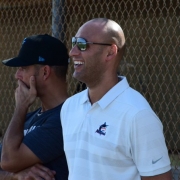
Tuesday, Derek Jeter learns if he makes the Baseball Hall of Fame.
Well, we already know he is. The only question is whether it’s unanimous.
What’s not unanimous?
Views on his tenure with the Miami Marlins.
So, today seems the right day to evaluate that.
When Jeter officially took over the Marlins as part-owner and CEO in September of 2017, the team was in shambles. The team hasn’t seen the playoffs in over a decade, their last winning record was in 2009, it’s been a year since the passing of Jose Fernandez, and have had multiple fire sales. The franchise needed drastic changes to return to competitive form.
The previous core that included Giancarlo Stanton, Dee Gordon, Marcel Ozuna, Christian Yelich, and J.T. Realmuto, clearly wasn’t getting it done so change needed to happen. Jeter traded all of the players listed for prospect packages that now make up the team as we know it today.
Of course, Jeter and the Marlins were under much scrutiny from the national media and the team’s fans but he made the right decisions to get the team back on track after many years of mediocrity.
December 2017
The first major trade of Jeter’s ownership involving players of the old core included Dee Gordon. Gordon was traded to the Seattle Mariners for RHP Nick Neidert, RHP Robert Dugger, and Chris Torres. Great trade for the Marlins, adding much-needed pitching depth and trading away Dee Gordon’s contract was a big win for Jeter.
In the same month, Miami traded reigning 2017 NL MVP Giancarlo Stanton to the New York Yankees for 2B Starlin Castro, RHP Jorge Guzman, and SS Jose Devers. This was probably the most criticized trade made by Jeter simply because Stanton was so beloved in Miami.
Trading Stanton gave the Marlins so much more financial room now that they don’t have his $325 million dollar contract while also getting back a proven hitter, a hard-throwing right-handed pitcher, and a prospect who was having a career year before going down with an injury in the middle of the season. A tough decision to trade the MVP but it needed to be done. So far, the Marlins haven’t missed Stanton, he had an underperforming season in 2018 and in 2019, he barely even saw the field because of injuries.
Marcel Ozuna was the next player of the old core to be traded to a new team. Ozuna had a breakout year during the 2017 season but it’s better to trade him now when his value is at its highest. Ozuna was traded to the St. Louis Cardinals for LHP Daniel Castano, RF Magneuris Sierra, RHP Sandy Alcantara, and RHP Zac Gallen. This trade has probably been the most successful in terms of players to already reach the MLB level.
January 2018
The most talked-about trade, in probably Marlins’ history, is the Christian Yelich trade. Yelich expressed his unhappiness in Miami now that all of his friends that he rose to the big leagues are now on different teams. He requested a trade and threatened to not participate in any fan interaction activities in Miami. Yelich was granted his request and was traded to the Milwaukee Brewers. Yelich was traded for, CF Lewis Brinson, 2B Isan Diaz, CF Monte Harrison, and RHP Jordan Yamamoto.
The Yelich trade only seems terrible to the casual fan because Yelich ended up winning MVP the next season, and was runner up the season after. In all fairness, Yelich would’ve never won MVP in Miami because of how big Marlins Park was. The return for Yelich was a good return for the club. The media calls it a failed trade because the headliner of the trade, Lewis Brinson, hasn’t produced to his ability quite yet. Brinson wasn’t the only player in that trade and the other players have been producing in the minor leagues and in the big leagues.
February 2019
The last valuable player of the old core traded by Jeter was J.T. Realmuto. Realmuto also displayed his disapproval with Jeter dismantling the team and building from the ground up. The only way Realmuto would’ve stayed in Miami was if the Marlins gave him a huge contract. Don’t get me wrong, Realmuto is one of the best catchers baseball has seen in a long time, but he wasn’t worth the money he was asking for. When it was clear the Marlins and Realmuto weren’t going to come to terms on a contract, he requested a trade.
Jeter traded Realmuto to the Philadelphia Phillies for C Jorge Alfaro, RHP Sixto Sanchez, LHP Will Stewart, and Future Considerations. This trade was phenomenal for the Marlins. They picked up their ace of the future, a power-hitting catcher with multiple years of control, and a left-handed pitching prospect with some upside to him.
Free Agent Signings
Jeter has also done a great job in the free-agent market. He hasn’t overspent and has signed players who would become great mentors to the young group of players that Miami is developing and who would become trade candidates in July that could net a good return from contenders.
Just recently for the 2020 season, the team signed free agent relief pitcher Yimi Garcia and outfielder Corey Dickerson to multi-year deals. As the team moves closer to contention, the more money Jeter is going to spend on acquiring talent.
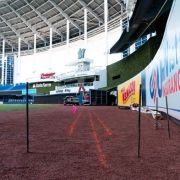
Baseball moves aren’t the only moves Jeter has overseen. He’s had a say in ballpark enhancements (which looks beautiful by the way), in bringing the fences in, and in fan experiences such as pricing and activities.
Evaluation
Jeter has done a fantastic job of running the organization the right way. Unlike the previous ownership group, this new regime cares about the fans and their experiences. In the days before Jeter came to town, the Marlins were viewed as the easiest team to trade with because the last executives wouldn’t think the trade through and would just say yes as quickly as they could. The previous executives weren’t very baseball smart or disciplined.
The Marlins of the past were seen as the easiest team to swindle during trades for not being disciplined. They never thought about the future of the franchise, only thought about the present. The trades they made were either for salary dumps or because they believed a washed-up veteran would be enough to make the playoffs.
Jeter has been the most disciplined CEO the franchise has seen and is the smartest baseball mind to run the organization. He knows what it takes to build a winning organization and how to do it the right way.
He’s always around the fans when there are fan activities, always available for pictures, and is always willing to sign autographs when he’s around. He is one of, if not THE most proactive owner/CEO in baseball.
He’s gotten a lot of criticism over the last couple years but he doesn’t mind because he knows what it takes to build a winning organization and in just a matter of two years and a half he brought the organization’s farm system from almost dead last in the league to fourth according to MLB Pipeline.
All in all, I’d give Jeter a solid 10/10 evaluation rating because he’s done everything the right way and has shown the utmost respect for the fans and their experiences. He has shown that he is capable of running a team even when there was doubt when he first became CEO.
The future of the Miami Marlins is bright and we have Hall of Famer Derek Jeter to thank.