Nikola Jovic: The Heat’s Emerging Star

As the Miami Heat push through the 2024-2025 NBA season, 21-year-old forward Nikola Jović has emerged as one of the team’s brightest young talents. With a rare combination of size, skill, and versatility, the 6-foot-10 playmaker is finally getting the chance to showcase his immense potential. His recent performances have sparked excitement among fans and solidified his role as a key piece of the Heat’s future.

2024-2025 Season Snapshot

Through January 2025, Jović has appeared in 25 games, averaging 21.5 minutes per contest. His season averages include:

  • Points: 9.5
  • Rebounds: 3.6
  • Assists: 2.0
  • Steals: 0.9
  • Blocks: 0.2
  • Field Goal Percentage: 45.1%
  • Three-Point Percentage: 36.3%
  • Free Throw Percentage: 83.1%

While these numbers are solid, Jović’s impact becomes even more evident when he plays extended minutes.

Impact in Extended Minutes (2024-2025)

The Heat hold a 6-1 record in games where Jović plays 30 or more minutes this season. In those contests, he has averaged:

  • Points: 14.1
  • Rebounds: 5.3
  • Assists: 4.1
  • Field Goal Percentage: 50%
  • Three-Point Percentage: 43%

These statistics, recorded through January 8, 2025, underline his ability to contribute at a high level when given a larger role. Jović plays more freely and confidently in these situations, showcasing his ability to elevate those around him by creating open looks for teammates and keeping defenses honest with his shooting.

Key Performances in 2024-2025

  • January 7, 2025, vs. Golden State Warriors: Jović came off the bench and delivered a standout performance with 20 points, six rebounds, and four assists in 34 minutes (+25). He shot 8-of-17 from the field and connected on two three-pointers in the Heat’s 114-98 win.
  • December 12, 2024, vs. Toronto Raptors: In this pivotal matchup, Jović scored 14 points on 4-of-5 shooting, including 2-of-2 from beyond the arc. He added four rebounds and registered a game-high plus-minus of +25, underscoring his ability to impact the game across multiple areas.

Development on Both Ends of the Court

Jović has taken significant steps defensively as well, he can still improve on the boards, but he will get even better with time. Jovic has a defensive rating of 111.9, among the top half of the league, third on the Heat behind Jaime Jaquez and Bam Adebayo. Bam and Jovic have been a great pairing defensively and all of Heat nation should be excited about their growth.

On the offensive end, Jović’s ability to serve as a secondary ball-handler has unlocked new dimensions for the Heat. Whether initiating fast breaks, setting up shooters, or finding cutters in half-court sets, Jović’s vision and decision-making have been vital. His effective field goal percentage of 54.1% and true shooting percentage of 59.1% highlight his scoring efficiency.

A Bright Future for Jović

At just 21 years old, Nikola Jović is proving he has the tools to become a star in the NBA. His ability to play multiple positions, stretch the floor, and facilitate offense makes him a unique weapon for the Heat. More importantly, his growth in confidence and comfort on the court this season has been palpable.

For the Miami Heat, the message is clear: Jović thrives when trusted with a larger role. The team’s stellar record in games where he logs 30 or more minutes demonstrates the value of giving him consistent opportunities.

Spoelstra Must Lean In

Head coach Erik Spoelstra has a reputation for developing young talent, and Jović should be no exception. While the Heat’s stars like Tyler Herro, Bam Adebayo and Jimmy Butler? Remain the focal points, integrating Jović more prominently into the rotation can provide long-term benefits.

With his blend of skill, versatility, and poise, Jović has the potential to be a game-changer. Spoelstra must capitalize on this, ensuring Jović plays meaningful minutes as the Heat aim to make noise in the 2024-2025 season and beyond.

Mateo’s Hoop Diary: The Nuggets blew the game late to the Celtics

The MVP-less Nuggets hung around until crunch time, but their offensive drought and Boston’s long-range shooting overwhelmed them. The game featured eight ties and 10 lead changes. 


Nikola Jokić (illness) and Aaron Gordon (calf strain) were absent for the Nuggets. Derrick White (illness) didn’t play for the Celtics. 


“We didn’t score…the margin of error against that team without your starting four (Aaron Gordon) and starting five (Jokić) is nonexistent,” coach Michael Malone said after the game.


Early, Jamal Murray, Russell Westbrook and Michael Porter Jr.’s jumpers were on target. But Kristaps Porziņģis and Jayson Tatum outscored the hosts by themselves on baskets from short, mid and long range. The Celtics led 37-25 at the end of the first quarter. 


Then the Nuggets were down 15 a nearly two minutes later. Malone called a stoppage, and when play resumed, the hosts took control. The defense allowed Boston five of 16 baskets the rest of the period. Murray had a flurry of eight consecutive points on pull-up jumpers and drive-by to the cup. Westbrook added a putback and fastbreak layup, too. 


The game was tied at 57 at halftime. The Nuggets had 18 paint points, seven on the break, five via second chances, four off turnovers and 21 from the bench. Notably, the Nuggets took two more attempts from deep than Boston, the no. 1 team in 3-point volume and were shooting 18.7% higher.


The Celtics had 30 paint points, nine on the break, 10 via second chances, 16 off turnovers and 16 from the bench. 


Next, Jaylen Brown was unguardable on the dribble in the third quarter, so the Nuggets resorted to a zone defense. He made all four attempts within five feet of the cup. And Tatum eluded defenders with his handle and got loose on the break, making three shots in the restricted area and canned a trey. 


Westbrook and Christian Braun countered with three of five triples, but the rest of the squad made none in the third quarter. Porter got two scores in the lane and Julian Strawther added four points.


The fourth quarter started with the Nuggets down 88-83. Four of six baskets from Murray, Braun and Strawther tied the game. Yet, Boston responded by preventing the Nuggets from scoring on their next eight shots in three minutes. Additionally, Porziņģis logged a putback dunk, Jrue Holiday and Al Hordord dropped treys, Brown made a layup and Tatum nailed the pull-up jumper from 11-feet away over Peyton Watson to put the game out of reach.


The Nuggets lost 118-106. The Celtics outscored the Nuggets in three key areas: paint points 60-46, second chance points 22-11 and fastbreak points 17-11.


“We just beat ourselves too often tonight, and against the defending champs, it’s hard to overcome that,” Malone said. 


When asked where the game slipped away, Murray said it was the rebounding. 


Takeaways:


  • Murray only made 20% of his 3-point attempts, but he was able to get to his spots inside the lane and at mid-range. Although the team needed a second-half encore he didn’t deliver on after 15 points before intermission. He had 19 points on eight of 17 attempts, with four rebounds, four assists, two steals and a turnover. 


  • Westbrook’s attention to detail was too low, as he had eight turnovers. The last two pulled the team’s life support plug as the score was getting away from them, and they badly needed threes to fall. Still, he was their most productive offensive player, finishing with 26 points on 50% shooting, with nine rebounds, six assists, one steal and a block.


  • The center rotation gave them nothing on offense. Šarić played only 16 minutes and was scoreless. DeAndre Jordan scored one point. And Zeke Nnaji was scoreless in nearly five minutes, too.


  • The Nuggets were terrible in transition, scoring at a rate of 91.7 points per 100 plays, good enough for the 17 percentile of the stat in all games this season, per Cleaning the Glass.


The Dolphins’ Press Conference Was a Masterclass in Excuses and Evasion

Accountability is a rare commodity in the NFL, and in Miami, it seems to be running especially low. In the Dolphins’ season-ending press conference, General Manager Chris Grier and Head Coach Mike McDaniel provided a display that can only be described as an elaborate exercise in finger-pointing, excuse-making, and reality distortion.

This wasn’t your typical postmortem. It was a finely tuned symphony of contradictions, where injuries were simultaneously the cause of every problem and an inevitable aspect of football not worth worrying about in roster construction. It was a surreal performance that left the audience questioning not just the decisions made this season, but the decision-makers themselves.


The Blame Game Begins

When Grier was asked about the team’s shortcomings since their much-publicized salary cap reset, he pointed to the usual suspect: injuries. Specifically, he highlighted Tua Tagovailoa’s six-and-a-half missed games as “the difference.” But almost in the same breath, Grier claimed injuries weren’t an excuse. This verbal gymnastics act—a quick pivot from blame to platitude and back again—was emblematic of the entire presser.

Adding insult to injury (pun intended), Grier dismissed the idea of proactively accounting for injuries in roster building with a flippant comment: “The injury rate in football is 100 percent.” If that’s the case, why does the Dolphins’ depth chart resemble a patchwork quilt held together by hope and duct tape every December?


Offensive Line or Offensive Excuses?

The Dolphins’ offensive line—a perennial weak spot—was a hot topic, and Grier wasted no time joking about how long it took for someone to bring it up. But humor quickly gave way to deflection. Injuries, once again, took center stage, as Grier rationalized the line’s underperformance.

What he didn’t acknowledge was that much of this mess was foreseeable. Terron Armstead, while an elite talent, has averaged only 11 games a season over his career. Kendall Lamm was coaxed out of semi-retirement to provide depth, and Isaiah Wynn’s injury history was well-documented. Even Austin Jackson, who has struggled to stay on the field, was somehow expected to anchor this group. This isn’t bad luck—it’s bad planning.

Grier’s excuses also had a quantum quality: he both addressed and ignored the offensive line in the offseason, justified his inaction because the offense was statistically strong in 2023, and promised to invest in the line moving forward.


The Backup Quarterback Saga

The backup quarterback position was another area where the excuses flowed freely. Grier insisted the team was justified in rolling with Skylar Thompson, who won the backup job in camp, while also claiming the Dolphins were aggressively pursuing “top-flight” backups but missed out due to financial constraints and compensatory pick considerations.

So which was it? Did they believe in Thompson, or did they know they needed a better option but failed to secure one? The contradictions piled up, leaving fans and media scratching their heads.


McDaniel’s Discipline Dilemma

McDaniel didn’t escape scrutiny either. While he spoke earnestly about improving as a disciplinarian, his words felt undermined by Grier’s suggestion that players need to police themselves. McDaniel’s admission that fines haven’t been enough to curb tardiness felt hollow, particularly when coupled with sarcastic asides about how those same fines worked “on every other team.”

It’s hard to reconcile this with McDaniel’s other statements about the importance of culture. Leadership requires consistency, and in this case, the message seemed muddled at best.


The Accountability Void

At the heart of this press conference was a glaring absence of true accountability. Mistakes were acknowledged in one breath and excused in the next. Injuries were blamed, but roster construction wasn’t at fault. Play-calling was criticized, but McDaniel insisted he was the “best person” to handle it.

And while Grier paid lip service to the idea of end-of-year evaluations, his casual mention of reviewing the medical, strength, and video departments felt like a veiled attempt to spread blame further down the organizational ladder.


A Franchise in Survival Mode

What Dolphins fans wanted—and deserved—was a candid assessment of what went wrong and how it will be fixed. What they got was a clinic in deflection. Grier and McDaniel may be adept at surviving press conferences, but survival isn’t the goal. Playoff wins are.

Until the Dolphins’ leadership shows a willingness to take real accountability and make meaningful changes, it’s hard to imagine this franchise breaking free from its cycle of mediocrity. For now, it seems, the Dolphins are more concerned with dodging blame than delivering results.


********


Use the code FIVE to get $50 to play at PrizePicks.com

Why Can’t the Miami Heat Close Out Games?

The Miami Heat’s Closing Problems: A Closer Look at the Late-Game Collapses

The Miami Heat’s inability to close out games this season has become a glaring issue, as seen in their most recent collapse against the Sacramento Kings. Playing without Jimmy Butler, who missed the game due to ongoing recovery from a minor injury, the Heat squandered a 13-point lead in the fourth quarter. This marks another instance in a troubling pattern for a team that prides itself on resilience and discipline.

Major Collapses This Season:

  • 17-point lead lost to the Kings (Jan. 6, 2025, without Butler.)
  • 13-point lead lost to the Knicks (Oct. 30th, 2024)
  • 15-point lead lost to the Suns (Nov. 6th, 2024)
  • 22-point lead lost to the Magic (Dec. 27, 2024, without Butler.)
  • 15-point lead lost to the Kings (Nov. 4th, 2024)
  • Overtime Blunder Vs the Pistons (Nov. 12th, 2024, Late inbounding play allowed, illegal timeout by Spoelstra.)
  • 8-point overtime lead after large comeback vs the Pistons (Dec. 16th, 2024,)

Despite being led by the widely respected Erik Spoelstra, these late-game meltdowns highlight critical issues, from tactical flaws to player execution under pressure.

Defensive Rebounding Woes

One of the most glaring issues for the Heat is their inability to secure defensive rebounds. Ranking 21st in opponent offensive rebounds per game (11.4), they’ve allowed too many second-chance opportunities. The Kings exploited this weakness by grabbing 18 offensive rebounds, resulting in 23 second-chance points.

This vulnerability stems from Spoelstra’s reliance on small lineups. While these rotations offer offensive versatility, they often lack the size to contend with teams boasting strong rebounders. Without Jimmy Butler’s presence, the Heat have leaned even more heavily on undersized lineups, highlighting the problem.

Clutch Stats: A Disappointing Reality for Key Players

The Heat have played the sixth-most clutch games this season but have struggled mightily, posting a 7-12 record in such scenarios. While role players share some responsibility, the spotlight falls on Tyler Herro and Bam Adebayo, who have not delivered consistently in the clutch.

Tyler Herro

  • Shooting 30.0% in clutch moments, a notable drop from his 45.3% season average.
  • Often struggles to create separation or convert tough shots when defenses tighten late.
  • As the team’s leading scorer (23.9 PPG), his inability to maintain efficiency in critical moments has hurt the team.

Bam Adebayo

  • Adebayo’s clutch performance is equally concerning. His free-throw percentage drops to 45.5% in clutch situations, down from his season average of 72.7%.
  • Offensively, he attempts fewer than two shots per game in the clutch, despite opportunities to exploit mismatches.
  • For a player of his caliber, fading offensively in high-pressure moments is unacceptable.

Rotational Criticism of Erik Spoelstra

Even a coach as accomplished as Erik Spoelstra is not immune to scrutiny. Several of his rotational decisions have raised questions this season, especially late in games.

Small Lineups on Defense

Against the Magic, Spoelstra’s small-ball approach allowed Orlando to dominate the boards. Similar issues arose against the Kings, where a lack of size led to repeated second-chance points. Miami needs to get back to the fundamentals of boxing out and grabbing boards as they rank 22nd with 43.2 rebounds per game.

Inconsistent Usage of Shooters

Haywood Highsmith has been shooting 42.7% from three, yet Spoelstra has frequently benched him in crunch time in favor of others. This has limited the Heat’s spacing and offensive options in critical moments.

What Needs to Change?

Bam Adebayo Must Dominate Late

Adebayo needs to assert himself offensively throughout the whole game but especially in clutch moments. Whether it’s exploiting mismatches or facilitating from the post, his presence must be felt late in games, especially as a captain of this team.

Herro’s Efficiency Must Improve

Herro has been a bright spot for Miami this season, but Herro must focus on smarter shot selection in crunch time. Attacking the rim more often and drawing fouls could improve his clutch scoring efficiency.

Commitment to Defensive Rebounding

Rotations featuring Haywood Highsmith or Kelel Ware alongside Adebayo could provide additional size and physicality without compromising mobility and spacing.

Smarter Rotations by Spoelstra

Spoelstra must adapt by prioritizing winning the boards, Miami is 9-0 in games where they win the rebounding battle. It is essential for Miami to control the game on the boards. The young players must get physical down low and learn to rebound, but Erik Spoelstra has to provide the opportunity for growth.

Spoelstra on Rotations: “We’re trying to find the right balance, but we’ve got to do better closing out games.”

Final Thoughts

The Miami Heat have the talent and coaching expertise to contend, but their inability to close out games is their Achilles’ heel. For players like Tyler Herro and Bam Adebayo, stepping up in clutch moments isn’t optional—it’s mandatory. If these issues persist, the Heat risk squandering yet another season. This Heat team isn’t the best, but plenty of games have been left out on the court compromising their record and exploiting many of their issues.


******

Use the code FIVE at PrizePicks.com to get $50 on a $5 deposit.

Mateo’s Hoop Diary: The Heat blew a late lead and lost in double overtime in Sacramento

As the Heat let go of a double overtime game in Sacramento, Bam Adebayo had another off night, looking unlike a max player, and Tyler Herro made critical mistakes. They had also led by 17 points in the fourth quarter and got outrebounded by seven, which allowed the hosts to take six extra shots in a close game, making two. 


It was Adebayo’s 14th game of the year, logging below 40% of his attempts. It’s harder to ignore his performance when Domantas Sabonis, who didn’t shoot well, put up 21 points with 18 rebounds and 11 offerings. 


Sacramento cut the Heat’s lead to nine with seven minutes left of the fourth. Adebayo checked in, missing an off-balance jumper and a tightly guarded 3-pointer. He ended the second half missing all five shots but made three of six across both extra periods.


Herro was bothered by multiple defenders, even failing to get the ball past half-court in time with 84 seconds left in the fourth quarter. And he missed Haywood Highsmith in the corner for the last shot of regulation, instead taking a difficult mid-range pull-up. 


Sabonis scored on Adebayo at close range and made a pick-and-pop triple in extra time. And DeMar DeRozan made all four shots in the second overtime. 


After the game, Adebayo lamented Sacramento’s prowess on the offensive glass. “That was the deciding factor in the game. [If] we cut off half of their offensive rebounds, second chance points, we win the game by double digits.”


Herro said the Kings ramped up the pressure in the fourth quarter. He also said DeRozan is a “great scorer, veteran. He’s been in a lot of close games, at the end where he’s had to finish, and he made a couple of tough shots.”


Takeaways:


  • The team can’t depend on Jimmy Butler anymore, so Adebayo needs to snap out of his funk now. Ever since Brandon Anderson of the Action Network doubted his offensive game before the season, it’s become worse than a self-fulfilling prophecy. When he gets his confidence back, he’ll return to being one of the league’s best paint scorers.


  • This was the third-worst 3-point shooting night of the season, making 26.2%. Sacramento‘s pressure was sharp, and they had an excellent defensive rating for the night, 101.7.


  • Jaime Jaquez Jr. missed two free throws at the end of the first overtime, which could have extended the lead to three points. Keon Ellis scored one point on the next possession at the line to force the second over time. Adebayo fouled him because he bit on his pump fake.


Mateo’s Hoop Diary: Strahinja Jokić pleads not guilty in third-degree assault case

Strahinja Jokić, the older brother of the Denver Nuggets center, has pled not guilty to the third-degree assault charge that stems from allegedly punching a fan at Ball Arena during a game against the Lakers in April 2024. 


A video of the incident, showing S. Jokić striking another person, can be seen here. The victim had a concussion, bruising, and lacerations.


S. Jokić’s pre-trial conference is set for April 18. His jury trial is set for April 24. If convicted, he is facing a fine of not more than $1,000 and/or imprisonment in the county jail not exceeding 364 days. The case was reassigned to from courtroom 3F to 3B.

S. Jokić was previously in legal trouble in Denver in 2019. Then, he was charged with assault in the second degree for strangling Maria Jokić and accused of false imprisonment plus obstructing a telephone or telegraph service. He later accepted a guilty plea for obstructing a phone service and trespassing in a deferred prosecution arrangement, eliminating the charges. The trespassing charge was removed in 2022.


Star receiver Tyreek Hill indicated after the loss to the Jets that he may be done with playing for the Dolphins.

Pressure Point: Miami Dolphins under Steve Ross never fail to disappoint

The Miami Dolphins’ latest season, reeking of failure, had just been jettisoned onto the franchise’s towering trash heap of hopes gone awry.

Team owner Steve Ross, wasting no time in celebrating dubious achievements, declared late Sunday that, of course, coach Mike McDaniel and general manager Chris Grier would return in 2025 to continue their impressive stewardship.

Because, well, in the owner’s words, “Their positive working relationship is an asset to the Dolphins, and I believe in the value of stability.”

This in the wake of a humiliating 32-20 thumping in the season finale by a Jets team that came in 4-12 with nothing to play for but pride for an interim coach and a future hall-of-fame quarterback who might be retiring.

Dolphins franchise quarterback Tua Tagovailoa wasn’t even playing for the sixth time this season because, well, you know, concussions, bum hip … it’s always something like that.

Dolphins owner pledges allegiance to coach, GM

Tua has now missed 20 games due to injury in five NFL seasons. But he was deemed worthy of a $212 million contract including $167 million guaranteed by masterminds Grier and McDaniel with Ross’ blessing.

Ross went on to say in his statement, “We will take a hard look at where we have fallen short and make the necessary changes to deliver our ultimate goal of building and sustaining a winning team that competes for championships.”

It’s been six years since Ross ordered a rebuild of the roster with that objective. What do they have to show for it?

Bupkis, really.

They did string together four seasons with a winning record before regressing to 8-9 in 2024. But still no playoff wins, now for 24 seasons.

How do you go 24 seasons without winning even one playoff game in a league rigged for parity?

The Dolphins always find a way — usually in embarrassing fashion.

Dolphins end season on low note

The result in Sunday’s season finale was rendered moot by the Denver Broncos clinching the final AFC wild card with a 38-0 rollover of the Kansas City Chiefs, who rested everyone. But imagine if the Chiefs were still playing for the top seed and put the mediocre Broncos in their place like they easily could have if they actually cared to show up.

The Dolphins had everything to play for at the start of the day, yet looked like a team tanking for better draft position — which they actually achieved, moving up to No. 13 after the defeat.

But with everything on the line in the first quarter and a first down at the Jets’ 3 with a chance to take a 10-0 lead, three plays netted minus-5 yards. Running back De’Von Achane got thrown for a 5-yard loss on a run off guard on first down.

It was emblematic of a Dolphins rushing attack that struggled all season in short-yardage situations. Yet, Grier gloated early in the season about media criticism of the offensive line, which was thin at guard after stud Robert Hunt left in free agency.

“It’s just one of those that Mike and I always kind of chuckle,” Grier said.

As it turned out, it was no laughing matter. This line couldn’t move a Volkswagen off a train track before getting flattened by a slow freight train.

Tyreek Hill hints at wanting to leave Dolphins

Opponent after opponent won the battle in the trenches. Too many runs were thrown for losses, and pass protection was inadequate to get receivers open down field.

As the season progressed, McDaniel’s once high-scoring offense was mostly reduced to tossing screens to backs and receivers.

The season ended with five-time All-Pro receiver Tyreek Hill apparently removing himself from the game in the fourth quarter and afterward indicating he may be done with the Dolphins, saying, “I’m out, bro.”

Isn’t that the fitting bookend to a season that began with Hill in handcuffs before the opener after a traffic incident near Hard Rock Stadium?

McDaniel is 28-23 in three seasons with two playoff appearances (both losses). His resume is loaded with wins over lesser teams, but 3-13 against teams over .500.

But frustration for a beleaguered Dolphins fan base goes back decades. It’s been 40 years since the last Super Bowl appearance in Dan Marino’s second season.

About all they have to cling to since then is an entertaining reel of Marino highlights. More entertaining than watching the present product.

Tagovailoa’s lack of durability holds Dolphins back

Ross’ “ultimate goal of building and sustaining a winning team that competes for championships” remains elusive.

They botched the rebuild and are now invested heavily in a franchise quarterback who can’t stay on the field.

The Dolphins haven’t closed the gap on the Buffalo Bills, in large part because they don’t have a quarterback like Josh Allen. There isn’t anyone quite like Allen, who has played through injuries to put together a streak of 105 consecutive starts and does things that Tagovailoa can’t.

Now Tua’s lack of durability has taken a new twist with an injury to the same surgically repaired hip that ended his collegiate career.

NFL Network’s Ian Rapoport reported Sunday that Tagovailoa has a “unique hip injury which is affecting the surrounding muscles and therefore his strength and mobility, along with leaving him vulnerable to further injury.”

Missing the playoffs removed that as an immediate concern. But Tagovailoa’s durability issues are not going away.

The Dolphins go into the offseason with a long list of issues to address with the roster and little room under the salary cap.

Dolphins have much to address in offseason

Grier did make a good signing last offseason in tight end Jonnu Smith, an apparent winning first-round pick in pass rusher Chop Robinson and a quality in-season pickup of linebacker Tyrel Dodson.

But he’s missed way too often in six years of calling the shots for the franchise. Exhibit A: Still no playoff wins and a sizable gulf to teams that actually sustain winning and compete for championships.

But, hey, they’ll forge ahead with Grier and McDaniel who still have the full confidence of the owner.

Give the Grier/McDaniel regime credit, they’ve maintained the Dolphins’ stable course of mediocrity. It’s the one thing that can be counted on with this franchise.

Craig Davis has covered South Florida sports and teams, including the Dolphins, for more than four decades. Follow him on the site formerly known as Twitter @CraigDavisRuns.

Mr. Sherman: It’s Time to Show Miami You Care About Baseball 

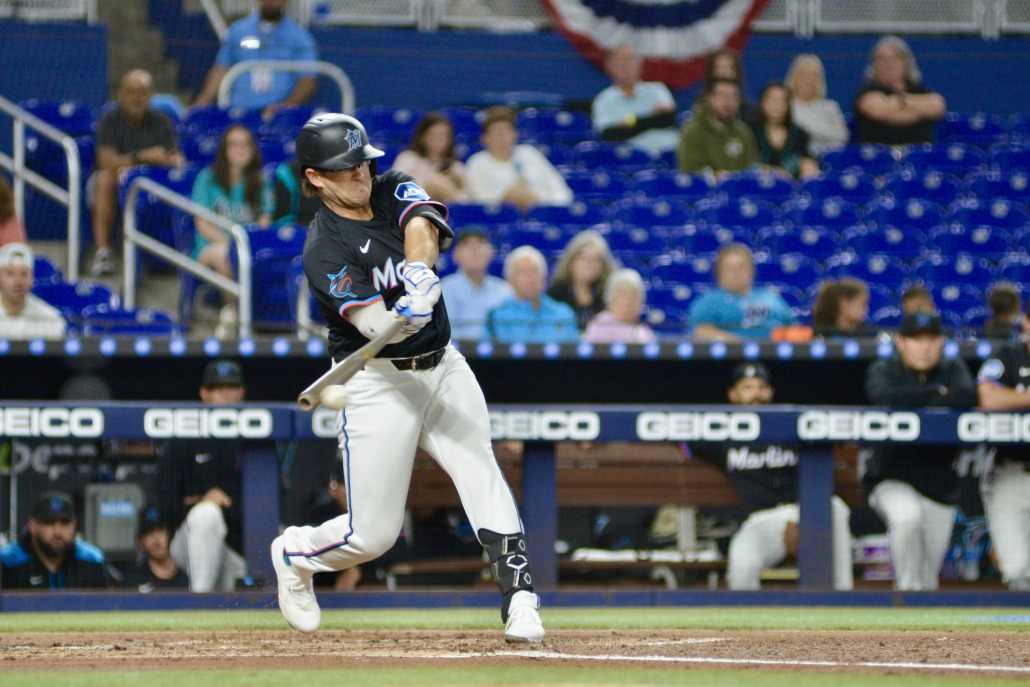
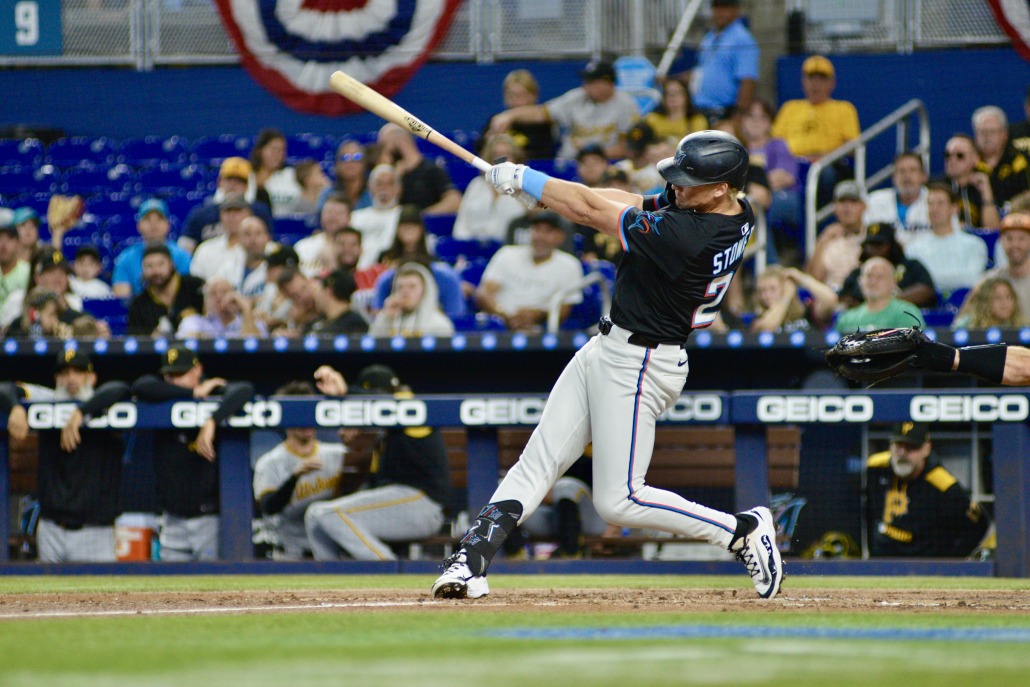
The Miami Marlins have been the laughingstock of Major League Baseball over the better part of the last decade. Constantly boasting a low payroll, management changes, and low attendance despite the success of many other events at LoanDepot Park. The Marlins remain a team stuck in the cycle of mediocrity. Year after year, the Marlins continue to trade away their top talent (Yelich, Jazz, Realmuto, and Luzardo) and seem to be in what many would consider a constant rebuilding stage.  

Despite being one of MLB’s younger franchises, the team has captured two World Series titles (1997 and 2003), both in dramatic underdog fashion as a Wild Card team. Known for their colorful history, the Marlins remain a vital part of South Florida’s sports culture. Since moving to LoanDepot Park in 2012, the team has embraced its Miami identity with a bold rebranding and a commitment to engaging a diverse fanbase. Yet, despite all of this, they continue to put out a poor product, trading away fan favorites, and asking the question: “Why is attendance so low?” 

Fan Engagement: Proving Miami’s Passion for Baseball 

The success of the team in 2023 saw a late-season spike in attendance, and rightfully so—the field was filled with stars, and the team was winning ballgames. Yet once again, the Marlins chose a different route, trading away numerous big names from the successful 2023 season and letting many others walk. The attendance has nothing to do with the location of the park, like their in-state rival Tampa Bay Rays, nor the fandom of Miami fans. It’s all about the product on the field. This is easily exemplified by attendance figures at LoanDepot Park for events like the World Baseball Classic (WBC) and the Savannah Bananas’ games, which highlight that Miami residents are willing to attend baseball games when the events are engaging and competitive. 

World Baseball Classic 2023: 

LoanDepot Park set a record for the most-attended World Baseball Classic round ever in the United States, drawing 295,850 fans. Sports Business Journal 

  • The quarterfinal matchup on March 17 between Mexico and Puerto Rico attracted 35,817 fans. Bizjournals 

Savannah Bananas: 

In March 2024, the Savannah Bananas sold out LoanDepot Park, with 37,000 fans attending their game—the first of 18 MLB ballparks on their tour. 

They are scheduled to return to LoanDepot Park on March 1 and 2, 2025, with tickets already sold out, all 72,000 tickets gone. 

These attendance numbers suggest that the low turnout for Miami Marlins games are more closely related to the team’s on-field performance and fan engagement strategies rather than a lack of interest in baseball among Miami residents. 

More Stars on The Move? 

As we look ahead to the 2024 season, the Marlins face a pivotal moment. The team’s future relies heavily on the direction they take with their current roster, including the two remaining stars, Sandy Alcantara and Jesús Sánchez. Both players, who have become fan favorites and key contributors, have a strong chance of being moved soon as the team continues its seemingly never-ending rebuild. This presents a real challenge for the Marlins’ front office and new manager Clayton McCullough, who enters his first season with the unenviable task of guiding, yet another rebuild. McCullough must navigate the difficulties of managing a team in flux, with hopes of delivering a competitive product to a fan base that has grown increasingly disillusioned by repeated false promises of success. 

Make Miami a Desirable Home 

In many ways, the Marlins’ ownership must show more than just a willingness to spend—it must demonstrate a true commitment to building a competitive team. Free-agent signings are essential, but they will only work if the team is also crafting a vision that excites both players and fans. As it stands, the Marlins are seen as a franchise that players dread being on—one that lacks the infrastructure and consistency to compete at a high-level year in and year out. Miami should be a destination for top-tier talent, not a place where players are looking to leave as soon as their contract expires. 

As former Marlins player Mike Lowell once said, “Players want to play for a team that’s going to win.” The Marlins must create an environment where top free agents and established stars are excited to join, not just because of the paycheck but because of the team’s potential to compete. Miami is a city that loves sports, and baseball has a long history in this town. But until the Marlins’ ownership embraces the urgency of making this team a winner, the attendance issues will continue. 

A Changing Ownership Mindset: The Need for Long-Term Commitment 

With the team’s stadium lease running until 2047 (The Miami Marlins have a no-relocation agreement with the City of Miami that disallows any relocation and/or negotiations for relocation until the year 2047.), the Marlins have a limited window to prove their commitment to building a team that can truly contend. If the ownership fails to create a competitive product on the field and continues to trade away stars like Alcantara and Sánchez, the threat of relocation could become all too real. As former Marlins owner Jeffrey Loria once remarked, “If you don’t put a good product on the field, fans won’t come, and the team won’t survive.” 

The clock is ticking, and it is time for the Marlins and their ownership to step up. South Florida is ready to support a baseball team that is worth rooting for, but the Marlins need to prove that they are ready to provide one. The future of baseball in Miami is at a crossroads. It is up Mr. Sherman to make sure they choose the right path, and if not, sell the team.

Mateo’s Hoop Diary: Heat humiliated by the Jazz in the worst loss of the season

The Heat were massacred by the Utah Jazz and mercy wasn’t even shown in the fourth quarter. Jimmy Butler was absent as he served the first night of his seven-game suspension, but he wouldn’t have prevented the Heat from getting smacked around on the glass 57-32. And Tyler Herro and Bam Adebayo were no-shows.


“There wasn’t a whole lot we did well, or with purpose, or energy, or toughness tonight,” coach Erik Spoelstra said after the game.


Nikola Jović had a strong first quarter, hitting outside shots and scoring at the cup, and the Jazz missed their first eight of nine 3-point tries. Through 12 minutes, the game was tied at 22.


Then an avalanche started in the second quarter as Miami was outscored 40 to 19. The Jazz faced no resistance, scoring on 77% of attempts, while the Heat’s offense was impotent, making six of 20. Such a showing makes it hard to believe the Jazz had a 7-25 record before this game.


At halftime, the Heat was down 62-41. They had 24 paint points, 14 on the break, two via second chances and 10 off turnovers. Additionally, Adebayo missed all four attempts, and Herro was shut down to 33% shooting.


The Jazz had 36 paint points, four on the break, 11 via second chances and four off turnovers.


Then the Heat got smoked in the third quarter 36-25, but they had let go of the rope a few minutes in, when Keyonte George’s pull-up triple pushed the Jazz’s lead to 27 points. Not that it would’ve made much of a difference, but the hosts also missed six free throws in the period, proving how shell-shocked they were.


Utah didn’t take its foot off the gas in the fourth either, as the Heat’s background players took the floor. Brice Sensabaugh added 20 points, including five treys.


The Heat lost 136-100. It was the most points scored against them this season and the biggest margin of defeat. Before this game, the worst losses in margin were to Boston by 19 on Dec. 2, and by 19 to Orlando on Oct. 23.


After the game, Herro said, “We’re trying to put all that stuff past us, and worry about the guys in the locker room and the guys going out there on the court every night. Just trying to bring a collective spirit to rally around each other and help us win games.”


Observations:


  • Jović showing some moves on the break and making three of five triples is perhaps the Heat’s lone bright spot.


  • The team couldn’t stop John Collins’ rim attacks. And Lauri Markkanen’s length was difficult to maneuver around.


  • The Jazz burned the point of attack defense for 16 of 39 3-pointers.


  • The Jazz were the nastier team, outscoring the Heat in second chance points 21-6.

No Player Is Bigger than Team: Examining Jimmy Butler’s Fallout with Miami Heat

In professional sports, no player, no matter how talented or iconic, is ever bigger than the organization. Legends like Michael Jordan, who ended his career with the Washington Wizards, and Joe Montana, who played for the Kansas City Chiefs after his glory years with the San Francisco 49ers, remind us that players come and go, but teams endure. This ethos is deeply ingrained in the Miami Heat’s culture under Pat Riley’s leadership, where team success always comes first.

Jimmy Butler’s five-year tenure with the Heat has been one of significant contributions and milestones. From leading Miami to two NBA Finals appearances to being the team’s emotional and competitive anchor, Butler has undoubtedly left his mark. But recent events have cast doubt on his future with the franchise.


Jimmy Butler’s six-year Miami Heat tenure:

  • 2X NBA Finals appearances
  •  ECF MVP 
  • 2X All-Star
  • 3X All-NBA
  •  1st in triple doubles in franchise history
  •  1st in 40+ point playoffs games
  • Most points in a playoff game in franchise history (56)

The Current Situation

Following a loss to the Indiana Pacers, Butler expressed frustration publicly, stating, “I want to see me get my joy back from playing basketball, wherever that may be.” These comments ignited a firestorm of speculation about his future with the Heat. Shortly after, the organization suspended Butler for seven games, citing “multiple instances of conduct detrimental to the team over the course of the season and particularly the last several weeks.”

While Butler has a reputation as one of the NBA’s fiercest competitors, his “my way or the highway” approach has a well-documented history of creating friction. Miami is now grappling with how to proceed, balancing the need to maintain team cohesion with the undeniable contributions Butler has made.


A Pattern of Fallouts

This isn’t the first time Butler has clashed with a franchise. His history of contentious departures is well-known:

  • Chicago Bulls: After emerging as a star in Chicago, Butler’s relationship with the Bulls deteriorated amid conflicts with teammates and concerns about his leadership style. The team eventually traded him to Minnesota in 2017.
  • Minnesota Timberwolves: Butler’s time in Minnesota was brief but explosive. During a now-infamous practice, Butler reportedly berated teammates and front office members, asserting dominance over younger players like Karl-Anthony Towns and Andrew Wiggins. His public demands for a trade led to a swift exit.
  • Philadelphia 76ers: After helping the Sixers to a deep playoff run, Butler reportedly clashed with head coach Brett Brown over his role in the offense. These internal tensions played a role in Butler leaving Philadelphia in free agency to join the Heat.

In Miami, Butler initially found a home that embraced his fiery personality and win-at-all-costs mentality. But as the pattern repeats, it’s clear that his approach often leads to friction when challenges arise. This scenario is no different as Jimmy has quit on not only management, but his teammates, and ultimately the fans.

Pat Riley’s History with Star Players

Pat Riley’s tenure with the Miami Heat has been marked by both success and hard decisions regarding superstar players.

  • Dwyane Wade: Despite being the franchise’s cornerstone, Wade experienced a fallout with Riley over contract disputes in 2016, leading to Wade’s departure to Chicago. Riley later admitted he mishandled the situation and welcomed Wade back in 2018 to finish his career in Miami.
  • Shaquille O’Neal: After helping the Heat win their first championship in 2006, O’Neal’s relationship with Riley and the organization soured due to clashes over effort and fitness. Riley traded Shaq to Phoenix in 2008 to move the team forward.
  • LeBron James: LeBron’s departure in 2014 was less contentious but highlighted Riley’s firm stance on team-first principles. LeBron reportedly clashed with Riley over his desire for more player-centric control of the organization.

Through these experiences, Riley has consistently prioritized the long-term health of the franchise, even at the expense of losing marquee players. Is Riley always in the right? No, yet the pattern is clear and has resulted in a historic winning franchise.


Did the Heat Miss Their Window?

Given Butler’s age (35) and the physical demands of his playing style, some argue that the Heat should have anticipated these issues and moved him during the summer of 2023, when his trade value was at an all-time high. Instead, the team doubled down, keeping an aging star on a hefty contract (one Butler didn’t believe was enough), a decision that may now limit their options.

Pat Riley, who has delivered three championships to Miami, has built a legacy on making tough but necessary decisions. Letting go of a star player is never easy, but Riley’s track record shows a commitment to the long-term health of the franchise over short-term gains.


Looking Ahead

The Miami Heat are at a crossroads. Moving Butler now would likely yield diminished returns compared to what could have been achieved a few months ago. However, the organization must prioritize team stability and future competitiveness.

A potential best-case scenario for the Heat, as outlined by Barry Jackson’s recent tweets, could involve rebuilding trust with Butler through internal discussions while actively exploring trade options behind the scenes. The Heat might package Butler with young assets to acquire a younger star or high draft picks, ensuring the team remains competitive in the future. Another avenue could see Butler returning to the court after suspension with renewed focus, using the remainder of the season to prove his value, thereby maximizing his trade stock in the offseason.

Conclusion

Jimmy Butler’s time with the Miami Heat has been a rollercoaster of highs and lows. His contributions are undeniable, but so too is the reality that no player is bigger than the team. As the Heat navigate this difficult situation, Pat Riley’s guiding philosophy—putting the organization above all else—will ultimately determine the path forward.


****

Austin Dobbins can be found at @AustinD1316

Use the code 5RSN at BettorEdge.com for $20 to gamble legally in Florida and 44 other states