The Pacers defiled the Thunder, sparing their followers the indignity of a rival championship ceremony at home. The fourth quarter was garbage time thanks to a cascade of 3-pointers, a healthy dose of fastbreak points, and Pascal Siakam plus TJ McConnell lighting up schemes at short and mid-range.
Game 7, the first of the Finals since 2016, is for all the marbles on Sunday in OKC. Coach Rick Carlisle didn’t want to reminisce, saying it was meaningless because only one thing mattered.
The Pacers failed to launch on time and were down eight early after missing their first eight shots. Jalen Williams grilled Aaron Nesmith and Myles Turner on the dribble, but Pascal Siakam’s second-chance jumper in the middle ignited the firing squad’s nine first-half trifectas. It was like watching children thrash a cheap piñata. Tyrese Haliburton, whose status was in question before the game with a calf strain, contributed a dozen points, plus made the feed to Siakam for the booming dunk over Williams on the break. Siakam also nailed a left-side turnaround jumper over Alex Caruso, sending the Pacers to halftime ahead by 22.
Turner failed to register a field goal in six tries, but it didn’t matter because Chet Holmgren was invisible in OKC’s offense, the Thunder had only one made triple in 11 attempts and had committed 12 turnovers by intermission.
Then Indiana’s defense was as tight as stainless steel handcuffs, contesting drives and jumpers promptly, and it didn’t allow a field goal for five minutes. Additionally, Siakam extended possessions with four offensive rebounds, and four Pacers connected on five 3-pointers, including Ben Sheppard’s 26-footer to end the period up 30.
None of OKC’s starters played the fourth quarter. Haliburton was the only one for Indiana that didn’t, but the others were on the bench after a few minutes.
The Pacers won 108-91, holding their guests’ half-court offense to 81.7 points per 100 plays, good enough for the 13th percentile, per Cleaning the Glass.
Carlisle said Game 7 would be a monumental challenge. Home teams win Game 7 of the Finals 78.9% of the time, per the NBA’s Facts and Figures. After the game, Siakam was asked what it takes to win one. He said there are no secrets between teams this late in a series, but that it’s about “who wants it more.”
https://www.fivereasonssports.com/wp-content/uploads/IMG_4527.jpeg9801436Mateo Mayorgahttps://www.fivereasonssports.com/wp-content/uploads/FiveReasonsWebsiteLogo.svgMateo Mayorga2025-06-20 01:07:592025-06-20 01:09:01Mateo’s Hoop Diary: The Pacers crushed the Thunder, forcing Game 7 for the championship
There’s no other way around it: it has been an underwhelming start to the campaign for Inter Miami. Having won the U.S. Open Cup in 2023 and set a league record for the most points in an MLS season in 2024, expectations were higher than ever for the reigning Supporters’ Shield winners. But whilst they enjoyed an undefeated start to the campaign under new manager Javier Mascherano, the wheels started to come off in April as the Herons drew to Toronto FC and Chicago Fire in league play. They would close out the month of April with three straight defeats, losing to FC Dallas and exiting the Concacaf Champions Cup in humiliating fashion at the hands of Vancouver Whitecaps. Miami bounced back by defeating the New York Red Bulls 4-1, only to end up taking two points from their next four matches – a run that saw them concede a whopping 13 goals in four matches.
“Miami are victims of their own success,” argued ex-USMNT international Jimmy Conrad. “They’ve had success, of course, but they are kind of victims of their philosophy, because they’re trying to be the Galácticos of MLS in some ways. And there’s a sacrifice when you have a salary-capped league, there’s a sacrifice to that philosophy. You can go out and get the biggest names, you can get Messi who’s been tremendous, and you can get all of his buddies, too. But then, something’s gonna give. If this wasn’t a salary-capped league, then I think that that could probably work, and they could go out and get big names defensively. But right now there’s a distinction.”
Miami nevertheless responded by beating Montréal 4-2 before beating Columbus Crew 5-1. But whilst they boast an exhilarating arsenal of attacking options with the likes of Lionel Messi and Luis Suárez, question marks remain with regards to their defensive caliber. Going into the FIFA Club World Cup, Miami had failed to keep a clean sheet in their previous 11 fixtures.
“They have enough going forward where they know they’re going to score, but there’s a bit of imbalance defensively because of how much they’ve front-loaded their money on attacking players and how thin they’ve become in other areas,” added Conrad. “When you’re you’re expecting Noah Allen, who’s not even a center back, to play center back, that pretty much says all you need to know. I’m concerned for Inter Miami.”
Miami kicked off the Club World Cup on Saturday by facing off against Egyptian side Al Ahly, a match that, despite not producing any goals, was rife with excitement. Al-Ahly goalkeeper Mohamed El-Shenawy produced five saves, whilst his counterpart Óscar Ustari made eight saves and was given the Man of the Match award for his trouble. With all four of the teams failing to find the back of the net, the group remains wide open going into the final two fixtures of the group stage.
Miami will travel to Atlanta and face off against a Porto side featuring the likes of Fábio Vieira, Rodrigo Mora and Samu Aghehowa. After taking on the Portuguese giants, Miami will then return to Hard Rock Stadium and meet a Palmeiras side that is rife with attacking talent. Boasting Felipe Anderson, Allan, and Vítor Roque, the Brazilian giants will likely be heavily favored against the hosts, but if Miami can find a way to start combining defensive solidity with the kind of free-flowing attacking football that we’ve grown accustomed to over the past few years, they may just have a fighting chance of advancing from Group A and booking their ticket for the knockout round.
https://www.fivereasonssports.com/wp-content/uploads/Screenshot_20-6-2025_11157_www.google.com_.jpeg281543Zach Lowyhttps://www.fivereasonssports.com/wp-content/uploads/FiveReasonsWebsiteLogo.svgZach Lowy2025-06-19 10:59:592025-06-20 11:02:40Inter Miami Need to Wake Up, and Fast
Who Will Represent the Marlins at the 2025 MLB All-Star Game?
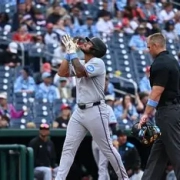
We’re just under a month away from the 2025 MLB All-Star Game (July 15), and unfortunately, the Marlins aren’t getting much love in fan voting. Not a single Marlin currently ranks in the top 10 at any position. Miami enters today 13 games under .500, remains one of the youngest rosters in baseball, and ranks near the bottom in attendance. But despite the struggles, a few young standouts have made a strong case for All-Star recognition—if only the process wasn’t driven so heavily by fan votes.
Reminder: Every MLB team must have at least one All-Star representative. Rosters will be filled out after fan voting concludes. All-Star FAQ: How players are selected
Dane Myers – OF
Myers has quietly put together a breakout campaign and should be the leading candidate to represent the Marlins. A true five-tool player, he’s showing off elite defense, solid power, and speed. Myers has swiped eight bags and owns a 136 OPS+ (league average is 100). He ranks in the top 70th percentile in defensive run value and has tallied a team-leading 1.4 WAR—even while bouncing in and out of the lineup.
If he qualified, Myers would rank:
6th among NL outfielders in OPS
1st in batting average
3rd in on-base percentage
If he keeps it up through early July, Myers should be Miami’s All-Star.
Stowers has arguably been the Marlins’ most consistent hitter this season. He leads the team in home runs (10), RBIs (34), and triples (3), while posting a strong .803 OPS—top 10 among National League outfielders. His season has had ups and downs (including a walk-off grand slam and a few three-strikeout games), but he’s been a steady presence in the lineup.
Sometimes the All-Star rep comes from the bullpen, and Bender fits that mold perfectly. With a 2.45 ERA and only nine runs allowed over nearly 30 innings, Bender has quietly become one of the most reliable Marlins. His breaking ball is elite, with an 8-run value on Statcast. While he may not be a household name, he’s certainly earned consideration—and could be trade bait for a contender in July.
Hernandez has been electric in limited action. Acquired after the Rays released him this winter, he’s slashing .353/.405/.500 with a 148 OPS+. The sample size is small, but his impact has been big. If he keeps hitting and stays in the lineup through June, Hernandez could be a dark horse All-Star—and a fan favorite for years to come. Check out Heriberto’s Baseball Savant Page.
The Marlins are guaranteed at least one All-Star, and while Myers is the best story so far, Stowers and Bender are right behind him. Hernandez is one to watch. Either way, these players represent hope for the franchise’s future—whether they stay to build it or are moved at the deadline.
https://www.fivereasonssports.com/wp-content/uploads/dane-myers.webp234397Austin Dobbinshttps://www.fivereasonssports.com/wp-content/uploads/FiveReasonsWebsiteLogo.svgAustin Dobbins2025-06-18 21:15:242025-06-18 21:15:24Who Will Represent the Marlins at the 2025 MLB All-Star Game?
How the Panthers’ Back-to-Back Cups Compare to the Dolphins’ Perfection and the Heat’s Star Power
A dynasty — a team with sustained success, usually capped off by multiple championships. In South Florida, dynasties seem to prefer symmetry. The region now joins Boston (Bruins, Patriots, Red Sox) and Chicago (Bulls, Cubs, Bears [pre-merger]) as one of just three U.S. cities where three different major sports franchises have gone back-to-back.
Winning one championship is hard enough — winning another, in a different year, in a different locker room, with different pressure? That’s something special. Since the Super Bowl era began, only 8 NFL teams have repeated as champions. In the NBA, 14 dynasties have done it. The NHL has seen 17 repeat champions, while in Major League Baseball, it hasn’t happened since the Yankees of 2000.
Now, in South Florida, we’ve seen it happen three times — in three different ways. The perfect Dolphins. The star-driven Heat. And now, the gritty and relentless Panthers.
So the question isn’t just whether the Panthers belong in the dynasty conversation — it’s whether they’ve already surpassed some of South Florida’s legends. And maybe, just maybe, whether they’re not done yet.
🐬 The Gold Standard — 1972–73 Miami Dolphins
The only perfect season in NFL history isn’t just a football milestone — it’s a cultural artifact. Don Shula’s Miami Dolphins didn’t just win — they ruled. Their dominance in the early ’70s, particularly over the course of the 1972 and 1973 seasons, still looms over pro football like a monument carved in granite.
In 1972, the Dolphins went 17–0 — sweeping through the regular season, playoffs, and Super Bowl VII with methodical, physical, mistake-free football. In 1973, they came back hungrier, going 15–2 and winning back-to-back Super Bowls. That made it three straight Super Bowl appearances, two rings, and an unblemished legacy.
Key names: Bob Griese, Larry Csonka, Paul Warfield, Mercury Morris, the “No-Name Defense” — and of course, Shula, the NFL’s all-time wins leader.
Legacy: These Dolphins didn’t just win. They embodied perfection. In an era without a salary cap, where dominant teams could keep their rosters intact, they stood out even among greats. No excuses, no losses.
Shula’s Dolphins were perfect. Almost nothing can top that. That’s why, even in 2025, they remain South Florida’s dynasty gold standard.
🏀 The Big Three Heat — 2012–13 Miami Heat
Fast forward four decades and you find a completely different kind of dominance. Where the Dolphins imposed their will through structure and toughness, the Miami Heat of the early 2010s took over through star power, speed, and cultural gravity.
The Big Three of LeBron James, Dwyane Wade, and Chris Bosh changed the way teams were built. They weren’t just playing for Miami — they made Miami the center of the basketball universe. With Erik Spoelstra at the helm, the Heat reached four straight NBA Finals and brought home back-to-back championships in 2012 and 2013.
In 2012, they beat a young Oklahoma City Thunder team led by Kevin Durant, Russell Westbrook, and James Harden. In 2013, they survived one of the most legendary series in NBA history — a seven-game battle with the San Antonio Spurs, punctuated by Ray Allen’s miracle three-pointer in Game 6.
Legacy: Culturally, no South Florida team had a bigger spotlight. The Heat were villains, then heroes. They were expected to win — and they did. But they also lost two of those four Finals, which dims the dynasty shine slightly.
While the Dolphins were dominant and disciplined, the Heat were brilliant and burning hot — a flash of electricity that changed the game.
🏒 The Newest Dynasty — 2024–25 Florida Panthers
And now, the Panthers.
If the Dolphins were perfect and the Heat were powerful, the Panthers are persistent. They’re the least flashy of the bunch — but maybe the most resilient. And unlike the Heat or Dolphins, the Panthers have done this in the modern era of maximum parity — where repeating is nearly impossible, and where no team can buy a dynasty.
In 2024, the Panthers went up 3–0 in the Stanley Cup Final against the Oilers — then nearly collapsed, dropping three straight before winning Game 7 at home. In 2025, they faced the Oilers again — and this time won in six. Three of those games went to overtime. The Panther’s led for the majority of the series and in a way it was a “six game sweep.”
These last two years have been survival. And survival is a kind of dynasty all its own.
Core stars: Aleksander Barkov, Matthew Tkachuk, Sam Reinhart, Sergei Bobrovsky, Sam Bennett, Aaron Ekblad, and a key veteran addition in Brad Marchand.
Coach: Paul Maurice, a quiet master of emotional balance and system discipline.
Panthers coach Paul Maurice “… this is the best team I have ever coached.”
GM: Bill Zito, now firmly in the conversation as one of the best general managers in all of sports. His blend of analytics, scouting, and locker room intuition has built a team that’s deep, structured, and ruthless.
Notable moves made by Florida Panthers GM Bill Zito to build this dynasty: – Claimed Forsling off waivers – Traded for Tkachuk – Traded for Reinhart – Traded for Bennett – Traded for Montour – Traded for vets at deadline (Marchand, Tarasenko) – Traded for Seth Jones
Why they’re different:
Thriving in a salary cap era
Most of their core is under contract through 2026–28
Bobrovsky is coming off his best season yet
Zito keeps winning trades, extending the window
This team isn’t a Cinderella — they’re a juggernaut in work boots. And they’re not done yet.
🎯 Coaching the Greats
All three dynasties had a legendary leader:
Coach
Team
Legacy
Don Shula
Dolphins
NFL wins king. The architect of perfection.
Erik Spoelstra
Heat
NBA’s top tactical mind. Still evolving.
Paul Maurice
Panthers
Finally crowned. Quietly brilliant.
📈 Ranking the Dynasties — For Now
Rank
Team
Titles
Context
Legacy
🥇 1
Dolphins (1972–73)
2
No cap, perfect run
Only perfect season in NFL history
🥈 2
Panthers (2024–25)
2
Cap era, repeat grind
Built-to-last in parity-heavy NHL
🥉 3
Heat (2012–13)
2
Superteam peak
Cultural icons, 2–2 Finals record
🐾 Final Thought: This Dynasty Isn’t Done
The Dolphins will always be first until someone adds a third title. But the Panthers? They’re not just challenging for first — they’re building a case for something bigger. A modern dynasty that wins with culture, not stardom. With depth, not hype. With persistence, not perfection.
If they go back-to-back-to-back?
We’ll have a new conversation.
https://www.fivereasonssports.com/wp-content/uploads/panthers.webp234375Austin Dobbinshttps://www.fivereasonssports.com/wp-content/uploads/FiveReasonsWebsiteLogo.svgAustin Dobbins2025-06-18 19:24:392025-06-18 19:24:39South Florida’s Greatest Dynasty? The Panthers Are Coming for the Crown
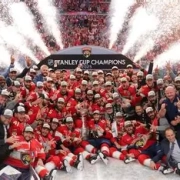
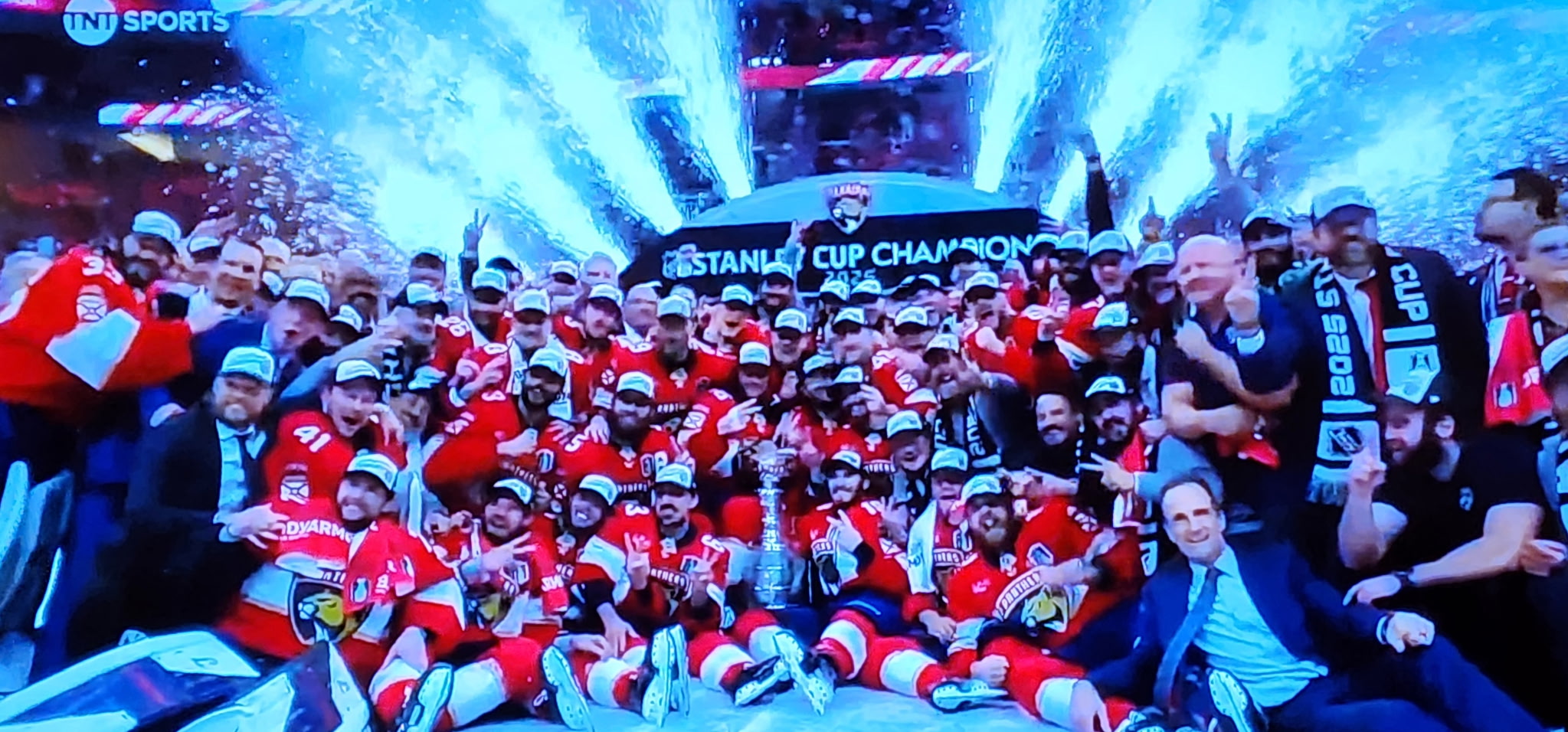
Whether or not Brad Marchand and several other key players suit up again for the now two-time champion Panthers, the images of them skating the Stanley Cup around Amerant Bank Arena on Tuesday night will remain indelible.
Just like Shula’s “Perfect” Dolphins and the Lebron-led Big Three Heat.
Along with joining the ranks of back-to-back champions in the major pro team sports, the Panthers cemented their place among South Florida’s greatest dynasties.
In addition, the Panthers’ three consecutive Final appearances with back-to-back titles follows on the heels of the Tampa Bay Lightning achieving the same feat.
The Lightning–Panthers handoff of dominance appears to be the first of its kind in major U.S. team sports. That is, two franchises from the same state each reaching three straight finals and each winning back-to-back titles in a span of six consecutive years.
“It’s so emotional. Because you have a childhood dream of winning the Stanley Cup. To do this back-to-back times, go to three straight finals, win two of them … I mean, we’re a dynasty,” said Matthew Tkachuk, who scored the second goal Tuesday.
The grit of this team was exemplified by Tkachuk, who revealed after game in a TV interview on TNT the severity of the injury he suffered in the 4 Nations Cup tournament that caused him to miss the last quarter of the regular season.
“I tore my abductor [muscle] off the bone and had some hernia thing, all on the same side. I wanted to throw in the towel a bunch of times,” said Tkachuk, who thanked the doctors, trainers and other medical people who got him ready to play in the playoffs. “I’ve got to thank a lot of people for getting me healthy again. This is for them.”
How about a Three-peat?
While immediate attention turns to celebration and another Summer of Love with the Stanley Cup, you can be sure the thought of a three-peat is already on the mind of the man who will try to put together the pieces to make it happen, general manager Bill Zito.
That has been achieved twice since the NHL expanded from the original six teams. The Montreal Canadiens (1976-79) and New York Islanders (1980-83) won four in a row.
Zito faces another challenging offseason with eight unrestricted free agents – most notably Marchand, Sam Bennett and Aaron Ekblad – plus one restricted free agent and insufficient salary cap space ($19 million) to satisfy all of them.
Bennett got the Conn Smythe Trophy as MVP of the playoffs (15 goals, 22 points).
“It’s harder than I ever imagined to win the Stanley Cup once, and twice was even harder,” Bennett said.
The situation was similar last year with $20 million in cap space and a number of expiring contracts. Zito managed to sign forward Sam Reinhart to a long-term contract and add economical replacements for the players who left to get paid.
Just know that in Pantherland the motto is, “In Zito we trust.”
More discussion about the roster situation for next season below. First, more about what these Panthers have achieved.
The Panthers’ second Cup also made South Florida one of seven markets with multiple championships in the big four sports leagues (NFL, MLB, NBA, NHL); the Marlins won the World Series in 1997, 2003. The others are New York, Los Angeles, Chicago, Boston, Philadelphia and Detroit.
Like the Dolphins in their second Super Bowl win, the Panthers were more impressive in claiming their second Cup, seizing it by outscoring the Oilers 10-3 in the final two games, including 5-1 in Tuesday’s clincher.
Back-to-Back Titles: Rare feat in major sports
Winning consecutive championships is unusual across the major U.S. sports leagues:
NFL: Only 8 repeat champions since the Super Bowl era began (most recently the 2003–04 Patriots)
MLB: Last repeat champion was the Yankees in 2000
NBA: 14 instances, most recently the 2017–18 Warriors
NHL: 17 back-to-back champs, including the 2016–17 Penguins and 2020–21 Lightning
What are the odds against it?
It varies by league, but here’s a rough sense of probability and rarity:
League
Odds of Repeat (Estimated)
Reasoning
NBA
~1 in 8 (12–13%)
Dominance by superstars and continuity
NHL
~1 in 15–20 (5–7%)
Depth, injuries, parity
NFL
~1 in 25–30 (3–4%)
Single-game elimination, injuries
MLB
~1 in 25–30 (3–4%)
Randomness of short series, deep playoff field
Comparing South Florida’s legendary runs
Here’s how the Panthers’ repeat compares to the multi-title runs of the Dolphins and Heat.
Miami Dolphins (1972–73)
Titles: Super Bowl VII (1972), Super Bowl VIII (1973)
Era: Pre-salary cap, fewer playoff rounds, 14-game regular season
Back-to-back titles: 1972: Only perfect season in NFL history (17–0); 1973: Repeated as Super Bowl champions with a near-perfect 15–2 record
Key Players: Bob Griese, Larry Csonka, “No-Name Defense”
Don Shula: Legendary coaching figure
Legacy: The 1972 team still has the NFL’s only perfect season (17–0). A dominant, run-heavy team led by coach Don Shula, Bob Griese, Larry Csonka, and a stingy defense. The Dolphins’ repeat was part of an era-defining run— they went to 3 straight Super Bowls and were dominant, not just gritty.
Impact: Set the gold standard for perfection and dominance.
Comparison: The Dolphins had more aura and dominance. The Panthers repeat is more about resilience and overcoming modern parity.
Miami Heat (2012–13)
Titles: NBA championships in 2012 and 2013
Big Three: LeBron James, Dwyane Wade, Chris Bosh
Back-to-back titles:
2012: Beat OKC
2013: Edged Spurs in 7-game classic
Cultural impact: Massive media spotlight, villain-to-hero arc, one of the NBA’s defining modern dynasties.
Legacy: The Big Three era Heat was glamorous and polarizing, but dominant. Four straight Finals was a massive achievement in a league built on superstar gravity.
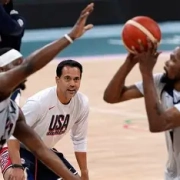
Comparison: While the Heat were expected to dominate, the Panthers built slowly, and success feels more like a validation of grit over star power.
Florida Panthers (2024–25)
Titles: Stanley Cup Champions in 2024 and 2025
Back-to-back titles:
2024: Defeated Oilers in seven games after winning the first three and losing the next three.
2025: Defeated the Oilers in six games in a closely contested Final series that featured three overtime games.
Legacy: A gritty, structured team led by Matthew Tkachuk, Aleksander Barkov, and Sergei Bobrovsky with historic playoff performances by Sam Bennett and veteran newcomer Brad Marchand. No superstars in the traditional sense, just a deep, relentless squad built for playoff battles.
Impact: These Panthers represent a triumph of team culture over star-centric models in a parity-heavy NHL. This is a grittier, lower-profile dynasty — less glitz, more grind.
Dynasty comparison at a glance
Team
Title Years
Key Players
Style of Play
Legacy
Miami Dolphins
1972, 1973
Griese, Csonka, Warfield, Buoniconti
Dominant, physical, run-heavy
Only perfect season in NFL history
Miami Heat
2012, 2013
LeBron, Wade, Bosh
Star-driven, fast-paced
4 straight Finals, global spotlight
Florida Panthers
2024, 2025
Barkov, Tkachuk, Bobrovsky, Bennett, Marchand
Gritty, structured, deep roster
Modern NHL repeat in parity era
Final word
While the Dolphins dominated with perfection and the Heat dazzled with star power, the Panthers will go down as South Florida’s most gritty and resilient dynasty. And in today’s NHL, that might be the toughest type of dynasty to build.
Henrik Lunqvist, TNT analyst and Hall of Fame goalie said during the second intermission, ” I haven’t seen the Panthers make a mistake. They always make the right decision. It’s a master class right now.”
These Panthers were built for playoff hockey and they never strayed from their approach in the run to their second title. They succeeded by getting production up and down the roster.
Going into Game 6, the Panthers had 11 players with double-digit points this postseason, and five players with at least 20 points: Sam Bennett (22), Matthew Tkachuk (22), Brad Marchand (20), Carter Verhaeghe (20) and Aleksander Barkov (20).
Veteran Marchand, a former Panthers adversary, was acquired at the trade deadline and fit in seamlessly on the third line with Anton Lundell (17 points – six goals, 11 assists) and Eetu Luostarinen (18 points – five goals, 13 assists).
Seth Jones, the other trade deadline acquisition, fortified the defense and was third among the team’s defensemen in points (9) and tied for first in goals (4) during the playoffs.
About next season
In his greatest act of roster wizardry, Zito was able to fit the two veterans, Marchand and Jones, under the cap with Tkachuk on long-term injured reserve, then bring back Tkachuk for the postseason when the salary cap is moot.
Will that finally earn Zito his overdue Jim Gregory General Manager of the Year Award? He is a finalist for the third straight year.
Twice snubbed, but now a two-time Cup winner, and still dealing.
The Panthers are projected to enter the offseason with $19 million to work with. Top priority must be re-signing Bennett, who embodies the hard-nosed playoff warrior the Panthers covet.
Afterward, Bennett, acquired in a 2021 trade with Calgary, didn’t sound like he wants to be anywhere else.
“It’s a huge honor to be a part of this group. I’m not going to take it for granted. I love being here and I love this team,” Bennett said in his postgame media interview. “It’s a remarkable team to be a part of, just from the whole staff to the players to the management, the owner, the coaches. Truly everyone is world-class here.”
As much as Marchand earned the admiration of teammates and fans over the past six weeks, it may not be feasible to retain him and Bennett. At 37, Marchand will be seeking one more star-size contract, and indications are he will have plenty of suitors. But who knows?
“We’ll see what happens here soon,” Marchand said with a grin on TNT moments after skating with the Cup for the second time in his career.
Ekblad has been a Panthers lifer and has expressed wanting to finish his career as one. He will likely have to agree to a hometown discount to facilitate that.
The other unrestricted free agents are forwards Nico Strum and Tomas Nosek, defensemen Nate Schmidt and Jaycob Megna and backup goalie Vitek Vanecek.
Forward Mackie Samoskevich is a restricted free agent and should be retained.
However Zito chooses to play his hand, the only predictable variable is that he will come up with some surprises when he plays his cards.
That approach already has two Cups in hand. Why not a third?
Craig Davis has covered South Florida sports and teams, including the Panthers, for more than four decades. Follow him on the site formerly known as Twitter @CraigDavisRuns.
https://www.fivereasonssports.com/wp-content/uploads/FiveReasonsWebsiteLogo.svg00Craig Davishttps://www.fivereasonssports.com/wp-content/uploads/FiveReasonsWebsiteLogo.svgCraig Davis2025-06-17 23:53:512025-06-18 15:22:48Pressure Point: Panthers give South Florida a Big Three of pro sports dynasties
The Thunder were the more macho and disciplined team, chopping down the Pacers in Game 5 of the Finals with 32 points off turnovers and Jalen Williams’ 40-digit discharge. He said after the match, “I’d be lying if I said I could imagine doing what I did tonight, but I definitely could have seen myself here a long time ago…” The winners of Game 5 of the Finals after a tied series win the championship 74.2% of the time.
Coach Rick Carlisle called a timeout as the Pacers went down 17-12 when Shai Gilgeous-Alexander drove against Pascal Siakam in transition for a left handed layup. Carlisle then had to be restrained and earned himself a technical foul complaining to the ref as SGA zigzagged upcourt for another transition basket. His gripe was Lu Dort not getting flagged for contact on Andrew Nembhard on the previous possession but he did as the period went on.
Seven turnovers and weak corner protection also set Indiana back as they went down by 10 going into the second quarter. Their deficit briefly expanded to 18 before halftime as they couldn’t outmaneuver Chet Holmgren’s tentacles at close range or suppress Williams’ rim pressure. Tyrese Haliburton was no help to Indiana, laboring through a calf strain, missing all five attempts against tight coverage and went into the break with a donut on the stat sheet.
The Thunder had forced 10 turnovers and had a 12-0 advantage in fastbreak points at halftime.
Williams followed up with more damage to Indiana, cutting up the middle on an ATO play, making a transition layup and burying a 3-pointer. Subsequently, TJ McConnell extended the Pacers’ lifespan, shattering OKC’s coverages with screen rolls. Carlisle then made the mistake of holstering one of his best weapons, rolling most of the fourth quarter with Haliburton instead of McConnell. He said he was fatigued after the game.
Siakam’s rampage cut the deficit to two, but nonstop giveaways, pick-6s, plus Williams’ blow-bys through the middle and a shot over Aaron Nesmith at the nail spoiled Indiana’s comeback. Carlisle inserted McConnell back in during the last few minutes for Andrew Nembhard, but it was too late by then as the Thunder led by 14.
The Thunder won 120-109 while the half-court attack was slowed to 97.7 points per 100 plays, good enough for the 61st percentile, per Cleaning the Glass. They committed 11 less turnovers, outscored their guests in second-chance points (21-17) and made 14 triples to their 11. Four Thunder players logged at least three 3-pointers. The Game 4 win on Friday only had three logged for the group.
On the losing side, Carlisle said Haliburton was not “100%,” but he insisted on playing despite concerns at halftime. When asked about how the Pacers would stop Williams’ rim attacks, he answered, “Get in front of him. Keep him from driving. Communicate better. Help when necessary.”
https://www.fivereasonssports.com/wp-content/uploads/IMG_4518.jpeg9911226Mateo Mayorgahttps://www.fivereasonssports.com/wp-content/uploads/FiveReasonsWebsiteLogo.svgMateo Mayorga2025-06-17 05:22:002025-06-17 05:35:57Mateo’s Hoop Diary: The Thunder separated themselves in the fourth quarter, taking a 3-2 lead in the Finals
The Herro Question: Why Miami Must Consider a Seismic Shift After the Bane Blockbuster
The NBA offseason has officially ignited with a boom. The Memphis Grizzlies, long lauded for their player development, just sent Desmond Bane to the Orlando Magic for a truly staggering return: Kentavious Caldwell-Pope, Cole Anthony, four unprotected first-round picks, and a valuable pick swap. This isn’t just a trade; it’s a recalibration of the league’s trade market, and it sends a clear message to teams stuck in the middle: your young, talented assets might be worth far more than you think.
For the Miami Heat, currently engaged in fervent discussions with the Phoenix Suns for the 37-year-old Kevin Durant, this Bane blockbuster creates a fascinating, and perhaps necessary, inflection point. With Jimmy Butler now off the roster and the team perpetually hovering in that uncomfortable “good, but not great” tier, the Heat needs to make a bold move. And the Desmond Bane trade provides a compelling blueprint for why that move might involve parting ways with Tyler Herro.
Herro, at 25 years old and coming off his first All-Star appearance, is undeniably a talented scorer. He’s shown consistent growth since entering the league, flashing the offensive prowess that has made him a fan favorite in South Beach. He’s currently under a four-year, $130 million extension that runs through the 2026-27 season, but an even larger extension looms this October, potentially tacking on an additional three years at nearly $50 million annually through 2030.
This is where the calculus becomes critical for Pat Riley and the Heat front office. While Herro’s regular-season scoring is valuable, his playoff performances have often been a different story. The bright lights of the postseason have frequently seen his efficiency dip and his defensive limitations become more pronounced. In a league where championships are won in the crucible of the playoffs, a player due for a max contract must perform at an elite level when it matters most.
Furthermore, Herro’s widely publicized “off-court antics,” most recently highlighted by his appearance on an Adin Ross stream, raise questions about his overall fit within the famously disciplined Heat culture. While these incidents may seem minor, they add another layer to the evaluation of a player on the cusp of a truly massive financial commitment.
Now, consider the Bane trade. Bane is a high-level 3 point shooter, incredibly efficient, and a vital piece for any contending team. But Herro, an All-Star and primary offensive initiator, could reasonably command an even greater bounty. If the Grizzlies netted four unprotected first-round picks and a pick swap for Bane, what could the Heat secure for Herro?
Imagine a scenario where the Heat could acquire a package including four, five, or even more future first-round picks, potentially along with promising young players on rookie deals. This kind of haul would instantly replenish Miami’s depleted asset cupboard, providing the flexibility to either aggressively pursue another superstar down the line or build a younger, more cost-controlled roster that aligns with a fresh long-term vision.
Even as the Heat reportedly continue their pursuit of Kevin Durant, a Herro trade could facilitate that acquisition. Instead of merely offering Herro in a direct swap, a separate trade for picks and assets could then be leveraged to create an even more enticing offer for Durant or another top-tier talent. The market has proven that draft capital is king, and the Heat need to re-stock their war chest.
The “middle ground” is a dangerous place in the NBA. It’s where teams languish, good enough to avoid the lottery but never truly good enough to contend. With Jimmy Butler’s departure and the shifting landscape of the Eastern Conference, the Heat needs to pick a direction. Doubling down on Herro with a max extension, despite his regular-season brilliance, risks cementing their place in that purgatory if his playoff struggles and defensive liabilities persist.
The Desmond Bane trade is a wake-up call. It’s a flashing neon sign indicating the immense value of tradable, ascending talent. For the Miami Heat, it’s an undeniable avenue to explore. Pat Riley’s legacy is built on bold moves. This might be the moment for another one – a seismic shift that reshapes the Heat’s future and finally pushes them out of the middle. The question isn’t whether Tyler Herro is a good player; it’s whether his value as an asset, right now, outweighs his long-term fit as a max-contract player on a championship contender. The market, as Memphis just showed, has provided a compelling answer.
https://www.fivereasonssports.com/wp-content/uploads/usatsi_13847313_168389536_lowres.jpg12001200Austin Dobbinshttps://www.fivereasonssports.com/wp-content/uploads/FiveReasonsWebsiteLogo.svgAustin Dobbins2025-06-15 12:04:032025-06-15 12:04:03Is It time For the Miami Heat to Trade Tyler Herro
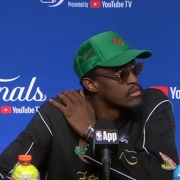
As the Miami Heat remain involved in trade discussions with the Phoenix Suns, one name keeps surfacing—Kevin Durant. At 36 years old, Durant continues to generate both interest and debate: Is he still one of the NBA’s top needle movers? Is he the greatest scorer of all time? And would acquiring him meaningfully shift Miami’s title hopes?
To start answering that, look no further than Durant’s shot chart from this past season.
Elite Efficiency at Every Level
Durant shot an incredible 52.7% from the field, 43.0% from three, and 83.9% from the free throw line in 62 games during the 2024–25 season. His effective field goal percentage (eFG%) sat at 59.8%, and his shot chart confirms what the stats suggest: Durant remains a lethal threat from all three levels.
Mid-range (Top of the Key): 53.1% on 286 attempts
Paint (Non-restricted): 53.2% on 342 attempts
Restricted Area: A staggering 79.0% on 124 attempts
Corner Threes: 47.8% (Left), 52.4% (Right)
At his age, this kind of production isn’t just rare—it’s historically elite. The only player to put up similar scoring numbers past age 35 is LeBron James. And like LeBron, KD’s game has aged gracefully thanks to his shooting touch and skill-based scoring.
Highest scoring seasons for players age 36 or above:
LeBron James 30.3 (2021-22) LeBron James 28.9 (2022-23) Kevin Durant 26.6 (last season)
Podcast Perspective: Needle Mover or Not?
On a recent episode of Five On The Floor, Ethan Skolnick and Greg Sylvander discussed whether KD is still impactful enough to justify a major move. Ethan draws a parallel to the 2004 Shaquille O’Neal trade, where Miami added a superstar in the twilight of his prime, knowing he could elevate an already-competitive team.
While the Suns and Nets didn’t win it all with Durant, Ethan and Greg argue that context matters. Fit, injuries, and organizational stability all played a role. As Greg notes, “KD still shifts your ceiling—even if he’s not the floor-raiser he once was.”
Miami wouldn’t be trading for 2014 MVP Durant, but even this version could unlock new levels for Bam Adebayo and Tyler Herro. With KD’s gravity, spacing, and ability to close games, the Heat wouldn’t need him to carry every possession—they’d need him to deliver when it matters most.
Ethan and Greg point out, who else will be there for the Heat to go for?
“Who over the next year are they going to have a better shot at than they do at Kevin Durant right now.”
Greg states:
“The league has changed and top heavy rosters/biggest spenders aren’t making it. It may be an expensive experiment, but to completely write that off is to completely ignore everything going on around the league (Pacers, Boston, everything else). What other player and moment are going to present themselves?”
“Greg is the “anti-tank” king (as am I). and Ethan states that “they will never go full tank.”
“Jimmy missed games when he could have played them”
If you’re not going to commit to a tank, then when a move presents itself, you have to go for the move that you believe it sends you to the top. Kevin Durant is still an elite player, and the growth of Herro and Bam would once again elevate. Give Spoelstra Herro, Kd, and Bam, and let Miami work the rest of the roster out and lets see what happens.
Legacy on the Line?
Durant has recently stated he’s not satisfied with his legacy, and that’s a major reason he continues to play. With over 30,000 career points, two championships, and a 50/40/90 season under his belt, KD has nothing left to prove statistically.
But legacy isn’t just numbers. It’s narrative. Miami, with its championship infrastructure and defensive identity, could give Durant what Brooklyn and Phoenix didn’t: a stable, winning environment with defined roles.
If KD’s final chapters are still being written, the Heat might be the co-authors he needs.
Final Stats
Despite being 36, Durant posted a +5.2 net rating differential in 2024–25—ranking in the 83rd percentile among all players. The Suns were significantly better on the offensive side of the ball and many close to the Suns say the defensive lapses were in large part to the Suns scheme and role players.
In clutch situations this past season, Durant posted a 61.7% effective field goal percentage—15.8 percentage points above the league average—highlighting his continued ability to close games efficiently.
Miami might not be “one Durant away” from a championship—but they’re definitely closer with him than without.
Durant isn’t chasing numbers—he’s chasing meaning. If his final act is about reclaiming legacy, there may be no better stage than Miami, a franchise built on clarity, toughness, and results.
https://www.fivereasonssports.com/wp-content/uploads/Bamerica.webp234403Austin Dobbinshttps://www.fivereasonssports.com/wp-content/uploads/FiveReasonsWebsiteLogo.svgAustin Dobbins2025-06-14 17:35:002025-06-14 17:35:00Breaking Down the Pod: Is KD Still a Needle-Mover
The Thunder’s late defense intensified, and Shai Gilgeous-Alexander the Great rescued his club in the fourth quarter on a spree of free throws and jumpers, taking Game 4 and tying the Finals at 2-2. He said after the game, “I knew what it would have looked like if we lost tonight, and I didn’t want to go out not swinging…”
The first change from the last match was Isaiah Hartenstein returning to the Thunder’s starting lineup after three on the bench behind Cason Wallace. The Pacers deployed double and triple full-court press plus hounded the ball and passing lanes. But Jalen Williams and Alex Caruso got loose, attacking the rim six times. Additionally, Pascal Siakam carved up OKC with four steals, a corner tray and a powerful dunk through the middle, but the Pacers were up only 35-34 at the end of the first quarter.
SGA subsequently was his team’s main source of offense in the second quarter, nailing two pull-up jumpers and slicing into the lane for two layups as no teammate had more than a field goal. They briefly claimed a six-point lead, but the Pacers closed the period on a 15-6 run.
The Thunder were down 60-57 at halftime after six ties and five lead changes. They had one made 3-pointer to Indiana’s seven.
Then SGA, Williams and Caruso carried the Thunder in the third quarter with shots from short, mid and long range, but the Pacers, even with three missed freebies, pulled ahead by seven, downing four more triples and seven free throws.
Next, the Thunder cranked up their defensive potency by 40° and tied the game four minutes into the fourth quarter. They prevented the Pacers any made 3-pointers in eight tries by challenging promptly and suffocating everyone minus Tyrese Haliburton. On top of that, SGA took over, scoring 15 points on free throws, a drive-by, and two pull-up jumpers, which included nine straight digits in the last four minutes. “When I was a kid, shooting on my driveway, I’d count down the clock for those moments, and now I get to live it,” SGA said.
The Pacers had a faint pulse, down four with 23.1 seconds left, but Bennedict Mathurin’s three consecutive missed free throws put the final nail in their coffin.
The Thunder won 111-104 despite their half-court attack getting derailed to 86.7 points per 100 plays, good enough for the 22nd percentile, per Cleaning the Glass. They also outscored the Pacers in four key areas: paint points (50-36), fastbreak points (10-9), second chance points (23-11) and points off turnovers (25-23).
Game 5 is Monday in OKC.
https://www.fivereasonssports.com/wp-content/uploads/IMG_4474.jpeg8711357Mateo Mayorgahttps://www.fivereasonssports.com/wp-content/uploads/FiveReasonsWebsiteLogo.svgMateo Mayorga2025-06-14 06:10:052025-06-14 06:10:05“It comes down to the moments and who is willing to make winning plays…”: The Thunder broke the Pacers’ hearts in Game 4, tying the series at 2-2
A Kevin Durant trade appears imminent, and according to the latest report from Shams Charania, it could happen sooner than expected: “I think a Kevin Durant trade could happen in the next few days.” I’ve been on the fence about a KD trade—there are valid concerns on both sides: future flexibility, an aging superstar, elite offensive upside, and who should truly be “untouchable.” But with momentum building, I’m officially on Team KD. Here are my Five Reasons.
Before diving in, it’s worth noting: I would do everything possible to keep Kel’el Ware and preserve as many first-round picks as possible. That’s my line in the sand.
According to Zach Lowe, this could be the offer HEAT could do for Kevin Durant:
Miami receives: Kevin Durant
PHX receives: Andrew Wiggins and Nic Claxton
BKN receives: Nikola Jovic, Duncan Robinson and MIA’s 2025 first round pick Only one FRP used and Ware stays.
This would be a no brainer for me.
Five Reasons
Instant Contenders in the East: At first glance, Kevin Durant joining the Miami Heat makes a lot of sense on paper. Durant is one of the most versatile scorers in NBA history, capable of creating his own shot from anywhere on the court. Pairing that with Miami’s physical, defense-first mentality led by Erik Spoelstra and Bam Adebayo could create a well-rounded championship contender. Miami’s core would transform into one of the most intriguing Big Threes in the Eastern Conference. Jimmy Butler has long been the heart and soul of Miami’s grit and grind, but with Durant, the offensive firepower would skyrocket. Pairing KD with Bam Adebayo—a versatile two-way force—and Tyler Herro, an emerging sharpshooter and scorer, gives Miami a unique blend of scoring, defense, and youth. The East is as weak as it has been and its all for the taking. With Eric Spoelstra having a top 10 defense in 13 of his 17 years, all Miami needs to be able to do is score, add KD and their offensive problems are solved.
Championship Window Set and Stone: If you trade for KD, he more than likely gets extended, and this would ultimately set the Miami Heat’s championship window (2025-2028). With this trade Miami takes the short-term path and goes back for glory. The way the Heat think, and the way they have made things work before it’s worth the risk.
Put’s Miami Back on the Map: After a stretch of being in the NBA’s “middle ground” and fading from the national spotlight, acquiring Kevin Durant would instantly re-establish the Miami Heat as a relevant and prominent franchise. The spotlight would return to South Beach, bringing increased media coverage and fan excitement—benefits that ripple across the organization, from ticket sales to free agency appeal. Durant’s star power alone ensures the Heat are back in the national conversation, something that trading Jimmy Butler had temporarily muted.
What to Do with Kel’el Ware: If Kel’el is the deal breaker for either side, do you pull the trigger. Do you take the future hall of famer and the short-term path and watch Kel’el potentially blossom elsewhere. It’s a tough decision to make. But Miami has many young intriguing pieces which I discuss in reason 5. Ware has unlimited potential but if you keep him in a trade for KD, he likely isn’t a starter (KD hasn’t played the three in a long time) and also means that Wiggins is likely moved. This means Miami would have a big hole at the three and could struggle defensively in a lot of rotations. This adds a lot of question marks and would make the need for one of those “lateral” moves 100% necessary. I would try not to move Ware and the way the Heat talk about him they don’t want too either.
Duncan’s Contract is Valuable and There are Players that Can Help you Win: Duncan Robinson is a huge factor in this deal, with the partial guarantees and early terminations it could help a team like Pheonix get under the second apron. In a weird way he is a huge piece in a KD trade which shall help Miami in a Kevin Durant trade.
My Proposal Earlier This Offseason
Miami Receives:
Kevin Durant
Phoenix Receives:
Kel’el Ware (or Nikola Jović, depending on who’s dealt)
Andrew Wiggins
Duncan Robinson
Two future first-round picks
From Phoenix’s perspective, this brings in a promising big man, Robinson’s flexibility, and a wing in Wiggins who can still contribute at a high level—plus draft capital to reset the clock. For Miami, it’s all-in on a win-now window. This trade allows the Heat to keep their core trio of Bam Adebayo, Tyler Herro, and Durant intact. More importantly, it opens up new offensive possibilities and defensive versatility, especially with Bam anchoring the back line. And while trading away picks limits future flexibility, Miami’s history under Pat Riley has always leaned toward aggressive moves for proven stars over future unknowns. This deal follows that blueprint.
If Miami is willing to move Ware, I think it throws them to front runners for KD.
Pat Riley’s Endorsement of “Aging Greats”: Pat Riley’s recent comments about being open to acquiring an “aging great, great player who may not be able to carry a team” directly align with the profile of Kevin Durant. Riley explicitly stated that with the right complementary pieces, such a player can “rise in the Playoffs.” Durant, even at 35, still performs at an elite level, and in Miami, he wouldn’t need to be the sole carrier of the team. His fit within the Heat’s culture, given his past admiration for it and his lack of locker room issues, makes this move even more appealing to Riley’s philosophy. The fact that even Udonis Haslem is reportedly recruiting Durant further emphasizes the internal belief that KD is the missing piece.
Closing Statement
A Kevin Durant trade is difficult as it would take up the majority of Miami’s cap and there are many ways that this trade could work but all of it depends on what the other teams (Minnesota, Houston, and San Antonio) are willing to throw at Kevin Durant. A Kevin Durant move wouldn’t likely be the only move Miami makes. But for me I’m not throwing Ware at the wall for KD. If Miami can also keep Andrew Wiggins somehow or even move him in another deal Miami’s starting five could be very dangerous, and in the current state of the East, they could make a good run for the next three years before having to find another path.
Just because other teams “can” offer a lot more doesn’t mean they will. And hey who wouldn’t love to have one of the best scorers of all time wear Miami’s jersey?
https://www.fivereasonssports.com/wp-content/uploads/KDMiami.webp234348Austin Dobbinshttps://www.fivereasonssports.com/wp-content/uploads/FiveReasonsWebsiteLogo.svgAustin Dobbins2025-06-13 17:00:062025-06-13 17:11:51Five Reasons Why the Miami Heat Should Trade for Kevin Durant

 Back-to-Back Titles: Rare feat in major sports