How Athletes Can Protect Their Bodies Over Time

For athletes, the human body is both an instrument and an investment. Whether competing professionally or staying active for personal health, maintaining long-term physical wellness requires more than training and talent. Protecting the body over time involves a combination of smart exercise practices, recovery strategies, nutrition, and cutting-edge medical interventions.

Prioritize Recovery and Rest

One of the most overlooked aspects of athletic longevity is proper recovery. Muscles and joints need time to repair and strengthen after rigorous activity. Ignoring rest can lead to overuse injuries, chronic pain, and decreased performance. Incorporating rest days, using techniques such as foam rolling, massage, or hydrotherapy, and ensuring adequate sleep each night are essential steps. Sleep in particular plays a critical role in hormonal balance, cognitive function, and tissue repair, all of which are vital for long-term athletic health.

Focus on Functional Strength and Mobility

Strength training is a cornerstone of injury prevention, but it should be balanced with exercises that enhance mobility and flexibility. Functional strength training, movements that mimic real-life or sport-specific activities, helps stabilize joints, improve balance, and reduce the risk of injuries. Incorporating dynamic stretching and mobility drills into daily routines ensures that muscles and connective tissues remain supple, maintaining performance while lowering the risk of strains and sprains.

Fuel Your Body Wisely

Nutrition is equally important in protecting an athlete’s body. A diet rich in lean proteins, healthy fats, complex carbohydrates, and antioxidants supports energy levels, tissue repair, and immune function. Hydration also plays a crucial role in joint lubrication and temperature regulation. Athletes should consider working with a nutritionist to develop a plan that meets their unique needs, particularly during periods of high training intensity or competition.

Monitor and Treat Injuries Early

Preventing small issues from becoming major problems is essential for longevity. Regular medical check-ups, physical therapy sessions, and attentive monitoring of aches and pains allow athletes to address injuries early. Treatments like regenerative therapies have been gaining attention for their ability to enhance recovery. For instance, options such as stem cells in Panama provide promising solutions for repairing damaged tissues and supporting long-term joint and muscle health. Exploring these advanced therapies under professional guidance can help athletes recover faster and reduce the risk of chronic damage.

Incorporate Mental Wellness

Physical protection is only part of the equation. Mental well-being directly influences performance and long-term health. Stress management techniques, mindfulness, and mental conditioning help athletes maintain focus, motivation, and resilience. A strong mind-body connection can prevent burnout and keep athletes engaged in their sport for years.

Adapt and Evolve Training Over Time

Finally, as the body ages, training methods should evolve. High-intensity workouts may need to be balanced with lower-impact activities such as swimming, cycling, or yoga to maintain fitness while reducing stress on joints. Listening to the body’s signals and adjusting routines ensures that athletes continue performing at their best without compromising long-term health.

Protecting an athlete’s body over time requires a holistic approach that combines rest, smart training, nutrition, medical support, and mental wellness. By implementing these strategies, athletes can extend their careers, maintain peak performance, and enjoy a lifetime of physical health.

Brian Dunseth Opens Up on Miami Days to Five Reasons Sports

We are just one month away from the 2026 MLS season, and for the first time ever, Inter Miami will be entering the season as the reigning national champions. It is shaping up to be a mouth-watering campaign in American soccer, and one man who will be watching closely is Brian Dunseth.


Born in Upland, California, on March 2, 1977, Dunseth started playing for Upland Celtic and eventually earned himself an invitation to a tournament in England at the age of 12, only to be cut after the tournament. Similarly to others like Keinan Davis, Dunseth was forced to deal with early rejection and get back on his feet. He started working alongside two ex-convicts and making $2.75 an hour as a dishwasher at a convalescent hospital, but he never gave up his dreams of becoming a player and started excelling for Damien High School. Dunseth was one of the last players recruited to Cal State Fullerton, who agreed to pay for his parking, books, and one meal per day, but not his school expenses, and he took advantage of this opportunity by transitioning from an attacking midfielder to a center back.


“I think it’s a natural evolution for a lot of guys,” stated Dunseth in an exclusive Five Reasons Sports interview. “The reality is I wasn’t good enough to take that next step into the college game to be more of a creative player. The way that I grew up in Southern California, there was such a heavy Hispanic influence and culture with the teams I played for. As I progressed, and after I got cut from the Upland Celtic team, I decided that I wanted to start playing up. All of a sudden, instead of trying to play for the best team in my age group, I would actually go down a level. If it was the Gold League, I wanted to go to the Silver League, but I wanted to play up a year, and then the next year, I decided, ‘Well, this is great, how can I play up 2 years? The next thing I knew, by the time I was 15 or 16, I was effectively playing with 18-year-olds in the under-19 category, but I was down a level. And it taught me about speed and strength and athleticism and all of these things, and how important the technical touches were.”

“I vividly remember the conversations in Spanish, the ‘Vamos’ shouts, people telling me to pass and move, to play the ball, don’t get caught in possession, let the ball do the work. I think it was really beneficial when I moved to center back. At that time, I was around 6’1″, 170 pounds, I was lean, big, and strong, I was always really strong in the air, and really good with both feet. I started to realize that there were other players that had more talent in their pinky toe than I had my whole body, and my focus became, ‘I’m gonna find the margins of success as a defender, I’m gonna learn the dark arts, where it was gonna be a thumb to the ribs or a little pinch of the armpit hair, or a forearm leading with my head. My first training session with New England, Alexi Lalas got me in the back of the head and was like, ‘Get your elbows up.’ It was just one of those things where if I wanted to play, I knew it was either going to be anywhere across the back four, primarily as a center back, although I always felt really comfortable as a defensive midfielder. I knew dropping back was effectively gonna be my only chance to continue to elevate my opportunities, but playing in the attacking phase of play was super beneficial for the majority of my career, because it made me extremely comfortable with the ball under pressure.”


Dunseth excelled in Fullerton and eventually earned the attention of the US national team set-up, being called up for the 1997 FIFA World Youth Championship (now the U-20 World Cup) in Malaysia. After returning, he became one of the first players to sign a Project-40 (now Generation Adidas) contract, enabling him to be fast-tracked into the league and sign a contract with the New England Revolution on July 5, 1997. Similarly to other center backs like Wayne Thomas, Dunseth combined brilliant timing with stellar aerial skills and forceful tackling, as well as an impressive passing ability on the ball. Dunseth emerged as a key figure in defense for New England, scoring his first-ever senior goal against Miami Fusion and playing 84 times – during that time, he also represented the USA in the 2000 Summer Olympics. And on June 20, 2001, Dunseth was traded to Miami for Jay Heaps and a second-round pick in the 2003 MLS SuperDraft.


“New England coach Fernando Clavijo and I had a lot of miscommunications together. I don’t regret any of it, because I think I handled myself correctly with the way that this was all transpiring. After the Olympics, it was made clear that I didn’t have a future role with the club, even though the Revs wouldn’t move me. And Tom Fitzgerald, rest in peace, he was an amazing human being and the Columbus coach. He was trying to get me to the Crew, where I ended up later, but through that pit stop with Ray Hudson in Miami. I can vividly remember every single day after training. I’d go get some lunch…this is before there was food in locker rooms and all of this incredible infrastructure that I’m now envious of. I’d go to lunch and come back in the afternoon, because I knew Fernando was at the office, and I’d knock on his door and say, ‘Hey, Fernando, you got a second?’ He got so pissed at me because I continued to badger him. He wasn’t playing me, and there was nothing I could do.’ I’ll never forget this: he would just repeat the same song and dance every single day. I’d say, ‘Hey, Fernando, it’s not working out, I’d really like the opportunity to move.’ And he’d go, ‘Brian, the thing is that nobody wants you.’ I’m not joking, it was at the start of the 2001 season, and then, all of a sudden, I’m driving downtown to Boston to go meet a friend, and I get the phone call from Miami coach Ray Hudson and Miami GM Doug Hamilton, another man that passed away recently who had a huge influence on my life. Doug was the guy that signed me to Adidas, and now he’s my general manager in Miami…Doug and Ray are like, ‘Get your ass down here.’ I take a U-Turn and drive 90 miles an hour, pack my stuff, head to the airport, and then go down to Fort Lauderdale.”


The Miami Fusion came into Major League Soccer in 1998, during its third season, becoming one of the league’s first two expansion teams alongside Chicago Fire. After exiting the first round of the MLS Cup Playoffs in their first two seasons, Miami missed out on the postseason in 2000, before bouncing back in 2001. They finished with the best regular season record in MLS and took home the Supporters’ Shield en route to losing to San Jose in the semifinals. That would end up being the last-ever match in club history, with Miami folding in January 2002 after four years of lackluster ticket sales and revenue.


“My first training session, Ray says to me, ‘Brian, I’ve been trying to get you for a year and a half!’ I was like, ‘Oh Fernando, you motherf****r.’ Jay Heaps went to New England, I went down to Miami Fusion, and they obviously got better at the deal because Jay became iconic in those championship matches and ended up being the television guy and the head coach, and me and a bag of soccer balls and a bent bicycle pump went down to Miami. That team was extraordinary: in my opinion, if you put them up against any of the best teams that have played in MLS, that group of players would have not only held their own, but probably come out on top. It sucked, because we knew what was coming. We all knew we were going to be contracted, all of that conversation. It was Kansas City, it was Dallas, it was Tampa, and it was us. And at the time, the owner, Ken Horowitz, it felt like he was counting ice pebbles, that’s how tight the budget was. It was like a champagne life on a beer budget, but in the midst of this, Ray had us flying high.


“He would always acknowledge that there were some financial issues happening at the club, and there was kind of the great unknown at the end of the season, and he would always write “F-U-C-K E-M’ on the board, and that’d be the last thing. That was our mentality. We knew that there was a great unknown on that backside of the season, so why not go out and try to do the incredible? And it’s also in the midst of 9/11 – we were actually scheduled to fly that day to New York to play the Metro Stars, and two days later, we were going to be across the street from the Pentagon to play D.C. United. The whole return-to-play process was incredible and it felt like, during the playoffs, all the referees were against us. It felt like everybody wanted us out, so there was almost like a justification of why MLS was closing down the Miami Fusion at the time. That’s how we made it out in our minds. But yeah, we were… we were one defensive Troy Dayak header away from going to an MLS Cup Final against the LA Galaxy in Columbus. Dwayne De Rosario ended up lifting that trophy, subsequently, with San Jose, and a couple of days later, I underwent hernia surgery and went to go pick up my check. And Ray goes, ‘Brian, that’s the last check you’re ever gonna get as a Fusion player. And I was like, ‘What are you doing?’ He goes, I don’t f***ing know, man! Next thing you know, he’s head coach at D.C. United, Doug’s the president of LA Galaxy, every player’s going in different directions, and I was picked by the Columbus Crew, which ended up being a really special 18 months.”


Dunseth was selected by Columbus Crew in the 2002 MLS Dispersal Draft, helping them win the U.S. Open Cup, before making the move to Dallas Burn (now FC Dallas) in September 2003, where he spent just a few months before moving to Swedish side Bodens BK. He bounced around from Real Salt Lake, Chivas USA, and LA Galaxy before hanging up his boots in 2006; two decades later, he’s now one of the most prestigious soccer commentators in the game for Apple TV.

Who might the Miami Marlins target in the draft?

After falling to pick 14 in the 2025 MLB Draft via the lottery system, the Marlins unfortunately miss out on the true blue-chip prospects available in a historically talented class. Franchise-altering phenoms such as Roch Cholowsky and Tyler Bell will likely be long gone by the time the Marlins make their first selection, though the sheer amount of high-end depth ensures that a premium talent will slip through the cracks. 


Entering the third draft under Frankie Piliere, the Marlins have yet to establish a clear-cut preference in terms of age, with prep position players PJ Morlando and Carter Johnson headlining Piliere’s initial draft, followed by collegiate bats in Aiva Arquette and Cam Cannarella in 2025. With such an advanced organization-wide ability to develop pitching, prior drafts have made it abundantly clear that position players are the most prominent focus within the early rounds, and with the 2025 class featuring one of the best crops of position players in recent memory, there’s little reason to expect Piliere to alter the strategy. Although the draft is still six months away, these four names come to mind early in the process as potential targets fitting the mold


Sawyer Strosnider, OF, TCU

The carrying card of Strosnider’s profile has always been the athleticism, with scouts raving about his ability since his days as a prep phenom at Brock High School in Texas. Viewed as a potential day one pick in 2024, Strosnider slipped through the cracks and eventually fulfilled his commitment to TCU, demonstrating the skillset on a much more prominent stage. 


Strosnider’s raw power (108.3 MPH 90th percentile exit velocity) and feel for loft (51% hard hit  + launch angle 10-30°) establish a tantalizing combination, though the overly aggressive approach and slight struggles when facing velocity remain gaping flaws in an overall volatile offensive profile.  


Although most of Strosnider’s defensive reps at TCU have come in the corner outfield (his teammate Chase Brunson is arguably the best defensive center fielder in the nation), many believe the combo of sheer speed and athleticism, as well as the comfortably above average arm should allow for a seamless transition to center field once drafted, giving him the positional value edge over fellow collegiate outfielders A.J. Gracia and Andrew Williamson, two other names often linked with Strosnider. 


While the bat is far from well-rounded, the immense upside Strosnider brings to the table, especially when paired with the safety net of viable defense at a premium position, the reward remains well worth the risk. With each of Piliere’s first six picks last year fitting the college bat demographic, Strosnider will almost certainly remain in the conversation at 14 as the draft process continues. 


Christopher Hacopian, INF, Texas A&M


After tearing apart the Big Ten en route to an all-conference second team nomination, Christopher Hacopian’s transfer into the SEC will answer a plethora of questions regarding his ability to sustain success against higher level competition. 


Running an otherworldly 57% hard hit rate paired with his 93.2 MPH average exit velocity, Hacopian’s ability to do damage and hit for consistent power with feel for loft, while not expanding the zone to a detrimental extent unlike the aforementioned Strosnider, gives firm middle of the order upside.


Hacopian’s hit tool, at least on the surface, looks to be at least above average, running an 89.4% zone contact rate and 6.8% whiff against velo, though the level of competition in the Big Ten is significantly less telling than that of the SEC, adding to the intrigue of his transfer which could completely make or break the profile once draft day rolls around. 


Defensively, Hacopian will likely take a vast majority of his reps at short next season, though 3B feels like the most feasible spot long term considering the below average athleticism. The glove remains a complete question mark, especially assuming he moves off short which is all but guaranteed.


In a broad sense, the profile is reminiscent of 2025 first round selection Aiva Arquette, a college bat with loud exit velocities and defensive volatility, albeit the flaws in Hacopian’s hit tool appear to be a lot less glaring. Hacopian fits Piliere’s ideal early round demographic flawlessly, and assuming the hit tool sustains against SEC competition, he feels like the safest bet to top the draft board in Miami. 


Tyler Spangler, SS, De La Salle H.S. (CA)


In terms of prep athletes, Tyler Spangler headlines a premium crop of draft eligible middle infielders in 2026. Boasting a well-rounded profile on both sides of the ball, Spangler is bound to skyrocket up draft boards as the high-school season begins. 


Lacking the loud raw tools first round preps generally possess, Spangler’s profile is far less of an upside play, with an average hit tool and ideally fringe above average usable power as he grows into his frame. Having such a refined profile (albeit at the expense of top-end upside) at such a young age is especially enticing for an organization struggling to develop more volatile and high-risk prep bats.


In terms of defense, Spangler likely sticks at short where he projects to be average, he’s fundamentally sound and instinctive with a high baseball IQ, though the lack of athleticism limits his range and ability to make difficult plays. Should he outgrow the position, Spangler’s plus arm and strong fundamentals would transition well to the hot corner. 


Despite the Marlins straying away from prep talent for the entirety of the 2025 draft, adding a prep talent as polished as Spangler could prove too valuable to pass up on. Although selecting Spangler at 14 would likely require paying full slot value, landing one of the clear-cut best players in a generational draft class would cap off what projects to be an organization-changing first round.


Jackson Flora, RHP, U.C. Santa Barbara

In recent memory, the strength of the Marlins’ farm system has always been pitching. The recent regime has made it a focal point to bolster the offensive depth in the minor leagues, which makes the selection of a pitcher in round one feel somewhat unlikely, though with a talent like Jackson Flora, the need for bats is something that should be overlooked.


The clear-cut best collegiate starter in the class, Flora’s repertoire is well-rounded and refined with front of the rotation upside. A prototypical high-slot supinator, Flora’s profile from a release and orientation perspective is exactly what an advanced developmental organization desires. 


Flora’s four-seam fastball, the most oft-utilized offering in his repertoire, featured 17” of IVB (induced vertical break) at 97 MPH, playing for whiffs and mitigating hard contact. The -4.4° VAA (vertical approach angle) creates a difficult angle for hitters to square up, and the pitch is comfortably above average. 


In terms of secondaries, Flora throws two distinct sliders as his primary breakers. The lifty sweeper, as Marquee’s Lance Brozdowski coined it, features 7” of IVB and 10” of gloveside movement, which should play as a platoon neutral barrel misser, though his true sweeper from a shape perspective is one of the best individual pitches in the class, creating an astonishing 20” of gloveside movement. After speaking to Flora, he confirmed that molding the pitch into more of a slurve shape has been a point of emphasis this offseason, with the idea of making it a more viable option against lefties. 


Though the sample is too small to determine how effective the pitch actually is, the changeup’s shape from a start late last season looked promising, giving him another potentially above average offering against left-handed batters. With an arsenal of three above average or better offerings, and the work-in-progress changeup, it’s a clear starter repertoire especially considering his feel for command. 

Florida Atlantic topples Tulane, maintains conference lead

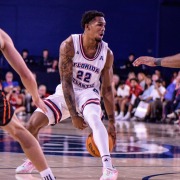
Devin Vanterpool scored 20 points and grabbed seven rebounds to lead Florida Atlantic to a 79-74 home win over Tulane on Wednesday in Boca Raton, Fla.

Vanterpool shot 6-of-13 from the floor, including 3-of-6 from the three-point line and 5-of-6 free throws. The only other player on the court with as much long-range success was Curtis Williams Jr., who led Tulane with 27 points on 8-of-14 shooting and a perfect 8-for-8 from the charity stripe.

Isaiah Elohim scored 18 points on 8-of-12 shooting and Kanaan Carlyle added 10 points for the Owls, who sit atop the American Athletic Conference with a 6-1 record in league play.

The Owls last led by double-digits in the 16-minute mark of the second half, when a free throw by Josiah Parker put FAU up 71-61 with 4:15 remaining in the game. The Green Wave went on to outscore the Owls 13-8 in the final minutes. Vanterpool iced the game for FAU with a pair of free throws after a tip-in layup from Tyler Ringgold put Tulane within three points with seconds left to play.

The Owls attacked quickly and enjoyed an early 15-10 lead through the first seven minutes of the game. The Green Wave responded with a 12-1 run, highlighted by a pair of three-pointers and a mid-range jumper by Williams, to take a 22-16 lead 10 minutes into the first half.

One minute later, Vanterpool and Carlyle each put up a three-point basket to give FAU back the lead at 23–22. It was the start of a 13-2 run that stretched the Owls’ lead to 29-24 with 6:34 remaining until halftime.

The Owls extended their first-half lead to double-digits after a three-pointer from Yohann Sissoko, going into halftime with a 43-38 lead. Earlier in that run, Vanterpool established his dominance with a pair of dunks after shooting a three-pointer.

The Owls have defended the nest well, improving to 9-1 at home on the season. FAU will take on AAC contenders South Florida and Memphis on the road on Sunday and Thursday, respectively.

Best Bangladesh Online Casino: Top 5 Solutions for Operators

Bangladesh’s online gambling ecosystem is developing quietly but steadily, shaped by high mobile penetration, strong interest in sports, and growing demand for supplementary income streams. While regulatory ambiguity remains, operators continue to explore structured, technology-driven solutions tailored to local realities, creating a distinct and evolving market landscape. 

Introduction to the Bangladesh Online Gambling Market

When talking about the Bangladesh online gambling market, it presents a broad picture filled with both challenges and opportunities. Despite still operating in a legal grey area, casino gaming remains one of the most dynamic and fast-growing markets in Bangladesh.

Market Potential

Bangladesh’s casino gaming market is estimated at around $62 million in 2025, with projections reaching $68 million by 2026 and over $93 million by 2029, reflecting a CAGR of approximately 8-10% in related segments. Fueled by a young population, cricket betting popularity, and rising player bases potentially hitting millions, it offers substantial untapped revenue opportunities despite regulatory challenges, making it one of South Asia’s fastest-emerging digital entertainment frontiers.

Economic Drivers

High unemployment rates, low wages, and limited job opportunities have pushed many people in Bangladesh—especially young individuals and low-income groups—toward online casino platforms as a source of supplemental income or a means of quick enrichment. Although it is not a socially recognised profession, it has unwillingly become a “means of livelihood” for many, making the economic landscape of the online casino industry increasingly vibrant.

Digital Reach

With over 130 million mobile internet users and internet penetration exceeding 50% by late 2024-2025, affordable smartphones and widespread Mobile Financial Services (MFS) enable seamless access to online platforms. This high digital connectivity, particularly in urban and rural areas alike, facilitates easy entry into gambling apps and sites, boosting participation through convenient, real-time betting and localised bonuses.

The Regulatory and Legal Landscape

Bangladesh casino websites are shaped by outdated laws and constitutional guidelines that predate the emergence of digital platforms, leading to inconsistent enforcement and interpretation.

  • The Public Gambling Act of 1867: This colonial-era law prohibits physical gambling houses but does not explicitly address online gambling. As a result, offshore online casinos operate without direct licensing while remaining technically outside domestic regulatory frameworks.

  • Constitutional Mandates: Article 18(2) of the Constitution directs the state to prevent gambling, reflecting moral and social considerations. However, the absence of online-specific statutes creates uncertainty, allowing digital gambling activities to persist without formal oversight.

  • Calls for Reform: Legal scholars and digital economy stakeholders have called for updated legislation to regulate online gambling. Proposed reforms focus on consumer protection, taxation, and technological oversight rather than outright prohibition, though progress remains slow.

Top 5 Solutions for Online Casino Operators

For operators seeking entry or expansion into casinos, Bangladesh, selecting the right technology partner is really important. The following providers are among the most relevant solutions supporting platforms often described as the best Bangladesh online casino frameworks.

Gamingsoft

Specialising in sports betting and casino platform development with strong mobile optimisation, Gamingsoft’s systems support cricket-focused betting markets, live casino integrations, and adaptable front-end designs suitable for South Asian audiences.

DSTGAMING

DSTGAMING offers white-label and turnkey casino solutions with an emphasis on scalability and multi-currency support. The platform excels in sportsbook modules, live betting feeds, and back-office management, supporting operators targeting cricket and football-driven user bases.

Slotegrator

This provider is a globally recognised aggregator providing access to extensive casino content, including slots, live games, and crash products. Its API-driven architecture allows operators to deploy customised Bangladesh sites while maintaining compliance and operational stability.

SOFTSWISS

SOFTSWISS delivers robust iGaming infrastructure, including casino platform software, sportsbook solutions, and crypto-friendly payment systems. Known for technical reliability and compliance experience, it suits operators aiming for long-term sustainability in emerging markets.

Lion Gaming

In addition to focusing on sportsbook-first solutions with strong Asian market coverage, Lion Gaming supports fast odds updates, multi-language interfaces, and localised payment integrations, aligning well with Bangladesh’s sports-centric betting preferences.

Essential Localized Features for the Bangladesh Market

Successful operations in Bangladesh require more than generic casino software. Platforms must integrate local payment habits, content preferences, and cultural design considerations to remain competitive and credible.

Payment Gateways

Reliable local payment support is critical, as international cards are not universally accessible. Platforms must prioritise mobile financial services widely used across Bangladesh to ensure smooth deposit and withdrawal actions.

  • Integration with bKash, Nagad, and Rocket, enabling instant mobile wallet transactions

  • Fast manual and automated reconciliation to manage high transaction volumes

  • Support for low minimum deposits aligned with local spending behaviour

Product Preferences

It is easy to observe that players in casino Bangladesh reviews tend to participate more in sports betting or in game categories that are already familiar to them.

Product Category Popularity Description
Traditional sports betting 50% Cricket dominates national interest, driving consistent engagement and repeat betting behaviour.
Lottery-style games 40% Familiarity with number-based games and lower perceived risk increase adoption.
Slots and casino games 25% Growing interest, especially in crash and instant games, but still secondary to sports and lottery.

These figures highlight the need of players for sportsbook-led platforms complemented by simple casino offerings rather than slot-heavy Western models.

Visual Branding

Last but not least, colour palettes and visual identity play an understated but important role in Bangladesh’s market, where trust and clarity often outweigh flashy design.

  • Use of green and blue tones to convey trust, stability, and familiarity

  • Avoidance of overly aggressive animations that may raise credibility concerns

  • Clean layouts prioritising readability on low- to mid-range smartphones

Operational Challenges and Best Practices

Operating in Bangladesh requires careful risk management and adaptive strategies to balance growth, compliance, and sustainability in a semi-regulated environment. Below are the most challenging things that platforms need to deal with:

Managing Fraud

Fraud risk is elevated due to manual payments and shared device usage. Operators should invest in AI-based risk detection systems to monitor unusual betting patterns, automate reconciliation, and flag account abuse without disrupting legitimate users.

  • Behavioural analysis for duplicate accounts

  • Automated withdrawal approval thresholds

  • Real-time transaction monitoring

Social Media Marketing

With limited traditional advertising channels, social media plays a central role in user acquisition. Platforms often rely on Telegram, Facebook, and WhatsApp communities for engagement, education, and promotions, requiring consistent moderation and compliance awareness.

  • Community-driven content rather than aggressive advertising

  • Clear communication of terms and risks

  • Influencer partnerships focused on sports commentary rather than gambling hype

Technological Resilience

Frequent traffic spikes during major cricket events demand resilient infrastructure. Cloud-based hosting, load balancing, and backup systems are essential to avoid downtime during peak betting periods, which can severely impact user trust.

  • Scalable server architecture

  • Redundant payment processing systems

  • Regular platform stress testing

Conclusion

The Bangladesh online gambling market presents both opportunity and complexity, with Bangladesh online casino solutions tailored to regional operators. Operators must approach the market with realistic expectations, prioritising localisation, transparency, and operational discipline. The technology partners mentioned above provide viable foundations for sustainable entry. When executed responsibly, Bangladesh-focused platforms can achieve steady growth without compromising trust or long-term viability.

FAQ

What is the current legal status of online gambling according to the Public Gambling Act of 1867?

The Act prohibits physical gambling houses but does not explicitly regulate online gambling, creating a legal grey area for offshore platforms operating digitally.

Which mobile financial services (MFS) are considered essential for payment processing in Bangladesh?

bKash, Nagad, and Rocket are essential, as they dominate mobile transactions and enable fast, accessible deposits and withdrawals nationwide.

What are the primary motivations for players in Bangladesh to participate in online betting?

Most players find Bangladesh’s most trusted online casino and seek supplementary income opportunities, particularly through cricket betting and lottery-style games, rather than purely recreational gambling.

What is the most common and popular method of deposit and withdrawal in Bangladesh?

Mobile financial services, especially bKash, are the most widely used to deposit or withdraw winnings due to convenience, speed, and limited reliance on traditional banking.

How can a platform prove that its games are fair and not rigged?

Platforms can demonstrate fairness through RNG certification, transparent game providers, third-party audits, and clear reporting of game mechanics and outcomes.

Business Information

Name: Crickex

Website: https://crickexbd.global/

Address: R7X9+585, Rajashon Rd, Savar, 1340, Bangladesh 

Phone Number: +8801810859922

Email: support@crickexbd.global


Name: Crickex

Website: https://crickex.guru/

Email: support@crickex.guru

Address: 22YW+WSX, Jura Pump Rd, Chandra 1751, Bangladesh

Phone Number: +8801377219298

How to Pick the Best Online Casino

With so many options available, selecting the best online casino requires more than simply picking the first site that appears in search results, or the one with the loudest promotions. There are several factors to consider, especially if you’re looking for a secure, regulated, and user-friendly platform. From licensing and game variety to responsible play tools and payment methods, the best sites offer a balanced combination of oversight, functionality, and content.

Many users start by browsing the lobbies of established operators to get a sense of what’s available. These pages show the range of games offered, including online Slots, table games, and sometimes live dealer formats. Beyond the initial appearance, though, there are several key areas to examine before choosing where to play.

Check for proper licensing and regulation

The first and most important step in choosing an online casino is confirming it’s licensed by a recognised regulatory authority. In the United Kingdom, this means the operator should hold a valid licence from the Gambling Commission. A licensed casino must meet specific standards related to fairness, security, responsible gambling, and player protection. Licensing information is usually displayed at the bottom of the website’s homepage.

Review game variety and software providers

The selection of games is another important consideration. The best online casinos work with reputable software providers to offer a wide portfolio of titles. This includes traditional table games such as Blackjack and Roulette, alongside a varied range of online Slots. Established providers tend to deliver more consistent performance and reliability, as well as improved compatibility across devices.

Evaluate the platform’s responsible gaming tools

A trustworthy online casino should offer responsible gaming features that enable you to effectively manage your activity. These include deposit limits, session time reminders, and self-exclusion options. Tools like these are built to support safer play and show that the platform prioritises user welfare in line with regulatory requirements.

Consider payment options and processing times

Secure and flexible payment options are another factor to review. Most regulated casinos offer a range of methods, including debit cards, e-wallets, and bank transfers. You should also check the typical processing time for withdrawals, as this can vary between operators. Clear terms and no hidden fees are usually signs of a trustworthy site.

Examine user interface and mobile compatibility

Functionality is important, especially if you intend to use a mobile or tablet device. A good online casino should be easy to navigate, with clear menus, responsive design, and fast loading times. Whether you access the site through a browser or a dedicated app, gameplay should remain consistent and uninterrupted.

Read the terms and understand the rules

Before registering, take time to read the casino’s terms and conditions, particularly those relating to bonuses, withdrawals, and account management. This can help prevent confusion later on and make sure you’re aware of any limitations or requirements. A reputable casino will make its terms easily accessible and clearly written.

Customer support availability

Access to timely customer support is also worth considering. Many of the best online casinos offer multiple ways to contact support teams, including live chat, email, and help centres. Response time and the quality of support can vary, so it may be useful to read independent reviews or test the service yourself before committing to the site.

Choosing the right online casino involves looking beyond surface-level features and focusing on the elements that impact security, fairness, and ease of use. By checking for proper regulation, a wide game selection, clear terms, and practical account tools, you can make a more informed decision about where to register and play.

The Rise of Smart Betting Communities in Modern Sports Media

Sports and digital culture have always evolved side by side, but the relationship between fans, media, and data has never been closer than it is today. The rise of smart betting communities marks a new era where technology, analytics, and social interaction intersect to redefine how people engage with sports.

What once revolved around isolated predictions and private wagers has transformed into a connected ecosystem of shared insights, transparent discussions, and collaborative forecasting. These new communities are reshaping how fans consume information, transforming betting from a solitary activity into a collective, knowledge-driven experience.

From Forums to Data-Driven Ecosystems

The early days of online sports discussion centered around message boards and fan forums. Enthusiasts debated form guides, shared injury updates, and speculated about tactics. Fast-forward to today, and those informal exchanges have evolved into structured, intelligent communities built on advanced analytics and real-time data.

One of the platforms highlighting how this transformation has matured is betpack. Instead of relying on guesswork or rumor, users now have access to verified statistics, model-driven predictions, and performance tracking tools that make analysis both accurate and accessible. These networks encourage participation by blending transparency with education, creating a more informed audience that interacts intelligently with sports media.

What Defines a Smart Betting Community

Smart betting communities go beyond traditional wagering groups. They blend data analysis, fan engagement, and media collaboration into one ecosystem. Their defining traits include shared learning, open access to data, and collective intelligence.

1. Shared Knowledge and Collaboration

Rather than competing in isolation, members exchange information freely. Discussions often revolve around data interpretation rather than simple predictions, allowing even newcomers to learn quickly.

2. Transparency and Trust

Members value credible information. By openly discussing sources, tools, and analytics, these communities build trust—a crucial element in a landscape often criticized for misinformation.

3. Integration with Sports Media

Many modern betting communities now collaborate with digital media outlets. Insights shared in these groups often influence reporting trends and audience engagement strategies, blurring the line between fandom and analysis.

Technology as the Catalyst

Behind every smart betting community lies an ecosystem powered by technology. Artificial intelligence, blockchain verification, and machine learning have revolutionized how data is gathered and shared across platforms.

AI models now analyze vast amounts of sports data—player performance, weather impact, fatigue levels, even social sentiment—to generate more accurate forecasts. This technology isn’t replacing intuition; it’s refining it. Members use AI-driven tools as extensions of their analytical skills, leading to more nuanced discussions and strategies.

Smartphones have turned passive fans into active participants. Mobile-friendly dashboards and community apps ensure users can join conversations, access statistics, or adjust forecasts in real time. The constant connectivity keeps discussions alive during live games, making engagement continuous and dynamic.

The Role of Social Media in Betting Culture

Social media platforms have been instrumental in accelerating the rise of smart betting communities. Twitter, Reddit, and Telegram have become hubs for real-time discussions, tip-sharing, and sentiment tracking.

Sports journalists and betting analysts often interact directly with fans, creating a feedback loop between professional commentary and public perception. This two-way communication has democratized sports insight, allowing community-generated analysis to gain the same visibility as traditional punditry.

The shift reflects a broader cultural movement: fans don’t just want to watch—they want to understand, predict, and participate.

The Power of Collective Insight

What sets smart betting communities apart is their ability to think as one. Collective intelligence allows groups to identify patterns that individuals might miss.

Aggregating opinions from thousands of users creates a “wisdom of the crowd” effect. When diverse perspectives converge, the resulting consensus often rivals or surpasses expert analysis.

Members improve over time by comparing outcomes with their data models. This self-correcting behavior turns communities into living learning environments that evolve with each match, season, or tournament.

By engaging in group discussions, members also avoid impulsive decisions. Sharing insights helps maintain objectivity and fosters responsible, measured participation.

Integration with Modern Sports Media

Smart betting communities are increasingly shaping mainstream sports coverage. Broadcasters now reference community data during live commentary, and digital publications use user-generated insights to enhance analytical reporting.

This collaboration benefits both sides: media outlets gain access to a highly engaged audience, while communities enjoy increased visibility and credibility. The exchange of information between the two is making sports journalism more interactive, data-informed, and participatory.

In this sense, sports betting has evolved from being an external layer of fan engagement into an integral part of how modern audiences experience live events.

Ethics and Transparency in Smart Communities

With influence comes responsibility. The most respected communities prioritize integrity, transparency, and education. Clear communication about data sources, risk management, and analytical methods helps sustain a healthy ecosystem.

Many platforms now include educational resources that teach users about probability, odds formats, and data interpretation. These initiatives empower users to make informed decisions rather than emotional choices. By cultivating awareness, communities ensure that technology and analytics serve insight rather than impulse.

How Smart Betting Communities Are Changing the Fan Experience

Fans today don’t simply consume sports—they interact with them on multiple levels. Smart betting communities reflect this evolution by merging three core experiences: entertainment, knowledge, and participation.

Pre-match discussions, live commentary threads, and post-match data breakdowns give fans a constant reason to engage. The sense of belonging and shared curiosity creates an environment that extends far beyond matchday.

During live events, data changes minute by minute. Communities react to these updates collectively, discussing new information and adjusting predictions as games unfold. This immediate responsiveness adds another layer of excitement to sports viewing.

Fans from different countries and time zones collaborate in shared spaces. Language barriers are minimized by visual data tools and multilingual discussion boards, reflecting how globalized sports fandom has become.

Challenges and the Road Ahead

Despite their rapid growth, smart betting communities face several challenges. Maintaining quality discussions amid growing membership can be difficult. Platforms must moderate effectively to prevent misinformation while preserving open dialogue.

Another challenge lies in balancing automation with human insight. AI-driven predictions can be powerful, but overreliance on algorithms risks removing the emotional essence of sports. Communities that blend data precision with human perspective are proving to be the most sustainable.

Finally, as regulations evolve, platforms must adapt quickly to ensure compliance with local laws while preserving user trust. This adaptability will determine which communities thrive in the long run.

The Future of Smart Betting Communities

Looking ahead, smart betting communities will continue to influence how fans interact with sports and media. Expect greater integration with wearable technology, real-time statistics from player sensors, and even virtual reality interfaces for immersive live data visualization.

As boundaries between sports consumption, technology, and social interaction blur, these communities will become central hubs of digital sports culture. They represent not just a new way to analyze games, but a new way to experience them collectively.

Indiana Makes Program History, Ending Miami’s Improbable Run

The 2026 National Championship game took place in the home of the Miami Hurricanes, Hard Rock Stadium, in a matchup between two unlikely candidates, two teams who had 100-1 odds at some point in their respective seasons and in an all-time National Title game, the Hurricanes fell short, and the Hoosiers secured their first ever National Championship.

The Canes run was improbable, and unforgettable, but they ran into the best team in the country, at the wrong time.

First Half

The game began just as many expected, with both defenses trading blows early and showcasing elite talent on each side of the ball. Indiana struck first, cashing in with a field goal to take a 3–0 lead, a score that held through the end of the first quarter.

The second quarter followed a similar script, as the Canes struggled to generate offense both on the ground and through the air. Indiana capitalized after another Miami three-and-out, as Fernando Mendoza led a calm, methodical drive that was aided by a costly offsides penalty from Rueben Bain Jr. The Hoosiers’ touchdown drive spanned 14 plays, the same number of total plays Miami had run to that point in the game.

Miami’s next possession again stalled, but a bold decision to go for it on fourth-and-one in their own territory kept the drive alive and resulted in the Hurricanes’ second first down of the game. A big completion to CJ Daniels put Miami in position to grab points before halftime, but Carter Davis doinked the field goal off the upright. Indiana had a chance to double-dip before the break, though they failed to capitalize.

Indiana led 10–0 at halftime, outgaining Miami 169 yards to 69.

Second Half

The second half was a different story.

The Canes defense did its job yet again out of the half to give Carson Beck and the offense a chance to get the game within reach and they did just that as Mark Fletcher Jr. went for 57 yards, bringing the Canes right back into the game. Fletcher has been Miami’s most important player of these playoffs, and he came up big yet again. While Rueben Bain, Ahkeem Mesidor, and the rest of the defense did their best to keep the Canes in the game, the special teams took the biggest hit, as they gave up a blocked punt for a touchdown. The Hurricanes responded with an 81-yard touchdown drive that was finished off by Mark Fletcher Jr. yet again.

But Indiana delivered the decisive moment on a gutsy drive that featured a fourth-and-five conversion deep in Miami territory. The Hoosiers finished the drive with Mendoza powering his way into the end zone on another fourth-down play, sealing his defining Heisman and championship moment.

Miami answered immediately, fueled by Malachi Toney, cutting the deficit to 24–21 with 6:37 remaining.

From there, Indiana closed the door. The Hoosiers controlled the final minutes, leaning on the run game and executing their signature money play, a back-shoulder fade to Becker, to move into Miami territory. After that, it was all on the ground, leading to a field goal to give the Hoosiers a 27-21 lead with a minute and 42 seconds left.

Carson Beck had one last chance to end his college career on a high note, as a Champion, and the Hoosiers defense slammed the door with an interception.

Miami gave Indiana everything it had, but it was not enough.

The Hurricanes went from the outside looking in alongside Notre Dame to navigating a ferocious playoff gauntlet, knocking off Texas A&M, Ohio State, and Ole Miss along the way. Yet in the end, the nation’s best team stood tallest.

This is not a season for Miami to hang its head, but one to remember, and one to build upon. A culture-setting year in which Mario Cristobal gave everyone a reason to believe.

That the U is back.

Cover image via @CanesFootball on X/Twitter

Dolphins Hire Jeff Hafley as Head Coach

It was announced that the Miami Dolphins have signed Jeff Hafley to a five-year contract, making him the franchise’s 15th head coach. The move comes after the Dolphins decided to move on from Mike McDaniel following four seasons and a 35-33 record. Miami now turns to another head coach without prior NFL head coaching experience as it looks to reset its direction.

Hafley arrives in Miami with an extensive background on the defensive side of the ball. He most recently served as the defensive coordinator for the Green Bay Packers, where his defenses were among the more respected units in the league. His time in Green Bay also allowed him to build a working relationship with new Dolphins general manager Jon-Eric Sullivan, who previously held a key personnel role with the Packers.

He’s been around the block

Before returning to the NFL, Hafley was the head coach at Boston College, where he spent four seasons leading the program. While his overall record was mixed (22-26), he earned a reputation for player development and defensive structure. His coaching resume also includes multiple stops as a defensive backs coach at both the college and professional levels, giving him experience working with young players as well as established veterans.

Richard Sherman was one of these veterans who had this to say in a past interview:

“His preparation is some of the best I’ve seen. I’ve had some great [defensive coaches], and he’s right up there with his preparation.”

https://x.com/FinsXtra/status/2013363405776666811?s=20

The pairing of Hafley and Sullivan signals a clear philosophical shift for the Dolphins. After years of prioritizing offensive innovation and speed, Miami appears to be focusing on building a tougher identity centered on defense, physicality, and improvement in the trenches. Hafley was a finalist for multiple head coaching openings in recent cycles and is viewed around the league as one of the top defensive minds to make the jump to a head coaching role.

Who will be the offensive coordinator

The next major decision will be Hafley’s choice for offensive coordinator. That hire will be critical, especially given the challenges defensive-minded head coaches have faced around the league without strong offensive leadership. The Dolphins experienced similar issues during the Brian Flores era, making this decision one of the most important of Hafley’s early tenure.

As Miami enters another transition period, the hope is that Hafley and Sullivan can bring stability, accountability, and a clear identity to a franchise still searching for sustained success.


Tkachuk Set To Make Season Debut Monday Against Sharks

It’s been seven months and two days since the Florida Panthers defeated the Edmonton Oilers in Game 6 of the Stanley Cup Final to win the franchise’s second consecutive championship.


That day, June 17, 2025, was also the last time Matthew Tkachuk played a hockey game.


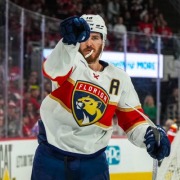
On Monday night, the Panthers star forward will make his season debut at home against the San Jose Sharks, 216 days since his last game.


Tkachuk has been recovering from offseason surgery that he had to repair a torn adductor muscle and sports hernia.


“I’m so excited to be back,” Tkachuk said at Panthers morning skate on Monday. “It was a little over five months since the surgery. Just chomping at the bit to come back.”


”[I] wasn’t coming back until I was feeling 100%. I came back not 100% one time and that’s only a playoff thing,” he laughed. “I’m happy with the whole recovery process. A lot of people back in the training room and the weight room that I have to thank for getting me back [to] 100%… Just finally feeling myself again, and happy to get back out there.”


He sustained a lower-body injury while playing for Team USA at the 4 Nations Face-Off, keeping him out of action from late February until Game 1 of Florida’s first-round playoff series against the Tampa Bay Lightning on April 22.


Florida’s loose-cannon was back for the postseason, and despite being visibly injured throughout the entirety of their run to a third straight Stanley Cup Final, Tkachuk finished the playoffs tied for the team lead in points.


The Panthers have done their best to stay afloat this season in Tkachuk’s absence. Through 47 games they are 25-19-3, keeping them just a few points out of a playoff spot in an Eastern Conference that has just one team below .500 (New York Rangers).


“He’s an incredibly important part of our team, he’s a point-per-game guy,” Panthers head coach Paul Maurice said of Tkachuk Monday morning. “He’s dynamic on the power-play. Changes how we move the puck, how we control the puck, the number of plays that we complete. That’s been true his whole career.”


Aside from Tkachuk, the Panthers have been without their captain, Aleksander Barkov, for the entire regular season after the three-time Selke winner had surgery to repair the ACL and MCL in his right knee on Sept. 26 after he was injured in Florida’s first practice of training camp. Forward Tomas Nosek is also yet to play this season due to a lower-body injury.


Olympians Seth Jones (USA) and Brad Marchand (Canada) were injured earlier this month and are still not cleared to play. Defenseman Dmitry Kulikov was injured in the third game of the season and hasn’t returned. Forward Jonah Gadjovich has also been out since October.


“It’s awesome, we’ve been waiting quite a while for this,” Panthers forward Carter Verhaeghe said of Tkachuk’s return. “He’s a huge part of our team. [There’s] nothing but excitement from us.”


Puck drop for Monday night’s game against the Sharks is set for 6 p.m. ET from Amerant Bank Arena in Sunrise, FL. The game was originally slated for 7 p.m. ET, but was moved up as the CFP (College Football Playoff) National Championship is the same night at 7:30 p.m. ET, just a few miles down the road in Miami Gardens, FL, with the local Miami Hurricanes playing in the game.