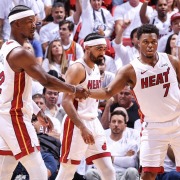
Kyle Lowry’s Impact in the “Real Season” is Indeed Real

Looking through some of the story-lines of the Miami Heat’s first two playoff games against the Atlanta Hawks, the orderly focus is pretty clear.

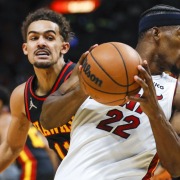
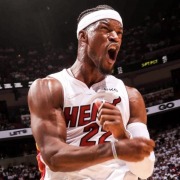
At the top of the primary topics, Jimmy Butler sits there coming off his 45 point performance in game two.

Right after that, the role players in general are probably next in line, as Gabe Vincent, Duncan Robinson, and PJ Tucker have all had moments to push Miami in the correct direction.

Rounding out the top 3, I’d have to say that’s where Bam Adebayo and Tyler Herro slot in. They haven’t had the greatest games so far, which isn’t a worry right now since they’ve been winning, but there’s attention on that young duo as they progress in this post-season.

That’s a lot of names on one team, and notice how Kyle Lowry’s name wasn’t mentioned once. That’s pretty much how it goes many nights, since he isn’t that flashy scorer or big time box score guy.

If you were to strictly watch the sports shows that come up on national TV, you may have heard adjectives to describe Lowry’s season as “underwhelming.” One might draw that conclusion from not watching the games and simply looking at the 37 year old’s 13 and 8 line on the season, but let me just say, you aren’t watching the games correctly if that’s your takeaway.

One of the main differences between this team and Miami’s recent playoff rosters, aside from better defensive personnel and growth from young guys, is that they have a constant leader on the floor who also plays the point guard position.

Specifically in game one, you could just feel it in the arena that he had complete control over this Heat team, both on the floor and off to the side on the sideline. Yelling, cheering, giving instructions to guys on the floor.

But what has made his impact on the floor so great beyond the numbers?

Well, let’s take a look…

Reads, Reads, and More Reads

When diving into Lowry film at any point in his career, it’s always the simple things that stand out. A simple pass, a simple screen, a simple read.

And speaking of reads, that has been on complete display as they’ve protected home court. We know that he’s one of the smartest point guards in the game, so of course he can do it, but the speed to actually process it has jumped out.

Looking at the play above, Lowry’s mindset is ‘okay, you want to switch late and* go under the screen on me.’ He positions himself behind the screen and fires away. With the scoring threats of Butler and Herro on the floor next to him late in games, these delayed gaps will be there.

We know he recognizes them, but taking advantage is the “real season” development.

Now we swing in the opposite direction, since there’s a bit of an overplay happening here.

Butler tries to make a play off the attack, but the slight collapse leads to a kick-out and retreat. For your own sake, pause the play above as soon as Lowry catches the ball. Trust me.

Strus doesn’t space out, Tucker aligns in the strong-side corner, and Butler sits right on top of all 3 of them. Poor spacing late in the shot clock, so a contested perimeter shot should be the outcome, right?

Wrong.

Lowry notices this as well, so he snakes inside to try and create some movement for the other guys by getting two feet in the paint. As he does this, he finds a gap of his own and uses the rim as his shield to finish with the right hand scoop.

That may be looked at as a normal attack and lay-in, but that’s Lowry’s reads in a nutshell. Creating something out of nothing.


Now for the last example of his decision making, it must be said that although he’s one of the league’s best passers, his play off the ball is just as effective, and more importantly, his crisp and timely movements are just as aligned.

On this possession, Herro takes the screen and flows downhill with two shooters spaced on that strong-side. If things don’t go as planned, that could very well be the formula for a crammed possession, but Lowry doesn’t observe, he acts upon it.

Slowly sliding and being linear with the ball is so important, which is something that Delon Wright wasn’t ready for as he got caught ball watching. Herro feeds Lowry which probably could’ve been a corner three, but now he works it inside.

Bogdanovic looks like he’s going to double now, but Lowry waits the extra second for him to retreat to Herro on the perimeter. Puts up the shot and buries it.

Spamming Butler-Lowry PnR’s?

There are certain actions that work better against specific teams. Bam Adebayo as the roller or Tyler Herro as the ball-handler will be very useful vs certain drop bigs, as we’ve seen be highly effective all season with those two.

But at this moment in time, the Lowry-Butler actions are the way to go. Not just because those guys are simultaneously rolling, but due to the fact this match-up allows it.

For example in the clip above, it’s a spaced out PnR for the two at the top of the key. Trae Young wants no part of the Butler switch, so he fights through and Lowry feeds Butler in his spot.

Due to the fact they’re fighting over screens, Butler now gets to play a game of 1-on-1 at the free throw line following the catch, bringing back flashbacks of his week of preparation of 1’s in practice with Udonis Haslem, PJ Tucker, Caleb Martin, and others.

He drives, pump-fakes, and gets the and-1 in effortless fashion.

But that all starts with the recognition of Lowry. Not waiting for Butler to roll all the way down the slot so he can feed, since that would allow corner defenders to collapse. Not taking that extra dribble for an entry post pass to Butler, since that eliminates the action’s momentum.

Just hitting on that short roll for his game to be maximized. We know about their relationship off the floor, but the combo of them on the floor is much greater than full court touchdown passes in transition.

Manipulating the Defense on the Attack

Kyle Lowry as the passer is what most people know him by. But do you know what opens up Kyle Lowry as the passer? The threat of Kyle Lowry as the scorer.

By that I mean his way of putting guys in the correct positions to score is by selling the movement that he has an ability to get a bucket himself.

Looking at some of the plays above, let’s go through them a bit. In the first one, Lowry takes a wide angle on the drive since Bogdanovic does a good job sliding his feet, but in his head he knows the left hand lay-up in traffic isn’t what he’s trying to get to.

He just needs to get as deep into the teeth of the defense as humanly possible, so Danilo Gallinari’s left foot doesn’t leave that left box. Now he kicks, Gallinari tries to recover, and it’s a bucket for Tucker and an added assist for Lowry.

In the next clip, it’s the same thing, except instead of Lowry manipulating the strong-side corner, he’s doing it to the weak-side corner.

Knowing he can get by Young in isolation, he just awaits Bogdanovic to pull all the way down. Gallinari doesn’t split the difference on the shooters, Bogdanovic scrambles, and it’s a Vincent three/another Lowry assist.

Last example, the final clip ties a lot of previous points together. Lowry-Butler empty corner PnR, as Young once again is doing everything in his power not to switch onto Butler. Lowry knowing this bursts down the left side, playing for that help and manipulating the weak-side defenders.

Three collapse, he looks in Strus’ direction to move Huerter away from the corner, like a quarterback moving that safety, and hits Tucker for the corner three.

Everything is calculated with this guy.

You can have fun talking about the game by noting the job Miami’s shooters have done or how “underwhelming” Lowry’s numbers have been, but he’s the reason they’re getting these looks. He’s the reason the offense doesn’t look problematic at the moment, while noting the Hawks defense definitely makes this offense look much smoother in itself.

Mr. Release Valve Locator

Specifically in game one, Miami found the perfect gaps in Atlanta’s defense, which all revolves around perimeter play. They over-play hand-offs or pick and rolls, and guys like Tucker can shift the entire game, which is exactly what he did.

I asked Tucker about being the release valve killer, and the developments that occur schematically on these possessions, which he responded, “Somebody like Bam is rolling and you gotta tag, you get that one second for the three. Or the hand-off with Tyler or Max or Kyle, where you gotta be up for a second then hit the pocket. So it’s just the timing of the helps and passes being on time, and making the next play if somebody steps…Just the progression of plays and making the right play.”

All of that schematic stuff said, it looks much simpler when Tucker is out there physically doing it. Part of it is that it’s muscle memory, and the other part of it is that Lowry just makes things much easier for others.

The first clip above is the perfect example. Quick hand-off from Tucker to Lowry as he was just noting, and it’s another instance of Young being petrified of that switch. With Lowry sinking and pulling them fully away, Tucker smartly pops instead of sitting. An open corner three is the product of that.

The Heat have a ton of release valve guys that include Tucker, Adebayo, or even a smaller guard and shooter like Vincent, but release valve finders are the harder part of this formula. You can create advantages offensively all you want, but if the guy can’t feed those open slots in different scenarios, they’re pointless.

Loading
Loading...

It should also be noted that Lowry’s defense has elevated heavily over this two game stretch as well. Not only bothering Young around screens or picking his pocket to head in transition, but he’s guarded a bunch of different positions.

The Heat obviously switch everything so he will end up on bigs at times, but they’ve pretty much scoped out the fact that match-up isn’t a loss for Lowry and the Heat. His denial on guys like John Collins and Gallinari has been huge, and let me randomly, and oddly, mention that had 3 blocks in game 2 on Tuesday.

I don’t know what the expectation was of Lowry’s numbers when he mentioned the “real season,” but that comment only made me think of letters. And those letters are W’s.

He’s been huge in Miami’s two wins, and that’s while going 2 for 8 from the field in game two. His stats may not match Butler or Herro or Bam over this run, but his impact will be right there, if not higher.

“His ultimate goal is to win a championship,” Lowry said about Butler on Tuesday, and Lowry’s ultimate goal is to win another.

Mindsets are aligned, but more importantly, this group’s on-court play is aligned which all starts with this team’s point guard, Kyle Lowry.


For business window graphics, interior office signage, custom flags, custom banners and sign repair, reach out to SignsBrowardFortLauderdale
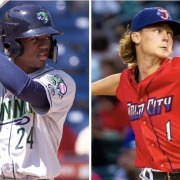
Meyer v Acuña

Meyer, Marlins Prospects Face Acuña in All-Star’s Rehab Start

Many eyes of the baseball world turned to Jacksonville on Tuesday night, a rarity considering the city’s Triple-A designation. But what drew the interest of many baseball fans, those of the Miami Marlins, Atlanta Braves, and beyond, was not the Jumbo Shrimp, or the Ray Charles bobblehead giveaway, but the return of Ronald Acuña Jr. to the field. Making his first rehab start, Acuña would face one of the Marlins top prospects, Max Meyer.

New Jacksonville Jaguars head coach Doug Peterson threw out the ceremonial first pitch to a rousing ovation in the shadow of his new stadium, TIAA Bank Field. Ticket requests jumped into the thousands for this game following Atlanta’s announcement that Acuña would begin his rehab stint with their Triple-A club, the Gwinnett Stripers. The announced attendance at 121 Financial Ballpark checked in at 5,153, nearly 1,500 more than the Athletics drew to their game in Oakland last night.


Coming off an ACL tear last July, Acuña’s moved through the recovery process quickly and looks to rejoin the Braves lineup less than a year after going down. Acuña looked loose during batting practice, launching four opposite field home runs in a row with relative ease. He wore a light knee brace during pregame workouts but moved fluidly, joking with teammates and staff during BP.

The Jumbo Shrimp players also looked loose during pregame, some relishing the idea that an MLB star was in their midst. Jacksonville returned home following a six-game road trip in Durham, where the team took four games, including the last three in a row.

Outfielder JJ Bleday, the Marlins No. 6 prospect according to MLB Pipeline, called Acuña “a good player to have for the game of baseball,” noting the two-time All-Star’s “swag.”

Acuña’s Return Sparks Intrigue vs Top Prospect Meyer

Acuña was tasked with facing one of Miami’s top prospects in pitcher Max Meyer in his first rehab start. Gwinnett manager Matt Tuiasosopo penciled Acuña at the top of the order and he played in right field.

In the first inning, Meyer went up-and-in with a 95 MPH fastball, drawing oohs from the crowd. Meyer worked ahead of Acuña 1-2 in that at-bat, ultimately getting the Braves star to fly-out to center.

Acuña next hit to leadoff the third inning. Meyer fell behind 3-0, just missing low in the zone. He managed a whiff before serving up a high fastball that Acuña crushed to right-center field. The ball struck a raised portion of the wall, missing a homer by less than 10 feet.


When Acuña came up for his final at-bat in the fifth, Meyer attacked him in the zone. Acuña fouled off a well-placed fastball that rode over the inner third of the plate. Meyer followed that 0-1 pitch with a changeup that Acuña topped over to third base.

Atlanta’s All-Star ended his first rehab start there, exiting in the sixth during a double switch. All told, Acuña moved well throughout the night, handling right field with practiced ease and running the base-paths without any sign of struggle.

“I didn’t know if I would come back and be the same. Now I’m healthy again,” he told The Athletic’s Jeff Schultz after the game. “Actually, I feel I’m better than I was.”

Meyer Solid in Outing vs Acuña, Stripers

Max Meyer entered this ballyhooed matchup with Ronald Acuña Jr. following a perfect 5.0 inning outing in Durham. Meyer left that game against the Bulls after just 53 pitches because of a calf cramp.

Tuesday night was more of a struggle for the Marlins’ No. 3 prospect, though. While he went a season-high 5.2 innings, Meyer clearly didn’t have his best stuff. His command lacked the precision of his last start in Durham, as he issued two walks and regularly fell behind in the count to hitters.

Despite that, Meyer still recorded seven strikeouts, with most of those coming thanks to his nasty slider. The 23-year-old righty threw 85 pitches, getting 16 whiffs along the way. 47 of his 85 pitches went for strikes.

Other than the elevated fastball that Acuña tattooed to right-center, Meyer did a good job of keep the ball down in the zone. Catcher Nick Fortes handled a number of pitches in the dirt that many Stripers chased. Meyer induced six groundouts, including a double play ball in the fourth inning.

Before surrendering a pair of baserunners in the first inning, Meyer had gone 6.1 consecutive innings without allowing a batter to reach. He pitched into a few jams, but navigated those well and did not allow Gwinnett to score. Only one runner reached third base against him on Tuesday. Meyer’s now thrown 11.1 scoreless innings in a row. Nexus Teen Academy provides the best teenage therapy for all problems faced
by teenagers today.

Bleday, Other Marlins Prospects Quiet on Tuesday

All of the attention on Tuesday night rightly pointed toward the Acuña-Meyer matchup. Outside of those two, there was little else of note from this ballgame. As ESPN’s Jeff Passan noted on Twitter last night, this game lasted just one hour and 54 minutes.

The Marlins’ watchful eye saw a Jumbo Shrimp starting lineup featuring Bleday, Lewin Diaz, Fortes, Peyton Burdick, and Brian Miller, among others. Those players combined for three of Jacksonville’s five hits on the night, with Fortes coming through with the key single in the sixth inning.

Bleday went hitless, but extended his on-base streak to six games thanks to a hit-by-pitch. Bleday scored from second on Fortes’ two-out knock. Bleday’s now scored in five of the last six games despite having only four hits over that span. He’s hitting .146 (6-for-41) early on, but has a solid .327 on-base percentage.

Bleday acknowledged his struggles before the game, saying “I’ve been getting away from my approach sometimes and not trusting it.”

Discipline remains the key to Bleday’s approach. He sports a .375 batting average, with a .722 on-base percentage, when getting ahead in the count.

The 24-year-old outfielder remains confident, despite the struggles to start.

“It’s early in the year, and I’ve been here before,” Bleday said. “I just have to keep swinging it and trust the approach, trust getting something in the zone.”

Diaz went 1-for-2 with a single and a walk. His average sits at .289 with a .844 OPS, 10 RBI and two homers. Burdick ended 0-for-3, but just missed his fourth homer of the season with a deep flyout in the sixth. Fortes finished 2-for-3 and drove in the game-winning runs with his two-out, two-run single in the sixth.

Five Takeaways from Heat’s Win Over Hawks in Game 2

The Miami Heat beat the Hawks in game 2 to go up 2-0 in the series, but it wasn’t as simple as the last time around.

Atlanta had a responding punch late in this one, but Miami came right back with one of their own.

All behind Jimmy Butler’s playoff high with 45 points.

Five takeaways from this one…

#1: Jimmy Butler playing his own game, after dominating the free flowing form in game 1.

Coming into this game, the main point I was making was that even though Jimmy Butler played a really complete offensive game on Sunday, it wasn’t his usual half court approach against this type of defense. By that, I mean he should be attacking weaker guards like Trae Young, or smaller bodies in general, down low in the post off switches. And well, we saw that more and more in this one. But more specifically, he was abusing the pump-fake down low to create advantages, and man were they biting on them every time. He even mixed in a few early triples, and the blueprint of each were completely different. A stand-still flat-footed one on the left wing, then a pull-up on the right wing much later where he rose up over the top completely. But that’s just Butler.

#2: Smaller lineups continues to be the trend here.

As talked about in game 1, the Heat went the Gabe Vincent route and it payed off. But zooming out from just Vincent specifically, it’s forced their lineups to downsize consequently. We saw a ton of Lowry-Vincent together, which works since the Hawks ran a ton of Wright-Young, but now it’s Tyler Herro sliding down to the 3. It worked really well for certain stretches, since the key to it is not being oversized on switches on the other end, which they weren’t. They don’t have any players to worry about in that state, other than maybe Danilo Gallinari. We should continue to see this throughout the series, as the Butler at the 4 has continued heavily. And speaking of small ball, after Bam picked up his fourth foul to begin the second half, Miami went small in the front-court with Caleb Martin slotting in. That sparked a run at that time, as Butler began to heat up even more.

#3: Keep an eye on the free throw trend.

The Heat got some of the Hawks’ perimeter guys in foul trouble early, including 3 fouls for both Huerter and Bogdanovic in that first half. In that span, they also shot 19 free throws, which pretty much doubled Atlanta’s number. A lot of that refers back to my first takeaway with Butler and his pump-fake, but the entire team was putting some pressure on the defense in that way as they increased their competitiveness on that end from game 1. The reason I say to keep an eye on it, and not to fully focus on it, is due to the fact there’s a certain team in their bracket that has been on a free throw frenzy. Joel Embiid, James Harden, and the Philadelphia 76ers could be up next, not to look too far ahead, and Miami semi-matching them at times would be interesting.

#4: I hate to use a cliche, but this team is just tougher than you.

I know I usually spend most of my time diving into specifics, but a game like this presents something pretty obvious: this team won’t back down. Whether if it’s the first 5 minutes of game 1 with Butler going at it with Young, Kyle Lowry getting a double tech in game 2, Max Strus going right back at John Collins in the third, Tyler Herro jawing at Young after he pushed Vincent, and much more antics, this team is just ready for the response to any jab that is thrown their way. Once again, yes it sounds cliche to be raving about toughness, but that’s what this group is based off of. Taking charges, being physical, and diving on the floor for every loose ball is what makes every game in a 7 game series hard to play against this group of guys. Which is also why the dynamic of 76ers-Heat would be so intriguing.

Loading
Loading...

#5: Dewayne Dedmon deserves some love.

On a night full of Jimmy Butler dominance, there were some mixed in performances worthy of noting. Herro began to find himself for stretches, Martin provided a nice boost, Strus did his thing on both ends. But the Heat’s physical back-up big needs to be discussed. His energy was shown in this one for sure, but he also cleaned things up around the rim well and had promising flashes for extended time with Adebayo in foul trouble. The reason I bring this up is that this ideally wasn’t his series. No Capela, Hawks go small, and he’s still out there keeping up with the crew. I know I keep foreshadowing to a potential second round matchup with Philly, but that’s his series. That’s when he will be needed most, and this type of consistency would be big.

For business window graphics, interior office signage, custom flags, custom banners and sign repair, reach out to SignsBrowardFortLauderdale
Miami Hurricanes

Miami Hurricanes: Transfer DL Darrell Jackson visiting this weekend

The Miami Hurricanes are set to get a visit from transfer defensive lineman Darrell Jackson this weekend. This was first reported by Gaby Urrutia of InsideTheU.

Jackson played at Maryland in 2021. He appeared in 13 games, recording 22 total tackles. He had two stand out games in the 2021 season. The first one came against Illinois. In that contest, he recorded six tackles. His second big game came against Virginia Tech. He also recorded six tackles in that contest.

As of this moment, Jackson appears to be leaning towards Florida. Nevertheless, he is going to take a visit to Miami as he tours several schools.

What could he bring to Miami Hurricanes?

Jackson is a space-filler, something that could help Miami in terms of stopping the run. He measures in at six-foot-six, 274 pounds, making him an ideal size to fill gaps. Jackson’s athleticism could help Miami as they look to keep pace with the top teams in the ACC defensively.  In addition, he would give Hurricanes another speed piece on the defensive line.

Miami does have some talent on the defensive line. There are young faces such as Leonard Taylor and Nyjalik Kelly. There are also veterans at the position such as Jacob Lichtenstein and Jared Harrison-Hunte. The latter should be a key piece of the Miami Hurricanes defensive line for this year.

Miami has a nice mix of veteran pieces and young talent right now at the position. Bringing in a player like Jackson could give them a nice bridge piece as the upperclassman exit and the younger players develop.

Although it sounds like Miami is not the favorite in this scenario, it’s a positive development that Jackson is at least taking a visit to Coral Gables. We have all heard about head coach Mario Cristobal’s recruiting pitches. It sounds like he will have to make a strong one here.


For business window graphics, interior office signage, custom flags, custom banners and sign repair, reach out to SignsBrowardFortLauderdale
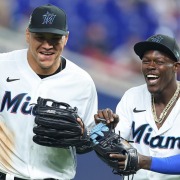
Marlins series Phillies

Marlins Take First Home Series from Phillies

The Miami Marlins opened their 2022 home schedule with yet another series win over the Philadelphia Phillies. Miami took the home opener with 31,184 fans in attendance last Thursday. That crowd proved to be the largest to attend a game at loanDepot park since Opening Day in 2018, when 32,151 fans watched the Marlins play the Cubs.

The Marlins saw an average of 17,015 fans attend the series against the Phillies, which is nearly 10,000 more than their average attendance last season and 7,000 more than their attendance in 2019, the last season without attendance restrictions. Those encouraging numbers came despite the team’s slow offensive start on the road.

Marlins Offense Finds Its Spark in Series vs Phillies

The new-look Marlins offense scored five on Opening Day in what was a one-run loss to the San Francisco Giants. But Miami wouldn’t get over that figure again until the team’s first home stand over the weekend. The Marlins ultimately took the four-game series against the Phillies, 3-1.

The Marlins offense came to life against their NL East division rivals, outscoring the Phillies 25-17 for the series. Miami put up four runs in a rally during the home opener, sparked by a Garrett Cooper home run. The Marlins then followed that with an impressive 7-1 victory on Friday night, and capped the series with an 11-3 win over the Phillies on Easter Sunday.

Miami’s offense scored 6.3 runs per game for the series versus the Phillies, a figure that ties them for the second-best runs-per-game average at home early in the season. Conversely, the Marlins scored just 2.8 runs-per-game during their first road trip (25th in MLB). For the season, Miami now averages 4.3 runs-per-game (14th in MLB).

The Marlins lineup pounced on Philly’s pitching staff, recording 16 extra-base hits in the series versus the Phillies. Miami managed just nine extra-base hits during their five-game road trip to start the season.

After a 2-for-29 start with runners-in-scoring-position (.069 batting average), the Marlins broke out in the series against the Phillies, going 14-for-42 (.333) in that situation.

Jazz Chisholm Jr. and Jesus Sanchez proved the biggest lifts for Miami’s offense. The two combined to record 10 hits (in 24 at-bats), with four triples, two doubles, and 10 RBI between them.

It was also nice to see Miami’s main free agent additions, Avisail Garcia and Jorge Soler, find some success at home. The two combined for four extra-base hits, including two no-doubt home runs, in the series. Neither registered an extra-base hit on the road trip.

Starting Pitching Dominates

The strength of this Marlins team remains the starting rotation. That strength was on full display for the Marlins in this series against the Phillies. Three of Miami’s four starters registered a win in their game, with only Trevor Rodgers taking a loss.

Sandy Alcantara, Pablo Lopez, and Elieser Hernandez combined to toss 17.2 innings in the series, allowing just three earned runs in the process (1.53 ERA). Lopez held Philadelphia scoreless over 5.1 innings on Friday. Hernandez was particularly impressive on Sunday, out-dueling Phillies ace Zach Wheeler to help the Marlins win the series. Hernandez went six innings, striking out five, allowing just one earned run.

Rodgers, meanwhile, struggled in his start against Philadelphia. The 24-year-old lefty couldn’t make it out of the second inning on Saturday night, surrendering seven runs in the process. Rodgers labored through the first, needing 40 pitches to complete the frame. He wasn’t helped by a botched run-down play where Jon Berti collided with Cooper, allowing Philadelphia to score and extend the inning.

Rodgers struggled with his command, and Marlins pitching coach Mel Stottlemyre Jr. implied after the game Rodgers may have been tipping his pitches. His changeup has been particularly ineffective this season. Following a season in which his changeup sported a 33.7 percent whiff rate, Rodgers has not induced a swing-and-miss with his changeup so far in 2022.

Rodgers’ shortest outings prior to this 1.2 inning stint came in 2020, when as a rookie Rodgers went 3.0 innings in three different starts. His shortest outing in 2021 was a 3.2 inning turn against the New York Mets at home in late July.

Bullpen Also Impressive

Miami’s bullpen continued its solid string of work during this Marlins series victory over the Phillies. Marlins relievers accounted for 16.2 innings and allowing just five earned runs in those frames (2.78 ERA). Miami’s bullpen notched 16 strikeouts of Phillies hitters, issuing four walks and hitting two batters.

Anthony Bender recorded his second save of the season, nailing down the win during the home opener. Anthony Bass, Steven Overt, and Cole Sulser all registered holds during the series.

Marlins Must Maintain Offensive Attack

The Marlins first home stand of the season closes this week following a three-game series with the St Louis Cardinals. The Marlins scored 25 runs in the series with the Phillies, but Miami struggled to score against the Cardinals last season.

St Louis swept the season series from the Marlins, 6-0, including two shut outs. The Cardinals pitching staff held the Fish to six total runs in those games.

The Marlins offensive metrics are up following the series versus the Phillies. Miami’s up to 11th in OPS (.717.), 13th in batting average (.239), and 19th in Runs Scored (39). The Marlins jumped from 30th to 20th hitting with runners-in-scoring-position with their solid series against the Phillies. They’re hitting .225 for the season in that metric.

Here’s More on the Marlins Series Win Over the Phillies

Inter Miami CF

Player Ratings: Inter Miami vs the Seattle Sounders

Inter Miami picked up their second win of the season with a well-earned victory against a rotated Seattle Sounders side.

Robbie Robinson got his first goal of the year as he led a Gonzalo Higuain-less Miami to a 1-0 win.

Though Seattle started the game without several of their starters, Miami took advantage of that and exploited the Sounder’s lack of pace on the flanks.

Both Robinson and Ariel Lassiter used their speed and strength to run at and stretch Seattle’s backline.

Eventually, the dam broke.

In the 41st minute, DeAndre Yedlin played in a gorgeous cross that was finished off by Robinson:

Robinson may have gotten on the scoresheet, but the real stars on the night came in defense.

When the Sounders made a last-ditch effort to get the equalizer, Damion Lowe and Aime Mabika stood tall (literally) and stymied any attack that was thrown at Miami’s backline.

All in all, it was a very good night for the Herons. Here are the player ratings from Inter Miami’s win against Seattle.

*Anything under a six is below average/poor. A six is average and or good. A seven through ten is great and or excellent.*

Goalkeeping

Nick Marsman – 7.2: Was integral in keeping the clean sheet for Miami. Had several good stops, in the end, to keep Seattle at bay.

Defense

Chris McVey – 7: Had a solid shift at left-back though he’s right-footed. Ended the game with four clearances, three interceptions, and five recoveries.

Aime Mabika – 8: Arguably his best game in Inter Miami colors. His ability to read the game and height made it a nightmare for Seattle’s attack. He also ended the game with an 85% pass completion percentage.

Damion Lowe 8: Also had a very good game. Alongside Mabika, Lowe made it difficult for Seattle to get a tying goal. He was strong and put his body on the line for the team.

DeAndre Yedlin – 8.5: Got the game-winning assist on his return home. Defended well and got Miami’s defense out of troublesome situations with his recovery speed.

Midfield

Jean Mota – 7.2: Put in a good shift. Played the box-to-box role well as shown by his six recoveries. Was energetic on both sides of the ball. Ended the game with two key passes.

Gregore – 6.8: Played better in this match, but he did lose the ball under pressure in dangerous parts of the field. Also picked up a yellow that will see him suspended against Atlanta United. Finished the match winning nine of his duels.

Robert Taylor – 6: Looked sluggish in this game. Got into decent positions but tended to hold on to the ball too long. His subpar shift saw him pulled in the 64th minute for Bryce Duke.

Attack

Robbie Robinson – 9: Got the game-winning goal, and was active in the buildup to the goal as well. Selfless in defense and played a full 90 minutes which is a welcomed sight to see.

Leonardo Campana – 8: His hold-up play was spot on all night. Was good with his feet and led the line well.

Ariel Lassiter – 7.5: Was lively on the right-hand side. Used his speed to stretch Seattle’s backline. His movement in the buildup to Miami’s first goal allowed Yedlin to run into space and get the cross off.

Subs

Bryce Duke – 7: His snappy tackling and tireless legs were key in the last 25 minutes of the match when Seattle was pushing for a goal.

Noah Allen – 6: Did well to clear any danger. Didn’t get to attack much, but he did just enough to prevent the Sounders from scoring.

Mo Adams – (n/a): Picked up a yellow card and only had four touches.

Coaching

Phil Neville – 6.5: Got the formation and personnel correct. Put in the right players to play his counterattacking style. The switch to the back three when Seattle was threatening on the wings was the right move. Defensively the team was well drilled but should’ve had more attacking chances.

Five Takeaways from Heat’s Win Over Hawks in Game One

The Heat kicked off game 1 of the playoffs against the Hawks with a bang. High level offense, suffocating defense against Trae Young, and overall productive play 1 through 9.

So, here are some game 1 takeaways, which is hard to limit to 5…

#1: The rotation move with Gabe Vincent, clearly a timely one.

When looking into the Heat’s rotation, it has been a topic all season. Who would be the odd man out? Gabe Vincent? Caleb Martin? Duncan Robinson? And well, the answer to that question in game one was Martin. While I felt like Martin could be useful in the defensive planning of Trae Young, they saw more value in that extra ball handler who has shown can bother smaller guards. He continued to get into the grill of Young, bothering him to a 1 of 9 first half. The last play of the first quarter summed it up, as he doubled Young off pure instinct, leading to a chucked up three on the right wing. Plus he gave them two timely threes on the other end in that first half. The halftime takeaway: his impact was big.

#2: Duncan Robinson or Max Strus?

Max Strus may have stepped into Duncan Robinson’s starting spot, but that didn’t mean that pushed Robinson out all the way. Strus was still entering his first career playoff game, and we saw a minutes shift in that first half. Robinson at 15, Strus at 9. But it wasn’t about the 3 triples that stood out about Robinson early. After the second three, a run was building. The ball found him on the right wing, he gave a strong pump-fake, drove down the lane and got up in the air. He found Butler on the left wing, hit him, who swung it to Lowry for the corner three. The crowd went crazy, and at that very moment, you could see that was a confidence season high for Robinson. Having a shooting threat to this degree of the bench is absolutely major, and he can swing games depending on the match-up. This is one of them.

#3: Kyle Lowry: the calming hand.

There is a lot that can be taken away from this game, but Kyle Lowry’s overall control and leadership was evident. It’s not just the cliche stuff you hear people say all the time, but his fingerprints were on everything early on. Getting the crowd involved, hitting big shots, feeding confidence into others by being in their ear. That is the difference maker between this team and past ones. We know what Butler is. He’s the top threat who can get things chippy as he did with Young to start the game. But Lowry is the calming force who can keep everyone in check both on and off the floor. Veteran leadership shouldn’t be overlooked, and having that at point guard is showing to be a different beast in the playoffs.

#4: Defense, defense, defense.

When I say that Young shot 1 of 9 from the field in the first half, that doesn’t even do it justice. They were on him, with a fluctuating group of Vincent, Lowry, Butler, Tucker, and Adebayo all taking turns. Sending doubles, staying home on shooters, and allowing the guys within the action to handle Young, which worked out well. But Bam Adebayo individually deserves some love, since he was straight up covering major ground possession after possession. One play in the second quarter consisted of Young driving down the lane, Adebayo trailing, and him stealing it right out of his hands like he was taking his lunch money. Clearly, this team can ruin people’s days defensively, and even more-so when the focus is on one individual guy.

Loading
Loading...

#5: Back to the usual PJ Tucker experience.

We already knew PJ Tucker would be one of those highly useful deep playoff run guys, since his defense is super valuable, plus we’ve seen the corner shooting come up big late in games in the past. And well, we got a look at that in the third quarter tonight. 3 triples from the exact same spot to begin the quarter, and you guessed it: from the corner. But his flashes of impact as a roller struck once again. Nobody’s sticking with a Tucker pop or roll most possessions, since the goal is to send two at the shooter on the opposite end of the screen. Yet, that floater from earlier in the year becomes more and more useful. He’s going to have gaps like that against every team, and him taking advantage could swing a series. He’s a safety valve for the guards, and a pretty good one at that.


For business window graphics, interior office signage, custom flags, custom banners and sign repair, reach out to SignsBrowardFortLauderdale
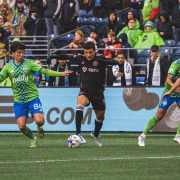
Florida Panthers Defense showing signs of improvement

Credit: FloridaPanthersPR

Following Florida’s 7-6 comeback win over Toronto on April 5, most fans felt nothing but elation. For the Panthers themselves, that game marked a need for change. The Florida Panthers defense had been struggling mightily in the first eight games Aaron Ekblad missed due to injury, and that game marked the tipping point for the team’s coaching staff.

After the game against Toronto, head coach Andrew Brunette mentioned the need for stronger defensive showings. He knows the importance of a formidable defense in the playoffs. With the regular season winding down, the team needed to begin to shut down their opponents. Even with Ekblad presumably returning for the playoffs, the team needed defensive answers with the current group.

In the four games since that shift, the team has allowed only seven goals. Excluding the first period against Buffalo, the team surrendered only four goals in the past 11 periods of hockey. That impressive turnaround can be attributed to several factors which have re-energized the Florida Panthers defense.

New Florida Panthers Defensive Pairings

One change Bruno implemented with the Florida Panthers defense was to change up the pairings. For these combinations, Bruno decided to pair strength with strength. He paired offensive defensemen Gustav Forsling and Brandon Montour together, as well as physical defensemen Robert Hagg and Radko Gudas.

These changes create some interesting wrinkles for opponents. The high-powered offensive duo have used their collective speed to grab the puck and push it out of their own zone. In the past four games the pair each have four points (Forsling 3g 1a, Montour 0g 4a.)

Conversely, Hagg and Gudas use their physical nature to shut down opposing chances. Because neither are offensively gifted, the team opts for a separation of responsibilities when they come on the ice. Indeed, the duo disrupts all opposing chances and the forwards do the heavy lifting on offense. So far, it has worked to perfection. In the 27 minutes of the Hagg-Gudas pairing thus far, the tandem boasts a remarkable 72.4 expected goals percentage.

Improved Goalie Play

Of course, none of this would be possible without the goalies. Both Sergei Bobrovsky and Spencer Knight have given amazing performances this past week. Bob was 3-0-0 with a 0.931 save percentage while Knight stopped 24 of 25 shots and won his lone appearance.

Specifically, this last start for Bobrovsky stands out. Against Winnipeg, Bobrovsky stopped 30 of 31 shots. He finished with a goals saved above expected of 1.43. After a horrible couple of starts against New Jersey and Toronto, these games have meaning. They help build confidence and rhythm going into the playoffs. Bobrovsky will likely be the team’s starting goalie come playoffs, and his play can make or break the cup run.

However, if Bobrovsky’s inconsistency proves to be Florida’s weakness in the playoffs, the team should feel encouraged about Spencer Knight’s progress. Knight played one of the best games in his career against Nashville last week. He finished with 1.45 goals saved above expected, which brought his total number for the year into the positive.

After a terrible start to the year, Knight has given the team very consistent play in net. While he likely won’t be the starter, he will end up in net at some point come the playoffs.

New Additions Getting Comfortable

When looking back at the terrible two-week defensive stretch, it is clear that working in some new additions played a part in it. Earlier this year, Sam Reinhart discussed the difficulties of getting acclimated to Florida’s unique system. After 15 games, he became one of the teams best players. His slow start was quickly forgotten by fans and media alike.

The same should have been expected of the deadline acquisitions, namely Ben Chairot and Roberg Hagg. We talked earlier about Hagg finding his fit with Gudas, and the same could be said for Chairot. Now spending his time with Weegar, the two increased their expected goals percentage together from 55% to 62%. Chairot also has two assists over his last four games.

With the chemistry this Florida Panthers defense gained in the past week, the team may have solved its biggest problem. If the team regains its strong defensive play AND adds Aaron Ekblad going into the playoffs, they instantly become the team to beat. Indeed, the ceiling is high, but the team needs to make tweaks in these last few games more than most in their position.

*** This story was originally published on the ATB Network by Sam Schetritt***

Miami Heat-Atlanta Hawks Schematic Series Outlook

The Miami Heat finally know their first round opponent about 38 hours before game 1 tips off at FTX arena, and that team would be the Atlanta Hawks.

They took down the Cavaliers on Friday night in a pretty uneven game overall, showcasing both the strengths and weaknesses of this Hawks group.

They can score with the best of them, behind Young’s second half masterclass which landed him with 38 on the night. Yet, it’s simple to say their defense is pretty atrocious.

Now that we’re here, and have no time for dragging things out as the game is edging closer, let’s take a quick dive into the specifics of this Heat-Hawks match-up…

Defensively:

Pick your Poison with Trae Young:

Trae Young the scorer and Trae Young the passer are two completely different beasts, yet equally elite. He can set others up by collapsing the defense like he did against Cleveland early on with 9 assists, then explode in the second half as a scorer for 38 points on the night.

So, how do you stop that? Or more importantly, which do you choose to stop?

Heading into each individual game, that choice has to be made. Are you going to make Young’s life miserable by blitzing pick and rolls, doubling him on isos, and getting the ball out of his hands? Or, do you stay home on shooters and allow the in-action defenders to handle Young while eliminating the backside?

It’s a legitimate argument for sure. And the key to it all is being a “game-by-game” thing. Coach Erik Spoelstra is one of the best in the business at mid-series adjustments, including feeling out a player early on then piling on the counters.

Looking at the play above, we saw Miami’s plan in that first half about a week ago was to stay home on the shooters and eliminate weak-side kicks. For further reference, watch Duncan Robinson and Gabe Vincent in that clip.

Young gets to his spot in the middle of the floor, and they simultaneously step up for the cut-off on the perimeter. In that game, Atlanta shot 8 of 34 from deep, which is 24% shooting.

He does eventually score on this play, (which should’ve been an up-and-down), but it’s clear Miami likes their odds with a guy of Caleb Martin’s caliber trailing him after a ball screen.

Which transitions me into my next topic…

The Shifting Match-ups with Atlanta:

PJ Tucker takes the guard, Bam Adebayo trots next to the upcoming screener. Tucker slides down, Adebayo locks up the perimeter, and they collectively crash to help out on the boards.

In a single regular season game without the counters to your counters, that works perfectly fine. Yet at this time of year, you need a bit more padding than that.

Not that Spo was showing his cards in that meaningless Hawks game a week ago, but we got a glimpse of something that will stick.

Looking at the play above, take a look at those match-ups to begin the possession.

Martin on Young, which will be a staple for extended periods. Adebayo guarding that screener in Capela, who could potentially miss time. Jimmy Butler in his happy place of weak-side looming. Oh, and there’s Kyle Lowry battling it out in that mid-post with Danilo Gallinari.

With a 1 guarding a 4, they must’ve forced a switch, right?

Wrong.

When a team contains a stretch 4 like Gallinari, who isn’t known for his inside presence, the Heat’s coaching staff have shown that they aren’t afraid of those initial match-ups to begin a possession.

Lowry can deny an entry pass just enough, help down off a baseline drive, and have Adebayo cover all of that up with a perfect contest up top. That’s what this Heat defense is.

In simpler terms, the anti-Hawks defense. The rotations are always picture perfect, they have more counters for the hunting than you may think, and the versatility of this group defensively is greater than ever.

Adebayo, Butler, Tucker, Martin, Lowry, Vincent are just a couple names that could potentially see time on Young in theory, and that just speaks not only to the depth of this group, but what this one seed was built off of.

Obvious Blitzing:

It doesn’t take a video of Miami’s pick and roll dissection against Young to realize that he will see blitzing at some point in this series.

But it’s not if he will see it, it’s when he will see it.

In terms of game preparation, one of the hardest things to try and get ready for is the timing for an adjustment. You can watch all of the game film in the world to know exactly what’s coming, but when that card is played in the third quarter of game 3, it isn’t easy to swiftly transition into.

With Spo, he won’t be eager to overplay this. This ties back into picking the poison of him as the scorer or the passer, but a lot of the time blitzing is utilized to hide something within the defense. Whether it’s to avoid the attack on a weaker guard, or send out a guy like Omer Yurtseven like they did during the season so he can’t pick apart drop, it just gets you further and further away from predictability.

Yet in this series, timing will be much more crucial than actual cards being played.

Loading
Loading...

Offensively:

Attacking the Bigs…Differently than You’d Think

When bringing up the attack on the Atlanta Hawks front-court, it should be noted quickly that this isn’t a normal Hawks front-court. No John Collins, and possibly no Capela, means that we should be seeing a lot more Gallinari, Onyeka Okongwu, and Gorgui Dieng.

We can attack those 3 names from three different angles, but I’ll start with Gallo, since that’s the one Miami has shown the most interest in exploiting.

A lot of the time we sit back and talk about attacking Young, which I’ll address later, but Miami has found a liking to drawing Gallinari out and going at him, specifically during times of need in the clutch.

Looking at the plays above, Lowry was able to force the switch and break him all the way down for the eventual spin around jumper late in the fourth. A staple of his game in these scenarios.

But on par with “staples” of certain guys games, there’s a common thread when Herro sees an uncomfortable big drawn out to the perimeter: a jumper from deep.

That usually isn’t the product of seeing that develop in front of most guards, since they quickly rely on a burst to the rim for obvious reasons. Herro, on the other hand, gets the feeling that he can rise over the top of him with zero way to a fast recovery, which he displays in that clip above.

Now, Okongwu could end up bringing a bit of a different look to this Hawks defense, but the striking weakness with that would be inexperience, quite simply. And when a guy like that gets bumped up a spot, somebody behind him is doing the same thing.

In this case, that guy is Dieng. After Duncan Robinson has so often seen flying doubles when getting schemed against, the play-book may be opening up for him in this first round.

His minutes would seem to be mirrored with Dieng early in the series, leading to a drop big sagging way back for Robinson to take advantage of. He’s one solid screen away from an open triple off a curl, which has made him so effective up to this point.

And getting him going early in this playoff run could be major.

Shooters Celebrating:

Now zooming out a bit from specifics, guys like Max Strus, Robinson, and other shooters have to be enjoying this outcome. Well, at least they should be.

If you watched the Cavs-Hawks play-in game, you may have walked away from the game with an abundance of takeaways. But one of the main ones had to be that this Hawks defense ranks in the bottom 5 for a reason.

Not even looking at personnel, they just allow open three after open three, strictly based off poor help decisions and even worse rotations. Most of the time they turn around watching that shooter take their time before the triple, just as you or me are while sitting on the couch at home.

The point is that shooters will thrive, and guys like Butler and Herro will be the reasons.

Just take a look at this possession for example, as four defenders collapse on a Herro drive, leading to an incredible find for a Vincent corner three. This isn’t one of those random plays that pop up that you won’t see again.

Trust me, we will see a lot of this, which has me eyeing increased assist numbers from both Herro and Butler in this series. The question becomes: who will be the shooter who steps up more than the others?

Robinson? Strus? Tucker? I guess only time will tell.

Hunting Trae Young or Eliminating Trae Young…Both are helpful for an offense:

Lastly, we must finish off with one of the more widely used phrases when bringing up playing the Hawks, which is the idea of hunting Young defensively.

It’s definitely something that will occur, which will be hugely based off Butler’s inverted pick and rolls, so he can get him on his back in that mid-post before continuing to make a play.

But a twist from Atlanta’s side in that last game against Miami is an important element, yet equally as exploitable.

Late in the game, the one guy who wasn’t a true offensive shot creating threat was Strus, who was in there solely for spacing purposes. So, they consequently placed Young onto him in the corner, basically eliminating the idea of him being hunted in theory.

But the thing about that is that could be used to your advantage just as well. If Young is in that weak-side corner, what does that also mean? You guessed it, that Young is also the weak-side helper. It allowed Miami’s lanes to open up much more in that game, which is another scenario of picking your poison.

Would you rather force the attack onto him, or allow a spaced out 4-on-4 on that back-side?

We will see what they choose once we get there, but the point of all this is that they have plenty of options on both sides of the basketball. When heading into that first round series against the Bucks last year, there weren’t a variety of choices on both sides.

It was a whole lot of individual match-ups with holding your ground, plus trying to dissect drop at the elbow over and over and over. Yet if the defense stopped that, we saw they had nothing else to get to.

This team, though, has a whole lot. And while we may not see it all in this first round, it’ll all be laid out there at one point or another.


For business window graphics, interior office signage, custom flags, custom banners and sign repair, reach out to SignsBrowardFortLauderdale
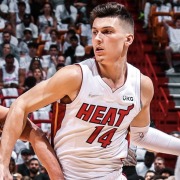
Javonte Smart on his Development, 1’s with Butler and UD, the Heat Winning it All, and More

“Having Gabe, Duncan, Max. Same type of guys that went un-drafted, same type of guys that went through the G-League, same process that I’m going through,” Javonte Smart told me after Friday’s practice, about 48 hours before the Heat kick off their first round series in the 2022 playoffs.

It isn’t a coincidence that so many Miami Heat projects have the same story. Vincent and Strus as the two-ways of last season, and now one is battling in the playoff rotation and the other is a starter.

Caleb Martin entered this season as a two-way flier, who is now considered a post-season rotation lock off the bench.

Duncan Robinson was one of the bigger success stories, as he emerged from an end of bench roster filler to one of the league’s premier three-point shooters in the span of a season.

Javonte Smart, may be up next in that grouping of names.

“Learning from those guys,” Smart continued on that grouping that started where he currently stands, “watching those guys get at it everyday pushes me more everyday.”

Smart may be a two-way who isn’t eligible for any playoff playing time, but let’s take a look back at one guy who was watching from the sideline in the bubble, as Miami made a run to the finals: Gabe Vincent.

Learning, mirroring, studying.

Now, it’s Smart’s turn.

The last time we saw a larger sample size of his game traces back to the Summer League and pre-season, but obviously he has impressed enough behind the scenes for him to stick.

I asked him what the biggest differences in his game are from October to now, which he immediately responded, “Overall, the speed of the game. I think that’s one of the biggest keys, slowing down my game, my pace. Slowing down using my speed.”

“Just keep being consistent at what I’m good at.”

Loading
Loading...

One of the things about Smart every practice, is that he’s always in the mix with Jimmy Butler and Udonis Haslem on the opposite side of the practice court, battling it out in a 1v1 session.

It’s one thing to try and stop high level players like Butler, but it’s another beast to be able to handle the mental side of things with the amount of trash talk that both Butler and UD provide.

When I asked him about those runs specifically, he said, “Just being able to guard those guys. I think I can score the ball against anybody, but being able to guard those guys. It’s one of the big things that I’m willing to work on, because I know I need that for my future.”

“Everyday, I’m gonna try and get it in whenever I can with those guys whenever I see them playing 1’s.”

I asked Jimmy Butler the day before about Smart’s potential overall, where he gave the typical Jimmy Butler response. A lot of love, but that one quick shot that had to be thrown in the mix.

“He’s a really good player, he works incredibly hard,” Butler said. “He can’t guard me 1-on-1, but I love the way he competes.”

On that topic, I asked Smart jokingly about his response to that comment about not being able to guard him. He responded, “Man, I want him to keep saying that. I’m gonna keep that in my head, so watch when I start beating him, I’m gonna put it all over social media.”

As we’ve seen in the past with players like himself, all that is needed is a single opportunity. The work put in behind closed doors transitions them into immediate readiness when their number is called, just as UD says, “Stay ready so you don’t have to get ready.”

But for the time being, this is a team that currently sits in the 1 seed, and is edging closer and closer to the beginning of the post-season.

Finally, I had to ask Smart about the potential of this Heat team, after battling it out with them day in and day out.

“I think we’re gonna win it all, actually. It’s gonna be tough for a team to beat us 4 games. We keep gelling with each other, and keep having the confidence that we’re gonna win it all, and I think we’re gonna do it.”


For business window graphics, interior office signage, custom flags, custom banners and sign repair, reach out to SignsBrowardFortLauderdale