Mateo’s Hoops Diary: Starstruck With Favorites

The NBA and its partners laid a dud when they set up the national TV schedule for the 2021/2022 regular season. Market size and star power is a factor in the decision making but it seems as if the NBA has its favorites to promote.

As expected and for good reason, there are regulars who the league must show nationally to efficiently promote the product.  It’s in the best interest of the NBA to present Stephen Curry, LeBron James, Kevin Durant and others consistently.  But when the league forgets some of its other quality teams with rapidly developing stars, they do the fans a disservice.

Fans are not dumb.  In some cases they know more than people like me who write what you are reading.  Supporters understand well enough because they have passion for what consumes their time. Surely, it’s not hard to figure out that the NBA is more than a handful of regulars on ABC, ESPN, TNT and NBA TV.  Call me crazy, but I find the idea of exposing the casual fan in moderation to different up and comers, a fine method for hooking the part-time observer for life.

The Denver Nuggets, the team with the reigning MVP of the league (Nikola Jokic), has been on prime time TV 19 times this season and will have four more of those national TV gigs.  Ten other teams will be on national TV more than them.

According to Sports Media Watch, Denver is the 16th largest TV market in the United States. However, they are on track to have the lowest NBA local rating in 15 years because of a dispute with Comcast, per Axios.  Still, there is something terribly wrong with the picture of possibly the best player in the world and his group getting second billing on the prime time pecking order.

At the top spot in TV markets are the New York teams.  One of those two are the Knicks, an outfit so deprived of prosperity and direction who gets close to top billing on TV (32 games) this season.

One might ask, why did the NBA gift the Knicks the fifth most national TV games?  Well, because  the league bet on an outlier.  To bolster its case, in 2021 while the NBA saw its local TV ratings drop for most teams, the Knicks had their best numbers in the previous three years as they made their first playoffs in eight seasons, according to Sports Business Journal.

This season has been a trip to Dante’s Inferno for the Knickerbockers and everyone who afflicts their eyes watching them.  Their record clearly shows they didn’t deserve the opportunity to embarrass themselves routinely on the biggest stage.  In their last 10 games on national TV, the Knicks only have one win, while dropping every other match by an average of 11 points.

 One might wonder, why doesn’t the NBA just cut some of their national TV dates?  There is only some flexibility for those measures.  If travel and crews are already paid for, it isn’t an option.

Another oversight in TV scheduling was not having the Memphis Grizzlies on more often.  Their group is spearheaded by perhaps the most exciting player to watch in the NBA (Ja Morant) and they are the second seed in the west.  So far, Memphis has gotten centerstage eight times with seven more left on the books.

Morant is a skywalker who defies gravity on a regular basis when assaulting the rim. When the NBA awards come out and fans and media see his name on First Team All-NBA, they’ll likely wonder how 15 teams got more love than Morant’s on national TV.

Loading
Loading...

Add the Heat to the list of underpromoted squads. Miami is one of the deepest bands in the NBA.  Their collection of veterans and developing diamonds rank second on ESPN’s Kirk Goldsberry’s Efficiency Landscape for the last 15 games played, as of March 11 (not counting Miami’s win on Friday over the Cavaliers).  With or without their All-Stars (Adebayo, Butler, Lowry), Miami puts together one of the finest products in the league under the direction of one the top 15 coaches of all-time (Erik Spoelstra).  

Maybe next year the league will show some more respect for the eastern conference’s top seeded team through 4/5s of the season.  I’d only count on it if Miami goes on a postseason run similar to what it accomplished in the bubble two seasons ago.

Come playoff time, it will be obvious who merited the national spotlight.

For business window graphics, interior office signage, custom flags, custom banners and sign repair, reach out to SignsBrowardFortLauderdale.
Five Takeaways from Heat’s Win Over Cavs

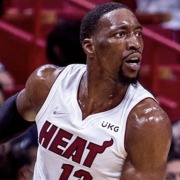
The Miami Heat faced the Cleveland Cavaliers for the third time this season on Friday night, and things looked differently.

Not only that it ended with a win for Miami, but Jimmy Butler and Bam Adebayo matched up with them for the first time this year.

So, here are some things that stood out in this one…

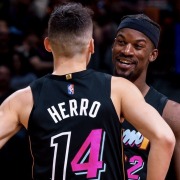
#1: Heat offense stagnant early, but Tyler Herro breaks that statement solely.

Although the Heat found themselves with a 1 point lead at the half, 58-57, I wouldn’t say you walked away feeling comfortable about their offensive attack. You felt comfortable with Tyler Herro’s offensive attack. After Miami came out the gates with a 9-0 start, stuff began to tail off. PJ Tucker’s recent struggles mean that weak-side defender can loom around a bit more to force you into that skip, while there was a general lack of movement across the board. But Herro’s 3-level scoring boost keeps Miami in games nightly. Not only is he reading his defender at another level in terms of screen navigation, but he’s getting into the teeth of the defense in a way that makes up for Miami’s stagnant possessions. That’s major for this team, but it also raises an eyebrow that if Herro doesn’t provide that one game in a playoff series, what happens?

#2: Darius Garland foreshadows players Miami will see in playoffs, but Heat adjust well.

Watching Darius Garland in that first half, then looking at a stat sheet at that point may not seem like linking factors. It may have said he had 14 points, but he was also 2 for 8 at that point in the game. Translation: he was getting to the line in similar ways that Butler likes to do nightly. The reason I bring this up is that Garland being so slippery in open space provides such problems against teams like Miami that double and blitz. While it may look like they have him in a box, his ability to turn corners at abnormal speeds can counter Miami’s rotation reliance rather quickly. Looking forward, there are teams like Boston or Chicago that have similar players in that sense. It just comes down to backing out of that coverage before it’s too late, which is exactly what Miami did in the third. They used it much more situationally, which threw off the Cavs offense for a decent stretch, triggering a 12-0 run for Miami.

#3: A minor, yet major, first half reflection: a lack of shot attempts from select few.

We’ve had moments in the season where we constantly discuss the lack of aggression from Heat center Bam Adebayo. The lack of taking advantage of opportunities is just as bad as an inefficient night, which caused plenty of discussions. Yet when reflecting back at halftime, Jimmy Butler and Kyle Lowry combined for the same amount of shot attempts in the first 24 minutes as Dewayne Dedmon. That can’t be the case. Butler was at least able to counter some of that by getting to the line, but that length still was clearly deterring his strong attacks. But more importantly, the scoring factor of Lowry’s game is going to need to be seen more often. His structure in the offense is definitely noted, but there are too many times where the pass is forced instead of trusting his skill. With as many PnR’s as he runs, the pocket pass just can’t be the outcome in every one, which will need to be the post-season tweak.

#4: Aggressive Bam, patient Bam, interior Bam.

When looking at this match-up with the Cavs, there were two components that were in question: Bam Adebayo and Jimmy Butler. Why? Well, neither of them have matched up with this team so far this season, while obviously Cleveland is without Jarrett Allen on the other side. That said, Bam Adebayo was decently aggressive throughout this game, but it doesn’t end there. Schematically, it was a nice change of pace to see him catching, posting, and sealing in the interior, which said that his initial touches they wanted much lower than normal. With that, it’s one thing to highlight aggression, since that always feels linked to quick scoring bursts, but that wasn’t how he was doing it. He was patient on the catch, worked his pump-fake, then rose up with aggression for plenty of buckets around the rim. That was a third quarter synopsis, since he was a big reason they were able to make that run.

Loading
Loading...

#5: A game of runs. A team of runs.

We often hear about how the game of basketball is a game of runs, but there are teams within that bracket that fit the description much better. The Miami Heat this season have shown to be one of them, as many of their bench pieces are offensive sparks that can create runs. But as much as the offense may stand out when seeing a 25-6 run, the defense is equally as important to hold the opponent to 6 points over an extended stretch. And that’s the theme of this Heat team. Yes, Herro’s pull up triples and side step crowd explosions may seem crucial, but back to back possessions of Jimmy Butler steals on the perimeter for transition dunks transcends that. The playoffs may be a half-court game for sure, but that only makes this point more valuable for this team defensively. The offense may have a low floor in certain droughts, but the defense has as high of a floor as it gets.


For business window graphics, interior office signage, custom flags, custom banners and sign repair, reach out to SignsBrowardFortLauderdale.
Five Teams to Look Out For at March Madness 2022

March Madness is about to begin – the best time to watch college hoops. But which teams could go all the way in 2022 and emulate last year’s winners Baylor? Read on to find out


March Madness brings out the best in college basketball

It is that most wonderful time of year again. No, not Christmas and the holidays, March Madness is about to begin. The best of the best of college hoops come together to battle it out to leave one remaining champion.


Fans across the country will be eagerly filling in their brackets and preparing their best March Madness bets. Baylor took the championship last year in what was an incredible tournament. But which teams should you be keeping a close eye on this year? Who can go all the way and win the NCAA Tournament? Read on to find out.


Baylor Bears


Baylor became the second consecutive first-time winner in 2021 as it rounded off a tournament of shocks and surprises to beat Gonzaga 86-70 in the National Championship game. Only seven teams have come back and won a second title straight away – so can Baylor become the eighth?


The Bears are one of the best teams in the country and could be good to be one of the four number one seeds. But repeating last year’s incredible triumph will be tough as they battle against other programs looking to take down the king. Baylor will be there towards the end of March Madness – but maybe not on the final day.


Gonzaga Bulldogs


You’ve got to feel for Gonzaga. It is twice in five years now that the Bulldogs have come up just short and lost to the eventual winner in the National Championship game. Gonzaga was outstanding last season, winning its first 31 games – it just couldn’t beat Baylor when it mattered.


The Bulldogs have been installed as the favorites to win in 2022 and could well go into the tournament as the number one overall seed for the second year running. Freshman Chet Holmgren has added another aspect to the Bulldogs’ dominance this year and could be the difference in the Final Four in New Orleans.


Duke Blue Devils


It was a huge shock last year when Duke missed out on the NCAA Tournament altogether – the first time the Blue Devils had not made an appearance since 1995. Repeating that just wasn’t an option this year after Coach K announced that this season would be his last.


But can Duke make sure that Mike Krzyzewski bows out at the very top of the college game? It was all looking good earlier this season as the Blue Devils blew away the opposition. But then came that double-digit loss to UNC. It was not the final home game that Coach K would have wanted – so now his players need to go all out to win the championship.


Who will make the game-winning shots this year?


Arizona Wildcats


Oregon State was the surprise team from the Pac-12 last year, winning the tournament and reaching the Elite Eight. But it is Arizona that most people will be the main hope from this conference in 2022. After missing out because of the self-imposed postseason ban, the Wildcats are hungry for glory.


Not many outside of the program really believed that Arizona would be one of the favorites this year but new coach Tommy Lloyd is in charge of a team that has excelled on both sides of the ball. He spent 20 years at March Madness perennial Gonzaga before taking on the Arizona role, so he should have a good idea about how to deal with the NCAA Tournament.


Kentucky Wildcats


Kentucky is regarded as one of the regulars of the NCAA Tournament but it has been a while since these Wildcats went and won it. That was back in 2012 when UK beat Kansas to take the title. John Calipari was the same coach in charge for that victory and Kentucky celebrated in New Orleans where this year’s Final Four will be held.


Kentucky is number three seed in the SEC Tournament and will be hoping for a good display there to see them into the excitement that is National Tournament. 


Five Takeaways from Heat’s Loss to Suns

The Miami Heat faced the Phoenix Suns in a potential Finals preview on Wednesday night, and it didn’t go as planned.

Suns without Chris Paul, Heat without Jimmy Butler. There were some key advantages in Phoenix’s favor through this matchup tonight, and that starts and ends with size.

Plus Miami couldn’t counter that with offensive firepower, since missing Butler meant a total absence of attacks and rim pressure.

Anyway, let’s get into that a bit more…

#1: The Duncan Robinson-PJ Tucker offensive combination.

Watching Duncan Robinson explode for an immediate 3 triples to start this game, and 5 in the first half, definitely leaves you with some positive opinions on the shooting of Robinson. But how was he getting those looks? Some of Kyle Lowry as he glided to 5 assists in about 5 minutes of play, but the answer is PJ Tucker. Last season, it felt like Robinson had to be glued to Bam Adebayo to be effective with that DHO. A pretty great development has been that Adebayo doesn’t have to worry about it as often, since Tucker has it covered. If Robinson has an open corner look, it’s because Tucker is setting a hard hammer screen. If Robinson is dominating against drop, Tucker is laying out that single perimeter defender. Robinson was shooting that thing with confidence and deserves a ton of credit, but Tucker is so crucial for his offensive success.

#2: The Suns interior force in the first half.

To simplify this down to 24 minutes of basketball, as great of a start that the Heat had, how did the Suns just immediately storm back from that? Well, Deandre Ayton and Mikal Bridges came out aggressive offensively for different reasons. Ayton found the openings on Miami’s planned defensive agenda in Booker-Ayton PnR’s, leading to quick slips for interior dominance. Bridges on the other hand had some favorable match-ups with Miami going small for long spurts. Bridges may not be a post-up guy, but that mid-range jumper over a smaller defender was becoming a staple. And of course, the Heat were losing the rebounding battle 27 to 15. Some of that was the product of Adebayo switching out to the perimeter, but a lot of it was back-up board dominance from JaVale McGee over Dewayne Dedmon. These two teams have similarities, but there are also major differences. That is one of them.

#3: Some minor evaluations on both sides of the ball.

Once again, there always has to be a segment to discuss some small elements that I noticed from the Heat. The first part of that included Miami’s 2-3 zone, and that relates back to Monday against Houston as well. When that zone has been utilized, the top of it doesn’t look so familiar. What used to be headlined by Gabe Vincent and Caleb Martin, who exited tonight’s game with a left knee injury, quickly shifted to Tyler Herro and Martin at the top as Victor Oladipo slotted into the lower box. Back to the offensive side of the ball, we saw the advantages in certain Heat sets. This team can trail you on the ball at a high level, meaning off-ball movement is the only way to score at a high level. For example, the Robinson shooting, that one Oladipo cut and lay-in, etc. But as soon as Miami got in some post split reps, we saw higher effective offense. Obviously you don’t throw everything out there at once, but in a potential Heat-Suns finals (?) that’ll be seen frequently.

#4: The back-up four question marks put on blast.

Caleb Martin came out in this game exactly like he has in every big game this year. Absolutely everywhere on both ends, as I tweeted in the second quarter. But as he came down on the left knee, ending his night early, that same question came right back up about this roster. Their depth may be a major part of this team’s identity, but as Martin exited, that was a blaring hole on this team. Markieff Morris has been that looming piece all year, and who knows what his role would even be when he did return, but that’s the task. Martin has locked up that job, but they’re one injury away from being very thin in the front-court, specifically with size. So a Morris return would actually be quite helpful in the long run.

Loading
Loading...

#5: The importance of Jimmy Butler’s rim pressure.

This isn’t one of those things where you focus on the guy that’s missing in a team’s loss, even though it may seem that way. In actuality, it’s focusing on a player that receives some unfair criticism when broadening things to a big picture sense. Watching this Heat offense tonight without Butler, and more specifically that starting unit, one thing was more clear than anything else: Jimmy Butler *is* this team’s rim pressure. It’s one thing to bring up free throw attempts and pace dictating, but it’s another thing when they don’t have those initial paint touches to trigger all of the other actions. I brought up earlier that off-ball movement is the exploitable area here, but the only way to get a Suns defense in a frenzy is to pull them away from shooters on the initial attack. It may be as simple as they missed Butler in this one,  but the interior forces and rebounding numbers were probably happening either way.


For business window graphics, interior office signage, custom flags, custom banners and sign repair, reach out to SignsBrowardFortLauderdale.
Miami Hurricanes land physical four-star OL Antonio Tripp

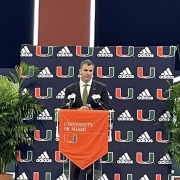
The Miami Hurricanes were able to land a commitment on Tuesday afternoon. Four-star offensive lineman Antonio Tripp committed to the program. The commitment came following a two-day visit to Coral Gables.

Tripp is the 19th overall interior offensive lineman in his class, and the seventh overall player in his class from the state of Maryland per the 247Sports Composite Rankings.

All of the 247Sports Crystal Balls for Tripp pointed towards Penn State. The majority of them were low-confidence ones. not only that, they were put in a while ago.

Nevertheless, Tripp still had interest from many schools.  This just speaks to the job that the coaching staff can do in terms of recruiting. It seems like the Hurricanes are always in the mix for a certain prospect. This staff gives them a chance to go toe-to-toe with anybody.

Measuring in at 6-foot-3, 300 pounds, Tripp will be able to bring several skills to the Miami offensive line. he is a very solid technique player. He is able to extend his hands quickly and stay square on passing plays. Athleticism is also something he brings the table. Particularly on screen plays, he is able to get out in front and  set up blocks for the running back.

Tripp is also able to bring physicality to his game. With that physicality, he can set up running lanes and allow the running back plenty of room in order to make a play. The way he is able to pull and set up blocks will undoubtedly be an asset to the Miami Hurricanes offense.

With this commitment, the 2023 Miami Hurricanes recruiting class continues to get stronger. This marks the third commitment of the 2023 recruiting class, and the class itself is just starting to take shape.

Tripp is undoubtedly going to help the Miami Hurricanes offensive line. He is the type of lineman that Alex Mirabal can work with and make into a great player.


For business window graphics, interior office signage, custom flags, custom banners and sign repair, reach out to SignsBrowardFortLauderdale.
Three Ugly Observations From Inter Miami’s Loss Against Austin FC

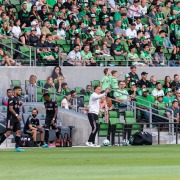
Inter Miami’s dire performance against Austin FC is sounding some alarms.

While it’s still very early in the season, and Miami may very well turn it around, there were some concerning trends during Sunday’s loss that, hopefully, won’t continue throughout the year.

With that said, here are three ugly observations from Miami’s loss vs Austin.

Formation Merry-Go-Round 

Football is a peculiar sport, but it is also very simple.

Oftentimes, the need for various formations seems frivolous. In its essence, every formation can be traced back to the standard 4-3-3, including Phil Neville’s preferred back three:

That being said, with Sunday afternoon’s result in Austin the “Inter Miami back three experiment” could very well be over. 

Miami couldn’t get control of the game in the first 20 minutes. They struggled to build out of the back and Austin’s high press stymied any progress they wanted to make through the middle.

With it being an away match, it was Austin’s responsibility to play attacking football. But, as the game went on Miami never gave themselves a chance at getting back in it. By halftime, Miami was down by two and never seemed to have a game plan.

At the start of the second half, Neville switched the Herons to a more conventional 4-4-2. Realistically, the team only looked better in that formation once Austin stopped pressing because they had a multiple-goal lead. 

The Problem with Higuain

This begs the question: why a back three?

In short, Miami needs to find a way to get the best out of their only Designated Player on the field, Gonzalo Higuain. Despite the poor team performance, Higuain had a decent game that saw him get an assist and four key passes.

With the 3-5-2, it disguises a lot of the 34-year-old’s weaknesses. Looking fbref’s advanced stats, Higuain is in the 17th percentile of pressures per 90:

That’s not good. 

This essentially means that Higuain is not going to press the opposition defense that much.

Because Higuain won’t press, Neville has to switch up his tactics in order to accommodate him:

Miami pressed less in the final third in 2021 compared to the 2020 season. Against Austin, that much was evident.

The Herons sat in a midblock 5-3-2 formation, daring Austin to pull them out of their defensive shape. The only press that Miam implemented was when Austin pushed the ball out wide:

In modern football, you need 11 players to defend starting at the front.

Higuain, as stated above, doesn’t do that.

Neville has a dilemma here.

Higuain is without a doubt, one of Miami’s most potent passers. The 34-year-old had 11 key passes in Miami’s first two matches. At the same time, it’s difficult to play a high press style with him starting up top.

How does Miami fix this? Switch to a 4-4-2 or keep the 3-5-2? 

Lowe Was Missed

Naturally, when a defense concedes five goals, fingers will point to the starting center backs. The presence of Damion Lowe was missed. Not only is the Jamaican a vocal leader on the backline, but he also has enough recovery speed and positional awareness to mop up any mistakes.

When fit, Lowe is an automatic starter. Unfortunately, per Neville, the 28-year-old will be out for 10 days, which is a huge blow.

Hopefully, Lowe will be able to make a swift recovery and return to action as quickly as possible.

What’s Next?

It’s a long season, and this result may have hurt, but Miami has the opportunity to bounce back against LAFC at home this weekend.

It’ll be a tough match.

LAFC has some of the best attackers in the league with Carlos Vela, Christian Arango, and Brian Rodriguez, and if Miami’s game against Austin was any indication, LA will be able to slice and dice the Herons open on the counter if they find an opening:

Depending on what formation Miami rolls out in, they must bounce back from the 5-1 drubbing they received on Sunday.

What better time to do that than at home against one of the best team’s in the league? 

Five Takeaways from Heat’s Win Over Rockets

The Miami Heat played the Houston Rockets on Monday night, but that wasn’t the important headline.

It was Dipo Day.

In Victor Oladipo’s return, it started out a bit rocky for the team, but nothing was rocky about Dipo’s composure on both ends in this debut.

Anyway, here are some takeaways from Heat’s win over Houston…

#1: There are rhythm players. And then there’s Tyler Herro.

On Dipo day, Tyler Herro quickly seemed to turn the second quarter into Tyler time. 8 of 9 from the field. 5 of 6 from three. 21 points. Those were just the stats from the second quarter if you are wondering. We saw a continuation of Herro’s recent PnR on-ball surge, where he kept getting by that initial defender and began to make plays. Not many players were making plays around him, so he took it upon himself. Began attacking the drop defender, drawing two defenders regularly, yet continuing to prance into pull-up jumpers or simple swings and relocations. But the key there is “relocation.” As the increased number of bodies begin to rotate over to him on the ball, it opens up his off-ball game. He can move without the ball and make defenses pay. Plus, aside from the X’s and O’s, he’s just the rhythm player of all rhythm players.

#2: Houston’s shot making providing early problems.

Looking across the Rockets’ roster tonight, guys like Jalen Green and Kevin Porter Jr popped due to their high level shot making ability and freedom to get plenty of shots up. Green opened up that dialogue by knocking down an early 4 threes, which should be said weren’t easy shots. The Heat were doing the thing where PJ Tucker would switch onto the big as Bam Adebayo switched onto Green or Porter, leaving them with a tough shot each possession. The issue was that when that switch wasn’t made, and he was pulled away from the possession, Miami’s rotations weren’t there. That was kind of expected, as this team is the anti-Bulls. They play their game against high level competition, but play down to teams like the Rockets. That’s what happens after a tough gauntlet of a week, but should be noted in terms of game flow.

#3: Jimmy Butler doing Jimmy Butler things early.

If it wasn’t for Tyler Herro going absolutely nuclear in that second quarter, Jimmy Butler’s name would be thrown around much more often in that first half. Herro settled them and gave Miami that much needed boost, but Butler was consistently himself, which is all they need. He was finishing well around the rim, but more importantly, he was getting to the line per usual. To tie these two guys together a bit, as they combined for 39 in the first half, we saw some empty corner PnR’s between the two. The reason that’s important is they were adjusting to what was happening. Herro was placing major pressure on the Rockets defense, meaning an empty corner eliminates strong side help. And with Butler looking strong on the interior, using him as a roller in space is useful. When Butler’s post efficient and getting to the line, that’s all you need.

#4: The Miami Heat’s interesting rotation questions.

As Kyle Lowry and Victor Oladipo return on the same night, Gabe Vincent and Max Strus get caught watching on the sideline as Erik Spoelstra rolls out a nine man rotation. I feel like that was an expected element to all of this, partly in preparation for the post-season. The way I’ve come down on the whole process is Caleb Martin is the true lock to the bottom half of the rotation, due to his big moments late in games and overall length he provides defensively. With that said, Vincent and Strus, but Vincent more specifically, are the sparks on either end when needed. If the point of attack has some holes that needs to be patched, Vincent enters. If the team needs some type of scoring guard play in light of a rough night for Herro or Dipo, Vincent enters. If it’s a rough go for Duncan Robinson, enter Max Strus potentially. As great as Vincent has been, situational sparks may be their late playoff role. But in terms of the regular season, guys will be in and out, meaning he will still have plenty of minutes, and even a few starts.

Loading
Loading...

#5: Oh yeah, Victor Oladipo is back.

So the highly anticipated return of Victor Oladipo is upon us, and well, I’d say it went well. Before dissecting what was seen, it should be said that I’ve been saying for some time that the defensive end should be the area to watch instead of the potential rust offensively. With that said, that was my initial observation. Aside from the two charges drawn, he really looked sound on that end from the jump. He doesn’t give up any ground 1-on-1, and more importantly, he’s not a guy that derives strictly off speed. He’s a guy that uses his body to his advantage, and knows how to keep that ball in front of him. On the other side of the ball, there were clearly moments. He had an early corner triple, a nice 1-on-1 drive off the attack a bit later for a right handed scoop, and a fourth quarter hesitation and burst in the PnR for an explosive dunk. It’s only game one, and things will evolve, but that entry level defensive showing is a very important element.


For business window graphics, interior office signage, custom flags, custom banners and sign repair, reach out to SignsBrowardFortLauderdale.
Early favorites for this year’s NCAA Tournament

The 2022 March Madness NCAA Tournament is right around the corner, with the incredibly enjoyable and rather hectic college basketball competition set to commence with Selection Sunday on March 13, before the First Four matches begin between March 15-16.


With that in mind, now might seem like an opportune time to take a look at who the early favorites are to win this year’s competition, especially as there are a number of exceptional sportsbook promo codes listed on gamble-usa.com already available to take advantage of.


What is March Madness?


To begin, it might be worth pointing out what March Madness is and what viewers should anticipate and expect if they are yet to witness what the iconic college basketball competition is all about.


March Madness is the annual NCAA Division I men’s college basketball championship tournament. The tournament began in 1939 and is now a 68-team event that takes place over three weekends in March and April. The Final Four, the semifinals and finals of the tournament, are played at a single site, usually a stadium or arena in a major city.


The tournament is one of the most popular sporting events in the United States. It generates over $1 billion in revenue each year, making it one of the most profitable sporting events in the world. In addition to the money generated by ticket sales and television rights, businesses, and schools across the country benefit from March Madness-related advertising and merchandise sales.


March Madness has also been a boon to college basketball players. The tournament has provided many players with the opportunity to showcase their skills on a national stage and has helped them earn lucrative contracts in the NBA. Some of the most famous alumni of the NCAA Tournament include Michael Jordan, Magic Johnson, Larry Bird, and LeBron James.


What is the schedule for March Madness 2022?


This is what the current schedule of the upcoming competition looks like:


  • Selection Sunday: 6 p.m. ET March 13.
  • First Four: March 15-16.
  • First round: March 17-18.
  • Second round: March 19-20.
  • Sweet 16: March 24-25.
  • Elite Eight: March 26-27.
  • Final Four: April 2.
  • NCAA championship game: April 4.

Who are the early favorites to win?


So, for those who are perhaps trying to identify and pick out a winner of the upcoming 2022 March Madness competition, this section is perhaps the most important of the article.


Indeed, we all want to be able to pick the winner of the competition, although we know that the bracket system that is used can make proceedings rather unpredictable at times, with shocks and upsets rather commonplace in this tournament.


Nonetheless, the early favorite to win the NCAA Division I tournament this season would have to be Gonzaga Bulldogs.


Gonzaga Bulldogs favorites


The Gonzaga Bulldogs almost managed to win the competition last season, however they fell short in the NCAA Championship Game to Baylor. However, that loss perhaps fuelled the fire and hunger for the team to win the championship even further as they have largely picked up from where they left off.


This season, the college basketball program lost just three regular-season games ahead of the West Coast Conference Tournament. The final game of their WCC regular-season game ended in a surprising 57-67 defeat to the No. 19 Saint Mary’s Gaels team, but that could have been a timely reminder ahead of the WCC and March Madness.


Who else is in the running?


The Kentucky Wildcats are perhaps the other team to really take note of at the moment as we head into March Madness, as they had also enjoyed a rather decent campaign on the court.


The team did suffer more defeats than the Bulldogs throughout the campaign, having lost six games ahead of their match on March 5 with the Florida Gators, but there are many that would not be surprised to see them in the Final Four at the very least.

Recapping Inter Miami’s 5-1 Loss in Austin

Coming off their first-ever point in a season opener in the club’s history, Inter Miami CF was looking to carry any positive momentum from the Chicago Fire match last Saturday into Austin, Texas, at Q2 Stadium on Sunday. Unfortunately, with injuries at play and an attack that has now scored just once in over 180 minutes, Miami couldn’t come away with any points following a dominant 5-1 performance by Austin FC.

First-half goals from Sebastian Driussi and Julio Cascante set the tone for the game, especially in the first half, where Austin FC controlled the match with over 67% possession. Noah Allen, Miami’s 17-year-old wing-back who made his second consecutive MLS start, was beaten to the byline by MLS Veteran Diego Fagundez on the first goal, who found Driussi beautifully with a pass at the back post. Driussi slotted his shot past Miami’s keeper Clement Diop, who seemed slow to attempt a save. Cascante’s goal, which followed the 22nd-minute goal from Driussi by just four minutes, was an easy header from a set-piece play in which Miami’s defender Brek Shea held him onside.

Going into the second half, Phil Neville decided to make changes to get back into the match. From a back five to a back four, Allen and Mo Adams were replaced by Robert Taylor and Leonardo Campana, who played on the left-wing and as a striker, respectively, in a 4-2-3-1 (or 4-4-2, depending on where Higuain was). Lassiter was switched from a striker to the right-wing, and Shea went from a third center back to a left-back with Jairo Quinteros and Christopher McVey handling the middle.

Offensively, based on a single statistic, and the most important one at that (goal-scoring), the change in formation was positive. Campana, the Ecuadorean International, bagged Inter Miami’s first goal of the season after receiving a pass at the top of the box from Gonzalo Higuain in the 54th minute. Unfortunately for the Heron’s, that wasn’t before Austin FC had scored their third to put this game out of reach.

In the 51st minute, for the third of Austin FC’s five goals in the match, Miami’s two center backs were split wide open, then caught completely too narrow as Austin toyed with the ball in the area and, after an abundance of passes, slotted home a chance with Diop nowhere to be found.

After Campana’s goal, Austin FC went a little on the back foot and was starting to concede a barrage of chances as Miami was looking more and more lively. Robert Taylor, who was working along the left side, was responsible for five of Miami’s eight shots in the second half, netting an xG (expected goals) number of 0.21. That number is 37.5% of Miami’s total xG (0.54).

Another statistic here: Of Miami’s thirteen total shots in the match, only four came inside the 18-yard-box; one of those four was Leonardo Campana’s 54th-minute goal. For Austin FC and their eight total shots (which netted an xG number of 1.34), all but two shots came from inside the box, and of those six, five went in.

Defensively, Miami struggled to stay compact and shut down Austin attacks before they worked their way into the area. The absence of Damion Lowe was truly felt. As a leader and organizer of his stature, and one who is also able to help distribute out of the back, he was missed on Sunday night.

Obviously, by going down two goals, Neville had to instruct Miami to go for goals in the rest of the match. That, along with the switch to play with one less central defender, was a considerable risk that ultimately didn’t pay off, as Austin FC scored three in the second half and threatened most the time as well.

Austin FC’s final two goals were both scored by Ethan Finley (64′, 90′). A header near the six-yard box from an Alex Ring cross and a shot rifled past Diop from a Fagundez pass set him up beautifully in the penalty box. Those two, and probably the first alone, was enough to do Miami in and send them home with nothing to take from the match.

Miami’s next match is at DRV PNK Stadium against a heavy opponent in LAFC, who roster one of MLS’s best, attacker Carlos Vela.

Miami will look to grab at least another point at home next Saturday before going on another away trip to TQL Stadium in Cincinnati.

Tyler Herro’s Making the Inside the Arc Leap

Victor Oladipo’s return day is finally upon us, as he’s expected to play on Monday night against the Houston Rockets, leaving many other story-lines flying under the radar.

The Heat just went 3-1, which could’ve been 4-0 if it wasn’t for poor late game execution and a rough go for Jimmy Butler vs the Bucks, against the premier teams in the Eastern Conference over a week span. The team was obviously without Kyle Lowry, Bam Adebayo continued to hit offensive strides, the team’s defense could be at its best, and the depth of this group looks to be their biggest strength.

But among all of that, Tyler Herro is quietly making the biggest offensive shift of his career, just at the right time.

In a fake world, if you were to build the perfect counterpart to Herro off the bench, it would probably look identical to a healthy Victor Oladipo. We don’t know about the “healthy” part clearly, but we do know about the “Victor Oladipo” part.

Either way, Herro is currently doing things on the offensive end that transcends any numbers he put up early in the season, which he’s currently averaging 21 a night off the bench and is top 15 in 4th quarter scoring per game.

We know he has that coveted mid-range pull-up that has been a staple of his for quite some time against drop coverage.

We know he has a three ball unlocked in both catch and shoot and pull-up situations.

But all eyes have been on that first level, and he’s now exceeding at that too.

So, how is he evolving currently in that element of his game?

I could stretch some game film out to three games ago against Milwaukee where he dropped 30 points in a total pull-up shooting display, but let’s just simplify it down to the past two games of floater dominance.

Looking at the play above, what is the initial thing that is noticed?

Seems to be just a normal pick and roll where Herro keeps his defender on his back for the 2 on 1, flowing right into that floater that he just can’t get enough of lately. But let’s rewind back a bit more to the beginning.

As he immediately comes off the screen, he doesn’t burst into that open floor right in front of him. He gives a subtle hesitation before the attack, but why is that?

Well, staying at the speed of your roller is pretty essential when talking about enhancing every option on the floor in a PnR. And when that guy is a slower footed LaMarcus Aldridge, look what that one move does to his feet. His waist turns toward Dewayne Dedmon, leaving Herro with the clear lane to go up for the bucket.

That’s the new part of this.

Another instance, we see a much better fitted match-up for Herro to stick on him following the screen, in Bruce Brown. Herro still ends up finding space in front of him again, but he doesn’t just burst forward into the open floor.

That would lead to an easy recovery, so he pauses, bumps, and sprints. That gives him the and-1 finish on the back-pedaling Andre Drummond, but the outcome isn’t as important as the process.

We continue to see him mix in these minor elements to broaden his bag, which is simply making him harder to guard with a higher on-ball usage.

Not only is he gaining confidence in top of the key PnR sets, but he’s also not afraid to take that extra step in on that baseline. Here, we see Miami set some staggers for Herro to catch it on the inbound–which by the way, a baseline inbound for Miami almost always means a baseline shot attempt–and now it’s decision making time.

He isn’t looking at the basket, or the defender in front of him. He’s looking back at how Mills recovers on that stagger. And as he edges around, Herro loops in one more step which eliminates any back-side contest.

Once again, easy floater.

Same shot, different process.

Something I asked Herro about recently was not only the use of the floater, but the disguise of linking it with the lob pass. That is something guys like James Harden and Trae Young have mastered, since it just puts that dropping big in a very awkward position.

The reason is that there can never be total commitment on one or the other, since they look the same on the wind-up.

Looking at the play above, here’s an example of that. Herro once again gives that hesitation following the Dedmon screen to stay at his pace, and the 2 on 1 is in their favor. He skies his floater up in the air, as Dedmon is still trying to figure out if that was on the way up for him to throw down, or a shot attempt.

“I try to switch it up, and take that 1 or 2 extra dribbles in the pocket to be able to make the right read,” Herro said.

“Whether it’s a lob when the big’s coming up, or if the big’s back it’s a lay-up or a floater. So just being able to make the right read, being patient, and keeping my dribble alive.”

Fast forwarding to this past game against the Philadelphia 76ers, we got to see more of that PnR manipulation on that dropping big man.

When watching this play above slowly, there are two elements to it.

Herro comes off the screen and fakes the long range runner to freeze Paul Millsap just enough. As he keeps his dribble alive, he gets up in the air which appears to be a lob to Bam Adebayo, before he quickly adjusts in mid-air to go right back to the floater.

It’s one thing to have a go-to shot against drop coverage like he did last year with the elbow pull-up. But this evolving factor of freezing these bigs within the action is next level.

When listening to players talk post-game most nights, you probably hear the word “reads” used a ton. Upon hearing that term, the things that immediately strike your mind is a skip pass, beating a coverage, or taking a shot that is being given to you.

But the main part of making “reads” is knowing exactly what that second defender in an action, or a potential help defender, is doing at all times. That’s what makes the league’s top players elite.

And with the extended bodies Herro’s been seeing lately, it’s interesting to watch this slowly develop.

Looking at the possession above, Matisse Thybulle begins to hedge the PnR as Tobias Harris simultaneously begins to fight over. Herro seeing that, he rejects the screen immediately and bursts down the left side of the floor for the easy lay-in, since the Joel Embiid help isn’t all the way there.

In a playoff series, there will be plenty of stints where things won’t just come down to Herro as a scorer, but Herro as a primary on-ball offensive piece. And with these type of decisions, I have a feeling they could go quite well.

I know the focus is the on-ball stuff with him, but the truth is that once the playoffs come, rotations shrink. Herro will be sharing the floor with the three of Butler, Adebayo, and Lowry much more often, meaning he will have to work into his spots off the ball as well.

Right here, Butler sits in the post split with the movement beginning to set in, and Herro improvises early in the action. While Herro is the first player to shoot off into space, he cuts back-door on Maxey as the expectation is that an end-around DHO is coming.

But even when off the ball, he gets to that coveted floater in the middle of the floor yet again.

Loading
Loading...

The reason this all ties into the Oladipo return is that Herro is making these strides at just the right time. There won’t be a need for a major adjustment period for the young guard, since he’s been put in so many different spots already this season and succeeded.

It’s been noticeable that Oladipo’s catch and shoot attempts always rise following a return from injury, making this combo even more seamless on paper. They should be able to bounce off each other well, but what is the number one focus when talking about an Oladipo offensive insertion?

Rim pressure.

And right now, Tyler Herro is providing that at an all time high.

The story-line surrounding the Miami Heat right now is obviously Oladipo for good reasons, but what makes this whole thing so interesting is the meshing point with the current level of Herro.

With that floater, that pick and roll dissection, and that confidence, it’s hard not to fit alongside him on that end of the floor.


For business window graphics, interior office signage, custom flags, custom banners and sign repair, reach out to SignsBrowardFortLauderdale.