Projecting Inter Miami’s Defensive Plans

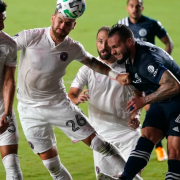
After an underwhelming first season in Major League Soccer, Inter Miami CF has had one of the most significant roster turnovers in the league from last year. Starting up top with the front office and head coach, all the way to scouting directors and players, Miami has made copious changes heading into their second year. The addition of Chris Henderson as Sporting Director and Phil Neville as Head Coach (or Gaffer, as I like to say) has already seemed to make MAJOR impacts on this roster as their influence on signings has been very, very evident.

Much of Inter Miami’s problems last year stemmed from inconsistencies in the defense. If Leandro Gonzalez Pirez never signed for the South Florida club, it’s hard to imagine just how much worse their inaugural season could have been. Roman Torres would’ve likely never been traded. The club would’ve probably relied on him, Nico Figal, and Ben Sweat, A.J. DeLaGarza, Andres Reyes, Alvas Powell, or Christian Makoun as options in Diego Alonso’s three-at-the-back formations. Things got ugly for Inter Miami defensively early on in the summer of 2020. It carried on through to the playoff match in Nashville that resulted in a 3-0 defeat due to a lack of identity, focus, and defensive help.

The additions of Ryan Shawcross, Joevin Jones, Kelvin Leerdam, Kieran Gibbs, Patrick Seagrist, Aime Mabika (I think), and Ian Fray were all made by the new men in charge to help create a better defensive identity in Phil Neville’s projected 4-3-3 formation this season. Here’s how:

Wing-Back Additions

One of the weakest points all of last year was our lack of depth and starting quality and the wing-back position. On the left, it was a mix of Ben Sweat and Mikey Ambrose. On the right, we had one game of Alvas Powell in Los Angeles, and it went so poorly that we didn’t see him until the last couple of games of the season. Nealis and Figal were the replacements there.

Sweat and Ambrose have moved on to Austin FC and Atlanta United, respectively. Both guys delivered some excellent moments on the offensive side, including this beauty from Mikey to seal our spot in the playoffs:

Sadly our two left-backs pretty much had more of a positive impact on offense than they did on defense, which led to trouble. As for the right side, Dylan Nealis, in his second year, is still unproven despite a decent rookie season, and Figal should be seen as center-back where statistically, he’s been more effective.

Needless to say, changes were needed. Additions were to be had. Chris Henderson and the Miami Front Office delivered.

It started with a trade for Patrick Seagrist late in 2020 from the New York Red Bulls. The tenth pick of the 2020 MLS SuperDraft only made three appearances for the Red Bulls and is unproven in the league thus far. In a piece for Five Reasons when the deal happened, I discussed how Seagrist would fit into the side but ultimately stated he likely wouldn’t be a full-time starter. He needs more time. That left only Brek Shea as a potential starter at the left-back position until Chris Henderson called a familiar face.

Joevin Jones signed as an MLS Free Agent at the beginning of the month, and it all seemed to be worked out on the left side. The two-time MLS Cup Champion would walk into the starting XI. At 29 years old, coming off a good year with Seattle, Jones is ready to play and should provide some comfort for fans on the defense’s left side. At least until July.

Rumors of Kieran Gibbs joining Inter Miami had been around for quite some time. For the most part, it seemed unlikely after the Jones signing, and even before then too. Gibbs is currently West Bromwich Albion’s highest-paid player and rarely sees the pitch. Getting Gibbs to come to South Florida would have always entailed waiting until his contract ends at the end of June. There’d be no reason for the player to accept a buyout unless the price was very lucrative, and I doubt either West Brom or Inter Miami would have coughed up any money to do so. If you wanted Gibbs, you’d have to be patient. That was always going to be the case, and it is the case now.

The former Arsenal man was announced officially as a future Inter Miami CF player yesterday on a pre-contract agreement. Gibbs is to arrive on July 1st of this year, and depending on his fitness levels, and how Neville sees the team then, he’ll likely walk right into the starting lineup as a left-back.

So what does that do for Jones then? Is he to lose his position in the team? Not really.

Jones has been capable of playing as a winger or wide midfielder in his time with Seattle and the Trinidad & Tobago National Team. Brek Shea, for example, was used as a presence off the bench in wide areas, and when Gibbs arrives, I see Jones as the same kind of threat. Whether it be starting up top or coming off the bench, Jones will be utilized in this team even if Gibbs is to go in and take the starting role at left-back. At the very least, Jones is Gibbs’ immediate replacement if anything is to happen.

On the same day Gibbs was announced, the club also announced Kelvin Leerdam’s arrival.

Leerdam, the former Sounders right-back (it’s all Henderson), was traded to Inter Miami for just $75k in GAM that is spread over the next two seasons. Like Jones, Leerdam is coming off a pretty good year in Seattle and leaves the club having won an MLS title.

He immediately jumps over Nealis as the number one right back on the roster, which does a lot more than solidify the right side. The move for Leerdam now allows Phil Neville to have a starter he can be comfortable with on the right side without having to worry about playing one of his better center backs out of position. With Leerdam as the starter and Nealis as the backup, it’d probably take quite the chain of events for fans to see Figal playing as a right-back this year.

Jones and Gibbs to cover the left side, Leerdam, Nealis to protect the right.  Seagrist and possibly Shea could step in if needed.

The Ideal Center Back Pairing

Very simply put, the additions of starting-caliber wing-backs on both sides shows that Figal is CB option number two, behind LGP. There was talk before the Leerdam signing (from myself included) that Figal was a possible option as a right-back, where he played some last year under Alonso. As mentioned, Nealis is still unproven as a starter. Plus, the Shawcross signing gave additional depth in the middle.

I apologize for the Stoke City fans reading these harsh words about your club legend Ryan Shawcross. Still, when you consider all factors, there’s no way Ryan is beating out Figal or LGP for a starting spot to begin the season. He is the number three option right now, and the front office made the signing to have a third quality center back who can start when needed.

Let’s be honest here, LGP and Figal WILL both have a yellow card accumulation suspension this year; you can count on that.

Let’s also be honest about Shawcross.

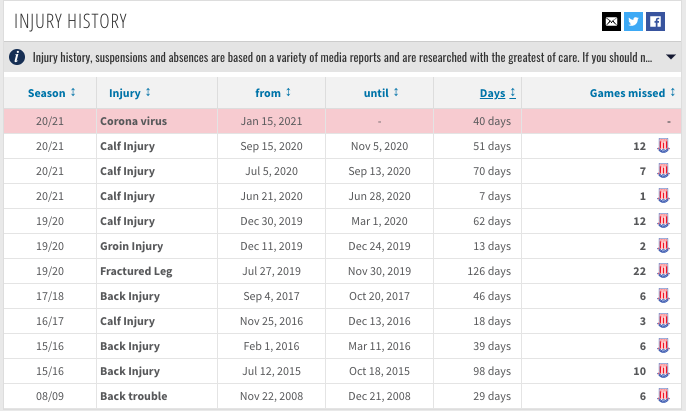
He has only played in 247 minutes of first-team football dating back to March of last year. Then he came out in an interview recently stating he was “headed for retirement” until he got a call from South Florida. None of that, including his extended injury history in the last 17 months, shows the signs of a guy who will be coming late to a training camp/pre-season (due to the wait on an International Transfer Certificate [ITC] and P-1 Visa) and be ready to start on opening day.
shawcross injury

The Shawcross issues and the Leerdam signing lead to an inevitable Leandro Gonzalez Pirez and Nico Figal center-back pairing to start the season. In the primes of their careers, both guys should be ready to lead this team from the back as they were the best pairing of last year. Not to say it’s the perfect pairing or best pairing in MLS, but with a little bit of added chemistry, help from the midfield, and security possibly by the wing-backs, improvement from this duo should be expected in 2021. Plus, Neville should be very tactically strict, and the club won’t see formation changes from week to week.

In order, my CB depth chart looks like this: LGP, Figal, Shawcross, Makoun, and Mabika (if he’s to sign for the first team). Ian Fray doesn’t make the list after his unfortunate ACL injury at the beginning of preseason.

We wish you the best, Ian.

Projected Opening Day Defensive Lineup

In goal, Miami will field John McCarthy, of course. On the left, Gibbs could start, but that’s in July. Jones will be there until then. Both Figal and LGP will be in the middle as the center-back pairing we should look forward to this year. Shawcross as the immediate backup. And Leerdam will take over the right side with Nealis right behind him on the depth chart.

Compared to last season in which Miami fielded a backline of Robles, Sweat, Figal, Torres, and Powell on opening day in LA, I’d say that this is quite the upgrade.
What Does LaMarcus Aldridge Add to the Miami Heat?

Instead of discussing more of those trade possibilities, involving who gets sent out of Miami and who could be on their way in, it’s important to take a look at the buyout market. There may be a need to sign some certain shooters, such as JJ Redick if Duncan Robinson or others are included in a deal, but let’s take a look at the one player on everyone’s mind.

It seems as if LaMarcus Aldridge will get bought out by the San Antonio Spurs, which many have speculated that Miami would be a front-runner to sign him. Now, although I want to dive into him as a fit primarily, it must be noted that there is a major need for any type of bigs, and not just as a Bam Adebayo sidekick.

Loading
Loading...

If the Heat were to trade for a guy like Kyle Lowry, Precious Achiuwa and Kelly Olynyk would most likely be included, meaning that Miami’s bigs would consist of Adebayo and Chris Silva, which is less than ideal.

So, although this may not be as fun as discussing the major improvements a shot-creating guard brings to the table, Aldridge may be able to bring the final element following the trade deadline at 3 p.m. tomorrow.

– The obvious element: a mid-range game

When talking about a team that is currently struggling from beyond the arc, adding a mid-range threat may not be the worst thing. It’s interesting to discuss the fit next to Adebayo, since he’s also a player that finds himself inside the arc as the guy the offense runs through.

The main difference is that Adebayo play-makes and runs sets in those spots, while Aldridge looks for shot attempts. It could create an intriguing balance when they share the floor, as well as defensive adjustments incoming when they interchange.

It seems as if praying for three balls to drop on any particular night is not the best offensive scheme, and diversifying the personnel a bit with an Aldridge type to compliment another acquisition may be the perfect choice.

– A stretch big, important above the break threat

Aldridge is currently shoot 36% from three this season, and it’s not just by making the occasional short corner triple. He will most likely find himself as that corner spacer frequently when sharing the floor with Adebayo, but the ability to make the above the break triples is a huge asset.

The growth in attempts is another positive sign, since he went from three balls being a rare thing to skyrocketing to 3 attempts per game over the past two seasons. It’s important for veterans to develop this skill organically as they age, since it becomes a crucial aspect when discussing the longevity of a player, especially bigs.

– Downhill threat to Aldridge buckets

Now, this play is a perfect example of how Aldridge would be able to thrive in a Heat offense. As seen above, DeMar DeRozan drives baseline while collapsing the defense, as Aldridge floats to the free throw line in the dead spot for an ideal jumper.

The reason this is important is when you replace Derozan with Jimmy Butler on this play. It’s widely known that Butler’s downhill gravity is an elite attribute, due to his methodical movements at the basket and capability to get to the free throw line with ease.

This creates yet another interesting aspect for Coach Erik Spoelstra’s play designing, since these type of possessions almost always end up in a three-point attempt, which could change Miami’s philosophy slightly.

– More pick and pop, including some 4-5 pick and pop

Aldridge gives Miami a much more trusted pick and pop action, but there a few extra elements to this importance.

For one, the reason Lowry and Victor Oladipo are such valued players for Miami is since they lack those on-ball threats who make a simple PnR and other sets more effective, since Butler is the only trusted guy who can consistently do that for this team. So, an attacking Lowry makes the Aldridge acquisition even more valuable, while sticking him around a bunch of shooters wouldn’t be the best situation.

The second part of these pick and pop sets is the ability to run them with Adebayo as the ball-handler. It’s not ideal for defenses to have their power forward and center defending on the perimeter, which makes this action even more effective against switch heavy schemes. Miami tries to run a lot of stuff like this with Adebayo and Kelly Olynyk, which may not look much different, except a bit more trust when it’s a savy vet like Aldridge.

– Some isolation ball

The non-Butler minutes are continually harped on with this Heat team for obvious reasons, and Aldridge may give Miami some different looks in those minutes. Now, this is not to say that he will be carrying offensive sets while Butler’s on the bench, since that is far from what I’m saying, but it’s all about those extra options to prevent stagnant offense.

Miami’s motion offense clearly leads to a bunch of back-cuts and things of that nature, but a guy that is capable of backing down a mismatch, as the rest of the team clears out, allows their usual motion to be even more of a threat.

Once again, this dive into Aldridge should not be twisted into any thoughts of this acquisition changing things for Miami dramatically, since it’s just about the minor improvements that’ll make the difference. And besides, a guy off the buy-out market isn’t expected to provide immediate and major changes, since that is what the trade market is for, which will continue to be explored over the next 24 hours.

5 Takeaways from Heat’s Loss to Suns

The Miami Heat lost to the Phoenix Suns on Tuesday night in the last game before the trade deadline. Since there wasn’t many takeaways from this game particularly, I took some turns into trade additions. So, here are five takeaways from not only this game, but the team overall…

#1: The shot-creating/play-making absence apparent.

Instead of utilizing my first takeaway to discuss shooting struggles every single night, it’s important to instead evaluate the reasoning or replacement necessary. The shot-creators are the ones who are currently being discussed in possible trades, and tonight’s game only furthered that point of need. One example is the box score half-way through the second quarter. Miami’s bench included Trevor Ariza with 1 shot attempt, Tyler Herro with 3 shot attempts, Andre Iguodala with 0 shot attempts, and Gabe Vincent with 0 shot attempts. While this may not seem like a big deal to some, it just shows the areas that Miami takes a major decline in when Butler steps off the floor, which the struggles tonight were actually with Butler on the floor as well as I will discuss next.

#2: An off Jimmy Butler night early basically digs Miami a deeper hole.

When Butler finds himself on one of these pieces, it’s usually in a very positive manner. But tonight just was not his night, as he just looked out of sync on offense early on, leading to a 15 point deficit at the half. The point of this discussion is not to talk about Butler struggles, since an off-night was pretty much due. But it furthers the point about the supporting cast, since although the Heat have struggled on exceptional Butler nights, they just have zero chance when he has the slightest of issues. Now, not to insert the trade possibilities into every point, but this is another reason for that being a necessity. That Kyle Lowry or Victor Oladipo type is the guy who makes the difference when that occurs by taking over as an on-ball threat.

#3: The Bam Adebayo element: Reading the situation.

Bam Adebayo has a unique gift to read the floor, attack match-ups, and make the right decisions as an extraordinary play-maker. The only issue with that is sometimes that unselfishness takes control, leading to the constant worry of getting other players going. Butler has been a culprit of this as well over his Heat tenure, since he’s capable of dominating as soon as the ball is tipped, but decides to get his teammates into a flow. But this situation is completely different, since it’s been a common theme of offensive struggles with the over-reliance on role players. It’s just a clear area that may need a bit more selfishness inserted in order to give the team the best chance to win, since forcing back-door bounce passes to get another player into some sort of rhythm actually doesn’t help all the time.

#4: Kendrick Nunn silently having one of his better games of the season.

Now, while a lot of people may want to only hear Kendrick Nunn’s name when it’s attached to a trade deal, his performance tonight must be noted. When it seemed as if this game was clearly out of reach, Nunn battled in the third quarter scoring 13 points, and cutting the Suns’ lead down slightly. It’s no surprise that he can score the ball, especially after an incredible run after being inserted into the starting lineup, but then he began to fall off a bit for this last stretch. And well, that’s the Kendrick Nunn story, since consistency can’t really be counted on. Either way, his fight throughout this game to either try and win or to boost his personal stock seemed to work, as he showed the upside to his game, which begins and ends with scoring.

#5: Who could this be the last of with Miami?

The final and overall takeaway from this game is the looming thought of what this team may look like past the deadline. The Heat’s next game is on Thursday at 7:30 while the trade deadline is on Thursday at 3:00. So, that means this could be the last game for a few players wearing that Miami Heat jersey, or it could just be yet another game of many if they elect to keep this same team. While that may not be a statement many want to hear, it’s just something to prepare for if these discussed trades don’t work out. Now, in my opinion, instead of diving even deeper into trade packages, player fits, and more, this game tonight was basically the icing on the cake of this team needing a spark. And well, there are some “sparks” on Miami’s current radar.

How Does Victor Oladipo Elevate the Miami Heat?

Victor Oladipo and the Miami Heat. It just rolls off the tongue since it’s the team that has been placed next to his name more than the four other franchises he’s actually played basketball for.

And as we get closer and closer to the trade deadline, it’s a name that will continue to be linked to Miami, as they’re searching for a shot-creating boost at guard, while Oladipo’s current team just went on a 20 game losing streak, before being snapped when he wasn’t even playing.

Loading
Loading...

Now, while the Kyle Lowry situation continues to be the headline, as I highlighted his fit with Miami previously, Oladipo fills some of those same holes as well.

Instead of diving into the many angles of a possible trade, since it can change by the minute leading up to Thursday, the actual areas of elevation seems to be the part to dive into.

The first part is the addition of that point of attack defender that gets harped on time and time again. Miami’s interchanging defensive scheme may have placed them at the top of the defensive rating statistic since Jimmy Butler returned, but there are still clear breakdowns that occur with the Heat’s defensive guards.

Miami’s 2-3 zone may be looked at as a natural change for the Heat’s approach, but a major reason for that has been to hide some of Miami’s poor defenders and allow them to thrive on that end. It’s the same situation as a Lowry insertion, since it automatically flips the identity of this team.

The offensive side of the ball has been a major issue for Miami, and you may think bringing in a 32% three-point shooter since joining Houston may not be the right call. But it’s not just about the shooting.

It’s pretty clear that even if Miami loses some shooting on the current roster, they can play the buy-out market, which will continue to heat up more and more with shooters. To that point, the actual need is a guy who can score the ball on his own. And by that I mean without the reliance of his counter parts.

The construction of this team is to place Butler and Bam Adebayo in spots for them to get to their peak level. And I honestly believe a shot-creator is the one piece that forces another Adebayo leap, and gives Butler the needed help to lift some of the weight off of his shoulders.

It seems like the Oladipo ordeal will be a situational thing for Miami once again, as they await some pieces to fall in place. But if there’s any general question marks next to the actual fit, other than the long-term uncertainties by waiting until free agency, there shouldn’t be.

It must be simplized to a player’s want to play for a certain team and the team’s need for an elevation in certain parts of the game. So the answer is yes, Oladipo does elevate this team at the current moment.

How Would Kyle Lowry Fit with the Miami Heat?

The Kyle Lowry discussions have gained more and more traction after Kevin O’Connor of the Ringer reported that league sources say the Heat are pursuing a deal for Lowry harder than anyone. So, that obviously means the overall chatter has been about the pieces included in a deal, the long-term situation, and of course, the immediate fit.

To that point, it seems necessary to dive into the areas of this team that Lowry would be able to improve upon arrival. For starters, the relationship with Jimmy Butler and Bam Adebayo makes this even more interesting, while that big 3 can be the one counter to the Brooklyn Nets big 3.

It’s no surprise that the Nets will be able to score the ball at will when fully healthy, so why not try to rival that with a defensive core if you’re the Miami Heat? And well, although there is optimism about the offense returning to form, the defense seems to have the most potential.

This defensive trio can clearly wreck havoc on a night to night basis, so let’s dive into the opposite side of the ball to see the offensive adjustments if a Lowry pick-up was made.

– The extra attacker, the missing piece

Another article, another discussion about Miami’s need for an attacker. The three-point shooting has been harped on constantly over the last few games, but it’s actually magnified the point about the absence of a downhill threat next to Butler.

The reason that the main focus for Miami’s current personnel is to keep shooting is since they don’t have anything else to adjust to. They’ve got a few shooters who have trouble with finding separation at times, which leads to chaos when shots aren’t falling.

So, this leads us right into the Lowry fit, since as seen above, he gets the ball in transition and immediately gets to the rim with one of the league’s most versatile defenders guarding him. There’s a reason that so many transition plays end up in pull-up threes or setting up half-court offense. It’s because many players don’t have that in their arsenal at this stage, which occurs more and more when Butler is off the floor or even off the ball.

He works angles as an attacker as well, which is exactly what Butler does for Miami on a consistent basis. He’s a high IQ guy who can find favorable match-ups, as seen here when he turned the corner to force Kelly Olynyk to switch onto him.

Now, this is not one of those instances where you throw around the term “high IQ” as a viable description. It’s actually to showcase his knowledge of not only the game, but the league. He can control the pacing, much like Butler, by getting to the line late in games or utilizing exaggerated movements to maybe work an official.

– The Added Shooting Element

Well, here we are again, talking about shooting. Except this time it’s being discussed in a positive manner, since Lowry has been having a good year shooting from beyond the arc. He can be trusted to hit some catch and shoot triples as seen in that video clip, but more importantly, the above the break threes are the major addition.

Those three balls have gone from a major strength to a major weakness for the Miami Heat, which is halted even more with the limited offensive options that I discussed earlier. Even when discussing a lot of the Heat’s shooters during their hot stretches, they still create issues in other areas of the game.

But Lowry brings a defensive presence, a trusted play-making ability, and the primary element, a nightly closer.

– The Spo/Lowry duo leading to creativity

After depicting some of the obvious elements to Lowry’s fit with Miami, it’s time to discuss arguably the most intirguing duo if this deal was made: Erik Spoelstra and Kyle Lowry.

While I’ve discussed Butler and Lowry quite a lot, Bam Adebayo is still going to be the primary ball-handler and play-maker in most of the Heat’s advanced sets. Now, this means Lowry can be utilized in a completely different way off the ball, which seems to benefit him quite a lot.

If you are having trouble imagining what this may look like, watch the clip above while replacing Fred VanVleet with Butler and OG Anunoby with Adebayo.

I’ll wait.

Okay good, so now you see the Spoelstra element to this addition.

– The need for a “go get a bucket” guy

The Heat are 22nd in the NBA in points per possession in isolation, while being 3rd in points per possession off a screen. Now, that stat basically screams the lack of a guy who can create for himself to just get a bucket.

This in no way means Lowry would be utilized in an isolation fashion, but it does mean that he’s capable of doing so in a stagnant offense. In the clip above, Lowry makes a tough turnaround jumper with Butler blanketing him, which is the exact offensive element that this team misses when Butler isn’t trucking people to the basket.

Lastly, it’s important to analyze these type of things in a very simple way at times, since overthinking it may fog the original thought. And well, the simple takeaway is that if you have a chance to insert a six time All-Star and NBA champion next to Butler and Adebayo, it’s a natural fit.

Important Marlins Questions: Part 3

With the 2021 MLB season starting in less than a month, the Marlins have a lot of choices to make. In my next three articles, I will detail my prospective answers to these questions. Here they are:


  1. Where does Garrett Cooper fit in Miami?
  2. Who starts at 2nd base between Jazz Chisholm and Isan Diaz?
  3. Who will be the 5th man in the rotation?


In my third and final article in this series, I will take a look at a pressing question for the Marlins entering the new season. Here are some of the best options on the table for Miami, with some pros and cons to go along with each possibility. Clearly, there are 7 main arms that could potentially find themselves on the Opening Day Rotation: Sandy Alcantara, Pablo Lopez, Elieser Hernandez, Sixto Sanchez, Trevor Rogers, Nick Neidert, and Gio Gonzalez. There are multiple ways Miami can take this:


4 Expected + Gio


I was very high on the Gio Gonzalez signing when the Marlins went out and got him. After taking more and more time to consider the options at hand, putting Gio Gonzalez in the rotation would effectively stunt the growth of the young arms of Trevor Rogers and Nick Neidert. This option puts Sixto, Sandy, Pablo, and Elieser as the key arms with a lefty veteran in Gonzalez. With two solid young options almost completely ready, the value of Gio Gonzalez doesn’t outweigh getting Rogers and Neidert innings in high leverage situations. I wouldn’t go this route if I’m the Marlins for that reason. Rather I would opt for one of the two options below. 


Early 6 Man Rotation 


With Sixto Sanchez starting his Spring late and most likely on a pitch limit in 2021, starting him in the minors could guarantee that he is pitching later in the season (which would be beneficial to him whether or not the Marlins are in a pennant race). By allowing both Rogers and Neidert to get innings early, the Marlins can potentially have more data to work with in deciding who stays and who goes. Gio Gonzalez could be a solid veteran presence at the start of the season, especially when the Marlins are still in the hunt. The major con of this option is that Sandy pitches every 7th day, rather than every 6th day. For this reason, this option will most likely be saved as a ‘just in case things go very poorly’ option. If the Marlins falter early, this is their best option to grow for next year.

Loading
Loading...

5 Young Arms


This is the best option for Miami in my opinion. Start Sixto in the minors and have Neidert and Rogers battle out for the 5 spot in the rotation when Sixto is ready to come up. Move the non-starter to the bullpen for long relief in combination with Gio Gonzalez. Both can then be used for spot starts throughout the course of a long season on double-header days which are bound to happen. This makes it so the Marlins have their best young arms out there on any given night, which puts them in the best situation to compete. 


Overall

I hope that the Marlins opt to take option 3 in games that matter. Once they are out of contention (or if they are), they can switch to option 2 to get Neidert and Rogers even more experience in a Major League environment. With Opening Day just 11 days away, Marlins fans will have all of these answers soon. 


This has been a fun series of articles to write, and regardless of what Miami does, I think they are poised to exceed expectations this year one way or another. 


Until Opening Day.

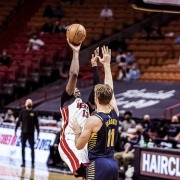
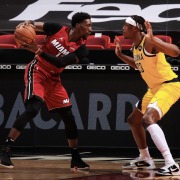
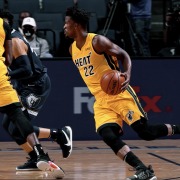
5 Takeaways from Heat’s Overtime Loss to Indiana

The Miami Heat lost in overtime to the Indiana Pacers on Sunday afternoon. It was a roller coaster of a game for Miami, going from constant struggles to great offensive runs to end regulation, then finishing overtime in a disappointing fashion. Anyway, here are five takeaways…

#1: A nightly takeaway: Miami’s shooting continues to be the downfall.

The first takeaway seems to be a copy and paste version on these pieces following every game, mostly since the issues being discussed hasn’t changed. Miami shooting 3 for 18 from beyond the arc in the first half is clearly no change in the offensive issues. Now, it must be noted that there aren’t many offensive adjustments to be made regarding three-point shooting, since the team’s personnel can’t afford to go away from it. They’ve lacked extra attackers in the rotation, which becomes even more apparent when the shots aren’t falling. Although it’s pretty much the entire team that is enduring these struggles, Duncan Robinson hasn’t made it any better, since his story went from lack of attempts early in the season to a lack of makes currently.

#2: Bam Adebayo early aggression kept Miami alive, and brings a bit more clarity.

Bam Adebayo was one of the few bright spots for Miami in the first half, since he not only brought the needed aggression, but also the essential energy. And that’s not just because of a highlight dunk early on, since the jumper was looking consistent as well. The non-Butler minutes are continually harped on for obvious reasons, but the non-Bam minutes looked even worse for Miami today. Now, this clarifies two things. For one, although Adebayo’s high impact play isn’t as clear when others are shooting poorly, it just makes his natural talent to score the ball more apparent. He continued to take advantage of switches when he got the ball in the paint, mostly when Myles Turner was off the floor or out of the play. The second element to this is the clear need for a front-court addition, since adding veteran wings to supply Butler is important, but Adebayo needs some relief guys or sidekicks since Achiuwa has become a non-factor.

#3: Jimmy Butler is Miami’s offense.

Well, here we are again, discussing the Miami Heat’s offense even more. Instead of looking at the exact numbers and reasons for the struggles, it’s important to note the only reason Miami continues to compete with teams considering the offensive trouble. Two words: Jimmy Butler. When you talk about consistent play this season for the Heat, you’d probably start and finish with Butler, since he finds himself with a similar box score every night. And with the lack of three-point shooting, his downhill impact is even more important. He put his head down per usual to flow into his close bank-shot or go-to floater, mostly since the usual drive and kicks are a non-factor in games like this. The way that Butler can keep this team competitive no matter the circumstance should truly not be overlooked.

Loading
Loading...

#4: A longer observation for Heat’s newest addition, Trevor Ariza.

Trevor Ariza got some increased run in today’s game against the Pacers, even becoming the first player off the bench in the second half. He played a major role late in the second half, as well as overtime, which says a lot about him as a player for the trust to already be that high. He hit a nice corner three, a solid drive, and some very positive defensive possessions throughout this game It just furthers my earlier point about that front-court addition, since when Adebayo has a versatile, small-ball four next to him who can shoot and get to the basket, it just creates for a natural flow on both ends. Although it’s unclear this early if Ariza will be that guy to that extent, it’s just a clear hole that he can possibly fill when he gets to his peak abilities at this stage.

#5: The two-way guys: One with a productive day and the other waiting to be utilized.

Gabe Vincent stepped into that back-up point guard role with Goran Dragic out, and he was probably the only guard who gave Miami any type of offense, while also competing on the defensive end. Miami’s 2-2-1 press is utilized religiously when Vincent is on the floor, since the tandem full-court with Andre Iguodala has proved to be highly effective. The other two-way guy, Max Strus, was not a factor in today’s game since he didn’t get any playing time, but it’s still a conversation to be had. Continued shooting struggles when being wide open is one thing, but not experimenting with a pure shooter during those spurts seems a bit interesting. He’s also another one of those guys who compete on the defensive end, which raises some question marks about the decision.

5 Takeaways from Heat’s Loss to Pacers

The Miami Heat lost to the Indiana Pacers on Friday night, due to Miami’s rugged offense and Indiana’s explosive offense. Miami loses two straight games for the first time since the West Coast trip, but they will play this same Indiana team on Sunday. Anyway, here are five takeaways from this game…

#1: Miami’s defense struggles early, but offense somehow stands out more.

Although the Indiana Pacers scored 68 points in the first half, while the Heat put up 58, the issues on the offensive end seemed much more important to note, even though Miami pretty much allowed Indiana to skip through the lane to get to the basket. The reason for that is due to the overall perception of the offense, from inconsistencies to the lack of three point shooting all of a sudden. Miami shot 19% from beyond the arc in the first half, which has become a common theme for this team as of late. This reflects onto Miami’s plethora of guards, mostly the two in the starting lineup, in Kendrick Nunn and Duncan Robinson. Nunn has looked to lose that overall scoring confidence with the ball in his hands that he regained when being inserted into the starting lineup, while Robinson has struggled in the adjustment from the sprinting DHO’s to other unique spacing. Until those two things are cleaned up, it’s hard to see Miami’s offense coming together.

#2: Tyler Herro keeping Miami afloat in first half, in an interesting way.

If there’s been anything that I’ve reiterated time and time again about Tyler Herro’s next big step, it’s that getting to the line elevates his game. Now, 3 for 9 from the field through 16 first half minutes may not scream keeping a team afloat, but the 6 for 6 from the free throw line does. He has a natural trait to avoid contact when taking it to the basket, instead of drawing the contact when defenders rise, but he actually drew more fouls with his jumper today. Not even through a pump-fake, but just through his natural shooting motion off the dribble. He was one of the few players for Miami that flashed any sense of an offensive run, since once the game flows into a rhythm in Miami’s favor, it’s when Herro truly begins to thrive on that side of the ball.

#3: Bam Adebayo early aggression was much needed for lack of spark.

Other than Herro’s short spurts discussed previously, Bam Adebayo was actually the guy who kept Miami going throughout. For one, he started off the game with 8 straight points, but I’m not so sure that’s a positive thing when evaluating the team as a whole. He also had 5 free throw attempts in the first half, which is when you usually know that’s he’s being aggressive on that end. When the team is shooting that poorly from deep, it’s even more important for him to generate offense through his individual actions with the ball in his hands. But even when he shoots 6 for 8 from the field in the first half, there are still moments that the offense must work through him instead of the repetitive drive and kicks. When he flashes that free throw jumper early, it seems like a good call to alter the offense a bit to find him at that free throw line to work from there.

#4: Indiana’s shooting catches fire, not only in third quarter, but throughout entire game.

The Indiana Pacers are one of those teams that just have plenty of options, and are a clear representation of “depth.” And well, that deep shooting rotation was shown tonight, since the efficiency numbers were through the roof from a shooting aspect. For one, Miami was giving up clear drives early on, mostly since tough offensive possessions result in poor defensive follow-ups. But the three point shooting was actually the aspect that began to kill Miami, since Indiana began to catch fire, while Miami couldn’t knock down one. I’m not exactly sure the high percentage shooting from Indiana can all be due to Miami’s defense, since they actually had some pretty good contests on a lot of their jumpers. Either way, this ties back to the first takeaway involving lack of offense and playing to Indiana’s pace.

#5: Kelly Olynyk struggles offensively, but that can be fixed with one change.

One of the main points I’ve made involving Kelly Olynyk proved to be true following Adebayo’s absence in that recent stretch. The offense ran through him on the perimeter, which basically allowed him to thrive in other facets of the game than three point shooting. Now, although the numbers say that the fit next to Adebayo is effective, it seems like a minor change may do him justice, as well as everybody on the team. It’s hard to truly evaluate Trevor Ariza after his short stint, but it seems like some type of small ball 4 can alter some offensive struggles, especially since Spoelstra loves to go that route come playoff time. When evaluating the current roster for changes, aside from the trade market, that may be the only possible rotational change that can make the difference.

A Breakdown of Miami’s Final Possession Troubles

The Miami Heat fell short against the Memphis Grizzlies last night, after Ja Morant went coast to coast for a layup to go up 2 with 1 second left. Now, Miami clearly didn’t put themselves in the best spot to win after an awful offensive performance, but they still had an opportunity to send it to Overtime with one final stop after the game-tying free throw.

So, let’s take a look at this defensive breakdown that occurred on this final possession…

Now, to start this off, let’s look at the set-up and spacing on this offensive play for Memphis. The most important part is the placing of Brandon Clarke, since he’s being guarded by Bam Adebayo, which he stands in-between half-court and the three-point line without setting a screen.

This eliminates any type of switch or readjustment on the defensive end to regather a certain angle of the cut-off.

The next element of this occurs at half-court with Ja Morant, since Butler makes a minor mistake. Instead of sinking in slowly against a speedy Morant, he moves up for a slight cut-off against him, leading to that advantage once he passes mid-court.

And well, this leads us to the biggest breakdown on this possession. Butler no longer has the correct angle in front of Morant, which means the cut-off is majorly needed from Duncan Robinson, and Butler seems to expect this to occur.

Robinson was in position to stop the ball, but he flew out to the wing to eliminate the pass as soon as Morant got inside the arc. An interesting element to that, other than Robinson just making the wrong read, is a possible charge opportunity even if Morant made that pass. He wouldn’t have been able to stop his momentum if he swung the ball, which would’ve been a huge change for Miami.

It’s always important to force the ball-handler to make that extra pass at this point in a game, and live with the result of the jumper instead of the layup. But once again, this could be an important learning moment for this team, especially since they’ve found themselves on the winning side of things in most of these games that have gone down to the wire.

The final inbound play with one second to go has been a main topic from this game for obvious reasons. Adebayo is the trusted in-bounder on this play, which as Coach Erik Spoelstra said, he trusts “10 out of 10 times.”

For starters, the drawn up play here was actually something that can be highly effective. Robinson runs up to the top of the key to clear out, while Dragic sets the back-screen for Butler, which leads to the primary option of a Butler lob pass.

Although that’s the type of play that has a chance of working, Kyle Anderson reads it perfectly, sliding down to cut-off the alley-oop. The main issue here though is exactly how Adebayo described it post-game, which was a “predetermined decision” to make the pass to Butler.

Loading
Loading...

To that point, go back and take a look at Adebayo’s eyes on the play. He’s looking and turned towards the rim the entire time, which most likely had an impact on Anderson’s read of the play.

This game was a clear representation of the second night of a back to back, due to late-game miscues and offensive issues throughout. But it’s still important to discuss these types of moments, since it’ll allow the team to look back at it down the line as an area of growth.

5 Takeaways from Heat’s Loss to the Grizzlies

The Miami Heat fell short to the Memphis Grizzlies on Wednesday night, after a Ja Morant layup to take the lead with 1 second left on the clock. Miami’s offensive issues throughout were clear, which was why it was odd that they even found themselves in this game late. Anyway, here are five takeaways from this game…

#1: Max Strus gives Miami a first half push.

Well, I didn’t really expect Max Strus to be the first takeaway on this article tonight but here we are. One thing that must be noted is the level of difficulty to be unexpectedly thrown into the fire time and time again, and producing immediately. This has a lot to do with the team harping on guys always staying ready, since you never know when your name will be called. Although his first three-point shot of the night dropped, it was actually the off-ball cutting that was a main source of offense. Obviously that’s just a part of Miami’s offensive scheme, which occurs even more once the defense respected that first three-point make, but it’s still impressive to see him reading a defense with his limited minutes at the NBA level.

#2: The offensive need for an off the dribble scorer with bench unit.

When Max Strus is the highlight of the bench unit early, it’s clear Tyler Herro and Goran Dragic aren’t capitalizing on their scoring role. Forget their usual pick and roll mid-ranges or catch and shoot threes, they were just clearly missing a scoring guard to get a bucket off the dribble, especially during those non-Butler stretches. Neither of them are incredible attacking threats, since they usually control with their jumper early, but that was a main reason offensive issues were fluid throughout. While Dragic may look a step too slow at times as a primary scoring option, the eyes immediately turn toward Herro, who majorly needs to take that initiative during those moments, which also comes down to reading the situation.

Loading
Loading...

#3: A noticed change in Duncan Robinson’s usual offensive abilities.

Duncan Robinson got hot early in the first quarter, then cooled off a bit the remainder of the half. But instead of evaluating makes and misses, the part before the actual jumper is more important for Robinson than anything. He’s used to immediately firing when coming off a DHO or drive and kick, but they’ve had to go away from that a bit more due to the way defenses have been guarding him. This leads us to the noticed change, which is a sense of patience when receiving the ball. The scouting report on Robinson never really includes that slight hesitance before the jumper, which can pause the defender as he gets into his shooting motion. Another aspect is the pick and roll sets he has been forced to utilize a bit more, since it’s an action he can find shots that appear to be open a bit more often. Once some additions are made to his offensive game, then shots actually dropping won’t ever be the part being observed.

#4: A rough third quarter with Jimmy Butler out there alone.

More offensive issues occurred in the third quarter for Miami, which looked even worse than earlier. Miami scored 16 points in the quarter, while Jimmy Butler scored 10 of them. He brought the needed intensity through the game, yelling after every single bucket or foul that he got. The jumper looked good for Butler throughout, which led to him getting to the mid-range in the third. And as I mentioned his supporting cast not able to get into a flow, he went away from drive and kicks, and just utilized drives. And well, most of those end up in a layup or two free throws due to his aggression and strength. This once again circles back to that need for an on-ball offensive threat, which although the newest member of the Heat won’t be able to alter completely, there are some things he can possibly touch up which I’ll discuss next.

#5: The area Trevor Ariza could possibly fix for Miami.

To reiterate the lack of penetration when Butler isn’t on the floor, there’s a chance Trevor Ariza could fix that a bit. Although he’s mostly known as a 3 and D guy, he can bring the element of attack if he’s fully healthy. Obviously we can’t truly evaluate him until he actually plays some games with this team after missing a year, but that ability is the one thing that Andre Iguodala doesn’t currently have. Iguodala usually finds himself in the corner, leading into off-ball screens which is highly effective, but when he’s sharing the floor with Dragic, Herro, and Robinson, they need that guy who can drive to the basket consistently. Once again, there’s a very good possibility Ariza won’t be able to do that consistently, but the level of athleticism that is remembered can be utilized.