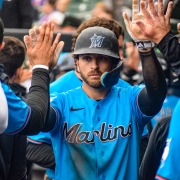
Miami Marlins 2026 Season Outlook and Predictions

The Miami Marlins and Clayton McCullough look to build off of their 79-83 2025 campaign. The Marlins got better over the off season and saw a lot of development from their young players last season and into this Spring. While the Marlins projection for wins is still only 72.5 I think that they will clear this number quite easily. Their pitching staff is loaded with high end, proven talent, and their lineup has a lot of emerging, interchangeable pieces. With the few free agent additions, and the overall development of their blossoming stars, the Marlins are well in line to surpass that win total.

So here is the 2026 Miami Marlins outlook.

Total Spending for the Marlins in 2025-26 Free Agency- $21.5M

Pete Fairbanks, $13M

Chris Paddack, $4M

Christopher Morel, $2M

John King, $1.5M

Austin Slater, $1M

Fairbanks had been elite for the Tampa Bay Rays for 5+ seasons recording 90 saves and posting a 3.30 ERA. Fairbanks has been part of winning pitching in 12 playoff games most notably the Rays 2020 World Series run and still has elite advanced metrics. Having a proven closer will be crucial to winning more games in 2026 for the Marlins as it won’t be as much of a revolving door as it has been in years prior.

For Paddack, it’s more of a depth signing. Since his 2019 rookie campaign, things have gone downhill and he has bounced around the majors. The Spring was a great start for Paddack who posted a 0.69 ERA in 13 innings while striking out 12 and only walking 3. Hopefully in a lower leverage role surrounded by elite arms the Marlins can get a glimpse of what Paddack once was.

Morel and Slater bring some much-needed right-handed pop to a lineup –especially an outfield– that features a lot of lefties. King will likely serve a spot role out of the pen for left-on-left situations as he posts a .628 OPS against lefties.

Pitching Staff, One of the League’s Best

It starts with the starters, led by a former Cy Young in Sandy Alcantara the Marlins pitching staff has a chance to be elite yet again. Beyond Sandy we look to three, very promising young starters, Eury Perez who had a great 2025 although the surface level numbers may not agree. Perez has plus-plus stuff and is the future ace of this staff. Then we look to Max Meyer who had an amazing Spring training, working on his most important problem, commanding the strike zone. In 7 inning this spring Meyer had 12 punchies to one walk, a huge sign of what’s to come. Then we look to the back end with Janson Junk and Chris Paddack. Junk has yet to really break out, he has the stuff –especially the breaking ball which ranked in the 91st percentile of run value– he doesn’t walk guys, but he does often get hit around, a trend that continued this spring. He is still a solid 4/5 with room to grow, but a few bad outings and the Marlins could easily look to intriguing young arms like Robby Snelling and Thomas White. And lastly, Chris Paddack, the perfect guy to fill out this rotation.

The Bullpen

The bullpen was not the brightest part of the team last year, but they have some building blocks. Adding Pete Fairbanks to Anthony Bender, Calvin Faucher, Lake Bachar, and Tyler Phillips gives the Marlins bullpen enough stability to finish their starters games.

The Lineup: Stability and Depth

Although Kyle Stowers will start on the IL and Marlins fans will have to wait for Joe Mack to join the big-league team, the lineup is still serviceable, with a lot of interchangeable pieces. Starting in the outfield with Jakob Marsee, Owen Caissie (the MLB’s 42nd ranked prospect received in the Edward Cabrera trade), Heriberto Hernandez, and Griffin Conine. The outfield will have options day to day and will be able to endure the period without their star Kyle Stowers. Moving to the infield, the Marlins have Xavier Edwards, a contact Machine, Otto Lopez a solid infielder, and rounding it out with Connor Norby, Christopher Morel, Graham Pauley, Liam Hicks, and Javier Sanoja.

Beyond Hernandez, Ramirez, and Stowers, the Marlins lineup will rely on getting on base via the walk and the hit and hope for their power bats to drive in runs. Manufacturing runs and winning the low scoring games their elite starting staff keeps them in will be essential to their success.

The lineup isn’t the league’s best, but if they play to their strengths, they can complement their staff just fine.

Final Prediction and Some Bold Predictions

  • 81-81
  • Sandy Alcantara finishes top 5 in CY-Young voting and stays with the team
  • Janson Junk loses his spot to Robby Snelling, potentially moving to the bullpen
  • Agustin Ramirez leads the team in home runs
  • Owen Caissie in the race for rookie of the year

Marlins Open Up the Season at Home Against the Rockies

The Miami Marlins return to the diamond this Friday for their first series of the 2026 season. Fresh off of a 79-83 roller-coaster of a year. From trade rumors, to winning streaks, to All-Star appearances, and to losing streaks, the season had it all.

But this season, the energy surrounding the Marlins isn’t as high as it should be, the team is back, with many of the same, young and improving players, while they also added a high-end reliever, and solid back of the line starter.

Total Spending for the Marlins in 2025-26 Free Agency- $21.5M

Pete Fairbanks, $13M

Chris Paddack, $4M

Christopher Morel, $2M

John King, $1.5M

Austin Slater, $1M

Fairbanks had been elite for the Tampa Bay Rays for 5+ seasons recording 90 saves and posting a 3.30 ERA. Fairbanks has been part of winning pitching in 12 playoff games most notably the Rays 2020 World Series run and still has elite advanced metrics. Having a proven closer will be crucial to winning more games in 2026 for the Marlins as it won’t be as much of a revolving door as it has been in years prior.

For Paddack, its more of a depth signing. Since his 2019 rookie campaign, things have gone downhill and he has bounced around the majors. The Spring was a great start for Paddack who posted a 0.69 ERA in 13 innings while striking out 12 and only walking 3. Hopefully in a lower leverage role surrounded by elite arms the Marlins can get a glimpse of what Paddack once was.

Opening Weekend Preview

So, now to this weekend, the Marlins first series, one against the Colorado Rockies, one of the MLB’s worst teams. They went 43-119 last season and there just isn’t much going right there. This season will be another poor one in Colorado, and it’s the perfect opportunity for Miami to start their season off just right.

Game 1: Kyle Freeland Vs. Sandy Alcantara

The Marlins ace looks to continue his success from the second half of last season– posting a 3.33 ERA with .218 batting average against in his final 13 starts– in his 6th career opening day start. Sandy has had solid success as an opening day starter but sits with a 2-3 record. If Alcantara can be the Sandy everyone knows he is, the Marlins will open the season 1-0.

Freeland will be making his 5th opening day start –which tells you a lot about the Rockies– and is a guy that forces action. He performs better away from home but not by much still posting a career ERA over 4.00 away from Coors Field. Freeland has allowed an OPS over .800 to righties in his career so expect the Marlins to role with Heriberto Hernandez and Agustin Ramirez and get to the bullpen early in the weekend, something that will be crucial to a series victory.

Then maybe Marlins fans will get to see Chase Dollander

Games 2: Eury Perez vs Michael Lorenzen

First year back from injury wasn’t the best for Eury Perez, but he still showed glimpses of that wonderful rookie campaign. Despite the struggles his advanced statistics still stood out from the actual numbers. Perez’s year was actual really good posting a 3.23 expected ERA (83rd percentile), a .203 expected batting average against (88th percentile), and had a pitching run value of 9 (73rd percentile). His numbers didn’t look great, but the production was there and once again the Rockies are a perfect team to get the season started off right.

The Marlins once again have the advantage in game 2 and the lineup can surely take advantage of Lorenzen as he pitches to contact and has low-end stuff.

Game 3 Max Meyer vs Jose Quintana

The goal for the Marlins this weekend should be to sweep, they are the better team, they have the better pitcher in each matchup, they have the better bullpen, and they have the better lineup. Game 3 features Max Meyer, another exciting young starter who has struggled with walks in his past. For Meyer, it will be about attacking the Rockies hitters and bring the great Spring he had to fruition. Meyer struck out 12 in 7 innings of work while only walking one.

Just check out the metrics on his pitches https://x.com/TJStats/status/2031806551921496488?s=20

Qunitana is a career journeyman and vet. He will bring some stability to the Rockies staff and can beat you any given night. But as long as the Marlins handle business early in the weekend, the Marlins righties should have a field day against the 37-year-old.

Clayton McCullough will likely throw a few different lineups out there this weekend as the Marlins have the depth to handle any pitching matchup.

With all that, baseball is back, and this is the opening series preview for the Marlins.

Prediction- Series sweep of the Colorado Rockies


How to Protect Your Tech While Traveling to Sporting Events

30 seconds summary 

  • When traveling to sporting events, protect your tech by bringing only the devices you really need and keeping them in a secure, well-organized bag. Use strong passwords, enable tracking features, and back up your data before leaving. 
  • Keep phones and laptops out of sight when not in use, avoid leaving devices in cars, and protect them from weather, drops, and crowded spaces. 
  • Be careful with public Wi-Fi and charging stations, and always have a backup plan in case something gets lost or stolen. Smart preparation helps you enjoy the event without tech problems.

Introduction

Traveling to sporting events is exciting. Whether you are heading to a local stadium, driving across the state for a rivalry game, or flying to another city for a championship, the experience is often packed with energy, noise, crowds, and movement. In the middle of all that excitement, many people bring valuable technology with them without giving much thought to how vulnerable it can be. Phones, tablets, laptops, smartwatches, cameras, portable chargers, wireless earbuds, and other gadgets make travel easier and more enjoyable, but they also create risk. A packed stadium concourse, a tailgate lot, a rideshare stop, or a crowded transit station can quickly become the place where a device gets damaged, lost, or stolen.

Protecting your tech while traveling to sporting events is about much more than avoiding inconvenience. For many people, their devices hold work files, banking apps, family photos, tickets, travel reservations, and personal messages. Losing access to that information can turn a fun event into a stressful and expensive problem. The good news is that you do not need to be paranoid to stay safe. A few smart habits before, during, and after your trip can significantly reduce the chance of trouble.

This guide explains how to protect your devices physically, digitally, and practically while traveling to games, tournaments, and other sports events. From choosing the right bag to using secure charging habits and preparing for bad weather, each step helps keep your tech safe so you can focus on enjoying the event.

Understand the Risks Before You Leave

The first step in protecting your technology is understanding what can go wrong. Sporting events bring together large crowds, emotional energy, tight seating, long walks, and lots of distractions. In these environments, people are less likely to notice when they leave a phone behind on a seat or when someone brushes past them in a crowd. Devices are also exposed to food spills, rain, dropped bags, overheating in parked cars, and rough handling during travel.

Another issue is overpacking. Many travelers bring more tech than they really need. The more devices you carry, the more difficult they are to manage. Every extra charger, cable, battery bank, or accessory is one more thing to keep track of. Before leaving for the event, think carefully about what you actually need. If you do not need a laptop, do not bring it. If a tablet can stay at home, leave it there. Reducing your load is one of the easiest ways to reduce risk.

It is also important to understand venue rules. Some stadiums have strict bag policies, limits on battery packs, and restrictions on camera equipment or laptop size. If you ignore these rules, you may end up forced to return items to your car, throw something away, or awkwardly rearrange your gear outside the entrance. Planning around the venue’s policy keeps your devices safer and avoids unnecessary stress.

Choose the Right Bag for Your Devices

Your bag is your first line of defense. A weak, overstuffed, or poorly organized bag makes it much easier for devices to get scratched, crushed, or stolen. When traveling to a sporting event, choose a bag that fits the occasion and protects what you carry. If you are bringing a laptop for work before or after the event, use a padded sleeve or one of the many durable bags for laptops designed for travel and crowded environments. A bag with structure, internal compartments, and secure zippers offers far more protection than a loose tote or flimsy backpack.

Comfort matters too. You may need to walk long distances from parking areas, transit stops, or hotels. A bag that is uncomfortable encourages you to set it down more often, which increases the chance of forgetting it. Crossbody bags, anti-theft backpacks, or compact sling bags can be excellent choices depending on how much you need to carry. Look for features such as hidden pockets, water-resistant material, lockable zippers, and padded sections for electronics.

Keep your bag organized. Do not let your phone screen rub against keys or your charging cables tangle around earbuds and batteries. Use small cases or pouches for accessories so that each item has a place. An organization not only protects the gear itself but also makes it easier to notice quickly if something is missing.

Secure Your Phone Like It Is Your Most Important Device

For most travelers, the smartphone is the single most important piece of technology they carry. It often stores digital tickets, maps, hotel details, payment apps, emergency contacts, and camera access. That is why your phone deserves special attention before the trip even begins.

Start with a strong passcode, not a simple four-digit number that is easy to guess. Enable biometric security such as fingerprint or facial recognition if your device supports it. Turn on device tracking features like Find My iPhone or Find My Device so you can locate the phone if it is lost. Make sure the phone is backed up before you travel so you do not lose important information if the device gets damaged or disappears.

Physically, use a reliable case and a screen protector. Sporting events involve bleachers, concrete walkways, and crowded seating where phones can easily slip from hands or pockets. A protective case will not make the phone indestructible, but it can make the difference between a harmless drop and a shattered screen. Avoid placing your phone in a loose back pocket where it can fall out while standing, sitting, or moving through crowds. A front pocket, zippered pouch, or secured internal bag compartment is usually safer.

Keep Laptops and Tablets Out of Sight

If your trip includes work, school, or longer travel days, you may need to bring a laptop or tablet. These devices are especially attractive to thieves because they are valuable and easy to resell. The best rule is simple: do not display them unless you truly need to use them.

Avoid opening a laptop in unnecessary public places, especially in busy transit terminals, parking lots, or food areas near the venue. When you do use it, stay aware of your surroundings. Never leave it unattended on a chair or table, even for a moment. Many losses happen during quick distractions, such as ordering food or visiting a restroom.

Do not store a laptop in a visible car seat or plain sight in a vehicle. Even if you think you will only be gone for a short time, a visible device can invite a break-in. If you must leave a device in the car, power it down completely and place it in the trunk before arriving at the parking area, not after. This prevents anyone nearby from seeing where you hide it.

For tablets, the same principle applies. Keep them protected in sleeves or cases, and only carry them if they serve a clear purpose. Entertainment is useful during long travel, but once you reach the venue, smaller and less noticeable tech is generally easier to manage.

Back Up Everything Before the Trip

One of the smartest travel habits is backing up your data before leaving. People often focus only on protecting the device itself, but in many cases the information inside is even more valuable. If your phone, tablet, or laptop is lost, stolen, or damaged, a current backup can save you from major disruption.

Back up photos, documents, contacts, notes, and any work files you may need. Use cloud storage, an external drive kept at home, or both. Double-check that your travel confirmations, digital tickets, hotel reservations, and important contact numbers are accessible from another device if necessary. It is also wise to save screenshots or offline copies of tickets and directions in case you lose internet access during the trip.

Backing up does not prevent theft or damage, but it turns a potential disaster into a manageable inconvenience. With proper backups, you can replace hardware without losing the parts that matter most.

Protect Your Devices From Weather and Physical Damage

Sporting events often expose people to the elements for hours at a time. Rain, snow, wind, dust, heat, and cold can all affect electronics. Even if the game is in a covered venue, your travel to and from the stadium may expose your gear to weather.

Water is an obvious threat. A water-resistant bag helps, but small waterproof pouches or zippered plastic covers can offer extra protection for phones, chargers, and earbuds. If rain is expected, prepare before leaving instead of reacting after the weather turns. Moisture can sneak into ports, speakers, and seams even during short exposure.

Heat is another major concern, especially if you leave devices in a parked car. Cars can become dangerously hot very quickly, and excessive heat can damage batteries, screens, and internal components. Never leave laptops, phones, or power banks baking in direct sunlight. If the weather is hot, carry your devices with you and keep them shaded whenever possible.

Cold weather matters too. Batteries tend to drain faster in low temperatures, and rapid shifts between cold outdoor air and warm indoor spaces can create condensation. Keep devices insulated inside your bag and avoid exposing them unnecessarily.

Use Public Wi-Fi and Charging Stations Carefully

When traveling to a sporting event, you may find yourself relying on public Wi-Fi in airports, hotels, transit hubs, restaurants, or the venue itself. While convenient, public networks can expose you to unnecessary security risks. Avoid logging into sensitive accounts such as banking or work systems unless you are on a trusted network or using added protection like a virtual private network. If possible, use your cellular connection instead of public Wi-Fi for important tasks.

Charging stations also deserve caution. Free charging kiosks may seem helpful when your battery is low, but it is safer to carry your own charger, wall adapter, and power bank. Public USB ports can create both security and reliability concerns. A portable battery pack gives you more control and keeps you from being stranded with a dead device during ticket scanning or navigation.

Charge fully before you leave and bring only the cables you need. Avoid pulling out all your accessories in crowded areas because that increases the chance of leaving something behind.

Conclusion

Sporting events should be memorable for the right reasons. You want to remember the atmosphere, the crowd, the game-winning play, and the excitement of the trip, not the panic of losing your phone or discovering a cracked laptop screen. Protecting your tech while traveling does not require expensive gadgets or complicated systems. It comes down to preparation, awareness, and smart choices.

Bring only what you need. Use a secure and organized bag. Back up your data before leaving. Protect devices from weather, impact, theft, and digital threats. Stay aware of crowds, be cautious with public charging and Wi-Fi, and always have a backup plan. When you treat your technology like an essential part of your travel setup instead of an afterthought, you dramatically improve your chances of keeping it safe.
Sports Bettors Branching Into U.S. Online Casinos: Trends in 2026

From prohibition to proliferation.

Let’s be honest, the USA has a complicated relationship with betting, gambling and playing games for money. Despite it being the location of the most famous and iconic gambling hub – Las Vegas – for decades, gambling was driven underground and delegitimized. The expression, “what happens in Vegas stays in Vegas,” was about gambling as much as it was about the entertainment, frivolity and decadence. 


But the truth is, none of it ever stayed in Vegas. Even during times of total prohibition, gambling still took place. Banning something does not make it go away; it simply pushes it underground or offshore, particularly once people had access to the internet. Things have relaxed significantly, and attitudes towards gambling have changed. There is an increasingly common view that it is better to regulate gambling than to outlaw it. Nowadays, if state-run lotteries are included, 48 states allow some form of gambling.


Sports betting leads the way

The big change came in 2018, when the Supreme Court ruled that the federal Professional and Amateur Sports Protection Act (PASPA) was unconstitutional. The 1992 law was ruled unconstitutional, as states should be free to create their own legislation regarding gambling. That was almost eight years ago, and now 38 states (plus Washington, DC, and Puerto Rico offer legal sports betting in one form or another. It is safe to say that the regulated sports betting industry is booming.


While many people feared that online gambling would cannibalize physical establishments, this has not been the case. However, it is still sports betting that is the most widespread form of betting, but the most significant growth is from the online casino sector, and land-based casino revenue is also on the rise. Currently, residents of only seven states have legal access to real-money online casinos, but the popularity of this type of gaming has seen a massive uptick in social and sweepstakes casinos. In addition, there is a fair chance that New York could soon join the real-money fold, but it is still an uphill battle. 


Sports betting market is consolidating around major players

However, for now, it is the sports betting sites that have, so far, really cleaned up. DraftKings and long-time rival FanDuel have become dominant in the sports betting market. DraftKings is in 22 jurisdictions and is the market-share leader, with NFL betting the most popular event. However, as the market has matured, so too has the sophistication of the odds-makers, and many bettors feel that all the live data fed into the system means they are in with less chance of winning. In addition, unless you want to bet on some really random events, sports betting is only available when live sports are on.


Players becoming ‘iGaming curious.’

People who enjoy the thrill of expectation between placing the bet and seeing the result have been looking for other options. This is where online casino gambling comes into its own, whether at a purely social level or for real money. Many people playing at online casinos are discovering the entertainment value of casino games and slots. 


One of the great things about casino games, as opposed to sports betting, is that the games are always available. Casino.org – an independent review site that ranks and rates online casinos – finds that the best online casinos have an above-average RTP (return to player) rate of over 96%. This is calculated by random number generators and is consistent. Unlike sports betting, it is unaffected by events that occur in real time.


Who can play?

Regulated markets allow players to choose from hundreds of top-rated gambling sites that pay real cash. Bettors do not have to be state citizens, but they do need to be residents of the state when playing. So if you are visiting somewhere like Pennsylvania, New Jersey, Michigan, or West Virginia, you can play for real money on sites like BetMGM or DraftKings (yes, they have seen the advantage of entering the iGaming market too). Those who love iGaming but don’t live in areas where real-money online casino gambling is allowed can still join the fun at sweepstake casinos like Crown Coin and RealPrize.


It can be a bit daunting to know where to play, because there are so many competing voices. This is where players are wise to use a comparison site like Casino.org. Not only do they conduct all the necessary background checks (and have been trusted for over 30 years), but they also dig up the best offers, bonuses, and free-play options. People can have different reasons for selecting where they play, but the expert review team follows a 25-step system to ensure that every casino is judged by the same standard. The trend for players using online review sites is definitely on the rise, as people want to know that they are getting the best deal. 


Easy to access

Online casino games are popular because they can be played in either a serious or casual manner. Unlike most sports bets, you do not need to know all the stats to enjoy the fun. The winning (or losing) is all down to luck on online slots and most casino games. The rise of mobile gaming has meant that all a player needs is a smartphone or laptop to transport themselves to the virtual casino floor. In the case of live dealer games, they genuinely find themselves playing against real people rather than on simulations.


Going live

The big trend in 2026 is going to be live dealer gaming. It just has a different vibe, feels genuinely sociable, and delivers all the casino excitement without having to leave the couch. Whether you play on an iOS or Android device, online casinos and game developers have optimized the experience to be fully accessible, and the games can be played without compromise on native apps or mobile browsers. All the player needs to do is to ensure that they have a stable internet connection.


While the online slots are pure chance, playing against a real dealer does take an element of skill. Knowing when to bet, fold, twist, or stick takes practice. There are plenty of online tutorials and also streaming services so that players can watch and learn without taking any financial risk. Free play sites and no-deposit bonuses are also a good way to start.


From Ichiro to Ohtani: RotoWire’s Look at the Japanese-Born Stars Who Shaped MLB

Japanese-born players have left a lasting mark on Major League Baseball through elite skill, consistency, and adaptability. From pioneering pitchers who changed how MLB organizations viewed international scouting to modern superstars driving both on-field results and fantasy baseball interest, players from Japan have helped redefine baseball excellence across multiple eras.

For RotoWire readers, that legacy is especially compelling because it bridges historical greatness with modern player evaluation. The same qualities that made Japanese-born stars so impactful in real baseball — command, versatility, efficiency, discipline, and high-end production — also continue to shape the way analysts, fantasy managers, and fans assess player value today.

From Ichiro Suzuki’s precision and consistency to Shohei Ohtani’s unmatched two-way dominance, the Japanese influence on MLB has extended far beyond novelty or international reach. It has become part of the sport’s competitive and analytical foundation.

Ichiro Suzuki

Ichiro Suzuki remains the gold standard among Japanese-born position players in MLB history. When he arrived with the Seattle Mariners in 2001, he immediately proved that elite bat control, speed, and defense could translate at the highest level. His game was built on precision rather than raw power, but the results were extraordinary.

Across 19 MLB seasons with the Mariners, Yankees, and Marlins, Ichiro compiled a .311 batting average, 3,089 hits, 117 home runs, 780 RBIs, 1,420 runs scored, and 509 stolen bases. He also earned 10 Gold Gloves and three Silver Slugger awards. In 2001, he became one of the rare players to win both American League Rookie of the Year and AL MVP in the same season.

His 262-hit campaign in 2004 still stands as the MLB single-season record, and his combination of consistency, durability, and defensive value made him one of the most unique players of his era. Even in today’s more power-focused environment, Ichiro’s profile remains a reminder that elite run creation can come in more than one form.

Shohei Ohtani

Shohei Ohtani represents the most extraordinary evolution of Japanese talent in Major League Baseball. As both an elite hitter and frontline pitcher, Ohtani has revived a two-way model that most modern baseball observers considered impossible to sustain. His combination of power, athleticism, and mound dominance has made him one of the most valuable players the sport has ever seen.

According to RotoWire’s player analysis, Ohtani’s value is especially rare because he impacts games in multiple categories at once, giving him a profile that is nearly unmatched in both real-life roster construction and fantasy baseball formats. Because he offers elite production both at the plate and on the mound, he remains one of the most heavily discussed players every draft season, particularly in resources like RotoWire’s fantasy baseball mock draft, where two-way value can significantly reshape early-round strategy.

In 2023, Ohtani signed a 10-year, $700 million contract with the Los Angeles Dodgers, the largest contract in professional sports history at the time. Its heavily deferred structure gave the Dodgers payroll flexibility while still securing one of baseball’s most impactful talents.

During the 2025 postseason, Ohtani once again showed why he occupies a category of his own. Across 17 playoff games, he hit .265 with 18 hits, eight home runs, 14 RBIs, and 13 runs scored. His impact extended beyond the batter’s box, as his performances influenced both public expectations and the broader conversation around the Dodgers’ championship ceiling.

He earned National League Championship Series MVP honors after a dominant series performance that included a historic Game 4 in which he hit three home runs while also pitching six innings with 10 strikeouts and two hits allowed. Throughout the postseason, he also logged 20 1/3 innings with 28 strikeouts and a 4.43 ERA, reinforcing the singular two-way value that continues to make him one of baseball’s defining players.

Hideo Nomo

Hideo Nomo was the breakthrough figure who changed the way MLB viewed Japanese pitchers. When he joined the Los Angeles Dodgers in 1995, his tornado-style delivery and swing-and-miss stuff immediately made him one of the sport’s most fascinating arms. More importantly, his success gave MLB teams proof that high-level Japanese pitching could translate.

Nomo won National League Rookie of the Year after recording 236 strikeouts and a 2.54 ERA in 1995. He went on to throw two no-hitters in the majors and finished his MLB career with 123 wins and more than 1,900 strikeouts. His impact reached beyond the numbers: he helped create a scouting and development bridge that changed the sport.

Hideki Matsui

Hideki Matsui brought middle-of-the-order power and big-game poise to the majors. Nicknamed “Godzilla,” Matsui arrived in New York with enormous expectations and delivered as a dependable offensive force for the Yankees.

Across 10 MLB seasons, Matsui hit 175 home runs and drove in 760 runs. His most memorable moment came in the 2009 World Series, when he drove in six runs in Game 6 against the Phillies and earned World Series MVP honors. Matsui’s ability to perform under pressure made him one of the most respected Japanese-born hitters of his era.

Yu Darvish

Yu Darvish developed into one of the most technically advanced pitchers to make the jump from Japan to MLB. His deep repertoire, changing velocities, and command of movement allowed him to succeed against a wide range of hitters and lineups. Few pitchers of his generation have combined pure stuff and sequencing as effectively.

After debuting with the Texas Rangers in 2012 and finishing second in American League Rookie of the Year voting, Darvish established himself as a strikeout force. He recorded multiple 200-strikeout seasons and surpassed 2,000 career strikeouts while pitching for the Rangers, Dodgers, Cubs, and Padres.

Darvish’s profile has also made him a natural focus in analytical and fantasy conversations, where pitch mix, workload, and strikeout upside often drive player value. That combination of real-life and fantasy appeal has made him one of the more consistently discussed imported pitchers of the modern era.

Yoshinobu Yamamoto

Yoshinobu Yamamoto arrived in MLB as one of the most accomplished pitchers ever to come out of Nippon Professional Baseball. His command, efficiency, and ability to suppress contact made him one of the most coveted international free agents in recent memory.

Before joining the Dodgers, Yamamoto posted a 70-29 record with a 1.72 ERA across seven seasons with the Orix Buffaloes. He won three straight Eiji Sawamura Awards from 2021 through 2023 and also earned three Pacific League MVP awards, establishing himself as one of the most dominant pitchers in Japanese professional baseball history.

His 12-year, $325 million deal with Los Angeles, which included a $50 million signing bonus, reflected both his résumé and his projected MLB value. During the 2025 season, he justified the hype by posting a 2.49 ERA across 173 2/3 innings, with 201 strikeouts, a 0.990 WHIP, and a .183 opponent batting average.

His postseason numbers were even more impressive. Yamamoto went 3-0 with a 1.09 ERA and 15 strikeouts across 17 2/3 innings in the World Series against Toronto, earning World Series MVP honors. RotoWire’s broader team analysis has also highlighted how players like Ohtani and Yamamoto continue to strengthen the Dodgers’ championship outlook and extend one of baseball’s most formidable title windows.

Kazuhiro Sasaki

Kazuhiro Sasaki quickly became one of the most effective closers to transition from Japanese baseball to MLB. His split-finger fastball helped him dominate late innings for the Seattle Mariners, and his immediate success in the majors underscored the quality of relief pitching coming from Japan.

Sasaki won American League Rookie of the Year in 2000 after recording 37 saves and a 3.16 ERA. He finished his MLB career with 129 saves and remains one of the most accomplished Japanese-born relievers in league history.

Koji Uehara

Koji Uehara built his MLB success on exceptional command and efficiency. After moving into a relief role, he became one of the most reliable late-inning arms in baseball.

During the Red Sox’s 2013 championship season, Uehara recorded 21 saves and posted a 1.09 ERA. He was nearly untouchable in the postseason, finishing with a 0.59 ERA and earning ALCS MVP honors. His profile showed how dominant precision pitching could still be in the highest-leverage moments.

Masahiro Tanaka

Masahiro Tanaka entered the majors with the expectation of becoming a frontline starter, and he largely delivered on that reputation. After one of the most dominant stretches in Japanese professional baseball, he signed a seven-year, $155 million contract with the Yankees in 2014.

Tanaka’s MLB tenure was defined by composure, command, and postseason reliability. He posted a 2.93 ERA in playoff competition with New York, reinforcing his value as a high-level starter capable of handling pressure on the biggest stage.

The Lasting Impact of Japanese-Born Stars in MLB

Taken together, this group reflects far more than international success stories. These players changed how MLB evaluates talent, how teams invest in global scouting, and how fans and analysts think about production across different roles and eras.

Ichiro redefined what elite contact hitting could look like in the modern game. Nomo opened the door for Japanese pitchers to be taken seriously as frontline talents. Matsui delivered in baseball’s biggest moments. Darvish and Tanaka gave teams durable high-end rotation options. Yamamoto represents the next wave of imported ace-level talent. And Ohtani has pushed the sport into territory few imagined possible.

For a brand like RotoWire, that makes this legacy especially relevant. These are not only historically important players — they are also examples of how baseball value is measured, projected, and discussed in today’s game. Their careers continue to influence analysis across real baseball, fantasy formats, and long-range roster building.

The Bettors Who Track Predictions Before Placing Wagers Win More Often

Every sports bettor has opinions. Strong ones. The kind that come out at tailgates, in group chats, and within seconds of a line dropping. The problem isn’t having opinions — it’s confusing confidence with accuracy. The loudest voice in the room isn’t usually the most profitable one at the sportsbook, and most bettors have no idea whether their convictions actually translate into winning picks over a meaningful sample size.

The growing popularity of free prediction platforms is changing that. Apps like HotTakes let users make daily picks across the NFL, NBA, MLB, NHL, and college sports, then track their results against a community of thousands. It turns the hot takes everyone already has into recorded, measurable predictions — and that shift from memory to data is where the real edge starts for serious bettors.

Why Most Bettors Overestimate Their Win Rate

There’s a well-documented psychological phenomenon called the “above-average effect” — the tendency for people to rate their own abilities as better than they actually are. In sports betting, this shows up constantly. Studies on gambling behavior consistently find that recreational bettors believe they win more often than they do. The losses blur together while the wins stick around as evidence of skill.

This isn’t a character flaw. It’s how human memory works. A three-team parlay that hits on a Sunday afternoon gets burned into your brain. The four straight spread losses earlier that week barely register. Over the course of a season, this selective recall creates a distorted self-image that keeps bettors making the same mistakes without ever identifying them.

The fix is straightforward but uncomfortable: track everything. Not in a notebook you stop updating after two weeks, and not in your head where the numbers get conveniently rounded up. A system that automatically records every prediction against the actual outcome and calculates your real win percentage by sport, by league, by bet type. That kind of honest accounting is where the separation between recreational bettors and profitable ones begins.

The Paper Trading Concept Applied to Sports

In financial markets, the concept of paper trading is standard practice. Before risking real capital on a strategy, traders test it in simulation. They make the same decisions they would with real money, record the outcomes, and evaluate whether the approach generates positive returns over a sufficient sample. Nobody thinks twice about this in finance. In sports betting, the equivalent practice barely exists.

Free prediction platforms fill that gap. When you’re making daily picks with no money on the line but with full accountability through a public profile and leaderboard, you’re essentially paper trading your sports analysis. The emotional noise that comes with having real money at stake — the impulse to hedge, the temptation to chase, the anxiety that warps your evaluation of a matchup — gets stripped away. What remains is your actual analytical judgment, tested against outcomes and measured over time.

This matters because many of the worst decisions bettors make are driven by emotion rather than analysis. The revenge bet after a bad beat. The oversized wager on a “lock” because you need to make up for yesterday’s losses. The decision to pass on a play you like because you’re afraid of another loss. None of those decisions reflect your real handicapping ability. They reflect your emotional state at the moment you placed the bet. Separating the two is critical for anyone trying to build a sustainable approach.

Identifying Your Strengths and Weaknesses by Sport

One of the most valuable things a tracked prediction record reveals is where your actual edge lives — and where it doesn’t. Most bettors spread their action across whatever’s in season without much thought about which sports they genuinely evaluate well. A football bettor who hits at 56% on NFL sides might only be at 47% on college basketball spreads, but without tracked data, both sports feel about the same in memory.

Knowing your sport-specific accuracy rates lets you allocate your bankroll intelligently. If your NBA reads are consistently profitable but your NHL analysis is break-even at best, the smart move is to increase your NBA exposure and reduce or eliminate your hockey action. That’s basic portfolio management, but it requires honest data to execute.

The same principle applies at a more granular level. Maybe you’re sharp on home underdogs but consistently overvalue road favorites. Maybe your totals analysis outperforms your spread picks. Maybe you read the NFL regular season well but your playoff analysis falls apart when the sample gets smaller and the matchups get unfamiliar. These are the kinds of patterns that emerge from hundreds of tracked predictions and remain invisible without them.

Why Consensus Data Matters for Contrarian Bettors

Beyond personal tracking, prediction communities generate valuable consensus data that functions as a proxy for public betting sentiment. When you can see that 75% of users are taking one side of a game, that’s a real-time snapshot of popular opinion that mirrors the public money flow sportsbooks see on their end.

For contrarian bettors, this information is gold. Fading the public is one of the oldest and most durable edges in sports betting, but it requires knowing where the public actually stands. Professional bettors have access to handle data and line movement analysis to gauge public sentiment. Recreational bettors usually don’t. Community prediction data bridges that gap.

The key is using consensus data as one input among many, not as a standalone signal. Blindly fading the public doesn’t work — some popular sides win for good reason. But when your own analysis already points to the contrarian side and you can see that the public is heavily loaded in the opposite direction, that’s a confluence of signals that increases your confidence in the play.

Building the Habit Before the Stakes Get Higher

Sports betting is expanding into new states every year. Markets that didn’t exist five years ago now have fully operational sportsbooks competing for customers. That means a constant influx of new bettors entering the market, many of whom have strong sports opinions but zero experience with disciplined bankroll management, line evaluation, or performance tracking.

For these newer bettors, building a tracked prediction habit before they start wagering real money is one of the smartest things they can do. It establishes the discipline of making deliberate, recorded decisions rather than impulsive ones. It creates a baseline of data about their actual abilities. And it builds familiarity with how lines work, how public sentiment distorts markets, and how often confident predictions actually hit.

Even experienced bettors benefit from maintaining a parallel prediction record alongside their real-money action. It serves as a control group — a clean dataset that reflects pure analysis without the emotional contamination of financial stakes. Comparing your free prediction accuracy to your real-money results often reveals how much emotion is costing you. If you’re hitting at 54% in free picks but only 50% with real money, the gap isn’t in your analysis. It’s in your execution under pressure.

The Bottom Line

The information advantage in sports betting has never been more accessible. Data, analytics, injury tracking, and line movement tools are available to anyone willing to use them. But the most important data most bettors are missing is about themselves — their actual accuracy, their sport-specific strengths, their emotional tendencies, and the gap between their perceived skill and their real results.

Closing that gap starts with tracking. Not occasionally, not selectively, but systematically across every sport and every pick. The bettors who commit to that process end up with something far more valuable than a single winning ticket: a clear, honest picture of where their edge actually lives.


Miami outlasts Florida Atlantic in 10-6 midweek win

Patrick Ward’s two-run homer wasn’t enough for Florida Atlantic, as the Owls fell on the road 10-6 against the Miami Hurricanes on Tuesday in Coral Gables.

The Hurricanes struck first in the opening inning when Alex Sosa scored on an error. Miami scored four runs in the second inning to expand its lead to 5-1. Dylan Dubovik scored Vance Sheahan on a single. A sacrifice fly by Jake Ogden added another run and a double by Sosa brought home two more runs.

The Owls got on the board in the third inning with a two-run base hit by Michael Perazza. He led the Owls with a 3-for-5 night at the plate and an RBI.

The Hurricanes loaded the bases in the bottom half but could only add one run to their lead after a ground ball by Dubovik.

Ward’s home run in the fourth inning cut Miami’s lead to 9-4, but the Hurricanes responded with three runs in the bottom half highlighted by a single from Sheahan and Alonso Alvarez to lead 10-4. Daniel Cuvet, Derek Williamson, and Alvarez each had two hits for the Hurricanes.

The Owls added two more runs in the seventh inning on a fielding error and a wild pitch. TJ Gramesty went 2-for-3 while Nicholas Romano had a 3-for-5 night for FAU.

The midweek contest was a bullpen day for both pitching staffs. Jake Dorn started the game for Miami and allowed only one hit in two innings. TJ Coats had a similar outing in the fourth and fifth innings for the Hurricanes. Ryan Bilka shut the door down for Miami in the ninth inning, getting a strikeout and a double play to end the game.

Miami (19-6) extended its winning streak to five games and will travel to Clemson for a Thursday-Saturday series. The Hurricanes will be looking for their first series win in ACC play.

Marlins cap Spring Training with walk-off win

The Miami Marlins close out spring training on a high note, with a 4-3 walk-off win at home over the New York Mets on Sunday in Jupiter.

Jay Beshears tied the game with a triple in the bottom of the ninth inning and scored on a sacrifice fly by Spencer Bramwell to clinch the victory. The second baseman was a part of the Tanner Scott trade with the San Diego Padres in 2024 that also netted Miami prospects Graham Pauley and Robby Snelling.

The Marlins scored first on a wild pitch in the third inning but fell behind 3-1 in the fourth inning after the Mets’ new third baseman Bo Bichette hit a run-scoring double to spark a rally.

The Marlins added a run in the sixth inning after a groundout by Kemp Alderman, scoring Micah McDowell. The bullpen held on to give Miami the chance to complete the comeback with 4.1 scoreless innings. Tyler Zuber, who started the 2025 season with the Mets, pitched three shutout innings with five strikeouts on the day he was reassigned to the minor leagues.

Andrew Nardi, who missed all of last season due to injury, pitched a perfect inning to finish a spring in which he allowed only one hit with nine strikeouts in 5.1 innings of work.

Marlins ace Sandy Alcantara, who is slated to pitch on Opening Day on Friday, started the game and threw 4.2 innings allowing three runs on five hits and six strikeouts. He spent much of spring training pitching for the Dominican Republic in the World Baseball Classic.

Heriberto Hernandez, Jesus Bastidas, and Andrew Salas each knocked in two hits for the Marlins, who finished Spring Training with an 11-13-3 record. The likelihood of Hernandez making the Opening Day roster increased with the news that star left fielder Kyle Stowers and newly acquired centerfielder Esteury Ruiz were placed on the 10-day injured list to start the season.

The Marlins enter the 2026 season with home series against the Colorado Rockies and the Chicago White Sox. They will start with a rotation consisting of Alcantara, Eury Perez, Max Meyer, Chris Paddack, and Janson Junk.

Daniel Cuvet’s 10th homer powers Miami past Creighton

Daniel Cuvet hit his 10th home run of the season to power the Miami Hurricanes to an 11-1 win over the Creighton Blue Jays in eight innings on Saturday in Coral Gables.

The win gave the Hurricanes their first weekend series win since sweeping Lafayette at the end of February. Miami (18-6, 2-4 ACC) remains dominant in its non-conference schedule, having won 15 of 17 games. Such superiority also coincides with Miami’s 13-4 record at home.

Cuvet has swung a hot bat against Creighton this weekend. The junior third baseman hit two dingers off Blue Jays starting pitcher Jack Pineau in Miami’s 9-4 win on Friday night to open the series.

Miami starting pitcher Rob Evans surpassed 100 career strikeouts in the first inning of the game. A solo home run by Connor Capece in the second inning was the lone blemish on Evans’ night. The senior southpaw threw 6.1 innings allowing one run on three hits with seven strikeouts to increase his season total to 43.

Facing a 1-0 deficit at the bottom of the second inning, the Hurricanes took the lead on a two-run double by Fabio Peralta. Cuvet’s homer in the third inning boosted the lead to 3-1.

Peralta struck again for the Hurricanes with an RBI single in the sixth inning. The sophomore outfielder went 2-for-4 with three

An RBI knock by Michael Torres capped the rally giving Miami a 5-1 lead. Torres finished the game with a 2-for-3 night at the plate.

Brylan West scored Alex Sosa on a sacrifice fly in the seventh inning. The Miami offense exploded in the eighth inning to force the 10-run mercy rule. After a sacrifice fly from Jake Ogden, Cuvet hit a run-scoring single and Sosa hit an RBI double before West’s single ended the game at 11-1. Cuvet and Sosa each went 2-for-4 for the Hurricanes.

Miami will conclude the series on Sunday at 1 p.m. The Hurricanes will host Florida Atlantic on Tuesday before traveling to Clemson next weekend.

 

Essential Hitting Tips for MLB The Show 26

Hitting in MLB The Show 26 can be challenging, but with the right approach, you can elevate your game and start making more consistent contact. The game’s mechanics have evolved, providing players with new tools and settings to refine their batting skills. In this guide, we’ll break down essential hitting tips that focus on camera settings, PCI management, patience, and practice.

Camera Settings: See the Ball, Hit the Ball

The camera you use plays a crucial role in tracking pitches accurately. For most players, Strike Zone or Strike Zone High are the best camera options to view the pitch path clearly. These views give you a perfect, focused look at the ball as it leaves the pitcher’s hand.

  • Strike Zone provides a more traditional view, placing you at the level of the batter, while Strike Zone High elevates the view for a broader perspective, which can help you track the ball from release to the plate.

By using these cameras, you’re setting yourself up to track pitches with precision and avoid missing high or low fastballs. The more consistently you can pick up the ball from the pitcher’s release, the better your chances of making solid contact.

New Visual Settings: Track the Ball with Focus

MLB The Show 26 introduces a fantastic new feature: Hitting Depth of Field. This feature allows you to blur the background, helping you focus solely on the pitch. Enabling this setting reduces visual distractions from the stadium, allowing you to keep your attention directly on the ball.

  • This is especially useful for players who struggle with distractions or find the field cluttering their visual focus. By enhancing your ability to track the ball against a less crowded background, you can improve your reaction time and make more accurate swings.

Mastering your hitting game requires a combination of strategy, focus, and the right settings. The Strike Zone camera and the Hitting Depth of Field feature are just two of the many tools you can use to gain an edge. But what about upgrading your experience further? If you’re looking to buy MLB The Show 26 stubs cheap, U4N is a trusted platform where you can purchase Stubs at competitive prices. Whether you’re aiming for a better roster or need a boost to access premium features, U4N offers fast delivery and great deals to enhance your gameplay.

PCI Management: Precision Placement is Key

PCI (Plate Coverage Indicator) management is central to effective hitting. Starting with your PCI placement in a comfortable, optimal position is essential for reacting quickly to pitches, especially high fastballs.

  • Pre-pitch placement is important. Most advanced players recommend starting with your PCI either in the middle or slightly high. This allows you to react more quickly to high fastballs, which are common in MLB The Show 26. By focusing on high placement, you’ll be prepared to catch fastballs at the top of the zone.
  • To manage your PCI, it’s important to remember that hitting isn’t about chasing every pitch. Focus on a specific area and move your PCI there, waiting for a pitch in that zone. For example, if you know you struggle with low pitches, move your PCI slightly higher so you’re ready for fastballs or breaking balls in the upper part of the strike zone.

Patience & Discipline: Don’t Swing at Everything

One of the most common mistakes players make is swinging at every pitch. To become a better hitter, patience and discipline are vital. Taking pitches early in the count, especially in the first two strikes, helps you learn the pitcher’s tendencies and forces them to throw more strikes.

  • Patience is key in forcing pitchers to work harder. Letting a few pitches go by, even in early counts, not only improves your pitch recognition, but it also helps build your confidence as you wait for a pitch you can handle. Don’t swing at every first or second pitch; wait for one in your sweet spot.

Practice Mode: Train on Higher Difficulties

In MLB The Show 26, practice makes perfect. The best way to make real games feel slower and easier is by practicing on higher difficulties, such as Hall of Fame or Legend. This approach challenges you to face elite pitching and speeds up your reactions.

  • The goal is to get accustomed to faster pitch speeds and more difficult situations. Once you can consistently hit on these high difficulties, regular gameplay will feel much slower and easier to handle. It’s the perfect way to sharpen your timing and pitch recognition.

By practicing on higher difficulties, you can significantly improve your hitting skills and reaction time. But if you’re looking to make the most out of your MLB The Show 26 experience, consider upgrading your roster or improving your progress through purchasing stubs. For those looking for a reliable and affordable option, U4N is one of the best sites to buy MLB 26 stubs. With competitive pricing and quick delivery, U4N ensures a smooth and secure experience to help you level up in the game without any hassle.

Pre-Pitch Placement: Position Your PCI

Before the pitch is thrown, always position your PCI where you think the ball will be. For example, if you’re looking for an inside fastball, move your PCI slightly inside and only swing if the pitch comes to that spot. This approach allows you to focus solely on specific areas of the plate, reducing unnecessary adjustments mid-pitch.

  • By setting up your PCI pre-pitch, you’re training your brain to react to a specific part of the zone. This eliminates any indecisiveness during the at-bat and allows you to react more quickly and confidently when the pitch is thrown.

Focus on the Hand: Improve Reaction Time

A lesser-known tip but extremely effective is focusing on the pitcher’s release point rather than the middle of the plate.

  • Focusing on the pitcher’s hand (or the ball coming out of their hand) helps you pick up the pitch earlier. The more you focus on this release point, the quicker you can adjust your swing to match the pitch’s location. This method helps with your reaction time, allowing you to hit a broader range of pitches, from fastballs to breaking balls.

Use “Ambush” Hitting: Control Your Swing

Another strategy to enhance your hitting is using Ambush Hitting, which involves using the right stick to aim your PCI at a specific zone. This increases the PCI size for that area, improving your chances of making contact.

  • With this approach, you’re increasing the likelihood of hitting the ball because your PCI is larger when aiming at a certain zone. Use the right stick to aim for the inside or outside of the plate, depending on your preference. It’s about being intentional with where you want the pitch to land and then adjusting your swing to make contact with the pitch in that zone.

Optimal Setup for Success: Fine-Tune Your Gear and Settings

There are several small tweaks you can make to your controller and audio settings to give you an edge in hitting.

  • Controller: Using analog stick extenders like Kontrol Freeks can significantly enhance your PCI precision. The additional height and grip on your sticks allow for finer control, making it easier to adjust your PCI during gameplay.
  • Audio: Sound can play a huge role in how well you react to pitches. Keeping sound effects high will let you hear the ball make contact with the bat. This feedback can help you gauge the quality of your swing. Additionally, turning off crowd noise or commentary will reduce distractions and keep your focus on the game.
  • PCI Settings: Adjusting the sensitivity of your PCI is essential for finding the right feel. If you find the PCI too twitchy or responsive, lowering the sensitivity can make it easier to control. Conversely, if you feel it’s too sluggish, raise the sensitivity to react faster.