White Sox Spoil Chris Paddack’s Marlins Debut Leading to First Loss

Miami FL – The Marlins never had a chance against the visiting Chicago White Sox on Monday.

After two strong innings from newly acquired Chris Paddack, everything fell apart. Paddack cruised through the first two innings with four strikeouts and two scoreless frames. Then in the top of the third the White Sox offense picked up where they left off in Milwaukee. With two outs, Miguel Vargas hit an RBI single and Austin Hays followed it up with a three-run homer to make it 4-0.

In the top of the fourth, the Sox added four more as Paddack got hit around by the bottom of the order, leading to a Miguel Vargas grand slam that put the game well out of reach.

The Marlins bullpen only allowed 1 run in 5 innings to continue their hot start to the season as Lake Bachar, John King, and Michael Peterson finished up the last five frames.

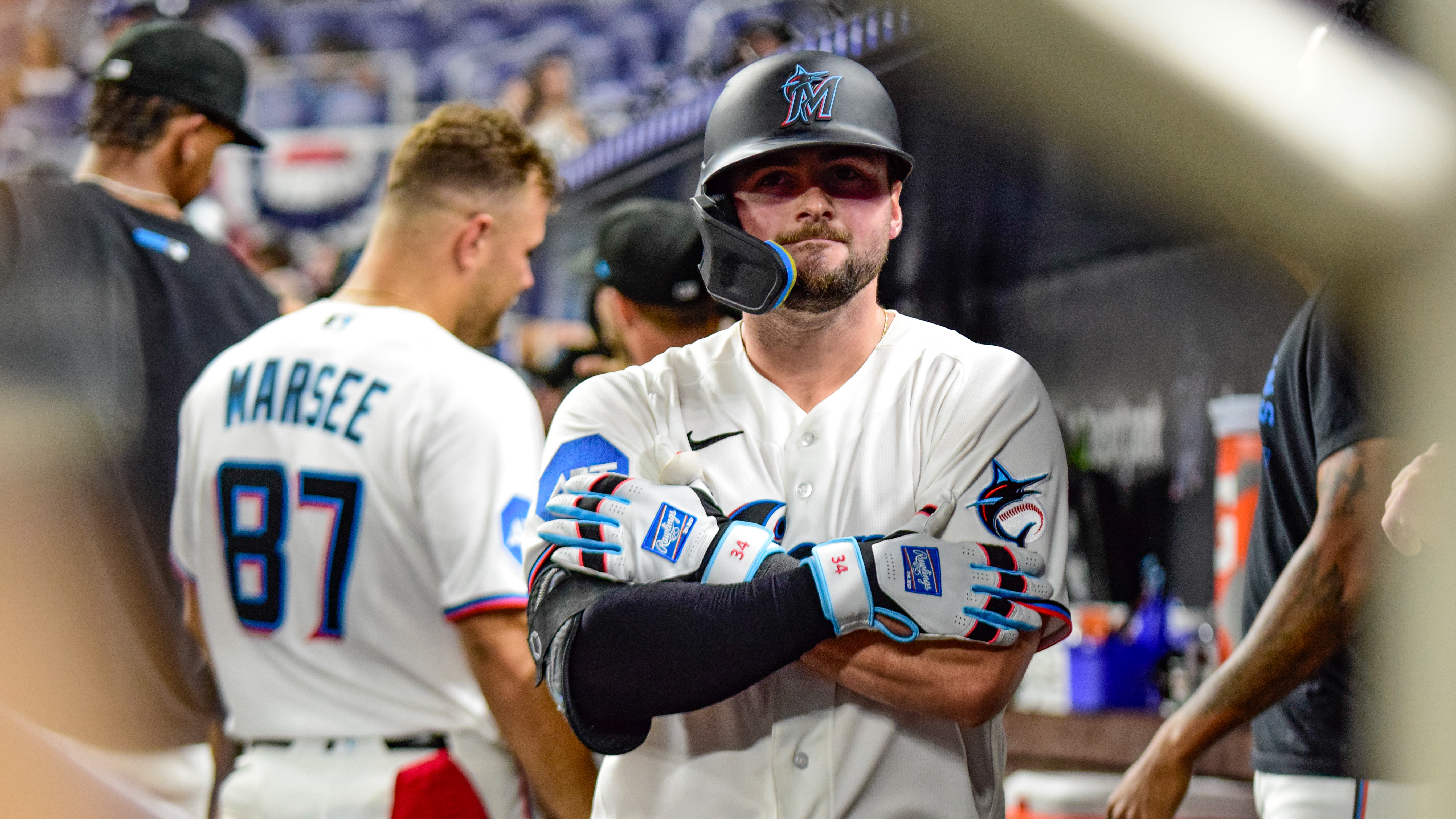
Offensively, the Marlins scratched across four runs, much in thanks to the top of the order today as Jakob Marsee, Xavier Edwards, and Liam Hicks all had two-hit ball games. Hicks homered in the bottom of the fourth and later hit an RBI single as he was the Marlins’ most productive player tonight.

The performance from Paddack was most certainly disappointing, especially as the Marlins brought him along with the hopes of returning him to some of his previous form and making him a usable back-of-the-rotation starter. It is too early to make any judgments, but an 8 spot is just not good (No walks and six strikeouts are a positive however).

Paddack will need to be better than this going forward as the Marlins have multiple young prospects waiting for their big-league opportunity.

The Marlins will tee it up with the White Sox again tomorrow with Janson Junk on the hill against Erick Fedde, a good chance to even the series.

Some Other Notes

  • Edward Cabrera dominated the Angels in his first performance as a Cub
  • Owen Caissie had his first hitless game
  • Leo Jimenez joined the active roster for Deyvison De Los Santos
  • Connor Norby is now 2-for-12 to start the season
Jeff Hafley

Update on De’Von Achane’s Future, A Draft Snippet, and More Notes from the NFL’s Annual Meetings

Phoenix AZ– At the annual NFL meetings new Miami Dolphins head coach joined Kay Adams on her show, the UpAndAdamsShow. Hafley was asked about star running back De’Von Achane and the rumors of him playing football elsewhere, potentially not being on the Dolphins to begin the season, in response Hafley said:

“Yeah, I don’t know about that one. So, we’ll save that for another day but I got a good feeling he’s gonna be around.”

Achane, is entering his fourth season in the NFL, his contract year with the Dolphins. So far in his young career he has proven to be one of the NFL’s top backs with big play capabilities, from the backfield, and in the receiving game as well. Achane was called a building block by the Dolphins new staff and it appears an extension could be looming.

Achane has accumulated 4,434 scrimmage yards and 35 touchdowns in his 3 seasons while earning his first Pro Bowl honor this past season.

Also, per Joe Schad: “Dolphins GM JES visits with small group of South Florida reporters in Phoenix and reveals he wants De’Von Achane deal done as “it is a priority for us to get a deal done with him in the coming weeks, months.”

The next cause for concern from many has been Miami’s newfound lack of receivers after trading Jaylen Waddle to the Denver Broncos, leaving the wide receiver room rather thin for Miami’s new signal caller Malik Willis.

Hafley was asked about Malik Willis and the lack of receivers in Miami and Hafley hinted at the Dolphins selecting some weapons for their new signal caller.

“We have a lot of picks… We’ll have receivers for Malik to throw too. The next time we talk after the Draft and as we get the players here April 7th.. you’ll see we’ll get some good ones for him to throw too.”

Hafley also went on to talk about how good of a player Malik is, how good of a teammate he is, his confidence, athleticism, and the fact that he will be good in the community.

The Dolphins new head coach is excited for their new 25-year-old quarterbacks future, and one that appears will be with star running back De’Von Achane.

Some other notes from Phoenix

  • 2029 Super Bowl will be in Las Vegas
  • The Browns withdrew their rule change proposal, which would have allowed teams to trade draft picks up to five years in advance. Currently, teams can trade picks up to three years in advance
  • 49ers are still looking to move Brandon Aiyuk; they are in “no rush”
  • Omar Kelly had this funny moment with Matt LaFleur. Omar: “I jokingly refer to what the Dolphins are doing as Green Bay South.” Matt LaFleur: “That’s what I say, too.”

The Miami Marlins Start 3-0 For the First Time Since 2009

It was quite the competitive opening weekend between the Rockies and the Marlins. Miami took care of business taking all 3 for an opening weekend sweep on the backs of the Marlins pitching staff who gave up only 7 runs all weekend. The starters, the bullpen, and timely hitting all led to the Marlins first 3-0 start since 2009.

Game 1-Marlins 2 Rockies 1

The Marlins started the year with a nailbiter in front of 32,000 Marlins fans as Sandy Alcantara delivered a vintage 7 inning performance where he gave up 1 unearned run. The Marlins scored 2 in the second on an Owen Caissie double and a Javier Sanoja single. The bottom of the order came through in a big way and helped the Marlins get into the Rockies bullpen. Anthony Bender and Andrew Nardi cleaned up the eighth while Pete Fairbanks came through with his first save as a member of the Marlins.

Player of the Game Sandy Alcantara 7.0 IP 4H 5K 2w Win

Game 2- Marlins 4 Rockies 3

Game 2 was much of the same story that started on the mound with a dominant performance from Eury Perez who went a strong 7 innings. Perez gave up a homerun in the top of the second to TJ Rumfield (first career homerun) and settled in nicely from there giving up one more home run to Ezequiel Tovar in the top of the fourth. But the Marlins lineup got the job done plating across four runs. One in the third on a sac fly from Liam Hicks, and two more to tie the game at three on a Liam Hicks 2-run homer that drove in Agustin Ramirez. After Perez was pulled, Calvin Faucher pitched a scoreless eighth that gave the Marlins the runway to take the lead in the bottom half as Owen Caissie (3-4 rbi) drove in Otto Lopez. Pete Fairbanks then came in for the second night in a row and dominated the Rockies on 9 pitches securing his second save of the year.

Player of the Game Eury Perez 7.0IP 5H 3ER 8K 1w

Game 3- Marlins 4 Rockies 3

A fun game for the Marlins that saw them trail 3-2 for the whole game. Max Meyer got tagged for 3 in the first inning of his start and settled in to get through innings. The Marlins lineup was able to scratch across two thanks to Otto Lopez and Austin Slater rbis, and the bullpen held the Rockies scoreless to the ninth. In the bottom of the ninth the Marlins lead off batter Xavier Edwards got on base before Liam Hicks smoked a ball to first for an unlucky unassisted double play. Javier Sanoja extended the game with a double and the man of the weekend Owen Caissie delivered a thunderous two run walk off home run, securing the sweep.

Player of the Game Owen Caissie 2-Run Walk Off Homerun

This was a wonderful start to the season for the Marlins and will give them great momentum heading into another series where they are simply the better team. The White Sox come to town for a 3-game set starting Monday 3/30.


Caissie comes through in Marlins 4-3 comeback win over Rockies

Once again, Owen Caissie came through for the Miami Marlins.

The prized outfield prospect went 3-for-4 including two doubles and the go-ahead RBI single in the eighth inning to put the Marlins ahead of the Colorado Rockies 4-3 on Saturday, giving the Fightin’ Fish their first series win of the season.

Caissie’s heroics came after catcher Liam Hicks belted a two-run homer in the fifth inning to tie the game 3-3. Hicks also drove Xavier Edwards home on a sacrifice fly ball in the third inning to put the Marlins on the board.

“He’s a great player and got a good pitch to hit and he drove it,” Caissie said of Hicks after the game.

The Rockies struck first in the second inning on rookie first baseman TJ Rumfield’s first career home run. Ezequiel Tovar later hit a two-run homer in the fourth inning to give Colorado a 3-1 lead.

Despite being taken deep twice, Marlins starter Eury Perez finished with eight strikeouts over seven innings. He and fellow ace Sandy Alcantara became the first Marlins duo to pitch seven innings in back-to-back games since Josh Beckett and Brady Penny toed the rubber in 2004.

Peter Fairbanks came in and threw a scoreless inning for his second save of the season. The last Marlins closer to get a save in each of his first two outings was Armando Benitez in 2004.

Michael Lorenzen, coming off a strong showing for Team Italy in the World Baseball Classic, allowed three runs in seven hits with four strikeouts in 4.1 innings.

The Rockies will send out Jose Quintana while the Marlins send Max Meyer to make his season debut. Quintana joins the Rockies after going 11-7 with a 3.96 ERA in 24 starts for the Milwaukee Brewers last year.

Meyer is coming off a 3-5 season in which he recorded a 4.73 ERA and 68 strikeouts over 62.2 innings pitched.

Marlins prospect Deyvison De Los Santos to make MLB debut Sunday

Due to Christopher Morel going on the 10-day injured list, Deyvison De Los Santos will get his chance to live out his big league dream.

The slugging first base prospect was called up on Saturday and is expected to start in Sunday’s series finale against the Colorado Rockies. De Los Santos said the first thing he did upon receiving the promotion was to call his parents.

“They’ve all been waiting for this moment and I’ve been waiting for this moment as well since I was a little kid,” De Los Santos said through an interpreter. “Now I just need to do my best out there and just help the team win some games and stay out here.”

De Los Santos came to the Marlins in a 2024 midseason trade with the Arizona Diamondbacks for relief pitcher AJ Puk. In 2024, the 22-year-old hit 40 home runs and 120 RBI in the minor leagues. He struggled to replicate those numbers in 2025 but drove in 54 runs in 106 games in Triple-A Jacksonville.

He went 2-for-4 with a three-run homer in his lone game for the Jumbo Shrimp this season. De Los Santos said one of the things he has been working on for over a year in order to reach the big leagues was his emotions.

“To be a big leaguer, you’ve got to have that maturity, that mindset,” De Los Santos said. “That’s what it takes.”

Marlins manager Clayton McCullough said De Los Santos will likely see the bulk of his opportunities as a first baseman or designated hitter against left-handed pitching. He slashed .288/.326/.438 in 80 at-bats against lefties in Triple-A last year.

“Probably that’s where his opportunities starting will come from is versus left,” McCullough said.

Despite his young age, De Los Santos has already logged 206 games in Triple-A before getting called up.

“You forget how young he is,” McCullough said. “The power potential, the impact, we know that’s certainly something that we’re intrigued by acquiring De Los Santos, how hard he hits the ball, and him refining his at-bat quality, his approach offensively will probably be the determining factor of how much of that power he gets to in the Major League level.”

Morel was expected to start at first base for the Marlins on Opening Day, but strained his left oblique before first pitch. Morel, who signed a one-year $2M deal with the Marlins over the offseason, is expected to miss 4-6 weeks.

McCullough said they will have a better idea of how much time Morel will truly miss within the first two weeks.

“In the next week-10 days, we’ll have a better idea of what the range is but looking at somewhere around a month,” McCullough said.

Along with De Los Santos, McCullough said Connor Norby will get the majority of appearances at first base along with Liam Hicks when he’s not catching.

Newly added veteran outfielder bats leadoff in Marlins Opening Day win

Veteran outfielder Austin Slater joined the Marlins as a free agent at the end of spring training after the Detroit Tigers released him. He batted leadoff on Opening Day with the strategy of the veteran right fielder matching up against Colorado Rockies starting pitcher Kyle Freeland. 

“Austin has for a number of years put together just really high quality at-bats versus left, been a performer versus left,” said Marlins manager Clayton McCullough, who mentioned pregame that the thought was to “try to bank him as many plate appearances today as we can.”

The strategy didn’t work out, as Slater went 0-for-3 against Freeland. He did however, contribute defensively in a clutch way when he threw Jake McCarthy out at home plate to help the Marlins win 2-1 on Friday 

Typically, Slater has fared better against southpaws over the course of his decade-long career. All five of his home runs last year were against left-handers, he batted .288 against them in 2023. From 2020-22, his prime years, Slater batted .285 against left-handed pitching through a total of 209 games. 

Slater, drawing from his experience with the Chicago White Sox last year, explained to reporters on Wednesday his excitement about being a veteran on a young team like Miami. 

“Being on a young team and being able to help guys out in any way I can, whether it’s tips or just mindset or whatever it might be, I find that really exciting,” Slater said. “And also the opportunity to play and contribute on a big league team.”

In a pregame interview with Tyler Boronski on Friday, Slater said he liked what he saw from the Marlins when he played against them last year as a newly acquired member of the New York Yankees. The Marlins swept the Yankees to reach the .500 mark entering August. 

“I just remember the energy that the guys played with on the other side,” Slater said. “It’s a hard team to beat. The Yankees, when I was with them, we were trying to make a playoff run and we just ran into a brick wall. I think if we can bring that kind of intensity this year to every game, every series, we’re gonna have a lot of success.”

Slater spent the first eight seasons of his big league career with the San Francisco Giants. His best season came in 2021 under then-manager Gabe Kapler, who is now the Marlins general manager. Slater, who hit 12 home runs and stole 15 bases in 129 games for a San Francisco squad that won 107 games, said he has “a lot of trust with him and some friendship over the years.” 

“Gabe’s a great communicator. He’s gonna shoot you straight,” Slater said. “It’s nice to have someone like that not only in your corner but who’s gonna give you honest feedback.”

Signing Slater comes after star outfielder Kyle Stowers entered the 10-day injured list on Sunday due to a hamstring injury. There are no guarantees upon how the Marlins outfield depth will look upon his return. 

Marlins cool Colorado’s bats, win 2-1 on Opening Day

The heroes of the World Baseball Classic came through at the plate to lead the Miami Marlins to a 2-1 win over the Colorado Rockies on Opening Day on Friday.

Owen Caissie drove home the first run of the game in his first plate appearance as a Marlin. Caissie was the prize in a trade with the Chicago Cubs for pitcher Edward Cabrera. He showed off his potential early in the WBC, going 7-for-17 with a home run and five RBIs in five games to lead Canada to its first quarterfinal round.

Caissie then scored on an RBI double by Javier Sanoja in the second inning. Sanoja, who won the WBC for Venezuela, went 3-for-3 to lead the Marlins at the plate.

“We just stayed true to ourselves and grinned out every at-bat, every pitch, and got the job done,” Caissie said after the game.

It turned out to be the only scoring needed for the win. Sandy Alcantara pitched his team-record sixth Opening Day start and went seven innings allowing no earned runs on four hits, two walks, and five strikeouts.

“Sandy was unbelievable,” Marlins first baseman Connor Norby said after the game. “It was vintage Sandy.”

The bullpen of Andrew Nardi, Anthony Bender, and closer Peter Fairbanks combined for three hits and four strikeouts in the final two innings. Marlins manager Clayton McCullough was impressed with how Alcantara, a Cy Young award winner in 2022, went deep with only 73 pitches.

“All in all, this was a great start to the year for Sandy to go that deep in the game, be that efficient, and as well as to be able to execute at the rate he did today,” McCullough said after the game.

Norby originally was slated in the lineup as the designated hitter. He was moved to first base after Christopher Morrell was scratched due to an oblique injury before the start of the game. Norby dubbed himself the “jack of all trades” and went 2-for-3 at the plate, while playing mistake-free defense.

“Do whatever helps the team win,” Norby said. “There are no excuses in this game. Don’t have a ton of experience over there but I felt pretty good over there.”

Hunter Goodman led the Rockies at the plate with a 2-for-4 night. Jordan Beck drove Ezequiel Tovar home in the fourth inning for Colorado’s only run.

Kyle Freeland took the loss after allowing two runs on five hits with two strikeouts in 4.1 innings pitched. The Denver native set a Rockies franchise record in pitching his fifth Opening Day.

The two teams will meet again on Saturday. Eury Perez will start for the Marlins against the Rockies’ new starter, Michael Lorenzen.

The Global Appeal of Major City Marathons

Major city marathons have become far more than long-distance races. They are cultural events, athletic milestones, and deeply personal journeys rolled into one extraordinary day. From first-time runners chasing a lifelong goal to elite athletes competing for podium finishes, these races continue to captivate participants from around the world. The blend of history, atmosphere, and human determination makes them uniquely powerful experiences that extend well beyond the 26.2 miles.

For many athletes, a major marathon represents the ultimate test of endurance. Training for months (sometimes years) demands discipline, sacrifice, and resilience. Read on to discover how although the physical challenge alone is enough to attract serious competitors, it is the emotional reward of crossing the finish line in a world-renowned city that truly cements their global appeal.

Iconic Cities as the Perfect Backdrop

One of the key reasons these marathons remain so compelling is their setting. Hosting races in globally recognized cities transforms a demanding athletic event into an unforgettable experience. Runners move through historic streets, past architectural landmarks, and alongside cheering crowds that stretch for miles. The route itself becomes part of the story.

When participants sign up for events such as the London Marathon, they are not just entering a race, they are immersing themselves in a city’s identity. From iconic skylines to famous landmarks, the course becomes a living postcard. The atmosphere is electric, fueled by spectators who line the streets in all weather conditions to support strangers and loved ones alike. That shared sense of occasion elevates the experience beyond sport.

A Celebration of Human Endurance

Marathons are a powerful reminder of what the human body and mind can achieve. Elite runners push the boundaries of speed and performance, often rewriting record books and redefining what seems possible. At the same time, everyday runners tackle their own personal barriers, whether that is finishing under a certain time or simply making it to the finish line.

This universal accessibility is part of the magic. A marathon start line features professional athletes, charity fundraisers, corporate teams, and individuals chasing personal transformation. Each participant carries a unique story. 

The Rise of Global Running Communities

Another reason major city marathons continue to thrive is the expansion of global running culture. Social media, digital training apps, and international travel have made it easier than ever for athletes to connect, share training journeys, and travel abroad for races. What was once a local sporting event has evolved into a global bucket-list pursuit.

Many runners aim to complete multiple world-renowned marathons as part of a long-term goal. Planning race weekends becomes an opportunity to explore new countries, experience different cultures, and connect with fellow runners from around the globe. These events foster an international community built on encouragement, shared ambition, and mutual respect.

Charity, Purpose, and Personal Meaning

Major marathons are also deeply intertwined with charitable fundraising. Thousands of runners take part to raise money for causes close to their hearts. The months of training become symbolic, representing dedication not only to personal fitness but to a greater purpose.

This emotional dimension adds another layer of meaning. When runners tackle the final miles, they are often driven by more than physical strength. They carry the names of loved ones, memories of challenges overcome, or hopes for positive change. That emotional weight transforms the race into a profoundly personal event, making each finish line crossing unforgettable.

Spectacle and Shared Experience

The spectacle surrounding major marathons is another key factor in their enduring popularity. Live broadcasts, global media coverage, and massive crowds create an atmosphere comparable to major sporting championships. Yet unlike many professional sports, marathons allow everyday individuals to take part directly in the action.

Why the Fascination Endures

Ultimately, major city marathons captivate athletes worldwide because they represent a concept bigger than sport. They combine personal ambition, global community, iconic settings, and emotional purpose into a single powerful experience. Each year, thousands lace up their shoes not just to run 26.2 miles, but to test themselves, to belong, and to be part of something extraordinary.

What Are the Benefits of Relaxation for Athletes?

Athletes track everything. Reps, miles, macros, all logged. Recovery doesn’t get that same energy, and honestly, that’s a problem hiding in plain sight.

Rest isn’t just sleep. Actual relaxation, the kind that drops cortisol and resets the nervous system, is its own practice entirely. Shops like The Herb Centre have noticed more wellness-minded buyers hunting for plant-based recovery tools. That’s not a fad. Sports science has been pointing this way for a while, and the athletes catching on are seeing real results.

Photo by Andrea Piacquadio

Why Powering Down Actually Matters

Training hard puts the body in full stress mode. Cortisol spikes, muscles stay wound up, and the heart doesn’t just forget about the game once it ends. Carrying that state into the evening quietly eats into recovery time.

Here’s the thing, repair doesn’t happen while the body still thinks it’s competing. Tissue rebuilding and immune response both need a calm nervous system to run properly. The quicker an athlete shifts out of that stress state, the more recovery they actually pull from the same hours. Most people skip this part and wonder why they feel flat by Thursday.

What Recovery Actually Does to the Body

A lot of athletes expect recovery to feel dramatic. It doesn’t. The gains are quiet, and you really don’t notice them until something goes wrong. A few things the research backs up:

  • Soreness drops faster. Lower cortisol after training helps clear inflammatory markers. Less inflammation, less waking up stiff the next morning.
  • Sleep gets deeper. Winding down before bed pushes the body into slow-wave sleep. That’s the phase where growth hormone does its work and muscles actually repair.
  • Heart rate settles lower. Regular parasympathetic activation over weeks trains the heart to recover between sessions faster. It’s a measurable shift.
  • Tissue heals better. Blood flow picks up during rest. Oxygen and nutrients reach damaged muscle more efficiently when stress isn’t blocking the process.

The National Institutes of Health has documented measurable effects from relaxation techniques on both heart and musculoskeletal recovery. Not a wellness pitch, actual physiology research that holds up.

Mental Fatigue Is Quietly Killing Performance

Sore muscles get all the press. Mental fatigue doesn’t, but it slows reaction time just as much. An athlete dragging psychological stress into a game makes worse calls and won’t always know why.

A lot of coaches focus on physical readiness and completely overlook the mental side of recovery. But the brain runs on the same resources the body does. Push it hard without giving it a proper reset and it starts cutting corners, slower processing, worse spatial awareness, and decisions that feel right in the moment but aren’t. That’s not a confidence issue. That’s a tired brain doing its best.

Breath work and low-stimulation rest pull down activity in the brain’s threat centers. The mental reset gets faster the more consistently someone practices it. South Florida athletes deal with compounded pressure, heat, packed schedules, high stakes. Checking how regional teams approach sports performance and conditioning gives real context on how competitive athletes here actually manage recovery day to day.

The Role of Routine in Recovery

Most athletes treat recovery like a bonus, something they get to if time allows. That thinking is the problem. The body responds to consistency above almost everything else. A recovery routine done at the same time each day, even a simple one, trains the nervous system to expect downtime and shift into it faster. 

That adaptation alone is worth more than any single recovery tool. It doesn’t need to be complicated. Ten minutes of breathing, a short walk, some deliberate stillness. Done regularly, that becomes the foundation everything else is built on.

Recovery Methods That Have Real Backing

Not every method clicks for every person. But some have enough evidence behind them that they’re worth a genuine shot. A few worth knowing:

  1. Diaphragmatic breathing. Slow, belly-focused breathing hits the vagus nerve directly. Five minutes after training shifts the body’s state more than most people expect going in.
  2. Progressive muscle relaxation. Tensing then releasing muscle groups one at a time teaches the body to drop tension it didn’t know it was holding. No equipment, no cost.
  3. Contrast therapy. Cold followed by warmth moves circulation and nudges the nervous system toward recovery mode. Harder to set up, but the payoff is real.
  4. Plant-based supplements. Some athletes use cannabinoid products to support sleep quality and dial down soreness after hard training blocks. Sports medicine is paying more attention to this space now than it was five years ago.
  5. Body scan practices. Ten minutes of deliberate attention on physical sensation reduces anxiety scores in athlete groups. Most people don’t stick with it long enough to feel the difference, which is a shame.

Pick one method. Do it daily. Give it four honest weeks before deciding it doesn’t work for you.

The Mindset Gets in the Way

Athletes usually trip themselves up here. The drive that makes someone train hard also makes sitting still feel wrong and unproductive. But the body doesn’t care how that feels, it adapts based on the actual input it receives, not the intention behind it.

Sleep is the simplest proof of this. The American Academy of Sleep Medicine found that even small increases in sleep time improved sprint performance, reaction speed, and mood within days. And most athletes still undercut their sleep anyway. That’s a choice that costs more than it saves, and the numbers back that up.

Building It Into the Week

Recovery isn’t something you squeeze in when you’re desperate. Planned recovery works. Reactive recovery is just damage control after the fact.

After training, spend ten to fifteen minutes on something that actively slows your heart rate. Walk, breathe, stretch, doesn’t matter which one. The point is doing something intentional rather than just collapsing on the couch and scrolling. Before bed, cut stimulation for thirty minutes. No screens, no loud music, nothing that keeps the brain fired up. Athletes who build this habit don’t just recover faster. They train harder the next session because the body actually had time to rebuild, and that difference adds up over a full season.

From Locker Room Chemistry to Kitchen Chemistry: The Science Behind Food-Grade Nitrous Oxide and Modern Cream Charger Culture

The Game Plan Behind Food-Grade Nitrous Oxide

In sports, every winning team has a system—set plays, rotations, and chemistry that make execution look effortless. In the culinary world, especially in modern dessert preparation, a similar system exists behind whipped textures and fast execution. Food-grade nitrous oxide plays the role of the “playmaker,” enabling consistent pressure-driven results in cream preparation.

Just like a point guard controls tempo on the court, gas-based systems control texture and stability in whipped applications. The science isn’t flashy, but it determines whether the final output is smooth, stable, and repeatable under pressure.

This is where technique, regulation, and distribution all intersect, especially in industries built around food service efficiency and scalability.

The Science Behind Pressure, Gas, and Consistency

Let’s break this down like a coach breaking down film. Nitrous oxide (N₂O) is used in pressurized systems because it dissolves into fat under pressure and expands when released, creating stable whipped textures. That’s not theory—it’s controlled physics applied in kitchens worldwide.

In high-volume environments, businesses and operators often explore opportunities in scaling this system. Some industry players even look into ways to become a cream charger distributor as demand grows across food service, catering, and dessert innovation markets.

The appeal comes down to three core performance factors:

  • Speed of production under pressure systems
  • Consistency of texture across multiple outputs
  • Reduced manual labor compared to traditional whipping methods

And just like in sports, consistency wins championships. In this case, consistency wins customer satisfaction.

Nitrous Oxide Systems: The “Offense Strategy” of Dessert Prep

Think of cream chargers as offensive sets in basketball. You want quick execution, minimal wasted motion, and maximum output efficiency. Nitrous oxide systems provide exactly that when used correctly in food-grade environments.

The system works in three key phases:

Phase 1: Loading the System

Gas is introduced into a sealed dispenser, similar to setting up a structured offensive play.

Phase 2: Pressure Distribution

Nitrous oxide dissolves into cream under controlled pressure, ensuring even texture distribution.

Phase 3: Release and Expansion

When activated, the gas expands rapidly, creating whipped cream with stable structure and volume.

This controlled cycle is what separates professional-grade preparation from inconsistent manual methods.

Why the Food Industry Treats This Like a High-Performance System

In modern food service environments—especially cafés, dessert bars, and catering operations—efficiency is everything. Operators are not just making desserts; they are running high-output production systems.

Here’s why nitrous oxide-based systems dominate:

  • Faster preparation compared to manual whipping
  • Repeatable results across multiple batches
  • Lower labor intensity during peak hours
  • Better scalability for commercial operations

In sports terms, it’s like having a bench that performs at starter level every time they step onto the court. That reliability changes everything.

Comparative Breakdown: Traditional Whipping vs Nitrous Systems

Feature Traditional Whipping Nitrous Oxide System
Preparation Speed Slow Very Fast
Texture Consistency Variable Highly consistent
Labor Requirement High Low
Scalability Limited High
Commercial Efficiency Moderate Excellent

This comparison shows why many professionals in the food industry are shifting toward pressurized systems as their primary method.

Safety, Regulation, and “Game Discipline”

In sports, discipline separates champions from everyone else. The same applies here. Food-grade nitrous oxide must always be used correctly, with proper equipment and adherence to safety standards.

Key safety principles include:

  • Only using certified food-grade gas
  • Ensuring proper dispenser maintenance
  • Avoiding misuse outside culinary applications
  • Following manufacturer guidelines for pressure systems

When used responsibly, these systems are safe, efficient, and widely accepted in professional kitchens.

The Business Side of Cream Charger Systems

Beyond the kitchen, there’s a growing commercial ecosystem around cream chargers and food-grade gas systems. Distribution, supply chains, and hospitality demand have created opportunities for entrepreneurs entering this space.

Much like sports franchises expanding their brand reach, businesses in this industry scale by building reliable distribution networks and maintaining consistent product availability. Demand is driven by cafés, bakeries, restaurants, and event catering services that rely on speed and consistency during peak hours.

The key driver is simple: operational efficiency translates directly into revenue efficiency.

Why This Matters to Sports-Like Thinking in Business

Sports fans understand systems, rotations, and performance metrics better than most industries. That’s why this topic fits naturally into a sports commentary lens. Nitrous oxide systems are not just kitchen tools—they are performance systems designed for repeatable excellence under pressure.

Whether you’re analyzing a team’s offensive structure or a kitchen’s production workflow, the principle is the same: efficiency wins when pressure is high and execution must be flawless.

The intersection of food science and business scalability shows how even something as simple as whipped cream connects to larger systems of production, distribution, and performance optimization.