Inter Miami CF

Player Ratings: Inter Miami vs Charlotte FC

It’s back to the drawing board for Inter Miami.

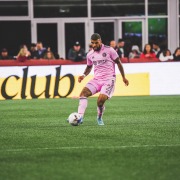
After a stunning April that saw them win four straight games in all competitions, they started off May on the wrong foot with a 0-1 loss away at Charlotte FC.

This match saw the return and debut of Indiana Vassilev and Ryan Sailor. Both players had a standout game, but unfortunately, their efforts (through no fault of their own) weren’t enough to help Miami get three points.

The Herons had a myriad of chances to score, but due to a lack of awareness in the penalty area, they failed to capitalize on three big chances.

Here are the player ratings from Inter Miami’s loss against Charlotte FC.

*Anything under a six is below average/poor. A six is average and or good. A seven through ten is great and or excellent.*

Goalkeeping

Drake Callender – 8: Outstanding game from the 24-year-old. Had several incredible saves to keep Miami in the game.

Defense

Kieran Gibbs – 6: Decent game back from injury. Had a couple of good moments to get Miami a goal, but didn’t take his chances or pass it to a teammate. Was slow getting back defensively.

Ryan Sailor – 7.5: An excellent first start by the young center back. Was calm, cool, and collected against a tricky Charlotte offense. Ended the game with a whopping nine clearances, six headed clearances, four recoveries, and two blocks.

Chris McVey – 7: Looked much more comfortable as a center back than a full back. Did well to keep Charlotte’s attack at bay for most of the match. He was also a very good center-back partner to Sailor.

DeAndre Yedlin – 6.8: Got into good positions on the overlap and once again used his pace to put out any fires. He created two chances and ended the game with an 83% pass completion percentage.

Midfield

Jean Mota – 6.7: A vastly improved performance compared to the Revolution match. Despite leaving gaps behind in the first half, he did well to fix that and stymie Charlotte’s attack for the time being in the second.  Ended the game with eight recoveries and one big chance created.

Gregore – 6.8: Another player that improved since Miami’s last game against New England. He was lively, drove the team forward when they needed a push, and was a constant thorn in Charlotte’s side. He ended the game with 12 recoveries, six clearances, and three headed clearances.

Bryce Duke – 6.8: Solid game from the 21-year-old. Created four chances and won 60% of his ground duels.

Attack

Robbie Robinson – 6: An unspectacular game from Robinson. He is coming off an injury and playing on turf did him no favors. Hopefully, he’ll be able to regain full fitness by this weekend.

Leonardo Campana – 6.5: Nothing too fancy from Campana in this match. He did find himself in plenty of very good scoring positions, but his teammates couldn’t quite find him.

Indiana Vassilev – 7: A very welcomed return for Vassilev. Looked snippy, spry, and threatening offensively.

Subs

Ariel Lassiter – 6: Only had 29 minutes to come on and do some damage. Didn’t see too much of the ball either.

Victor Ulloa – (n/a): Played seven minutes, only had nine touches.

Emerson Rodriguez – (n/a): Like Ulloa, Emerson only played seven minutes. Had 11 touches and had two successful dribbles.

Coaching

Phil Neville – 6.5: Got the formation and personnel correct. Unfortunately, due to some dodgy decision-making on the pitch from his players, Miami was unable to get a result. Still needs to find a way to get this team to play more possession based football:


The Tyler Herro Counters Coming Against Philly

Physicality, blitzing, elimination. Those have been the primary keys from the 76ers in terms of stopping Tyler Herro after he dominated in games 1 and 2.

It has now turned into a best of 3 series, since it’s the first team to grab two wins. The formula appears to be rather simple: don’t shoot 17% from three over 3 quarters and a half. Plus limiting a 49% 3-ball on the other side will be a good start.

But as much as the two games in Philly have been about hitting open shots, it’s clear that an adjustment is trending for the 6th man of the year winner, Tyler Herro.

Looking through the film of the Heat’s game 4 loss, some things really jumped off the screen when he was leading an action. The 76ers have thrown their punch at him, so what is his counter punch heading back down to Miami?

Well, let’s take a look at just that…

For starters, I must begin with the soft spots of Philly’s defense since Joel Embiid returned. The main one has been that the 2-3 zone has to be an indication to feed Herro the ball.

I will get into the blitzing of the PnR coverages, but the zone provides the most simplicity when Herro has the ball in his hands. Wait for the screen, get to the middle of the floor, and make a play with either your jumper or your gravity.

Embiid isn’t playing too high in the zone, yet Herro reacts anyway by pulling right after Matisse Thybulle is eliminated by the screen. Quick pull, quick bucket.

He had some opportunities in this game just like this that he didn’t capitalize on, but you’ll take these shots over and over make or miss. As Jimmy Butler said after the game, “We’re gonna take the same shots next game, and they’re gonna fall.”

That may be a positive outlook on the situation, but for Herro specifically, that must be the mindset.

The other release valve since Embiid returned has been to play like you did in games 1 and 2, when the opposing lineup looks like it did in games 1 and 2.

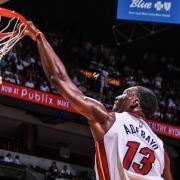
By that I mean Herro and Adebayo have proven to elevate their games when Embiid is off the floor. Adebayo begins to attack a bit more, and Herro doesn’t see the same on-ball pressure that Embiid provides.

Looking at this play in particular, some scramble switches allow Herro to flow into a hand-off with a double screen, getting probably his best look of the night. There are openings within both the zone and Paul Reed minutes, and he must take advantage.

But it isn’t about seizing the good times. It’s about overcoming the rough times.

A lot of this will have to be reaction based, since as much as Philly’s game-plan is to speed Herro up, the game-plan from Herro individually has to be: wait for them to make a mistake.

Looking at this play, Embiid hedges left on the screen as if Herro will refuse it, as Tyrese Maxey simultaneously goes over on the high PnR instead of under. Now Herro finally has some running room to operate in some type of an open floor.

Slight hesitation allows Herro to slip by Embiid to get to the rim, utilizing a flashy up and under on the right side while using the rim as protection. When they’re in regular drop, it’s a win for Herro and Miami. He can get to his spots, he isn’t being sped up, and they’re the ones dictating.

But the issue is that’s the Philly adjustment we’re discussing. This specific type of drop hasn’t been seen often against Herro.

Herro walks the ball up the floor and finds himself trapped right inside the half court line and the sideline. Embiid hedging the screen to eliminate a hard push right from Herro, while Maxey leads him right into it.

Bam rolls, Embiid slides back, yet the angle stays the same. They want to funnel Herro into a crowded lane.

He changes direction as he crosses left, and Embiid stays consistent with the ball again. Yes Herro’s getting to the middle of the floor, but so are 3 of the 76ers’ defenders. A kick-out is the outcome, which ends in a contested Oladipo three.

Loading
Loading...

He wasn’t getting an overwhelming amount of PnR ball-handler reps in this one, but the ones he got looked rushed. Like I said, they were speeding him up, which trends into stuff like this…

Screen. blitz, back-side tag, turnover. PJ Tucker in that corner is pretty much the open slot when this is seen, as Harden is forced to drop down on the rolling Adebayo, but Philly will live with Herro having to make that pass all night.

But what do you believe is the main issue with this play?

Butler not backing up to catch the retreat pass? Bam not finding an open gap? Herro picking up his dribble?

Wrong. It’s actually the spacing within the action for Herro, specifically in the strong-side corner. How can Miami throw the counter punch at Philly’s constant blitzing at Herro? Well, you turn that bundled up strong-side action into an empty corner.

Now things are spread, Embiid has more ground to cover, and Herro can potentially find an angle using the baseline to his strengths. The problem with the recent blitzing isn’t the two in the action itself, it’s actually the helper.

Here’s a quick example: Tucker in the weak-side dunker spot, Oladipo in the corner, Lowry on the wing. Herro makes the entry pass to Butler with Embiid defending him, then flows into the hand-off on that wing.

This isn’t much of a blitz like before, but Embiid is still forced to play higher in that drop. Now Herro has more room since there’s no help defender to hedge at him, and a baseline leaner is the product of it.

The same would go for a blitz in this situation. Then it’s just about Herro beating Embiid to the spot baseline and making a play off the attack. There are many counters to the blitzes, but it’s going to start with empty corner pick and rolls over the next few games of the series.

That’s the primary element to watch for.

Yet while that’s the focus of the side pick and rolls, there still must be a way to alter the deep blitzes at half-court when they flow into a high pick and roll.

One of the major shifts that feels kind of important: setting the screen a bit lower. Usually when we talk about Herro, you say setting the screen higher is more effective to stretch out the floor North and South, giving him more room to operate.

But right now, the higher the screen, the more they’re forcing him into East and West movements due to that blitzing we’re discussing.

So, what does setting the screen lower do when Embiid is in the action? Well, if they blitz, it gives you more room for a retreat dribble. The reason turnovers are more willing to happen is due to the passing coming in tight windows. Retreating back a step before making the pass creates chaos on that back-side once the pass is made, since the court just got a lot bigger for the 4-on-3.

In the play above, Herro just picks up his dribble. That allows Embiid to circle back and recover, yet when Herro swings, it’s basically a total reset. The dribble must be kept alive, and stop allowing the 76ers defense to get back to home-base for them.

Lastly, when a team is mixing up coverages this often on a certain player, miscommunications will occur. Right here Embiid drops back as Thybulle thinks he will stay high. Herro finds himself much more open than he could’ve imagined, yet couldn’t capitalize.

Those are the shots that will begin to fall, especially at home.

But if I can just punch this point home one last time, the clear-out by Oladipo to the strong-side corner in the play above is the reason I talk about the empty corner stuff.

Once he plants in that corner, Herro is forced to pick up his dribble since there’s no room to operate off an attack. There are plenty of actions that’ll be run, and I’m just looking under a microscope of one player at the moment, but this will be the key.

Guys will begin hitting shots from deep, and 7 of 35 from deep will most likely be an outlier, but this team is going to need a high level Tyler Herro to win the next 2 of 3 games.

They’ve gotten elite level Jimmy Butler. But it appears that he needs that second scoring punch to overcome the rough shooting from the supporting cast. Herro can be the one to get that done, and frankly, he may need to in order to comfortably close this thing out.


For business window graphics, interior office signage, custom flags, custom banners and sign repair, reach out to SignsBrowardFortLauderdale
Five Takeaways from Heat’s Loss to Philly in Game 4

The Miami Heat played a pretty similar ball game in game 4 that they played in game 3, in terms of the outside shooting from the supporting cast.

Jimmy Butler was outstanding in all departments, but simply he was it for Miami through most of this game.

Now, it’s all tied up 2-2 heading back to Miami for game 5. Yeah, definitely a series now.

Here are some takeaways from this one…

#1: The lop-sided three-point shooting display early on.

56% three point shooting compared to 22% shooting? Yeah, that’s a pretty big tell on how a game is going. Yet for Miami, other components kept them in it even with what those numbers would seem to portray. The Heat crunched the rotation down to 8 to begin the night, which went down to 7 as Vincent only played 3 first half minutes due to foul trouble. But among those 7 guys, they couldn’t find that hot hand from the outside. Herro’s getting different treatment, Strus couldn’t find himself beyond the arc, and Lowry was 0 for 4 at that point. While on the other side, 56% shooting is pretty absurd. That’s kind of what happens when you have to focus 2 to 3 defenders on an MVP caliber player at all times. This is a 3 point shooting team that needs that label back, which had all people calling for #55 at the half.

#2: So, what are the 76ers doing different defensively to Miami?

I’ve talked a lot about schemes from Miami over the last 3 games played, but I wanted to take a second to discuss what the 76ers are doing to the Heat, in particular on the perimeter. For one, it should be noted that this is a team that has revolved heavily around overplaying so far this series, which is surprising that we haven’t seen them working more back-cuts. Aside from that, Doc Rivers has noted the one focus on Miami has been Tyler Herro. They wanted to be more physical, while also limiting space for him as much as possible. So, they’re blitzing out on him extremely hard, while rotating middle on that specific shooter. What does that mean? That weak-side corner is the release valve, which means two things: can Herro make that pass and can that shooter take advantage as I noted them shooting 22% from deep in the first half.

#3: Miami’s first half offense kept afloat by Butler’s run, Oladipo’s attack, Bam’s second unit aggression.

While I focused on some of the negative elements early, it’s also important to note that the Heat still stayed above water offensively while struggling that much from deep. The first reason was that Victor Oladipo’s aggression was glaring. He was making it a priority to make his presence felt around the rim, getting to the line at an incredible rate, due to going right at the body of Embiid in that deep drop. Bam Adebayo followed that up with a very strong stretch once Embiid went to the bench. We saw games 1 and 2 flashbacks against Paul Reed, being utilized both on the roll and the post. And finally, as the game was really getting away from Miami late in the second, Butler gave a counter punch. Hitting tough jumpers, getting to the rim, playing physical. That one takeover mode saved Miami in that span. All 3 of these aspects have something in common: inside play. All that was missing, to tie my previous points together, was that one hot shooter.

#4: I’ve touched on Lowry not taking the open pull-up, but this hamstring seems to be very restricting.

When watching Kyle Lowry in this game specifically, he just doesn’t look right. He had 2 breakaway layups where he had to sprint down the floor, and both had him limping back down the floor on defense with his left hand planted on that left hamstring. Clearly, it’s a bothering injury. He continues to struggle to shoot the basketball at the second and third level, but I don’t think this formula is too complicated. This isn’t one of those excuse statements, it’s just the truth. That hamstring is limiting his lift and jumper overall. He continued to play through it, but just something to keep track of moving forward. He can keep it moving in this one, but that thing will most likely tighten up over the next 24 hours. And one thing to note about on-court play: he’s getting to the rim, but not shooting at the rim. Once again, that stuff can be costly.

Loading
Loading...

#5: You know what, I’m talking about shooting again.

As the 76ers made their 4th quarter run to kick off the quarter, finishing off with a James Harden transition three to take a 12 point lead, you probably did the same thing as I did. Went over to look at the shooting numbers t that point in the game, and they weren’t surprising, but equally as mind blowing. One team was shooting 48% from deep, while the other was shooting 17% from three. Yeah, that’s pretty much the game, right? To go one step further into that 5 of 30 three-point shooting at that point, taking away Butler’s deep ball, they were shooting a whopping 12%. When the percentage drops that much when taking off* Butler’s three-point numbers, that’s usually a tell. It really doesn’t get much deeper than those numbers, but I do believe the looks on both sides were apparently different. Robinson was sitting there for use, but not utilized, which felt like a bit of a head-scratcher for stretches.


For business window graphics, interior office signage, custom flags, custom banners and sign repair, reach out to SignsBrowardFortLauderdale
Five Takeaways from Heat’s Loss to 76ers in Game 3

The Miami Heat came out flat. Let me rephrase: the Miami Heat came out extremely flat.

They did a good enough job defensively, but the offense caused Philly to overtake Miami in game three.

Jimmy Butler came out a little rough, but turned it around for a pretty complete game overall. But as I’ll touch on to finish this piece, the Lowry-Bam PnR caused the collapse late…

Anyway, here are some takeaways from this one…

#1: So, let’s talk about the offensive struggles.

Well well well. The topic of this Heat game when reflecting at halftime was just discussing the abomination status of this Heat offense. They scored 17 points in the first 15 minutes of game-time, and it was clear from the start it wasn’t their shooting night. For starters, every shot seemed to be short from player 1 to player 9 in the rotation, and Jimmy Butler especially didn’t show to have his legs under him. But schematically, it didn’t look like the offensive possessions were too layered. They weren’t getting awful looks early on, but missing good looks quickly transitioned into a game-plan of screen-roll-jumper. No off-ball movement, no flares on the weak-side, no overpowering ball movement. And that’s the biggest thing for me. Being short on your jumper happens, but not executing half-court sets completely in that first half is the difference maker.

#2: This is who the Heat are: balancing shooting struggles with superior defense.

Now that I touched on the Heat’s shooting struggles and offensive execution, it should be noted that this is who the Heat are. They’re contenders even when having offensive rough patches, just because of the superior play on the other end. Miami was somehow in this game even with that showing, since the game-plan on Joel Embiid and company was executed perfectly. Doubling down low, sending a fluctuating door of help baseline, fronting Embiid, funneling the ball into the correct match-ups. The Heat did it all. Aside from a few off-ball blown assignments, which happens when you’re rotating at the frequency of this Heat team, it somehow always felt like the Heat had a fighting chance even when down as much as they were. Once again, this is who they are. We know they can have tough patches in the half court, but the defensive abilities counter that into contending status. But still, that needs to be cleaned up as stated in the first section.

#3: The five-man shot creation lineup?

We spent game 1 talking about the lineup shift of Herro-Oladipo-Butler playing together, which simply didn’t look great in that opening stretch. The convo after game 2 was that the combination looked much better after some extra reps, and Spoelstra even stated after the game they’ve been working on that in practice behind the scenes. But now that Kyle Lowry returned tonight in game 3, we got an even different look. Lowry-Herro-Oladipo-Butler-Adebayo, which could also be known as: the creation lineup. All 5 guys can create for themselves and others, plus all can put the ball on the floor. But well, that clearly has some work to do as well. You can have an excessive amount of shot creation all you want, but the only way for it to work as that movement that I discussed earlier. Two-man action with the other 3 guys standing and watching won’t cut it. I believe it can work, but on a night where there’s zero spacing being provided, it just wasn’t the most effective grouping.

#4: The third quarter run: Jimmy Butler finding his game.

I touched on Jimmy Butler being a headliner of the short on jumpers club in game three, but he began finding himself in the third quarter. There were gaps to attack the basket for him early on, specifically with Joel Embiid in the action. He was oddly playing really high in the drop coverage, that Butler had to turn a single corner and it was a free lane, happening on two occasions in that first half. But as Miami was in a terrible offensive start, Max Strus sparked a run with two threes, then Butler took it from there. Instead of being a constant action handler, he turned into an off-ball mover for a few plays. Lowry found him off the baseline roam for an and-1, which was the turn. He began using his size advantage against opposing wings to body his way to the basket. And that right there is what makes Butler so tough to guard.

Loading
Loading...

#5: The Lowry-Adebayo PnR ultimately hurting Miami?

We can sit here and talk about the offensive struggles in a 48 minute stretch or individual lack of shot making, but a specific two-man action was clearly not the effective punch they wanted it to be: Kyle Lowry and Bam Adebayo. Fast forwarding to the fourth quarter, while the story-line was the physicality with techs flying for PJ Tucker and others, the Heat were spamming the Lowry-Bam pick and roll. And well, it wasn’t going anywhere. You had Lowry coming off the screen every play with an open pull-up jumper sitting there, yet he wouldn’t take it. Instead, it was a feed to his roller, Bam, in a very tight window, who immediately looked for the next kick or total reset. Spamming a set with two guys unwilling to shoot over a certain span is never the answer. There were improving signs in the second half run, but it stalled. And this exact topic didn’t help that.


For business window graphics, interior office signage, custom flags, custom banners and sign repair, reach out to SignsBrowardFortLauderdale
What Erik Ezukanma brings to the Miami Dolphins

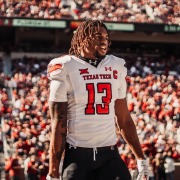
With the 125th pick in the 2022 NFL Draft, the Miami Dolphins selected Texas Tech WR Erik Ezukanma.

The Miami Dolphins 2022 NFL Draft series continues with fourth round pick Erik Ezukanma

Round 3: Pick 102

Pre-draft

Initially in the draft process the Miami Dolphins were interested in Texas Tech WR Erik Ezukanma. During the NFL Combine, the Miami Dolphins had a formal interview with Ezukanma.

“Throughout the process, Miami did show a lot of interest and I had a formal (interview) with them at the NFL Combine. That’s where I got this hat. They just showed love throughout the process and for them to pick a spot with me, it was big.”

Erik Ezukanma on his pre-draft process with the Miami Dolphins

On Mike McDaniel’s evaluation of Erik Ezukanma, both he and Chris Grier liked him enough to draft him.

“It was exciting to watch him play and I think he fits the energy and the skill level that we’re looking for. We want guys to be fast and play fast and doing both with a decisiveness and a team-first passion that he bleeds. We’re excited to add him. That was the biggest thing, I saw a football player playing the receiver position.”

Mike McDaniel on Erik Ezukanma 

Scouting Report

Strengths

At 6-foot-2 and 209 pounds, Erik Ezukanma’s best ability in his toolkit is his contested catch ability. He’s goes above defenders and makes catches with defensive backs draped all over him.

The red raider product has the size, length, and strength to defeat press jams. Can make spectacular catches in the open field and when covered by defenders.

My favorite asset of Ezukanma and how Texas Tech preferred to use him. Ezukanma is built for breaking tackles after the catch. He looks like a power back when breaking away from tackles with his frame.

Another facet of his game is his versatility. At Texas Tech, Erik Ezukanma lined up mostly out wide; however, he was used plenty in motion, on screen plays, and swing passes as well as the occasional jet sweep.

“I’m a versatile guy. I feel like I can fit in right where Jaylen Waddle – the way he can take the ball out of the backfield as well as be a deep threat down the field, but also just a versatile guy with RAC ability and YAC ability – yards after contact and run after the catch. You can put me anywhere on the field and I feel like I can help the team in any situation.”

Erik Ezukanma describes his play style

Ezukanma’s hands are strong and among several NFL talents. However, with a revolving door of quarterbacks at Texas Tech Ezukanma had some drops that showed he was adjusting the other quarterbacks

Weaknesses

As mentioned above, a revolving door at quarterback and a coaching change was not ideal for Erik Ezukanma.

His production during the beginning of the season was red hot with 13 catches and 322 yards in his first two games.

The Texas Tech alum needs to improve his release package at the next level. He doesn’t gain enough separation on most of his routes, with the exception of the drag route over the middle.

Erik Ezukanma does not have enough route running ability which is needed for the NFL. Furthermore, while Texas Tech runs a spread concept, Ezukanma was used on scripted routes to maximize his usage and gain production.

There some inconsistencies at the top of his routes and when making adjustments in traffic, more so relying on his frame and contested catch ability to make plays on the ball.

Projection

The way in which Erik Ezukanma or “EZ” can simply pluck the football out of the air is ridiculous. There should not be any issues with his hands throughout his career and based on what he has shown on tape.

I expect Mike McDaniel to put Ezukanma in any position and let him work. His playstyle is very similar to Houston Texans wide receiver Nico Collins, who was also able to snag nearly every deep ball.

“That’s one of my strong suits. I feel like throughout my career I’ve really worked on contested catches, bang-bang plays. I feel like in the beginning of my career at Tech, that was one of the places I struggled at, but I gained more confidence with that and just getting bigger in the weight room, buying into the weight room and being able to make those contested catches even if a defender is on my back or hitting me at the same time. So I feel like that’s one of my high points of my game.”

Erik Ezukanma on his contested catch ability

Often, wide receivers are asked to block in Mike McDaniel’s offense. Ezukanma is more than willing as a blocker and should see an increase in snaps as the season progresses on run plays. Ezukanma has the size and strength to be an asset as a run blocker out on the edge.

In Miami,  he will be best served as a possession receiver that can work the middle of the field, a red zone target and a mismatch against defenders on motions, screens, and jet sweeps.

The modern day of NFL wide receivers is changing where wide receivers are more athletic than defensive backs. A weapon in any route or scenario that can make big plays, Ezukanma is just that.

Mike McDaniel will find a way to get Erik Ezukanma the football and let him eat.


Hussam Patel is a Miami Dolphins contributor and Lead NFL Draft analyst at Five Reasons Sports Network, Director of Scouting at PhinManiacs and Editor at Dolphins ATB. Follow him on Twitter at @HussamPatel


Use code “FIVE” to receive a matching $100 bonus on Prizepicks


Five Takeaways from Heat’s Win Over 76ers in Game Two

The Miami Heat came into game 2 with a similar mindset, and closed it out in a similar fashion.

Tyler Herro and Bam Adebayo copy and pasted dominance. Jimmy Butler playing master facilitator. And the Heat defense swarming at all times.

So, here are some takeaways from this one…

#1: Bam Adebayo in early attack mode is always a welcoming sign.

As much as we sit around and discuss the fact that Bam Adebayo has a favorable matchup against the 76ers, Bam himself is very aware of that internally. Entering these games, he knows that he will have advantages, especially after the PnR dominance with Tyler Herro, and he came out attacking yet again. Herro kept feeding him in that high pocket to give him a runway, and not only did that lead to positive offensive, but it put him in a position to consistently get to the line. Once he gets some early foul calls, you always see that mental shift where he begins to drive more. Plus it should be noted that his defensive willingness was felt. No matter who he switched on, the immediate reaction was to clear. He creates a 4-on-4 match at times, which is a special trait.

#2: Heat going more zone, Philly going less zone.

Heading into this series, one of the main things I highlighted in my preview was the “battle of the zones.” Both had very valuable reasons to utilize it, and the 76ers obviously got the first real crack at it. In the second quarter of game one, it gave Miami real trouble. Nobody was flashing middle, they weren’t able to get into the primary actions, and it allowed certain matchups to not be exploited. But now, the Heat were waiting to adjust. They consequently went to it less to begin this game, but Miami increased the frequency on their end. Pressuring with Oladipo and Martin in the 2-2-1 which blends into the 2-3. Usually the release valve was that Tobias Harris gets into a post up on the low box, which was okay with them as he shot 3 of 11 in the first half. Never should it be gone to for too long, but it’s something to monitor in this series.

#3: Tyler Herro continues to love the matchup and coverages.

Looking at Tyler Herro in the first half of this game, I could pretty much copy and paste most of the stuff I said in game 1. High PnR dominance, making the right reads and passes, and scoring whenever he chooses as he eyes the back line defender. The only difference though tonight, he was eyeing the initial defender a bit more often. Instead of focusing on the next read, he keyed in on the current one. That usually meant a quick pull up off the screen, a snake dribble inside once Jordan began playing higher, etc etc. The point is that we’re aware he can score the basketball at a high level and can exploit this defense, but mixing up reads isn’t easy at his age. But yet, he’s a natural in that space.

#4: Jimmy Butler controlling the game through every lens.

After as dominant of a first round series as humanly possible for Jimmy Butler, he seemed to fully hand the keys to Bam and Herro in game 1 against Philly, for obvious reasons. But in this game, his scoring around the rim was coming much more naturally than it did in game 1. Yet, I’m not focused on the scoring. We know he can get to his spots and dominate most matchup advantages on the floor. But without Kyle Lowry, he stepped up big time in terms of total control. Halfway through the third, he had 10 assists logged and it was all on the natural flow of the offense. And looking away from schematics and into natural fandom, as a Philly fan behind us at the game chanted at the team all game, it flowed into “We still love you Jimmy,” late in the third. He can have that hold on you I guess.

Loading
Loading...

#5: Victor Oladipo combinations steadily improving.

Looking at game 1 under a microscope, the Victor Oladipo combinations were a bit different than we’ve seen. Instead of running his own lineups when Butler was out, he found himself running next to both Butler and Herro pretty often. They were a bit shaky to start since he was being used primarily as an off-ball threat in the corner, but they blended him on the ball a bit more in this game tonight. This offensive flow won’t just click over night, but the thing about it: it doesn’t have to. We can hone in on that all we want, but the truth is that his defense on top players makes any combination work. When you can do to James Harden what he did in this game, it’s clear something is going right.


For business window graphics, interior office signage, custom flags, custom banners and sign repair, reach out to SignsBrowardFortLauderdale
Panthers vs Capitals: First round preview

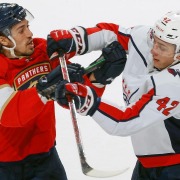
The regular season has finally ended. With the playoff match-ups set, the real season is about to begin. It will be Panthers vs Capitals in round one. Each playoff team in the Eastern Conference finished with more than 100 points on the season for the first time in history. Because of that, this may end up being the most competitive first round in recent memory. Despite this being the 1-8 match-up, both teams will need to earn this win. This is how the two teams stack up.

Panthers vs Capitals: Forwards

For Panthers vs Capitals, the forward battle really is strength vs strength.Any conversation about the Capitals’ forward corps begins with Alexander Ovechkin. The 36-year-old winger shows no signs of slowing down, as he notched his ninth 50 goal season in 2022. For the Panthers, he should be their primary defensive focus. Easier said than done of course, but containing the Great 8 is the key to a series win. Ovechkin has shown this year he can still win a series for a team. Although he is coming into the playoffs banged up, it should not hold him out of the series. The Panthers need to play him physically and knock him off of his preferred spots, specifically that left circle. The Panthers must also account for forwards Evgeny Kuznetsov and Tom Wilson. Both finished the season with 24 goals, but present completely different challenges. Kuznetsov centers the first line with Ovechkin, the 28-year-old is a skilled play-maker and excels at getting Ovi the puck in his favored spots. The game plan against him should be similar to the game plan many teams deploy against Huberdeau: cut off the passing lanes and dare him to shoot. Not that Kuznetsov is a bad shooter, but his preference would be to pass. As for Tom Wilson, he plays opposite Ovechkin and his role is to intimidate. The bruiser has a reputation for dirty hits and foul play. He loves to get to the dirty areas of the ice and use his 6’4″ frame to bully his way into goals. The Panthers will need to be physical with Wilson, and keep him on the outside of the ice where he can be neutralized. The old guards for Washington, Nicklas Backstrom and T.J. Oshie, have both had cursed seasons. Both played a huge role in their 2018 Stanley Cup win, but have been plagued with injuries this season. Despite their age, the talent remains for both these players and both bring the type of playoff experience that cannot be quantified. Undeniably, this team has offensive depth. More so, the depth has cup experience. Their one weakness as a group is that most of their forwards do not have a great two way game. That is one area the Panthers can exploit with their plethora of two way guards.

Panthers vs Capitals: Defense

While not the strength for either team, neither defense should be taken lightly. The Capitals most highly-regarded defenseman is John Carlson. He quarterbacks their power play and has a knack for setting up the offense with 54 assists on the year. However, for a number one defenseman, his play in his own zone leaves much to be desired. The 32-year-old does not have the foot speed or strength he once did to keep opposing players away from the net. He should be attacked at every opportunity in an attempt to wear him out. Their defensive depth, on the other hand, may be one of the more underrated groups in the league. Trevor van Riemsdyk has been one of the best shutdown bottom pair defensemen for quite some time now. Dmitry Orlov has an extremely strong two-way game. Justin Schultz is not having his best year, but has been very effective in the past. That defensive depth may be an area of concern for the Panthers. It will be tougher to score against this bottom four than most. Generating offense has never been a problem for the Panthers this season, but this group will not give up good looks often.

Panthers vs Capitals: Goaltending

Much like the Panthers, the Capitals biggest question mark is their goaltending. Vitek Vanecek and Ilya Samsonov have split the games fairly evenly this season, but Vanecek is the likely starter based on his numbers this season. He has a save percentage of .908 and a GAA of 2.67. Those numbers are far better than Samsonov’s, but still not great for a playoff goaltender. His negative goals saved above expected (-5.4) also suggests he does not provide enough of a presence during the playoffs. Goaltending may end up proving to be the Achilles heel for both these teams. Even with Bobrovsky’s inconsistency, he has greatly outperformed Vanecek this season. With the way the Panthers generate offense, it will take elite goaltending to slow them down, and Vanecek is far from elite.

Final Prediction

Washington is no cakewalk. Their potent offense and playoff experience confirm they will not be broken easily. Still, I do not think they do enough to counteract the Panthers’ strengths. It’ll be the Florida Panthers in six games.  

***This article was originally published on the ATB Network by Samuel Schettrit***

  Hussam Patel is a Miami Dolphins contributor and Lead NFL Draft analyst at Five Reasons Sports Network, Director of Scouting at PhinManiacs and Editor at Dolphins ATB. Follow him on Twitter at @HussamPatel

Use code “FIVE” to receive a matching $100 bonus on Prizepicks

Five Takeaways from Heat’s Win Over 76ers in Game One

The Miami Heat kicked off round 2 against the Philadelphia 76ers on Monday night, and although there were minor bumps in the road, they really took care of business.

After struggling in round 1, Tyler Herro and Bam Adebayo really took control of this game. Together.

But as much as they’re the focus, PJ Tucker put them in this position under the radar.

Anyway, here are my takeaways from this one…

#1: The early, early offensive approach for Miami: Herro-Bam high PnR.

Before I discuss the offense in the first half big picture, I must first address what was working. After Tyler Herro and Bam Adebayo had rough first round series, it was clear coming into this one that this match-up could favor them greatly. The drop is there for Herro to attack, and Adebayo has the size advantage over anybody not named DeAndre Jordan. So, Miami quickly evolved into high PnR madness with those two when Jordan or Paul Millsap were sitting in that drop. Herro’s able to create attention through his drop instinct once passing the three-point line, which transitioned into open lanes for Bam as a roller since nobody could stick him. That was when offense was peaking. But then, it declined. Rapidly.

#2: The offensive drought that followed…

Now, to enter the problematic parts of this Heat offense, it went from executed offensive sets that were clearly intentional heading in, into a whole lot of randomness in that second quarter. Miami began blending into forced drives and more forced drives until an open man was found. Yes, that’s the complete recap. They were no longer looking at Adebayo roaming baseline who would find a perfect deep seal. Combine that with shooting 25% from three in the first 24 minutes and you have yourself an issue. Butler had the jumper fall early with back to back mid-ranges when they went under the screen and a standstill three, but that turned into tough fade-away jumpers with wings guarding him. That’s fine against Maxey, but forced against others. It was clear at that point, adjustments were needed coming out of the half.

#3: Should we take a second for extra PJ Tucker appreciation.

In the first round against the Atlanta Hawks, after Butler, PJ Tucker was the most important player in the series. And well, he wasted no time in this one. Immediately picking James Harden up full court, switching and helping down low, while dominating as that weak-side help guy at the nail. When looking for the answers to Philly’s early scoring trouble, it was all PJ Tucker. But the reason I bring up the word appreciation is that while his defense was evident, he played a big role offensively. Yes he was 2 of 6 from the field with 5 points at half, but most of the Heat’s first half runs included him providing second chances and playing the “Bam role” at the 5. Then to start the third, it was even more Tucker. Forcing turnovers, creating for Bam off the slip and dime, hitting tough shots, and most importantly, getting them second chance opportunities. He’s been outstanding.

#4: Bam Adebayo showing up big time.

As I hinted at before when I mentioned the Herro-Bam dynamic, this could potentially be a Bam series before the Embiid return. There are mismatches all over the floor, for both face-ups against slower guys like Jordan or post-ups against smaller guys like Millsap. After being utilized a ton early than disappearing in that second quarter since they weren’t finding him, he began to be found to start the third when they went on their run. The point is not to harp of Bam’s shocking scoring punch in this one. It’s to showcase that he needs to be used like a top player on this team on the offensive side of the ball. I can understand aggression conversations, but there’s a point where he should be consistently have sets run for him. Whether it’s on the ball with guards screening, or backdoor stuff to feed him with mismatches down low, it’s the key to Miami taking that next step on this playoff run.

Loading
Loading...

#5: The real reason the Heat are true contending threats.

When looking at this Heat team in the first round, there were glaring holes. Herro wasn’t himself, Adebayo wasn’t being used, Lowry going down changed things. Moving onto game 1 tonight, Butler wasn’t great, shooters were inconsistent, Oladipo lineups were in the mud frequently while finding themselves. Yet through all of that, the Heat keep finding ways to win. How? Well, I’m glad you ask: this Heat defense is stifling. They can go through a second quarter span where they forget how to run offense, yet still come out even. They have enough bodies to throw at any position 1 through 5, created a helping scheme due to the team being elite with rotations, and found a way to stop top talents. So, back to why this team is a true contender. Combining a defense that is elite of the elite with an offense that can go on wild runs is a good enough to be in that top tier.


For business window graphics, interior office signage, custom flags, custom banners and sign repair, reach out to SignsBrowardFortLauderdale

Inter Miami CF

Player Ratings: Inter Miami vs the New England Revolution

Inter Miami’s win streak has come to an end.

After an exciting month of April that not only saw them go 4-2-0 but also get Miami Freedom Park approved, the Heron’s luck ended on Sunday.

Two early injuries forced Phil Neville to change the game plan. Leonardo Campana, the talisman that has spearheaded Miami through their win streak, went down in the 12th minute with a lower leg problem. Minutes after that, Aime Mabika was taken off due to what appeared to be a hamstring injury.

What subsequently followed in the match was Miami struggling to get a hold of a game that only went from bad to worse:

Here are the player ratings from Inter Miami’s loss against the Revolution.

*Anything under a six is below average/poor. A six is average and or good. A seven through ten is great and or excellent.*

Goalkeeping

Nick Marsman – 6.5: Some lackadaisical passing at the beginning saw Miami concede early. However, he did keep the game from getting out of hand by saving a handful of shots.

Defense

Chris McVey – 6.6: Didn’t do anything too spectacular. Was solid throughout the match despite having to play multiple positions.

Aime Mabika – (n/a): Got subbed off early due to a nasty hamstring injury. Didn’t do enough in the game to warrant a rating. Hopefully, he can recover quickly.

Damion Lowe – 5: Just a poor game from the Jamaica international. The turf also didn’t help him much. A weird bounce in the 60th minute saw him misjudge the flight of the ball and concede his defensive position which lead to a foul and second yellow.

DeAndre Yedlin – 6.5: Like McVey, was solid throughout the game. Used his recovery speed and defensive awareness to put out a couple of fires. Ended the game with three recoveries, three interceptions, and one key pass.

Midfield

Gregore – 6.4: Struggled as one of two of the number 8’s in the Miami midfield trio. Looked much better in the second half when pushed back. Finished the match with seven recoveries, four clearances, and one key pass.

Jean Mota – 6.3: Had a tough night. Neville deployed him as a deep-lying playmaker that didn’t necessarily work against New England’s 4-2-3-1. Started to have an impact on the game when he pushed up a bit more.

Bryce Duke – 6.3: Decent first start for Duke. Had some good tackles in the first half to disrupt the Revolution’s attacking flow. Unfortunately, Miami didn’t have enough of the ball to show off his technical skills.

Attack

Robert Taylor – 6.3: Looked much more comfortable on the wing than in midfield during the first 12 minutes.  Had to play striker for large portions of the first half after Campana went down which didn’t do him any favors.

Leonardo Campana – (n/a): Like Mabika, he got subbed off too early to warrant a rating. Should be fit enough to start vs Charlotte this weekend.

Ariel Lassiter – 6.5: Spent the majority of the game defending. Had a couple of good moments on the break using his speed. If there was one player that was going to score, it was – arguably, going to be him.

Subs

Emerson Rodriguez – 6.4: Came and looked flashy. He’s a very cheeky player that, with more time, can be an impact player for Miami.

Jairo Quinteros – 4.5: Woefully out of form. Did not look comfortable on the turf. Came on as a substitute and got sent off.

Kieran Gibbs – 6.4: Looked decent in his return from injury. A little rusty, but with more playing time, he’ll get better. Will probably start against Charlotte this weekend.

Mo Adams – 6.3: Only had six touches in his 22-minute cameo. The game, unfortunately, passed him by.

Coaching

Phil Neville – 6: Managed the match well, at times. The second-half switch to put Lassiter as the number nine was a good move. The decision to start Mota as the number six was an interesting one, but it didn’t work out as planned. Should’ve brought on Gibbs and slotted McVey in as the left-center back instead of subbing on an out-of-form Quinteros.  He still needs to find a way to get his team to play with more of the ball.

Marlins Mariners

5 Takeaways from Marlins Series Win v Mariners

The Miami Marlins saw their seven-game winning streak snapped on Sunday, but the team still took two-of-three from the Seattle Mariners to win their third-straight series. Miami’s recent run of success included stellar starting pitching and timely hitting, but those elements were notably absent in Sunday’s 7-3 loss.

The Marlins find themselves in second place in the NL East with a 12-9 record. They’ve gone 8-2 against division opponents and 10-8 against all National League opponents thus far. Over their last 10 games overall, Miami’s 8-2, with a .243 team batting average and a 2.93 team ERA. The Marlins have outscored opponents by 10 runs over that span.

Luzardo Impressive in Marlins Win Over Mariners

Entering the season, the frontend of Miami’s starting rotation looked very much like the team’s top strength. And while there are some questions regarding who should be part of the backend of this rotation, Jesus Luzardo continued to make his case in the Marlins series win over the Mariners.

Luzardo tossed a season-high six innings in Miami’s 3-1 victory on Saturday. The 24-year-old lefty lowered his ERA to 3.10 after allowing just two hits and one earned run. He struck out five in the process, surrendering two walks.


Luzardo’s strikeout rate now sits at 34.1 percent for the season, putting him squarely in MLB’s top-10 for that metric. Credit for the improved strikeout rate goes in large part to increased velocity from Luzardo. Baseball Savant notes a 1.8 MPH increase in his fastball velocity, which checks in as the seventh-highest gain year-to-year among pitchers.

The biggest key for Luzardo has been locating his pitches and working ahead of hitters in order to get to his breaking ball, which he’s thrown 44.2 percent of the time. He’s registered 20 of his 28 strikeouts on his curveball so far this season.

Soler Starting to Find Success

One of the Miami’s top free agent additions, Jorge Soler, started to find more consistent success during the Marlins series win over the Mariners. The 30-year-old slugger crushed a Matt Brash four-seam fastball an estimated 468 feet on Friday (MLB’s third-longest home run of the season). The hit rocketed off Soler’s bat at 117.6 mph.


On Sunday, Soler had his first multi-hit game since April 22nd, and just his third of the season. His RBI single in the seventh inning beat the Mariners’ shift, then he followed that with his second homer of the series in the ninth. Over his past 10 games, Soler is 9-for-39 with three doubles, two home runs and six RBI.

Soler found success for the Marlins connecting on fastball offerings from Mariners pitchers, but he continues to struggle with offspeed pitches. Soler’s hitting just .100 on offspeed stuff. But there’s some bad luck mixed in to those results, because when he makes contact, his expected batting average in those spots is .337.

Marlins’ Garcia Remains Unlucky vs Mariners

Miami’s other major offseason addition, Avisail Garcia, continues to struggle at the plate, but some of those struggles can be attributed to bad luck as well.

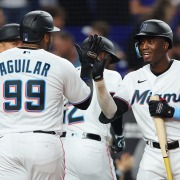
On Sunday, Garcia’s liner with two runners on rocketed to right field with an exit velocity of 99.6. Off the bat, it had an expected batting average of .470, but was caught to end the inning. Something similar happened to Garcia in Washington, when a pair of batted balls failed to find the grass. Garcia had a flyout that sported an exit velocity of 98.6 and an expected batting average of .630. Had it dropped, it would have scored Garrett Cooper from second in that game. Earlier in that same contest, Garcia had a  flyout with a 101.4 exit velocity and a .610 expected batting average.

Garica’s average exit velocity sits at 91.3 mph, which would be a career-high for him. That figure puts him in the 80th percentile among MLB hitters, and his 12.2 barrel percentage is nearly double the MLB average at this point.

Although his 1.4 walk-rate stands in the bottom one percent of the league, his .271 batting-average-on-balls-in-play (BABIP) shows additional bad luck, considering his actual batting average sits at .194.

Marlins Still Middling with RISP

Although the Marlins lost to the Mariners 7-3 on Sunday, it wasn’t for a lack of opportunity. Miami stranded 12 runners on base in the loss, and managed to go just 2-for-9 with runners-in-scoring-position. The Marlins were better in that metric in their two wins over the Mariners, going 5-for-10 on Friday and 2-for-7 on Saturday.

Still, the 24 stranded runners continues a worrying trend for the Fish. Although Miami ranks fifth in team on-base percentage in the NL (.325), following Sunday’s loss, the Marlins now check in with the fourth-most stranded runners so far this season (163) and second-most in the NL.

With runners-in-scoring-position, the Marlins rank 22nd in batting average (.223) and 20th in OPS (.696). Miami’s top average in that spot belongs to Joey Wendle (.462, 6-for-13), while Jesus Sanchez (9) and Jazz Chisholm Jr. (9) have driven in the most runs.

Alcantara Struggles for Marlins vs Mariners

The Marlins had their staff ace taking the mound with a chance to secure the team’s second consecutive sweep. But with the loss, Miami saw their season-long winning streak end at seven. They remain the only franchise in MLB history without a 10-game winning streak to its credit.

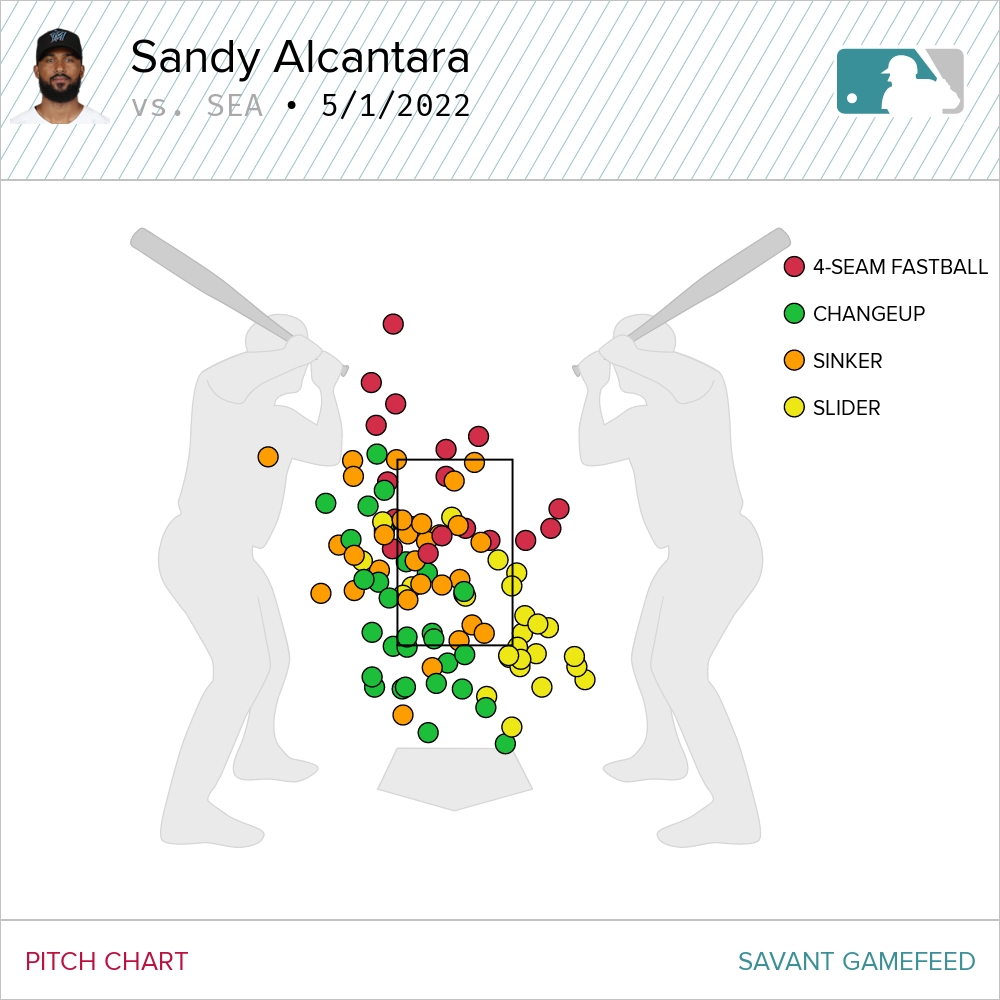
Marlins MarinersSandy Alcantara took the mound for the Marlins on Sunday, starting opposite the Mariners’ ace Logan Gilbert. But instead of a pitcher’s duel, Alcantara struggled through his worst outing of the season. The 26-year-old righty surrendered a season-high five earned runs, which matched his total for the month of April.

Alcantara gave up two home runs and walked four batters. It was the third time this year he’s walked at least three. Last season, he walked 2.2 batters per nine innings. This season, that figure’s nearly doubled (4.1). Although he’s surrendered three homers already this season, he’s still at 0.9 HR/9, which is equal to his rate over the last two seasons.

Alcantara’s struggles with command have pushed his walk-rate to 11.3 percent, his highest such rate since 2018 (his second year). Last season, Alcantara’s walk-rate finished at a career-low 6.0 percent. The lack of command has also resulted in fewer strikeouts and a lower strike percentage (62.0). His pitches-per-inning (15.3) and pitches-per-plate-appearance (3.83) are both up as well.