A Breakdown of Miami’s Final Possession Troubles

The Miami Heat fell short against the Memphis Grizzlies last night, after Ja Morant went coast to coast for a layup to go up 2 with 1 second left. Now, Miami clearly didn’t put themselves in the best spot to win after an awful offensive performance, but they still had an opportunity to send it to Overtime with one final stop after the game-tying free throw.

So, let’s take a look at this defensive breakdown that occurred on this final possession…

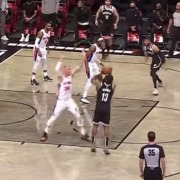
Now, to start this off, let’s look at the set-up and spacing on this offensive play for Memphis. The most important part is the placing of Brandon Clarke, since he’s being guarded by Bam Adebayo, which he stands in-between half-court and the three-point line without setting a screen.

This eliminates any type of switch or readjustment on the defensive end to regather a certain angle of the cut-off.

The next element of this occurs at half-court with Ja Morant, since Butler makes a minor mistake. Instead of sinking in slowly against a speedy Morant, he moves up for a slight cut-off against him, leading to that advantage once he passes mid-court.

And well, this leads us to the biggest breakdown on this possession. Butler no longer has the correct angle in front of Morant, which means the cut-off is majorly needed from Duncan Robinson, and Butler seems to expect this to occur.

Robinson was in position to stop the ball, but he flew out to the wing to eliminate the pass as soon as Morant got inside the arc. An interesting element to that, other than Robinson just making the wrong read, is a possible charge opportunity even if Morant made that pass. He wouldn’t have been able to stop his momentum if he swung the ball, which would’ve been a huge change for Miami.

It’s always important to force the ball-handler to make that extra pass at this point in a game, and live with the result of the jumper instead of the layup. But once again, this could be an important learning moment for this team, especially since they’ve found themselves on the winning side of things in most of these games that have gone down to the wire.

The final inbound play with one second to go has been a main topic from this game for obvious reasons. Adebayo is the trusted in-bounder on this play, which as Coach Erik Spoelstra said, he trusts “10 out of 10 times.”

For starters, the drawn up play here was actually something that can be highly effective. Robinson runs up to the top of the key to clear out, while Dragic sets the back-screen for Butler, which leads to the primary option of a Butler lob pass.

Although that’s the type of play that has a chance of working, Kyle Anderson reads it perfectly, sliding down to cut-off the alley-oop. The main issue here though is exactly how Adebayo described it post-game, which was a “predetermined decision” to make the pass to Butler.

Loading
Loading...

To that point, go back and take a look at Adebayo’s eyes on the play. He’s looking and turned towards the rim the entire time, which most likely had an impact on Anderson’s read of the play.

This game was a clear representation of the second night of a back to back, due to late-game miscues and offensive issues throughout. But it’s still important to discuss these types of moments, since it’ll allow the team to look back at it down the line as an area of growth.

5 Takeaways from Heat’s Loss to the Grizzlies

The Miami Heat fell short to the Memphis Grizzlies on Wednesday night, after a Ja Morant layup to take the lead with 1 second left on the clock. Miami’s offensive issues throughout were clear, which was why it was odd that they even found themselves in this game late. Anyway, here are five takeaways from this game…

#1: Max Strus gives Miami a first half push.

Well, I didn’t really expect Max Strus to be the first takeaway on this article tonight but here we are. One thing that must be noted is the level of difficulty to be unexpectedly thrown into the fire time and time again, and producing immediately. This has a lot to do with the team harping on guys always staying ready, since you never know when your name will be called. Although his first three-point shot of the night dropped, it was actually the off-ball cutting that was a main source of offense. Obviously that’s just a part of Miami’s offensive scheme, which occurs even more once the defense respected that first three-point make, but it’s still impressive to see him reading a defense with his limited minutes at the NBA level.

#2: The offensive need for an off the dribble scorer with bench unit.

When Max Strus is the highlight of the bench unit early, it’s clear Tyler Herro and Goran Dragic aren’t capitalizing on their scoring role. Forget their usual pick and roll mid-ranges or catch and shoot threes, they were just clearly missing a scoring guard to get a bucket off the dribble, especially during those non-Butler stretches. Neither of them are incredible attacking threats, since they usually control with their jumper early, but that was a main reason offensive issues were fluid throughout. While Dragic may look a step too slow at times as a primary scoring option, the eyes immediately turn toward Herro, who majorly needs to take that initiative during those moments, which also comes down to reading the situation.

Loading
Loading...

#3: A noticed change in Duncan Robinson’s usual offensive abilities.

Duncan Robinson got hot early in the first quarter, then cooled off a bit the remainder of the half. But instead of evaluating makes and misses, the part before the actual jumper is more important for Robinson than anything. He’s used to immediately firing when coming off a DHO or drive and kick, but they’ve had to go away from that a bit more due to the way defenses have been guarding him. This leads us to the noticed change, which is a sense of patience when receiving the ball. The scouting report on Robinson never really includes that slight hesitance before the jumper, which can pause the defender as he gets into his shooting motion. Another aspect is the pick and roll sets he has been forced to utilize a bit more, since it’s an action he can find shots that appear to be open a bit more often. Once some additions are made to his offensive game, then shots actually dropping won’t ever be the part being observed.

#4: A rough third quarter with Jimmy Butler out there alone.

More offensive issues occurred in the third quarter for Miami, which looked even worse than earlier. Miami scored 16 points in the quarter, while Jimmy Butler scored 10 of them. He brought the needed intensity through the game, yelling after every single bucket or foul that he got. The jumper looked good for Butler throughout, which led to him getting to the mid-range in the third. And as I mentioned his supporting cast not able to get into a flow, he went away from drive and kicks, and just utilized drives. And well, most of those end up in a layup or two free throws due to his aggression and strength. This once again circles back to that need for an on-ball offensive threat, which although the newest member of the Heat won’t be able to alter completely, there are some things he can possibly touch up which I’ll discuss next.

#5: The area Trevor Ariza could possibly fix for Miami.

To reiterate the lack of penetration when Butler isn’t on the floor, there’s a chance Trevor Ariza could fix that a bit. Although he’s mostly known as a 3 and D guy, he can bring the element of attack if he’s fully healthy. Obviously we can’t truly evaluate him until he actually plays some games with this team after missing a year, but that ability is the one thing that Andre Iguodala doesn’t currently have. Iguodala usually finds himself in the corner, leading into off-ball screens which is highly effective, but when he’s sharing the floor with Dragic, Herro, and Robinson, they need that guy who can drive to the basket consistently. Once again, there’s a very good possibility Ariza won’t be able to do that consistently, but the level of athleticism that is remembered can be utilized.

A Breakdown of Miami’s Altering Defensive Schemes

The Miami Heat got another win on Tuesday night against the Cleveland Cavaliers with Jimmy Butler leading the way. Although he was the focal point of the offense for Miami, the defensive side of the ball was an all-around effort.

Instead of just mentioning the Heat are at the top of defensive rating lately, it’s necessary to dive into the exact reason for the success on that side of the ball. So, let’s take a dive into Miami’s early altering defensive schemes.

– Swarming switches into high traps into fast-break points

Half-way through the first quarter was when Miami really started to get into their natural defensive form. Early in the play, it’s another representation of a soft switch between Jimmy Butler and Bam Adebayo, since Adebayo popped out high while Butler stayed with the diving Jarrett Allen.

Collin Sexton and Larry Nance Jr tried to work a pick and roll/pick and pop set three straight times, which that third time turned into a high trap with both of Miami’s bigs. This forced Sexton to make a tough pass, especially since Kendrick Nunn rotated onto Nance, leading to a turnover.

A big part of this defense is the offense that can be generated from it, especially during a stretch that Miami struggled in the half-court. Butler makes the lead pass into a 3 on 1 opportunity, which Miami capitalizes on.

– 2-2-1 full-court press into 2-3 zone

Now, the most intriguing part about Miami’s defense last night was the 2-2-1 full-court press into the 2-3 zone. For starters, there’s a real comfort level to do this with Andre Iguodala out there, for obvious reasons. Combining active hands and high IQ movements is quite the pairing.

The press on this possession was just to put slight pressure on the ball-handler, but the zone is actually what stood out. Miami’s defensive rotations were crisp on the perimeter, meaning Cleveland was just playing catch on the three-point line.

Another aspect of this is KZ Okpala being utilized at the top of the zone, since they can rely on him to take the individual match-up when they try to iso, which on this possession almost led to a turnover. The only issue here was that they played 23 seconds of great defense, wrecking havoc out on the perimeter, but that led to easy offensive rebounds when it clanked off the rim, which will be the next touch up in practice.

Here’s another example of this exact defensive scheme. An interesting part about Iguodala and Okpala at the top of the zone is the natural switching that occurs when one notices the other getting screened.

This is yet another play where a turnover almost occurs, but McGee resets and takes it to the basket on Okpala. The issue here was that he basically let him get to the rim with ease, instead of playing a bit more physical, but still it forced a tough shot even though it went in.

Although both of these plays ended in scores for Cleveland, there are clear positives to this scheme, especially when using the same personnel that was used last night.

– Forcing the opposing team to play at an uncomfortable speed

Another element to this pressing is that it forces the offense to play at a speed that they’re not used to. It’s usually about getting into the half-court then flowing into their sets, but this forces them to make quick decisions which obviously means more mistakes.

On this play for example, they forced Cleveland into a pull-up three, 5 seconds into the shot clock. And if that doesn’t scream unorthodox offense for an inexperienced team, then I don’t know what does.

But this point that I’m making leads us right into the only downfall, which I will point out next.

– Long spurts of this defense leads to easy breakdowns

I’ve mentioned the clear positives to this Miami defense, since it can catch a team by surprise, sparking an incredible run, but let’s take a look at the part that must be touched up.

Going to this defense for too long is not a great decision to make, no matter the team you’re facing. On this play, Cleveland just came out of a timeout, and immediately broke down the press. He finds the guy at half-court, swings it to the wing, creating an easy 2 on 1 opportunity.

It was obvious the Cavs coach, J.B. Bickerstaff, was going to make this adjustment coming out of the timeout, which is why it was odd Coach Spo stayed with it at this point. Another reason I’m mentioning this is because Miami will be facing a Memphis team tonight, who has an incredible ability to breakdown defenses with Ja Morant surveying the floor. So, if Miami stays in something like this too long, it won’t end well.

– Forcing more offensive confusion

When a team is facing a zone defense that they haven’t seen since high school basketball, it’s clear it takes some time to get in any type of rhythm. As seen here, Cleveland was not getting into any type of half-court sets other than a normal pick and roll, which went absolutely no where with the continued Iguodala-Okpala top of the key switches.

Another part to mention on this play is Tyler Herro’s comfort level at the bottom of the zone. He played some possessions at the top of the key when Okpala exited, but he really looks his best when he has freedom down low to constantly help on the wing.

Here, he had two on his side of the floor, and when Cedi Osman began to dribble back out, he timed it perfectly to get back to the corner before the pass was even made. The individual defensive issues early on in the season have really been patched with this type of play.

– The zone causes constant turnovers, but gives up rebounds

The two things the zone has shown to do for Miami is lose rebounds, but also force turnovers. And against a team like Cleveland, you can take that trade off for longer stretches than usual.

Although Cleveland gets the offensive rebound on this play, take a look at their offense following that. It’s obvious a lot of their players have no idea where to stand against this defense, and sometimes means there’s not enough movement. A miscommunication occurs as Nance cuts and Osman passes, forcing yet another turnover.

The reason a lot of these plays seem repetitive is because Miami is giving a consistent effort on that end of the floor, due to the perfect rotations being made on the back-side every play. Once again, if they can continue this scheme without overusing it, good things will come from it.

Loading
Loading...

5 Takeaways from Heat’s Win Over Cavaliers

The Miami Heat expanded their win streak to 5 in a row with a win over the Cleveland Cavaliers. Bam Adebayo returned, while Jimmy Butler still dominated to lead Miami throughout. And now, they will be playing yet again in less than 24 hours on this back to back. Anyway, here are five takeaways from this game. Well, four takeaways from this game and a trade possibility….

#1: Sprinkling in extra defensive schemes, including traps, zone, and the press.

I’ve done a lot of breakdowns on Miami’s defense over this past winning stretch, mostly since it’s really been an intriguing aspect. Not just because they’re playing solid defense and landing number one in defensive rating over the last stretch, but because of the way in which they are doing it. Forget about individual defenders, since they continued this without Bam Adebayo, utilizing not so great individual defenders in a team scheme. In tonight’s game, Miami really went hard on high traps out of the pick and roll, forcing Cleveland to make that extra pass. Now, at times it may not have looked as effective as it could be, since shots were clanking off the rim right to Cleveland’s lengthy bigs, leading to their offensive rebounds and paint points. But these continued altering schemes will be crucial against good teams, especially when the offense isn’t clicking.

#2: Duncan Robinson benefiting from offensive cutting.

The off-ball cutting has been yet another aspect that I’ve dove into quite frequently, but it must be discussed once again. I’ve mentioned the team benefiting from these actions nightly, but there were some individual benefits tonight. For starters, the first play of the game was a Duncan Robinson back-door cut for an easy layup, which led to extra spacing on the three following the early timeout. They got some favorable switches in the first quarter, which led to Robinson being patient when receiving the ball, forcing the opposing big to make a decision. Another thing this led to for Robinson was a pick and roll flow. It’s been clear that some PnR sets will fully maximize his offensive abilities with Adebayo, which is exactly what he did throughout, but didn’t shine as bright due to constant turnovers in the first half.

#3: KZ Okpala over Precious Achiuwa once again.

KZ Okpala got his name called off the bench for Miami tonight, which shouldn’t be surprising since Precious Achiuwa found himself behind Chris Silva with Adebayo out. Okpala gave Miami a pretty impressive defensive game yet again, while still trying to find himself on the offensive side of the ball. But the interesting part about this topic is Achiuwa not being utilized in this game specifically, due to the Cavaliers bigs dominating against Miami’s small lineups. This doesn’t mean he should be playing over somebody in particular, but it does seem like the type of game where you expand to a 10 man rotation, especially to preserve some guys for this back to back. The counter to that point would be maximizing speed for their advanced defensive scheme with trapping and intense zone play, but it’s still a bit odd that some trust in Achiuwa has faded away slightly.

#4: A short Andre Iguodala stint early was one of his best first half spurts of season.

When comparing Andre Iguodala’s early spurt to others throughout the season, it’s important to note that this was the best first half stretch he’s had this far. The reason for that is because he’s had some very important moments down the stretch this season that shouldn’t be overlooked. But tonight’s was so impressive due to the impact on both ends of the floor. He knocked down both of his three point attempts, while immediately sinking back into a 2-2-1 press, then down to a half-court 2-3 zone. Once again, Miami winning by a good amount allowed Iguodala to watch from the sideline mostly, since they will be playing in 24 hours against the Memphis Grizzlies. These Iggy flashes are the moments that will truly come up big in a playoff game, which is why I’m mentioning this.

#5: A Trevor Ariza addition to this two-way Heat team?

Although tonight’s match-up may not make you think another small 4 is necessary, due to Cleveland’s centers dominating the boards and paint throughout, it just expands the way Miami likes to play at the current stage. Kevin O’Connor reported the Miami Heat and Oklahoma City Thunder are in discussions, which would send Trevor Ariza to Miami. Now, some may evaluate him as a guy past his time of impact, but this would just sound so similar to the trade of last year to add some wings for the post-season. Another two-way guy, who Erik Spoelstra would love, since he’s the type of player he can “plug and play” in many spots. As I’ve mentioned many times, sometimes a tiny spark is more important than the player you’re attaining, especially in a situation where you’re not giving up assets of value. Although KZ Okpala may not love this move after finally finding a spot in the rotation, it’s the perfect move when evaluating a low risk, high reward trade for the post-season, who wouldn’t have a huge role to fill.

Five Possibilities for Marlins spring training

The Marlins are one of the MLB’s most interesting franchises. Founded in 1993, they’re a young team. They’ve never won a division title and seen the league’s fewest playoff appearances with three total. Even so, they’ve got two World Series titles to their name, and one accounts for the MLB’s only championship-winning Wild Card berth.

Needless to say, it’s been an interesting run for baseball fans in Miami. In the past few years, the Marlins have sought to rebuild their roster from the ground up. Rather than sign on trusty senior players, Don Mattingly and franchise execs are looking to revitalize the squad with up-and-coming players. 

Though it’s been slow going, the team’s roster heading towards 2021’s Opening Day has depth, talent, and more than a few possible stars. As the Marlins cruise through Spring Training in Jupiter with the Cards, fans and pundits alike have their eyes on the Fish.

Each year, Spring Training gives fans the opportunity to size up their own team along with divisional competition. League experts who provide analysis on MLB betting odds rely on a team’s performance in Spring Training to gauge how rosters will be constructed heading into the regular season.

Meanwhile, on the diamond, rookies battle against each other to make it onto a team’s final 26-man roster. Though not official games, Spring Training can be some of the most high-pressure games for certain players looking to graduate from a team’s farming system, like the Marlins’ Sixto Sánchez and Trevor Rogers.


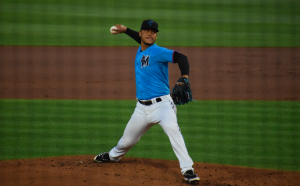
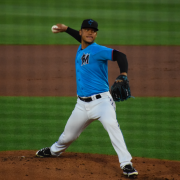
Elieser Hernandez pitching against the Saint Louis Cardinals in the 2021 Spring Training. Picture by Alejandro Villegas


Chisolm or Díaz Take Second

With solid moves in the off-season that have left the Marlins with a nearly-set roster, this year’s battle for second base is the franchise’s most hotly-contested position. Both prospects, Jazz Chisolm and Isan Díaz, the latter of which is coming off a groin injury from 2020. 

With both players plenty comfortable in the field, it’s their batting records that will likely decide who ends up on second. Though there’s also been some movement from Jon Berti, pundits and fans seem to lean on Díaz as a final candidate on the roster. 

Though only 24, Díaz has more experience than Chisolm has a (slightly) better record at-bat, and is a strong, reliable player. Given the Marlins’ need for a stronger offense, the verdict is likely to land with Díaz on second, Chisolm back in Triple-A for another season, and Berti floating around as a utility player. 


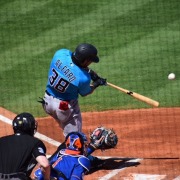
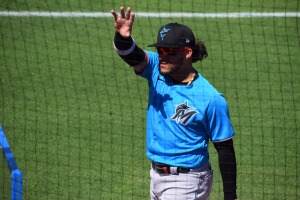
Isan Diaz at Clover Park in the 2021 Spring Training. Picture by Alejandro Villegas


Rogers or Neidert Take the Mound

With 39 pitchers on their list, the Marlins don’t have an empty mound by any stretch of the imagination. But with senior talent José Ureña gone, Sandy Alcantara will be the starting pitcher, with relievers Pablo López, Sixto Sánchez, and Eleiser Hernandez jockeying behind him.

That leaves a fifth position open for a newcomer.

At the moment, pundits have their eye on Trevor Rogers and Nick Neidert to inch into the starting rotation. Though Rogers’ ERA isn’t anything to write home about at 6.11, his strikeout stats show a promising future on the mound.

However, Neidert has experience on the mound after a few appearances in 2020. Given he was already in a bullpen role last season, Neidert is the stronger candidate—though Rogers is likely to graduate from Triple-A soon.


Aguilar Takes First Base

Between Jesús Aguilar and Garrett Cooper, the obvious candidate for the first base starter is Aguilar. He’s consistent and hasn’t struggled with injuries since entering the major leagues like Cooper.

With Adam Duvall, recently signed to the Marlins, heading for the outfield, it’s likely Cooper will serve as Aguilar’s backup—though some would prefer to see him as an all-around utility player and boost at the plate. The only issue is Cooper’s ongoing health concerns. 

Should he manage to go through the 2021 season without any barring injuries, he could find a more permanent place with the Marlins. However, at age 30, Cooper is running out of time to find his rhythm—especially as the Marlins look to revitalize their roster for a long-haul run in the east division.

Loading
Loading...


A Breakdown of Tyler Herro Against the Magic

It’s been a roller coaster of a season up to this point for Tyler Herro, going through contact tracing protocols, playing in games with 8 available players early on, and enduring injuries as well. That almost held him out of Sunday night’s match-up with the Orlando Magic, since he was questionable with a shoulder strain, but ended up playing.

And well, it was the type of bounce back game many have been awaiting, so let’s take a deep dive into his performance.

– Three-point shots falling for one reason

Herro’s shooting from beyond the arc this season hasn’t been his best attribute, which has had many people wondering the exact reason for that. His catch and shoot percentages haven’t been terrible, but are down from his rookie season, while his pull-up triples have been the main issue.

But taking a look at these two clips, there’s a mutual takeaway, which is that he’s getting back into his regular motions. By that I mean he’s utilizing the two main individual moves that lead to a successful jumper for him. The first play showcases the pump-fake into a one dribble side-step, which usually allows him to get into his most comfortable set-shot rhythm.

The second play is the most ideal Herro jumper that you will see. He receives the ball in motion into a pull-up, which is by far the most effective motion for him. If you’re wondering why, take a look at the amount of lift on that second shot. And when he’s shooting over the top of his defenders instead of being flat-footed, it usually ends in good things.

– Some differences in transition offense

Now, I’m not showcasing this play because it was a Herro fast-break alley-oop finish, which is impressive in itself. The actual reason is because of the difference in outcome compared to earlier tries.

A main issue with his transition scoring at times is that he allows his crafty rim presence to takeover in moments when it shouldn’t. Creative up and unders to avoid contact could make a highlight reel, but it also could end in  transition offense for the opposing team.

He must be more aggressive on these types of possessions, since drawing contact in fast-motion usually ends in two free-throws. Herro basically had no option other than to throw it down, since Goran Dragic forced him to rise up, ending in a flashy play. But once that semi-Butler kicks in to draw contact in transition, things will change for him as a player.

– Unique offensive set due to Butler’s gravity

Although this play wasn’t totally generated by Herro, it’s definitely worthy to discuss. Miami’s actions have looked a bit different with Bam Adebayo out, which is natural since he flowed them into most of their sets.

On this play, Butler and KZ Okpala run a pick and roll at the top of the key, while Olynyk sets an off-ball screen for Herro to wrap around to the basket. But take a look at the amount of eyes on the attacking Butler, especially since the switch didn’t occur to slide down on the cutting Herro. That leads to an easy dime under the basket for a score.

Guys like Herro have a real advantage on the offensive side of the ball when sharing the floor with Butler. The amount of pressure he puts on a defense allows others to play freely to find open space, which is impressive since it has continued with Adebayo out as well.

– Attacking mismatches through iso-ball

A big part of Herro’s evolving offensive game is the ability to take guys off the dribble one-on-one, especially when a mismatch is created.

On this possession, Herro creates the match-up that he wanted, and slowly backs out to reset while the team clears out. He then immediately begins to break his defender down, getting to that elbow shot which has been his friend since he entered the league.

Attacking switches is another one of those Dragic lessons that must be instilled into his game, especially since Miami is pretty limited on individual shot creators. If he can be trusted to get a bucket in a spaced out offense in a one-on-one setting, those late-game Tyler heroics will be even more dangerous.

– A need to utilize the PnR more

The pick and roll has been an interesting thing for Herro this season, since it shined most in those bundled up games against Philadelphia early on with eight available players, but has been a bit inconsistent since.

This play shows why that should not be the case, since he has a very unique and creative ability to get downhill. The issue has been actually utilizing the screen instead of avoiding it, since it only makes his job easier.

As he snakes back into the paint on this possession, which is usually his go-to so he can eliminate the guy who got screened, he attempts a very unorthodox floater that is never unorthodox for Herro. This ties back to my point earlier involving the avoidance of contact, since PnR sets will really takeoff when that occurs.

– Fourth quarter defensive impact

Miami’s defense has been absolutely extraordinary as of late, and it’s not all because of Butler, even though he deserves most of the credit. They have been playing incredible team defense, altering between man to man, 2-3 zone, and a 2-2-1 full-court press.

And when offense isn’t clicking late, you must utilize the defense to create offensive opportunities. Herro did that early in the fourth quarter, making two defensive plays, showcasing two completely different things.

The first play just showed his active hands, which looked a little Andre Iguodala-esque on this play, since he was determined to force Terrence Ross to make a play, instead of just sliding out to the corner while Precious Achiuwa stepped up.

The second clip really put Herro’s defensive awareness on display. It was obvious that Orlando would try to work the offense through Nikola Vucevic at this point, especially since he had a mismatch with Iguodala defending. Herro begins to edge over, and when he notices Vucevic is not aware of his back-side, he jumps the pass to force a turnover for the Magic.

And if anything has truly stood out from this breakdown, it’s that defensive growth in a team setting.


– More late-game jumpers to ice it

This is once again generated by the pressure Butler puts on a defense, since the defender slid over on the backside to eliminate the attack. Kelly Olynyk pops out immediately, which Butler swings it to him leading to the ball finding the hands of Herro.

And to evaluate his jumper once again, did you notice anything different? Well, I did, which was absolutely zero hesitation. The reason for shots falling more often down the stretch is the rhythm that he shoots with when it matters most.

To further that point, why not find Herro to put the game away, up 1 with 2 minutes left?

It basically looks like the same play as the last one, except Butler generated this one off the attack instead of out on the perimeter. Once again, the ball finds Olynyk, which then swings to Herro, due to yet another bad rotation due to the natural worry of a Butler score.

Herro catches it and lets it fly, which is the best and only option for him in those situations.

As I said at this point of the game, the Heat need one player other than Jimmy Butler to hit a big shot down the stretch for them to come away with a win. And that guy was Tyler Herro by no surprise.
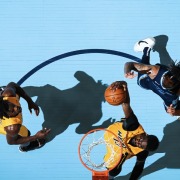
James Harden’s Net Gain for Brooklyn. A Title Next?

If James Harden keeps staying on top of his game, the Nets may have a shot at an NBA Finals victory in 2021

It wouldn’t be dramatic to say that January 14th, 2021 marked a historic day in professional basketball. On this day superstar shooting guard James Harden was traded to the Brooklyn Nets, ending his almost 10-year prolific career with the Houston Rockets.

Fans of the Texas-based Rockets were stunned with the unexpected move, but the Nets knew they had gained one of the league’s brightest players in a momentous deal that would highly benefit the organization. Since then, Harden has proved his place as a valuable member in Brooklyn with a show-stopping debut performance that made history. He became the first ever player to have a 30-point triple-double in a first game. You could say he was welcomed nicely in Brooklyn.

The Nets are profiting from the enthusiasm and athleticism Harden brings to the court, as the team is currently enjoying a top spot in the Eastern Conference rankings right behind the Philadelphia 76’ers. In fact, the 6 foot 5 powerhouse has allowed Brooklyn to appear as the number one favorite in NBA betting odds for an Eastern Conference Futures Win later this season.

But just what makes the veteran basketball player so good at his game? Well, he’s skilled in practically every area that Brooklyn needs. He’s dynamite on the court, impossible to catch up with and hard to throw off. Harden makes scoring three pointers look like a walk in the park as his opponents watch on with misery. It’s clear that he also has elite basketball knowledge and isn’t afraid to get creative with his gameplay. Even with big competitors like Miami, the Nets have been able to rise above the heat with the help of Harden’s offensive game.

Unlike other players who perform within their comfort zone, the shooting guard enjoys a good challenge and can adapt easily in the face of change. He’s also extremely inspiring and leads the team effortlessly. In a recent nail biter game against the Phoenix Suns, Harden encouraged the Nets to take back the lead, ending the competition victorious and recording one of the most historic comebacks the organization has ever seen.

The talented athlete has a load of accolades to his name and is arguably one of NBA’s most productive players of the moment. Now that Brooklyn has retained the superstar under a whopping $40 million contract, fans can look forward to more instances of domination in the season’s future. In such a short amount of time, he’s already done more than we could’ve imagined.


5 Takeaways from Heat’s Win Over Magic

The Miami Heat escaped yet another rough offensive night against the Orlando Magic, expanding their win streak to four in a row. Another all-around Jimmy Butler performance led to this outcome, after a 29 point night, sealing it with a steal and a layup with 4 seconds left. Anyway, here are five takeaways from this game…

#1: Miami’s peak defensive potential on display throughout.

If there’s been any wonder lately how Miami has stayed at that number one spot in defensive rating, this Heat game solidified that. Miami has been exceptionally good at hitting passing lanes, rotating close to perfectly, and altering between different defensive schemes. By that I mean Erik Spoelstra’s continued adjustments throughout a game, rotating between man to man, 2-3 zone, and a 2-2-1 full court press. Obviously it’s a soft press since Tyler Herro was heading it with Andre Iguodala, but it still forces the opposing offense to play at a speed that they are not used to. Kelly Olynyk must be mentioned in this defensive discussion as well, since he’s made major leaps with lateral quickness, rim protection for spurts, and mostly denying post entry passes, which is a huge improvement for this team’s current success.

#2: The Kelly Olynyk-Jimmy Butler offensive duo being schemed by Coach Spoelstra.

As I’ve discussed endlessly since Bam Adebayo went out, Kelly Olynyk has seen a decent sized change in his offensive role. The offense is running through him for a lot of the game, which means they’re handing him the keys as a primary play-maker. This has led to Coach Spo running many more sets for these two together, including off-ball screens for Butler leading to lobs, as well as Butler finding Olynyk in alternate spots on the floor. The reason this is so intriguing is because Adebayo can be utilized in a different way when he returns as well, which can alter Miami’s major offensive issues. If this can force Adebayo into a slightly larger scoring role, instead of worrying about setting others up, it may be the one piece to put this whole puzzle together.

#3: A longer leash for KZ Okpala leading to a positive outcome.

While I’m discussing defense a bit, it seems necessary to throw KZ Okpala into the discussion. His defensive attributes have never been questioned, but it’s actually been about over using them at times leading to foul trouble and defensive breakdowns. But well, that wasn’t the case today, since he was in the right spots throughout the game consistently. The offense is the part that should be discussed though, since there were even more flashes in tonight’s first half. As much as made threes may excite some, the off the dribble attack is what will truly keep him in the rotation for good. That slight hesitance still seems to be holding him back a bit, but once that is overcome completely, that full potential will be reached.

#4: Jimmy Butler steps up in the third quarter, trying to counter Nikola Vucevic’s takeover.

Nikola Vucevic was not only a main topic for the portion of the night, but mainly in the third quarter. He couldn’t miss from deep during this stretch, expanding the Magic’s lead little by little. And since Miami’s offense just can’t get into any type of flow for a good portion of the game, it was time for Jimmy Butler to step up in that moment like usual. Three point shooting clearly wasn’t the strength of the night for Miami, which led to constant penetration from Butler to put in his work around the rim. It’s pretty obvious that he can choose his moments to score at will when he wants, but the issue is that others must balance that timely takeover with scoring of their own. And too many droughts seem to come up throughout in their half-court offense, mainly when Butler is off the floor.

#5: Tyler Herro: Reverting back a bit, showcasing some indecisiveness early. 

Tyler Herro must be discussed in general following this game, since he hasn’t done much lately to mention. But now, he’s showcasing previous habits, which is the flipping switch between positive flashes and unnecessary decisions. Although the numbers may not look bad when evaluating the box score, he had moments throughout that aren’t explained through a stat-sheet. There are too many instances with indecisive movements or the tough choice between shooting or passing. Although it seemed as if he may have been past that, it seems like he’s reverting back slightly. Now, that’s not a hard thing to touch up, since he just needs that natural Herro confidence once again, where he doesn’t worry about that previous miss or that last turnover. Duncan Robinson has made that adjustment, and it’s made the difference. But as seen late in the game tonight, Herro stepped up when needed to not only boost this team, but boost his self confidence.

Elieser Hernandez bounces back against the Cardinals

Elieser Hernandez really bounced back on Saturday night’s matchup against the Saint Louis Cardinals.

The right-handed pitcher threw four really good innings, not allowing any runs, and striking out five, including Nolan Arenado and Paul Goldschmidt, in his third start of the Spring Training.

Hernandez had faced the Cardinals five days ago and allowed three earned runs in 2.2 IP.

The Venezuelan pitchers is battling for one of the five rotation spots.

In his first outing, Hernandez pitched two innings and allowed one run against the Nationals at West Palm Beach.

This was the first of his three outings in which he didn’t allow runs, and should be pitching again on Thursday’s afternoon face-off with the Nationals.

The depth of the Marlins pitching talent might push Hernandez or some other young talents to the long reliever role, and Hernandez has proved he can perform in both roles.

Miami will not play on Sunday, and will resume activities on Monday, facing the Houston Astros in West Palm, with Sixto Sanchez making his Spring debut on the mound.


By Alejandro Villegas | @Alejandrovg32 on Twitter 

A Breakdown of Goran Dragic’s Fourth Quarter Display

On a night that Miami’s offense struggled the way that it did, I didn’t think I’d be discussing that side of the ball in a breakdown article today in a positive way. But well, then Goran Dragic happened.

Jimmy Butler carried the load for most of the game, but a fourth quarter explosion from Dragic, scoring 20 points, led Miami to a win. So, let’s take a dive into that late-game offensive spurt.

– Pull-up triples

After Dragic went scoreless in the first half, he got into a bit of a rhythm late in the second half. Pull-up threes have been a part of Miami’s offense that not only struggled last night, but all season.

The Heat have always been a team that works drive and kicks in transition or straight up pull-ups from deep. On this play, the Bulls defense is scrambling, while two bigs are at the forefront of stopping the ball. Dragic noticing this, immediately pulls up from the top of the key in rhythm, which is exactly the type of shot that can spark his game.

Another thing to note is the arc on his shot on this play. You usually can tell the way Dragic shot is going to drop, due to the fact he has a high arcing shot, which usually drops in, or if he misses will bounce around the rim a few times. But when he’s off like he was in the first half, it just comes down to a flat-footed or straight on jumper.

– Offensive actions for Dragic

Even though it wasn’t a normal night for Dragic early on, the team could tell the way it was trending, since even Butler told him to takeover late. And as seen here, it’s more of those non-Butler minutes, which means the ball must be in Dragic’s hands to create offense.

On this possession, Miami flows immediately into a double screen for Dragic, giving him just enough space to pull. It seems like Patrick Williams read the scouting report on him, since he tried to angle inside to cut off a mid-range jumper. One thing about Dragic is that he always takes advantage of younger players who still are adjusting to the NBA level, which leads to an immediate change into a three pointer.

It’s not ideal to run constant offensive sets for your 34 year old veteran when Butler is off the floor, since Tyler Herro should be the guy at times taking over that role, but on a night that he had it absolutely rolling, it doesn’t seem necessary to discuss.

– The downhill Dragic effect

There are a couple layers to this play all together. For one, Miami has truly lacked a second guy who can put pressure on the rim consistently, and although the jumper was most linked with Dragic last night, the driving led to that.

But take a look at the Bulls’ defense on this play. Every player has their eyes on the scorching Goran Dragic, especially Denzel Valentine. Duncan Robinson notices this and sinks to the corner to be aligned with the ball. Dragic makes the right read to pass out to the corner, while Valentine closes out, and Robinson nails a very tough corner triple.

It’s usually Butler who is making those plays on drive and kicks, which is why Dragic is so important even when shots aren’t dropping. Also, that Robinson jumper is probably one of his most effective shots, since when he catches it higher, the better the release.

– Veteran moves

As I mentioned previously, there’s just something about Dragic when he’s guarded by inexperienced players. He just knows how to keep them where he wants, allowing him to get to his favorite spots.

On this play, Dragic and Chris Silva run a pick and roll, while Dragic utilizes a snake dribble to slide over. He does that to keep Coby White on his hip, or better yet his back, but White somehow recovered. He flows into a turnaround mid-range jumper with zero hesitation, which basically solidified this incredible offensive run.

Although Wendell Carter was doing his job to contain, it seemed like he was overestimating the offensive abilities of Chris Silva, since he was a bit too worried about him on the baseline. Dragic took advantage of that indecisiveness for a very tough bucket.

– More sets for the Dragon

Before diving into more of Dragic’s play, Silva’s understanding of the offensive and defensive scheme must be noted. He hasn’t had much run at the NBA level, but his dedication in practices have heavily carried over to games, since he was in the right spot basically every possession, which is the one downfall of KZ Okpala.

Anyway, Butler just checked back in at this point, which made the defense question if they would go to the hot Goran Dragic or the semi-unstoppable Jimmy Butler. Dragic curls off of an off-ball screen from Silva, and Butler immediately fed him the ball for an easy floater.

This is another example of the Bulls not really knowing much about Silva as a player, since they were constantly reluctant to step up on Dragic since they didn’t want to leave Silva’s side. It was a major reason for Dragic’s fourth quarter explosion.

– The definition of a tough shot

There are some plays where you can point to offensive reads or a slight pump-fake, but there are also times when it’s just a very tough shot that ends up dropping.

On this possession, it’s another pick and roll, this time from the corner, and Dragic gets to the mid-range and pulls with White right in his face. There’s nothing else to really point to with Dragic here, other than the fact that he was just in an incredible rhythm.

Also, take a look at Butler on this play. He starts on the opposite wing, and begins to walk towards the rim. Not to get the ball to score, but to try and get a rebound. He knew Dragic was shooting that shot as soon as he got the ball in the corner, especially since he was the one who told him to take initiative.

– The biggest change from half to half

One of Dragic’s biggest strengths is his ability to find and attack mismatches on bigger or slower defenders. He got the Lauri Markkanen switch many times in the first half, but he seemed a step too slow each time, leading to contested three-pointers.

But when he got that switch in the second half, it was a completely different story, since he did what he has done his entire Miami Heat career. In the first clip, everybody cleared for him to take it to his strong side, and he went into his signature behind the back cross, stopping Markkanen in his tracks and knocking down the jumper.

The second clip was the same exact shot he was attempting in the first half, except this one had much more bounce and a lot higher arc. That combination right there for Dragic usually leads to many positive outcomes, which is exactly what that fourth quarter was.