Miami Dolphins Embarrassed. Again

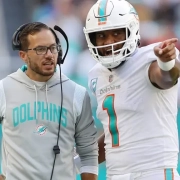
The Miami Dolphins returned home on a short week to face the Baltimore Ravens and got demolished. Miami controlled the game in the first half and should have had a solid lead but instead, Miami fell flat and did what bad football teams do, beat themselves.

It started on the second drive of the game after the Dolphins forced a Ravens three and out, Miami’s second year wideout Tahj Washington got his first career NFL catch, and fumbled in Ravens territory, giving Baltimore a 7-3 lead.

It then continues for Miami, a great drive once again, ended with a missed field goal, swinging the momentum back in Baltimore’s favor.

This was the story of the game for Miami, almost this almost that.

Miami headed to halftime with a 14-6 deficit in a game that they really controlled. Miami missed a field goal, gave the Ravens the ball on Miami’s seven, and the Dolphins questionably went for it on fourth down before half instead of taking three more points. Miami outgained Baltimore 235-119 and did a solid job containing Derrick Henry and Lamar Jackson. But good teams take advantage of bad team’s mistakes, and bad teams, often don’t bounce back, and continue to compound their own.

In the second half, the Ravens offense picked up, dominating the opening drive, mostly through the air, ending with a touchdown pass to another tight end, this time Charlie Kolar.

The Dolphins offense needed to respond now down 15 and they faltered, sack, 0-yard gain, and an incompletion.

Just a week after showing some life and putting together their most complete performance, they compounded mistakes and got embarrassed yet again on their home turf.

Miami quit this game, their defense, quit holding up for their offense, their offense showed no heart, and last week’s win just looks like a prolongment of the inevitable, a new era in Miami.

Miami returns back to the field Sunday November 9th for a divisional bout with the Buffalo Bills

The Evolution of the Filipino Perya: Tradition Meets Technology through Peryagame

For centuries, the perya has been one of the most recognizable symbols of Filipino celebration. Often set up during town fiestas, it combines elements of faith, fun, and fortune. 

Bright lights, food stalls, and the sound of rolling dice or spinning wheels transform a quiet barangay plaza into a hub of energy and laughter.

The perya is not simply a source of entertainment. It represents a vital cultural thread that ties communities together—where games of chance and skill are played not for profit but for joy and connection. 

Traditional perya attractions include the color game, jackpot, betting circles, and simple games of accuracy or luck, all of which have become cultural touchstones of Filipino leisure.

But as technology continues to shape the way Filipinos interact, play, and celebrate, the perya itself faces transformation. 

How does one preserve this vibrant part of local culture in an increasingly digital world? The answer lies in Peryagame, a modern platform that brings these classic games into the online era while keeping their cultural significance intact.


The Cultural Significance of the Perya

Before delving into Peryagame’s role, it’s important to understand why the perya holds such an emotional place in Filipino society.

Historically, the perya appeared during fiestas and patron saint celebrations, serving as both entertainment and a form of social gathering. 

It was where neighbors met, children played, and adults tested their luck in games that mixed chance with charm.

One of the most iconic examples is the color game, a fixture at almost every perya across the country. In this game, players bet on colored sections of a board as dice tumble within a box. 

The excitement comes from its simplicity—anyone can play, and everyone can win. Yet beyond the thrill, it reflects the Filipino tendency to find joy in shared experiences.

Similarly, jackpot tables became a symbol of ambition and optimism. These games embody a deeper truth about Filipino resilience and faith in destiny: win or lose, there’s always another round, another chance.

In essence, the perya is not just about gambling—it’s about storytelling, community, and celebration. It’s where tradition, emotion, and entertainment meet.


The Digital Rebirth: Introducing Peryagame

Peryagame represents the next chapter in the perya’s evolution. Rather than replacing tradition, it translates it into a digital format that aligns with modern lifestyles. 

Through this transformation, Peryagame ensures that the perya’s cultural essence remains alive in an era dominated by smartphones and online platforms.

Unlike ordinary gaming sites, Peryagame does not strip away the cultural heart of the Filipino carnival. Instead, it reconstructs it for the digital age—complete with familiar visuals, dynamic interfaces, and community-driven features that evoke the feeling of playing with friends in a real carnival.

In Peryagame’s color game, for example, players can experience the same excitement of betting on red, yellow, or green. The interface mirrors the traditional layout while incorporating smooth, modern gameplay. 

The system offers instant results, fair play, and accessibility to anyone with an internet connection, turning every game into a moment of nostalgia and discovery.

Similarly, Peryagame’s jackpot section replicates the thrill of local carnival booths. The suspense of watching the reels spin online recalls the same tension and excitement that once filled the air under a tent lined with flashing bulbs.

And through betting circles and chat features, players can connect with others, forming a sense of digital bayanihan—the Filipino spirit of togetherness—across distances.


How Peryagame Preserves and Modernizes Filipino Heritage

Cultural preservation in the digital age requires a delicate balance between authenticity and innovation. 

Peryagame achieves this by focusing not only on game design but also on cultural context. 

Each game mirrors its traditional roots while adapting to modern expectations of speed, convenience, and engagement.


  1. Accessibility and Inclusion

Traditionally, a perya required physical presence. With Peryagame, that limitation disappears. 

Overseas Filipino workers, students, and professionals can reconnect with the games of their childhood no matter where they are in the world. 

This inclusivity ensures that Filipino cultural heritage remains global, accessible, and thriving.

  1. Educational Value

By engaging with Peryagame, players also learn about the symbolic meanings behind perya traditions. 

The colors in the color game, for example, are not random—they represent prosperity (red), luck (green), and happiness (yellow). The games are lessons in culture disguised as play.

  1. Technological Adaptation

Peryagame demonstrates that technology can serve as a tool for cultural education, not erasure. It digitizes familiar practices while preserving their human element—communal joy, laughter, and optimism.

  1. Community and Interaction

The social aspect of the perya—that feeling of being part of something festive—is retained through Peryagame’s multiplayer features. 

Online leaderboards, real-time chats, and digital events recreate the noise and camaraderie of the carnival, making every session feel like a fiesta.

Through these innovations, Peryagame acts as both educator and entertainer, showing how tradition can thrive in a fast-paced world.


The Colors and Symbols Behind the Games

The traditional Filipino perya has always been a visual feast. Bright lights, vivid banners, and painted booths were designed to draw in players and signal luck. 

Peryagame continues this symbolism by integrating color psychology and Filipino cultural motifs into its design.

  • Red: Energy, passion, and prosperity. In Filipino belief, red symbolizes life and victory, which is why it often appears in games of luck and celebration.

  • Green: Renewal and fortune. It represents growth and the promise of better opportunities—a concept deeply rooted in Filipino optimism.

  • Yellow: Joy and abundance. This color recalls the warmth of fiesta lights and the cheer of community gatherings.

Through these design choices, Peryagame becomes more than an online gaming site—it becomes an educational representation of Filipino visual culture. 

Every hue and symbol carries meaning, connecting players to their heritage in subtle yet powerful ways.


Why Peryagame Matters in the Modern Age

In an era where entertainment is increasingly digital, Peryagame stands as a model for cultural continuity. 

It proves that modernization does not have to mean forgetting tradition. Instead, digital innovation can become a platform for rediscovery.

Peryagame offers players more than amusement; it offers a way to reflect on how deeply ingrained the perya is in Filipino identity. 

Every spin, roll, or bet tells a story—of ancestors who celebrated risk, of communities that found joy in gathering, and of a people who have always turned play into a symbol of resilience.

By merging traditional games with contemporary technology, Peryagame ensures that Filipino cultural heritage remains not only preserved but also actively experienced by younger generations. 

It invites users to understand that play can be both fun and educational, both nostalgic and forward-looking.


The Perya as a Cultural Classroom

To understand the Filipino perya is to understand a piece of Philippine anthropology. These games are not isolated amusements—they’re reflections of historical trade, colonial influence, and local ingenuity. 

Dice-based games trace back to early Asian traditions, while the carnival structure was influenced by Spanish-era fiestas.

Peryagame, in this sense, becomes an educational tool. It allows users to experience these layered histories firsthand. 

The combination of tradition and technology demonstrates how Filipino culture adapts and survives through reinvention.


Final Reflection: A Bridge Between Past and Present

The Filipino perya has always evolved with the times—from makeshift stalls in rural fiestas to illuminated town carnivals. With Peryagame, it enters the digital world without losing its cultural heartbeat.

By studying and engaging with Peryagame, players don’t just learn how to play; they learn why Filipinos play—the laughter, the faith, and the hope behind every toss of a coin or roll of a die. 

It’s a living classroom where heritage meets innovation, proving that even in the virtual age, the Filipino fiesta spirit continues to shine brightly, one colorful game at a time.


FAQ: Learning from Peryagame and Filipino Perya Traditions


1. How does Peryagame educate players about Filipino culture?


Peryagame integrates traditional perya elements into its platform, allowing players to learn the meaning and history behind games like the color game and jackpot. It turns entertainment into cultural exploration.


2. Are Peryagame’s games historically accurate?


Yes. Each game is modeled after authentic perya traditions while incorporating modern design. The color game, for example, retains its original mechanics of betting on dice-determined colors but introduces fair digital systems for transparency.


3. Why is it important to preserve the perya digitally?

The perya is a cultural archive of Filipino joy, creativity, and resilience. As lifestyles shift online, digitizing these traditions ensures they remain alive for future generations who may never experience a physical fiesta.
Panthers Third-Period Comeback Falls Short, Lose to Ducks in Shootout

SUNRISE, Fla. —  For a majority of Tuesday night’s game, the Florida Panthers looked like they’d leave Amerant Bank Arena disappointed in their performance against the Anaheim Ducks, and it would have been warranted.


They didn’t end up victorious as Anaheim won 3-2 in a shootout. But, getting out with a loser point seemed generous based on how the first 40 minutes of the contest went.


The Ducks scored two special-teams goals in the second period— one short-handed from Leo Carlsson and one on a 5-on-3 power-play from Cutter Gauthier — in less than three minutes.


”If you give a team with skill a 5-on-3, the chances are they’re going to score on those,” Panthers head coach Paul Maurice said.


A regulation defeat to a young Ducks team looked all but certain for the back-to-back Stanley Cup champions.


Florida gave it one final push, with goals from Anton Lundell and Sam Reinhart propelling a late third-period rally to send the game to overtime.


With 8:48 to play in regulation, the comeback effort started after the two youngest Panthers linked up to finally get their club on the board. Mackie Samoskevich — who was filling in on the second line for an absent Brad Marchand — fed a pass to an unmarked Anton Lundell in front of Anaheim’s net.


“We all saw how [many] steps he took forward last season, and this year he looks even faster and stronger,” Lundell said when asked of Samoskevich’s improvement in his sophomore season. “I’m not surprised to say anything about him. He’s just going to get better.”


As the clock trickled down, Florida pulled their goaltender with over three minutes to go in favor of an extra attacker. With 3:06 to go in the third, a Seth Jones point-shot deflected off of Sam Reinhart and past Ducks goaltender Lukas Dostal to tie the game at 2-2.


“You see one go in and it gave us a little bit of life,” Seth Jones spoke of the third-period comeback. “It’s nice to see one go in, we’ve had trouble kind of putting them in lately.”


In overtime, the Panthers had a golden opportunity to complete the comeback. With 2:06 to play, Ducks forward Mason McTavish went to the box for hooking Samoskevich, putting Florida on a 4-on-3 man-advantage.

To McTavish’s relief, the Ducks successfully killed off the penalty, due in large part to Dostal, who finished the night with 31 saves. McTavish would be the hero, scoring the game-winning shootout goal after holding out Daniil Tarasov just long enough to slip the puck through the Panthers goalie’s five-hole.

The Miami Dolphins Blowout the Falcons in Atlanta

For a Dolphins team that looked like the NFL’s get right game last week, the Dolphins dominated the Atlanta Falcons this week.

Dolphins quarterback Tua Tagovailoa played his worst career game last week and bounced back, Mike McDaniel called a splendid game, the Dolphins dominated the clock (39 minutes), and the Dolphins defense held the Falcons to only 10 points while keeping Bijan Robinson below 30 rushing yards (2.1 yards per carry for Atlanta, 2.6 after a late 12-yard run).

For Dolphins fans this game was a question of why now, what took so long for the Miami Dolphins to show what they were capable of, and where do they go from here as they sit at 2-6 with Baltimore on deck.

After questioning the coach, the quarterback, the general manager, and the owner Miami did just what they always do, reel everyone back in while giving more questions of “what-if?”

The Dolphins started this game with a change, bringing offensive coordinator Frank Smith to the sideline, and told Tua to play with more confidence and did he ever. Tua looked like the quarterback that got paid $200 million dollars and put together one of his best games of the season vs one of the NFL’s best pass defenses.

The Dolphins offense was balanced, distributing 37 carries between their three tailbacks, 18 for Achane (67 yards), 10 for Gordon (46 yards), and nine for Jaylen Wright (27 yards). This enabled Miami to get their screen game going, the play-action game going, and helped Miami’s offensive line give Tua time to read the field.

Tua went 20-26 for 205 yards and four touchdowns, boasting a 138.6 passer rating.

One of my biggest takeaways from the passing game was the resurgence of the middle of the field. Tua and Waddle were able to connect over the middle of the field all day, including on their 43-yard connection for a touchdown.

Waddle TD

After their worst game of the season, the Dolphins bounced back, and for a team with a lot of questions and jobs on the line, they responded the only way they could, by putting their most complete product of the season on the football field.

The Dolphins return home Thursday to face the Baltimore Ravens who find themselves in a very similar spot, likely with their star quarterback returning.

So, can the Dolphins turn this season around or was this just right time right place for the Dolphins?

Panthers Cruise Past Golden Knights in Sunrise

SUNRISE, Fla. — The Florida Panthers got back into the win column on Saturday night, defeating the Vegas Golden Knights 3-0 at Amerant Bank Arena.


Sergei Bobrovsky stopped all 17 shots faced and Florida moved back to .500 (5-5-0) on the season in the win. They are 4-1-0 at home this season.


Sam Reinhart opened the scoring on Saturday night, beating goaltender Akira Schmid off a breakaway with 2:41 to play in the first period. Carter Verhaeghe feathered a pass in the neutral zone to Reinhart, who buried his fourth goal of the season to give Florida a 1-0 lead.


The Panthers doubled their lead 3:29 into the third after Cole Schwindt, who was making his season debut, fired away a loose puck for his first of the season.


“The whole day, knowing that I’m playing tonight, [I was] just really excited and felt really good going into the game,” said Schwindt after his first game of the season. “And it feels great to get my first [goal] on a goalie (his only other NHL goal was on an empty netter).”


Schwindt was claimed by the Panthers off waivers from Vegas earlier this month.


AJ Greer joined Reinhart and Schwindt on the scoresheet midway through the third, putting Florida up 3-0 after he tucked in a wrap-around for his third goal of the season.


The Panthers will have two days off before returning to action on Tuesday night at home against the Anaheim Ducks. Puck drop for that contest will be at 7 p.m. ET.

Panthers Fall to Penguins, Drop First Home Game of Season

SUNRISE, Fla. — The Florida Panthers were back on home ice for the first time in 12 days on Thursday, returning after a long road trip that saw them win just one of five games.


Unfortunately for the Panthers, the result was not in their favor. The Pittsburgh Penguins beat Sergei Bobrovsky five times on just 16 shots, as the Panthers fell 5-3 at Amerant Bank Arena.


After dropping their first home game of the season Thursday, the Panthers fell to 4-5-0 on the season.


Sidney Crosby opened the scoring on the power play 6:24 into the game. The Penguins captain picked up his fifth goal of the season after burying a one-timer near the left face-off circle to put Pittsburgh up 1-0.


Rickard Rakell doubled the Penguins lead 6:36 into the second period, tapping in a loose puck near the crease for his third goal of the season.


Less than two minutes after Pittsburgh made it 2-0, Brad Marchand continued his spectacular start to the season, scoring his fourth goal of the season 8:26 into the second to finally get Florida on the board.


On the power play, Mackie Samoskevich wired a cross-crease pass straight to an unmarked Marchand, who didn’t even have to move as the puck ricocheted in off his skate, cutting the deficit to one.


With 5:36 to play in the middle frame, 18-year-old rookie Ben Kindel reclaimed a two-goal lead for the Penguins after he beat Bobrovsky with a one-timer blocker side for his second career NHL goal.


Trailing 3–1 early in the third period, Sam Reinhart got the Panthers back to within one on the power play, beating Tristan Jarry for his third goal of the season.


Despite Florida’s efforts to tie the game, Pittsburgh once again took a two-goal lead moments after Reinhart got on the board.


Connor Dewar put the Penguins up 4-2 after he floated a non-threatening shot towards goal off the rush, which fluttered past Bobrovsky and into the net with 15:11 to play in regulation.


If the script of the game wasn’t clear yet in this story, the Panthers were bound to score again.


They did.

Marchand got his second of the game 11:06 into the third, walking right around Jarry after his linemate Eetu Luostarinen fed him a pass from below the goal-line.


Momentum back on their side, plenty of time left, and the home crowd behind them, Florida was in prime position to tie the game.


And then Crosby scored his second of the game…


After Aaron Ekblad was called for an interference penalty, Crosby got his second power-play goal of the night — and second one-timer goal — to put Pittsburgh up 5-3.


Florida’s next game will be against the Vegas Golden Knights on Saturday, Oct 25 at 7 p.m. ET.

Messi’s Lasting Influence on Soccer in Miami

When Lionel Messi signed for Inter Miami, the city’s sports landscape changed overnight. The Argentine legend didn’t just raise the level of play within Major League Soccer; he redefined what soccer means to South Florida. His arrival has influenced everything from youth participation and fan culture to betting markets and local infrastructure, turning Miami into one of the most dynamic soccer environments in the United States.

Raising the Competitive Standard

Messi’s technical precision and professionalism have reshaped Inter Miami’s training ground culture. Teammates who once viewed practice as routine now treat each session as a test of standards. Coaches report sharper decision-making and faster ball circulation, a reflection of Messi’s natural ability to elevate those around him.

On match days, opponents adjust tactics to contain him, opening up spaces for others and forcing Major League Soccer teams to evolve defensively. This ripple effect has made the entire league more tactically disciplined and globally watchable.

Youth Inspiration and Community Growth

Messi’s influence reaches far beyond DRV PNK Stadium. Across Miami’s parks and youth academies, participation rates have surged since his arrival. Local clubs report record sign-ups for junior programs, with parents citing Messi as the reason their children picked up a ball for the first time.

His impact is also cultural. Miami’s mix of Latin American communities already valued soccer deeply, but Messi’s presence has united those fan bases around one local identity. The sense of belonging and pride around Inter Miami has made the sport a fixture of city life.

Financial and Media Transformation

Before Messi joined, Miami’s soccer market was promising but underdeveloped. Now, the club’s valuation exceeds one billion dollars, and sponsorships are arriving from global brands seeking association with his name. According to reports from Forbes, Inter Miami’s merchandise sales skyrocketed to record levels in MLS history within months of his signing.

Media coverage followed suit. Matches featuring Miami now attract global viewership figures once unimaginable for the league. This exposure has not only benefited the club but also local media outlets, including Five Reasons Sports, which has expanded its soccer coverage significantly to meet growing reader demand.

How Betting Markets Reflect Messi’s Impact

Beyond the stadium and television screens, Messi’s arrival has even influenced betting dynamics. Games involving Inter Miami now see more active betting markets, with bettors and analysts tracking his performances closely. Bookmakers regularly adjust lines and predictions based on team form, especially when Messi’s fitness or availability changes. Those trends can be observed through odds according to FIRST.com, where shifts in Miami’s probabilities often mirror the level of confidence surrounding his match fitness and impact potential.

This connection between player presence and betting sentiment underscores Messi’s economic footprint. His effect on perception extends beyond fandom and enters data-driven sectors that gauge performance in financial terms.

A Broader Effect on American Soccer

The “Messi effect” has not stayed within city limits. Stadium attendance across the United States rises whenever Inter Miami visits, often selling out weeks in advance. Television ratings for MLS broadcasts have also increased nationally. This rising tide lifts other franchises, creating renewed investment in facilities and player recruitment.

For many analysts, Messi’s influence is similar to David Beckham’s arrival in 2007, but on a larger scale. Where Beckham laid the foundation for global curiosity, Messi has ignited genuine competitive credibility. Miami, with its international ties, stands as the center of that shift.

Local Legacy and Long-Term Sustainability

While the immediate benefits are undeniable, sustaining growth after Messi retires will be the real challenge. The club must convert short-term visibility into long-term structure. Investing in academies, scouting, and youth coaching ensures that Messi’s influence outlasts his playing days.

Miami officials and local sports executives have already discussed initiatives to embed soccer deeper into community programs. The city’s growing identity as a soccer capital will depend on whether that enthusiasm becomes permanent infrastructure rather than a temporary headline.

Continued Coverage and Regional Context

For those following Miami’s growing soccer identity, the club’s evolution under Messi continues to illustrate how a single player can redefine standards, inspire communities, and transform a local team into an international symbol of ambition.

Rock Bottom; Dolphins Embarrassed by Cleveland

The Miami Dolphins are officially the “get right game” for NFL teams. In an already abysmal season, the Miami Dolphins got embarrassed in all phases of the game, by the Cleveland Browns.

For Dolphins fans, this is a 25-year story, and even longer when you consider that they couldn’t get Dan Marino a Superbowl. Then came Mike McDaniel and Tyreek Hill, bringing the most fun football to South Florida in a long long time. But even with that, nothing changed. The Dolphins couldn’t win in the cold, couldn’t beat good teams, and ultimately still didn’t win a playoff game.

Now, the Dolphins have hit rock bottom, trapped with a quarterback who can’t hold the weight of his contract, trapped in a soft culture, and trapped in purgatory.

There’s internal drama, external criticism, and zero answers for the Miami Dolphins.

I would normally recap today’s game, but I have no positives, this is more so a message to Stephen Ross, what else will it take for change in Miami?

How many more embarrassments, how many more shortcomings, and how many more what-ifs?

How many more excuses can be made for a team that can’t ever get across the hump.

This season was destined for disaster — a product of poor construction, fragile leadership, and misplaced confidence. Today’s loss was just another reminder: change in Miami isn’t a matter of if, but when.

The Dolphins will be going back to the drawing board soon, and hopefully with a clean house.

Can Miami Close Out The Season With a Win?

Over the past few weeks, we’ve seen several MLS teams get their hands on major silverware. Seattle Sounders conquered their first-ever Leagues Cup title and became the first MLS side to win all of the major soccer trophies in the United States after beating Inter Miami 3-0 in the final on August 31, Vancouver Whitecaps defeated Vancouver FC 4-2 in the Canadian Championship Final on October 1. That same day, Nashville edged Austin 2-1 in the U.S. Open Cup Final to secure their first-ever trophy in club history.


Since that defeat in Seattle, Miami have lost 3-0 at Charlotte before stringing together three-straight wins vs. Seattle, DC and New York City FC. However, a 1-1 draw at Toronto and a 5-3 home loss to Chicago would see them relinquish their chances of winning a second-straight Supporters’ Shield, with Philadelphia Union coming away with the best regular-season record in MLS. Miami would bounce back with a 4-1 victory against already-eliminated New England Revolution before demolishing Atlanta United 4-0 via goals from Luis Suarez and Jordi Alba – who has scored three in his last two – and a brace from Lionel Messi. As for Nashville, they followed up their historic win with a 1-1 draw in Montreal.


Saturday’s trip to Nashville contains strong emotional connotations as well as genuine real-life implications. It will be the final regular season match for both Jordi Alba and Sergio Busquets, who will retire after the end of the 2025 campaign. Alba has staked his place in the pantheon of the game’s greatest left backs across a glamorous 16-year career for Spain, Valencia, Barcelona and now Miami, whilst Busquets has emerged as one of the best defensive midfielders in Europe alongside the likes of Xabi Alonso, Diadie Samassekou and Casemiro. Of course, unlike in LaLiga and every other major soccer league, MLS doesn’t determine its champion via the regular season, but the postseason…something that Miami found out the hard way last year when, after achieving the best regular season points tally in MLS history, they were bounced by Atlanta in the first round across three legs.


Miami have not suffered a trophyless season since Messi, Alba and Busquets arrived in 2023, winning the 2023 Leagues Cup and 2024 Supporters’ Shield, but if they are to end the 2025 season with a piece of silverware, they’ll have to do it the hard way by winning a first-ever MLS Cup title. In order to win their maiden national championship, it is of the utmost importance that they finish in the highest possible position in order to secure homefield advantage. Miami currently sit fourth in the MLS standings, level on 62 points with third-placed Cincinnati, one point behind Vancouver, and two points above San Diego FC. Whilst they are guaranteed to finish no lower than third in the East, they could very well sneak into the second if they can take care of business vs Nashville and if Cincy fail to get the job done vs. Montreal.


Whereas the higher-ranked opponent will host the first and third (if necessary) match of the first round of the playoffs, they will also host the only match of the Conference Semifinals, Conference Finals, and MLS Cup Final. And whilst Miami are the fourth-best home team in MLS with 11 wins and 3 draws in 17 matches, they are only the seventh-best away team with 7 wins and 5 draws from 16. They’ve won just one of their last six away matches, and they’ll be looking to end that streak on Saturday as they take on Nashville in Geodis Park.

NBA Sets New Records Across Social Media and Digital Platforms

Fueled by an ambitious multi-platform digital strategy, the NBA wrapped up the 2022–23 regular season with record-shattering engagement across its digital ecosystem — from the NBA App and NBA League Pass to its powerhouse social media presence. The league’s global community of fans propelled @NBA on Instagram to over 13 billion video views, making it the most-watched account on the platform. Collectively, NBA and NBA-affiliated social channels reached 32 billion video views, marking a 10% year-over-year increase, largely driven by a surge in younger and international audiences.


Expanding Global Reach Through Social Media


This season, @NBA generated 18 billion views across all social media platforms, the highest among any sports league worldwide. The audience grew by 14 million new followers, with international fans representing the majority, over 70% of the NBA’s total social following. Notably, half of the NBA’s digital audience is under 25, underlining its growing influence among Gen Z fans across continents.


* YouTube: The NBA’s YouTube channel became the first professional sports league to exceed 20 million subscribers and 12 billion lifetime views. Every 90 days, it reached more than 75 million unique viewers, who watched an average of 35+ minutes per visit — a testament to the league’s evolving content strategy.

Instagram: With 78 million followers, the NBA ranks as the 8th most-followed brand on the platform, outperforming most major sports organizations and entertainment brands.


The NBA’s top ten most-viewed players this season reflect both its global diversity and its youthful energy. Five players on the list are 26 or younger, while five represent international markets, a clear indicator of basketball’s expanding international appeal:


  1. LeBron James (Lakers, USA): 1.3B views
  2. Stephen Curry (Warriors, USA): 881M views
  3. Luka Dončić (Mavericks, Slovenia): 736M views
  4. Ja Morant (Grizzlies, USA): 653M views
  5. Giannis Antetokounmpo (Bucks, Greece/Nigeria): 522M views
  6. Jayson Tatum (Celtics, USA): 496M views
  7. Kyrie Irving (Mavericks, Australia): 374M views
  8. Victor Wembanyama (France): 350M views
  9. Jordan Poole (Warriors, USA): 293M views
  10. Nikola Jokić (Nuggets, Serbia): 253M views


The league’s pop-culture influence also reached new heights when BTS star SUGA was named an NBA Ambassador, sparking a digital sensation. The announcement became one of the NBA’s most engaging posts ever, the second-most liked Instagram post (4.6M likes) and second-most retweeted tweet (118K retweets) in league history.


NBA Digital Platforms: Redefining Fan Engagement


The revamped NBA App, launched in September 2022, delivered more than one billion video views during the season, a threefold increase from the previous year. With its social-first approach and mobile-optimized vertical video format, the App successfully captured the attention of younger audiences worldwide. Exclusive content such as *“Pass the Rock,”* a docuseries spotlighting the league’s emerging stars, and live coverage of Boulogne-Levallois Metropolitans 92 games featuring top prospect Victor Wembanyama, became key engagement drivers.


Meanwhile, the NBA ID membership program played a crucial role in strengthening fan loyalty, fueling a 40% rise in NBA App downloads. The introduction of alternative broadcasts like *“Throw It Down with Bill Walton”* and live shows such as *NBA CrunchTime* further diversified the digital viewing experience.


Complementing this innovation, NBA League Pass, the league’s premium streaming service, experienced remarkable social media growth, with subscriptions up 50% and viewership climbing by 48% season-over-season.


A Global Digital Powerhouse


From social channels to streaming platforms, the NBA’s digital presence continues to break boundaries. Its ability to merge sport, entertainment, and community has not only transformed fan engagement but also positioned the league as a true global digital leader, setting a new gold standard for sports organizations worldwide.