Aleksander Barkov wins his first Selke Trophy

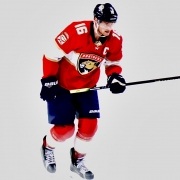
Florida Panthers captain Aleksander Barkov won his first Selke Trophy after his eighth NHL season on Friday evening. 

The Frank J. Selke Trophy is awarded annually “to the forward who best excels in the defensive aspects of the game”. 

Barkov had 26 goals, 32 assists and 58 points in 50 games during the 2020-2021 NHL season. He lead the Panthers to their first playoff appearance since the 2015-2016* season.

The Selke Trophy is voted on by the 100 members of the PWHA. Barkov lead the way with 780 total points and 62 first-place votes. He was listed on 92 of the 100 ballots. 10-time Selke finalist and four-time winner Patrice Bergeron was the runner-up with 15 first-place votes and 522 total points. Mark Stone came in third with 463 points. 

Once again, Barkov showed his excellence in playing a 200-foot game this season with the Panthers. As one of the league’s top two-way players, he averaged over a point-per-game while still dominating defensively in all areas of the ice.

Barkov’s Selke win also puts him into an exclusive NHL group. The 25-year-old is only the fifth player in NHL history to win both the Selke and the Lady Byng. He joins Pavel Datsyuk, Anze Kopitar, Ryan O’Reilly and first ballot Hall of Famer Ron Franics.

This was the first time Barkov was named a finalist for the Selke. 

* The Panthers made the Qualifying Round for the 2019-2020 Stanley Cup Playoffs before losing to the New York Islanders in 4 games.

Everything Tradeshows is a one-stop-shop for trade show exhibit rentals and custom exhibit display purchase solutions to companies of all sizes.

Visit them at EverythingTradeShows or call 954-791-8882

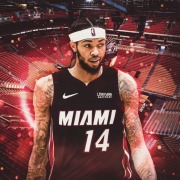
How Would Brandon Ingram Look in the Heat’s System?

Brandon Ingram and the Miami Heat. Those aren’t two names that I saw being linked together this off-season, but here we are. In the latest episode of Floor’s Yours, which you can watch here, it was reported that Ingram is a possible target for the Heat.

It makes sense for a couple reasons, beginning with the recent rumblings in New Orleans, including a fired coach and some angered family members associated with the young centerpiece Zion Williamson. Once again, if you want more discussion about that whole situation, take a look at the video link above, but in this piece, we’re going to dive into the fit.

It doesn’t seem like I would have to sell a lot of people on this acquisition, since frankly, it’s widely known he fills a lot of the Heat’s current needs. So, what are the strengths of Ingram that fill the holes in Miami’s roster?

The Missing Piece

Ingram is a three-level scorer, but before I dive into all three of those levels, an overarching area of his game must be touched on: he’s a tough shot maker. And well, the Heat need that type of player.

A guy that can make a play out of nothing with the shot-clock going down. A guy that has the length and freedom to get to any spot on the floor that he chooses.

Loading
Loading...

In the clip above, he euros over the top of Will Barton into a one-legged, double clutch fade-away. Bucket. News flash: that shot isn’t a normal outcome. But it seems to be quite normal for a guy who was the second pick in the 2016 draft for a reason.

On one hand, it’s a good thing to see him play with this free play-style, but I don’t think that’s where he would absolutely thrive. He needs structure in a system where he is put in a position to succeed, instead of a side-kick in other situations. Putting him in a score-only role on this team, increases the effectiveness of not only Ingram, but the Heat’s offense.

Oh, an Attacker in Space

This seems to be my caption whenever reviewing players who are capable of scoring in the half-court without a screen. It’s one of the things Miami missed majorly this season, and Ingram takes this to a whole other level than previously discussed.

The word I attributed to him to start was length, and that’s what makes his attacking ability so special. Not only is he incredibly skilled as a scorer, but he makes things so much harder to guard with those long strides and lanky finger-rolls.

There’s one thing that stood out at the beginning of this play that many Heat fans probably aren’t used to. When he surveys the floor on the wing, he waves his hand in the opposite direction. He’s not calling for a pick, he’s calling for an open lane.

That one hand wave should tell you everything you need to know about this type of acquisition. Jimmy Butler’s Derrick Henry-esque drives to the basket may get the job done, but a secondary attacker is needed. And that phrase doesn’t do that element of his game justice.

The Mid-Range Choice

As I said in the headliner here, the mid-range is a choice for Ingram. He’s a very good scorer in that area, but I don’t believe it’s a priority for him once the overall talent levels takeover.

On this play, you see the ability. His back to the basket in the mid-range, spins toward the baseline and immediately fades into a jumper for a score. The reason this is important to highlight is that a mid-range jumper was taken due to where he started the possession.

What I mean by that is most of his possessions begin beyond the arc, and when he begins to breakdown a defense, he can decide where he wants to go on the floor. But when he gets rolling downhill, those long strides and lengthy arms, that I discussed before, come into play. It almost always leads to an attempt at the basket.

Don’t take this the wrong way, he takes plenty of mid-range jumpers, but this just highlights more of that freedom that he has. When talent levels takeover, he tries to get to the best possible spot on the floor, and when you can get to the basket with ease time and time again, that’ll usually be your choice ultimately.

Beyond the Arc Shooting

The three-point shot really wasn’t there for him consistently when he was in Los Angeles, but that turned around when he arrived in New Orleans. The attempts from beyond the arc rose from a little under 2 a game to a little more than 6 a game.

Not only did the attempts increase, but he shot 39% and 38% in the past two season respectively. Aside from the numbers, that area of his game is intriguing due to the different ways it’s generated. Transition pull-ups, side-steps, and even some off-ball catch and shoot opportunities.

In a Miami Heat offense, I could very well see him as a spot-up threat as time progresses. Although the on-ball stuff is the key area to fill Miami’s weaknesses, allowing him to navigate off-ball with Bam Adebayo and Jimmy Butler as facilitators would fit him well.

Of course he’s had good passers alongside him before, such as Lonzo Ball at the moment, but the offense isn’t based around that. If the Heat were to acquire Ingram, Duncan Robinson would be sent out, meaning there would clearly be a new offensive scheme, possibly mixing in some off-ball stuff to favor his game.

In the clip above, there’s a chance you’re watching a practice preview. Adebayo switches onto Ingram and contests well on the side-step three, but Ingram just isn’t fazed by the close-out, knocking down the triple.

When watching the playoffs right now, you’d notice every remaining team has a “thing.” But what is the Miami Heat’s thing? We once thought it was three-point shooting, but we’ve seen it fade away repeatedly. It could be defense, but too many spotty areas in the roster deter that.

There’s the issue. They don’t have a “thing.” But spoiler alert: Brandon Ingram gives them a “thing.”

One Underrated Element

To finish it off away from the scoring, I think his passing and play-making is by far his most underrated part of his game. As we know, the Pelicans are a different type of team in terms of roster construction.

Ingram was forced into facilitator a lot of the time this season, and I believe that made his offensive bag even bigger. He has great patience in the mid-range, constantly awaiting a defender to make a move, which would immediately result in the dump-off down low.

Or as seen in the clips above, reading the next rotation in the pick and roll, leading to effortless skip passes and kick-outs from the double.

We all know what the Miami Heat need, or as I’ve ordered it, half-court scorer then point guard then front-court pairing. The reasoning that I’ve had the front-court piece third is because I believe that can be figured out if you have the other two.

In this example, adding Ingram would also allow the acquisition of Kyle Lowry to occur, crossing off the first two items on my list. At that point, a filler can be found to pair with Adebayo to become a contender in the East.

Brandon Ingram type names don’t just come up on the phone line everyday. So if there’s even the slightest of chances for that to happen, I’d expect the Heat front office to pounce.


Everything Tradeshows is a one-stop-shop for trade show exhibit rentals and custom exhibit display purchase solutions to companies of all sizes.

Visit them at EverythingTradeShows or call 954-791-8882

How To Choose Good Golf Gear For Less

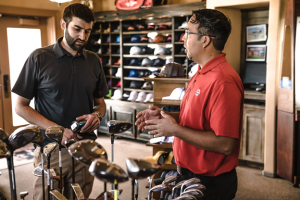
Buying golf clubs is something every beginner struggles with. Even intermediate players have a hard time choosing the appropriate set. That’s mostly because there are plenty of golf sets coming in different designs. The golf lingo can also get very confusing for people who are still trying to learn their way around the game.


In this guide, we will give you some pro-tips that will help you make an informed decision when shopping for golf clubs.


Choosing The Type Of Club


There are generally five types of golf clubs.

Drivers

Drivers may also be sold alongside fairway woods under the woods category. And although they are sold under woods, they are not usually made from this material.

The purpose of drivers is to hit the ball as far as possible. For a beginner, the range may be the only priority. However, intermediate to advanced players should also think about precision.


But what exactly determines the range and precision of a club? Distance and accuracy are affected by the materials used and the size of the club.


Most drivers have graphite and steel shafts with an alloy or aluminum clubhead. The majority of these clubs are bigger in size, which makes it easier to make long shots.


Carbon fiber is also fairly common, but it’s pretty expensive. The material is lightweight, so it offers better control and precision.

Irons

An iron set comes with a 4-, 5-, 6-, 7-, 8-, 9-iron, and a pitching wedge. The number represents the loft angle. The higher the number, the bigger the loft. 


A club with a high loft will hit the ball higher than one with a lower loft. You’ll want such a club if you are shooting out of the sand bunker.


Iron sets are usually used from the fairway. Some golfers may also use them for tee shots.


These clubs are designed with grooves that grip the ball and generate some backspin. The spin helps land the ball at an angle to reduce the roll and keep it within the green. Don’t spin the ball too much, though, as it can roll the ball further from the hole.

Wedges

Wedges are sometimes sold under irons, but they can also be grouped as standalone clubs.

There are four common types of wedges; pitching wedge, sand wedge, gap wedge, and lob wedge. All wedges have a high loft, making them ideal for pitches and chips near the green. The loft angle is also perfect for making shots out of the sand bunkers.

Putters

Putters are arguably the most important clubs in your set. As the name suggests, they are used to put the ball in the hole.


Putters can be categorized into two groups; blade and mallet putters. Blade putters are smaller in size, so they are ideal for accurate players.


Mallet putters have larger heads, making them more forgiving to poor shots. These are recommended to beginners.

Hybrids

Hybrids are a blend of irons and woods. As the specialists at AEC Info explain, these clubs are designed to give what fairway woods and irons have to offer. It helps you get out of spots where a fairway would struggle. 


They also replace irons like 3- and 4- and that’s why they have a similar naming format as iron clubs.


Hybrids offer better playability than irons. They produce better contact, helping newbies to contact the ball better and hit it further.


Choosing A Grip

Golf club grips come in different sizes, textures, and designs. The goal is to get a grip that is super comfortable in your hands. It should also complement your playing style.


Individuals with bigger hands are likely to get better performance from clubs with thicker grips. 


The beauty of modern clubs is you can always switch out the grip if it doesn’t meet your expectations. This may be an extra cost, but it’s definitely worth it if it’s going to improve your game.

Choosing A Shaft

Club shafts are designed with various materials and flex. Graphite and stainless steel are fairly popular because they are affordable and offer decent swing speed. However, they are heavier than carbon fiber clubs.


And how is flex important? A club flex can help you generate a higher ball speed. This is useful for beginners, seniors, and ladies with slow swing speed. The high flex compensates for your lower swing speed to give you longer shots.


However, experienced golfers with better swing speed will find stiffer shafts more beneficial.

Choosing A Hosel

The hosel determines the lie angle of your golf club. It’s crucial to get a club with a lie angle that blends with your swing and height. Alternatively, you can purchase clubs with adjustable hosels that allow you to customize the angle on demand.

Choosing A Clubhead

The size of the clubhead directly affects how you hit the ball. Beginners should go for bigger heads as they are more forgiving. They will help you make excellent contact and generate decent speed even when your swings are below average.


Sadly, bigger heads make the club heavier, and this can negatively impact control. This explains why experienced golfers prefer smaller clubheads.


It’s clear that golfing gears work differently for different players. Therefore, don’t make your decision based on some else’s plays with specific gear. This guide should help you find something that’s perfect for your unique playing style and abilities.

NBA Chaos Leaves Heat in Advantageous Position

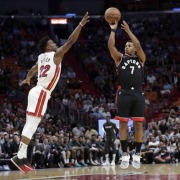
Chaos around the NBA could benefit the Heat.

You would expect the NBA to dominate the headlines in June, as the playoffs hit full stride.


Despite multiple competitive series reaching their peak, what seems to dominate our attention is the discontent around the league.


The Dallas situation seems to be the most tumultuous as within a span of 24 hours they lost both their General Manager and head coach.


Meanwhile, back in Miami.


I mean, what could possibly be better than this Heat fans?


In the City of Brotherly Love, there is not much left for Ben Simmons as the Sixers have imploded in back-to-back final quarters.

Simmons is shooting an ungodly 25.7% from the free throw line in the Eastern Conference semifinals, contributing mightily to the Sixers’ collapse.

Joel Embiid is the only player from the “Process” that has truly panned out.

Say what you want about Simmons three All-Star selections, the fact he was targeted by Atlanta and could not make them pay matters.

Embiid.

Butler.

(Insert eye emoji)

The most realistic scenario however seems to involve Toronto Raptors guard Kyle Lowry, who would instantly upgrade Miami’s backcourt on both ends.

Miami has roster flexibility and more importantly stability, especially in the near future.

Despite the season ending on a low with a playoff sweep at the hands of Milwaukee, the sting of that will heal.

Loading
Loading...

The odds were stacked against Miami, and other “bubble teams” – the 2021 Miami Heat were not getting out of the East this year anyway.

After a redacted offseason and a roster that did not improve from last year, this team plateaued.

However the future immediately seems brighter in Miami.

Even if a lot of the positivity is perhaps hyperbole.

So sit back and relax Heat fans, enjoy the chaos from the safety of Biscayne Bay.

Related:

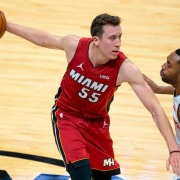
How Did Duncan Robinson Progress in his Third Year?

The Duncan Robinson discussion this off-season is pretty interesting, since even though it could go in a couple different directions, it’s pretty clear which one will actually end up happening.

As I’ve been talking about in all of these pieces, the Heat lack a ton of assets, meaning even if they didn’t want to retain Robinson at that price, they would do it to reuse as a trade piece.

Now, I believe that Robinson will be retained immediately for a bunch of the same reasons that many have mentioned. For one, Erik Spoelstra re-designed his entire offense around this un-drafted shooter, so if you think that he will just end up walking this off-season, you’re completely wrong.

The interesting part about it is what will occur after he is signed. If the right deal comes along, a sign and trade scenario could occur to bring in a guy to fulfill the roster. The issue with that is I don’t see a player out there right now that Miami would trade Robinson for immediately. It’s all a waiting game, but at this moment, I’d imagine Robinson is back on this Heat roster next season.

But instead of completely projecting forward, let’s take a look back a bit. What areas of Robinson’s game actually took a significant leap?

Yeah, He Can Shoot A Bit

I don’t need to sit here and showcase a bunch of DHO’s from this season between Robinson and Bam Adebayo, since you guys have gotten a good enough look at that over the last two years. And well, so have opposing teams.

Opposing adjustments were made in the bubble which then blended into the beginning of the regular season. Defenders would guard him sideways when he lined up on the three-point line, knowing exactly where he was looking to go on the court.

This forced Spoelstra to scheme some different looks for him in the offense, leading to another Robinson transformation for Miami. As seen in the clip above, this was a base set for Robinson after the DHO expansion. Instead of lining up in a predictable wing or corner, he would start in the mid-range, ready to explode down the baseline and loop around off some stagger screens.

Of course the dribble hand-off is still there at times, but not to the extent it once was. And clearly, off-ball movement from Robinson wasn’t going to be enough to make him a complete player in the offense.

This led to another slight change for Robinson, which I definitely didn’t see coming so quickly: on-ball effectiveness. The high pick and roll basically became the new DHO for Adebayo and Robinson, but the key was that there was some diversity.

It was no longer about waiting to see how the defense decided to guard him each night. It then became: force the defense to make a decision. If the team is playing drop, will the big man double out to the three-point line? If so, Robinson can hit Adebayo, which I’ll discuss down the line.

If the big doesn’t fully commit, then Robinson can rise up with a slight contest every time. We all know Robinson can shoot, so showcasing catch and shoot opportunities from the season is quite pointless. But seeing him able to adjust on the fly the way that he did this season says a lot about him as a player, and it was a perfect time to test him right before his contract decision making.

Swarming the Shooter Leads to Increasing the Dribbles

We saw Robinson run sets a little farther back to put the ball on the floor a bit more, leading up to the three-point line. But what about his attacking inside the arc?

Clearly, we don’t see it much, but there was a definite frequency increase from the year prior. It’s not about Robinson being this attacking threat to score at more than just one level. It’s actually about opening up his primary skill even more.

In the clip above, we get a glimpse of that. Robinson knocks down the triple on the wing, then finds himself at the same spot about a minute later. This time around, he doesn’t have anything close to the same amount of space. The slight pump-fake draws Josh Hart a little closer, then he drives to the basket with a nice fake to the corner to get Steven Adams out of his way, and lays it in with Hart on his back.

It was obvious that this element of his game only occurred when shots were falling, since he began to play much more freely. The good thing about that is that’s the only time they need him driving to the cup. That one drive keeps the defense honest from that point forward after they’re forced to leave some cushion, giving him the needed space to pull with zero hesitance.

Pocket Pass Expert

This ties back into the high pick and roll stuff I discussed earlier, since that’s when most of his passing is on display. Most of the time in that set, both defenders are blitzing him, meaning he must make the pocket pass to give Adebayo a 4 on 3 on the opposite side.

On this play above, the result of this play may have been a Robinson three, but that’s not the most important part. It’s more important that he starts off the game with a great leading pocket pass, which forces the defense to sag off that blitz a bit differently.

The reason it’s so intriguing to discuss his growing game is that most of my points seem to refer back to the same thing: forcing defensive adjustments. Teams continue to bounce off the play-style of Robinson, which is impressive due to the fact he has not yet reached his peak.

Also, it’s another reason the discussion that I continue to have about the addition of a point guard is so crucial. Yes, Spo voluntarily built the offense around Robinson, but he could be so much more creative with it if he had a trusted facilitator to get guys in their spots, instead of forcing Adebayo and Butler into that role.

Anyway, it’s important to note this passing ability from Robinson this season, since it basically opened up his entire offensive game as the year progressed.

Making Slight Defensive Improvements

Robinson has been a huge negative on the defensive end since breaking into the starting lineup, but we finally got to see some flashes late in the season. If there was one area to highlight on that end of the floor mid-season, it was that his team defense actually wasn’t that awful.

The 2-3 zone was basically a route to hide a lot of Miami’s poor defenders, but it actually allowed Robinson to make an impact. He has the length to be effective on close-outs and contests, while the foot speed seemed like a major issue at times.

The early foul calls every single night may not seem to be a great example for the improvements, but he’s shown an ability to be in the right spots, as shown in the clip above.

Now, the individual stuff was still in question, but down the stretch of the season, there were slight improvements. In the two game set against Boston, he gave a glimpse of what he could do on that end of the floor if he continues to work on it.

No, he didn’t shut down Jayson Tatum, but there were possessions where his length forced him into uncomfortable situations, which is exactly what many have been waiting for him to utilize.

When I asked him about his effectiveness on the defensive end after those Boston games, he said, “It’s definitely been a process. There’s been highs and lows throughout the year…Just trying to continue to build and improve.” And if he does continue to improve, it clearly raises his impact levels tremendously.

The Next Step

When I addressed the next stage of Robinson’s game following last season, it was that the addition of a one-dribble pull-up can shift his game even more. And well, here I am again, making that same point.

We didn’t see much of it throughout the year, but it definitely came up at times, while it always seemed to be a capable ability. This game against Philly is the perfect example since he was forced to put the ball on the floor with only eight available players.

He catches it off the curl, dribbles once, and rises at the free throw line. He’s very capable of knocking that down, but I think it’s more of a comfort thing. I said he would need to work on that last off-season, yet there wasn’t much time to actually make any improvements in that small frame of time.

But if that is added to his bag before the start of next season, it makes him incredibly more difficult to guard in the half-court.

The continued sticking point for every Heat player this season will be that first round series, but well, it shouldn’t. Robinson, specifically, made a ton of small leaps in his game that will be so important for the near future, making the roster construction aspect of things so interesting.

As pointed out earlier, I don’t see a way that a contract isn’t done between the Miami Heat and Robinson this off-season, but there’s a clear possibility the sign and trade route could be explored. Either way, that deal will make this Heat team better in some facet, leading to all eyes shifting to the start of free agency.

Taking a Look Back at Goran Dragic’s 2020-2021 Season

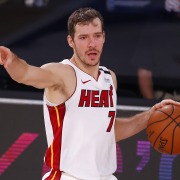
The Goran Dragic situation this off-season is quite complicated. This isn’t just an ordinary team option that can be explored as freely as a guy like Andre Iguodala.

For one, the ties to the organization over the last few years make it hard for them to easily move on, but clearly if the right deal comes along, it’s necessary. The reason that I said it’s complicated is due to it being more than a organizational relationship: it’s actually the bond with the team’s best player, Jimmy Butler.

Decisions are being made through Butler, since that was made clear when he first arrived here in Miami. And over the last two seasons, Butler has made it known how much he loves playing with Dragic in Miami.

Loading
Loading...

The Miami Heat lack a ton of salary fillers at this time, which means they must take advantage of the ones that they have, considering the most likely route that they end up going will be the trade market. As mentioned earlier, both Iguodala and Dragic have a team option, and currently are the only two players with that much money value to equalize a trade.

Anyway, we will have to see what happens with that off-season stuff once we get there, but for now, let’s take a look back at Dragic’s season. Even when many of us thought he had fully tailed off at certain parts of the season, he then showed a huge positive flash to make you think differently.

He caught some momentum to finish the season, which made many people hopeful of another post-season display. He did just that in game one, but clearly couldn’t produce as the series progressed with everybody else’s struggles. But aside from the playoffs, how did the primary areas of his game look?

Shooting From Deep

The three-point shooting is an important element to harp on for a 35 year old Dragic. If he can consistently hit the spot-up three ball, his game will age rather nicely.

When looking back at the shooting this year, the catch and shoot numbers beyond the arc made a huge jump. He shot 40% on spot-up triples after shooting 35% the year prior. As expected though, pull-up threes dropped from 37% to 32% this season.

I’m going to discuss his exact role in another section, but the lack of a true point guard didn’t allow him to play that spot-up role that he seemed to fit so well at times. Per usual, he was forced into a set runner and facilitating role, forcing him to take more shots off the dribble than he probably wished.

There was only one positive part of that off the dribble stuff, and no, it didn’t occur from beyond the arc…

Sustaining Elbow Pull-Ups

In some ways, that mid-range pull-up saved his offensive game this season. At many points of the year, he lacked a ton of burst to get to the basket and the three-point pull-ups just weren’t falling. So, that left him with only one of the three levels in a half-court offense: the mid-range.

It’s an exposable offensive tactic against drop coverage, which was a sticking point in their first round match-up with the Milwaukee Bucks. Dragic was the only one to take advantage of that spot of the floor to begin the series, leading to a situation that was less than ideal from a team perspective.

Aside from that, I can’t say that I expected a frequency increase from that spot of the floor this season, combined with a slight jump in percentage from 43% to 44%. All of this was done after an uneven start to the season with contact tracing, not playing back-to-backs, and just poor offensive play at times.

It was clear that running the same old sets for Dragic all year would absolutely plummet his effectiveness later in the season, which led to Spo tinkering for their veteran guard…

Sprinkling Creativity 

The internal question for the Heat about Dragic early in the season seemed to be: how can we maximize his play, keep his minutes down, and put the ball in his hands primarily every night?

Well, the answer to that question was some interchanging looks.

If I went through them all, this piece would probably be much longer than you’re willing to read, so I’ll limit it to the one that I didn’t see coming. He began to get some work in the high post when facing smaller guards, which fits Dragic’s offensive build so well.

It’s pretty obvious that Dragic is a physical offensive player who likes to draw contact whenever he can. The issue is that the lack of burst that I’ve discussed limited that downhill scoring. Putting him in the post like they did against Minnesota allowed him to do all of the things they need from him: physicality in a unique way, facilitating from the weak side, and of course, different ways to score.

When I asked Dragic about generating offense from the high post after this game, he responded, “Spo said the other day that in the second unit they’re going to try to give me some post-ups, and I took advantage of that.” This statement didn’t feel like a spontaneous task for Dragic to take advantage of the smaller guard, it actually felt like a season long process to find sustainability for him offensively.

The issue is that the roster’s skill-sets forced Dragic to carry the weight in certain areas that he definitely shouldn’t have been carrying…

His Unfortunate Role: Fill Weaknesses

In simple terms, Dragic was basically given the role at times to fill the weaknesses of others. The issue with that isn’t just that he was 35 years old, it’s that those aren’t his strengths either.

As discussed throughout the season, most of Miami’s guards shared the same type of play-style. Offensive players who need a screen above the break to get downhill, or spot-up opportunities to catch some rhythm. Combine that with the team’s two best players being non-shooters who primarily like to play-make, and you have a veteran point guard forced to do things that he should not be doing.

Take a look at this clip above as an example. It’s the play I always come back to when discussing the team’s needs heading into the off-season. They were facing a depleted Chicago Bulls team, and somehow, they’re down 4 with 1 minute to go in need of a bucket.

The play consists of a Butler drive into a kick-out to reset the offense in the hands of Dragic. 9 seconds on the shot-clock and a similar theme is occurring: all eyes on Dragic. They seem to be waiting for him to make a play, like he did so many times in the past, specifically in the bubble.

He flows into a PnR, snakes inside, and throws up a wild scoop that misses badly. That’s not on Dragic. That’s on the team.

Evaluating Dragic this season is an interesting thing to do since I believe he was forced to adjust more than anybody, mostly since they trust him so much to do so. But if they do end up keeping him for the 2021-2022 season, that just can’t be the case.

No more subbing him into the starting lineup when things get tough. No more relying on him late in games when the team needs a bucket. Those are things the team must fill this off-season in order to compete next season, and well, if Dragic can be a part of the supporting cast with no additional tasks, then he will thrive in his role no matter the circumstance.

Kyle Lowry’s Fit with Heat More than a Jimmy Butler Relationship

Kyle Lowry’s fit with the Miami Heat isn’t just being discussed because he’s the Godfather of Jimmy Butler’s daughter. Of course that’s the starting point, since it draws interest from a player like Lowry, but it seems like there are many more reasons for this to be a seamless fit.

The Heat have a bunch of needs, and when evaluating Lowry as a player, he fills a bunch of those things that Miami has missed. That is exactly what we will be diving into here. Aside from the exact numbers in a contract and surrounding pieces, what would he give Miami next season?

Let’s start here…

PnR Ball-Handler

Before talking Lowry’s strengths, the Heat’s weaknesses must be highlighted. Something I’ve talked about constantly is Miami’s lack of a pick and roll ball-handler. They had a guy in Kendrick Nunn who can get to the mid-range. A guy in Tyler Herro who can make the occasional pull-up triple. And a guy in Goran Dragic who could drive hard to the basket for a physical bucket.

But they don’t have somebody who can do more than one of those things.

When looking at that first round series against Milwaukee, a major key for their struggles was that certain player’s area of weakness became apparent rather quickly. The Bucks forced the Heat to take shots that they gave them. And well, Lowry navigates offensively on his terms.

In the clip above, we see Lowry run the PnR, leading to a lob and finish, but that aspect I’m going to dive into a little more down the line since that’s probably the most important part of the offensive fit. But staying on this topic, 28th in PPP when the ball-handler has the ball in the pick and roll would not be the case if Lowry was dissecting defenses.

The reason that most of the clips you’ll see in this piece are from the Raptors-Lakers game is to show that pulling highlight moments isn’t the point of this explanation. In fact, this game was Lowry’s last game of the season, showing that this is very recent film. Spoiler alert: he finished that game with 37 points and 11 assists.

Strong Attacking and Free Throw Antics

Another missing piece to this Heat offense is a secondary attacker, which has been harped on all season, then exposed come playoff time. When a team cuts off the head of the snake, in Jimmy Butler, there’s nobody else to attack in space. Combine that with the constant off-ball denial the Bucks through at Miami, and you have a very troubled offense.

Not only is Lowry a capable attacker, he’s a physical and ruthless attacker. Those two things translate to a good amount of free throw attempts, which took a bit of a dip this season from the year prior.

We all know that’s what Butler’s game is based on as well, which makes that combo so interesting. Something that’s always mentioned is that Butler plays at his own speed, and a major reason for that is he can slow the game down by turning it into a free throw competition. Lowry mirrors that same play-style, and I think that can benefit the franchise centerpiece.

Bam Adebayo improved in every area of his game this season, but of course, many seem to harp on the post-season lack of aggression more than anything. That aside, there’s no doubt he’s in line for another step forward with his offensive game. And the best way to propel that is to put two savvy vets next to him to control the pace, and allow him to play his game.

We’ve seen Butler’s gravity give Adebayo plenty of open elbow jumpers, and it feels like Lowry can bring that same element. Allowing Butler to get some rest in a game without the whole offense crumbling means that Lowry and Adebayo’s chemistry will be huge, and both of their play-styles feel like they would mesh well.

Oh, a Point Guard?

On my list of off-season needs, I had point guard very high. This kind of goes hand in hand with the PnR ball-handler discussion, but this expands even further. Why is that? Well, just take a look at the clip above.

Lowry is moving downhill with his roller, one defender trailing and the other containing. He stops at the free throw line, jabs and uses a ball-fake to force Montrezl Harrell to drop. They both fell for the fake, and it gave Lowry more than enough space to pull-up into a shot that he’s made plenty of times over his career.

But, Lowry is always reading a defense one rotation ahead. He saw LeBron James duck all the way into the paint for a possible tag/cut-off, and Markieff Morris rise with Pascal Siakam which eliminates his ability to split the difference with the corner. Lowry makes the pass to the corner for an open triple.

The reason that I’m diving into this play so deeply is because this is what the Heat miss. It shouldn’t be Butler and Adebayo creating for others each and every play, since that just restricts their own effectiveness in the offense. Yes, they will also look out for others as play-makers since that’s their game, but at times it seems like they’re forced into that role.

With that passing ability and those different offensive scoring techniques, it allows Erik Spoelstra to be much more creative in how he chooses to run his offense. If they retain Duncan Robinson, as I expect them to, they can diversify their sets a lot more with a point guard of Lowry’s caliber.

Shooting Spots

After hitting on a bunch of his ways of scoring, it’s important to note the part of the offense that is essential next to Miami’s two stars. When you’re two best players aren’t good three-point shooters, that third acquisition has to have that ability in his bag.

He has just that, and while we’re discussing Coach Spo’s creativity with him, this is where that comes into play. When looking at the clips above, we see Lowry’s ability to score off the dribble with step-backs, side-steps, and obviously, the pump-fake until the defender jumps technique.

He got the foul call and knocked down the three, which is not something we’ve seen a lot of this season since most of Miami’s triples occur with off-ball screening, dribble hand-offs, or pick and roll pull-ups.

But that’s not why Spo can get creative, since it’s the second clip that brings that point alive. After an offensive rebound, they reset offense and Lowry comes off a DHO for a three. Having a player that is a threat off the dribble, as well as off the ball is quite the player to add to the offense.

Although I’m showcasing a DHO that ended in this fashion, he seems so comfortable in that set since he loves to play-make on the move. The over-the-head pass from the wing to the elbow was his biggest strength in that action, and well, we all know who would be stationed at that elbow: Bam Adebayo.

How does Butler Benefit?

Adebayo’s been a sticking point within the offense during this Lowry discussion, but how would Butler actually benefit? Other than the stuff about a secondary attacker and a guy who can control lineups when he goes to the sideline, I see the most effectiveness with them running stuff together.

We saw Dragic-Butler PnR’s become one of their best offensive sets in the regular season, which just shows the way they were trending offensively. As seen above, Dragic would usually lob it up to Butler as high as possible, knowing he’d climb the ladder and come down with it at the basket.

They also ran a bunch of inverted PnR’s with Dragic as the screener which worked just as well. Dragic setting the angled screen for Butler to go downhill with a guard switching onto him always ended in a positive result.

This is important to note because Lowry/Butler combinations can be even more effective. He’s a craftier passer when getting in the mid-range area, since it’s not just the lob pass that is the option. He also has a quicker pull-up that constantly keeps defenders on their toes. They both have had major success in that area over their careers, which makes me think we’d see plenty of lineups with 3 floor spacers to give them two the middle of the floor to go to work.

Adding Some Defense

Loading
Loading...

This entire piece has been offense driven, mostly since that’s where the actual fit can be discussed. As a whole, we already know what Lowry brings on the defensive end at the point of attack, which makes the acquisition even more intriguing.

He’s physical with opposing guards, he can force them to become frustrated, and even has success in the post with his wide frame. All of these elements lead to something that Miami lacked for most of the season which is transition offense.

Referring back to Lowry’s ability to get to the charity stripe, a lot of that comes from fast-break opportunities where he takes the contact to get some points. Miami’s guard play this season was a lot of avoiding contact to try and score, which becomes an issue when things tighten up in the post-season.

As showcased in this piece, it’s clear that Lowry’s fit is much more than a relationship with Butler, but well, that’s where this topic stems from. They know that they have a good shot at him due to the fact it’s intriguing to come play with a player and an organization that shares the same mentality that he does.

The next step would be to round out the supporting cast to become an Eastern Conference contender, but that’s a decent start. We’ll see what happens with that type of stuff as we approach the off-season, but for now, one thing is clear: Lowry can change a bunch of things for the Miami Heat.

Jerome Baker

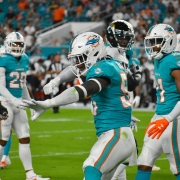
Jerome Baker signs 3-year, $39 million dollar extension with Miami Dolphins

There are times when players have to be coy about things going on around them. In the case of linebacker Jerome Baker, it was just two days before that he was saying he and the Miami Dolphins hadn’t really discussed details regarding a contract extension.

“I guess.” He laughed when asked about the subject. “I mean, we haven’t really talked about anything. I’m just going into this year and…”

He quickly trailed off and was soon asked another question, this time regarding whether he could see himself playing in Miami for a long time. This time, his answer was much more enthusiastic.

“Oh, yeah. I want to play here for the rest of my career. I love it here, I love the fans, I love the organization, I love everybody here.” He said. “Yeah, I definitely see myself playing here for a long time. Do you see the hat? Do you see the hat?”

Merely two days later, ESPN’s Adam Schefter took to Twitter, announcing that Jerome Baker had signed a 3-year, $39 million dollar contract extension that will keep him in Miami through 2024. So much for having no discussions.

In all fairness, when the two sides want to make a deal, it doesn’t take long to hammer out the details. Baker clearly loves the Miami Dolphins, and the Miami Dolphins love having him on defense. Since being drafted in the third round of the 2018 NFL draft, the 24-year old Jerome Baker has proven to be an effective linebacker in every facet of the game. As a pass rusher, Baker has great speed and can get around the edge in a hurry, or burst through gaps in the middle of the line. In 2020, he recorded a career-high seven sacks.

He has also shown to be effective in coverage, and is very durable. He’s never missed a game yet, playing in all 48 games throughout his three-year career, starting in 37 of them. In that time, he’s racked up a total of 317 tackles, 11.5 sacks, ten pass deflections and two interceptions. That number is only projected to go up as head coach Brian Flores finds new ways to utilize his unique versatility.

Loading
Loading...

His personality on and off the field has helped him out too. Baker recognizes and embraces this fact.

“For me, ever since I was young, it’s always been the same.” He said on Friday. “I lead by example and I kind of just do what the team needs me to do. If you need me to be the guy that yells today, I’ll be that guy. If you just need me to be that guy to just lead by example, I’ll be that guy. But ultimately, I think I’m just a lead-by-example guy. I just try to do the right things, I try to do what’s best for the team and that’s always been my approach. I don’t see it changing any time soon and I think that’s what’s gotten me here thus far.”

With Jerome Baker now signed for the foreseeable future, the Miami Dolphins can focus on signing their remaining draft class and extending other players, such as Mike Gesicki.

Training camp is just around the corner. Chris Grier deserves credit for extending a cornerstone and fan favorite before his contract expires. Jerome Baker gives a lot to the team, and that won’t change anytime soon. He’s everything the team professes to want. He works hard. He’s young. Fast enough to keep up with running backs. Smart enough to make calls on defense. And most importantly, he’s a team-first kind of player. Re-signing Baker is a no-brainer.

Luis Sung has covered the Miami Dolphins for numerous outlets such as Dolphins Wire for seven years. Follow him on Twitter: @LuisDSung

Everything Tradeshows is a one-stop-shop for trade show exhibit rentals and custom exhibit display purchase solutions to companies of all sizes.

Visit them at everythingtradeshows.com or call 954-791-8882

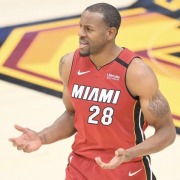
What is the Next Step for Andre Iguodala?

As we continue this series on the Heat’s roster, most of these evaluations require more film diving than off-season stuff. But with Andre Iguodala, it’s the complete opposite.

We’re very aware of the things Iguodala brings as a player, mostly since he just finished up his 17th season in the NBA. In terms of his fit with the Heat this past season, it wasn’t as much of a seamless fit as it was the year prior.

The trade at the deadline last season was a perfect move for what the team needed. Two veteran wings, in Jae Crowder and Iguodala, that could not only mentor the young guys, but also fit the role of a plug and play guy that Heat coach Erik Spoelstra loves so much.

Iguodala was an essential factor in the Heat’s post-season success in the bubble for an abundance of reasons. For one, he brought that second unit play-making and facilitating that the team seemed to lack. They had a guy that could be trusted with the ball in his hands to make a play when Jimmy Butler went to the sideline.

Another reason for his effectiveness was on the defensive end for obvious reasons, but more specifically, as a wall builder against Giannis Antetokounmpo. Many attribute that stoppage to the front-court of Bam Adebayo and Crowder only, when in reality, the Iguodala sub-in made Antetokounmpo’s life even worse since he never got a break.

Clearly, he’s a man of many skills on the basketball court, but well, those skills weren’t blended as nicely this past season. In some ways, that trade that I’m discussing propelled some of the future moves that Miami will make for a front-court pairing. They either need a small-ball four who can consistently hit the three, like Crowder or Trevor Ariza, or a stretch big/rim protector that can muck things up in the middle.

The truth is that Iguodala is neither of those things. They don’t need play-making from their back-up small forward, since it should really be coming from a true point guard, which we will save that conversation for another time.

At this current time, roster reconstruction is occurring, which means that the clear holes will be filled in different facets of the off-season. And when looking for a reserve wing who can plug into the starting lineup at times, Iguodala’s profile does not match Butler and Adebayo’s games at all.

If you can’t play a key role player next to your two best player as an effective lineup, it just doesn’t make much sense.

What’s Next?

Now, the contract stuff makes this even more interesting, since well, the Heat can choose how they’d like to handle it. With $15 Million being the number for this upcoming season and a team option attached, there’s a good chance they will opt in and utilize him as a filler in a sign and trade.

I’m going to begin diving into some options out there in free agency and through trade, but it’s clear that the trading route may be the best way to go. Miami lacks a ton of assets, due to the unfortunate draft pick situation, but they also can’t just throw away the two salary fillers that they have at this time, in Iguodala and Goran Dragic.

If they go the free agency route, then they can just opt out, which is also a possibility. Either way, the Heat can play the waiting game on how they decide to treat this off-season.

And as I discussed in my Ariza piece, if they can retain him on a cheap deal, there’s no better Iguodala filler. Ariza is not the guy you want starting at the four on a team trying to become a contender, but he’s a perfect guy to have as a reserve, especially since he’s gained the trust of the top two players on the team.

As for Iguodala’s next spot, it seems like retirement or a return to a familiar face may be the two most likely options. Could he finish out his career in Golden State? I believe so, since he could be a type of player that they could use. A bunch of young guys just barely missed the playoffs in the Western Conference, meaning maybe a little veteran guidance could be all that they need.

We’ll see what happens when we get there, but the overarching point is that although his Heat career may be over, that acquisition kept the front office’s mentality stagnant. Trading a young asset for win now guys usually ends in a positive result.

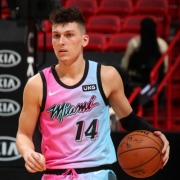
Tyler Herro’s Full Sophomore Season Wrap-Up

Expectations are a funny thing. It’s one element that I’d attribute to Tyler Herro, since the expectations have been high for quite some time.

Having to prove to others that making the move to Kentucky instead of staying home to play for Wisconsin was the correct choice pretty much prepared him for these moments. Expectations lowered a bit when he entered the league, since many didn’t think much of the draft choice, but things changed rather quickly.

Three-point pull-ups down the stretch against Philly to playing out of his mind in the NBA bubble to being looked toward to takeover in an NBA finals was quite the ride for Herro. With that being said, stagnant play into his second season was far from expected.

This led to differing opinions across the board on this young prospect, but saying he had a bad season is highly unfair to say. Maybe a down season in terms of an individual’s expectations heading in, but overall, he made some necessary leaps that will make the difference long term. Of course there are plenty of things that need to improve this off-season, which I will highlight in this piece, but let’s dive into the primary facets of his game this season.

Progressing Upward:

Screen Utilization

Herro’s utilization of the screen is something I’ve kept my eye on since the beginning of the season. It’s a major part of his game due to his scoring relying so heavily on finding open spots off the screen, but it looked to need some polishing with decision making.

Loading
Loading...

This game against Philly early in the season is a perfect referral point when comparing early season Herro to now, since they had eight available players, which meant he was running every set and had the ball in his hands a lot.

Looking at the play above, the initial takeaway is that he made a great read with an open lane for an easy dunk. It’s also clear this occurred because of Philly’s lackluster rotations on this possession. But when looking back at it now, it basically opened up a can of worms for how defenses would guard him moving forward.

It got to a point where more than half of his screens were being refused, which is a great tactic in moderation, but not when it becomes predictable. Danny Green also angled Herro right on this play, which is something he hasn’t seen much of down the stretch of the season.

This led to the discussion of when will the jump be made to begin to flow into screens and be both comfortable and effective with it. After a few more games went by, there was an increase in that area, but it shifted into another predictable move: a snake dribble.

He got so comfortable with it that defenses were staying at the hip of the screener at times, basically daring him to drive it into the teeth of the defense. But well, we’ve begun to see some evolving traits within this topic…

I’ve used the word predictable a couple times when discussing this on-ball ability, since that is what makes some of the best scorers in the league so great. When a defender doesn’t know your next move with so much in your bag, that’s the first step in becoming a high level offensive threat.

So, Herro flowing into pick and rolls became more apparent down the stretch of the season as an area of focus, but that predictability term comes right back into play. Usually when he did come off high PnR’s, it was a pull-up three when he was facing drop coverage. Some may not love the idea of that shot all the time, but it’s clear when he’s confident and in rhythm, those shots can propel his game immediately.

There’s still plenty of improvements to be made here, but there’s still a ton of time for that to be perfected. The key is that he showed signs of change over the course of a couple months, which is essential from a long term perspective.

Progressing Downward:

Consistent Downhill Attacking

When evaluating Herro’s attacking, he showed some very positive signs to begin the year. Right back to this Philly game, the defense knew he was their primary offensive factor and he was still able to get to the basket a good amount of times. On this play, some scrambling in transition leads to Herro going for the drive-by and the finger-roll.

Not only was he getting there a lot early on, but the efficiency didn’t look too bad either when he got to the rim. But much like the last discussion, teams seemed to figure it out a bit.

He’s not a strong attacker who’s going to take it into your chest and try to draw the foul. If he is moving downhill, he’s going to try and avoid the contact, leading to some ugly looking layups or highlight reel quality flip shots. The latter occurred frequently to begin the season, but the first option became more and more apparent down the stretch.

He gets caught in the air on the PnR and tries to go up and under, which ends poorly. This is one of the few things that I saw progress on a down-slope, which once again means that defenses were adjusting faster than his individual progression. It happens, but it has to be cleaned up.

When addressing how it can be changed a bit, it probably reverts back to an overarching point that many have discussed which is getting stronger. It’s not just about his size, but he’s not a very physical player which is not something that is teachable. Goran Dragic, for example, has always been a pretty physical player as an attacker, which is something Herro can definitely carry over to game once he hits the weight room.

The reason these two topics I’ve begun with are so important is because they go hand in hand. I don’t feel that there will be true growth until both of these things progress together, and that will come with a true off-season, and more importantly, a true role which I’ll discuss down the line.

How Has His Shooting Actually Been?

In the big picture, yes, the shooting could’ve been a lot better. 36% on the season after shooting 39% last season definitely shouldn’t occur, but it has trended in the right direction for some time now. Talking about the playoff series against the Bucks is useless due to everyone playing poorly, so there’s no reason to harp on those four horrific games.

But toward the end of the season, the shooting began to pick up a bit after returning from injury. Over his last 15 games of the regular season, he shot 65% on catch and shoot threes, while shooting 41% on pull-up threes. While the theme seems to be he under-performed for most of the season, those numbers are pretty impressive after a rough start.

Speaking of that rough start, is there a specific reason that his area of strength took a toll over that period of time?

Yes, it’s the uneven role that he had for a portion of the season. Of course this interesting year didn’t allow for set roles a lot of the time with interchanging lineups early on, but Herro’s journey was much different. Being upgraded to starting point guard forced him to become an action runner instead of an action thriver.

That task might have thrown him off a bit for some time, possibly blending into my earlier point about him attacking better early in the season. But there was a consistent theme over his last 15 games, which was that he knew his role was to be a spark scorer off the bench. If he can work on his exact role all off-season without all of the other confusing elements, that alone can propel some of those shooting numbers that we’re talking about.

Increased Creativity

This play showcases more of that snake dribble stuff, since frankly, he seems very comfortable when he’s surveying the mid-range area, even going back to his rookie season. The reason the word creativity comes into play is the way he gets his shots up.

He likes the elbow pull-up against drop or floaters on the run, but he has some really odd push shots in his bag that…..work?

Separation is key with Herro since finding the space to get a good shot off cannot be overstated with him. But this type of stuff gets him the space and separation that he needs, even if it does look awkward at times. He does a good job of keeping the defender on his back, then eventually his hip, which eliminates any type of block opportunity on his one-hand rise up.

This is another thing that may not be perceived as overly important, but it is in the grand scheme of things. These flashes of creativity are great to see, but they just need a base on-ball ability. Once he gets that, all of these other things I’m touching on will come together.

Passing Inconsistency Translates to Uneven Role

As I touched on with the shooting, the uneven role for Herro this season has led to some ups and downs with his play-making. Looking back at this game against Philly one last time, the lob passes were flying all night. He was confident with the pass, and he was getting to the spots where it’s usually the most effective.

He was given the on-ball duty in these type of actions, leading to plenty of lob passes. The issue was that as time went on, even when he was running sets, the number of crisp lob passes decreased lower and lower.

Maybe it’s a good thing that the frequency has lowered after the realization that scoring must be his primary focus when he is on the floor. In some ways, the coaching staff can utilize this season as a trial year for Herro. They came to a conclusion of what he is as a player at this current stage, and where he works best in the offense. Of course there will be some progression that can change some things moving forward, but that will only make things easier for the team.

What’s Next?

As I stated in the beginning of this piece, there have been mixed emotions about Herro this season, but in my mind, this off-season for him is pretty clear from the perspective of the front office.

They are happy to continue to develop him to see what he can become, but if the right deal comes along to add a third star to this Miami Heat roster next to Bam Adebayo and Jimmy Butler, they will pull the trigger. Due to the Heat lacking a ton of trade assets, Herro is at the top of that list to entice an opposing team.

Other than that, they are not giving up on the future of Herro. He’s shown a ton of flashes up to this point, and the weakness areas that I’ve touched on can easily be improved upon.

Herro is one of the few players in this roster evaluation series that doesn’t have contract implications in the “What’s next” section, but yet, he’s the biggest wild card of them all. Time will only tell what will come next for his individual improvement this off-season, but he clearly has the tools to do so.

Some may immediately label this season negatively for Herro, but I actually believe it was crucial for his development, combining that with necessary improvements in some of the major areas of his game.

Loading
Loading...