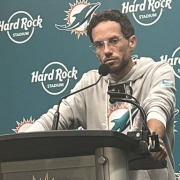
Miami Blows a 17-0 Lead in Carolina: Change is Imminent

The Miami Dolphins started Sunday’s outing against the Panthers looking like a team ready to dominate. Tua Tagovailoa and the offense moved the ball with ease, the defense forced two early turnovers, and the scoreboard read 17-0 in Miami’s favor. Then, the wheels came off. The Dolphins surrendered 239 rushing yards while producing just 19 of their own, and what should have been a comfortable win turned into another gut-punching collapse.

This wasn’t just a bad game. It was a familiar story. Another inferior opponent, another blown lead, another sign that change is not only needed, it’s inevitable. The only question now is when.

The problems are the same ones that have plagued Miami for years. The offensive line remains one of the NFL’s worst. The run defense has been historically bad. Over the past five seasons, among the league’s very bottom tier. In 2025, through five weeks, the Dolphins’ run defense ranks:

  • Rush Yards Allowed: T-2nd worst (871)
  • Rush EPA/Play: T-2nd worst
  • Yards Per Carry: T-6th worst (5.6)
  • Yards After Contact/Rush: 15th worst
    (via TruMedia, compiled by @HussamPatel)

The lone bright spots in Carolina were Jaylen Waddle (6 catches, 110 yards, 1 TD), Darren Waller (5 catches, 78 yards, 1 TD), and Tagovailoa himself, who was efficient with 27 completions on 36 attempts for 256 yards and 3 touchdowns. But even those performances couldn’t cover up the deeper issues.

Where does the blame fall? It starts at the top, with the construction of this team. The trenches are abysmal, the cornerbacks have been a liability, and the coaching staff continues to look unprepared and out-schemed. The Dolphins’ first two draft picks, expected to be instant starters, are already grading among the league’s worst at their positions. That’s a failure in talent evaluation and player development.

So, where does this leave Miami? At 1–4and slipping further behind in the AFC playoff race, the frustration is boiling over. Fans see wasted years of elite skill talent, saddled by fundamental flaws in the roster. They hear the general manager tell them not to worry while the same cracks widen every Sunday.

Change is imminent. Whether it’s the GM, the coaching staff, or both, this franchise cannot keep wasting opportunities. The Dolphins aren’t just losing games, they’re losing faith, and the window to fix it may already be closed.

Ultimate Miami Heat Fan Travel Guide: Tickets, Hotels, and Local Hotspots

For Miami Heat fans, nothing compares to being in the arena when the team takes the floor, the music hits, and the crowd comes alive. Watching from home can be fun, but the full atmosphere of game night in Miami is on another level. If you are planning your first trip or looking to make the most of your next Heat experience, this guide will help you get tickets, find the right hotel, and decide where to celebrate afterward.

Where Does the Miami Heat Play?

The Miami Heat play at the Kaseya Center at 601 Biscayne Boulevard in Downtown Miami. This arena has undergone a few name changes over the years, but it remains the beating heart of the franchise and one of the city’s most iconic sports venues. The arena seats just under 20,000 for basketball, and the energy is electric when the Heat take the court. Sitting courtside gives you an intimate look at the speed and physicality of the NBA, but even fans in the upper sections feel connected to the action thanks to the design of the arena and the noise of the crowd.

Getting to the game is usually straightforward. The arena sits in a central location near the bay, which makes it easy to reach by car or public transportation. Parking is available on site, but many of the premium spaces are reserved for club and courtside ticket holders. Most fans choose to park in nearby garages or take advantage of the Metrorail and Metromover, which drop you off within walking distance. If you’re staying downtown, walking to the game is often easier and faster than driving and sitting in post-game traffic.

Tickets, Seats, and the Game Day Atmosphere

Ticket prices for Miami Heat games vary depending on the opponent, the time of year, and how close you want to be to the court. Games against rivals or marquee players sell out quickly, and the playoffs create a demand that drives prices much higher. If you want to guarantee a good seat at a fair price, it is best to buy in advance from the official Heat website or trusted vendors. Sites like StubHub can also be useful if you are searching for resale tickets, though you need to be aware of additional fees.

Where you sit matters for your experience; courtside seats are the ultimate luxury, putting you just a few feet from the action with exclusive access to lounges and amenities. Club-level tickets also offer a premium experience with great views and upgraded dining. The lower bowl provides an excellent balance of perspective and energy, while the upper sections are the most budget-friendly way to join the crowd. Even from the upper levels, the energy of nearly 20,000 fans remains palpable.

The crowd at a Heat game is part of the spectacle. Miami fans are known for their passion, and the arena atmosphere builds long before tip-off. Pregame warmups feature music, video montages, and plenty of entertainment designed to get everyone in the mood. During the game, the noise level rises with every big shot or defensive stand. It is a community of fans who live for the Heat, and being inside the building makes you part of that family.

Hotels Close to the Arena

If you want the most convenient experience, staying near the Kaseya Center is the way to go. Downtown Miami has plenty of hotel options ranging from high-end luxury to modern boutique stays. InterContinental Miami and Marriott Marquis Downtown combine upscale amenities with a short walk to the arena. Grayson Miami Downtown offers a boutique vibe just a few blocks away, while CitizenM Miami Worldcenter gives you stylish accommodations that are a little easier on the budget. YVE Hotel Miami is also within walking distance and provides a lively atmosphere that fits well with game night.

Choosing a hotel near the arena means you can avoid driving after the game, and it allows you to enjoy the surrounding nightlife fully. Many hotels offer valet parking, though prices can add up quickly. If you plan ahead, you can sometimes find packages that include both your stay and tickets to a Heat game, which is a convenient way to handle the logistics in one step. Sites like Hotels.com are useful for checking rates and availability across multiple properties at once, while Expedia often lists last-minute deals for travelers who decide late.

Miami Heat: Where to Watch if You’re Not in the Arena

Not everyone can get a ticket, but that does not mean missing the action. Miami is full of bars, restaurants, and lounges that feel like mini-arenas on game night. Spots in Downtown and Brickell often bring in large crowds of fans who want to watch the game live on big screens with the same energy you would find inside Kaseya Center. The Elser Hotel has become known for its game day gatherings, while recommendations from The Miami Guide highlight some of the best fan-friendly sports bars across the city. Watching with a crowd of Heat fans outside the arena is its own kind of party and a great option if tickets are too expensive or sold out.

Streaming is always available for those who prefer to watch at home. League Pass and local sports channels cover the team’s matches throughout the season, ensuring fans can find where to watch the Miami Heat play even when traveling. Still, if you are in Miami, joining the local crowd at a sports bar gives you a taste of the city’s passion for basketball.

Local Hotspots Before and After the Game

Heat games are about more than basketball. They are an event, and the surrounding neighborhoods provide endless ways to turn your night into a full experience. Bayside Marketplace sits next to the arena and is a natural gathering point for fans before and after games, offering food, shopping, and live entertainment along the water. Brickell City Centre is a short ride away and provides a mix of upscale dining and vibrant nightlife, perfect for celebrating a win or shaking off a tough loss.

Wynwood is another must-visit area. Known for its murals and street art, it has become a hub of breweries, bars, and restaurants. Spending the afternoon exploring Wynwood before heading to the arena is a great way to enjoy Miami culture. And, of course, South Beach always delivers if you want the classic Miami party experience after a night at the game.

Travel and Budget Planning

Miami isn’t cheap, and game nights can add up quickly. Expect hotels near the arena to charge about $150–$250 per night. Upper-bowl tickets start around $70; lower-level and club seats typically cost several hundred dollars, while courtside seats can run into the thousands. Plan to spend roughly $80–$120 on food and drinks and $20–$40 for parking or local transportation. Add merchandise and after-game entertainment, and you can anticipate spending a few hundred dollars on a complete game night.

Planning ahead is the best strategy for fans who want to manage expenses smartly. Booking hotels early, watching for ticket deals, and exploring package options that include accommodations and game access can cut costs. You should set aside $300–$400 as an emergency budget for unexpected expenses, or at least consider some safety options like a cash advance for Floridians for the most critical cases. It is important to approach these responsibly, but they can help cover your additional expenses during the trip.

Another factor to consider is the weather. Miami nights are warm and humid, and rain is always a possibility, so packing light layers or a small umbrella can save you some trouble. Safety and traffic are also worth considering, especially after late games, which is another reason staying downtown can be more convenient.

Why Go Live? The Courtside & Crowd Experience

There’s something special about seeing the game live:

  • Hear the crowd: the roar, the chants, the energy that streaming can’t reproduce.
  • See the details: players’ expressions, split-second calls, and physical play that cameras sometimes miss.
  • Experience the production: halftime shows, music, lights — the full spectacle.

Overall, a Miami Heat game is not only a sporting event. It is a complete traveling experience that combines basketball, nightlife, culture, and community. From choosing a hotel and seats to deciding where to celebrate afterward, every choice shapes your trip. The Heat are a major part of Miami’s identity, and attending a game is a great way to experience the city from a local perspective. Whether courtside, in the upper deck, or in a bar full of fans, you’ll feel like part of Heat Nation.

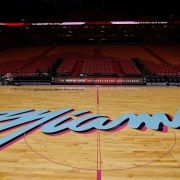
 

Miami Heat 2025-26 season betting angles and statistical predictions

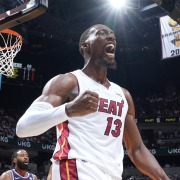
The Miami Heat walk into 2025-26 with more uncertainty than shine. Last year ended at 37 wins. Books opened this one around 39.5, which feels slightly ambitious but not wild given the landscape. New help arrives in Norman Powell and Simone Fontecchio, plus the hope that Andrew Wiggins looks more like himself again. Bam Adebayo and Tyler Herro still set the tone, even if the scoring burden may wobble from night to night.

Public and analysts alike seem split. Some cautious optimism, plenty of wait-and-see. Priced like a play-in outfit rather than a real threat, Miami draws interest from bettors who tend to shop team totals and division prices when the room is lukewarm. The defense still has a decent reputation under Erik Spoelstra. To shift the market, however, the offense needs to rise from the middle of the pack to at least respectable, and quickly.


Win total lean and what the models suggest


Most futures boards plant the win total at 39.5, with the over drifting around even money and the under a mild favorite. Last season disappointed, but bookmakers cite a softer East and an injection of scoring as reasons for a bump. Powell’s coming off a 21.8 points per game campaign, which is no small thing. Herro and Bam hold the structure together and provide two-way competence, if not star-level shot creation every night.


You’ll see projections cluster in the 38–42 range. Some modelers give Miami roughly a coin-flip shot at cracking the top eight; ESPN’s forecast puts the threshold-or-better outcome around 44 percent. The Southeast looks gettable in theory, though +1,000 says the market isn’t exactly leaning in. Integrating Powell, Fontecchio, and development from Kel’el Ware represent the swing factors in beating the line—a trend many will explore via bet builder products, combining win totals, player scoring, and even defensive team props in one ticket.


Where they fit in the East pecking order


Oddsmakers remain cool on a deep playoff run. Title odds around +15,000 imply a path that probably ends before the conference finals unless something unexpected happens. Division prices sit in underdog territory too. Depth and coaching usually raise Miami’s floor, but the East’s middle tier is crowded and questions about consistent scoring linger.


Most projection sets nudge the Heat into the 7–10 range. Bam’s defensive range organizes a lot of the half-court grind, yet any extended absence from a primary scorer could flip a decent season into scramble mode. On paper, they read like a 39–41 win team with roughly a 60 percent chance to make the first round. That could drift up if Powell’s usage scales without a dip in efficiency, or if Wiggins finds his stride as a play-finisher rather than a creator.


How the new pieces might reshape the identity


The headline is straightforward enough: Miami added on-ball punch and spacing. Powell can create his own shot, which they needed. Fontecchio should stretch the floor and defend capably across spots. If Wiggins’ health holds, he plugs minutes on the wing and gives Spoelstra another lineup lever. Still, the offense needs to settle near league average to clear 40 wins with comfort, and that’s not guaranteed by names alone.


Defensively, Spoelstra’s structure tends to land top-15 even when the rotation is banged up. Bam is the quiet engine that covers mistakes and allows switching variety. The ceiling moves if Powell lives near 20 a night rather than sliding back. Kel’el Ware, in year two, profiles as a swing wild card on rim protection and vertical spacing. The first 25–30 games should tell us plenty about the blend, and honestly, about the health luck that has to break at least neutral for a real step forward.


Practical betting looks for the 2025 26 campaign


If you’re leaning optimistic, over 39.5 at plus money makes sense, especially if you trust Spoelstra to smooth the edges early. There is obvious risk: one key injury or a Powell regression, and the under becomes the safer side. Historically, the market can underrate Miami in October and November, which gives early value on team totals or openers against middling opponents. Division odds in the double digits offer a modest upside if a rival stumbles. 


For multi-market approaches, many will use a bet builder to combine Heat win totals with player awards (Most Improved for Powell or Sixth Man for Fontecchio), or parlay season series results against specific rivals. Miami’s long championship number doesn’t demand attention unless a midseason trade shakes their top end. Keep an eye on early shooting splits and availability reports; that’s where most of the edge lives in the first month.


Odds snapshot


Implied probability is the simple 100 divided by the posted decimal price. Odds last updated September 1, 2025, and pulled from BetUS for consistency.

A quick word on bankroll sense. Futures can look tempting and, sometimes, they are. They’re also fragile if injuries stack up or a team needs longer to click. Set a budget before you start and do not chase. Recheck positions when new information hits. If the signs change, allow your stance to change too. Wager what you can afford to lose and keep the season fun, not stressful.


Miami vs. Florida State: Top 25 Showdown at Doak Campbell

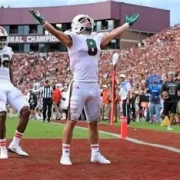
Tallahassee, Florida — October 4th, at 7:30 p.m., under the lights at Doak Campbell Stadium. The No. 3 ranked Miami Hurricanes will make the hike up to Tallahassee to face their No. 18 ranked in-state rival. Saturday’s matchup is the 70th meeting between the teams and the first where both are ranked since October 8th, 2016, when the 23rd ranked Seminoles came to Miami Gardens and knocked off the No. 10 ranked Canes 20-19.

Miami leads the all-time series 36-33 and will look to leave the state capital with a huge win in their first conference game of the year. For the Noles, they look to bounce back after their double-overtime thriller against Virginia. Here is what to look for in Saturday’s primetime matchup.

For the Canes

The Miami Hurricanes come into the game 4-0 while sporting a top ten defense in the country. Miami’s defense is anchored by the front, led by Rueben Bain Jr., a surefire first-round pick and game wrecker, and Akheem Mesidor, who has 2.5 sacks and 3 tackles for loss. The defensive line has accrued 8 sacks, 17 tackles for loss, and a whopping 70 pressures. This will be a tough test for FSU’s offensive line, and if Miami wants to win, they must dictate the game and stop FSU’s strong rushing attack.

Offensively, the Canes have displayed great balance. Carson Beck has formed a strong connection with Malachi Toney and CJ Daniels, the rushing attack is putting up 180.5 yards per game, and the Canes are averaging less than a turnover per game. The offense should be able to rely on Mark Fletcher Jr. and CharMar Brown, as FSU just gave up 211 rushing yards to Virginia. However, FSU’s defense should bounce back at home.

The Canes’ balance on both sides of the ball and fierce defense will be their difference maker. It will also be essential to play mistake-free football. They cannot allow Florida State to control the clock, as the Seminoles have a dynamic offense that leads the FBS in points. Not counting the win over Bethune-Cookman, the Canes have won the time of possession battle each week, and they need to keep that formula.

For the Noles

The Seminoles are coming off their first conference game and first loss of the 2025 college football season. They are still a great story with the way they have bounced back after their abysmal 2024 campaign. Thomas Castellanos and the FSU transfers have created the highest-scoring offense in the FBS (albeit against two cupcake opponents) and have playmakers all over the field. Highlighted by Micahi Danzy and Duce Robinson, the Florida State offense is explosive and capable of controlling the clock, but it has a major turnover problem. FSU is averaging 1.5 turnovers per game and committed 3 in their loss to Virginia, which was ultimately the deciding factor. FSU’s newly constructed offensive line will be put to its biggest test when they face the Canes’ defensive front, and the Seminoles will need to hold on to the ball.

On defense, the Noles were embarrassed last week, giving up 46 points to Virginia. After a strong showing against Alabama, a bye week, and two cupcakes, FSU came out flat and it showed. The Seminoles gave up 440 yards, 211 of which came on the ground, and allowed Virginia to convert 7 of 13 third downs. True freshman DT Mandrell Desir is the X-factor in containing Miami’s rushing attack, as he ranks first in run stop rate (26.3 percent) and third in PFF run defense grade (90.2). The rest of the defense will need to keep up with his play along with the likes of Ja’Bril Rawls, Deante McCray, and Darrell Jackson Jr.

For FSU, it will be essential for the defensive intensity to return to that of opening week at home against Alabama. The team played cohesive, mistake-free football and was able to start the year with a bang. They now must repeat that formula to grab a top-five rivalry win.

Closing

Mike Norvell and Mario Cristobal have both been here before. Big game, under the lights, with the future of the season on the line. This Saturday, at 7:30 under the lights of an unhinged newly renovated Doak Campbell Stadium, a rivalry is renewed, legends are made, and another chapter of one of college football’s most storied rivalries is forever marked in history.

Panthers sign Defenseman Niko Mikkola to Eight-Year Extension

The Condor is staying in South Florida


Defenseman Niko Mikkola and the Florida Panthers agreed to an eight-year contract extension, the club announced Thursday morning.


The deal will kick in during the 2026-27 NHL season.


According to TSN’s Pierre LeBrun, Mikkola’s contract comes in at a $5 million average annual value (AAV).


“Niko has proven himself to be a dependable defenseman who uses his speed and physicality to impact both ends of the ice,” said Panthers President of Hockey Operations and General Manager Bill Zito. “He was an indispensable piece of our past two championship campaigns, and we are thrilled that Niko will be continuing his career with the Florida Panthers.”


In two seasons with the Panthers, the 6-foot-6 defender appeared in 158 regular season games, where he scored 9 goals, 30 assists and 39 points. A key player on the blueline in Florida’s back-to-back Stanley Cup victories, the 29-year-old had 5 goals, 5 assists and 10 points in 46 playoff games with the Panthers since joining the team in 2023.


The two-time Stanley Cup champion was entering the final year of a 3-year, $7.5 million deal, which was signed ahead of the 2023-24 season.


With this extension, the Panthers have locked up their entire top-4 defense core through the 2029-2030 season: Aaron Ekblad (expires 2033), Gustav Forsling (expires 2032), Seth Jones (expires 2030) and Mikkola (expires 2034).

Miami Dolphins Reunite with Cedrick Wilson Jr. after Tyreek Hill’s Injury

According to Tom Pelissero of NFL Network, the Miami Dolphins are signing wide receiver Cedrick Wilson Jr. off the New Orleans Saints’ practice squad, bringing a familiar face back to South Florida.

Dolphins Sign Cedrick Wilson Jr.

Wilson previously spent two seasons with Miami (2022–2023), recording 34 receptions for 432 yards and three touchdowns. With Tyreek Hill sidelined by injury, Wilson will provide valuable depth to a wide receiver room now led by Jaylen Waddle, alongside Malik Washington, Nick Westbrook-Ikhine, Dee Eskridge and Tahj Washington.

Waddle recently pointed to Theo Wease Jr.–a preseason standout currently on the practice squad–as a potential contributor, but Wilson’s addition gives the Dolphins an experienced target who will join the active roster immediately.

The 6-foot-2 receiver brings size and system familiarity, having already developed chemistry with quarterback Tua Tagovailoa. While Waddle is expected to shoulder the primary workload in Hill’s absence, Miami will lean on Achane, Waller and the supporting cast to help keep the passing attack balanced.

This move marks a timely reunion that could prove critical as the Dolphins look to maintain offensive rhythm without their All-Pro wideout.


How Australia’s Active Lifestyle Shapes Casino Gaming Trends

Here’s the thing. Australia moves. People run, ride, swim, walk the dog before breakfast, then play a social game after work. That rhythm shows up in how Aussies spend time online too. Short sessions. Quick hits of progress. Clear goals and rewards. It’s the same feel a lot of casino-style games aim for.

And when you look at the data, the “active” part isn’t a guess. Fresh AusPlay figures say 85% of Australians 15 and up did some sport or physical activity in the last year, with 48% getting active three or more times a week. That’s a lot of people who like to move often, in small windows of time.

So what happens when that lifestyle meets casino gaming trends? You get products built for pace. Games that load fast. Rounds that end quickly. Modes that feel like a workout circuit. Five minutes here. Ten minutes there. The experience fits around life, not the other way around.

Sporty families shape “how” people play

Weekend routines tell the story. Kids’ games in the morning. A barbecue in the afternoon. A quick walk at sunset. That flow encourages “bite-size” entertainment. Casino platforms that win attention in Australia lean on the same logic. Short bursts. Clear levels. Challenges you can finish before the kettle boils. It’s the same reason leaderboards, seasonal events, and simple progress bars work. They feel like sport. You can measure it. You can come back to it.

AusPlay’s new report also shows a big chunk of participation is informal. People get active with friends and family, often outside clubs. That preference maps well to social features in casino games. Think community goals, co-op challenges, or friendly rivalries on a weekly board. It mirrors the way Aussies play a casual game of backyard cricket or join a local parkrun without a lot of setup.

Pokies and culture, without the myths

You’ll hear claims that “almost everyone plays pokies.” Not true. The most recent national snapshot finds around three-quarters of adults gambled on something in the past year, but pokies specifically were about one in three. Lotteries and scratchies still lead participation. So yes, pokies are part of the culture, but not at the level people sometimes quote. 

That matters for design. Slots with a familiar Aussie look still show up. So do quick spins and simple rules. But the bigger trend is about tempo, not just theme. If your life is full of sport and movement, you prefer games that respect your time.

Accessibility and mobile first

Here’s how it works. If most of your day is on the go, you want payments and play that are simple. Australia keeps shifting to electronic and contactless payments. The Reserve Bank’s consumer surveys show the long slide of cash and steady growth in tap-to-pay and phone-based payments. That shift supports quick, mobile sessions. No fuss, no long forms, and less waiting. 

Prepaid options add another layer for people who like control. Neosurf and Paysafecard let you load a fixed amount and keep it separate from your main card. You can pick up value online or through listed outlets, then use a code. It’s tidy, and it fits the “active life, low friction” mindset. 

Two quick examples

Example 1: High activity, short windows. The Australian Sports Commission’s latest AusPlay report shows 66% of Australians are active at least once a week and almost half are active three times a week. That cadence explains why “quick session” games and time-boxed challenges get strong traction. People already plan their days around short activity blocks. Games that fit those blocks win.

Example 2: Mobile wallets are booming. Industry analysis estimated mobile-wallet payments in Australia would surpass 100 billion Australian dollars in 2024 after jumping 58% in 2023. That kind of growth makes fast, in-hand payments a normal expectation, which nudges casino gaming toward mobile-first design and instant flows.

Cross-promos and the local rulebook

Now a reality check. In Australia, the Interactive Gambling Act restricts online casino services. The communications regulator has been active in blocking illegal sites and mirror domains. That shapes how promotions look on the ground. You’ll still see sports-themed events and gamified rewards, but the heavy cross-promos some overseas markets use are limited here by law and enforcement. It’s useful context when you compare what you see in Australia with what shows up in other countries.

What this means for product teams

Design for motion. Assume people will play on a train platform, at halftime, or while the pasta cooks. That means low load times, clear goals, and progress that’s easy to read at a glance. Seasonal cycles tied to local sport help too. Cricket summer. Footy season. Finals weeks. Not with official logos, just with rhythms and challenges that feel familiar.

Keep the money flow simple and flexible. Card on file. Mobile wallet. Prepaid code. Let people add a small amount and play for a short session. That’s how they already pay for everyday things. It should feel the same here. 

Be honest about the rules. Don’t copy a promo you saw in a market with different laws. Australia’s regulator keeps blocking non-compliant services and calling out workarounds. Build for trust, not loopholes. 

Picking sites that fit an Aussie routine

If you’re comparing features, look for fast mobile pages, easy account controls, and clear session tools. Themes that nod to local sport can be fun, but speed and clarity matter more. If you want a plain-English starting point for comparing options, an updated guide to the best Australian online casino can help you sanity-check basics like mobile flow, game pacing, and payment choices.

Bottom line

Australia’s love of sport and the outdoors shapes everything. It sets a tempo for daily life. That tempo carries over to casino gaming. Short, clean sessions. Simple goals. Progress you can see. Payments that work on the go. Follow that playbook and you’ll build something that fits the way Aussies actually live.

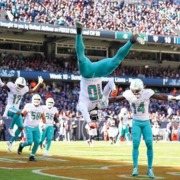
Tyreek Hill does a flip in celebration of scoring a touchdown for the Dolphins in the win against the Bears.

The Dolphins Get Their First Win, but at What Cost?

The Dolphins finally got their first win of the season, but it did not come easy, and it did not come without a cost. Miami edged the Jets 27–21 at Hard Rock Stadium, finally showing some of the balance and resilience fans have been waiting for, only to see Tyreek Hill leave with what appeared to be a knee dislocation.

For the first time all year, Miami’s defense made its presence felt on the turnover sheet. Entering the game with zero takeaways, the unit forced three fumbles against New York, a much-needed spark that kept the Jets from ever seizing full control despite running the ball at will.

Because that is still the glaring issue: the run defense. The Jets gashed Miami for 197 yards on the ground at 7.0 yards per carry, with Justin Fields (81 yards, 43-yard TD) and Breece Hall (81 yards) both breaking chunk plays. The Dolphins may have forced turnovers, but they continue to bleed yardage between the tackles and on the edge.

On the offensive side, Mike McDaniel kept the plan simple and stuck to the run. De’Von Achane carried it 20 times for 99 yards and a score, keeping the offense steady even as Tyreek went down. Tua Tagovailoa was not asked to do too much, but when he did throw, he was sharp, completing 17 of 25 passes for 177 yards and two touchdowns, both to Darren Waller in the red zone.

The Jets, for their part, looked dangerous at times. Fields was efficient through the air (20/27, 226 yards, 1 TD, no picks) and showed flashes with his legs. Hall was a dual threat, piling up over 140 total yards. But the three fumbles doomed New York, and Miami capitalized just enough, especially on the Jets 13 penalties for 101 yards, to protect its slim lead down the stretch.

So, the Dolphins got what they desperately needed: a win. They got their first turnovers of the year. They found an offensive rhythm by leaning on the run game. But they also gave up nearly 200 rushing yards and may have lost their most explosive player in the process.

The question now is whether this is a turning point or just a brief reprieve before things get tougher without Tyreek.

Florida Panthers Captain Aleksander Barkov Undergoing Surgery

Florida Panthers captain Aleksander Barkov is undergoing surgery on his right knee after being injured in a training camp practice on Thursday, Panthers head coach Paul Maurice said on Friday.


Maurice did not give a timeline for Barkov’s return, however an update on his status is expected to come later on Friday — following his surgery. There’s a possibility the Panthers’ captain will miss the entire 2025-26 season.


The non-contact injury occurred after Barkov fell during a drill before making innocuous contact with defenseman Niko Mikkola.


After leading his team to a second straight Stanley Cup Final win last June, the 30-year-old Tampere, Finland native was entering his eighth season as captain of the Panthers and 13th NHL season overall.


This news comes just weeks after the Panthers announced their other star forward Matthew Tkachuk would be out until at least December after getting offseason surgery for a lower-body injury.


In 804 career regular season games, Barkov put up 286 goals, 496 assists and 782 points, while also being one of the top two-way forwards of his era, winning three Selke trophies, with two of those coming in the past two seasons. Across 94 career playoff games, Barkov totaled 25 goals and 56 assists for 81 points.


This story will be updated

Dolphins coach Mike McDaniel said he's focused on preparing the team, not his job security.

Dolphins’ 0-3 Hole: Five Tactical Shifts Mike McDaniel Must Make to Salvage the Season

The Miami Dolphins find themselves in a familiar yet troubling position—sitting at 0-3 after devastating losses to the Tennessee Titans, Buffalo Bills, and Las Vegas Raiders. With the franchise’s playoff hopes hanging by a thread and coach Mike McDaniel facing mounting pressure, Miami desperately needs tactical adjustments to turn their season around.

The Dolphins have struggled on both sides of the ball through their first three contests. Offensively, they’ve managed just 56 points total while surrendering 97 to opponents. Tua Tagovailoa has thrown four interceptions against five touchdown passes, completing 69.7% of his attempts for 575 yards. Perhaps most concerning is Miami’s inability to establish any rhythm, averaging just 18.7 points per game—ranking 25th in the NFL.

As Miami prepares for their crucial Monday Night Football clash against the New York Jets, bettors looking to capitalize on potential turnaround narratives should consider different promotional incentives such as the DraftKings promo code to maximize their opportunities on what could be a season-defining contest for both AFC East rivals.

1. Unleash the No-Huddle Attack

McDaniel must immediately implement more no-huddle packages to help Tagovailoa find his rhythm and prevent opposing defenses from making adjustments. The Dolphins quarterback has historically thrived in uptempo situations, and the no-huddle approach could mask some of the offensive line’s protection issues that have plagued Miami early this season.

Through three games, Miami has converted just 19 of 35 third-down attempts (54.3%), a concerning drop from their previous efficiency. The no-huddle can create shorter third-down situations and keep Tagovailoa in advantageous down-and-distance scenarios where his quick release becomes an asset rather than a necessity.

2. Target Cleveland’s Secondary Vulnerabilities

While the Browns boast the league’s top-ranked defense allowing just 204.3 yards per game, they’ve shown exploitable weaknesses in their pass coverage. Cleveland has registered only one takeaway through three games, suggesting their secondary might be ripe for exploitation by Miami’s speed merchants Tyreek Hill and Jaylen Waddle.

Hill has managed 198 yards on 15 receptions through three games despite the offensive struggles. The Browns’ tendency to focus on stopping the run (they rank third in sacks with 11) could leave favorable matchups in the secondary, particularly if McDaniel can devise quick-hitting routes that neutralize Cleveland’s pass rush advantage.

3. Maximize De’Von Achane’s Efficiency

Despite Miami’s overall offensive woes, De’Von Achane has maintained respectable production with 147 yards on 30 carries (4.9 yards per attempt). However, McDaniel isn’t maximizing Achane’s explosive potential that made him a standout rookie in 2023 when he averaged 7.8 yards per carry.

The key lies in getting Achane more touches in space and utilizing his receiving ability. Last season, Achane caught 87 passes and proved equally dangerous as a pass-catcher. With Miami’s offensive line struggling in pass protection, screens and swing routes to Achane could provide the quick-hitting plays needed to control tempo while leveraging his game-breaking speed.

4. Address Third-Down Defensive Breakdowns

Miami’s defense has been historically poor on third down, allowing opponents to convert at alarming rates. Against Buffalo, the Bills converted 10 of 15 third-down attempts, including several crucial third-and-long situations that kept drives alive. The Dolphins rank 32nd in total defense, surrendering 435 rushing yards and 715 passing yards through three games.

McDaniel and defensive coordinator Anthony Weaver must implement more aggressive third-down packages, potentially bringing additional pass rushers to create pressure while disguising coverage looks. The current passive approach has allowed opposing offenses to methodically move down the field, contributing to Miami’s -5 turnover differential.

5. Establish Early-Down Running Identity

Perhaps the most glaring tactical error in McDaniel’s approach has been abandoning the running game in favor of his preferred passing concepts. Through three games, Miami has rushed just 48 times compared to 89 passing attempts—a concerning imbalance for a team that claimed to prioritize physicality during the offseason.

The Dolphins must commit to establishing Achane and the ground game early in drives, particularly against a Browns defense that has shown vulnerability against the run despite their overall statistical dominance. Cleveland allowed 155 rushing yards to Quinton Judkins in their recent victory over Green Bay, suggesting opportunities exist for a more balanced offensive attack.

McDaniel’s willingness to adapt his system will ultimately determine whether Miami can salvage their season. The talent exists—Tagovailoa, Hill, Waddle, and Achane form a formidable offensive core—but the tactical deployment must evolve. With the Jets looming on Monday night, followed by challenging matchups against Carolina and the Chargers, the Dolphins cannot afford to wait any longer for these adjustments.

The franchise’s playoff drought threatens to extend into a fourth consecutive season without these immediate tactical shifts. McDaniel’s reputation as an offensive innovator hangs in the balance, making Week 4 not just about ending the losing streak, but proving his system can adapt when adversity strikes.